

Mesenchymal Stem Cells Market Size and Forecast — 2026-2033
Overview
Mesenchymal stem cells, also known as Mesenchymal Stromal Cells (MSCs), are adult, fibroblast-like multipotent cells that can differentiate and mature into tissues of mesodermal origin such as adipocytes, chondroblasts, and osteoblasts. Mesenchymal stem cells were isolated first time from the bone marrow and later from various sources such as cord cells, adipose tissue, and molar cells. MSCs in terms of size, are smaller and are quite difficult to observe in histological sections. A group of mesenchymal stem cells are called as mesenchyme and is widely distributed in the body. Mesenchymal cells can multiply in numbers of specialized cells and they can grow in-vitro or in-vivo condition.
The mesenchymal stem cells play an important role within an organism for suppression of immune cells activation, increase the number of newer cells, reduce cell death or cell damage in the body, and secretion of both neurotrophic and angiogenic factors, which are responsible for stabilizing the extracellular matrix, when transplanted to the brain, this cells promote the reduction of free radical levels and enhance synaptic connections of damaged neurons, and increases the myelination of axons. The mesenchymal cells are also able to replace and repair any damaged blood vessel in the cerebrum brain.
Mesenchymal Stem Cells Market Size and Forecast – 2026 – 2033
The Mesenchymal Stem Cells Market size is estimated to be valued at USD 5.01 billion in 2026 and is expected to reach USD 10.67 billion by 2033, exhibiting a compound annual growth rate (CAGR) of 11.4% from 2026 to 2033.
Key Takeaways
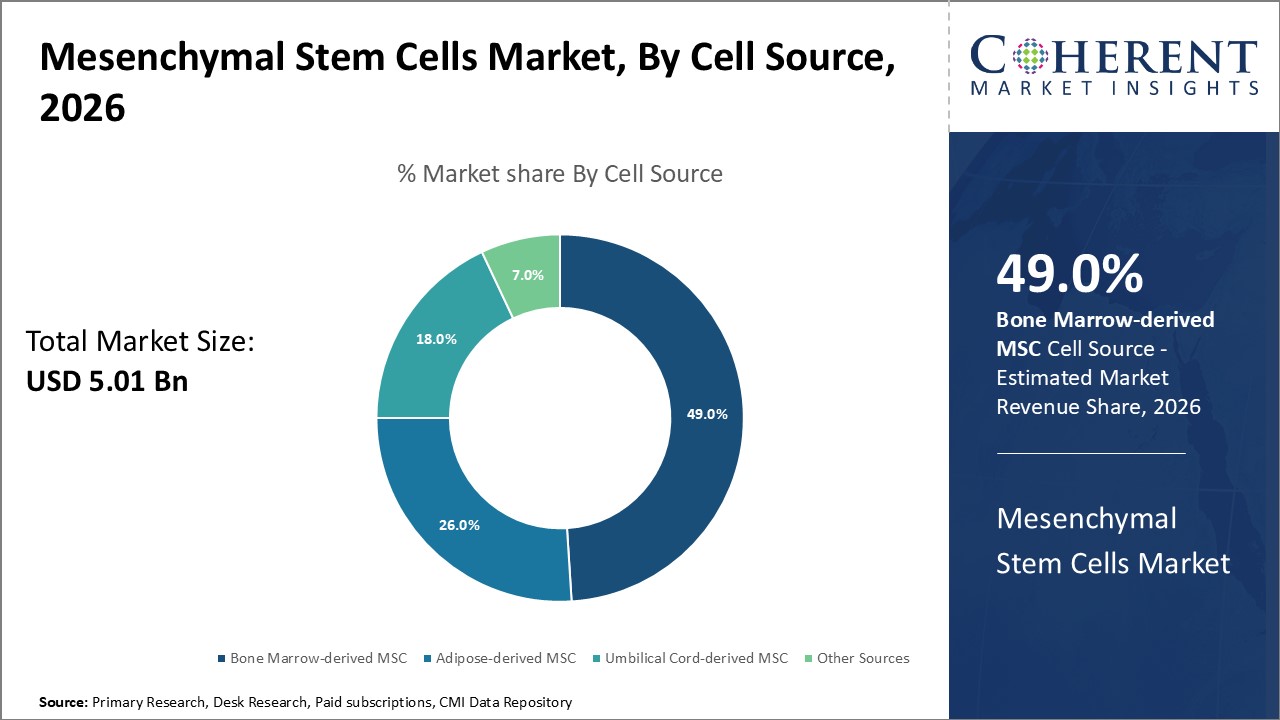
Bone Marrow-derived MSC dominate the Cell Source segment, accounting for 49% industry share, showing robust clinical adoption in orthopedic and hematological indications. Adipose-derived MSC exhibit rapid growth driven by easier harvesting methods enhancing procedural scalability.
Regenerative Medicine constitutes 55% of application market share, benefiting from expanded clinical validation in chronic disease treatment, while Immunomodulation is a rising subsector exploring autoimmune disease treatment applications.
The Hospital & Clinics segment embraces 60% market share owing to the rising number of stem cell-based therapeutic procedures and infrastructure enhancement. CROs are becoming pivotal for contract research-driven segment expansion.
Mesenchymal Stem Cells Market – Segmentation Analysis
Mesenchymal Stem Cells Market Insights, By Cell Source
In terms of Cell Source, the market is segmented into Bone Marrow-derived MSC, Adipose-derived MSC, Umbilical Cord-derived MSC, and Other Sources, among which Bone Marrow-derived MSC dominate the market share with 49%. Bone Marrow-derived MSC continue to lead due to their extensive clinical history and efficacy in orthopedic and hematological disorder treatments. Their established protocols and substantial presence in clinical trials support their sustaining dominance.
Mesenchymal Stem Cells Market Insights, By Application
In terms of Application, the market is segmented into Regenerative Medicine, Immunomodulation, Tissue Engineering, and Others, with Regenerative Medicine commanding the largest share at 54%. This dominance is driven by large-scale clinical adoption of MSC therapies in osteoarthritis, cardiovascular repair, and musculoskeletal injuries, supported by compelling clinical outcomes and improved processing technologies.
Mesenchymal Stem Cells Market Insights, By End-User
In terms of End User, the market is segmented into Hospitals & Clinics, Research & Academic Institutes, Contract Research Organizations (CROs), and Others, where Hospitals & Clinics dominate with 59% market share. The rising adoption of MSC therapies in hospitals is driven by increasing treatment approvals and availability of advanced cell therapy infrastructure.
Mesenchymal Stem Cells Market Insights, By Geography
North America Mesenchymal Stem Cells Market Analysis and Trends
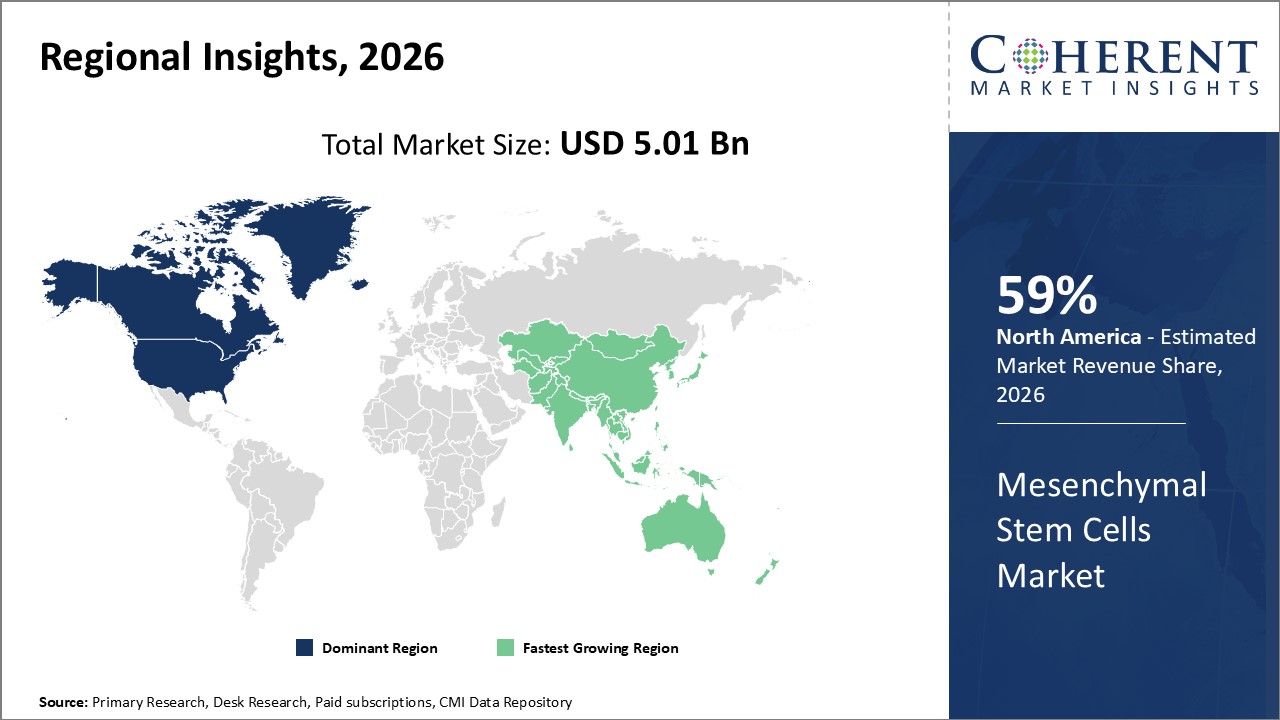
In North America, the dominance in the Mesenchymal Stem Cells market is attributable to comprehensive healthcare infrastructure and leading biotech conglomerates actively developing MSC therapies. Governmental support through expedited regulatory pathways enables faster clinical trial approvals. Companies such as Mesoblast and Thermo Fisher Scientific have successfully expanded manufacturing scale here, which underpins this region’s industry growth.
Asia Pacific Mesenchymal Stem Cells Market Analysis and Trends
Meanwhile, the Asia Pacific region exhibits the fastest growth due to increasing biopharmaceutical investments and government incentives fostering stem cell research. China’s pivotal role with increasing MSC output and clinical applications has soared, supported by major players like Celyad Oncology and Medipost, focusing on localized production and distribution networks. The expansion of healthcare access, particularly in India and Southeast Asia, propels this market dynamic.
Mesenchymal Stem Cells Market Outlook for Key Countries
United States Mesenchymal Stem Cells Market Analysis and Trends
The USA remains the largest mesenchymal stem cells market, driven by a rigorously regulated but innovation-friendly environment. Investment surges in regenerative medicine, supported by the FDA’s accelerated approval programs, enable new MSC-based products to enter the market swiftly. Market companies like Takeda Pharmaceutical and Mesoblast have conducted pivotal trials in autoimmune and orthopedic indications, driving significant revenue growth. Advanced manufacturing clusters in states such as California and Massachusetts further bolster market scale and industry share.
China Mesenchymal Stem Cells Market Analysis and Trends
China’s mesenchymal stem cells market is rapidly evolving thanks to robust government policies promoting stem cell research, notably through the National Natural Science Foundation’s substantial funding. Major biotech companies have launched large-scale MSC production facilities to leverage the large patient population demanding regenerative therapies. This regional push has led to increasing clinical trial numbers and collaborations, contributing to China’s standout industry growth trajectory and expanding market revenue streams.
Analyst Opinion
The expanding production capacity of mesenchymal stem cells is a crucial supply-side indication of the market’s momentum. In 2025, global MSC manufacturing facilities increased by approximately 18%, supporting the rising demand for clinical-grade stem cells. For instance, a landmark facility in Europe doubled its cell processing capability to meet regenerative medicine needs.
Demand-side factors spotlight the diversification of MSC applications across oncology, orthopedics, and autoimmune therapies. The surge in MSC injections for osteoarthritis treatment rose by 23% in 2026, reflecting enhanced acceptance among healthcare providers. This dynamic illustrates the evolving demand patterns which directly influence market revenue growth.
Price stabilization coupled with enhanced process efficiencies has moderated market restraints historically linked to cost-intensive MSC procurement. A pharmaceutical consortium in North America optimized stem cell expansion techniques, decreasing costs by 12% annually since 2023, thereby boosting market accessibility.
Nano-scale indicators such as rising import volumes of MSC products in emerging markets manifest broader global market penetration. Latin America observed a 15% increase in MSC imports in 2026, signaling expanding regional market share influenced by evolving healthcare infrastructure.
- Current Industry Events of 2026
- Market Size Estimation
- Regional Breakdown
- Competitive Landscape
- Customer Intelligence
- Segmental Analysis
- Pricing Analysis
- Key Market Drivers, Challenges & Future Trends
- Customized Insights Section
Market Scope
| Report Coverage | Details | ||
|---|---|---|---|
| Base Year: | 2025 | Market Size in 2026: | USD 5.01 billion |
| Historical Data for: | 2020 To 2024 | Forecast Period: | 2026 To 2033 |
| Forecast Period 2026 to 2033 CAGR: | 11.4% | 2033 Value Projection: | USD 10.67 billion |
| Geographies covered: |
| ||
| Segments covered: |
| ||
| Companies covered: | Mesoblast Ltd., Takeda Pharmaceutical Company, Lonza Group AG, Thermo Fisher Scientific Inc., Pluristem Therapeutics Inc., Novartis AG, Athersys Inc., Cytori Therapeutics, Inc., Medipost Co. Ltd., and Celyad Oncology | ||
| Growth Drivers: |
| ||
Growth factors
Market growth is bolstered by several key factors: The rising incidence of chronic diseases like osteoarthritis and cardiovascular disorders is increasingly driving the adoption of MSC therapies, especially regenerative interventions with proven efficacy. Furthermore, continuous advancements in bioprocessing technologies, including 3D culture systems, have enhanced MSC yield and viability, contributing to improved treatment outcomes and market acceptance. Cell surface markers detection plays a crucial role in MSC research and therapy by enabling precise identification and characterization of stem cell populations, thereby enhancing treatment efficacy and market acceptance.
Growing regulatory support for stem cell research, including expedited review pathways in the U.S. and Europe, provides a conducive environment for more products entering clinical use. Lastly, expanding R&D investments by biotechnology companies to innovate in immunomodulatory applications are catalysing new therapeutic avenues, broadening market scope.
Mesenchymal Stem Cells Market Development
- In December 2025, the U.S. Food and Drug Administration approved Ryoncil (remestemcel-L-rknd), a therapy made from donor-derived bone marrow mesenchymal stromal cells (MSCs), for the treatment of steroid-refractory acute graft-versus-host disease (SR-aGVHD) in children aged 2 months and older.
Market Trends
Recent market tendencies demonstrate a clear pivot toward allogeneic MSC products due to scalable manufacturing and lower immunogenic profiles, propelling this trend with a compound annual growth rate surpassing autologous variants since 2025. Additionally, convergence between gene editing technologies and MSC therapies marks an emerging frontier, such as CRISPR-mediated enhancement of stem cell functionality witnessed in trials initiated in late 2025.
Key Players
Mesoblast Ltd.
Takeda Pharmaceutical Company
Lonza Group AG
Pluristem Therapeutics Inc.
Novartis AG
Athersys Inc.
Cytori Therapeutics, Inc.
Medipost Co. Ltd.
Celyad Oncology
Several companies have aggressively adopted collaborative clinical initiatives and strategic partnerships to amplify market presence. For instance, Mesoblast’s alliance with international cell therapy centers accelerated clinical trials in immune-mediated diseases, increasing market share by 6% in 2025. Similarly, Lonza’s expansion of its cell manufacturing facilities led to a 21% surge in production capacity, catering to the escalating demand for MSC-based therapies.
Mesenchymal Stem Cells Market Future Outlook
The future outlook of the Mesenchymal Stem Cells (MSC) market is very positive, with significant growth projected over the coming decade. This growth is driven by increased government and private funding, a rising number of clinical trials, advances in cell-based research, and growing demand for therapies targeting chronic, age-related, and degenerative diseases. The amniotic membrane, a valuable source of MSCs, is gaining attention due to its advantages such as non-invasive isolation, low immunogenicity, and anti-inflammatory properties, making it an important contributor to advanced regenerative medicine. Allogeneic MSC therapies are anticipated to dominate the market due to their scalability and commercial production potential.
Key therapeutic areas advancing the market include orthopedics, cardiovascular diseases, autoimmune, and neurological disorders. Innovations such as MSC-derived exosomes and advancements in cryopreservation and storage solutions are also broadening the accessibility and application of these therapies. North America remains a leading market due to strong research and development pipelines and supportive regulatory frameworks.
Historical Analysis
For instance, in February 2019, Cytonus Therapeutics developed Cargocytes, a first-of-its-kind, controllable, cell-based platform technology for delivery of biologics. Cargocytes were engineered allogenic cell lines that could carry a variety of small molecule compounds, gene editing therapies, therapeutic RNAs, and powerful biologics such as immune modulating cytokines, antibodies, and oncolytic viruses. As a platform technology, Cargocyte had many therapeutic applications and was commercialized through a blend of internal and partnered programs.
In February 2019, BrainStorm Cell Therapeutics Inc. announced an expansion of its clinical trial facility with Cleveland Clinic as the first U.S. clinical site contracted for a planned Phase 2 open-label, multicenter study of repeated intrathecal administration of autologous Mesenchymal Stem Cell (MSC-NTF) cells in participants with progressive Multiple Sclerosis (MS).
Sources
Primary Research interviews:
Regulatory authorities (FDA, EMA, CDSCO)
Stem cell therapy clinic directors
Hospital procurement managers
Databases:
ClinicalTrials.gov
Embase
SpringerLink
Magazines:
Biopharm International
Nature Biotechnology (magazine edition)
Pharma’s Almanac
Journals:
Stem Cell Research & Therapy
Cytotherapy (International Society for Cell & Gene Therapy journal)
Cell Stem Cell
Newspapers:
The Times of India – Health/Science
The Economic Times – Healthcare
Financial Times – Healthcare & Pharma
Associations:
International Society for Stem Cell Research (ISSCR)
International Society for Cell & Gene Therapy (ISCT)
European Society of Gene & Cell Therapy (ESGCT)
Get access to 250+ pages report
Every segment, forecast, competitor profile and data table behind the analysis above — available for instant download.
- ESOMAR Member
- ISO 9001:2015 Certified
- D-U-N-S Registered
- GDPR & CCPA Compliant
Missing comfort of reading report in your local language? Find your preferred language:
Transform your Strategy with Exclusive Trending Reports
Frequently Asked Questions
Dominant players include Mesoblast Ltd., Takeda Pharmaceutical Company, Lonza Group AG, and Thermo Fisher Scientific Inc., which lead in production capacity, clinical pipeline breadth, and commercialized products.
The Mesenchymal Stem Cells market size is projected to reach USD 10.67 billion by 2033, expanding at an 11.4% CAGR from 2026 onwards.
Hospitals and clinics hold the largest growth opportunity, driven by increasing stem cell therapeutic procedures, expanded treatment approvals, and infrastructure growth.
Market trends will include a shift toward allogeneic therapies, integration of gene editing techniques, and rising adoption in immunomodulation and infectious disease treatment.
The landscape is competitive with innovation-driven market players, focusing on clinical approvals and manufacturing scale-up; challenges include regulatory complexities and cost containment.
Strategies encompass strategic partnerships, joint ventures, capacity expansions, and extensive clinical collaborations to expedite product commercialization.