

Targeted Cancer Therapies Market Size and Forecast — 2026 - 2033
The Global Targeted Cancer Therapies Market size is estimated to be valued at USD 73.6 billion in 2026 and is projected to reach USD 132.4 billion by 2033, growing at a compound annual growth rate (CAGR) of 9.7% during the forecast period from 2026 to 2033.
Overview
The Targeted Cancer Therapies market is driven by the increasing global prevalence of cancer and the growing demand for personalized medicine. Advances in genomics, biomarker identification, and molecular diagnostics have enabled the development of therapies that specifically target cancer cells while minimizing damage to healthy tissues. Rising investments in oncology research, expanding clinical trials, and strong support from regulatory authorities for precision therapies are further accelerating market growth. Additionally, increasing adoption of biologics, monoclonal antibodies, and immunotherapy-based targeted treatments is improving treatment outcomes and patient survival rates. Growing healthcare expenditure and awareness regarding early cancer diagnosis are also contributing significantly to market expansion.
Key Takeaways
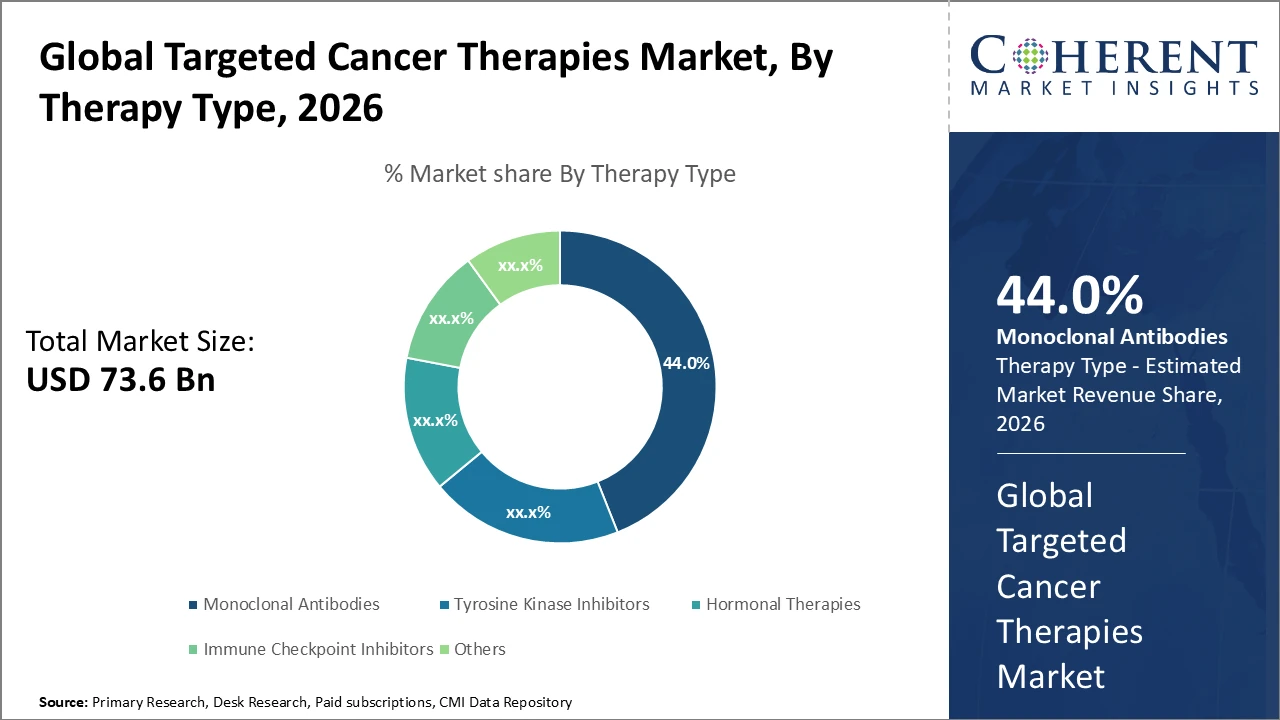
Monoclonal antibodies dominate with a 44% market share in 2026, driven by extensive clinical applications and strong pipeline growth, while tyrosine kinase inhibitors are the fastest-growing subsegment due to novel molecule launches and expanded indications.
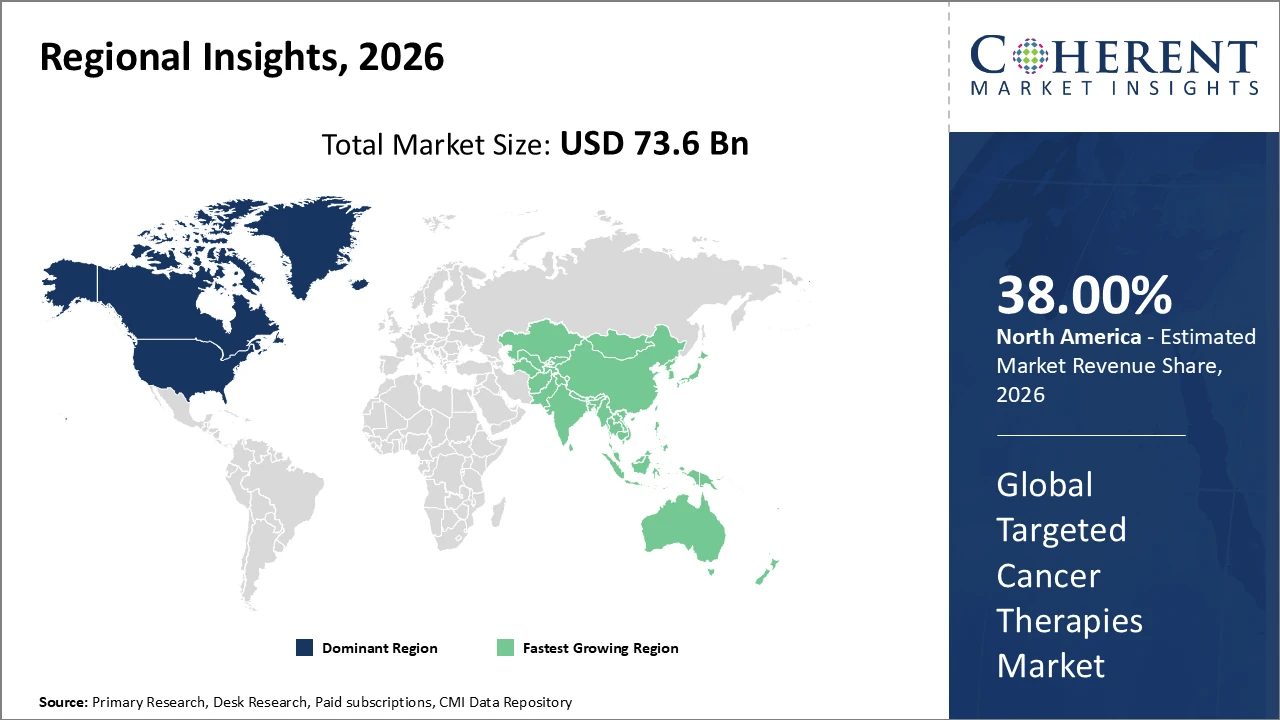
North America continues to dominate with a share of 38%, supported by robust R&D funding, well-established healthcare infrastructure, and leading pharmaceutical companies based in the U.S., while Europe offers steady opportunities due to regulatory harmonization and increasing public healthcare expenditure.
Asia Pacific is the fastest-growing regional market, with accelerated CAGR driven by expanded healthcare access, rising cancer incidence, and greater adoption of molecular diagnostics in countries such as China and India.
Targeted Cancer Therapies Market Segmentation Analysis
Targeted Cancer Therapies Market Insights, By Therapy Type
Monoclonal antibodies lead the targeted cancer therapies market, holding 44% of the share, driven by their proven efficacy and versatility in treating cancers such as HER2-positive breast cancer and CD20-positive lymphomas. Their ability to selectively target tumor cells with minimal off-target effects reinforces market dominance. Tyrosine kinase inhibitors are the fastest-growing subsegment, supported by next-generation molecules for lung and gastrointestinal cancers, offering oral administration and improved patient compliance. Hormonal therapies sustain steady demand in breast and prostate cancers, while immune checkpoint inhibitors increasingly complement targeted treatments.
Targeted Cancer Therapies Market Insights, By Cancer Type
Lung cancer dominates the targeted cancer therapies market due to its high incidence and the presence of actionable mutations like EGFR and ALK, making it highly suitable for targeted treatments. The segment continues to advance with multiple FDA-approved combination regimens addressing drug resistance. Colorectal cancer is the fastest-growing segment, driven by increased use of targeted therapies for KRAS and BRAF mutations and rising screening awareness. Breast cancer maintains a significant share, supported by HER2 and hormone receptor-targeted treatments.
Targeted Cancer Therapies Market Insights, By End User
Hospitals hold the largest share in the targeted cancer therapies market, driven by their central role in treatment delivery, advanced infrastructure for administering complex therapies, and integration with multidisciplinary oncology care. Cancer research institutes represent the fastest-growing subsegment, fueled by increasing clinical trials and translational research exploring new molecular targets and combination therapies. Diagnostic centres are also expanding, supported by the adoption of companion diagnostics and molecular profiling services essential for patient stratification and personalized treatment planning.
Targeted Cancer Therapies Market Trends
The surge in targeted therapies combining immune checkpoint inhibitors with tyrosine kinase inhibitors is a key trend, enhancing patient outcomes, particularly in non-small cell lung cancer. Clinical trials in 2025 showed a 30% improvement in progression-free survival with these combinations compared to monotherapies.
The rise of companion diagnostic tools using next-generation sequencing is transforming treatment, enabling precise biomarker identification. In 2024, over 45% of new targeted therapies were launched with associated diagnostics, emphasizing the shift toward personalized treatment protocols.
Expansion into emerging markets, particularly Asia Pacific, is reshaping the competitive landscape, driven by increased healthcare investment and regulatory reforms. China’s Center for Drug Evaluation, for example, facilitated faster drug review times in 2025.
Targeted Cancer Therapies Market Insights, By Geography
North America Targeted Cancer Therapies Market Analysis and Trends
North America dominates the targeted cancer therapies market with a share of 38% due to significant R&D investments, a well-established network of oncology hospitals, and leading pharmaceutical companies driving innovation. Government initiatives, including funding programs by the National Cancer Institute, support research and clinical trials, accelerating the introduction of novel therapies. Additionally, comprehensive reimbursement frameworks and insurance coverage enhance patient access to advanced treatments. This combination of innovation, infrastructure, and policy support solidifies North America’s leadership in the global targeted cancer therapies market.
Asia Pacific Targeted Cancer Therapies Market Analysis and Trends
The Asia-Pacific region is experiencing the fastest growth in the targeted cancer therapies market, with a projected CAGR exceeding 12% during the forecast period. This growth is driven by rising cancer incidence, expanding healthcare infrastructure, and increasing awareness of advanced treatment options. Countries such as China and India are leading adoption of precision medicine, supported by the development of local manufacturing facilities and strategic market entry by multinational pharmaceutical companies. Government initiatives, improving reimbursement frameworks, and the integration of molecular diagnostics further accelerate market penetration, positioning the region as a key growth hub in the global targeted cancer therapies landscape.
Targeted Cancer Therapies Market Outlook for Key Countries
USA Targeted Cancer Therapies Market Analysis and Trends
The U.S. targeted cancer therapies market leads globally, driven by robust clinical trial pipelines and advanced oncology care infrastructure. Major pharmaceutical and biotech companies focus on developing innovative therapies, accelerating the adoption of next-generation targeted agents for cancers such as lung and breast. In 2025, more than 60% of newly approved oncology drugs were targeted therapies, highlighting the country’s central role in shaping market trends. Supportive government programs, well-established reimbursement frameworks, and high patient awareness further strengthen market growth. These factors collectively position the U.S. as a key driver of innovation, adoption, and revenue in the global targeted cancer therapies market.
Germany Targeted Cancer Therapies Market Analysis and Trends
Germany’s targeted cancer therapies market is witnessing steady growth, driven by advanced healthcare infrastructure, strong R&D capabilities, and early adoption of innovative oncology treatments. The market is fueled by rising cancer incidence and increasing demand for personalized medicine, particularly in breast, lung, and colorectal cancers. Monoclonal antibodies and tyrosine kinase inhibitors dominate therapy segments, while companion diagnostics and molecular profiling support precision treatment approaches. Regulatory support, public healthcare funding, and collaborations between biotech firms and research institutions further accelerate market expansion. Additionally, Germany’s focus on clinical trials and translational research strengthens its position as a leading hub for targeted cancer therapy development in Europe.
Analyst Opinion
The rising adoption of precision oncology has significantly boosted market revenue. In 2025, therapies targeting HER2-positive breast cancer saw a 15% increase in market share, highlighting the shift toward biomarker-driven treatments. Integration of next-generation sequencing enabled faster patient stratification, improving treatment efficacy and market uptake.
Demand-side dynamics show that imports of novel immunomodulatory agents for targeted therapies rose 17% in North America in 2024, reflecting strong market acceptance. In Asia Pacific, demand increased by 20%, driven by wider availability and improved patient access in emerging economies.
Micro-indicators, including approvals of combination targeted regimens, supported clinical adoption. Over 30% of therapies launched in 2026 were designed to co-target multiple pathways, with growth in tyrosine kinase inhibitors and monoclonal antibodies expanding clinical diversity and revenue potential.
Supply-side developments, such as enhanced manufacturing capacity for biologics and small molecules, reduced lead times. For example, the scale-up of EGFR inhibitor production increased global capacity by 25% in 2025, improving availability and supporting market growth.
- Current Industry Events of 2026
- Market Size Estimation
- Regional Breakdown
- Competitive Landscape
- Customer Intelligence
- Segmental Analysis
- Pricing Analysis
- Key Market Drivers, Challenges & Future Trends
- Customized Insights Section
Market Scope
| Report Coverage | Details | ||
|---|---|---|---|
| Base Year: | 2025 | Market Size in 2026: | USD 73.6 billion |
| Historical Data for: | 2020 To 2024 | Forecast Period: | 2026 To 2033 |
| Forecast Period 2026 to 2033 CAGR: | 9.7% | 2033 Value Projection: | USD 132.4 billion |
| Geographies covered: |
| ||
| Segments covered: |
| ||
| Companies covered: | Roche Holdings AG, Novartis AG, Pfizer Inc., AstraZeneca Plc, Johnson & Johnson, Bayer AG, Amgen Inc., Eli Lily and Company, Sanofi S.A., AbbVie Inc. | ||
| Growth Drivers: |
| ||
Targeted Cancer Therapies Market Growth Factors
The targeted cancer therapies market is experiencing strong growth, driven by the rising global incidence of cancer, particularly lung and breast cancers, which fuels therapy demand. Increased government funding for oncology research in the U.S. and Europe has accelerated drug development and regulatory approvals. Advances in molecular and companion diagnostics have enhanced patient selection, improving treatment outcomes and expanding market share. Additionally, growing healthcare infrastructure and awareness in emerging economies support wider adoption, especially in Asia Pacific, where improved access to cancer treatments and evolving reimbursement frameworks are facilitating the uptake of advanced targeted therapies, strengthening overall market growth.
Targeted Cancer Therapies Market Development
In January 2026, MedPark Hospital launched its Genomics Laboratory to enhance genomic medicine capabilities and support precision medicine through personalized treatment strategies based on individual genetic profiles.
Key Players
Leading Companies of the Market
Roche Holdings AG
Novartis AG
Pfizer Inc.
AstraZeneca Plc
Johnson & Johnson
Bayer AG
Eli Lily and Company
Amgen Inc.
Sanofi S.A.
AbbVie Inc.
Leading companies in the targeted cancer therapies market focus on strategic collaborations and acquisitions to enhance their product portfolios. In 2025, AstraZeneca acquired a biotechnology firm specializing in ALK inhibitors, strengthening its position in lung cancer therapies and driving a 12% increase in market revenue for the segment. Similarly, Roche has emphasized a combination of in-house development and strategic partnerships for next-generation antibody-drug conjugates (ADCs), enabling faster commercialization and broader therapeutic indications. These strategies allow companies to accelerate innovation, expand clinical offerings, and maintain competitive advantages in the rapidly evolving targeted cancer therapies landscape.
Targeted Cancer Therapies Market Future Outlook
The future outlook for the Targeted Cancer Therapies Market is highly promising, driven by advances in precision medicine and molecular diagnostics. Increasing understanding of genetic and protein biomarkers enables the development of highly specific therapies, reducing side effects and improving patient outcomes. Growth is expected across oncology segments, including solid tumors and hematologic cancers, fueled by rising cancer incidence and demand for personalized treatments. Innovations such as bispecific antibodies, next-generation CAR-T therapies, and combination regimens are likely to expand therapeutic options. Additionally, global healthcare investments, regulatory support, and collaborations between biotech firms and research institutions will accelerate market expansion over the next decade.
Targeted Cancer Therapies Market Historical Analysis
The Targeted Cancer Therapies Market is expected to grow significantly in the coming years, driven by advancements in precision medicine and biomarker-driven treatments. Rising cancer prevalence worldwide, coupled with increasing adoption of personalized therapies, is fueling demand across oncology segments. Innovations such as bispecific antibodies, antibody-drug conjugates, and next-generation CAR-T therapies are expanding treatment options, improving efficacy, and reducing side effects. Additionally, supportive regulatory frameworks, increased research funding, and strategic collaborations between pharmaceutical companies and biotech firms are accelerating product development. Growing awareness among patients and healthcare providers about targeted therapies further reinforces the market’s long-term growth potential.
Sources
Primary Research Interviews:
Oncologists, hematologists, and clinical researchers involved in cancer treatment and drug development.
R&D managers, molecular biologists, and product developers from companies manufacturing targeted cancer therapies, including monoclonal antibodies, small molecule inhibitors, and CAR-T therapies.
Industry experts from biotech firms, pharmaceutical companies, and diagnostics providers focused on personalized oncology and immunotherapy solutions.
Magazines:
Cancer Therapy Advisor – Updates on targeted therapy innovations, clinical trial results, and treatment guidelines.
Pharmaceutical Technology – Insights on drug development, formulation trends, and regulatory developments in oncology therapeutics.
Oncology Times – Coverage of emerging therapies, clinical case studies, and market trends in cancer treatment.
Journals:
Journal of Clinical Oncology – Research on efficacy, safety, and clinical outcomes of targeted cancer therapies.
Cancer Research – Studies on molecular pathways, biomarkers, and mechanisms of drug action.
The Lancet Oncology – Insights on clinical trials, novel therapeutics, and comparative effectiveness studies.
Newspapers:
The Wall Street Journal – Company strategies, mergers, and investments in oncology and biotech sectors.
Financial Times – Global healthcare spending, regulatory updates, and trends in pharmaceutical innovation.
Reuters – News on drug approvals, product launches, and technological advancements in cancer therapies.
Bloomberg – Market analysis, corporate performance, and strategic developments in the pharmaceutical and biotech industries.
Associations:
American Society of Clinical Oncology (ASCO) – Guidelines, clinical trial updates, and research resources for cancer treatments.
European Society for Medical Oncology (ESMO) – Recommendations on targeted therapies, treatment protocols, and market insights.
International Association for Cancer Research (IACR) – Global research initiatives, standards, and collaboration opportunities in oncology.
Get access to 250+ pages report
Every segment, forecast, competitor profile and data table behind the analysis above — available for instant download.
- ESOMAR Member
- ISO 9001:2015 Certified
- D-U-N-S Registered
- GDPR & CCPA Compliant
Missing comfort of reading report in your local language? Find your preferred language:
Transform your Strategy with Exclusive Trending Reports
Frequently Asked Questions
Dominant players include Roche Holding AG, Novartis AG, Pfizer Inc., and AstraZeneca plc. These companies generate significant market revenue through innovative drug pipelines, strategic acquisitions, and global distribution networks.
The market is projected to grow from USD 73.6 billion in 2026 to USD 132.4 billion by 2033, at a CAGR of 9.7%, driven by advances in personalized medicine and expanding therapeutic applications.
Hospitals remain the primary end-users due to their role in administering complex therapies, while cancer research institutes and diagnostic centers are rapidly expanding, fueled by increasing clinical trials and adoption of precision medicine.
Trends include integration of AI in drug discovery, wider adoption of combination regimens, expansion into rare cancers, and increased use of liquid biopsy technologies to enhance personalized treatment approaches.
The competitive landscape is driven by innovation, strategic partnerships, and geographic expansion. Challenges include high development costs, complex regulatory requirements, and disparities in access to therapies in emerging regions.
Companies frequently use collaborations, licensing agreements, and mergers and acquisitions to expand portfolios. Investments in companion diagnostics and real-world evidence studies are also key to demonstrating treatment efficacy and supporting market adoption.