

Amniotic Membrane Market Size and Forecast – 2026 to 2033
Amniotic Membrane Market is estimated to be valued at USD 5.23 Bn in 2026 and is expected to reach USD 12.46 Bn in 2033, exhibiting a compound annual growth rate (CAGR) of 13.2% from 2026 to 2033.
Key Takeaways
- By Product Types, Amniotic Membranes acquired the prominent share of 68.3% in 2026 as rising prevalence of chronic wounds.
- By Application, Ophthalmology holds the largest market share in 2026 owing to its increasing prevalence of ocular disorders.
- By End User, Hospital disease dominates the overall market share in 2026 owing to the diverse medical applications across specialties.
- By Region, North America disease dominates the overall market with an estimated share of 36% in 2026 owing to its advanced healthcare infrastructure.
Market Overview
The Amniotic Membrane Market is rapidly expanding as more healthcare providers apply it in wound care, ophthalmology, and regenerative medicine. Its unique anti-inflammatory and healing properties help treat chronic wounds and ocular conditions effectively. Improvements in processing techniques and greater adoption by hospitals and surgical centers are driving this growth. Additionally, increasing awareness of its benefits and wider use in emerging markets are boosting the global demand for amniotic membrane products.
Current Events and their Impact on the Amniotic Membrane Market
Current Events | Description and its impact |
Economic and Healthcare Funding Trends |
|
Technological and Scientific Advancements |
|
Societal and Demographic Trends |
|
End-user Feedback and Unmet Needs in the Amniotic Membrane Market
- Effectiveness and Healing Outcomes: End-users often highlight variability in healing times and inconsistent clinical outcomes with existing amniotic membrane products. Many seek enhanced regenerative properties to improve tissue integration and reduce complications, especially in complex wound or ocular cases, emphasizing the need for more reliable and predictable healing support.
- Ease of Use and Handling: Clinicians report challenges in product preparation and application, noting that some membranes are difficult to handle due to fragility or storage conditions. They express a need for more user-friendly, ready-to-use formats that streamline surgical workflows and minimize preparation time without compromising membrane integrity.
- Product Availability and Accessibility: End-users in diverse healthcare settings experience limited access to high-quality amniotic membranes, often due to supply chain constraints or high costs. There is demand for more affordable and widely available options, especially in emerging markets and smaller clinics where resource limitations are significant.
- Current Industry Events of 2026
- Market Size Estimation
- Regional Breakdown
- Competitive Landscape
- Customer Intelligence
- Segmental Analysis
- Pricing Analysis
- Key Market Drivers, Challenges & Future Trends
- Customized Insights Section
Segmental Insights
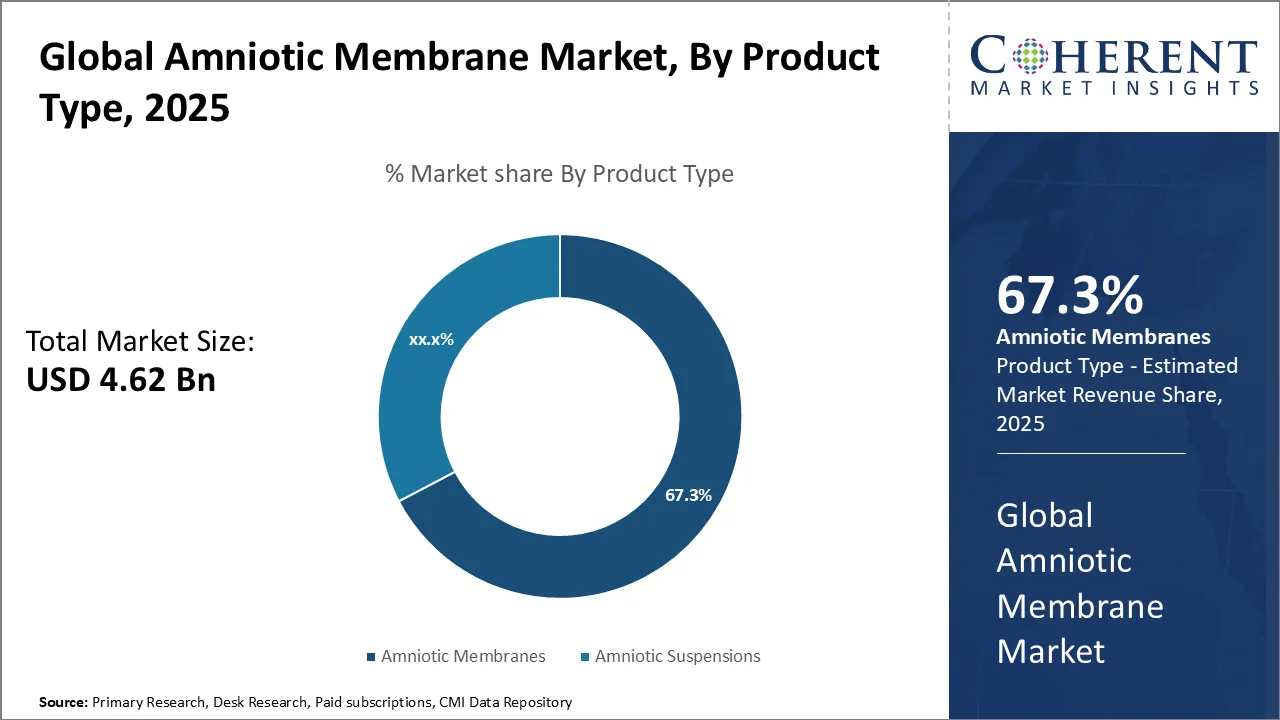
Amniotic Membrane Market Insights, By Product Type: Amniotic Membranes contribute the highest share of the market owing to its growing demand in ophthalmology
Amniotic Membranes acquired the prominent share of 68.3% in 2026. The rising number of chronic wounds and ocular disorders pushes the demand for effective treatments. Improvements in preservation and processing techniques increase product quality and usability. Healthcare providers adopt amniotic membranes more widely due to their expanding applications in regenerative medicine and surgeries. Additionally, medical professionals and patients are becoming more aware of its benefits, and increased healthcare investments in emerging markets further boost the global demand for these products. For instance, in January 2025, BioStem Technologies announced the launch of the BR-AM-DFU (BioREtain® Amniotic Membrane - Diabetic Foot Ulcers) clinical trial to evaluate the effectiveness of Vendaje® in treating patients with non-healing diabetic foot ulcers. This is further proliferating the amniotic membrane market demand.
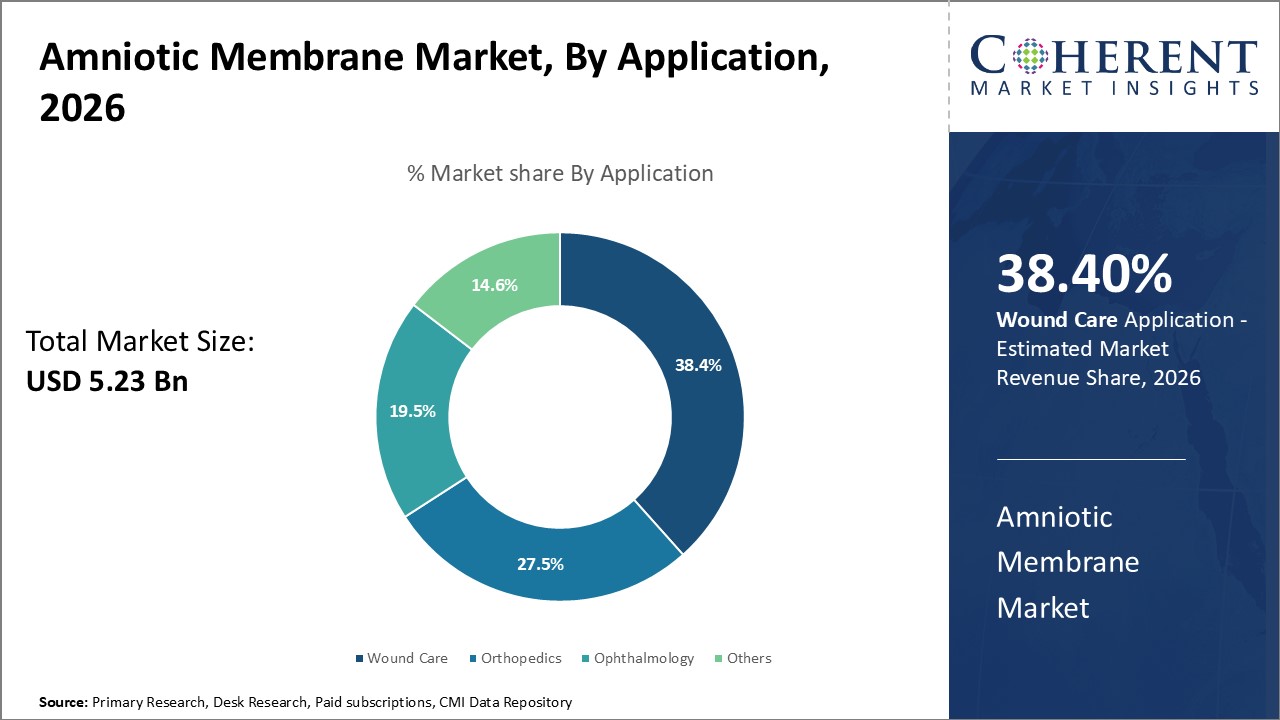
Amniotic Membrane Market Insights, By Application: Ophthalmology contributes the highest share of the market owing to its expanding clinical applications
The ophthalmology segment in the amniotic membrane market grows as more patients experience eye-related health issues like corneal injuries and dry eye syndrome. Healthcare providers prefer the membrane for ocular surface repair because of its natural healing and anti-scarring properties. Advances in technology have enhanced the preservation and availability of these membranes, promoting their use in numerous eye surgeries. Additionally, increasing patient awareness and the broadening scope of clinical applications drive the greater adoption of amniotic membrane products in ophthalmic care.
In May 2025, Topcon Healthcare launched the Institute of Digital Health (IDHea) to advance artificial intelligence (AI) research and digital health innovation. The company also formed a strategic partnership with Moorfields Eye Hospital NHS Foundation Trust and the UCL Institute of Ophthalmology (IoO) to establish Cascader Limited.
Amniotic Membrane Market Insights, By End User: Hospital contributes the highest share of the market owing to its enhanced patient outcomes and cost efficiency
Hospitals drive the amniotic membrane market by using these membranes across multiple medical specialties such as ophthalmology, wound care, and surgery. They value amniotic membranes for their ability to speed up patient recovery and minimize complications. Healthcare professionals widely adopt these membranes because they work well with advanced surgical techniques and deliver proven results. Moreover, hospitals actively focus on improving treatment outcomes and conducting clinical research, which further increases the demand for amniotic membrane products in medical facilities. For instance, in February 2025, OhioHealth collaborated with Lifeline of Ohio to extend the Placenta Donation Program to patients throughout its hospital system. Lifeline of Ohio’s program enables expectant mothers with scheduled C-section deliveries to donate their placenta, umbilical cord, and amniotic membrane, further enhancing the amniotic membrane market share.
Regional Insights
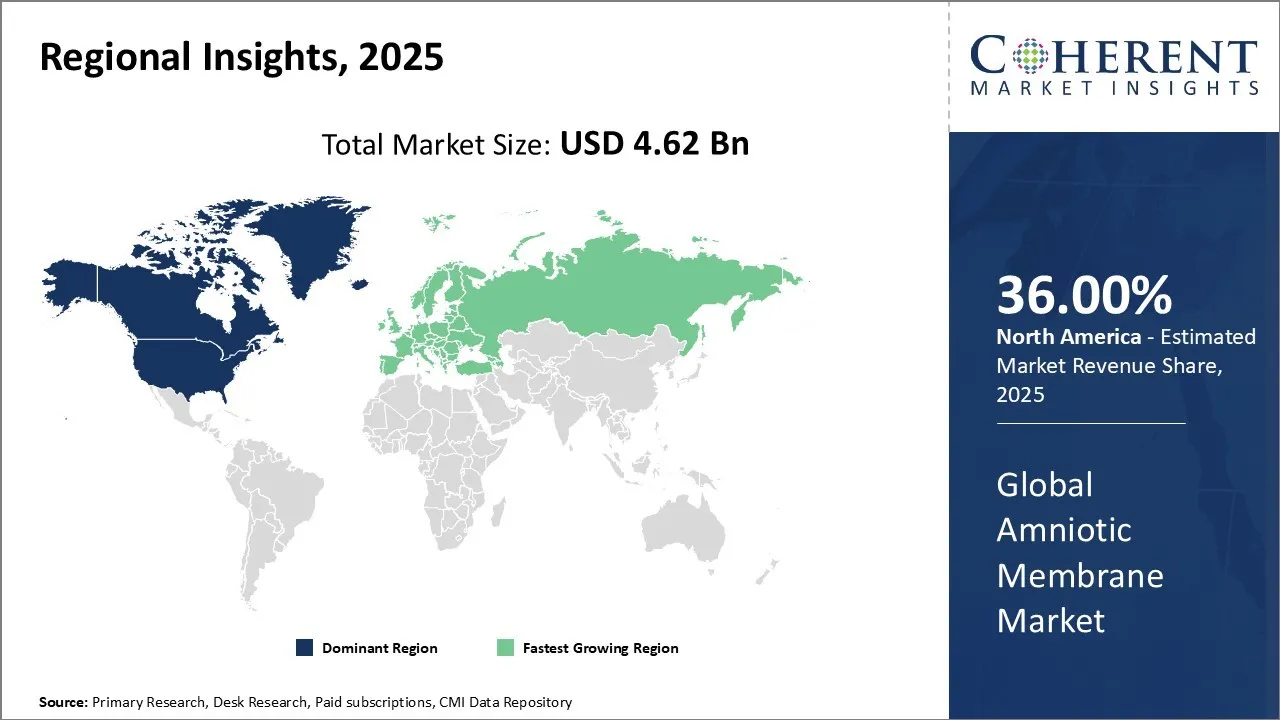
North America Amniotic Membrane Market Trends
North America disease dominates the overall market with an estimated share of 36.00% in 2026. Strong healthcare infrastructure and ongoing innovation in regenerative therapies shape North America’s amniotic membrane market. Healthcare providers increasingly use amniotic membranes to treat chronic wounds, eye disorders, and for surgical purposes. Regulatory agencies support product adoption through clear guidelines and favorable reimbursement policies. Leading research institutions actively develop new applications, fueling market growth. As healthcare professionals and patients become more aware of the benefits, demand rises, establishing North America as a major hub for amniotic membrane technologies. For instance, in June 2026, in Las Vegas, New Horizon Medical Solutions expanded its Precise Bioscience product portfolio by launching AdvoGraft One and AdvoGraft Membrane Dual. These natural amniotic membrane-based wound care solutions come with CMS-approved Q codes and offer billing and reimbursement pathways for healthcare providers and payers, now available in the market.
Europe Amniotic Membrane Market Trends
The growing demand for advanced wound care and ophthalmic treatments drives Europe’s amniotic membrane market. Healthcare providers actively use amniotic membranes for their ability to promote tissue regeneration and reduce inflammation. Governments support innovation and product development through initiatives, while strong research collaborations across countries accelerate progress. Clinicians and patients increasingly recognize the benefits of amniotic membranes, boosting adoption rates. The expansion of specialized medical centers also reinforces Europe’s strong position in the amniotic membrane market.
United States Amniotic Membrane Market Trends
Innovative regenerative therapies and advanced surgical applications position the United States as a leader in the amniotic membrane market. Hospitals and clinics actively use amniotic membranes to improve healing for chronic wounds and eye conditions. Regulatory bodies provide strong support, and favorable reimbursement policies accelerate product adoption. Prominent research institutions continuously develop new applications and enhanced formulations. Furthermore, growing awareness among healthcare professionals and patients drives consistent growth and wider acceptance of amniotic membrane products throughout the country. For instance, in Miami, VIVEX Biologics, Inc., a leading regenerative medicine company focused on naturally sourced treatments, has launched VIAGENEX™—a line of amniotic allografts processed to preserve the natural mechanical properties of amniotic tissue along with its rich supply of extracellular matrix, growth factors, and cytokines.
India Amniotic Membrane Market Trends
The India amniotic membrane market is rapidly evolving as more people recognize its therapeutic benefits in wound healing and ophthalmic surgeries. The increasing prevalence of chronic wounds and eye disorders is driving demand for advanced, biocompatible treatment options. Innovations in processing techniques are enhancing membrane quality and extending shelf life, making these products more accessible. Government support for regenerative medicine and growing adoption in hospitals and clinics are accelerating market growth, though high costs and a shortage of skilled professionals continue to pose challenges. For instance, in August 2026, Dr. Agarwal’s Eye Hospital has launched the Wavelight® EX500 Contoura Excimer Laser in Bengaluru. By adding Contoura Vision, the hospital embraces a broader ophthalmology trend of scaling technology-driven precision treatments selectively, balancing advanced care with cost and accessibility considerations.
Market Report Scope
Amniotic Membrane Market Report Coverage
| Report Coverage | Details | ||
|---|---|---|---|
| Base Year: | 2025 | Market Size in 2026: | USD 5.23 Bn |
| Historical Data for: | 2020 To 2024 | Forecast Period: | 2026 To 2033 |
| Forecast Period 2026 to 2033 CAGR: | 13.2% | 2033 Value Projection: | USD 12.46 Bn |
| Geographies covered: |
| ||
| Segments covered: |
| ||
| Companies covered: | Smith & Nephew, Applied Biologics, Organogenesis Holdings Inc., Osiris Therapeutics, Inc., Alliqua BioMedical, Inc., Amnio Technology, LLC, Next Biosciences, Integra LifeSciences, MiMedx, LifeCell International, Human Regenerative Technologies, LLC, Amniox Medical, Inc, Skye Biologics Inc., Wright Medical, TissueTech, Katena Products, Inc., NuVision Biotherapies, Surgenex, and Ventris Medical | ||
| Growth Drivers: |
| ||
| Restraints & Challenges: |
| ||
Amniotic Membrane Market Trend
- Advancements in Preservation Technologies
Recent trends emphasize innovation in preservation methods, such as cryopreservation and dehydration, enhancing the shelf-life and bioactivity of amniotic membranes. These advancements help maintain the membrane’s natural regenerative properties, making the products more effective for a broader range of clinical applications. Improved preservation also supports easier storage and transportation, enabling wider adoption in both developed and emerging healthcare markets, and driving growth through enhanced product stability and convenience.
Amniotic Membrane Market Opportunity
- Growing Demand in Cosmetic and Aesthetic Procedures
The cosmetic industry’s expanding use of amniotic membranes in skin rejuvenation, scar reduction, and anti-aging treatments offers new revenue streams. Consumers increasingly seek minimally invasive, natural regenerative therapies with faster recovery. This demand encourages development of specialized products targeting dermatology and aesthetic surgery, positioning manufacturers to tap into lucrative niche markets driven by rising awareness of the benefits of biologic-based cosmetic interventions.
Amniotic Membrane Market News
- In July 2025, BioLab Holdings, Inc., a Phoenix-based medical manufacturer specializing in wound healing and regenerative therapies, launched a multicenter hybrid platform trial to evaluate the clinical effectiveness of its amnion-based wound care products in treating patients with hard-to-heal diabetic foot ulcers (DFUs) and venous leg ulcers (VLUs).
- In July 2024, BioTissue, Inc. has added its latest cryopreserved amniotic membrane (CAM) solution, CAM360 AmnioGraft (AG), to its product lineup. The new offering is designed to treat dry eye disease (DED) and other ocular surface conditions.
- In July 2024, Axogen (Nasdaq: AXGN) today announced the launch of Avive+ Soft Tissue Matrix. Designed as a soft tissue barrier, Avive+ is a resorbable, multi-layer amniotic membrane allograft that offers temporary protection and tissue separation to support peripheral nerve healing.
Analyst Opinion (Expert Opinion)
- The amniotic membrane market is on the cusp of a paradigm shift, driven less by incremental growth and more by disruptive innovation in regenerative medicine. Despite the clinical promise, adoption remains hindered by fragmented product standardization and inconsistent clinical outcomes, which I argue are the primary barriers stalling broader utilization.
- Moreover, emerging applications in orthopedics and chronic wound care, where amniotic membranes could revolutionize treatment protocols, remain in nascent stages largely due to lack of robust, large-scale clinical trials. For example, a 2023 pilot study at Johns Hopkins demonstrated a 30% improvement in diabetic foot ulcer closure using amniotic membranes combined with stem cell therapies, but without broader validation, payers and providers remain cautious.
- From an innovation standpoint, companies investing in hybrid technologies that combine amniotic membranes with bioactive scaffolds and stem cells will redefine market leadership. CryoTek’s recent launch of a cryopreserved, ready-to-use membrane product exemplifies how addressing storage and handling complexities can drive clinical adoption and operational efficiency.
Speak to the analyst
Want personalized insights?
Take the findings above to one of our principal consultants, or have the report rebuilt around the segments, geographies and competitors you actually track.
Market Segmentation
- By Product Type (Revenue, USD Bn, 2021 - 2033)
- Amniotic Membranes (Cryopreserved Amniotic Membranes, Dehydrated Amniotic Membranes)
- Amniotic Suspensions
- By Application (Revenue, USD Bn, 2021 - 2033)
- Wound Care
- Orthopedics
- Ophthalmology
- Others
- By End User (Revenue, USD Bn, 2021 - 2033)
- Hospital
- Ambulatory Surgical Centers
- Specialty Clinics
- Research and Academic Institutes
- By Geography (Revenue, USD Bn, 2021 - 2033)
- North America
- U.S.
- Canada
- Latin America
- Brazil
- Argentina
- Mexico
- Rest of Latin America
- Europe
- Germany
- U.K.
- Spain
- France
- Italy
- Russia
- Rest of Europe
- Asia Pacific
- China
- India
- Japan
- Australia
- South Korea
- ASEAN
- Rest of Asia Pacific
- Middle East
- GCC Countries
- Israel
- Rest of Middle East
- Africa
- South Africa
- North Africa
- Central Africa
- North America
- Key Players Insights
- Smith & Nephew
- Applied Biologics
- Organogenesis Holdings Inc.
- Osiris Therapeutics, Inc.
- Alliqua BioMedical, Inc.
- Amnio Technology, LLC
- Next Biosciences
- Integra LifeSciences
- MiMedx
- LifeCell International
- Human Regenerative Technologies, LLC
- Amniox Medical, Inc.
- Skye Biologics Inc.
- Wright Medical
- TissueTech
- Katena Products, Inc.
- NuVision Biotherapies
- Surgenex
- Ventris Medical
Sources
Primary Research Interviews
- Leading clinicians and surgeons specializing in ophthalmology, wound care, and regenerative medicine
- Product development heads from biotechnology and medical device firms
- Hospital procurement managers and supply chain specialists
- Academic researchers focused on tissue engineering and regenerative therapies
Databases
- PubMed
- ClinicalTrials.gov
- FDA Device Approvals Database
- WHO Global Health Observatory
Magazines
- BioTechniques
- Medical Device and Diagnostic Industry (MD+DI)
- Advanced Wound Care Magazine
Journals
- The Ocular Surface
- Journal of Tissue Engineering and Regenerative Medicine
- Wound Repair and Regeneration
- Stem Cell Research & Therapy
Newspapers
- The New York Times – Health Section
- The Guardian – Science & Technology
- Washington Post – Health & Science
Associations
- American Academy of Ophthalmology (AAO)
- Wound Healing Society (WHS)
- International Society for Stem Cell Research (ISSCR)
Public Domain Sources
- NIH (National Institutes of Health) Reports and Publications
- CDC (Centers for Disease Control and Prevention) Data Sets
- WHO (World Health Organization) Publications
Proprietary Elements
- CMI Data Analytics Tool, and Proprietary CMI Existing Repository of information for last 8 years
Get access to 250+ pages report
Every segment, forecast, competitor profile and data table behind the analysis above — available for instant download.
- ESOMAR Member
- ISO 9001:2015 Certified
- D-U-N-S Registered
- GDPR & CCPA Compliant
Missing comfort of reading report in your local language? Find your preferred language:
Transform your Strategy with Exclusive Trending Reports
Frequently Asked Questions
The Amniotic Membrane Market is estimated to be valued at USD 5.23 Bn in 2026, and is expected to reach USD 12.46 Bn by 2033.
The CAGR of the Amniotic Membrane Market is projected to be 13.2% from 2026 to 2033.
Increasing product launches are expected to drive the market growth.
Amniotic membranes (cryopreserved amniotic membranes, dehydrated amniotic membranes) are the leading product type segment in the market.
Strict U.S. FDA regulations are expected to hinder the market over the forecast period.
Major players operating in the global amniotic membrane market are Smith & Nephew, Applied Biologics, Organogenesis Holdings Inc., Osiris Therapeutics, Inc., Alliqua BioMedical, Inc., Amnio Technology, LLC, Next Biosciences, Integra LifeSciences, MiMedx, LifeCell International, Human Regenerative Technologies, LLC, Amniox Medical, Inc, Skye Biologics Inc., Wright Medical, TissueTech, Katena Products, Inc., NuVision Biotherapies, Surgenex, and Ventris Medical.