

Global Face Oil Market Size and Forecast: 2026-2033
The Global Face Oil Market is estimated to be valued at USD 3.11 Bn in 2026 and is expected to reach USD 5.68 Bn by 2033, exhibiting a compound annual growth rate (CAGR) of 9.0% from 2026 to 2033.
Key Takeaways of the Face Oil Market
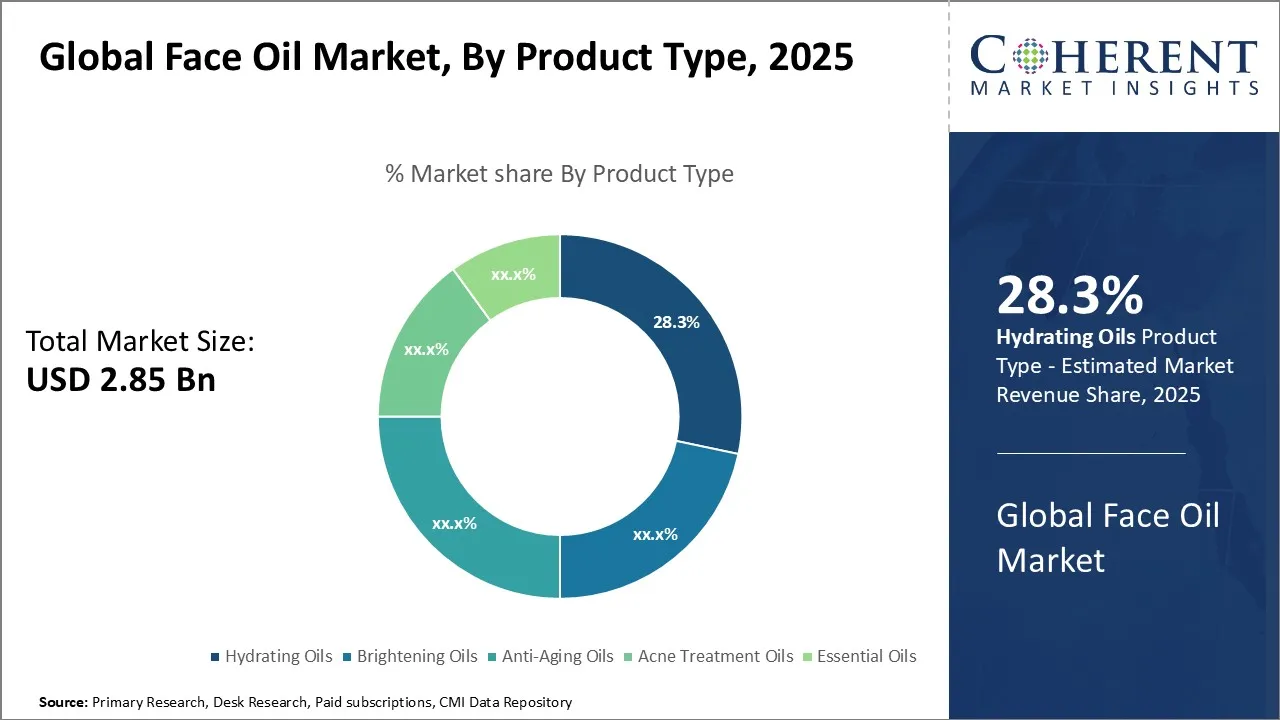
- The hydrating oils segment is expected to dominate the global face oil market in 2026, holding a 29.3% share.
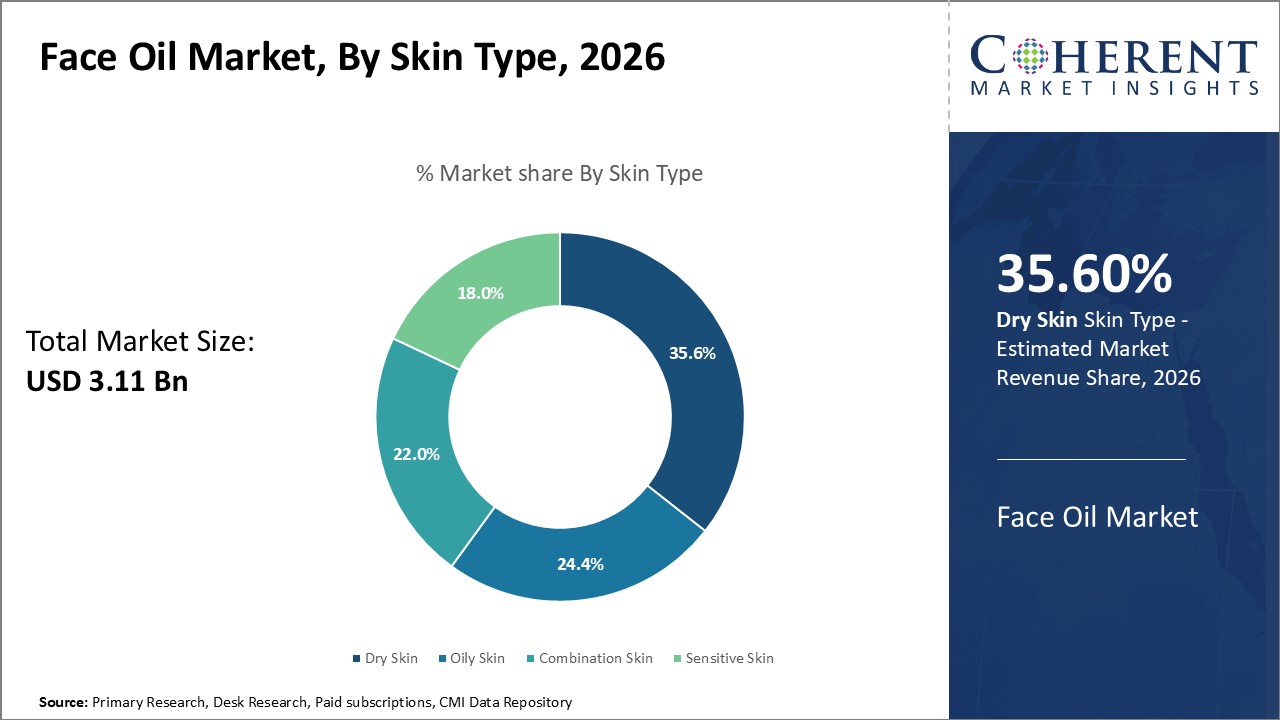
- The dry skin segment is projected to account for 35.6% of the market in 2026.
- The single oil formulations segment is set to hold a 43.8% share of the global face oil market in 2026.
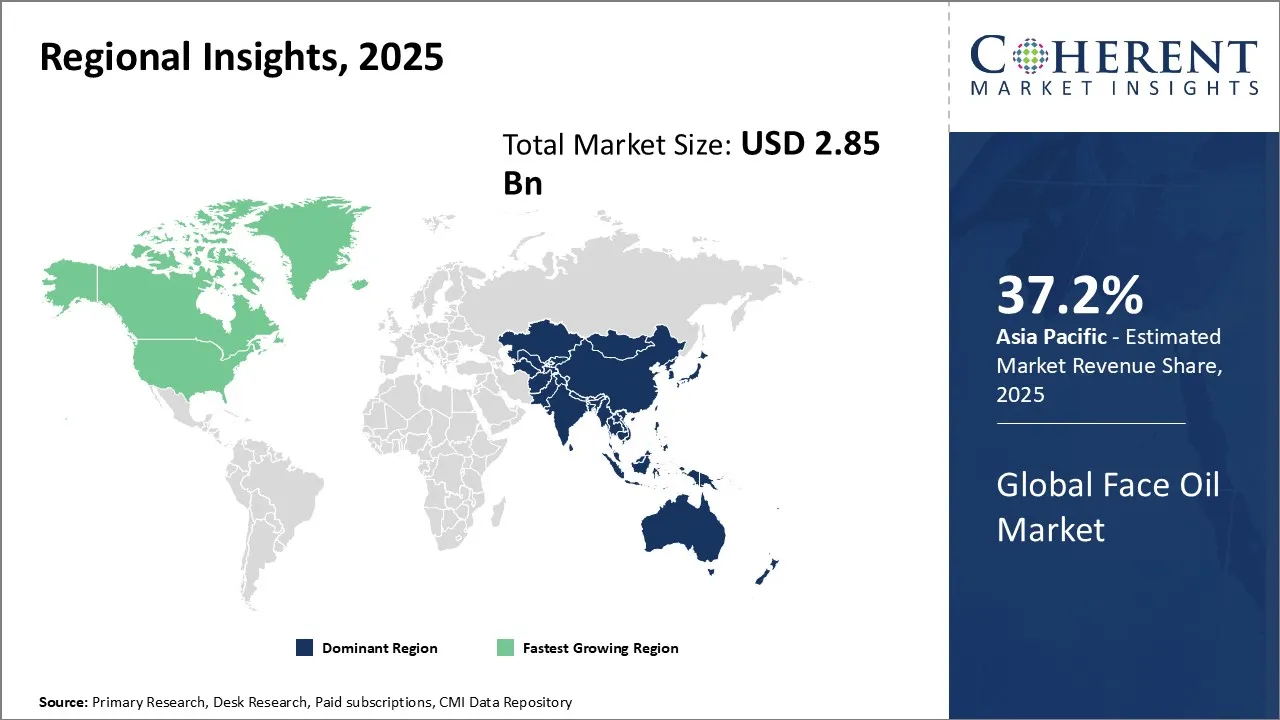
- Asia Pacific is set to lead the global face oil market in 2026 with a 37. 2% share. North America, with a 24.5% share, will be the fastest-growing region in 2026.
Market Overview
Market trends indicate a surge in demand for face oils enriched with botanical extracts and essential oil, catering to consumers seeking clean beauty solutions. Innovations in formulations targeting various skin concerns, such as acne, dryness, and sensitivity, are gaining traction. Additionally, the growing influence of social media and influencer endorsement significantly shapes consumer buying behavior, while the rise of e-commerce platforms facilitates easier access to premium and niche face oil brands, fueling sustained market momentum.
Currents Events and their Impact
Current Events | Description and its impact |
Growing Consumer Preference for Natural and Organic Skincare Products |
|
Regulatory and Sustainability Shifts |
|
Segmental Insights
- Current Industry Events of 2026
- Market Size Estimation
- Regional Breakdown
- Competitive Landscape
- Customer Intelligence
- Segmental Analysis
- Pricing Analysis
- Key Market Drivers, Challenges & Future Trends
- Customized Insights Section
Face Oil Market Insights, By Product Type - Hydrating Oils Segment Leads the Market Driven by Rising Consumer Demand for Deep Moisturization
Hydrating oils segment is expected to hold 29.3% share of the global face oil market in 2026, capturing the highest share due to mounting consumer preference for skincare products that provide intensive moisturization. The increasing awareness around the importance of maintaining skin’s hydration barrier is a primary driver. Hydrating oils offer a blend of rich emollients that deeply penetrate the skin, replenishing moisture and preventing dryness without leaving an oily residue, which appeals widely across age groups and skin concerns.
Moreover, modern consumers are gravitating towards natural and plant-based ingredients, positioning hydrating oils — often derived from ingredients like jojoba, argan, and rosehip — as favored options. These oils contain essential fatty acids and antioxidants that support skin barrier repair and improve elasticity, making them particularly appealing in regions with harsh climates where moisture loss is a prevalent issue. The versatility of hydrating oils allows them to be incorporated into different skincare routines, either as standalone moisturizers or as boosters mixed with other formulations, enhancing their market traction.
Face Oil Market Insights, By Skin Type - Dry Skin Segment Dominates Driven by Growing Focus on Targeted Skincare Solutions
Dry skin segment is expected to represent 35.6% share of the market in 2026, due to an expanding consumer base seeking specialized products to address persistent dryness and sensitivity. Dry skin requires formulations that can enhance moisture retention and create a protective barrier against environmental aggressors, a need that face oils are uniquely positioned to meet due to their occlusive and nourishing properties.
The surge in demand for dry skin-specific oils is further supported by increased awareness about skin hydration’s role in preventing premature aging and irritation. Face oils formulated for dry skin typically combine deeply moisturizing ingredients such as squalane, vitamin E, and various botanical extracts that aid in soothing inflamed patches and reducing flakiness. With prolonged exposure to urban pollution and climate changes exacerbating skin dehydration, consumers with dry skin are turning to oils as an effective restorative solution.
Face Oil Market Insights, By Formulation Type - Single Oil Formulations Segment Dominates Due to Preference via Purity and Customization Appeal
Single oil formulations segment is projected to command 43.8% share of the global face oil market in 2026, driven by increasing consumer inclination towards purity, simplicity, and personalized skincare. Single oil products are often perceived as more natural and less likely to cause adverse reactions compared to blends, making them particularly attractive to consumers sensitive to additives or artificial ingredients.
The trend toward “clean beauty” has manifested in a preference for straightforward ingredient lists, where consumers choose single oils like argan, marula, or tamanu oils based on their unique skin benefits. This customization aspect empowers consumers to select oils tailored to their specific skin concerns, whether it’s calming inflammation, boosting radiance, or providing anti-aging benefits, thereby reinforcing loyalty to single oil options.
Regional Insights
Asia Pacific Face Oil Market Analysis and Trends
The Asia Pacific region is projected to lead the market with a 37.2% share in 2026, due to a rising middle class increasingly investing in premium skincare products, coupled with a growing trend toward natural and herbal beauty solutions rooted in region-specific traditional knowledge. The expanding retail infrastructure, including omnichannel approaches integrating brick-and-mortar and digital sales, accelerates market access and penetration. Government initiatives promoting skincare awareness and stringent quality standards have improved consumer confidence.
Significant industry presence from multinational corporations like Shiseido and Amorepacific alongside regional leaders such as Innisfree and Forest Essentials drives innovation tailored to local skin types and climatic conditions. Furthermore, regional trade agreements ease cross-border product movement, ensuring a steady supply of raw materials and finished goods. Cultural emphasis on personal grooming and increasing influencer-driven marketing are additional catalysts contributing to the region’s rapid market expansion.
North America Face Oil Market Analysis and Trends
The North America region is expected to exhibit the fastest growth in the market contributing 24.5% share in 2026, driven by a sophisticated consumer base with high purchasing power and significant awareness about skincare benefits associated with natural and organic products. The well-established beauty and personal care ecosystem, including a robust distribution network of specialty retailers, e-commerce platforms, and premium salons, supports market growth and consolidation.
Additionally, stringent government regulations regarding product safety and ingredient transparency have encouraged innovation and consumer trust. Major players such as Estée Lauder Companies, Kiehl’s (a L’Oréal brand), and Clinique have cemented their presence through continuous product launches and strategic marketing campaigns focused on clean beauty. Moreover, strong trade ties facilitate the import of exotic and niche oils, enriching market variety and consumer choice. The presence of numerous startups and indie brands, combined with a culture geared towards wellness, also bolsters North America’s leadership in this market segment.
Global Face Oil Market Outlook for Key Countries
U.S. Face Oil Market Trends
The U.S. face oil market is characterized by a mature consumer base with a pronounced demand for high-efficacy and natural face oils. Leading players including Estée Lauder and Kiehl’s offer premium, often organic formulations that appeal to health-conscious consumers. The country’s robust retail landscape — from department stores to online platforms — offers convenient access to a wide range of international and domestic brands. Regulatory oversight by the FDA ensures product safety while encouraging innovation in clean and sustainable beauty. The prominence of wellness and self-care trends, coupled with significant influencer marketing, continues to fuel product adoption.
China Face Oil Market Trends
China’s rapidly expanding middle and affluent class is driving increased consumption in skincare, especially in premium and niche face oils. Domestic brands are gaining ground alongside global players like Shiseido and L’Oréal, adapting products to consumer preferences that favor light, hydrating oils catering to oily and combination skin types. The government’s push for stronger intellectual property protections and quality standards instills confidence in both consumers and manufacturers. The rise of e-commerce giants such as Tmall and JD.com facilitates broad market reach, while social commerce and Key Opinion Leader (KOL) endorsements significantly influence buying behavior.
Japan Face Oil Market Trends
Japan continues to lead the face oil market in terms of innovation and quality with an emphasis on technological advancement in skincare ingredients. Brands such as Shiseido and DHC have a strong heritage and invest substantially in R&D to develop face oils that combine traditional Japanese ingredients with cutting-edge science. The local regulatory environment incentivizes safe and eco-friendly production practices. Moreover, consumers’ preference for minimalistic skincare with multifunctional benefits keeps demand steady for lightweight, absorptive oils. Department stores and specialty beauty retailers remain key distribution channels, complemented increasingly by online sales.
India Face Oil Market Trends
India’s face oil market for face oils is shaped by deep-rooted cultural traditions of using natural oils for skincare, which modern brands are capitalizing on by blending Ayurvedic knowledge with contemporary formulations. Companies like Forest Essentials, Kama Ayurveda, and Himalaya are driving market growth by emphasizing authenticity and organic certifications. The government is boosting the natural and organic product sector through favorable policies and certification standards helps enhance consumer trust. Increasing urbanization and rising internet penetration support the rapid expansion of e-commerce platforms, enabling wider accessibility for these products from both domestic and international players.
Brazil Face Oil Market Trends
Brazil’s face oil skincare market reflects a strong emphasis on natural beauty and sustainability, appealing heavily to face oils derived from indigenous plant extracts and Amazonian ingredients. Brands such as Natura and O Boticário play a critical role by innovating with organic and eco-certified products that resonate with environmentally conscious consumers.
Supportive government initiatives promoting sustainable agribusiness and trade facilitate the sourcing and export of raw materials. Retail channels including specialty beauty stores and growing online sales platforms ensure accessibility. Moreover, Brazilian consumers often seek products that offer sun protection and hydration, increasing the demand for multifunctional face oils.
Consumer Buying Behavior for the Face Oil Market
- The consumer buying behavior in the face oil market is largely driven by increasing awareness and preference for natural, organic, and clean beauty products that promise efficacy such as deep moisturization, anti-aging, skin repair, and nourishment. Consumers are more informed and discerning, prioritizing ingredient transparency, product effectiveness, and brand reputation, especially favoring brands that demonstrate sustainable and ethical practices.
- Preference for natural and plant-based oils: Popular oils include argan, rosehip, marula, jojoba, and squalane due to their moisturizing, anti-aging, and healing properties. Cold-pressed and organic oils aligned with wellness trends appeal strongly.
- Multi-functional products: Consumers seek oils that can hydrate, provide anti-aging benefits, improve texture and radiance, and repair skin barriers, fitting into multi-step skincare routines.
- Influence of social media and influencers: Consumers rely on product reviews, beauty influencers, and dermatologist endorsements shared on Instagram, YouTube, etc., which boost product visibility and credibility.
Market Players, Key Development, and Competitive Intelligence
Key Developments
- In September 2024, Nuebiome, a biofermented skincare brand, launched a duo of anti-aging face oils. The collection includes a skin-soothing face oil and a plum botanical serum, both designed to hydrate and improve skin texture. These biocompatible formulas are optimized for pH balance and incorporate bioferment and plant-derived ingredients, marking a significant advancement in the brand's skincare offerings.
Top Strategies Followed by Global Face Oil Market Players
- Established players in the industry maintain their leadership by heavily investing in research and development (R&D) to innovate high-performance products that resonate with discerning consumers. These market leaders prioritize innovation to develop face oils with advanced formulations, incorporating natural ingredients, anti-aging properties, and multifunctional benefits that align with contemporary skincare trends.
- For instance, Estée Lauder and L'Oréal have pioneered the use of advanced anti-aging face oils, integrating natural ingredients like argan and rosehip oils. These products often incorporate multifunctional benefits, such as hydration, anti-aging, and sun protection, to meet the diverse skincare needs of modern consumers.
- Mid-level players in the global face oil market adopt a distinct approach by focusing on delivering cost-effective solutions that strike a balance between quality and affordability. Recognizing that a significant portion of consumers remains price-sensitive, these companies tailor their product portfolios to appeal to budget-conscious customers without compromising essential efficacy and safety standards. This pricing strategy helps mid-level players position themselves as accessible yet reliable alternatives to premium brands.
- For example, companies such as The Ordinary and Kiehl’s use this approach to target a more budget-conscious yet quality-seeking demographic. The Ordinary, a brand known for its affordable yet high-quality skincare, focuses on key active ingredients like rosehip oil and squalane, offering them at a fraction of the cost of premium brands.
- Small-scale players carve out a unique niche within the global face oil market by concentrating on specialized features or highly innovative products that differentiate them from larger competitors. These companies often embrace cutting-edge technologies such as biotechnology, cold-pressed extraction processes, or sustainable sourcing methods to develop formulations that cater to specific customer needs, including organic, vegan, or allergen-free products.
Market Report Scope
Face Oil Market Report Coverage
| Report Coverage | Details | ||
|---|---|---|---|
| Base Year: | 2025 | Market Size in 2026: | USD 3.11 Bn |
| Historical Data for: | 2020 To 2024 | Forecast Period: | 2026 To 2033 |
| Forecast Period 2026 to 2033 CAGR: | 9.0% | 2033 Value Projection: | USD 5.68 Bn |
| Geographies covered: |
| ||
| Segments covered: |
| ||
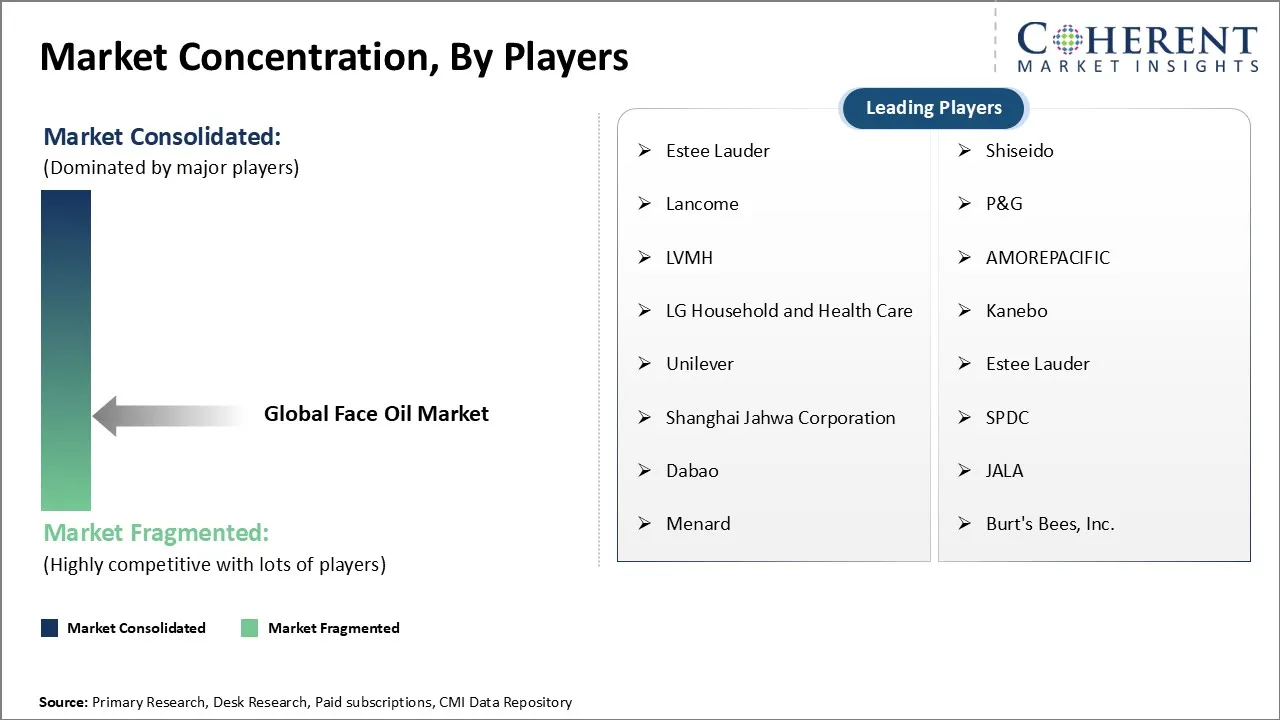
| Companies covered: | Estee Lauder, Shiseido, Lancome, P&G, LVMH, AMOREPACIFIC, LG Household and Health Care, Kanebo, Unilever, Estee Lauder, Shanghai Jahwa Corporation, SPDC, Dabao, JALA, Menard, and Burt's Bees, Inc. | ||
| Growth Drivers: |
| ||
| Restraints & Challenges: |
| ||
Face Oil Market Dynamics
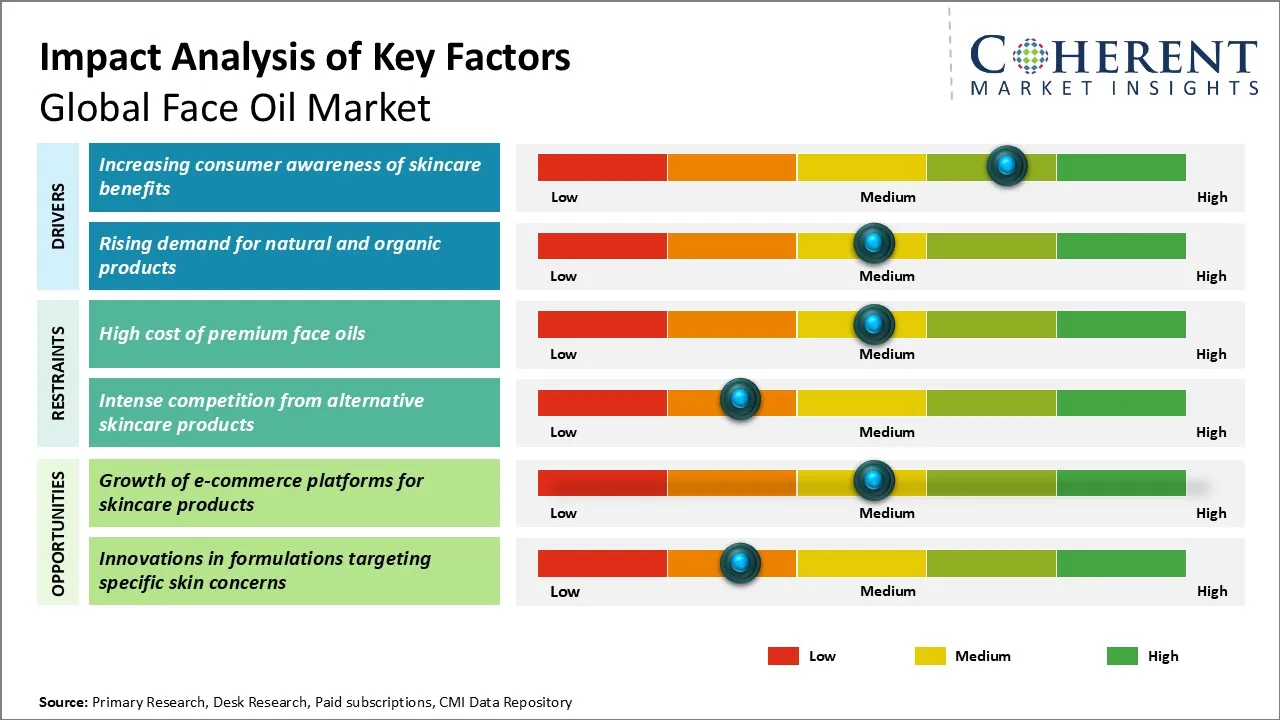
Face Oil Market Driver - Increasing Consumer Awareness of Skincare Benefits
The growing emphasis on holistic skincare and wellness has significantly contributed to increased consumer awareness regarding the benefits of face oils. Modern consumers are becoming more knowledgeable about the nourishing properties of natural oils, including their ability to hydrate, protect the skin barrier, and provide essential nutrients that enhance overall skin health. This shift is largely driven by the proliferation of beauty influencers, dermatological advice shared across digital platforms, and a stronger preference for clean and organic skincare formulations.
Their online presence and collaborations with skincare brands have educated consumers on how face oils can improve skin texture, provide deep hydration, and strengthen the skin's natural barrier. For instance, Dr. Gross's products like the C+ Collagen Oil promote anti-aging and skin protection, addressing growing demand for products that offer both wellness and beauty benefits.
Face Oil Market Opportunity - Expansion of E-Commerce Platforms for Skincare Products
The rapid growth of e-commerce platforms presents a significant opportunity for the global face oil market, transforming how consumers discover and purchase skincare products. Increasing internet penetration and smartphone adoption worldwide have propelled online shopping into mainstream consumer behavior, particularly within the beauty and personal care products in this sector. E-commerce platforms offer an extensive range of face oil products from various brands, providing consumers with the convenience of browsing, comparing, and purchasing products from the comfort of their homes.
Subscription-based e-commerce models, such as Ipsy and Birchbox, have also contributed to the accessibility of face oils. These platforms offer consumers the opportunity to discover and try new face oils on a monthly basis, often in travel-size versions. Brands featured in these subscription boxes, such as Youth to the People and Kiehl’s, have seen substantial growth due to the ability to introduce their face oil products to a targeted and engaged consumer base through e-commerce.
Analyst Opinion (Expert Opinion)
- The global face oil market is experiencing a dynamic shift, driven by the rising consumer demand for natural and multifunctional skincare products. Insights from the Global Skincare Summit (2023) and the Cosmetics & Beauty Expo (2022) highlighted the increasing popularity of face oils enriched with botanical ingredients, such as jojoba and rosehip, which are touted for their nourishing properties.
- Brands like Kiehl’s and The Ordinary are at the forefront, launching innovative formulations that cater to diverse skin types and concerns. For instance, Kiehl’s recent release of a vitamin C-infused oil showcases a blend of efficacy and luxury, appealing to health-conscious consumers. Furthermore, discussions at these events emphasized the role of clean beauty trends, with a notable shift towards eco-friendly packaging and transparent ingredient sourcing.
- As more consumers prioritize holistic skincare routines that emphasize wellness, companies that focus on education and product effectiveness will likely thrive. The market will increasingly reward brands that not only deliver exceptional results but also align with sustainability values. Ultimately, the future of the global face oil market hinges on innovation, quality, and the ability to foster consumer trust.
Speak to the analyst
Want personalized insights?
Take the findings above to one of our principal consultants, or have the report rebuilt around the segments, geographies and competitors you actually track.
Market Segmentation
- Product Type Insights (Revenue, USD Bn, 2021 - 2033)
- Hydrating Oils
- Brightening Oils
- Anti-Aging Oils
- Acne Treatment Oils
- Essential Oils
- Skin Type Insights (Revenue, USD Bn, 2021 - 2033)
- Dry Skin
- Oily Skin
- Combination Skin
- Sensitive Skin
- Formulation Type Insights (Revenue, USD Bn, 2021 - 2033)
- Single Oil Formulations
- Blend Formulations
- Serum-Oil Hybrids
- Moisturizing Oils
- Distribution Channel Insights (Revenue, USD Bn, 2021 - 2033)
- Online Retail
- Specialty Stores
- Supermarkets/Hypermarkets
- Others
- Regional Insights (Revenue, USD Bn, 2021 - 2033)
- North America
- U.S.
- Canada
- Latin America
- Brazil
- Argentina
- Mexico
- Rest of Latin America
- Europe
- Germany
- U.K.
- Spain
- France
- Italy
- Russia
- Rest of Europe
- Asia Pacific
- China
- India
- Japan
- Australia
- South Korea
- ASEAN
- Rest of Asia Pacific
- Middle East
- GCC Countries
- Israel
- Rest of Middle East
- Africa
- South Africa
- North Africa
- Central Africa
- North America
- Key Players Insights
- Estee Lauder
- Shiseido
- Lancome
- P&G
- LVMH
- AMOREPACIFIC
- LG Household and Health Care
- Kanebo
- Unilever
- Estee Lauder
- Shanghai Jahwa Corporation
- SPDC
- Dabao
- JALA
- Menard
- Burt's Bees, Inc.
Sources
Primary Research Interviews
- R&D Director – Leading Global Face Oil Manufacturer
- Procurement Manager – Major Skincare Product Retailer
- Product Development Head – Well-Known Face Oil Brand
- Sustainability Manager – Beauty Product Certification Body
Stakeholders
- Manufacturers of Face Oils
- End-use Sectors
- Skincare and Beauty Brands focusing on face oils and serums
- Luxury and Natural Cosmetic Product Lines
- Regulatory & Certification Bodies related to cosmetics and skincare
- E-commerce Platforms and Retailers specializing in beauty products
- Technology Integration Players AI-based personalization for skincare products
Databases
- UN Comtrade Database
- India Import Export (EXIM) Database
Magazines
- Beauty Industry Review – Trends in natural and organic face oils
- Cosmetic Science Weekly – Innovations in oil-based skincare
- Global Skincare Insights – Consumer trends in facial oils
- Natural Beauty Journal – Market updates and growth opportunities in face oils
- The Skincare Guide – Industry updates on lotions, serums, and oils
Journals
- International Journal of Cosmetic Science – Formulation trends in facial oils
- Journal of Dermatological Treatment – Effects of natural oils on skin health
- Journal of Cosmetic Dermatology – Consumer efficacy studies on face oils
- Advances in Skincare Research – Bioactive components in botanical oils
- Food and Cosmetic Toxicology – Safety assessments of oils used in cosmetics
Newspapers
- The Financial Times – Market growth of natural and synthetic face oils
- The Guardian – Consumer preferences in skincare and facial oils
- Asia Beauty Journal – Growth of face oil consumption in Asia Pacific
- European Cosmetics News – Regulations and policies on cosmetic oils
- The New York Times – Trends in luxury and wellness skincare
Associations
- Personal Care Products Council (PCPC)
- International Federation of the Societies of Cosmetic Chemists (IFSCC)
- Natural Products Association (NPA)
- Cosmetic, Toiletry and Perfumery Association (CTPA)
- European Cosmetics Association (Cosmetics Europe)
Public Domain Sources
- FDA – Guidelines for cosmetic products including face oils
- European Commission – Cosmetics Regulation and ingredient guidelines
- World Health Organization – Safety standards for cosmetic ingredients
Proprietary Elements
- CMI Data Analytics Tool, Proprietary CMI Existing Repository of information for last 8 years.
Get access to 250+ pages report
Every segment, forecast, competitor profile and data table behind the analysis above — available for instant download.
- ESOMAR Member
- ISO 9001:2015 Certified
- D-U-N-S Registered
- GDPR & CCPA Compliant
Missing comfort of reading report in your local language? Find your preferred language:
Transform your Strategy with Exclusive Trending Reports
Frequently Asked Questions
The global face oil market is estimated to be valued at USD 3.11 Bn and is projected to reach USD 5.68 Bn in 2033.
The CAGR of global face oil market is projected to be 9.0% from 2026 to 2033.
To start a face oil business, conduct market research, create a unique product line, establish a brand, source high-quality ingredients, and set up manufacturing and distribution channels.
Increasing consumer awareness of skincare benefits and rising demand for natural and organic products are the major factors driving the growth of the global face oil market.
High cost of premium face oils and intense competition from alternative skincare products are the major factors hampering the growth of the global face oil market.
In terms of product type, hydrating oils segment is estimated to dominate the market revenue share in 2026.
Estee Lauder, Shiseido, Lancome, P&G, LVMH, AMOREPACIFIC, LG Household and Health Care, Kanebo, Unilever, Estee Lauder, Shanghai Jahwa Corporation, SPDC, Dabao, JALA, Menard, and Burt's Bees, Inc. are the major players.