

Global Foot Care Products Market Size and Forecast – 2026-2033
The global foot care products market is estimated to be valued at USD 8.95 Bn in 2026 and is expected to reach USD 14.75 Bn by 2033, exhibiting a compound annual growth rate (CAGR) of 7.4% from 2026 to 2033.
Key Takeaways of the Foot Care Products Market
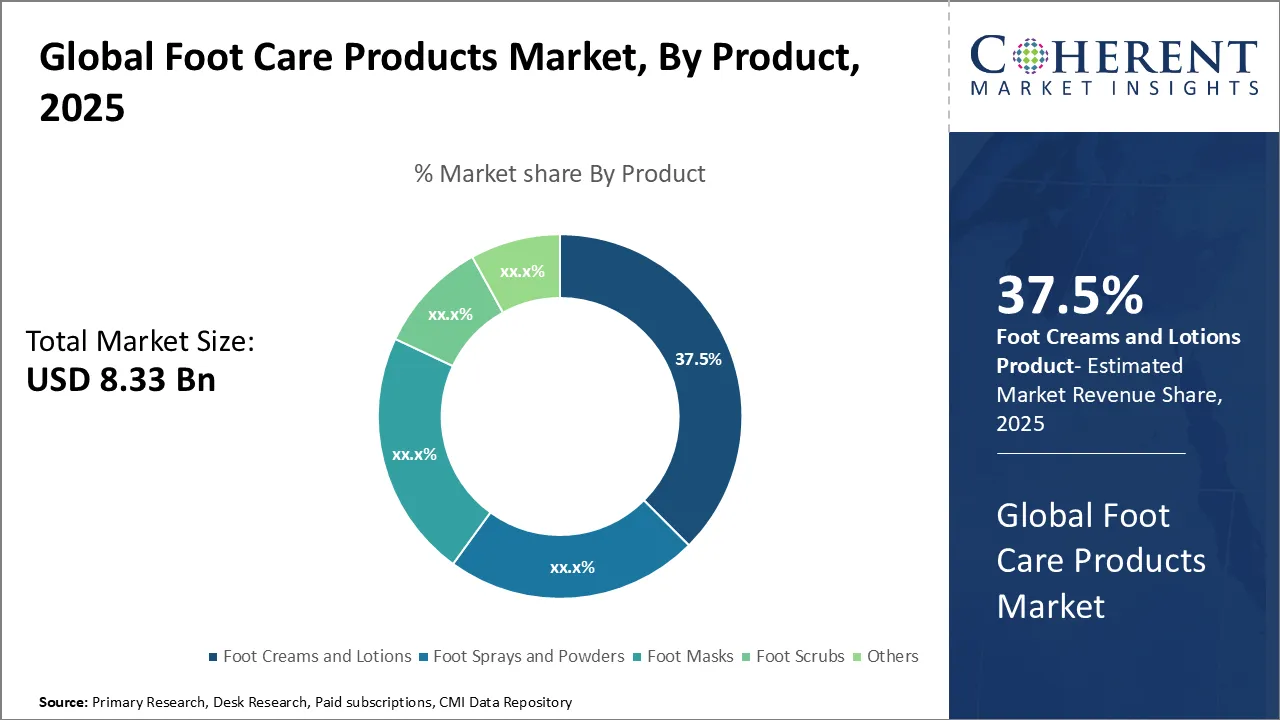
- The foot creams and lotions segment is projected to account for 38.5% of the market in 2026.
- The medical treatment segment is expected to captures 39.6% share in 2026.
- The supermarkets and hypermarkets segment is expected to command 30.6% of the global foot care products market share in 2026.
- North America is projected to lead the global foot care products market in 2026 with a 35.8% share. Asia Pacific is projected to accounting for a 25.5% share in 2026, and it is expected to be the fastest-growing region.
Market Overview
Current market trends in the foot care products sector highlight a surge in the demand for natural and organic ingredients, as consumers prioritize safe and eco-friendly solutions. Technological advancements in product formulations, such as enhanced moisturizing and anti-microbial properties, are also shaping product innovation. The foot creams and lotions segment, being a key part of the broader personal care products category, continues to gain traction due to its versatile therapeutic and cosmetic benefits. Moreover, e-commerce platforms are playing a crucial role in expanding the market reach, while increasing investment in research and development is focused on addressing specific foot conditions and promoting personalized foot care treatments.
Current Events and Its Impact
Current Events | Description and its Impact |
Pharmacy & mass retail private-label expansion |
|
E-commerce, quick commerce & social selling |
|
Segmental Insights
- Current Industry Events of 2026
- Market Size Estimation
- Regional Breakdown
- Competitive Landscape
- Customer Intelligence
- Segmental Analysis
- Pricing Analysis
- Key Market Drivers, Challenges & Future Trends
- Customized Insights Section
Foot Care Products Market Insights, by Product - Foot Creams and Lotions Segment Dominates the Market Due to their Versatile Therapeutic and Cosmetic Benefits
The foot creams and lotions segment is projected to hold 38.5% share in 2026, driven by their multifunctional benefits that cater to both health and aesthetic concerns. One of the core factors propelling this segment is the increasing consumer awareness about foot health and the rising preference for products that provide deep hydration, repair, and protection against various foot problems like dryness, cracking, and fungal infections.
Foot creams and lotions are formulated with ingredients such as urea, salicylic acid, essential oils, and vitamins, which are known for their moisturizing and exfoliating properties. This makes them highly effective in addressing common foot issues, thereby enhancing user satisfaction and loyalty.
For example, Eucerin UreaRepair PLUS Foot Cream, enriched with 10% urea and ceramides, has gained significant popularity in Europe due to its clinically proven ability to provide long-lasting hydration and repair extremely dry and rough skin. Such product success stories underscore the effectiveness and consumer demand for multifunctional foot creams and lotions.
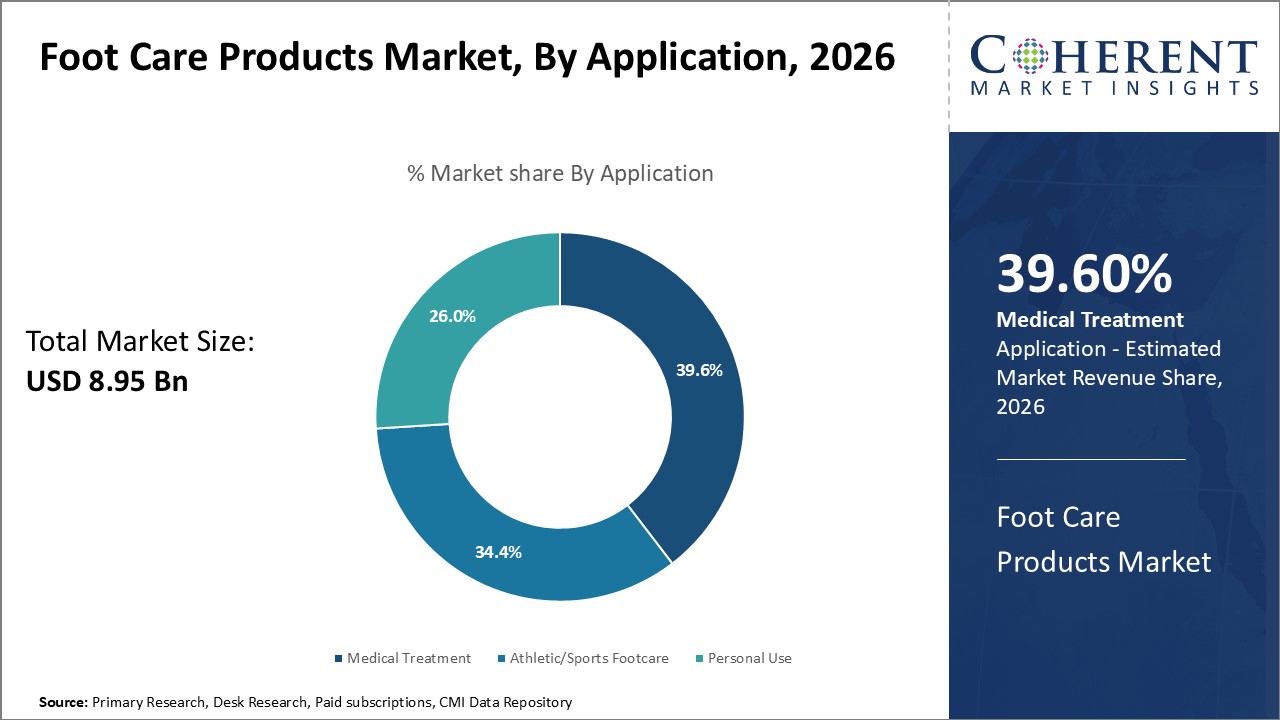
Foot Care Products Market Insights, by Application - Medical Treatment Segment Dominates the Market Due to Rising Foot-Related Health Conditions and Enhanced Focus on Therapeutic Care
The medical treatment segment is projected to account for 39.6% share in 2026, influenced by the rising prevalence of foot-related health disorders and the increasing emphasis on professional and clinical foot care. Conditions such as diabetic foot ulcers, athlete’s foot, plantar fasciitis, and peripheral neuropathy are responsible for the expanding the demand for specialized foot care products designed to aid healing, manage symptoms, and prevent complications. The growth in chronic diseases, particularly diabetes and obesity, has led to higher incidences of foot ailments, compelling both healthcare providers and patients to adopt dedicated foot care regimens supported by medical-grade creams, sprays, and other formulations.
Increased awareness among consumers and healthcare professionals about the importance of preventive and corrective foot treatments has further bolstered this segment. Foot care products targeted at medical treatment often contain clinically proven active agents and antimicrobial properties that help in infection control, wound management, and pain relief. This clinical validation drives trust and preference, especially in clinical or semi-clinical settings like hospitals, podiatrist clinics, and specialized foot care centers.
Foot Care Products Market Insights, by Distribution Channel - Supermarkets & Hypermarkets Segment Dominates the Market Due to Extensive Accessibility and Growing Consumer Convenience
The supermarkets and hypermarkets segment is expected to capture 30.6% share in 2026, due to their widespread presence and ability to offer a broad range of foot care products under one roof. This channel’s growth is driven by consumer preference for one-stop shopping destinations that provide convenience and the opportunity to compare multiple brands and products easily. The availability of foot care solutions—including creams, sprays, masks, and scrubs—within these large retail outlets supports impulse purchasing and bulk buying habits, particularly among families and repeat users.
Additionally, supermarkets and hypermarkets often benefit from strategic partnerships and exclusive launches with leading foot care brands, enhancing their product variety and promoting new releases that attract foot care consumers. Their competitive pricing, frequent promotional offers, and accessibility in both urban and suburban regions reinforce customer retention and acquisition.
Regional Insights
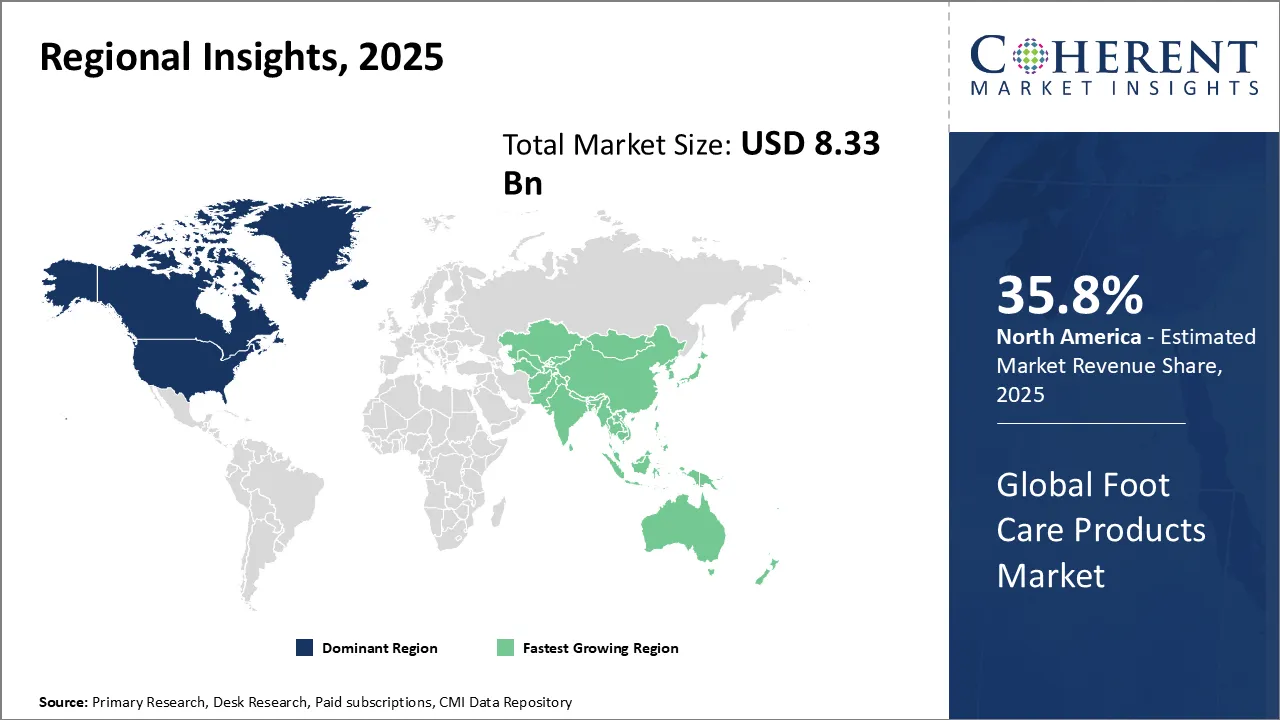
North America Foot Care Products Market Analysis and Trends
The North America region is projected to lead the market with a 35.8% share in 2026, driven by a well-established healthcare infrastructure, high consumer awareness regarding foot health, and a significant presence of key industry players. The region benefits from stringent government policies promoting healthcare innovations and safety standards, which encourage the development of advanced foot care products such as orthopedic insoles, diabetic foot care items, and therapeutic creams.
The mature retail ecosystem, including pharmacies, specialty stores, and e-commerce platforms, facilitates easy accessibility and distribution of these products. Key companies such as Dr. Scholl’s, Dr. Comfort, and OOFOS have a strong foothold in the region, contributing to extensive product innovation and market penetration. Additionally, trade agreements and established supply chains further support seamless market operations and cross-border collaborations enhancing the region’s competitive edge.
Asia Pacific Foot Care Products Market Analysis and Trends
The Asia Pacific region is expected to exhibit the fastest growth in the market contributing 25.5% share in 2026, due to rising healthcare expenditure, growing awareness about foot-related disorders, and increasing disposable income among consumers. The region is witnessing rapid urbanization and lifestyle changes that contribute to higher the demand for preventive and therapeutic foot care products. Government initiatives aimed at improving public health, coupled with expanding healthcare infrastructure in countries like China, India, and Japan, are fueling the market expansion. Moreover, the burgeoning e-commerce sector provides effective channels for wide product reach. Local and multinational companies, such as Himalaya Wellness (India), are tapping into this growth by introducing affordable and innovative products tailored to regional needs. Favorable trade dynamics, including participation in free trade agreements within ASEAN, enable smoother import-export operations, thus boosting supply chain efficiency.
Global Foot Care Products Market Outlook for Key Countries
U.S. Foot Care Products Market Analysis and Trends
The U.S. foot care products market is characterized by high consumer awareness and demand for specialized foot care products addressing conditions such as plantar fasciitis, diabetic foot ulcers, and general foot fatigue. Strong research and development activities among leading companies like Dr. Scholl’s and ProFoot, alongside the regulatory oversight by the FDA, ensure high-quality standards. The country hosts a complex yet efficient healthcare delivery mechanism supported by insurance providers, which promotes the usage of orthotic devices and prescription-based foot care products. Additionally, the widespread adoption of e-commerce facilitates accessible and convenient purchasing options for end consumers.
Germany Foot Care Products Market Analysis and Trends
Germany foot care products market is driven by an aging population increasingly prone to foot ailments, combined with a robust healthcare system that integrates preventive care. Government policies supporting medical device innovation and subsidies for orthotic and prosthetic products encourage the market expansion. Notable players such as Beurer and Gehwol have a substantial presence, offering premium quality and technologically advanced foot care solutions. Germany’s strategic location in Europe enables strong trade links within the EU, providing companies with broad access to neighboring markets. The country’s emphasis on sustainability and natural ingredients is influencing product development with more organic foot care lines.
China Foot Care Products Market Analysis and Trends
China continues to lead the Asia Pacific foot care products market with rapidly expanding urban centers and increasing focus on health and wellness lifestyles. Government healthcare reforms and investments in infrastructure have significantly augmented consumer access to quality medical products, including foot care solutions. Local companies like Yunnan Baiyao and international players such as Medtronic are innovating to meet unique regional needs, including products targeting diabetic foot complications prevalent in the country. The rise of online healthcare platforms and direct-to-consumer models is facilitating market penetration even in tier 2 and 3 cities. Trade policies supporting domestic manufacturing and import of raw materials further support the market’s robust growth trajectory.
India Foot Care Products Market Analysis and Trends
India foot care products market growth is fueled by a growing population base, rising prevalence of diabetes, and increasing awareness about foot health, especially in rural areas. Government initiatives aimed at expanding healthcare accessibility, such as Ayushman Bharat, and increasing health insurance coverage are augmenting the market environment. Companies like Himalaya Wellness and Cipla are focusing on herbal and ayurvedic foot care products that resonate well with local consumer preferences. The expanding pharmaceutical sector and improvements in distribution networks are helping to distribute foot care products more effectively. Furthermore, the rapid growth of e-commerce platforms such as Amazon India and Flipkart enhances accessibility to a wide product range for consumers across the country.
Brazil Foot Care Products Market Analysis and Trends
Brazil foot care products market is influenced by increasing urbanization, growing middle-class population, and enhanced focus on cosmetic and health-related foot care products. The government’s healthcare policies targeting chronic disease management, including diabetic foot care, support market growth. Local manufacturers and international brands such as Granado Pharmácias and Bota Footwear have contributed to raising product awareness and availability. The country benefits from well-established retail chains and a growing digital marketplace that support consumer access. Trade relations within Mercosur facilitate the movement of raw materials and finished products, fostering competitive pricing and variety in the marketplace.
Macro and Micro Economic Factors Impacting on Global Foot Care Products Market Growth
Macro-Economic Factors
- Population Aging: Aging populations in regions like Europe, North America, and China drive demand for products targeting age-related foot issues, including arthritis, bunions, and diabetic care.
- Healthcare Expansion: Globally, emphasis on preventive healthcare boosts the adoption of foot care products, particularly as awareness of foot-related disorders rises within medical and wellness sectors.
- E-commerce Penetration: Rapid expansion of online retail increases market accessibility, enabling easier consumer access and driving growth in global and regional markets.
- Regulatory Environment: Stricter safety and ingredient transparency regulations (e.g., FDA/EMA) incentivize innovation and promote the development of safer, natural formulations.
- Sustainability Trends: Consumer and regulatory focus on eco-friendly packaging, biodegradable ingredients, and cruelty-free formulations is prompting brands to adopt more sustainable practices.
Micro Economic Factors
- Consumer Awareness: Growing knowledge about foot health and aesthetics pushes demand for specialized creams, medicated treatments, and therapeutic devices.
- Technological Innovations: Integration of AI, smart devices, and personalized recommendations enables new product launches—e.g., smart insoles, foot monitoring, and temperature-sensitive materials.
- Product Segmentation: Market growth is influenced by expanding categories (orthopedic products, skincare, medicated treatments), with a rising preference for multifunctional and natural ingredient products.
- Brand Trust: Consumers often prefer dermatologist-recommended and clinically-tested products to prevent risks of rashes, infections, and foot complications.
- Regional Behavior: Demand patterns vary by geography, with North America favoring convenience and premium options, Europe prioritizing sustainability and clinical efficacy, and Asia-Pacific seeing growth from wellness and traditional medicine-based offerings.
Market Players, Key Development, and Competitive Intelligence
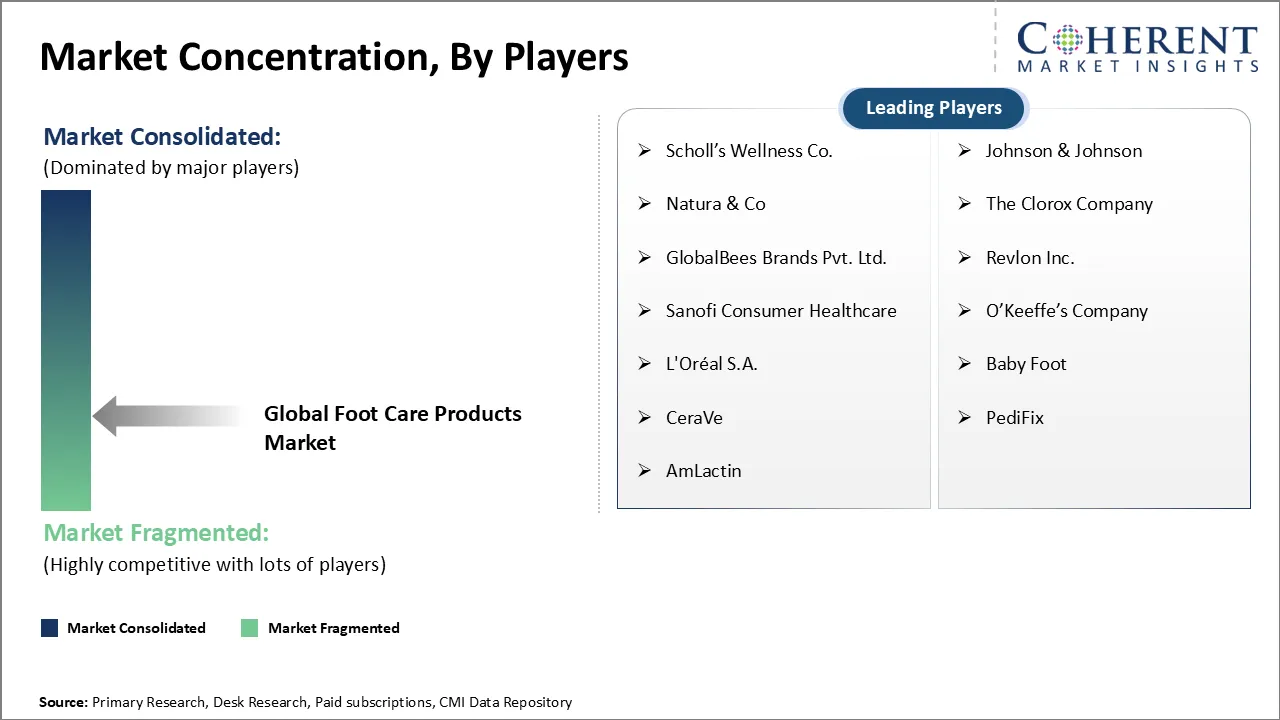
Key Developments
- In July 2025, ZenToes expanded its retail presence by launching its holistic foot care solutions at CVS Pharmacy. Several of its flagship products, including Gel Toe Caps and All Toe Spacers, became available both in CVS’s in-store locations and through the retailer’s online platform, enhancing consumer access to the brand’s offerings.
- In October 2024, to mark its 135th anniversary, The Mentholatum Company introduced the Mentholatum Heel Revival Cream, an advanced treatment designed for persistent cracked heels. The product, which incorporates patented technology and is clinically proven to address fungal infections commonly linked with cracked heels, is now available on Amazon and will debut on Walmart.com in November.
- In June 2023, ZenToes, a U.S. FDA-registered foot care brand recommended by podiatrists, unveiled a comprehensive product line addressing common foot conditions. Now available in more than 900 Target stores and on Target.com, the range is aimed at improving comfort and relieving pain associated with bunions, hammer toes, plantar fasciitis, and other widespread foot health issues.
- In March 2023, Enertor Medical partnered with RSscan Lab Ltd to introduce a practical foot scanning system tailored for clinical use. This advanced solution is designed to support healthcare professionals by providing detailed insights into patients’ gait patterns, ultimately enhancing diagnostic accuracy and treatment planning.
Top Strategies Followed by Global Foot Care Products Market Players
- Established market leaders consistently invest heavily in research and development (R&D) to create high-performance, innovative products that address evolving consumer needs such as enhanced comfort, durability, and specialized treatment features. They pursue aggressive expansion plans by broadening their global distribution networks, particularly targeting emerging markets with growing consumer awareness and disposable incomes. This global outreach not only increases their market penetration but also helps in tailoring their offerings to suit regional preferences and regulatory standards, thereby reinforcing their leadership position.
- For instance, Johnson & Johnson, consistently upgraded its Dr. Scholl’s product line by integrating gel-based insoles, antimicrobial shoe sprays, and orthotic inserts to enhance comfort and hygiene. Similarly, Reckitt has strengthened its presence in emerging economies like India and Brazil by launching region-specific product variations that align with local consumer preferences and regulatory standards.
- Mid-level players in the foot care products market adopt a differentiated approach by balancing quality and affordability to cater predominantly to price-sensitive customer segments. These companies focus on cost-effective solutions that do not compromise essential quality attributes, thus capturing market share among budget-conscious consumers who seek reliable yet economical options. To enhance their competitiveness, mid-tier firms actively engage in collaborations—such as joint ventures, licensing agreements, or technology-sharing partnerships—with larger manufacturers or specialized technology developers.
- For example, Flexitol Heel Balm offers dermatologically tested solutions at a lower price compared to premium competitors, targeting cost-sensitive markets in Asia Pacific. To remain competitive, these players frequently collaborate with dermatologists and podiatrists for endorsements and licensing tie-ups.
- Small-scale players in the global foot care products market distinguish themselves by targeting niche segments that require specialized or innovative product features which larger companies may overlook. They often emphasize the adoption of cutting-edge technologies—such as bio-based materials, smart insoles, or customized orthotic solutions—to remain competitive and attract tech-savvy and health-conscious consumers.
- For instance, natural foot care startups like O’Keeffe’s (known for its Working Hands and Healthy Feet creams) emphasize bio-based, chemical-free formulations that appeal to eco-friendly buyers.
Market Report Scope
Foot Care Products Market Report Coverage
| Report Coverage | Details | ||
|---|---|---|---|
| Base Year: | 2025 | Market Size in 2026: | USD 8.95 Bn |
| Historical Data for: | 2020 To 2024 | Forecast Period: | 2026 To 2033 |
| Forecast Period 2026 to 2033 CAGR: | 7.4% | 2033 Value Projection: | USD 14.75 Bn |
| Geographies covered: |
| ||
| Segments covered: |
| ||
| Companies covered: | Scholl’s Wellness Co., Johnson & Johnson, Natura & Co, The Clorox Company, GlobalBees Brands Pvt. Ltd., Revlon Inc., Sanofi Consumer Healthcare, O’Keeffe’s Company, L'Oréal S.A., Baby Foot, CeraVe, PediFix, and AmLactin | ||
| Growth Drivers: |
| ||
| Restraints & Challenges: |
| ||
Foot Care Products Market Dynamics
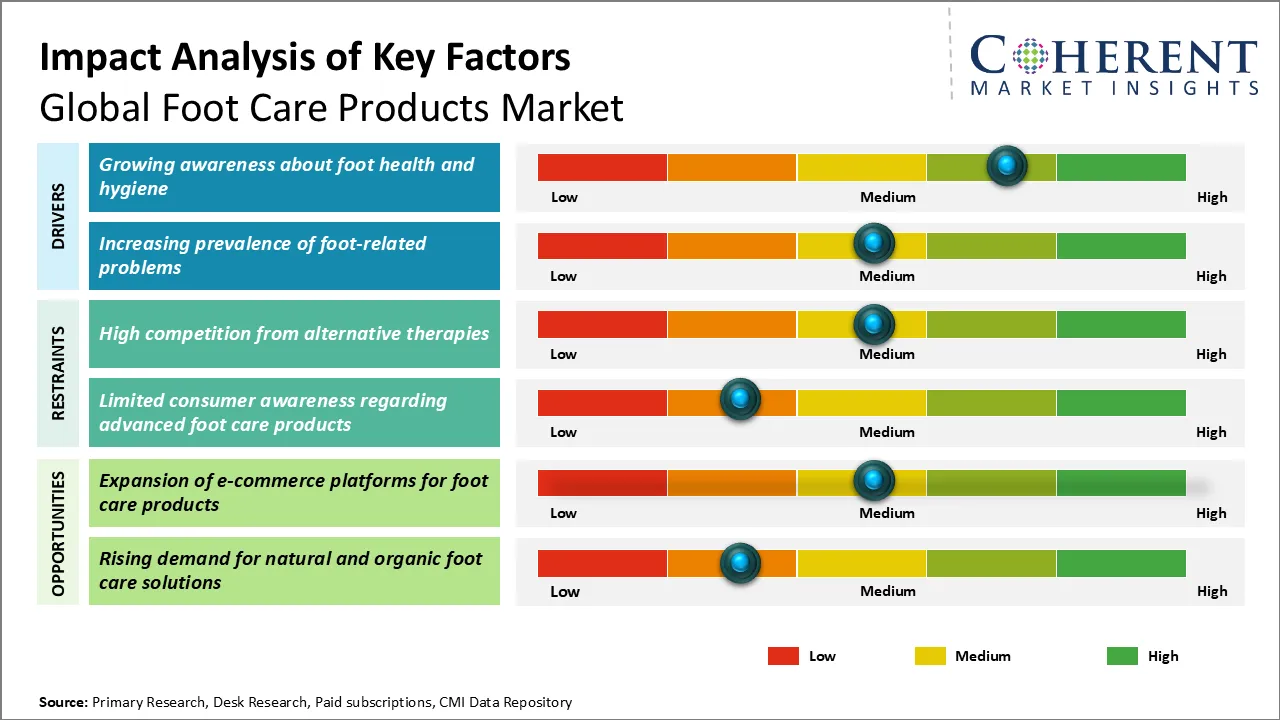
Foot Care Products Market Driver - Growing Awareness About Foot Health and Hygiene
Increasing consumer awareness regarding foot health and hygiene is significantly driving the demand for foot care products globally. As people become more conscious of the importance of maintaining proper foot care to prevent common issues such as fungal infections, dryness, odor, and cracked heels, they are more likely to invest in specialized products tailored to these needs. The rising prevalence of lifestyle-related foot conditions, coupled with an emphasis on overall wellness and appearance, has encouraged individuals to adopt regular foot care routines.
In 2023, Scholl – a leading global foot care brand – reported double-digit growth in its moisturizing heel balms and antifungal creams across Europe and Asia Pacific. The company attributed this growth to heightened consumer awareness campaigns about diabetic foot care and fungal infections, which led to a surge in sales of preventive and therapeutic foot care products.
Foot Care Products Market Opportunity - Expansion of E-commerce Platforms for Foot Care Products
The rapid proliferation of e-commerce platforms presents a significant growth opportunity for the global foot care products market. The increasing adoption of online shopping across diverse consumer segments has transformed purchasing behaviors, offering a convenient and accessible channel for foot care product vendors. E-commerce allows brands to reach wider and more geographically dispersed audiences, including consumers in remote or underserved regions who may lack easy access to specialized retail outlets. Additionally, digital platforms facilitate personalized marketing strategies through data analytics, enabling companies to tailor product recommendations based on individual foot care needs, preferences, and purchase history. The integration of user reviews, expert advice, and interactive content on these platforms further enhances consumer trust and engagement.
For example, JD Health launched a “Foot and Ankle Center” which leverages an “online + healthcare” model to provide 24/7 professional medical services related to foot and ankle care. This includes online consultation (via text, video, and phone) plus offline appointments, serving both urban and lower-tier cities.
Analyst Opinion (Expert Opinion)
- The global foot care products market is experiencing significant growth, fueled by an increasing awareness of foot health and wellness. Insights from the International Foot Health Conference (2023) and the Footwear and Foot Health Expo (2022) showcased key innovations, with brands like Dr. Scholl’s and Scholl’s leading the way in developing targeted solutions for various foot conditions.
- Scholl’s recent introduction of a line specifically designed for diabetic foot care demonstrates a strategic response to the rising prevalence of diabetes and the need for specialized products. Discussions at these conferences emphasized the importance of consumer education regarding foot hygiene and preventive care, which can drive the demand for high-quality products. However, challenges such as market saturation and the prevalence of low-cost alternatives were identified as potential barriers.
- Companies that invest in research to develop clinically validated formulations and enhance product efficacy will likely stand out. Additionally, collaborations with healthcare professionals can enhance credibility and trust. Ultimately, the growth of the foot care products market will depend on its ability to innovate while addressing the diverse needs of consumers seeking effective solutions for foot health and comfort.
Speak to the analyst
Want personalized insights?
Take the findings above to one of our principal consultants, or have the report rebuilt around the segments, geographies and competitors you actually track.
Market Segmentation
- Product Insights (Revenue, USD Bn, 2021 - 2033)
- Foot Creams and Lotions
- Foot Sprays and Powders
- Foot Masks
- Foot Scrubs
- Others
- Application Insights (Revenue, USD Bn, 2021 - 2033)
- Medical Treatment
- Athletic/Sports Footcare
- Personal Use
- Distribution Channel Insights (Revenue, USD Bn, 2021 - 2033)
- Supermarkets & Hypermarkets
- Pharmacies & Drugstores
- E-commerce/Online
- Others
- Regional Insights (Revenue, USD Bn, 2021 - 2033)
- North America
- U.S.
- Canada
- Latin America
- Brazil
- Argentina
- Mexico
- Rest of Latin America
- Europe
- Germany
- U.K.
- Spain
- France
- Italy
- Russia
- Rest of Europe
- Asia Pacific
- China
- India
- Japan
- Australia
- South Korea
- ASEAN
- Rest of Asia Pacific
- Middle East
- GCC Countries
- Israel
- Rest of Middle East
- Africa
- South Africa
- North Africa
- Central Africa
- North America
- Key Players Insights
- Scholl’s Wellness Co.
- Johnson & Johnson
- Natura & Co
- The Clorox Company
- GlobalBees Brands Pvt. Ltd.
- Revlon Inc.
- Sanofi Consumer Healthcare
- O’Keeffe’s Company
- L'Oréal S.A.
- Baby Foot
- CeraVe
- PediFix
- AmLactin
Sources
Primary Research Interviews
- R&D Director – Leading Foot Care Products Manufacturer
- Procurement Manager – Major Personal Care Retailer
- Product Development Head – Well-Known Foot Cream Brand
- Sustainability Manager – Certification Body for Personal Care Products
Stakeholders
- Manufacturers
- End-use Sectors
- Foot Creams & Lotions
- Foot Scrubs, Soaks, and Masks
- Foot Devices (Orthotics, Foot Massagers, etc.)
- Footwear Companies integrating foot care solutions
- Regulatory & Certification Bodies
- E-commerce Platforms and Retailers
- Technology Integration Players: Smart wearable foot care devices, AI-based diagnostic solutions
Databases
- UN Comtrade Database
- India Import Export (EXIM) Database
- Eurostat International Trade Database
- U.S. International Trade Commission (USITC) Database
- Trade Map (ITC – International Trade Centre)
Magazines
- Podiatry Today – Innovations and treatments in foot health
- Footwear Plus Magazine – Trends in footwear and foot comfort products
- Personal Care Magazine – Ingredients and formulation trends for foot creams and lotions
- Health & Wellness Review – Consumer lifestyle & wellness product coverage
- Cosmetics & Toiletries – Formulation and R&D in topical foot care products
Journals
- Journal of Foot and Ankle Research – Clinical insights into foot care treatments
- International Journal of Cosmetic Science – Innovations in creams, lotions, and personal care
- Journal of Podiatric Medical Association – Foot health and product efficacy
- Journal of Dermatological Treatment – Topical solutions for skin and foot disorders
- Clinical Research in Foot & Ankle – Impact of products on specific conditions
Newspapers
- The Financial Times – Coverage on global personal care and wellness product growth
- The Guardian – Trends in sustainable and natural personal care products
- Asia Health Journal – Expansion of foot care in Asian consumer markets
- European Personal Care News – Regulation and consumer demand in Europe
Associations
- American Podiatric Medical Association (APMA)
- European Academy of Dermatology and Venereology (EADV)
- Personal Care Products Council (PCPC)
- International Federation of Podiatrists (FIP)
- International Federation of Foot & Ankle Societies (IFFAS)
Public Domain Sources
- U.S. FDA – Guidelines for topical personal care and foot care products
- European Commission – Cosmetics and personal care regulation (EU Cosmetics Regulation 1223/2009)
- World Health Organization – Foot health standards and prevention studies
- OECD – Reports on health and consumer safety in personal care
Proprietary Elements
- CMI Data Analytics Tool, Proprietary CMI Existing Repository of information for last 8 years.
Get access to 250+ pages report
Every segment, forecast, competitor profile and data table behind the analysis above — available for instant download.
- ESOMAR Member
- ISO 9001:2015 Certified
- D-U-N-S Registered
- GDPR & CCPA Compliant
Missing comfort of reading report in your local language? Find your preferred language:
Transform your Strategy with Exclusive Trending Reports
Frequently Asked Questions
The global foot care products market is estimated to be valued at USD 8.95 Bn in 2026 and is expected to reach USD 14.75 Bn by 2033.
The CAGR of the global foot care products market is projected to be 7.4% from 2026 to 2033.
Growing awareness about foot health and hygiene and increasing prevalence of foot-related problems are the major factors driving the growth of the global foot care products market.
High competition from alternative therapies and limited consumer awareness regarding advanced foot care products are the major factors hampering the growth of the global foot care products market.
In terms of product, the foot creams and lotions segment is estimated to dominate the market revenue share in 2026.
Scholl’s Wellness Co., Johnson & Johnson, Natura & Co, The Clorox Company, GlobalBees Brands Pvt. Ltd., Revlon Inc., Sanofi Consumer Healthcare, O’Keeffe’s Company, L'Oréal S.A., Baby Foot, CeraVe, PediFix, and AmLactin are the major players.
North America is expected to lead the global foot care products market in 2026.