

Spa Market Size and Forecast – 2026 to 2033
The global spa market is estimated to be valued at USD 237.50 Bn in 2026 and is expected to reach USD 590.66 Bn by 2033, exhibiting a compound annual growth rate (CAGR) of 13.9% from 2026 to 2033. The Spa Market is experiencing strong growth in 2026 driven by rising wellness tourism, increasing stress-related disorders, and growing demand for medical-grade and personalized wellness services. According to the Global Wellness Institute (2026 wellness economy outlook, published January 2026), global wellness spending continues to expand rapidly, with spa services remaining a core pillar of preventive health and recovery ecosystems. Industry journals such as Journal of Alternative and Complementary Medicine (2026 editions) highlight increasing adoption of hydrotherapy, aromatherapy, and evidence-based stress reduction therapies in spa operations. In 2026, International Spa Association (ISPA) reports (Q1 2026 update) emphasize strong recovery in spa visitation volumes across North America and Europe, supported by luxury hotel spa expansions. Leading companies like Marriott International and ESPA (2026 press releases) are integrating AI-driven skin diagnostics and advanced therapeutic spa treatments, reflecting the shift toward tech-enabled wellness experiences and medical spa convergence worldwide.
Key Takeaways
- Massage Therapies acquired the prominent share of 36.1% in 2026 on account of the rising health & wellness awareness. The massage therapies segment dominates the spa market in 2026 due to rising stress-related disorders, increasing consumer focus on preventive healthcare, and strong integration of massage into both wellness and medical spa services. According to the Global Wellness Institute (Wellness Economy Monitor, 2026 outlook), demand for therapeutic and relaxation-based services remains the largest contributor to spa revenues globally, driven by urban stress and lifestyle diseases. The International Spa Association highlights that massage therapy continues to be the most frequently booked spa service, supported by high repeat visitation and strong customer retention rates across North America and Europe.
Source: Global Wellness Institute
- Day Spas dominates the overall market with an estimated share of 41.2% in 2026 owing to the wellness & self‑care awareness. The Day Spas segment dominates the global spa market in 2026 due to increasing demand for short-duration wellness experiences, affordability compared to destination spas, and rising urban consumer preference for quick stress-relief services. According to the Global Wellness Institute (Wellness Economy Monitor, 2026 update), urban wellness consumption continues to grow rapidly, with day-use spa services forming a key entry point for first-time wellness consumers globally. The International Spa Association reports that day spas account for the highest share of spa locations worldwide due to their scalability, lower operational costs, and strong repeat customer visits in metropolitan areas. Additionally, research published in MDPI journals on hospitality and wellness services (2026 editions) highlights that consumers increasingly prefer convenient, time-efficient wellness formats such as express facials, massages, and hydrotherapy sessions integrated into day spa offerings.
Source: Global Wellness Institute; International Spa Association; MDPI
- Women hold the largest market share of 67.1% in 2026 owing to its predominant consumer demographic. The women’s segment dominates the end-user base in the global spa market in 2026 due to higher participation in wellness, skincare, and preventive health services, along with stronger adoption of aesthetic and relaxation therapies. According to the Global Wellness Institute (2026 wellness economy update), women represent the largest consumer group in personal care and wellness spending, particularly in spa, beauty, and holistic health services, driven by increasing focus on self-care and mental well-being. The International Spa Association (ISPA Big Five Statistics, Q1 2026 report) highlights that women account for the majority of spa visits globally, supported by higher repeat visitation rates for services such as massage therapy, facials, and body treatments, especially in urban wellness centers
Source: Global Wellness Institute; International Spa Association
- By Region, North America dominates the overall market with an estimated share of 36.1% in 2026 owing to the rising demand for wellness, self‑care & mental health. North America dominates the global spa market in 2026 due to a combination of high disposable income, strong wellness culture, advanced spa infrastructure, and widespread adoption of medical and technology-enabled wellness services. According to the Global Wellness Institute, North America remains one of the largest contributors to global wellness spending, driven by premium spa consumption and strong integration of preventive healthcare into lifestyle habits. The International Spa Association (ISPA Big Five Statistics, 2026 update) reports that the U.S. alone accounts for the highest number of spa visits globally, supported by more than 21,000+ spa locations, strong repeat visitation rates, and high per-visit spending across day spas and hotel spas.
Source: International Spa Association; Global Wellness Institute
Market Overview
The spa market grows steadily as more people prioritize wellness, manage lifestyle stress, and seek holistic health solutions. Consumers actively choose personalized and convenient services like massages, facials, and medical spa treatments. Urban living, rising incomes, and a growing focus on self-care drive this demand across diverse groups. Spa providers adopt technology, embrace sustainability, and tap into wellness tourism to enrich client experiences. The industry expands by forming hotel partnerships, offering mobile services, and introducing innovative treatments that meet changing customer needs.
Global Spa Market – Driver
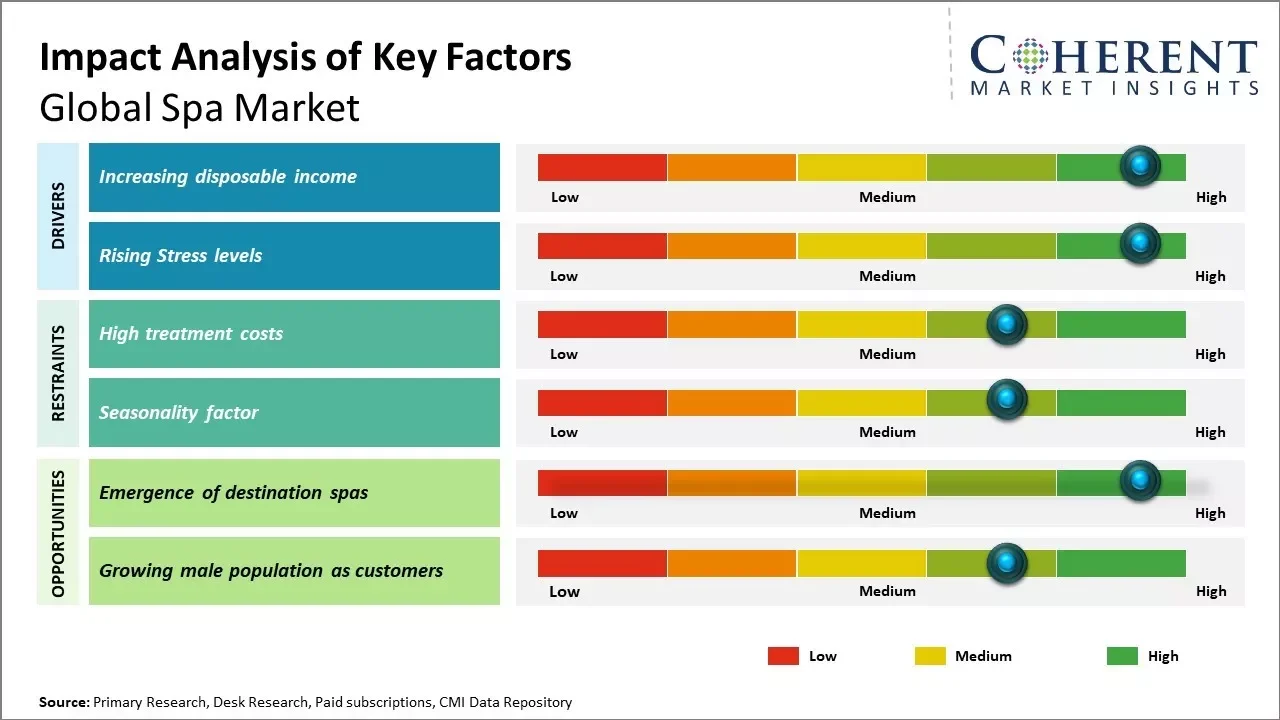
Increasing Disposable Income
Increasing disposable income significantly drives the spa market by enabling consumers to allocate more spending toward premium wellness, relaxation, and self-care services rather than only essential needs. As household earnings rise, consumers increasingly choose luxury spa treatments such as massage therapies, aromatherapy, and hydrotherapy, boosting repeat visits and higher service spending per visit.
According to the International Spa Association (ISPA) U.S. Spa Industry Study 2025 (published March 2026, ISPA Foundation report release), spa revenue reached US$23.5 billion in 2025, while revenue per visit rose to US$123.10 in 2026, reflecting stronger consumer spending capacity driven by higher disposable incomes and willingness to pay for upgraded wellness experiences.
This trend shows that as incomes grow, consumers shift from occasional spa use to regular and premium packages, directly accelerating spa market expansion through higher frequency, luxury service adoption, and increased average transaction value.
Source: International Spa Association
Rising Stress Level
Rising stress level in the Population has estimated to drive the market growth of the global spa market as consumers increasingly seek massage therapy, aromatherapy, hydrotherapy, meditation, and relaxation treatments for mental well-being and preventive care. According to the CDC, updated in May 2026, 23% of U.S. adults live with a mental health condition, while CDC FastStats reports 12.1% of adults regularly feel worry, nervousness, or anxiety. WHO data shows depression and anxiety cause 12 billion lost working days annually, costing US$1 trillion in productivity. In the 2026 NAMI-Ipsos workplace poll, 70% of employees reported stress, supporting rising demand for stress-relief spa services.
Spa Market Opportunity
Integration of Technology and Innovation
Spas can leverage technology to improve service delivery and customer engagement. Virtual consultations, AI-driven personalized treatments, and mobile apps streamline booking and enhance experiences. Innovations like VR relaxation, wearable wellness devices, and advanced skin diagnostics create new service avenues. Investing in digital transformation not only meets rising consumer expectations but also boosts operational efficiency and marketing effectiveness, positioning spas as modern, tech-savvy wellness destinations.
In August 2025, iHealth Marketing, a top medspa marketing firm, announced the launch of its new MedSpa Marketing services, aimed at helping medical spas throughout the U.S. enhance their visibility, attract premium clients, and grow their revenue.
Role of Artificial intelligence (AI) in Spa Industry
AI is transforming the spa industry by enhancing efficiency, personalization, and overall guest experience. Intelligent systems, such as robotic massage devices, help address staffing shortages by operating continuously and supporting therapists with routine tasks like muscle-warming treatments. AI also enables customized wellness experiences by analyzing client preferences and physical needs in real time. From automating bookings to optimizing treatment plans, AI streamlines operations and improves service quality.
In October 2024, Aescape launched its first hospitality partnership in Nashville at R+R Wellness in the Grand Hyatt, offering AI-powered automated massage to meet growing demand for personalized wellness solutions. Also, in July 2025, Ionto-Comed introduced iRiS, an intelligent robotic massage system designed to address spa therapist shortages by operating 24/7, reducing labor costs, and easing therapist workload. iRiS can handle the muscle-warming phase before therapist-led treatments and stands out for combining AI precision with practical support for spa professionals.
- Current Industry Events of 2026
- Market Size Estimation
- Regional Breakdown
- Competitive Landscape
- Customer Intelligence
- Segmental Analysis
- Pricing Analysis
- Key Market Drivers, Challenges & Future Trends
- Customized Insights Section
Current Events and their Impact on the Spa Market
Current Events | Description and its impact |
Macro-Level Economic Developments |
|
Regional Geopolitical and Regulatory Events |
|
Nano-Level Consumer Behavior and Lifestyle Trends |
|
Segmental Insights
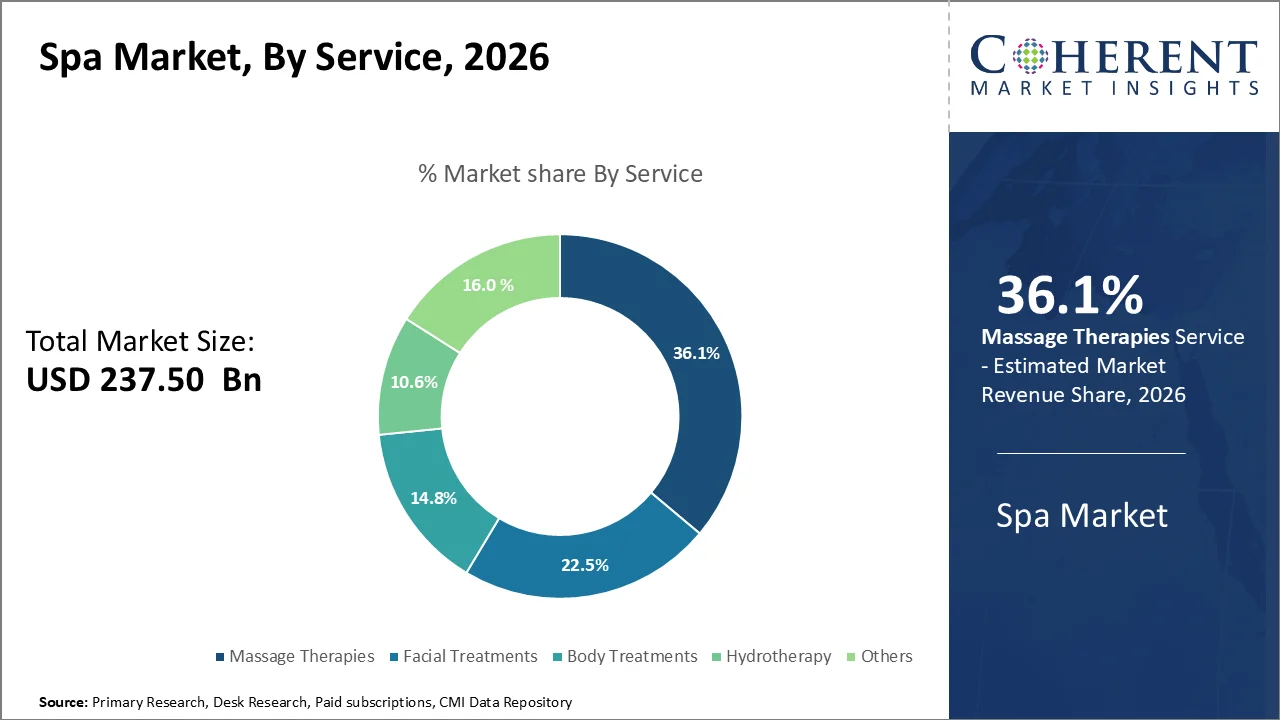
Spa Market Insights, By Service: Massage Therapies contribute the highest share of the market owing to its tech-driven convenience & personalization
Massage Therapies acquired the prominent share of 36.1% in 2026. Massage therapy offers numerous health benefits such as improved circulation, relief from muscle tension and pain. With rising health consciousness, people are increasingly turning to massage as a way to unwind from daily pressures. The fast-paced urban lifestyle has led to higher incidence of stress-related issues, driving the demand for therapeutic massage services. Additionally, massage is becoming more mainstream as a self-care and self-indulgence activity. Several high-end spas have enhanced their offerings by providing specialized massages using natural ingredients or innovative techniques like hot stone massage. Greater acceptance of complementary treatments and focus on incorporating Eastern practices of wellness in daily lives have boosted the popularity of massage therapies globally.
In December 2024, Hand & Stone Massage and Facial Spa recently launched its public Learning Management System (LMS) to manage educational lectures, training programs, and learning and development courses. The platform offers free select courses to help all licensed massage therapists meet their continuing education requirements, extending access beyond just those employed by the brand.
Spa Market Insights, By Spa types: Day Spas contribute the highest share of the market owing to its wellness tourism & lifestyle travel
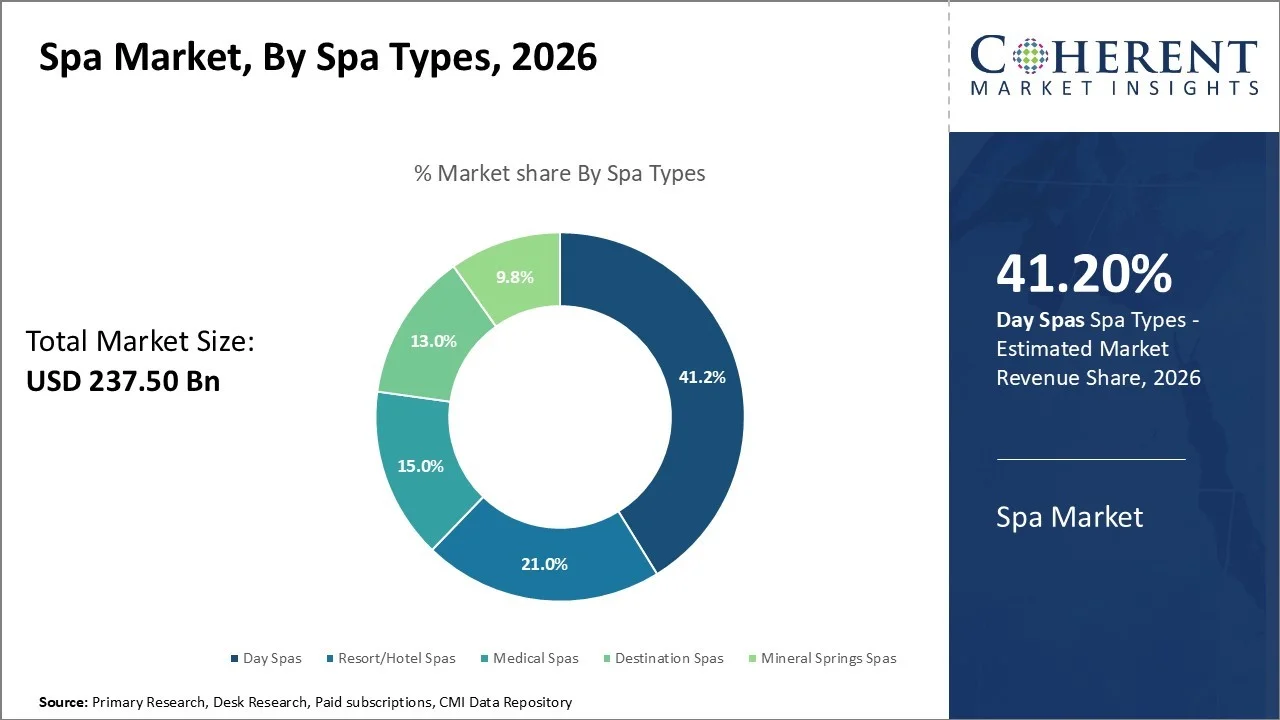
Day Spas dominates the overall market with an estimated share of 41.2% in 2026. Their flexible operating hours fitting busy schedules have made day spas extremely accessible to working professionals and families. Not requiring an overnight stay allows patrons to schedule sessions anytime during weekdays or weekends based on their availability. This quality of fitting easily into consumers’ lifestyles without disrupting routines has ensured day spas attract high footfall. The thriving real estate of branded day spa chains across major cities provides customers with a standardized experience wherever they are based. Their diverse service packages catering to specific needs like bridal, group, or teenager services have further amplified the appeal of day spas. For instance, Italian day spa QC Terme prepared to open its newest location—and its first outside of Europe—on Governors Island in the middle of New York Harbor. They have started selling tickets for QC NY, along with available entry dates.
Spa Market Insights, By End User: Women contribute the highest share of the market owing to its social experiences & community.
Women hold the largest market share of 67.1% in 2026. The spa market has tailored its offerings to cater to the diverse needs and preferences of women, who seek a wide range of treatments, services, and experiences to enhance their overall well-being. From luxurious massage therapies and rejuvenating facials to specialized body treatments and holistic wellness programs, the spa market has evolved to provide a comprehensive range of services that resonate with the female clientele.
In January 2026, The Spa by Equinox Hotels partnered with Stripes Beauty, a pro-aging wellness brand, to support women through perimenopause and menopause. This collaboration combines results-driven treatments with education and innovative solutions to address the physical and emotional needs of women during hormonal changes, promoting confidence and accessible care.
Latest Trends in the Spa Market
Growing Wellness and Self-Care Focus
Consumers increasingly prioritize wellness and self-care as essential parts of their lifestyle. They seek spa treatments not just for relaxation but for mental health, stress reduction, and overall well-being. This shift encourages spas to offer holistic services combining physical therapies with mindfulness, nutrition, and fitness. The emphasis on preventive health and emotional balance drives demand, making wellness an integral part of everyday life rather than a luxury experience.
Expansion of Medical and Cosmetic Spas
Medical and cosmetic spas are rapidly growing, offering advanced treatments like laser therapy, injectables, and skin rejuvenation. These spas bridge healthcare and beauty, appealing to clients seeking non-invasive, results-driven solutions. Technological advancements and rising awareness of aesthetic procedures fuel this trend, while regulatory support ensures safety and quality. The growth of medical spas also reflects changing beauty standards and consumer willingness to invest in long-term skin and body care.
Regional Insights
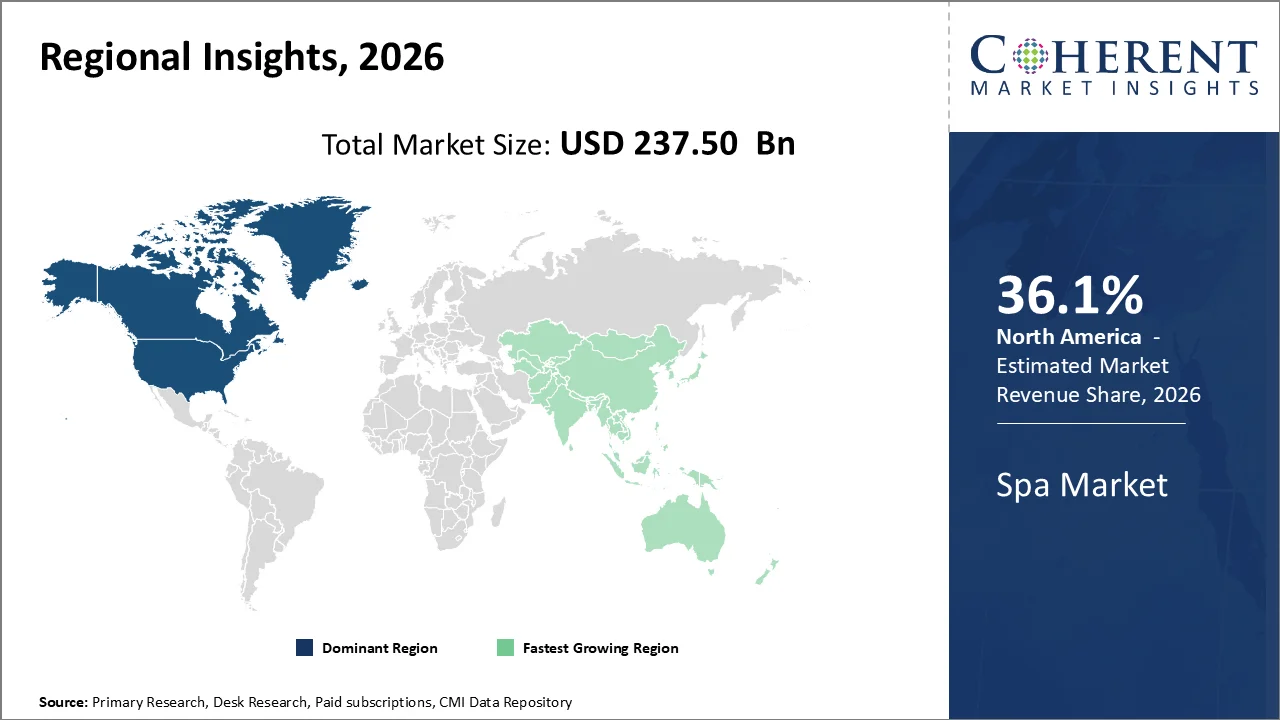
North America Spa Market Trends
North America dominates the overall market with an estimated share of 36.1% in 2026. Increasing demand for wellness and self-care drives the North America spa market as more consumers seek stress relief and holistic treatments. Medical spas attract growing attention with their cosmetic and anti-aging services. Technology enhances personalization and convenience through digital bookings and advanced therapies. Luxury hotel spas continue to draw clients, while wellness tourism boosts market expansion. Consumers also show rising interest in sustainable and eco-friendly practices, and the market grows further as men and younger generations actively engage with spa services. For instance, in March 2026, Pause, a state-of-the-art wellness studio focused on modern and holistic solutions, announced its expansion to Fort Lauderdale, FL, marking the West Coast brand’s first location in South Florida. Pause offers a tranquil and sophisticated spa sanctuary that aims to revolutionize the wellness space by delivering a wide range of holistic services designed to nurture both the mind and body and support overall wellbeing.
Asia Pacific Spa Market Trends
Rising health consciousness and urban lifestyle stress drive consumers in Asia Pacific to seek wellness and spa services. They actively pursue holistic and traditional therapies alongside modern treatments to enhance their physical and mental well-being. This growing awareness boosts spa popularity across various age groups and regions. Additionally, ancient healing practices like Ayurveda, Herbal Medicine, and Balinese massage continue to attract local clients and wellness tourists, carving a unique niche focused on natural and holistic healing. For instance, in June 2026, Meliá Pattaya Hotel unveiled its YHI Spa with a menu affording an array of health benefits, such as improving metabolism and the nervous and lymphatic systems, to ease stress, anxiety, headaches and sleep problems.
India Spa Market Trends
Consumers across India are increasingly aware of health and wellness, driving demand for spa services. They actively seek stress relief and rejuvenation through both modern and traditional treatments, boosting spa visits in urban and semi-urban areas. Medical spas rapidly expand, offering cosmetic, dermatological therapeutics, and anti-aging treatments. Rising disposable incomes and advanced technology give urban consumers greater access to these specialized services. Spas also enhance convenience and engagement by adopting digital tools, appealing especially to younger, tech-savvy customers. For instance, in August 2026, Carlton London unveiled Carlton Wellness Spa, a chain of luxury wellness spas in malls and resort properties, marking its first entry into health and well-being experiences in India.
China Spa Market Trends
Chinese consumers actively prioritize wellness and stress relief amid fast-paced urban lifestyles. Spas that offer relaxation, mental health support, and holistic wellness treatments gain popularity in major cities and emerging urban areas. Traditional Chinese Medicine therapies like acupuncture, cupping, and herbal treatments continue to play a key role, attracting locals and tourists seeking authentic wellness experiences. The government supports the expansion of spa resorts and wellness destinations, encouraging both domestic and international tourists to explore culturally rich and luxurious spa offerings, driving market growth. For instance, The PuYu Hotel & Spa in Wuhan, China finalized the last details of its new spa. The Akasuri treatment, rooted in Japanese tradition, begins with a short visit to the steam room or sauna to soften the skin. Therapists then perform a loofah scrub to remove dead skin, followed by a restorative hot oil massage.
Who are the Major Companies in Spa Market
Some of the major key players in Spa Market are Mandara Spa, Woodhouse Spas, Hand & Stone Franchise Corp, Hyatt Hotel Corporation, Four Seasons Hotel Limited, Marriot International, Inc., Hilton Hotels & Resorts, OneSpaWorld Holdings Limited, InterContinental Hotels Group Plc, Banyan Tree Hotels & Resorts, Carmel Valley Ranch, Ojai Valley Inn., The Greenwichhotel, Healing Hotels of the World, Siam Wellness Group, Spaandwellness, Chiva-Som, Amatara Welleisure Resort, Niyama Spa, and SoulSense Spa
Spa Market News
- In April 2026, LightStim, a leader in professional-grade LED light therapy and Hand & Stone announced the national rollout of LightStim’s FDA-cleared Elipsa device across participating Hand & Stone locations in the U.S. and Canada. The launch follows a successful pilot program and brings professional LED light therapy into facial services. Elipsa treats fine lines, wrinkles, and mild to moderate inflammatory acne using patented MultiWave technology, supporting accessible, results-driven skincare through Hand & Stone’s 600-plus spa network.
- In January 2026, the Langley, a Luxury Collection Hotel in Buckinghamshire, has partnered with leading wellness brand ESPA to launch a reimagined spa experience. The collaboration introduces a refreshed spa menu featuring seven curated treatments, including facials, massages, body therapies, and men’s wellness options. Signature rituals such as ESPA’s Face, Back & Scalp Treatment are fully personalised, blending advanced massage techniques and aromatherapy to enhance holistic wellbeing. The spa aims to combine luxury hospitality with immersive, restorative wellness experiences.
Source: Langley
- In August 2025, Gateway Bekal, North Kerala’s premier hospitality destination and largest event venue, has launched The Spa at Gateway Bekal—a dedicated wellness space that blends Kerala’s ancient Ayurvedic traditions with modern therapeutic practices in a serene, purpose-built environment.
- In July 2025, Ode Spa has expanded its national footprint by launching a new outlet at Regenta Central Imperial in Candolim. This move represents a key milestone in the brand’s strategic growth across India’s premium hospitality and leisure destinations.
- In July 2025, the Leela Hyderabad has launched NILA, a state-of-the-art, four-storey wellness and spa sanctuary that ushers in a new era in the city’s luxury scene. Connected to the hotel yet featuring its own private entrance, NILA provides a transformative spa and fitness experience for both in-house guests and Hyderabad’s wellness-focused community.
- In July 2025, Bamboo Luxury Spa opened its doors on Juhu Tara Road in Mumbai, directly across from JW Marriott. Positioned as a premium wellness destination, the spa aims to meet the city’s rising demand for holistic and urban wellness services.
Market Report Scope
Spa Market Report Coverage
| Report Coverage | Details | ||
|---|---|---|---|
| Base Year: | 2025 | Market Size in 2026: | USD 237.50 Bn |
| Historical Data for: | 2020 To 2024 | Forecast Period: | 2026 To 2033 |
| Forecast Period 2026 to 2033 CAGR: | 13.9% | 2033 Value Projection: | USD 590.66 Bn |
| Geographies covered: |
| ||
| Segments covered: |
| ||
| Companies covered: | Mandara Spa, Woodhouse Spas, Hand & Stone Franchise Corp, Hyatt Hotel Corporation, Four Seasons Hotel Limited, Marriot International, Inc., Hilton Hotels & Resorts, OneSpaWorld Holdings Limited, InterContinental Hotels Group Plc, Banyan Tree Hotels & Resorts, Carmel Valley Ranch, Ojai Valley Inn., The Greenwichhotel, Healing Hotels of the World, Siam Wellness Group, Spaandwellness, Chiva-Som, Amatara Welleisure Resort, Niyama Spa, and SoulSense Spa | ||
| Growth Drivers: |
| ||
| Restraints & Challenges: |
| ||
Analyst Opinion (Expert Opinion)
- The spa market today is at a critical inflection point where traditional wellness services must evolve rapidly to meet sophisticated consumer demands. The shift toward personalized, technology-enabled, and medically integrated spa experiences is no longer optional but essential for differentiation. For instance, the rise of medical spas in the U.S., which account for nearly 40% of global medspa revenues, exemplifies how aesthetics and wellness are converging. Operators failing to integrate advanced therapies such as laser treatments or injectables risk losing relevance.
- Moreover, consumer expectations for seamless digital engagement are transforming how spas interact with clients. Data shows that 29% of U.S. spa-goers prioritize app-based booking and personalized recommendations, making technology investment a strategic imperative. The success of brands like Canyon Ranch, which combines digital health tracking with luxurious spa offerings, underscores this trend.
- Apart from this, the demographic diversification cannot be overstated. While women have historically dominated the market, the rapid growth of male spa clients and wellness-focused millennials demands a recalibrated approach. Brands that create inclusive, gender-neutral environments and target younger audiences with innovative wellness modalities are positioning themselves for future leadership. Failure to do so risks alienating key emerging segments.
Speak to the analyst
Want personalized insights?
Take the findings above to one of our principal consultants, or have the report rebuilt around the segments, geographies and competitors you actually track.
Market Segmentation
- Service Insights (Revenue, USD Bn, 2021 - 2033)
- Massage Therapies
- Facial Treatments
- Body Treatments
- Hydrotherapy
- Others
- Spa Type Insights (Revenue, USD Bn, 2021 - 2033)
- Day Spas
- Resort/Hotel Spas
- Medical Spas
- Destination Spas
- Mineral Springs Spas
- End-user Insights (Revenue, USD Bn, 2021 - 2033)
- Women
- Men
- Regional Insights (Revenue, USD Bn, 2021 - 2033)
- North America
- U.S.
- Canada
- Latin America
- Brazil
- Argentina
- Mexico
- Rest of Latin America
- Europe
- Germany
- U.K.
- Spain
- France
- Italy
- Russia
- Rest of Europe
- Asia Pacific
- China
- India
- Japan
- Australia
- South Korea
- ASEAN
- Rest of Asia Pacific
- Middle East & Africa
- GCC Countries
- Israel
- Rest of Middle East & Africa
Sources
Primary Research Interviews
- Spa industry experts and practitioners
- Wellness center managers
- Medical spa professionals
- Consumers and spa clients
Databases
- PubMed (for wellness and medical spa studies)
- World Health Organization (WHO) wellness and health reports
- National health and wellness statistics databases (e.g., CDC)
Magazines
- Spa Business Magazine
- Global Wellness Summit Publications
- Wellness Tourism Magazine
Journals
- International Journal of Wellness
- Journal of Alternative and Complementary Medicine
- Journal of Cosmetic Dermatology
Newspapers
- The New York Times (Health & Wellness sections)
- The Guardian (Lifestyle and Wellness coverage)
- South China Morning Post (Health & Wellness features)
Associations
- International Spa Association (ISPA)
- Global Wellness Institute (GWI)
- National Ayurveda Medical Association
Public Domain Sources
- Government health department reports
- Publicly available wellness tourism statistics
- Industry whitepapers from spa and wellness organizations
Proprietary Elements
- CMI Data Analytics Tool
- Proprietary CMI Existing Repository of information for last 10 years
Get access to 250+ pages report
Every segment, forecast, competitor profile and data table behind the analysis above — available for instant download.
- ESOMAR Member
- ISO 9001:2015 Certified
- D-U-N-S Registered
- GDPR & CCPA Compliant
Missing comfort of reading report in your local language? Find your preferred language:
Transform your Strategy with Exclusive Trending Reports
Frequently Asked Questions
The Spa Market is expected to reach USD 590.66 Bn in 2033.
Major players operating in the global Spa Market include Mandara Spa, Woodhouse Spas, Hand & Stone Franchise Corp, Hyatt Hotel Corporation, Four Seasons Hotel Limited, Marriot International, Inc., Hilton Hotels & Resorts, OneSpaWorld Holdings Limited, InterContinental Hotels Group Plc, Banyan Tree Hotels & Resorts, Carmel Valley Ranch, Ojai Valley Inn., The Greenwichhotel, Healing Hotels of the World, Siam Wellness Group, Spaandwellness, Chiva-Som, Amatara Welleisure Resort, Niyama Spa, and SoulSense Spa
High treatment costs and seasonality factor are the major factors hampering the growth of the spa market.
Increasing disposable income and rising stress levels are the major factors driving the growth of the spa market
The Spa Market is anticipated to grow at a CAGR of 13.9% between 2026 and 2033.
The spa industry refers to businesses that provide wellness, relaxation, and therapeutic services such as massage therapy, facial treatments, hydrotherapy, and body care. It focuses on improving physical, mental, and emotional well-being through non-invasive treatments. The industry includes day spas, resort spas, medical spas, and destination wellness centers globally.
Spa services mainly include massage therapies, facial treatments, body treatments, hydrotherapy, aromatherapy, and wellness programs. Some advanced spas also offer medical-grade services such as skin rejuvenation, IV therapy, and anti-aging procedures. These services aim to enhance relaxation, improve circulation, reduce stress, and support overall holistic health and beauty goals.