

Global Generative AI In Healthcare Market Size and Forecast – 2026 To 2033
The global generative AI in healthcare market is expected to grow from USD 3.86 Bn in 2026 to USD 19.72 Bn by 2033, registering a compound annual growth rate (CAGR) of 26.2% from 2026 to 2033. The market for generative AI in healthcare is poised for significant expansion, fueled by the widespread adoption of electronic health records (EHRs) that provide the high-quality clinical datasets required to train and deploy generative AI models.
According to the 2024 National Electronic Health Records Survey (NEHRS) by the U.S. Centers for Disease Control and Prevention (CDC), 95.0% of office-based physicians had adopted EHR systems, while 83.6% were using certified EHR systems, strengthening the digital infrastructure needed for AI-powered healthcare innovation.
(Source: Centers for Disease Control and Prevention)
Key Takeaways of the Global Generative AI In Healthcare Market
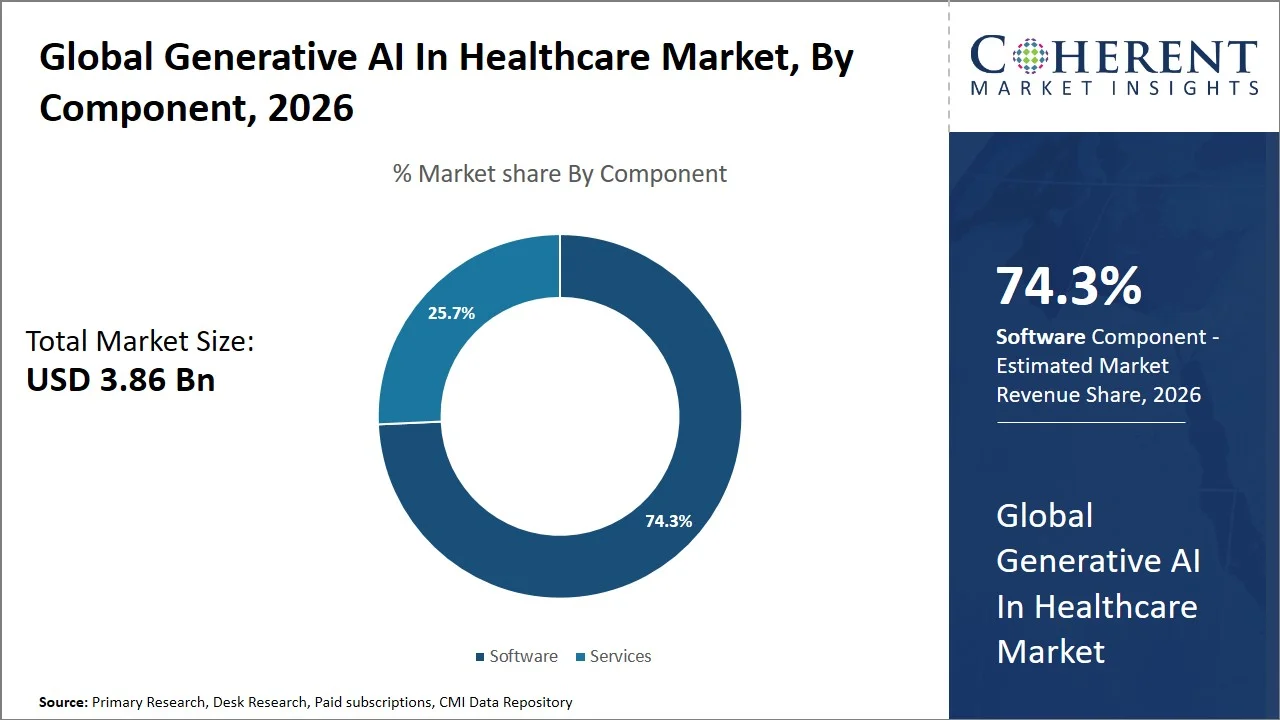
- Software is projected to hold 74.3% of the global generative AI in healthcare market share in 2026, making it the dominant component segment across North America due to rapid deployment of AI software platforms within healthcare enterprises and life sciences organizations. For instance, the U.S. Food and Drug Administration (FDA) has established the Digital Health Center of Excellence to advance the development and oversight of AI-enabled software technologies, fostering innovation and adoption of AI-based healthcare solutions.
- Drug discovery and development is projected to hold 31.8% of the global generative AI in healthcare market share in 2026, making it the dominant application segment across Europe owing to strong investments in AI-enabled pharmaceutical R&D and collaborative life sciences innovation. For instance, the European Commission's Horizon Europe Programme continues to fund artificial intelligence and biomedical research projects that accelerate AI-driven drug discovery and precision medicine across the region.
- Pharmaceutical and biotechnology companies are projected to hold38.6% of the global generative AI in healthcare market share in 2026, making it the dominant end user segment across Asia Pacific due to increasing adoption of AI for target identification, molecular design, and clinical development. For instance, India's National Strategy for Artificial Intelligence (NITI Aayog) identifies healthcare as a priority sector for AI adoption, encouraging the integration of advanced AI technologies across pharmaceutical research and healthcare innovation.
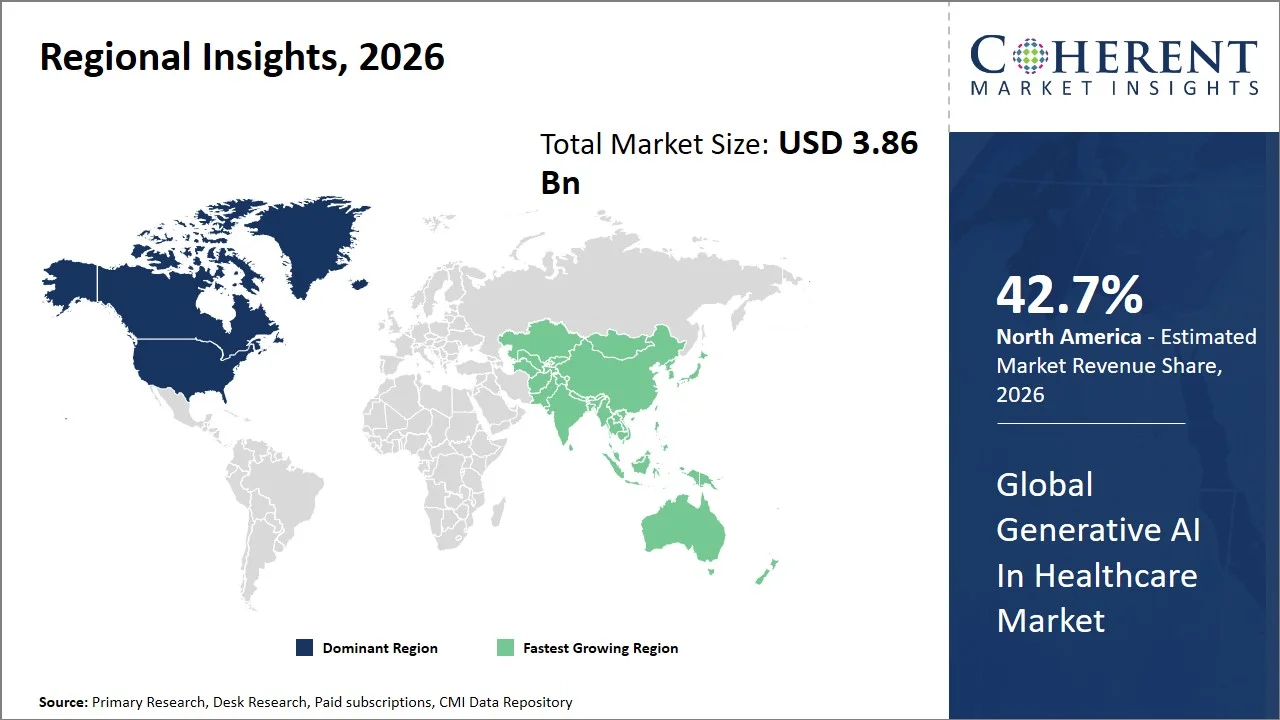
- North America maintains its dominance with an expected share of 42.7% in 2026, bolstered by the widespread deployment of cloud-based AI platforms, mature digital health ecosystems, and strong adoption of generative AI across healthcare providers and life sciences organizations. For instance, in January 2025, the U.S. Department of Health and Human Services (HHS) released the 2025 AI Strategic Plan, outlining priorities for the responsible development, evaluation, and adoption of AI technologies to improve healthcare delivery, biomedical research, and public health.
- Asia Pacific is expected to exhibit the fastest growth with an estimated contribution of 21.9% share in 2026, driven by increasing investments in healthcare AI infrastructure, expanding digital health programs, and growing adoption of AI-enabled clinical and pharmaceutical research. For instance, Singapore's Ministry of Digital Development and Information (MDDI) launched the National AI Strategy 2.0 Implementation Programme, identifying healthcare as a priority sector for accelerating the adoption of trustworthy AI solutions and strengthening AI capabilities across the healthcare ecosystem.
- Emergence of Healthcare-Specific Foundation Models: The emergence of domain-specific foundation models trained on biomedical literature, clinical guidelines, and multimodal healthcare datasets is accelerating the adoption of generative AI across healthcare. Unlike general-purpose AI models, these specialized models deliver higher clinical relevance, improved contextual understanding, and reduced hallucination risks, making them increasingly suitable for medical documentation, clinical decision support, and biomedical research applications.
- Expansion of Synthetic Clinical Data Generation: Synthetic clinical data generation is creating significant opportunities for the healthcare industry by enabling organizations to develop and validate AI models without exposing sensitive patient information. As regulatory scrutiny around healthcare data privacy intensifies, synthetic datasets are becoming a preferred approach for model training, cross-institutional collaboration, and clinical research, thereby accelerating innovation while maintaining compliance with evolving data governance requirements.
Segmental Insights
Why Does Software Dominate the Global Generative AI In Healthcare Market?
Software is projected to hold a market share of 74.3% in 2026, as it enables comprehensive, scalable and customizable AI-driven models for clinical documentation, radiology reporting, medical imaging, drug discovery, clinical decision support, and several other healthcare operations. The adaptability, scalability, cloud-native infrastructure, and high interoperability with established electronic health records (EHRs) infrastructure is expected to fuel its growth in the healthcare sector. For instance, in March 2025, Oracle unveiled the AI Agent Studio in Oracle Health, giving healthcare institutions a way to construct, configure, and deploy AI agents for automating clinical and business operations powered by generative AI. (Source: Oracle)
- Current Industry Events of 2026
- Market Size Estimation
- Regional Breakdown
- Competitive Landscape
- Customer Intelligence
- Segmental Analysis
- Pricing Analysis
- Key Market Drivers, Challenges & Future Trends
- Customized Insights Section
Why Does Drug Discovery and Development Represent the Largest Application Segment in the Generative AI In Healthcare Market?
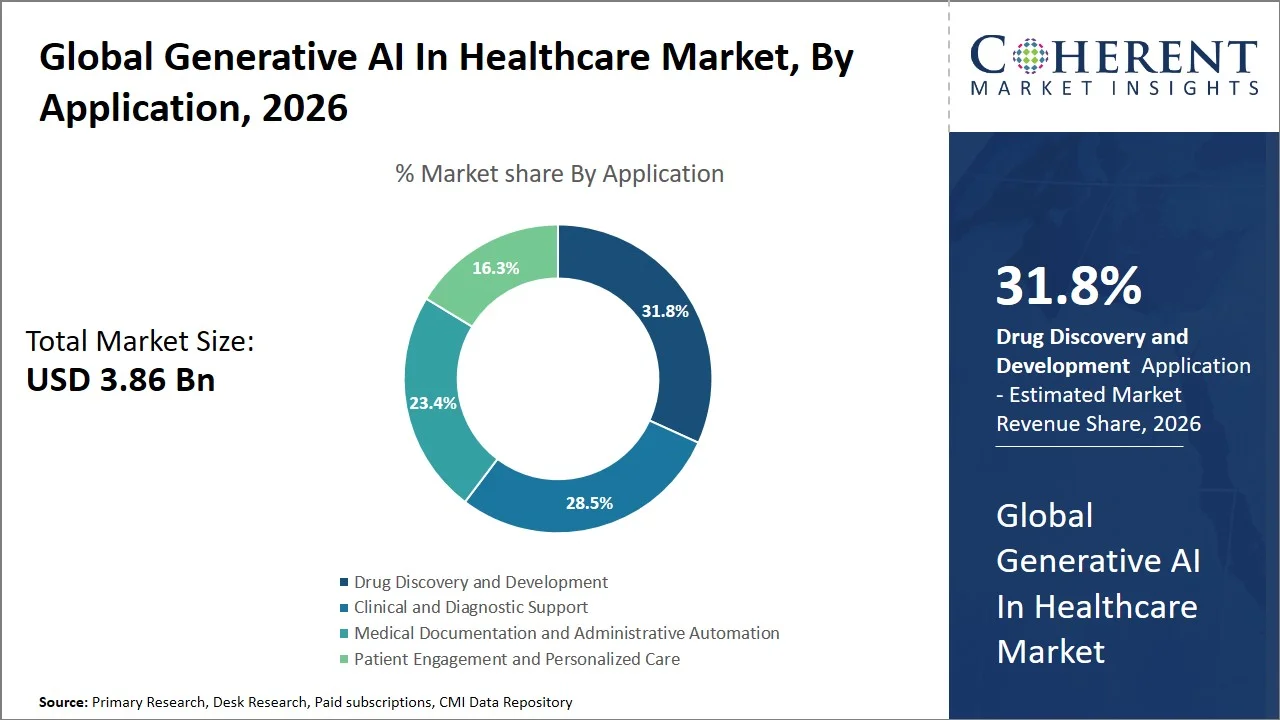
Drug discovery and development is projected to hold a market share of 31.8% in 2026, fueled by Generative AI’s capability to fasten the target identification and molecular design as well as the ability to advance the selection of lead candidates by a reduced period and cost of early-stage R&D. Through multimodal biological and chemical datasets, generative AI can better select molecules that form promising drug candidates. For instance, in April 2026, Insilico Medicine announced its preclinical candidate which was identified using generative AI-the first in the U.A.E, highlighting increased adoption and use of generative AI for drug discovery and innovation within the pharmaceutical industry globally. (Source: Insilico Medicine)
Pharmaceutical and Biotechnology Companies Segment Dominates the Global Generative AI In Healthcare Market
The pharmaceutical and biotechnology companies segment is projected to hold a market share of 38.6% in 2026, owing to the comprehensive application of generative AI for drug target discovery, molecular design, biomarker analysis, clinical trials, and research & development. The sector is heavily investing in its research capabilities, large proprietary biological datasets, and the development of treatments, hence, boosting the usage of AI powered-products. For instance, in June 2025, AstraZeneca partnered with CSPC Pharmaceuticals to integrate AI-powered research methods in the identification and development of next-generation oral medicines, underscoring the accelerating influence of generative AI within the pharmaceutical industry in research and development (R&D) and personalized treatment. (Source: AstraZeneca)
Currents Events and their Impact
Current Events | Description and its Impact |
U.S. FDA Issues Draft Guidance for AI-Enabled Medical Devices (March 2025) |
|
EU AI Act Expands Governance Requirements for Healthcare AI (February 2025) |
|
(Source: Food and Drug Administration, European Commission)
Generative AI In Healthcare Market Dynamics
Market Drivers
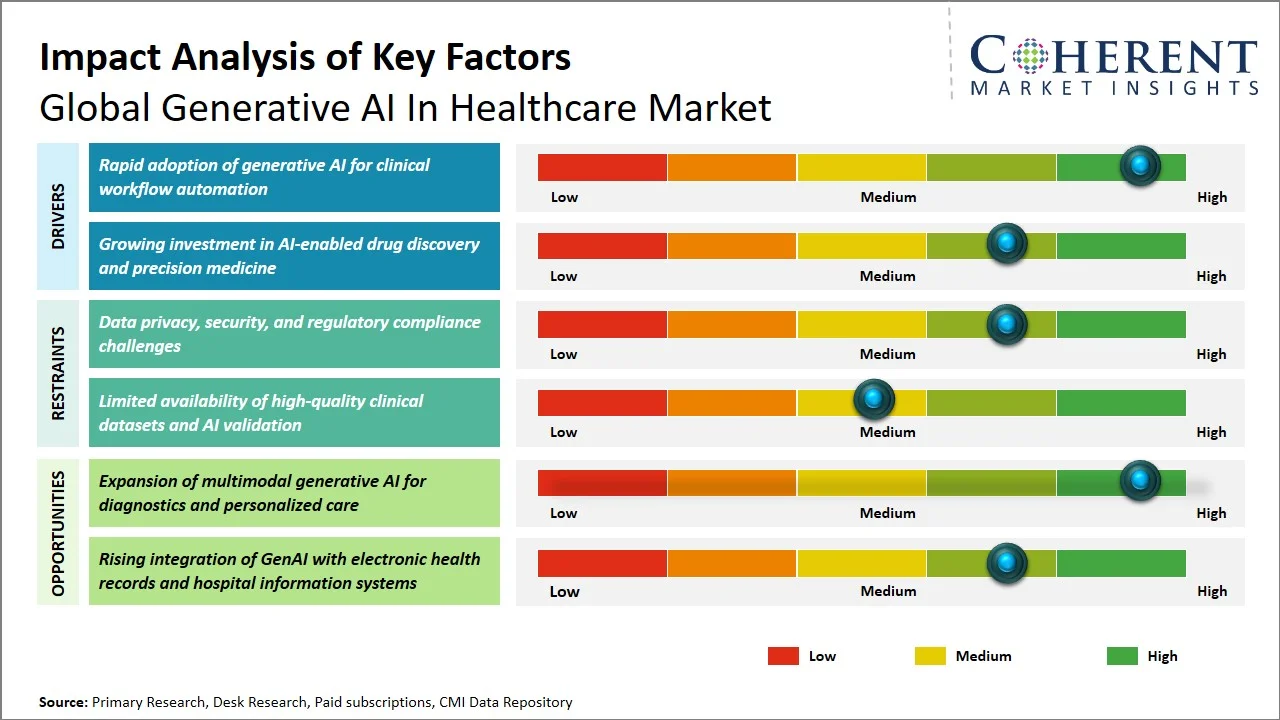
- Rapid adoption of generative AI for clinical workflow automation
Generative AI is ushering in a new era of healthcare, in which AI automates clinical documentation, synthesizes patient summaries and enables real-time clinical decision support, ultimately enabling health organizations to improve efficiency and free up clinicians’ time. As AI becomes a larger part of daily care delivery across the health ecosystem, interest in workflow-driven generative AI will surely expand. For instance, in March 2025, Microsoft launched Dragon Copilot, the healthcare industry's first unified voice AI assistant that enables clinicians to streamline clinical documentation, surface relevant patient information, and automate administrative tasks, highlighting the growing adoption of generative AI in everyday clinical practice.
- Growing investment in AI-enabled drug discovery and precision medicine
Growing investment in AI-enabled drug discovery and precision medicine is accelerating the adoption of generative AI across the pharmaceutical and biotechnology sectors. Advanced generative AI models are enabling faster target identification, de novo molecule design, and patient stratification, helping reduce early-stage R&D timelines while supporting precision medicine. For instance, in April 2025, Isomorphic Labs announced a USD 600 million funding round to accelerate the development of its AI-driven drug discovery platform and advance the design of next-generation therapeutics.
Emerging Trends
- Expansion of Agentic AI for Clinical Workflow Automation
Healthcare organizations are increasingly deploying agentic generative AI capable of autonomously executing multi-step clinical and administrative tasks such as patient triage, documentation, coding, appointment scheduling, and care coordination. This shift from AI-assisted tools to AI-driven workflow orchestration is improving operational efficiency while reducing clinician workload.
- Growing Adoption of Multimodal Healthcare Foundation Models
Multimodal foundation models are emerging in the market with rapid adoption to jointly analyze medical images, electronic health records (EHRs), laboratory, genomics and clinical notes, improving multifaceted clinical decision support, leading to increased diagnostic performance and driving personalization of treatment across multiple clinical areas.
Regional Insights
Why is North America a Strong Market for AI In Healthcare?
North America leads the global generative AI in healthcare market, accounting for an estimated 42.7% share in 2026, due to the region’s robust digital health landscape, the large-scale penetration of enterprise health IT solutions, and increasing use of generative AI within research, clinical applications, and life sciences areas. Favorable government initiatives promoting AI, healthcare digitalization, as well as biomedical advancements further propel the adoption of generative AI within North America.
For instance, the Artificial Intelligence (AI) Strategic Plan by the U.S. Department of Health and Human Services (HHS) outlines a coordinated strategy to develop, evaluate, and deploy AI responsibly in health and biomedical research, by emphasizing safe use of health data, dependable AI governance and the adoption of AI innovation faster. (Source: Department of Health and Human Services) Additionally, the region further draws from substantial availability of clinical data as well as cloud computing technology, enabling rapid commercialization of generative healthcare AI and market consolidation capabilities.
Why Does the Asia Pacific Generative AI In Healthcare Market Exhibit High Growth?
The Asia Pacific generative AI in healthcare market is expected to exhibit the fastest growth with an estimated contribution of 21.9% share to the global market in 2026, owing to the fast pace of healthcare digitization, rise in healthcare infrastructure facilities, and the uptake of AI in healthcare sectors such as diagnostics, drug discovery, and clinical workflows. The increased government support for the development of AI and digital healthcare, as well as rising healthcare R&D investments are playing vital roles in speeding up market expansion.
For instance, IndiaAI Mission by the government of India seeks to build India's national AI ecosystem through increased access to high-performance computing resources, high-quality datasets, startup funding, and in-house AI model development within priority sectors like healthcare. (Source: Press Information Bureau) Additionally, Asia Pacific’s significant patient base and the increasing presence of an integrated data pool also enable a faster market expansion of health-centric Generative AI applications.
Global Generative AI In Healthcare Market Outlook for Key Countries
Why is the U.S. Leading Innovation and Adoption in the Generative AI In Healthcare Market?
The U.S. dominates the generative AI in healthcare market driven by country’s strong focus on healthcare AI developers specialized for the medical and healthcare industries, robust cloud computing capability and deep adoption of commercially available clinical applications utilizing AI capabilities. The applications are readily available for drug discovery, medical transcription and imaging. Growing utilization of clinical decision support software leveraging these powerful new technologies have enabled strong adoption in the domestic market where the ecosystem for translational studies is relatively advanced, coupled with ready adoption of emerging digital health technologies and platforms.
Is Japan a Favorable Market for Generative AI In Healthcare?
Japan is one of the most promising markets for the generative AI in healthcare market driven by its highly developed digital healthcare infrastructure, strength in medical imaging and precision medicine, and early implementation of artificial intelligence in clinical work. The country’s strengths in robotics, high-performance computing and health informatics make Japan conducive to developing healthcare generative AI in all areas, from diagnostics, drug discovery to clinical note taking, along with hospital data digitization and increasing efforts to address staff shortages with intelligent automation.
Is China Emerging as a Key Growth Hub for the Generative AI In Healthcare Market?
China is positioned as a key growth hub in the global generative AI in healthcare market driven by country’s rapid adoption of AI in healthcare infrastructure development across nation, increased rate of digitization for patient records in hospital, and increasing inclusion of generative AI for use in hospital IT system as well as drug development. China boasts enormous capacity of clinical and imaging data generation which provides necessary impetus for creation of healthcare targeted AI applications. Extensive application of artificial intelligence in tertiary care in country also bolsters adoption of generative AI.
Why Does Germany Top the European Generative AI In Healthcare Market?
Germany is the leader in the European market for generative AI in healthcare due to its robust healthcare IT ecosystem, medical research credentials and prevalence of digitization within its life science and healthcare organizations. The country’s competencies in medical imaging, translational and precision medicine enables the development of specialized generative AI. In addition, close proximity of academic with commercial R&D will rapidly support deployment and commercialization of its healthcare and life science innovative and creative outputs.
Is Generative AI In Healthcare Market Developing in India?
India is a high-potential market for generative AI in healthcare attributed to burgeoning digital health infrastructure and growing utilization of Electronic Health records, further driving adoption across several areas like diagnostics, teleconsultations and hospital management. The country has a huge patient population fueling data availability to train healthcare AI models. Furthermore, expanding health-tech startup ecosystem (such as Qure.ai, 5C Network, and Nirama) along with burgeoning desire of AI-led clinical efficiency is further augmenting deployment of generative AI.
Evolution of Generative AI Adoption Across the Healthcare Value Chain
Healthcare Function | Traditional Approach | Generative AI-Enabled Approach | Key Market Impact |
Drug Discovery & Development | Conventional target identification and molecule screening through laboratory-intensive processes | AI-assisted target identification, de novo molecule generation, lead optimization, and clinical trial simulation | Accelerates R&D timelines, reduces development costs, and improves candidate success rates |
Clinical Documentation | Manual clinical note-taking, coding, and discharge summary preparation | AI-generated clinical documentation, automated coding, and intelligent medical summarization | Improves clinician productivity, reduces administrative burden, and minimizes documentation errors |
Medical Imaging & Diagnostics | Manual interpretation of medical images and report generation | AI-assisted image interpretation, automated report drafting, and multimodal diagnostic support | Enhances diagnostic efficiency, reporting consistency, and clinical decision-making |
Clinical Decision Support | Guideline-based decision-making using fragmented patient information | Context-aware AI assistance leveraging EHRs, clinical guidelines, and scientific literature | Enables faster evidence-based decisions and supports precision medicine |
Patient Engagement & Virtual Care | Conventional patient communication and follow-up processes | AI-powered virtual health assistants, personalized patient education, and automated care coordination | Improves patient engagement, care accessibility, and continuity of care |
How is the expansion of multimodal generative AI for diagnostics and personalized care creating new growth opportunities in the generative AI in healthcare market?
The global generative AI in healthcare market is gaining traction through the development of multimodal generative AI capabilities. These can connect various data types in health-including medical imaging, clinical notes, speech and electronic health records into cohesive clinical intelligence systems that facilitate precise diagnosis, automate care workflows and facilitate precise treatment for patients by clinicians and researchers alike. For instance, in January 2026, Google rolled out the next generation of healthcare AI - MedGemma 1.5, capable of interpreting multimodal medical images, and MedASR, a multimodal medical speech-to-text model-as the latest advancements towards more streamlined and efficient workflows and aided-diagnostics for clinician care. (Source: Google)
Market Players, Key Development, and Competitive Intelligence
Key Developments
- In June 2024, Cognizant launched its first suite of healthcare large language model (LLM) solutions in collaboration with Google Cloud to improve administrative efficiency, clinical workflows, and patient engagement. The solutions leverage Google Cloud's generative AI capabilities to automate documentation, enhance care coordination, and streamline healthcare operations. This launch highlights the growing commercialization of healthcare-specific generative AI solutions and their expanding role across provider organizations.
- In March 2024, NVIDIA Healthcare launched a suite of Generative AI microservices to accelerate applications across drug discovery, medical technology, digital health, and medical imaging. The platform enables healthcare organizations to build and deploy customized generative AI applications using optimized foundation models and NVIDIA's accelerated computing infrastructure. This launch is expected to accelerate the commercialization of generative AI solutions and strengthen AI-driven innovation across the healthcare value chain.
Competitive Landscape
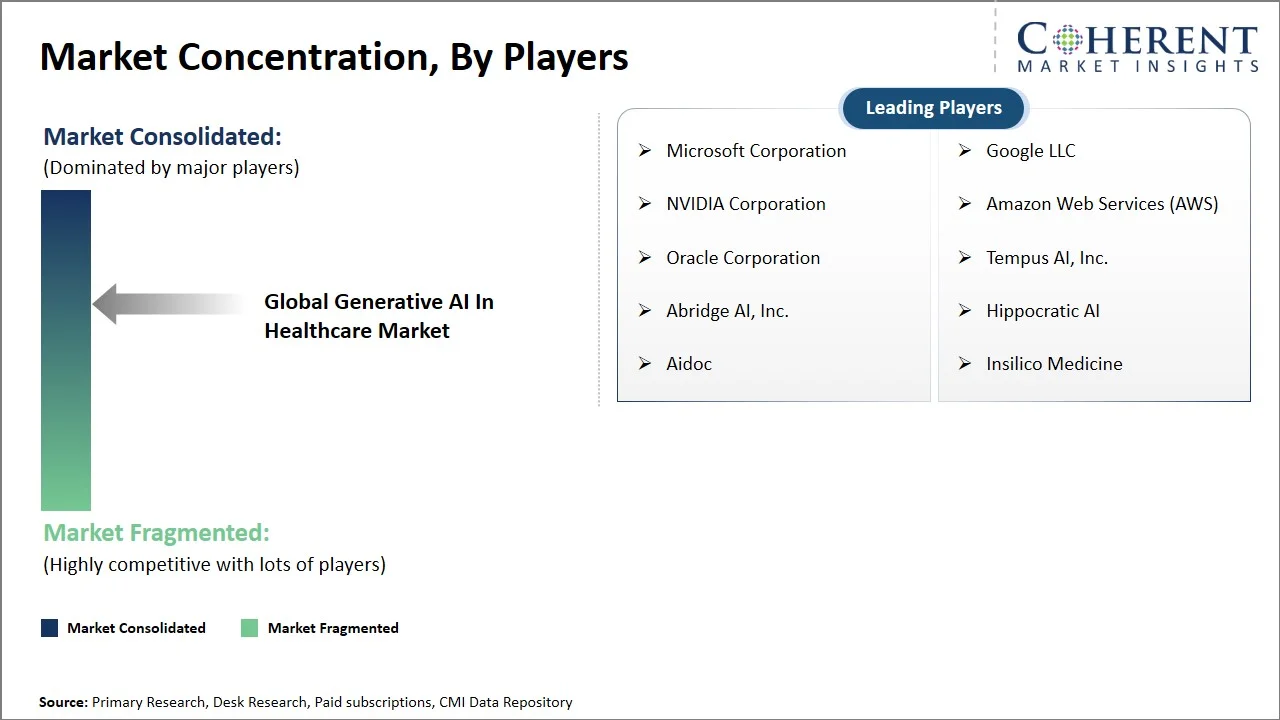
The global generative AI in healthcare market is moderately consolidated. The rivalry among market participants revolves around making and providing dedicated healthcare-specific foundation models, advancing its multimodal AI offering, and developing and implementing business-grade generative AI services in healthcare. To bolster the growth of its business, stakeholders are collaborating with healthcare providers, cloud service providers, and pharmaceutical and R&D businesses, thereby facilitating the swift adoption of this technology and facilitating scalability. The greater focus by market stakeholders on ensuring AI deployment according to guidelines of regulations, developing strong governance structures, and integrating generative AI solutions with EHRs and clinic procedures for streamlining clinician’s working is intensifying market rivalry. Key focus areas include:
- Development of healthcare-specific large language models (LLMs) and multimodal generative AI platforms for clinical and life sciences applications.
- Expansion of AI-enabled drug discovery, clinical decision support, and medical documentation solutions to improve healthcare productivity.
- Integration of generative AI with electronic health records (EHRs), medical imaging systems, and hospital information platforms for seamless clinical workflows.
- Strengthening responsible AI frameworks, model validation, and regulatory compliance to enhance trust, transparency, and clinical reliability.
- Strategic partnerships, cloud ecosystem collaborations, and global commercialization initiatives to expand market reach and accelerate enterprise adoption.
Market Report Scope
Generative AI In Healthcare Market Report Coverage
| Report Coverage | Details | ||
|---|---|---|---|
| Base Year: | 2025 | Market Size in 2026: | USD 3.86 Bn |
| Historical Data for: | 2020 To 2024 | Forecast Period: | 2026 To 2033 |
| Forecast Period 2026 to 2033 CAGR: | 26.2% | 2033 Value Projection: | USD 19.72 Bn |
| Geographies covered: |
| ||
| Segments covered: |
| ||
| Companies covered: | Microsoft Corporation, Google LLC, NVIDIA Corporation, Amazon Web Services (AWS), Oracle Corporation, Tempus AI, Inc., Abridge AI, Inc., Hippocratic AI, Aidoc, and Insilico Medicine | ||
| Growth Drivers: |
| ||
| Restraints & Challenges: |
| ||
Analyst Opinion (Expert Opinion)
- The future outlook for the generative AI in healthcare market will largely focus on the move from experimental AI solutions to enterprise-wide deployment. As the regulatory and standards environment matures and the clinical benefits of deploying generative AI solutions to power clinical decision support, medical documentation, drug discovery and patient engagement are fully recognized. Generative AI will become an inextricable component of digital healthcare infrastructures, rather than a novel technological application.
- The maximum opportunities will probably exist within software solutions for drug discovery and development in the U.S where the highest density of pharmaceutical R&D, complex AI infrastructure and data across large scale clinical studies and genomic data enable for quick commercialization for generative AI. Large opportunities are developing in AI driven clinical documentation and automation of workstreams for hospitals in North America and Western Europe.
- In order to obtain a competitive advantage, market participants should focus on designing healthcare-specific foundation models, particularly one that features clinical validation, effortless electronic health record (EHR) integration, and solid data privacy and compliance guardrails. Long-term leaders in this rapidly evolving market are the ones building strategic alliances with healthcare provider organizations, cloud technology firms, and life science companies, and are able to provide secure, explainable, interoperable AI solutions to this industry.
Speak to the analyst
Want personalized insights?
Take the findings above to one of our principal consultants, or have the report rebuilt around the segments, geographies and competitors you actually track.
Market Segmentation
- Component Insights (Revenue, USD Bn, 2021 - 2033)
- Software
- Services
- Application Insights (Revenue, USD Bn, 2021 - 2033)
- Drug Discovery and Development
- Clinical and Diagnostic Support
- Medical Documentation and Administrative Automation
- Patient Engagement and Personalized Care
- End User Insights (Revenue, USD Bn, 2021 - 2033)
- Pharmaceutical and Biotechnology Companies
- Healthcare Providers
- Healthcare Payers
- Research and Academic Institutions
- Others
- Regional Insights (Revenue, USD Bn, 2021 - 2033)
- North America
- U.S.
- Canada
- Latin America
- Brazil
- Argentina
- Mexico
- Rest of Latin America
- Europe
- Germany
- U.K.
- Spain
- France
- Italy
- Russia
- Rest of Europe
- Asia Pacific
- China
- India
- Japan
- Australia
- South Korea
- ASEAN
- Rest of Asia Pacific
- Middle East
- GCC Countries
- Israel
- Rest of Middle East
- Africa
- South Africa
- North Africa
- Central Africa
- North America
Sources
Primary Research Interviews
- Chief Medical Information Officers (CMIOs) and Chief Digital Officers (CDOs) from healthcare organizations
- AI researchers and clinical informaticians specializing in healthcare foundation models and large language models (LLMs)
- Hospital IT and digital transformation leaders implementing generative AI solutions
- Pharmaceutical R&D executives involved in AI-enabled drug discovery and clinical development
- Medical imaging and clinical decision support specialists utilizing generative AI platforms
- AI product managers and healthcare innovation leaders from health technology companies
Stakeholders
- Generative AI software platform providers
- Cloud computing and healthcare AI infrastructure companies
- Pharmaceutical and biotechnology companies
- Healthcare providers and integrated delivery networks (IDNs)
- Contract Research Organizations (CROs) and clinical research institutes
- Electronic Health Record (EHR) and healthcare IT solution providers
- End-use Sectors
- Hospitals and Multispecialty Healthcare Systems
- Pharmaceutical and Biotechnology Companies
- Diagnostic Laboratories and Imaging Centers
- Academic Medical Centers and Research Institutions
- Digital Health and Telehealth Providers
- Regulatory & Health Bodies
- U.S. Food and Drug Administration (FDA)
- European Medicines Agency (EMA)
- Medicines and Healthcare products Regulatory Agency (MHRA), U.K.
- Pharmaceuticals and Medical Devices Agency (PMDA), Japan
- National Medical Products Administration (NMPA), China
Databases
- ClinicalTrials.gov
- FDA Artificial Intelligence/Machine Learning-Enabled Medical Devices Database
- WHO Global Health Observatory (GHO)
- OECD Health Statistics
- World Bank Open Data
Magazines
- Healthcare IT News
- AI Business
- MedTech Dive
- Healthcare Innovation
- Pharmaceutical Executive
- HealthTech Magazine
Journals
- Nature Medicine
- npj Digital Medicine
- The Lancet Digital Health
- Journal of the American Medical Informatics Association (JAMIA)
- Artificial Intelligence in Medicine
- NEJM AI
Newspapers
- The Wall Street Journal
- Financial Times
- The New York Times
- USA Today
- The Guardian
Associations
- Healthcare Information and Management Systems Society (HIMSS)
- American Medical Informatics Association (AMIA)
- Digital Medicine Society (DiMe)
- Health Level Seven International (HL7)
- International Medical Informatics Association (IMIA)
Public Domain Sources
- World Health Organization (WHO)
- U.S. National Institutes of Health (NIH)
- U.S. Centers for Disease Control and Prevention (CDC)
- European Commission – Directorate-General for Health and Food Safety (DG SANTE)
- Organisation for Economic Co-operation and Development (OECD)
Proprietary Elements
- CMI Data Analytics Tool
- Proprietary CMI Existing Repository of information for last 10 years.
Get access to 250+ pages report
Every segment, forecast, competitor profile and data table behind the analysis above — available for instant download.
- ESOMAR Member
- ISO 9001:2015 Certified
- D-U-N-S Registered
- GDPR & CCPA Compliant
Missing comfort of reading report in your local language? Find your preferred language:
Transform your Strategy with Exclusive Trending Reports
Frequently Asked Questions
The global generative AI in healthcare market is estimated to be valued at USD 3.86 Bn in 2026 and is expected to reach USD 19.72 Bn by 2033.
Software dominates due to its widespread adoption for clinical documentation, drug discovery, medical imaging, clinical decision support, and workflow automation, supported by continuous advancements in healthcare-specific large language models and AI platforms.
Generative AI in healthcare refers to the use of advanced artificial intelligence models to generate clinical insights, medical content, synthetic healthcare data, and personalized recommendations that enhance healthcare delivery and research.
The CAGR of global generative AI in healthcare market is projected to be 26.2% from 2026 to 2033.
Rapid adoption of generative AI for clinical workflow automation, and growing investment in AI-enabled drug discovery and precision medicine are the major factors driving the growth of the global generative AI in healthcare market.
Data privacy, security, and regulatory compliance challenges, and limited availability of high-quality clinical datasets and AI validation are the major factors hampering the growth of the global generative AI in healthcare market.
In terms of end user, pharmaceutical and biotechnology companies are estimated to dominate the market revenue share in 2026.