

Global Grey Hydrogen Market Size and Forecast – 2026-2033
The Global Grey Hydrogen Market is estimated to be valued at USD 198.32 Bn in 2026 and is expected to reach USD 292.54 Bn by 2033, exhibiting a compound annual growth rate (CAGR) of 5.7% from 2026 to 2033.
Key Takeaways of the Grey Hydrogen Market
- Natural gas is expected to hold 45.3 % share of the market in 2026, driven by its widespread availability, cost-effectiveness, and well-established infrastructure.
- The Steam Methane Reforming (SMR) segment is projected to account for 39.6 % of the grey hydrogen market in 2026, as it remains the most established, efficient, and cost-effective technology available.
- The refining segment is expected to capture 43.6% of the grey hydrogen market in 2026, driven by hydrogen's essential role in petroleum refining processes.
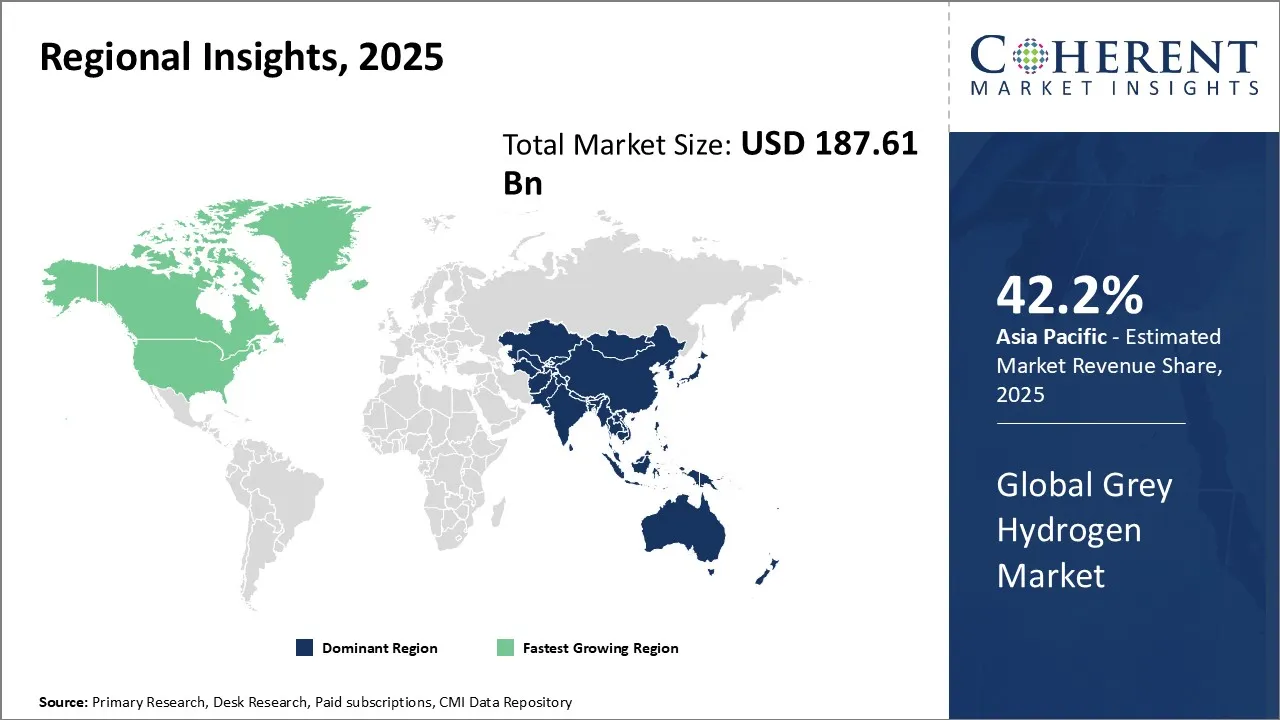
- Asia Pacific is expected to lead the global grey hydrogen market in 2026 with a 42. 2% share, driven by increasing industrial demand, government support for hydrogen initiatives, and the region's focus on reducing carbon emissions. North America, with a 21.8% share, will be the fastest-growing region, fueled by rapid technological advancements, growing investments in hydrogen infrastructure, and strong government policies promoting clean energy solutions.
Market Overview
A significant market trend in the grey hydrogen sector is the rising focus on improving production efficiency and reducing carbon emissions associated with hydrogen generation from fossil fuels. Despite being a non-renewable source, grey hydrogen remains prevalent due to its established infrastructure and cost advantages. However, stakeholders are increasingly investing in carbon capture and storage technologies to mitigate environmental impact. Additionally, integration with renewable energy systems and policy incentives are shaping the future trajectory of the grey hydrogen market, balancing economic growth with sustainability goals.
Current Events and Its Impact
Current Events | Description and its impact |
Environmental Regulations and Carbon Emission Policies |
|
Impact of U.S. Inflation Reduction Act (IRA) on Investment and Trade |
|
Segmental Insights
- Current Industry Events of 2026
- Market Size Estimation
- Regional Breakdown
- Competitive Landscape
- Customer Intelligence
- Segmental Analysis
- Pricing Analysis
- Key Market Drivers, Challenges & Future Trends
- Customized Insights Section
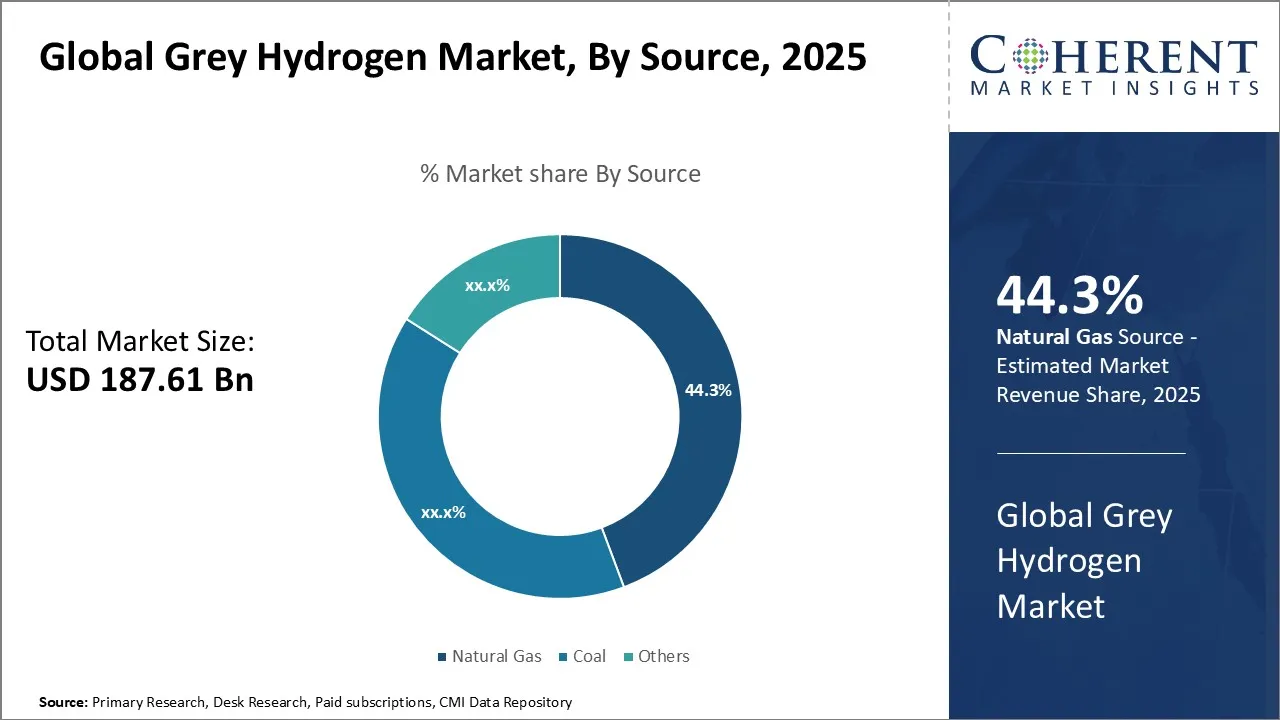
Grey Hydrogen Market Insights, By Source - Natural Gas Segment Dominates the Market due to their its Widespread Availability, Cost-Effectiveness, and the Advantage of a Well-Established Production and Distribution Infrastructure
Natural gas is expected to command 45.3% share of the market in 2026, due to its abundance, cost efficiency, and established infrastructure. Natural gas serves as the preferred feedstock for hydrogen production mainly because it is widely available in many regions, particularly in North America, the Middle East, and parts of Asia Pacific, which possess extensive natural gas reserves. The accessibility of natural gas facilitates continuous supply, making it a reliable source for large-scale hydrogen production.
Furthermore, the processing complexity associated with natural gas is relatively lower when compared to other sources such as coal. The chemical composition of natural gas, predominantly methane, lends itself well to hydrogen generation via Steam Methane Reforming (SMR), a method that dominates grey hydrogen production. This synergy between source and production technique enhances operational efficiencies and contributes to cost savings, which support the preference for natural gas.
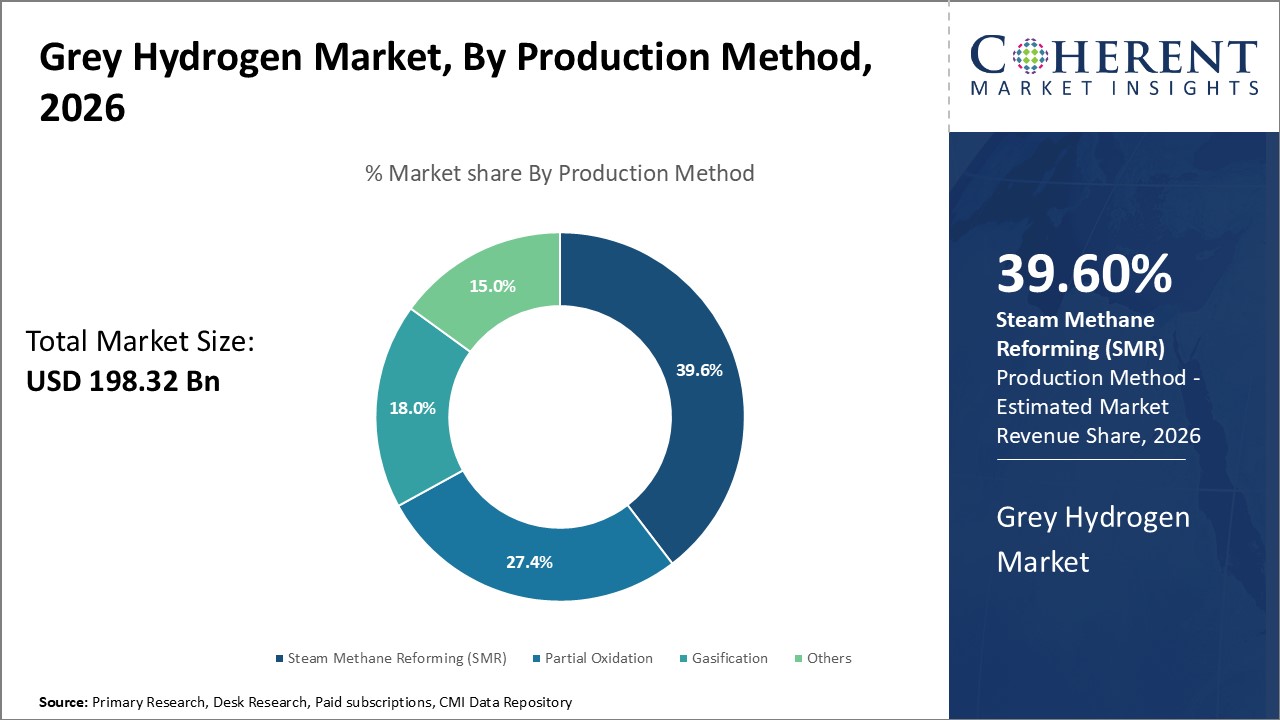
Grey Hydrogen Market Insights, By Production Method - The Steam Methane Reforming (SMR) segment leads the Market due to its Cost Efficiency, High Hydrogen Yield, And Established Infrastructure Enabling Continuous, Large-Scale Production
Steam Methane Reforming (SMR) segment is projected to hold 39.6% share of the grey hydrogen market in 2026, because it represents the most mature, efficient, and economically viable technology currently available. SMR is favored for converting hydrocarbons, particularly methane from natural gas, into hydrogen by reacting them with steam under high temperature and pressure. This process has been extensively optimized over decades and benefits from a deep pool of operational expertise globally.
Grey Hydrogen Market Insights, By End-use Industry – Refining Segment Dominates the Market due to its Critical Role in Hydrocracking and Desulfurization Processes, which Are Essential for Producing High-Quality Fuels and Meeting Stringent Environmental Standards
Refining segment is expected to hold 43.6% share of the grey hydrogen market in 2026, propelled by the critical role hydrogen plays in petroleum refining processes. Hydrogen is essential in hydrodesulfurization and other catalytic refining steps aimed at reducing sulfur content and improving fuel quality to meet stringent environmental regulations. These regulatory pressures globally have heightened the need for cleaner-burning fuels, thereby elevating demand for hydrogen in refineries.
The refining industry’s longstanding dependency on grey hydrogen is underpinned by the relatively low cost and ready availability of hydrogen produced through conventional methods such as SMR. Refineries have integrated hydrogen deeply into their operational framework, making the transition to alternative hydrogen sources challenging and costly in the short term. Consequently, grey hydrogen remains the backbone for supplying hydrogen in refining operations.
Regional Insights
Asia Pacific Grey Hydrogen Market Analysis and Trends
The Asia Pacific region is projected to lead the market with a 42.2% share in 2026, owing to increased industrialization, expanding energy demand, and growing petrochemical industries in countries like China and India. The region’s rapid urbanization and focus on energy security have accelerated hydrogen consumption, with grey hydrogen serving as a cost-effective solution during the transition to green alternatives.
Emerging economies benefit from government incentives promoting domestic hydrogen production, along with strategic partnerships between international and local energy firms. Notable players such as Sinopec and Reliance Industries Limited are aggressively expanding their grey hydrogen production capacities to meet regional industrial demand. Additionally, improved trade connectivity within Asia Pacific facilitates raw material and technology transfers, further supporting market growth.
North America Grey Hydrogen Market Analysis and Trends
The North America region is expected to exhibit the fastest growth in the market contributing 21.8% share in 2026, driven by its well-established industrial infrastructure, particularly in sectors such as oil refining, chemical production, and heavy manufacturing. The U.S. and Canada benefit from a mature energy ecosystem with a reliable supply of natural gas, which is the primary feedstock for grey hydrogen production.
Favorable government policies supporting traditional energy sources alongside emerging hydrogen initiatives provide a balanced regulatory landscape for grey hydrogen utilization. The presence of leading energy companies such as Air Products and Chemicals, Inc., and Air Liquide North America strengthens the market through continuous investments in hydrogen production and distribution infrastructure. Trade dynamics also favor North America due to its strong petrochemical export markets and cross-border energy trade with Mexico and Canada, enhancing regional supply chains for grey hydrogen.
Global Grey Hydrogen Market Outlook for Key Countries
U.S. Grey Hydrogen Market Trends
The U.S. grey hydrogen market is underpinned by its vast natural gas reserves and extensive refinery networks, making it a central hub for hydrogen production. The government's ongoing support for energy infrastructure modernization and industrial diversification indirectly aids grey hydrogen’s sustained role, especially in sectors yet to fully transition to green hydrogen alternatives.
China Grey Hydrogen Market Trends
China's grey hydrogen market is rapidly evolving with government-led initiatives focused on energy transition, while still relying heavily on grey hydrogen to fuel its industrial base. Corporations such as Sinopec and CNPC are key players, leveraging their extensive petrochemical operations to bolster hydrogen production. China’s strategic investments in hydrogen pipeline infrastructure and refineries position it as a critical market in Asia Pacific, with governmental policies balancing environmental commitments and economic growth imperatives.
India Grey Hydrogen Market Trends
India’s grey hydrogen market is expanding in tandem with its growing chemical and fertilizer industries, sectors that remain reliant on hydrogen for production. Reliance Industries Limited and Indian Oil Corporation dominate the market, capitalizing on domestic natural gas availability and supportive state-level regulations. Enhanced government focus on industrial emissions reduction is gradually encouraging shifts toward cleaner hydrogen but grey hydrogen remains predominant due to cost and infrastructure factors.
Germany Grey Hydrogen Market Trends
Germany continues to lead in Europe’s grey hydrogen landscape by integrating it as a transitional energy source within its robust industrial sector. Companies like Linde and Siemens Energy have cemented their presence by providing hydrogen generation technologies aligned with Europe’s stringent regulatory framework. Germany’s strong commitment to a hydrogen economy includes leveraging grey hydrogen as a bridging technology while scaling up green hydrogen production capabilities.
Saudi Arabia Grey Hydrogen Market Trends
Saudi Arabia's grey hydrogen market is characterized by its vast hydrocarbon resources, enabling cost-efficient grey hydrogen production predominantly through state-owned enterprises such as Saudi Aramco. The kingdom’s strategic vision includes using grey hydrogen as a base feedstock for petrochemical exports and domestic industrialization. Government policies focusing on energy diversification and international partnerships help reinforce Saudi Arabia’s influential role within the Middle East and global hydrogen supply chains.
Macro and Micro Economic Factors Impacting on Grey Hydrogen Market Growth
Macroeconomic Factors Impacting Grey Hydrogen Market Growth
- Energy Prices and Feedstock Availability: The cost and availability of natural gas and coal, which are primary inputs for grey hydrogen production, significantly affect production costs and market growth. Fluctuations in natural gas prices directly impact grey hydrogen's cost competitiveness.
- Global Industrial Demand: Large-scale demand from critical industries such as refineries, fertilizers (ammonia production), methanol, and petrochemicals drives grey hydrogen consumption. Rapid industrialization, especially in Asia Pacific countries like China and India, bolsters this demand.
- Government Policies and Incentives: Policies supporting cleaner energy transitions, carbon pricing, and incentives for carbon capture technologies influence grey hydrogen’s production dynamics. While grey hydrogen faces environmental regulatory challenges due to CO2 emissions, technologies like carbon capture and utilization (CCU) can mitigate some of these impacts.
- Economic Growth and Population Trends: Rising population and disposable incomes increase food demand, thereby boosting fertilizer demand, which in turn increases grey hydrogen consumption since it is used in ammonia production for fertilizers.
- Transition Role in Energy Sector: Grey hydrogen serves as a transitional fuel bridging fossil fuels and green hydrogen, sustaining its market presence as countries develop infrastructure for cleaner hydrogen alternatives.
Microeconomic Factors Impacting Grey Hydrogen Market Growth
- Production Costs: Grey hydrogen production involves high initial and operational costs, driven by fuel prices and technology efficiency. Advancements in carbon capture and storage techniques can reduce environmental penalties and enhance cost-effectiveness.
- Industrial Demand Specifics: Demand growth in specific sectors such as urea fertilizer production and refining feeds directly into grey hydrogen market growth. The continued reliance on grey hydrogen by these sectors sustains market growth in the near to medium term.
- Competitive Pressure from Green Hydrogen: The cost differential between grey and green hydrogen affects industrial uptake. Green hydrogen currently has higher production costs, limiting its replacement of grey hydrogen except where subsidies or policy incentives exist.
- Technological Advances: Improvements in production techniques and carbon mitigation technologies help improve grey hydrogen’s sustainability profile, thus supporting its market position as a mid-term solution.
Market Players, Key Development, and Competitive Intelligence
Key Developments
- In 2021, Sinopec—China’s largest producer of grey hydrogen—produced over 3.5 million tons, representing around 14% of the country’s total output. The company has since outlined plans to transition toward low-carbon hydrogen production in alignment with China’s decarbonization targets.
Top Strategies Followed by Global Grey Hydrogen Market Players
- Established players, often commanding significant resources, invest heavily in research and development (R&D) to innovate high-performance and efficient hydrogen production technologies. Their focus lies in enhancing the scalability and cost-effectiveness of grey hydrogen solutions, which remain dominant due to their established infrastructure and relatively lower production costs compared to green hydrogen alternatives.
- For example, Sinopec, China’s largest grey hydrogen producer. The company manufactures over 3.5 million tons of hydrogen annually, making it a significant player in the global market. Sinopec has continually focused on optimizing the steam methane reforming (SMR) process, the primary method of producing grey hydrogen, to enhance its efficiency and cost-effectiveness.
- Mid-level players in the grey hydrogen market are focusing on delivering cost-effective solutions that meet the needs of price-sensitive consumers while ensuring that quality is not significantly compromised. These players often work to optimize their production processes, aiming for cost efficiency by leveraging economies of scale. Strategic collaborations and joint ventures play a crucial role in achieving these objectives. By forming alliances with technology providers and regional distributors, these firms enhance their production capabilities and technological expertise, which helps expand their market reach.
- For instance, Malaysia’s Ministry of Science, Technology and Innovation has set targets to boost national hydrogen production to 2 Mt per year by 2030 and further to 16 Mt per year by 2050. Up to 2030, the strategy prioritizes replacing grey hydrogen with blue hydrogen, given the current high cost of green hydrogen, which will remain a longer-term focus through to 2050.
- Small-scale players operating in the grey hydrogen market typically concentrate on niche segments, often leveraging specialized features or pioneering innovative product offerings to differentiate themselves from larger competitors. These companies prioritize the adoption of cutting-edge technologies such as modular hydrogen production units or advanced carbon capture integration to enhance the environmental and operational performance of their solutions. Staying at the forefront of technology enables them to compete effectively despite their limited scale.
- For instance, in 2022, HiiROC announced a pilot project in collaboration with Centrica at the Brigg peaking plant in Lincolnshire, U.K. This aimed to inject hydrogen produced via TPE into the natural-gas-fired facility—though this was for a peaking power plant, not a steel manufacturer.
Market Report Scope
Grey Hydrogen Market Report Coverage
| Report Coverage | Details | ||
|---|---|---|---|
| Base Year: | 2025 | Market Size in 2026: | USD 198.32 Bn |
| Historical Data for: | 2020 To 2024 | Forecast Period: | 2026 To 2033 |
| Forecast Period 2026 to 2033 CAGR: | 5.7% | 2033 Value Projection: | USD 292.54 Bn |
| Geographies covered: |
| ||
| Segments covered: |
| ||
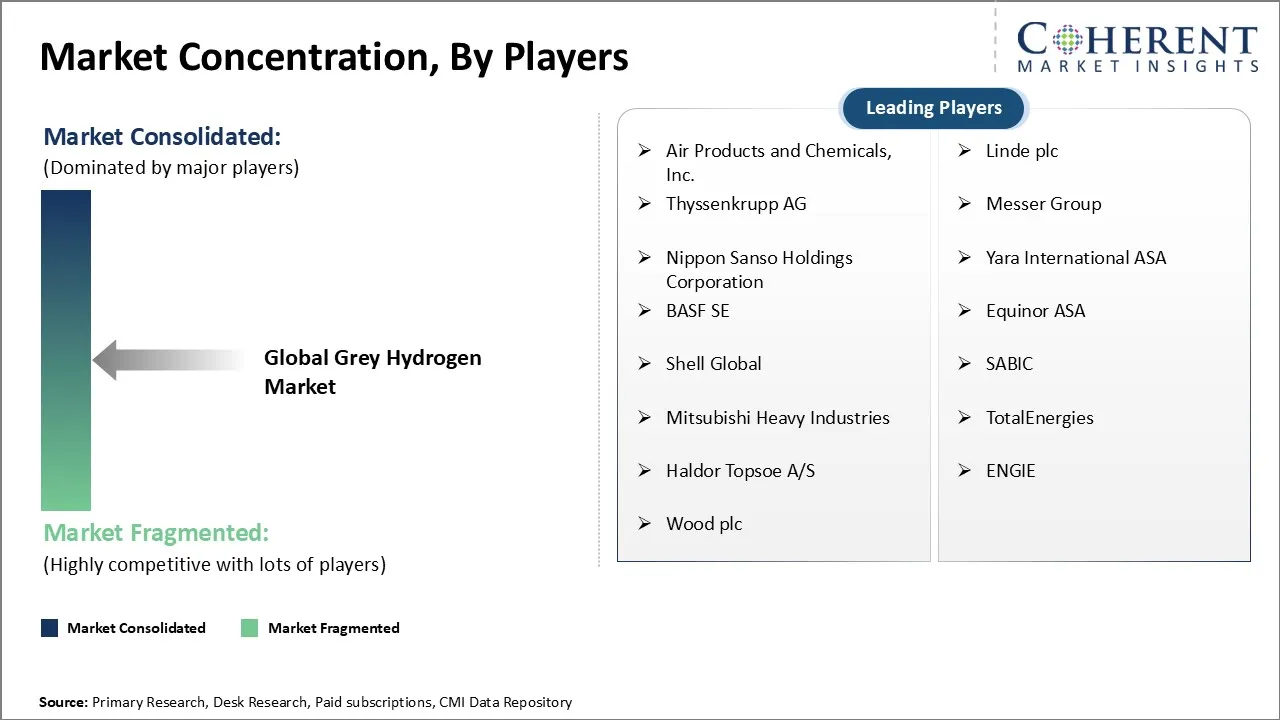
| Companies covered: | Air Products and Chemicals, Inc., Linde plc, Thyssenkrupp AG, Messer Group, Nippon Sanso Holdings Corporation, Yara International ASA, BASF SE, Equinor ASA, Shell Global, SABIC, Mitsubishi Heavy Industries, TotalEnergies, Haldor Topsoe A/S, ENGIE, and Wood plc | ||
| Growth Drivers: |
| ||
| Restraints & Challenges: |
| ||
Grey Hydrogen Market Dynamics
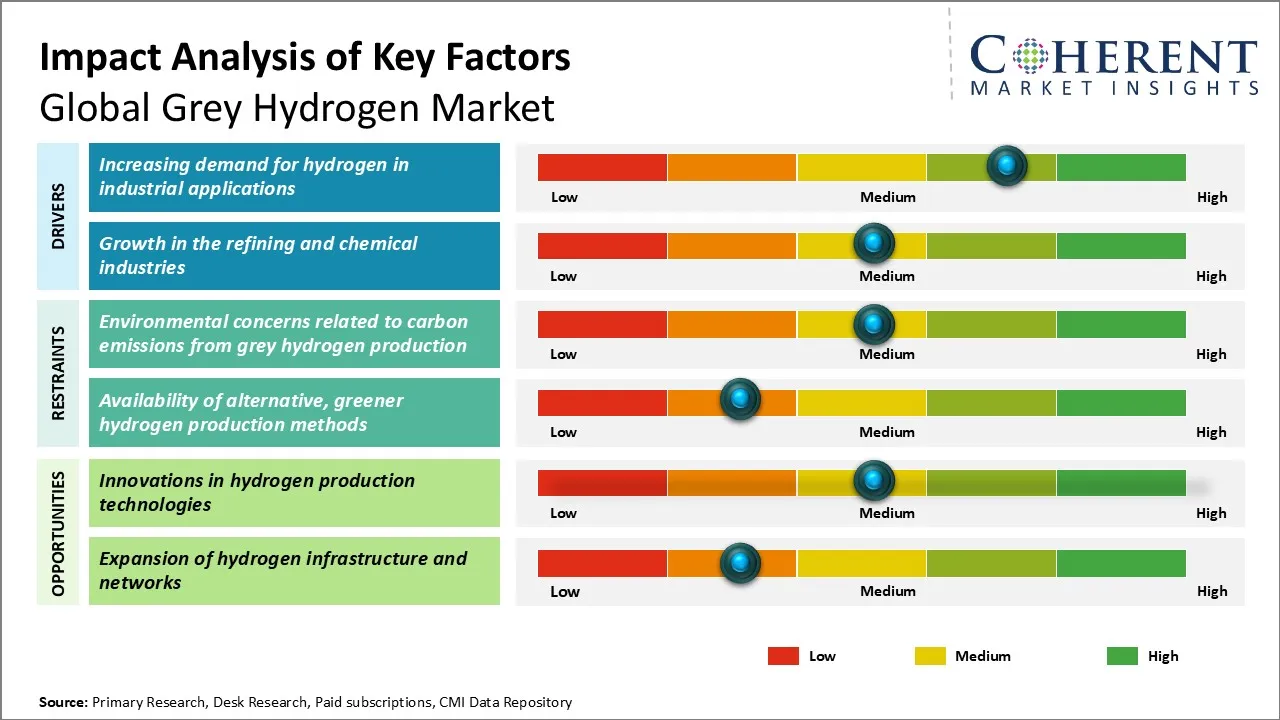
Grey Hydrogen Market Driver - Increasing Demand for Hydrogen in Industrial Applications
The rising demand for hydrogen across various industrial sectors is a significant driver propelling the growth of the global grey hydrogen market. Hydrogen plays a crucial role as a feedstock and energy source in industries such as petroleum refining, chemical manufacturing, and steel production. In petroleum refining, hydrogen is essential for processes like hydrocracking and desulfurization, which help produce cleaner fuels complying with stringent environmental regulations.
According to the International Energy Agency's Global Hydrogen Review 2023, global hydrogen demand reached approximately 95 million tons in 2022, with industrial applications accounting for the vast majority of consumption, representing nearly 90% of total demand. The report highlights that refineries consumed about 40 million tons, while ammonia production utilized approximately 35 million tons of hydrogen.
Grey Hydrogen Market Opportunity - Innovations in Hydrogen Production Technologies
The global grey hydrogen market stands at the cusp of transformative growth driven by ongoing innovations in hydrogen production technologies. Grey hydrogen, predominantly produced through steam methane reforming (SMR) of renewable natural gas, is currently constrained by high carbon emissions and energy-intensive processes. However, breakthroughs in catalytic reforming, membrane separation, and carbon capture utilization and storage (CCUS) technologies present significant opportunities to enhance production efficiency and reduce environmental impact without drastically increasing costs. Advanced catalysts are being developed to optimize reaction kinetics, thereby improving hydrogen yield and lowering operational expenditures.
For example, Oregon State University (OSU) researchers' development of advanced catalysts for clean hydrogen production. They designed catalysts that can greatly improve the efficiency of producing hydrogen by splitting water via electrochemical catalytic processes. This method is cleaner and more sustainable than traditional steam methane reforming (SMR) used for grey hydrogen.
Analyst Opinion (Expert Opinion)
- The global grey hydrogen market is currently at a pivotal juncture, shaped by rising energy demands and the urgent need for cleaner alternatives. Insights from the World Hydrogen Summit (2023) and the Hydrogen and Fuel Cells Conference (2022) revealed ongoing discussions about the role of grey hydrogen, primarily produced from natural gas, as a transitional fuel in the journey towards greener hydrogen solutions.
- Companies like Air Products and Linde are actively investing in grey hydrogen production technologies, emphasizing efficiency improvements and cost reduction. For example, Air Products' recent partnerships to enhance hydrogen infrastructure underline the growing recognition of grey hydrogen’s role in facilitating the shift to low-carbon energy systems. However, industry stakeholders voiced concerns about the long-term viability of grey hydrogen due to its carbon emissions.
- As regulatory pressures increase, the market may face challenges in maintaining its growth unless it pivots towards blue or green hydrogen solutions. Companies that can innovate and adapt their strategies to incorporate carbon capture and storage technologies will likely secure a competitive edge. Ultimately, the grey hydrogen market's future will depend on its ability to evolve amidst the shifting energy landscape.
Speak to the analyst
Want personalized insights?
Take the findings above to one of our principal consultants, or have the report rebuilt around the segments, geographies and competitors you actually track.
Market Segmentation
- Source Insights (Revenue, USD Bn, 2021 - 2033)
- Natural Gas
- Coal
- Others
- Production Method Insights (Revenue, USD Bn, 2021 - 2033)
- Steam Methane Reforming (SMR)
- Partial Oxidation
- Gasification
- Others
- End-use Industry Insights (Revenue, USD Bn, 2021 - 2033)
- Refining
- Ammonia Production
- Methanol Production
- Fuel Cells
- Others
- Regional Insights (Revenue, USD Bn, 2021 - 2033)
- North America
- U.S.
- Canada
- Latin America
- Brazil
- Argentina
- Mexico
- Rest of Latin America
- Europe
- Germany
- U.K.
- Spain
- France
- Italy
- Russia
- Rest of Europe
- Asia Pacific
- China
- India
- Japan
- Australia
- South Korea
- ASEAN
- Rest of Asia Pacific
- Middle East
- GCC Countries
- Israel
- Rest of Middle East
- Africa
- South Africa
- North Africa
- Central Africa
- North America
- Key Players Insights
- Air Products and Chemicals, Inc.
- Linde plc
- Thyssenkrupp AG
- Messer Group
- Nippon Sanso Holdings Corporation
- Yara International ASA
- BASF SE
- Equinor ASA
- Shell Global
- SABIC
- Mitsubishi Heavy Industries
- TotalEnergies
- Haldor Topsoe A/S
- ENGIE
- Wood plc
Sources
Primary Research Interviews
- R&D Director – Leading Liquid Vitamin Manufacturer
- Procurement Manager – Major Dietary Supplement Retailer
- Product Development Head – Well-Known Vitamin Brand
- Sustainability Manager – Health Supplement Certification Body
Stakeholders
- Manufacturers
- End-use Sectors:
- Dietary Supplements (Vitamins, Minerals, Nutritional Drinks)
- Fitness & Wellness Brands focusing on liquid supplementation
- Regulatory & Certification Bodies
- E-commerce Platforms and Retailers
- Technology Integration Players: AI-based personalization providers for nutritional products
Databases
- UN Comtrade Database
- India Import Export (EXIM) Database
Magazines
- Nutrition & Wellness Magazine – Trends in dietary supplements and liquid vitamins
- Health & Nutrition Business – Innovations in liquid nutrition and supplements
- Global Health Insights – Consumer health trends in vitamin consumption
- Vitamin Business Journal – Market updates and growth opportunities in liquid vitamins
- The Supplement Guide – Industry updates for dietary supplements and liquid formulations
Journals
- International Journal of Nutrition – Nutritional benefits and absorption of liquid vitamins
- Journal of Food Science & Technology – Formulation trends in vitamin products
- Journal of Dietary Supplements – Effects of liquid supplementation on health
- Journal of Applied Nutrition – Benefits of liquid vitamins in nutrition
- Food Research International – Nutrient bioavailability in liquid supplements
Newspaper
- The Financial Times – Market growth of liquid vitamins and nutritional products
- The Guardian – Consumer trends in health and wellness supplements
- Asia Health Journal – Growth of liquid vitamin consumption in the Asia-Pacific region
- European Nutrition News – Liquid vitamins regulation and health policies
- The New York Times – Consumer preference shift to liquid supplementation
Associations
- Council for Responsible Nutrition (CRN)
- International Society of Nutraceuticals and Functional Foods (ISNFF)
- American Herbal Products Association (AHPA)
- Natural Products Association
- European Food Safety Authority (EFSA)
- Clean Label Project
Public Domain Sources
- U.S. FDA – Guidelines for dietary supplements, including liquid vitamins
- European Commission – Food Supplements Regulation and Vitamin Guidelines
- World Health Organization – Safety standards and health impact studies on vitamins
- OECD – Nutritional and safety assessments for food supplements
Proprietary Elements
- CMI Data Analytics Tool, Proprietary CMI Existing Repository of information for last 8 years.
Get access to 250+ pages report
Every segment, forecast, competitor profile and data table behind the analysis above — available for instant download.
- ESOMAR Member
- ISO 9001:2015 Certified
- D-U-N-S Registered
- GDPR & CCPA Compliant
Missing comfort of reading report in your local language? Find your preferred language:
Transform your Strategy with Exclusive Trending Reports
Frequently Asked Questions
The global grey hydrogen market is estimated to be valued at USD 198.32 Bn in 2026 and is expected to reach USD 292.54 Bn by 2033.
The CAGR of global grey hydrogen market is projected to be 5.7% from 2026 to 2033.
Increasing demand for hydrogen in industrial applications and growth in the refining and chemical industries are the major factors driving the growth of the global grey hydrogen market.
Environmental concerns related to carbon emissions from grey hydrogen production and availability of alternative greener hydrogen production methods are the major factors hampering the growth of the global grey hydrogen market.
In terms of source, natural gas is estimated to dominate the market revenue share in 2026.
Air Products and Chemicals, Inc., Linde plc, Thyssenkrupp AG, Messer Group, Nippon Sanso Holdings Corporation, Yara International ASA, BASF SE, Equinor ASA, Shell Global, SABIC, Mitsubishi Heavy Industries, TotalEnergies, Haldor Topsoe A/S, ENGIE, and Wood plc are the major players.
Asia Pacific is expected to lead the global grey hydrogen market in 2026.