

Global Hair Restoration Market Size and Forecast – 2026 to 2033
The Global Hair Restoration Market is estimated to be valued at USD 8.71 Bn in 2026 and is expected to reach USD 25.66 Bn by 2033, exhibiting a compound annual growth rate (CAGR) of 16.7% from 2026 to 2033. This robust growth reflects increasing consumer demand supported by advancements in hair restoration technologies and a rising prevalence of hair loss conditions across diverse demographics worldwide.
Key Takeaways of the Global Hair Restoration Market
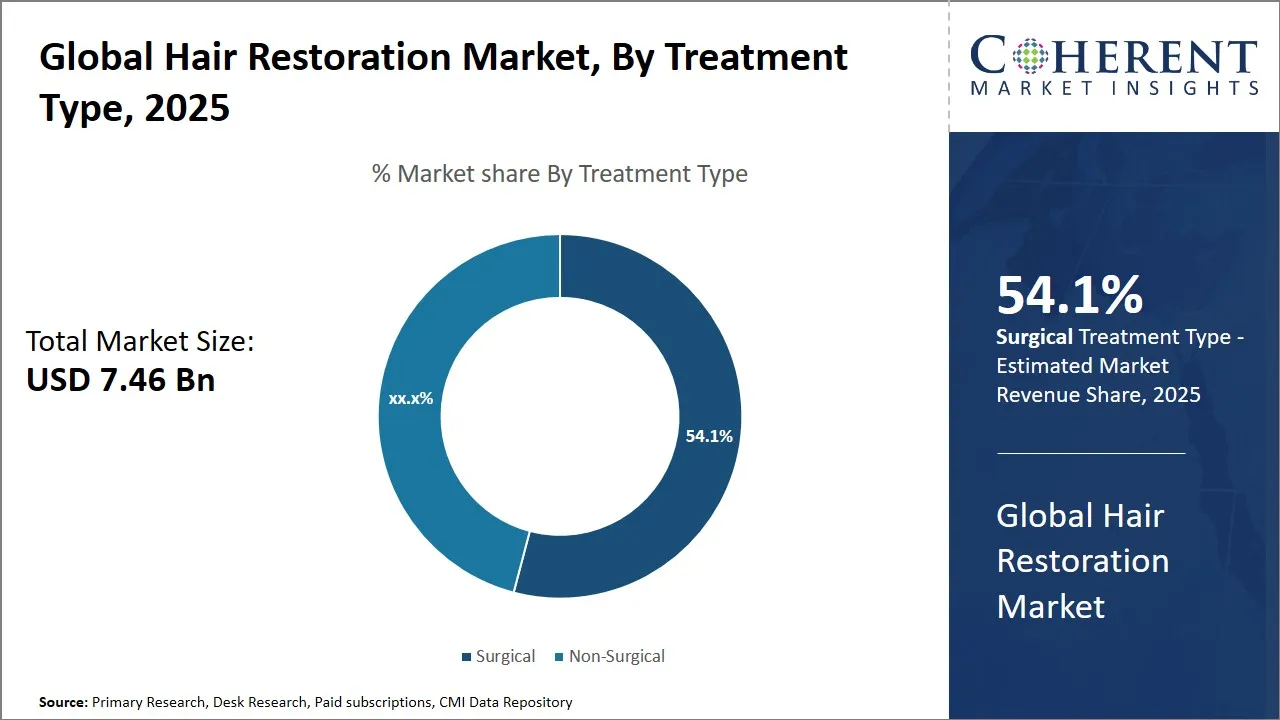
- The surgical segment is expected to dominate the global hair restoration market, accounting for 55.1 % share in 2026.
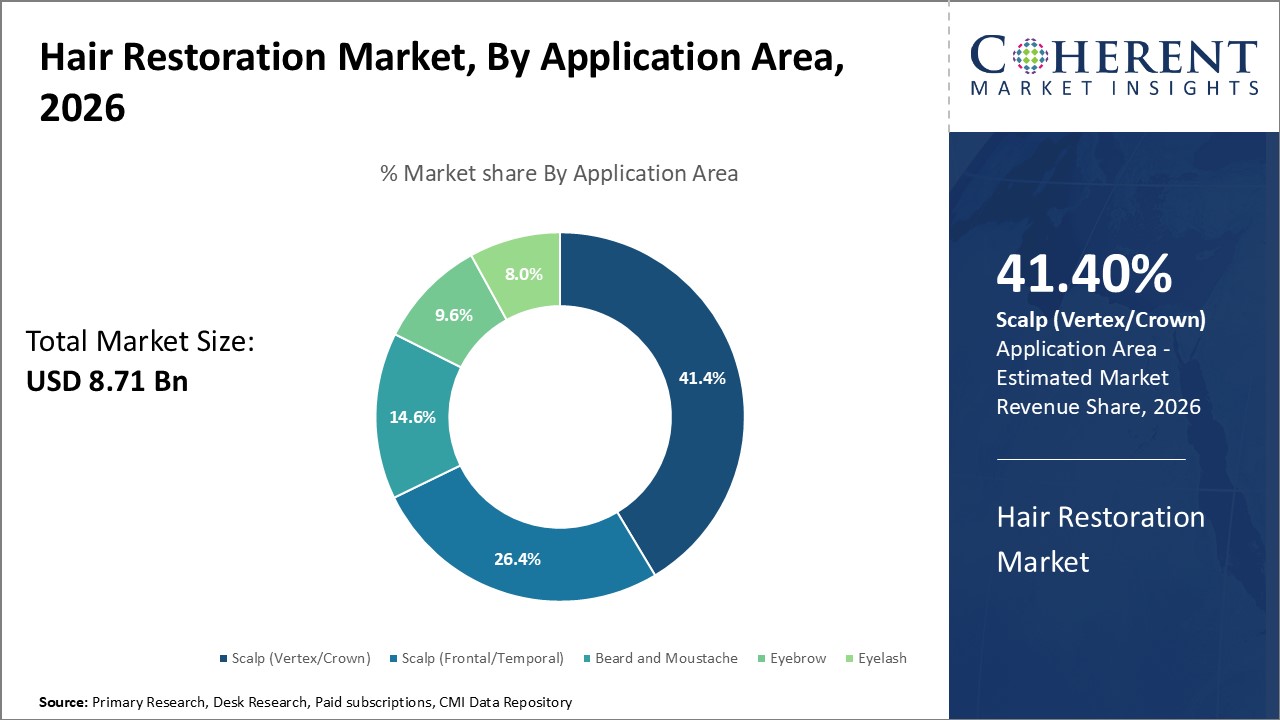
- Within application area, the scalp (vertex/crown) segment is projected to account for 41.4 % share in 2026.
- By indication, the androgenetic alopecia segment is expected to capture 25.5% of the market share in 2026.
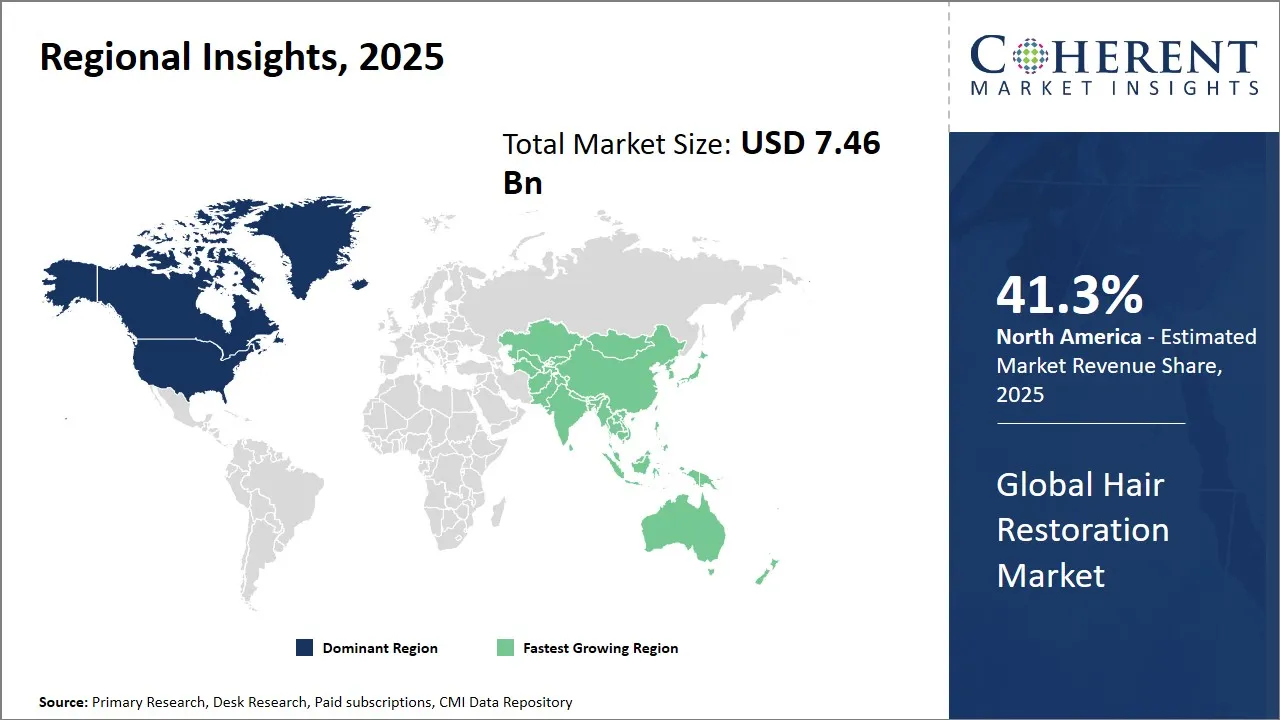
- North America is expected to lead the market, holding a share of 41.3 % in 2026. Asia Pacific is anticipated to be the fastest-growing region, with an estimated market share of 24.5% in 2026.
Market Overview
A key market trends include a significant shift towards minimally invasive and non-surgical hair restoration techniques, driven by consumer preference for faster recovery and natural-looking results. Additionally, growing awareness about aesthetic grooming, coupled with innovations such as robotic-assisted hair transplants and regenerative therapies, is propelling the market expansion. The integration of artificial intelligence and personalized treatment plans further bolsters adoption, making the hair restoration sector a dynamic and fast-evolving landscape.
Current Events and Its Impact
Current Events | Description and its Impact |
Surge in medical tourism focused on hair transplants (e.g. Turkey as a destination) |
|
Rise of AI and Robotics in Surgical Procedures |
|
Segmental Insights
- Current Industry Events of 2026
- Market Size Estimation
- Regional Breakdown
- Competitive Landscape
- Customer Intelligence
- Segmental Analysis
- Pricing Analysis
- Key Market Drivers, Challenges & Future Trends
- Customized Insights Section
Hair Restoration Market Insights, By Treatment Type - Surgical Segment Maintains Dominance Driven by Efficacy and Technological Advancements
The surgical segment is projected to hold 55.1% of the market share in 2026, because of its unmatched effectiveness and sustained technological advances. It is dominated by surgical techniques, mostly Follicular Unit Transplantation (FUT) and Follicular Unit Extraction (FUE) which provide permanent remedies to loss of hair follicles by moving healthy ones to balding or atrophic areas. On the one hand, non-surgical methods provide temporary or slow benefits, which are unlikely to impress patients in search of a lasting and effective hair restoration process.
In August 2024, Hair Doctors, a leading hair restoration clinic known for its expertise in advanced transplant procedures, highlighted the latest hair transplant technologies transforming the field. Dr. Ossman Ashraf discussed innovations such as robotic-assisted Follicular Unit Extraction (FUE), Direct Hair Implantation (DHI), and stem cell–based regenerative techniques, all contributing to faster recovery, minimal scarring, and more natural results.
Hair Restoration Market Insights, By Application Area - Scalp (Vertex/Crown) Leads Due to Prevalence and Targeted Treatment Effectiveness
Scalp (vertex/crown) is expected to capture 41.4% share in 2026. Such supremacy is based on the fact that the occurrence rates of hair thinning and baldness are localized in the vertex area, which is among the first and most apparent areas affected by typical hair loss disorders.
The vertex is more exposed and prone to suffering various forms of alopecia and thus the patterns of the hair loss are eminent and patients are highly motivated to address them to treat them aesthetically and psychologically.
Hair Restoration Market Insights, By Indication - Dominance of Androgenetic Alopecia Segment Rooted in its Widespread Prevalence and Chronic Nature
The androgenetic alopecia segment is projected to account for 25.5% share in 2026, because it is the most common and gradually progressive, which produces a continuous need to restore the hair. Androgenetic alopecia, also referred to as male-pattern and female-pattern baldness, has a high prevalence in the adult population of the global population.
Its progressive hair thinning and follicle downsizing structure is a direct incentive to patients to find out how their hair can be stopped and restored, which makes it the leading signal that drives the market of hair restoration.
Role of Artificial Intelligence (AI) in the Global Hair Restoration Market
- AI is transforming the global hair restoration market by improving diagnosis, personalization, and procedural accuracy. AI-powered imaging, predictive analytics, and robotic systems help doctors assess scalp health, predict treatment outcomes, and automate graft extraction with higher precision and efficiency. In July 2025, MDalgorithms launched the world’s largest AI-driven hair restoration data study through its MDhair app, analyzing insights from over one million users. The study, presented at the American Academy of Dermatology Innovation Academy in Chicago, confirmed androgenetic alopecia as the most common U.S. hair loss condition, affecting 50 million men and 30 million women showing how AI can process massive data sets for clinical insight.
- AI also enhances patient experience, reduces costs, and supports new business models like digital consultations and personalized product delivery. Platforms such as HairMetrix by Canfield Scientific and ARTAS iX robotic systems use AI to monitor hair growth and automate transplants with minimal human intervention. These advancements drive greater accuracy, accessibility, and scalability in hair restoration. However, while AI increases efficiency and data-driven care, concerns around privacy, bias, and overdependence on algorithms highlight the need for balanced adoption and strong ethical governance.
Regional Insights
North America Hair Restoration Market Analysis and Trends
North America is projected to hold a 41.3% share of the global hair restoration market in 2026, driven by advanced healthcare infrastructure, strong consumer awareness, and widespread adoption of cutting-edge hair restoration technologies. The existence of well-maintained clinics and special dermatology units is a major contributor. In the forefront of the U.S. are the leading companies like Bosley, Restoration Robotics and Hair Club that are already pioneering with robotic and minimal invasive technologies. The demand is further contributed by strong insurance systems and rising disposable incomes.
In October 2023, Ample, a U.S.-based hair restoration company focused on personalized and technology-driven care, launched its innovative hair restoration solution and opened its flagship studio in Midtown Manhattan, New York City, alongside a virtual hair health platform.
Asia Pacific Hair Restoration Market Analysis and Trends
Asia Pacific is expected to record the fastest growth in the global hair restoration market, holding a 24.5% share in 2026, supported by rapid urbanization, rising disposable incomes, and increasing beauty awareness among younger consumers.
The area has enjoyed increased medical tourism especially in such countries as South Korea, Japan and India and this attracts patients across the globe who are willing to have cheap but quality treatment. The governments in the region are also facilitating cosmetic and medical tourism by making policies and infrastructural investments.
Hair Restoration Market Outlook for Key Countries
U.S. Hair Restoration Market Analysis and Trends
The hair restoration market in the U.S. is the epicenter of hair restoration innovation, and multiple clinics are providing the state-of-the-art interventions such as robotic hair transplants and platelet-rich plasma (PRP) treatment. Bosley, Restoration Robotics, and other market leaders have led in the adoption of technology, which has dictated the industry standards. The U.S. FDA provides strong regulatory control over quality treatment and safety of the consumers.
In January 2026, Eirion Therapeutics Inc., a U.S.-based biopharmaceutical company specializing in aesthetic and dermatological innovations, announced promising first-in-man clinical trial results for its new ET-02 topical treatment targeting androgenic alopecia under its Hair Restoration portfolio.
Germany Hair Restoration Market Analysis and Trends
The hair restoration market in Germany is defined by sophisticated medical services and developed medical industry and this is the reason why both local and European patients are attracted to it. The strict medical devices policies by the government have ensured high quality of treatment which instills confidence in patients. Well-established firms, including Dr. Wolff Group and Hairfor2, are well represented, and both are concerned with developing non-invasive transplant and cosmetic products. Strategic positioning of the country in Europe can be used to trade and reach a wide range of customers throughout Europe.
In February 2026, Smile Hair Clinic, a leading Turkish medical center recognized for its expertise in hair transplantation, announced the opening of its first branch in Germany, marking a major step in expanding its international hair restoration services.
South Korea Hair Restoration Market Analysis and Trends
The South Korea hair restoration market is becoming a significant market in hair restoration due to the fact it has an international reputation in cosmetic surgery and beauty innovation. Medical tourism and cosmetic healthcare have developed a flourishing ecosystem in the country due to the positive government policies that have resulted in the tourism sector. Some of the main competitors like the SEVO and the Dermaster are the leaders in offering high-tech procedures at a reasonable cost. The emphasis on minimally invasive, state-of-the-art treatments and an increasing number of domestic customer base drives the growth of the market.
In October 2024, AesMed Co., Ltd., a leading South Korean company specializing in medical hair loss treatments, announced its participation in Cosmoprof Asia Hong Kong 2024, one of the world’s largest beauty industry trade fairs. The company used the platform to highlight its nonprofit initiative, the Hair Care Day Campaign, designed to raise awareness about hair loss and promote confidence among those affected.
India Hair Restoration Market Analysis and Trends
The India hair restoration market is growing at a high pace and is projected to keep growing because of the growing awareness, low cost, and the availability of numerous trained medical practitioners. International patients are drawn to the country in search of affordable, but quality treatments, and these are supported by favorable medical tourism policies. Such companies as Apollo Hospitals and Dr. Battras are spending on modern equipment and specialized clinics. The enhancing healthcare infrastructure and governmental support allow increasing access to and growth potential of the market regardless of the issue of standardization.
In August 2023, DHI International, a global pioneer in hair restoration and transplant services, launched Activa Regenera, an advanced regenerative hair loss treatment in India. The procedure uses a patient’s own tissue to create a micrograft solution enriched with activated progenitor cells, which stimulate follicle regeneration, strengthen thinning hair, and reduce hair loss naturally.
Market Players, Key Developments, and Competitive Intelligence
Key Developments
- In September 2025, MedPark Hospital, a leading multidisciplinary healthcare institution in Bangkok known for its advanced medical services and international standards, announced the launch of its Hair Restoration Center. The new facility, led by Thailand’s renowned hair transplant pioneer Dr. Damkerng Pathomvanich, offers comprehensive solutions for hair loss and baldness using techniques such as FUE, FUT, and combo transplants.
- In August 2025, Dr Batra’s, India’s leading modern homeopathy healthcare brand known for pioneering personalized hair and skin treatments, launched XOGEN Advance, the country’s fastest and only hair growth therapy powered by 10 billion exosomes. The India FDA and US-patented mRNA-based treatment delivers visible results within just four sessions, requiring no surgery or harsh chemicals. Designed to target all forms of hair loss and natural approach to long-term hair restoration.
- In July 2025, Sun Pharmaceutical Industries Ltd, India’s largest drugmaker with a strong global specialty medicines portfolio, launched LEQSELVI (deuruxolitinib) 8 mg tablets in the United States for adults suffering from severe alopecia areata.
- In June 2025, the University of California, Los Angeles (UCLA) announced a major breakthrough with the discovery of PP405, a novel molecule designed to combat hair loss. Unlike traditional treatments, PP405 activates hair follicle stem cells (HFSCs) through a unique metabolic pathway, enhancing mitochondrial (cellular energy center) activity to promote stronger and faster hair regrowth in both men and women.
Top Strategies Followed by Global Hair Restoration Market Players
- Established players take a dominant role in the arena by exploiting their strong resources and industry experience. These firms have placed a lot of emphasis on research and development (R&D) in order to develop high performance products that can meet the changing consumer demands such as enhanced hair growth formulation, creation of non-invasive solutions as well as the advanced hair transplant methods. Along with innovation, they also establish strategic alliances and collaboration with key industry players and Original Equipment Manufacturers (OEMs) in order to add value to the products and make supply chain practices more efficient.
- On October 07, 2025, the Hair Restoration Institute of Minnesota (HRI), a leading U.S. center known for surgical and non-surgical hair restoration, announced a merger with Good Look Ink (GLI), a pioneer in scalp micropigmentation. The partnership marks a new chapter in the Midwest’s hair restoration industry by combining HRI’s medical expertise with GLI’s advanced SMP technology to deliver comprehensive treatments for men and women.
- Mid-level stakeholders in the hair restoration market use a complementary but different strategy that is geared towards providing solutions at a cheaper cost. Targeting consumer groups that are sensitive to price, these firms come up with products that balance both affordability and quality, and hair restoration becomes affordable to a larger population.
- For mid-level players, companies such as Advanced Hair Studio, Capillus, and RegenLab SA exemplify this approach by offering cost-effective yet clinically backed hair restoration options. Advanced Hair Studio provides affordable surgical and non-surgical treatments tailored for middle-income consumers globally, while Capillus focuses on budget-friendly laser therapy caps for home use.
- Small-scale players distinguish themselves through the niche segments and specialized product features serving the unique needs of consumers. The innovative technologies that are embraced by these businesses include customized hair restoration products, AI-enabled diagnostics, or a plant-based hair growth serum as a way of remaining competitive even though the scale of business is small.
- For small-scale players, firms like Kiierr, Keeps, and Vegamour represent innovation-focused brands leveraging niche technologies. Kiierr uses AI-driven diagnostic tools for personalized laser cap treatments; Keeps offers telehealth-based, subscription hair restoration services tailored for younger male audiences; and Vegamour differentiates itself through plant-based serums and holistic hair wellness formulations.
Market Report Scope
Hair Restoration Market Report Coverage
| Report Coverage | Details | ||
|---|---|---|---|
| Base Year: | 2025 | Market Size in 2026: | USD 8.71 Bn |
| Historical Data for: | 2020 To 2024 | Forecast Period: | 2026 To 2033 |
| Forecast Period 2026 to 2033 CAGR: | 16.7% | 2033 Value Projection: | USD 25.66 Bn |
| Geographies covered: |
| ||
| Segments covered: |
| ||
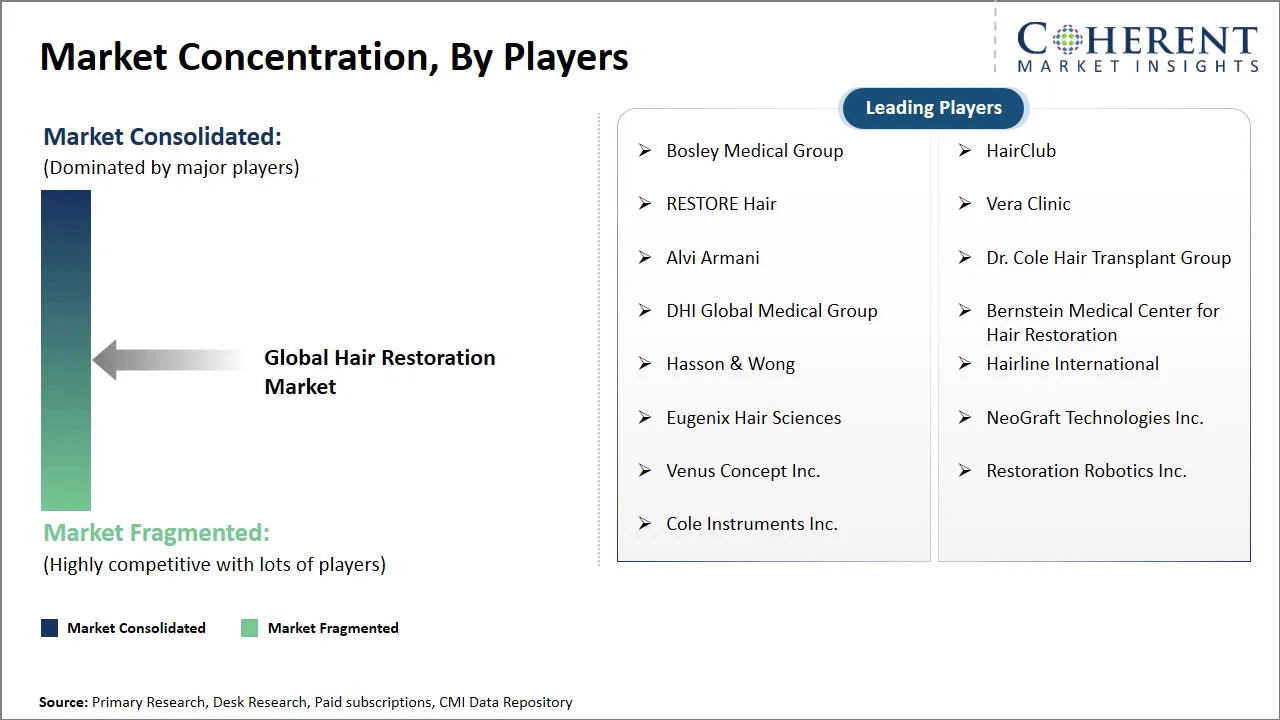
| Companies covered: | Bosley Medical Group, HairClub, RESTORE Hair, Vera Clinic, Alvi Armani, Dr. Cole Hair Transplant Group, DHI Global Medical Group, Bernstein Medical Center for Hair Restoration, Hasson & Wong, Hairline International, Eugenix Hair Sciences, NeoGraft Technologies Inc., Venus Concept Inc., Restoration Robotics Inc., and Cole Instruments Inc. | ||
| Growth Drivers: |
| ||
| Restraints & Challenges: |
| ||
Hair Restoration Market Dynamics
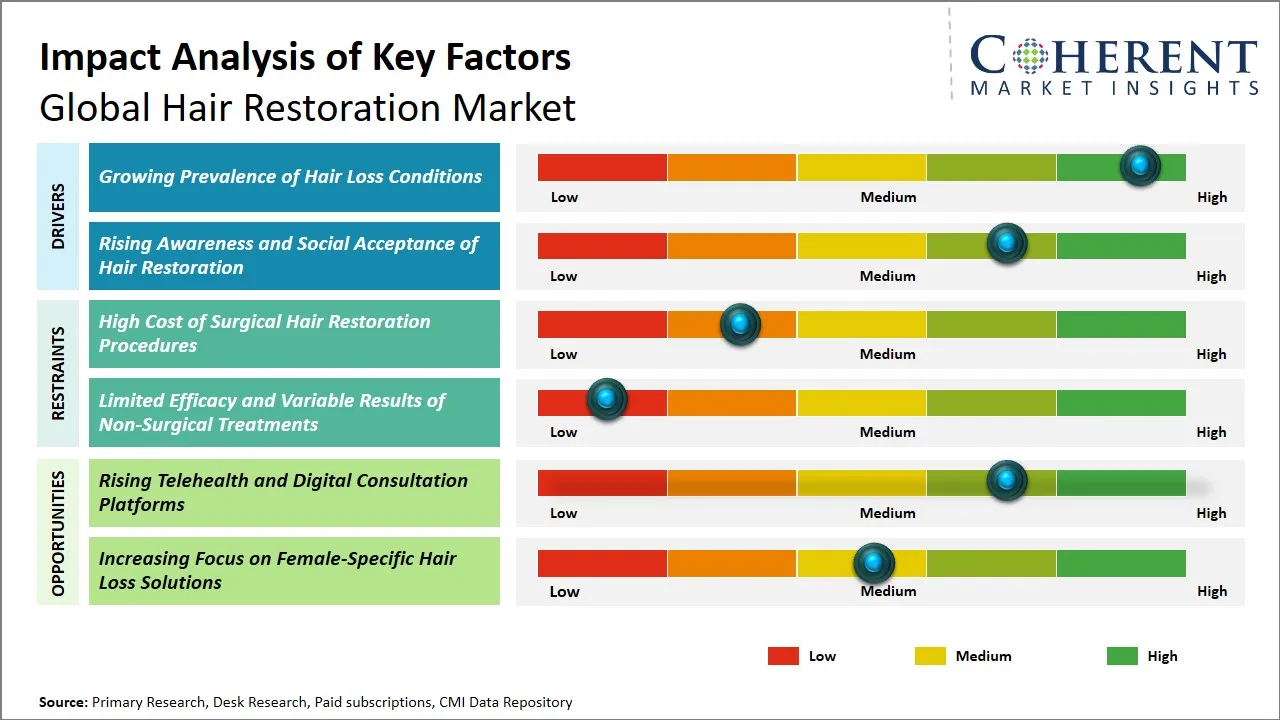
Hair Restoration Market Driver - Growing Prevalence of Hair Loss Conditions
The global hair restoration market is witnessing strong growth due to the rising incidence of hair loss disorders such as androgenetic alopecia, telogen effluvium, and alopecia areata. Factors like stress, hormonal imbalance, genetics, and environmental changes are accelerating the rate of hair loss across various age groups and populations worldwide. Additionally, unhealthy diets, pollution exposure, poor lifestyle habits, and frequent use of harsh chemical treatments have further intensified the problem.
In January 2025, according to the International Society of Hair Restoration Surgery, male pattern baldness, medically known as androgenetic alopecia (AGA), remains the most common form of hair loss, affecting up to half of all men by age 50 and nearly 80% by age 80. The condition is largely genetic and polygenic, meaning it stems from multiple genes, though only one gene linked to the androgen receptor has been clearly identified.
Hair Restoration Market Opportunity - Rising Telehealth and Digital Consultation Platforms
Telehealth and digital consultation services have experienced rapid growth, which is a major opportunity to the hair restoration market in the world. As technology evolves and more consumers demand the convenience of remote healthcare solutions, these solutions are changing the way patients seek hair restoration consultation and treatment. Telehealth means that people can communicate with hair restoration experts without having to consider geographical boundaries, which are more convenient and lessen the first obstacles to professional consultation.
In November 2024, Amazon One Medical, the telehealth arm of e-commerce giant Amazon known for integrating digital healthcare and pharmacy services, introduced affordable treatment plans and medication delivery for common wellness needs, including men’s hair restoration, skin care, and erectile dysfunction.
Analyst Opinion (Expert Opinion)
- Hair restoration market is developing fast due to improvements in minimally invasive surgery, regenerative cell therapy, and automated follicular extraction systems that are replacing the standard of the treatment. The increasing consumer consciousness on aesthetic wellness, as well as favorable regulatory permission of new approaches such as exosome and stem cell-based therapies is still widening the industry. The demand is also driven by increasing personalized medicine and genetic diagnostics, which provide the possibility of creating customized hair restoring treatments.
- Nevertheless, procedural expenses, labor-intensive processes, and inadequate reimbursement systems are still a challenge particularly in the developing economies. In the meantime, new opportunities are in the merging of AI-powered scalp analytics, tele-consultation, and hybrid in-clinic and at-home options that can be used to improve access and patient outcomes.
- Examples of events, like the International Society of Hair Restoration Surgery (ISHRS) World Congress, AMWC Monaco or the Global Aesthetic Summit in Dubai have become crucial to the development of best practices all over the world due to the sharing of expertise and clinical displays. In the industry, other firms such as Venus Concept are developing robotic-assisted transplantation, and alliances of companies, such as L’Oréal working with Verily on biological aging, are an indication of a science-based personalization future.
Speak to the analyst
Want personalized insights?
Take the findings above to one of our principal consultants, or have the report rebuilt around the segments, geographies and competitors you actually track.
Market Segmentation
- Treatment Type Insights (Revenue, USD Bn, 2021 - 2033)
- Surgical
- Follicular Unit Transplantation (FUT)
- Follicular Unit Extraction (FUE)
- Others (e.g., Direct Hair Implantation, Body Hair Transplant)
- Non-Surgical
- Medications (e.g., Topical Minoxidil, Oral Finasteride, etc.)
- Autologous Micrografts (cell-based, non-PRP)
- Mesotherapy (non-cellular cocktails)
- Microneedling (medical-grade)
- Low-Level Laser Therapy (LLLT)
- Platelet-Rich Plasma (PRP) Therapy
- Other Therapies (e.g., Scalp Micropigmentation)
- Surgical
- Application Area Insights (Revenue, USD Bn, 2021 - 2033)
- Scalp (Vertex/Crown)
- Scalp (Frontal/Temporal)
- Beard and Moustache
- Eyebrow
- Eyelash
- Indication Insights (Revenue, USD Bn, 2021 - 2033)
- Androgenetic Alopecia
- Alopecia Areata
- Traction Alopecia
- Scarring Alopecia
- Post-Surgical/Trauma Hair Loss
- Telogen Effluvium
- Gender Insights (Revenue, USD Bn, 2021 - 2033)
- Male
- Female
- End User Insights (Revenue, USD Bn, 2021 - 2033)
- Specialty Hair/Dermatology Clinics
- Multispecialty Hospitals
- Ambulatory Surgical Centers
- Medical and Wellness Centers
- Others
- Sales Channel Insights (Revenue, USD Bn, 2021 - 2033)
- Online
- Offline
- Regional Insights (Revenue, USD Bn, 2021 - 2033)
- North America
- U.S.
- Canada
- Latin America
- Brazil
- Argentina
- Mexico
- Rest of Latin America
- Europe
- Germany
- U.K.
- Spain
- France
- Italy
- Russia
- Rest of Europe
- Asia Pacific
- China
- India
- Japan
- Australia
- South Korea
- ASEAN
- Rest of Asia Pacific
- Middle East
- GCC Countries
- Israel
- Rest of Middle East
- Africa
- South Africa
- North Africa
- Central Africa
- North America
- Key Players Insights
- Bosley Medical Group
- HairClub
- RESTORE Hair
- Vera Clinic
- Alvi Armani
- Cole Hair Transplant Group
- DHI Global Medical Group
- Bernstein Medical Center for Hair Restoration
- Hasson & Wong
- Hairline International
- Eugenix Hair Sciences
- NeoGraft Technologies Inc.
- Venus Concept Inc.
- Restoration Robotics Inc.
- Cole Instruments Inc.
Sources
Primary Research Interviews
Industry Stakeholders List
- Leading Hair Transplant Surgeons and Dermatologists
- Medical Device Manufacturers (Hair Restoration Systems)
- Pharmaceutical Formulation Experts (Minoxidil, Finasteride)
- Cosmetic Clinic Owners and Chain Managers
- Trichology Research Scientists
- Regenerative Medicine Specialists
End Users List
- Male and Female Patients with Alopecia
- Aesthetic Clinic Clients (Non-Surgical Treatments)
- At-Home Device Users (LLLT, Topical Applications)
- Cosmetic Dermatology Patients
- Beauty and Wellness Consumers
- Post-Chemotherapy Hair Recovery Patients
Government and International Databases
- World Health Organization (WHO)
- U.S. Food and Drug Administration (FDA)
- European Medicines Agency (EMA)
- National Center for Biotechnology Information (NCBI)
- Organization for Economic Co-operation and Development (OECD)
- National Health Service (NHS – UK)
Trade Publications
- Dermatology Times
- Aesthetic Medicine Magazine
- Medical Device Network
- Cosmetic Surgery Times
- The Aesthetic Guide
- MedTech Insight
Academic Journals
- Journal of the American Academy of Dermatology (JAAD)
- Dermatologic Surgery Journal
- International Journal of Trichology
- Clinical, Cosmetic and Investigational Dermatology
- Journal of Cosmetic Dermatology
- Stem Cell Research & Therapy
Reputable Newspapers
- The New York Times – Health Section
- The Guardian – Healthcare and Science
- The Wall Street Journal – Life Sciences
- The Times of India – Health
- Financial Times – Biotechnology Reports
- The Washington Post – Health and Science
Industry Associations
- International Society of Hair Restoration Surgery (ISHRS)
- American Academy of Dermatology (AAD)
- European Academy of Dermatology and Venereology (EADV)
- International Trichology Congress (ITC)
- American Society for Aesthetic Plastic Surgery (ASAPS)
- International Federation of Hair Research Societies (IFHRS)
Public Domain Resources
- World Bank Open Data
- U.S. National Library of Medicine (NLM)
- ResearchGate Public Repository
- European Commission Health Data Portal
Proprietary Elements
- CMI Data Analytics Tool: Proprietary analytics tool to analyze real-time market trends, consumer behavior, and technology adoption in market
- Proprietary CMI Existing Repository of Information for Last 8 Years
Get access to 250+ pages report
Every segment, forecast, competitor profile and data table behind the analysis above — available for instant download.
- ESOMAR Member
- ISO 9001:2015 Certified
- D-U-N-S Registered
- GDPR & CCPA Compliant
Missing comfort of reading report in your local language? Find your preferred language:
Transform your Strategy with Exclusive Trending Reports
Frequently Asked Questions
The global hair restoration market is estimated to be valued at USD 8.71 Bn in 2026 and is expected to reach USD 25.66 Bn by 2033.
The CAGR of the global hair restoration market is projected to be 16.7% from 2026 to 2033.
Growing prevalence of hair loss conditions and rising awareness and social acceptance of hair restoration are the major factors driving the growth of the global hair restoration market.
High cost of surgical hair restoration procedures and limited efficacy and variable results of non-surgical treatments are the major factors hampering the growth of the global hair restoration market.
In terms of treatment type, the surgical is estimated to dominate the market revenue share in 2026.
Bosley Medical Group, HairClub, RESTORE Hair, Vera Clinic, Alvi Armani, Dr. Cole Hair Transplant Group, DHI Global Medical Group, Bernstein Medical Center for Hair Restoration, Hasson & Wong, Hairline International, Eugenix Hair Sciences, NeoGraft Technologies Inc., Venus Concept Inc., Restoration Robotics Inc., and Cole Instruments Inc. are the major players.
North America is expected to lead the global hair restoration market in 2026.