

Medical Aesthetic Devices Market Analysis & Forecast
The global medical aesthetic devices market is estimated to be valued at USD 23.22 Bn in 2026 and is expected to reach USD 53.28 Bn by 2033, exhibiting a compound annual growth rate (CAGR) of 12.6% from 2026 to 2033.
Key Takeaways
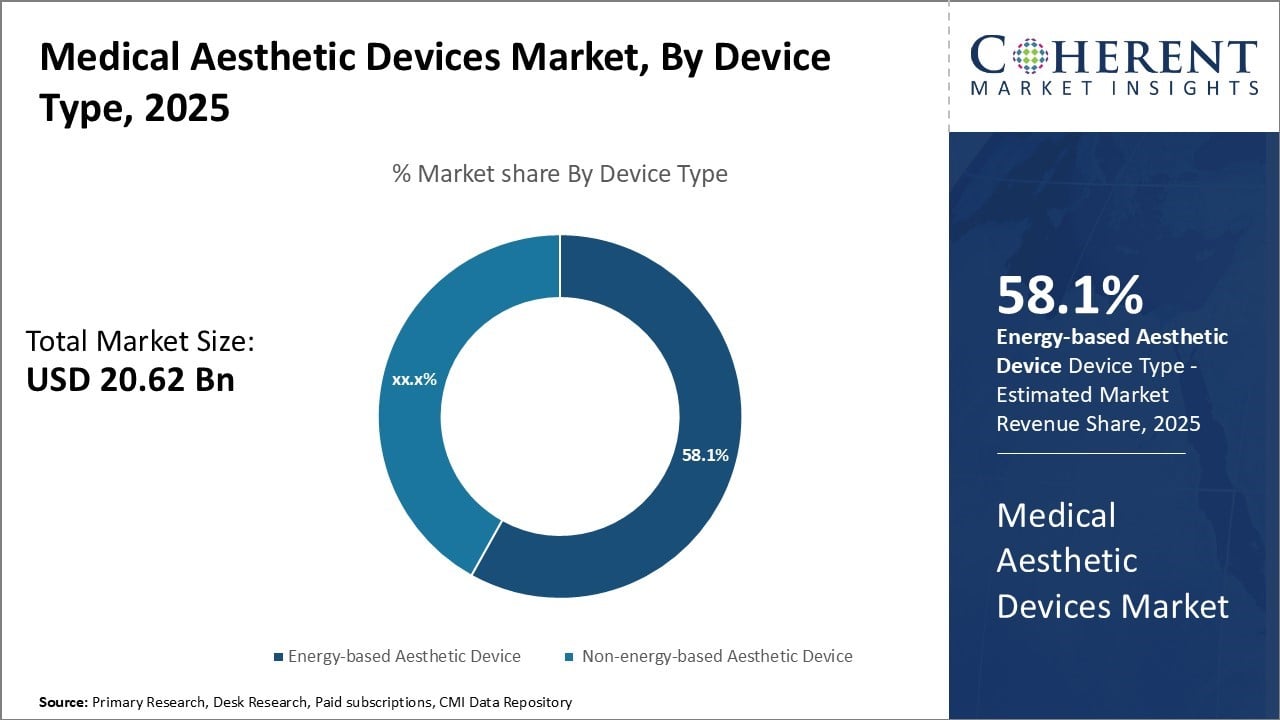
- Based on the Device Type, the energy-based aesthetic device segment dominates the market with a share of 59.1% in 2026 owing to ongoing technological advancements.
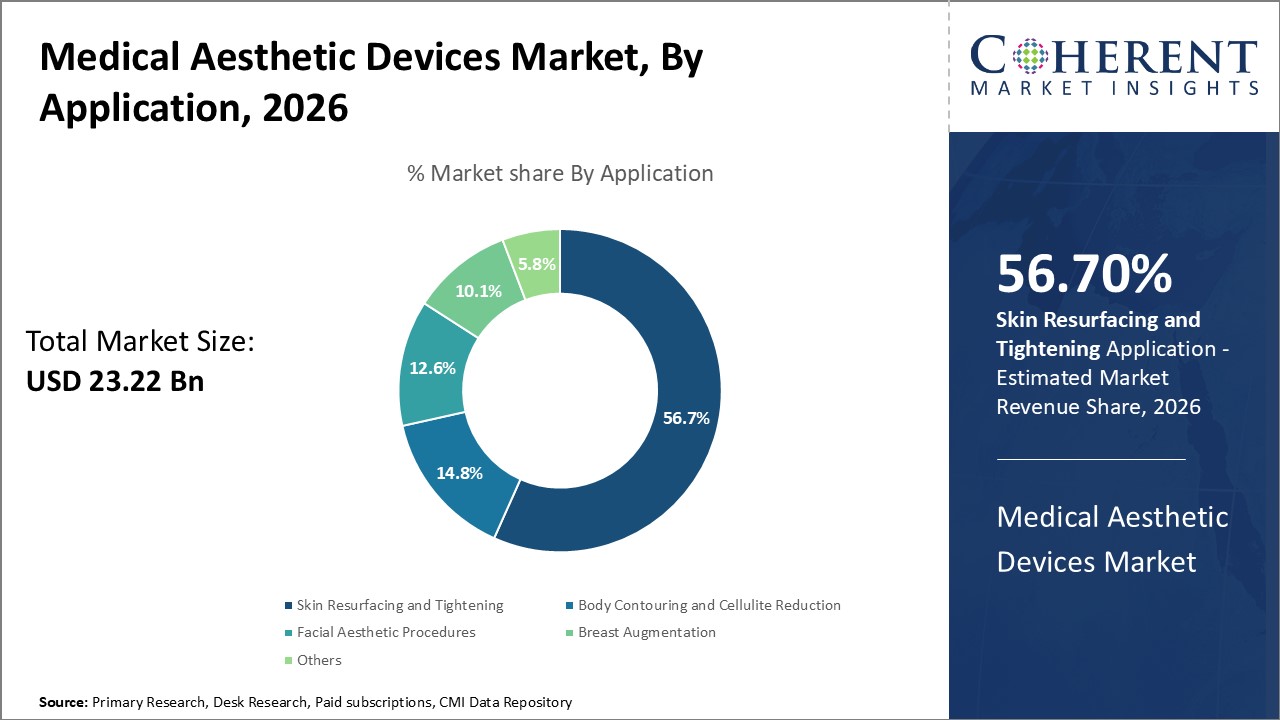
- Based on the Application, the skin resurfacing and tightening segment dominates the market, with 56.7% of the market share in 2026 owing to the growing penetration towards youthful skin.
- Based on the End-User segment, the hospital segment dominates the overall market with a share of 41.4% as Expanding Medical Infrastructure Favors Hospitals.
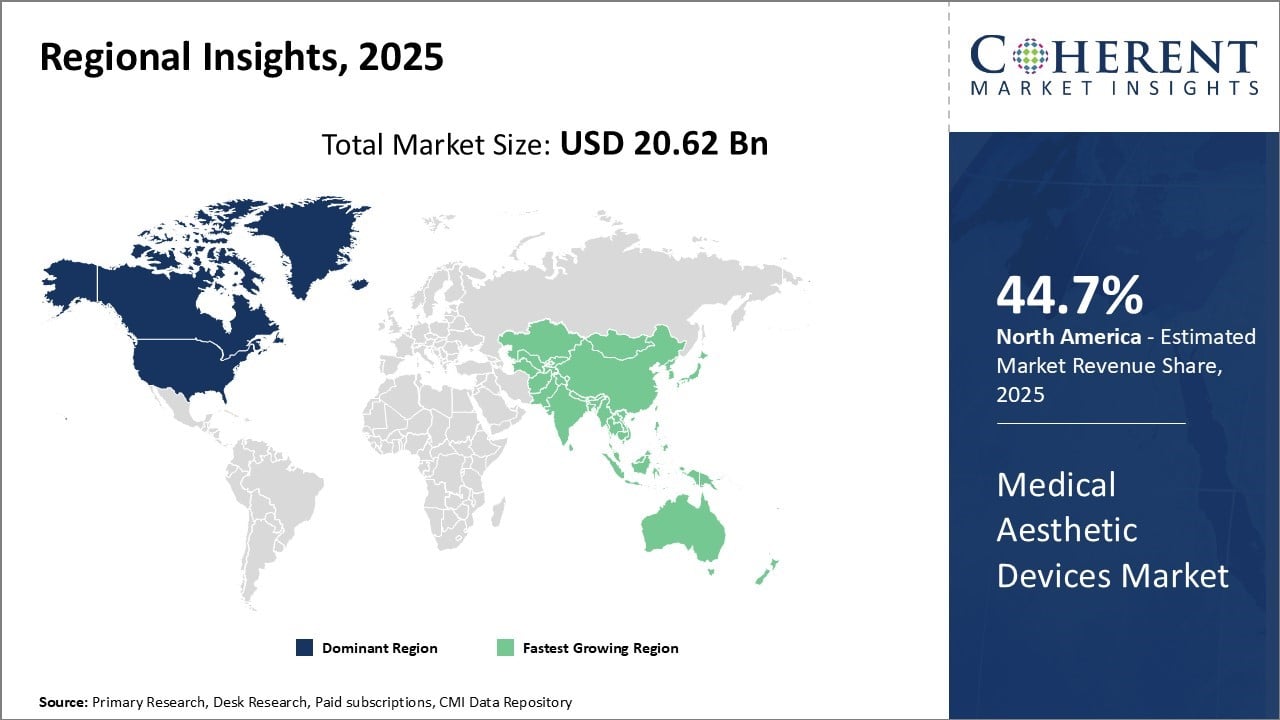
- On the basis of Region, North America remains the dominant region in the global medical aesthetic devices market and is estimated to hold 44.7% of the market share in 2026.
Market Overview
The global medical aesthetic devices market is witnessing positive trends with growing incidences of diabetes worldwide. The popularity of non-invasive aesthetic treatments over surgical procedures is expected to remain a key trend in the market over the forecast period. Non-invasive aesthetic procedures allow for quicker recovery times and less discomfort compared to surgical options. This has made them an attractive choice for individuals with less time availability or seeking subtle enhancements. The availability of various non-invasive treatments is thus expected to continue supporting market expansion. There is a rising focus on aesthetics and physical beauty among individuals across all age groups. There has been a marked shift in people's perception of beauty and appearance. Device manufacturers need to comply with stringent approval procedures and quality standards set by these regulators.
Current Events and Their Impact on the Medical Aesthetic Devices Market
Current Events | Description and its impact |
Regulatory Shifts in Key Markets |
|
Geopolitical Trade Policies |
|
Technological Innovations |
|
Market Consolidation Dynamics |
|
End Use Application for Medical Aesthetic Devices Market
- Clinics and Medical Spas: Clinics and medical spas are top users of aesthetic devices. They use tools like lasers and light therapy for skin care, acne, and body shaping. These centers offer safe, quick, and non-surgical treatments done by trained skin and beauty professionals.
- Hospitals: Hospitals use aesthetic devices for complex skin and beauty treatments. They support surgeries, scar and burn repair, and trauma recovery. With expert doctors, advanced tools, and emergency care, hospitals provide safe and trusted services for both medical and beauty purposes.
- Dermatology and Cosmetic Surgery Centers: These centers focus on skincare and beauty improvement. They use new machines for wrinkle removal, hair reduction, and body shaping. Skilled doctors provide personalized treatment plans utilizing advanced tools, catering to clients who seek prompt and lasting results.
- Home-Use Settings: Home-use beauty devices are becoming popular for being easy, private, and affordable. Products like LED masks and laser tools help with skin care at home. They are safe and simple, attracting young users who prefer doing beauty treatments on their own.
- Current Industry Events of 2026
- Market Size Estimation
- Regional Breakdown
- Competitive Landscape
- Customer Intelligence
- Segmental Analysis
- Pricing Analysis
- Key Market Drivers, Challenges & Future Trends
- Customized Insights Section
End-user Feedback and Unmet Needs in the Medical Aesthetic Devices Market
End-user Feedback
- Ease of Use and Training Requirements: Many practitioners value devices that are simple to operate and have easy-to-understand controls. However, some users still find certain devices hard to learn and mention that companies do not always provide enough practical training or support during setup.
- Treatment Efficacy and Patient Satisfaction: Clinics give positive feedback for devices that show visible improvements after treatment and do not require long recovery times. Still, many users highlight the need for more reliable results, especially for different skin types and parts of the body.
- Maintenance and Service Support: Clinics often appreciate when companies provide fast and dependable service and when machines rarely break down. However, some users are unhappy with costly repair plans or delays in getting help when their equipment needs fixing or regular servicing.
Unmet Needs
- Customization for Diverse Skin Types: There is a rising demand for devices that are safe and effective for people with darker or more sensitive skin. Current machines sometimes cause unwanted side effects, like burns or dark spots, especially for patients with higher melanin levels.
- Affordability and ROI for Smaller Clinics: Small or rural clinics often struggle to afford expensive machines because of high costs and slow returns on investment. Many also find that there are not enough affordable options or flexible payment plans, like renting or financing.
- Multi-functionality in a Single Platform: Many end-users are looking for one machine that can do several treatments, such as skin tightening, acne care, and hair removal. However, the market still lacks compact devices that deliver strong results across all these different types of procedures.
Segmental Insights
Medical Aesthetic Devices Market Insights, by Device Type
The energy-based aesthetic device segment dominates the market due to Technological Advancements
The device type segment includes energy-based aesthetic devices and non-energy-based aesthetic devices. The energy-based aesthetic device sub-segment is estimated to hold 59.1% of the market share in 2026, owing to continuous technological innovations. These devices utilize different energy sources, like laser, infrared light, radiofrequency, focused ultrasound, etc., to remodel skin and other tissues with minimal invasion. Ongoing R&D has led to the development of new advanced systems with improved safety profiles and treatment efficacy. For example, newer laser platforms incorporate advanced cooling systems and micro-spot technologies to deliver energy more precisely without damaging surrounding tissues. Similarly, hybrid ultrasound and radiofrequency devices utilize the synergistic effect of multi-modal energies for comprehensive body sculpting and skin tightening. Constant upgrading of such technologies attracts more patients and drives repeat usage.
In March 2025, eNaCell, a subsidiary of Evonik, introduced epicite® CALM at the Aesthetic & Anti-Aging Medicine World Congress (AMWC), taking place in Monaco from March 27 to 29. Designed to set a new benchmark in medical aesthetics, epicite® CALM supports ideal post-procedure recovery after laser, light, and energy-based treatments, such as fractional CO2 lasers and radiofrequency microneedling.
Medical Aesthetic Devices Market Insights, by Application
The skin resurfacing and tightening segment dominates the market due to the Rising Cosmetic Consciousness Boosts Skin Resurfacing and Tightening Procedures
The application segment includes skin resurfacing and tightening, body contouring and cellulite reduction, facial aesthetic procedures, breast augmentation, and others. The skin resurfacing and tightening sub-segment is estimated to hold 56.7% of the market share in 2026, owing to growing aesthetic awareness. With advancing age, sun exposure, and other environmental factors, signs of skin aging like wrinkles, laxity, and uneven texture have become more apparent. This has increased the demand for non-invasive procedures to restore a youthful appearance. Novel energy-based technologies offer enhanced skin rejuvenation results with minimal downtime and have gained massive popularity. Furthermore, greater accessibility to such treatments and rising disposable income allow people to frequently maintain flawless complexion, thereby propelling repeat purchases. For instance, Emcure Pharmaceuticals, through its subsidiary Emcutix Biopharmaceuticals, partnered with WiQo to introduce PRX-PLUS, a skin-tightening product, in India.
Medical Aesthetic Devices Market Insights, by End-User
The Hospital segment dominates the hospital market due to the Expanding Medical Infrastructure Favors Hospitals
The end user segment includes hospitals, beauty centers, skin clinics, and others. The hospital sub-segment is estimated to hold 41.4% of the market share in 2026, owing to the increased availability of advanced medical infrastructure and trained professionals. Larger healthcare facilities are equipped with the latest energy-based technology, along with experienced doctors and technical staff to ensure optimum treatment outcomes. They also provide integrated healthcare services like weight management, physiotherapy, and postoperative consultations under one roof. This adds to patient comfort while fostering brand loyalty, driving higher hospital revenues. Additionally, the availability of insurance coverage and bulk purchasing agreements with OEMs allows hospitals to offer such specialized therapies at competitive price points.
For instance, A J Hospital & Research Centre in Mangalore has launched “DIRA Aesthetics,” a dedicated unit designed to address all facets of aesthetic care comprehensively.
Regional Insights
North America Medical Aesthetic Devices Market Trends
North America remains the dominant region in the global medical aesthetic devices market and is estimated to hold 44.7% of the market share in 2026, owing to the high prevalence/incidence of chronic diseases and the increasing obese population in the region fueling the market growth of medical aesthetic devices. For instance, obesity is a metabolic disorder and is often associated with a wide range of chronic diseases, leading to a significant increase in mortality and comorbidities. According to the Trust for America's Health, obesity is a growing epidemic in the U.S., and currently, about one in three Americans of all ages, more than 100 million people, are obese. This, in turn, is expected to increase demand for medical aesthetic devices for body contouring and cellulite reduction.
For instance, the U.S. company Apyx Medical received FDA 510(k) clearance in May 2026 for AYON, an all‑in‑one body contouring platform combining helium plasma and RF for fat removal, tissue contraction, and electrosurgery. The company plans to begin commercial rollout in H2 2026.
Asia Pacific Medical Aesthetic Devices Market Trends
The Asia Pacific region has emerged as the fastest-growing market due to the rising number of aesthetic procedures and the rising adoption of minimally invasive procedures in the region. For instance, owing to the increasing awareness among people about the benefits of aesthetic procedures, people are more inclined towards the use of minimally invasive procedures. According to the International Society of Aesthetic Plastic Surgery, India carried out a total number of 524,064 aesthetic procedures (surgical and non-surgical) in 2020. For instance, Galderma launched Sculptra® in China, further fueling its growth into one of the fastest-growing aesthetics markets.
United States Medical Aesthetic Devices Market Trends
The growth of the United States medical aesthetic devices market is driven by increasing demand for non-surgical beauty treatments, better awareness of these options, and higher spending power. New technologies like smart and multi-use devices improve treatment accuracy and safety, encouraging more people to try them. Older adults looking for anti-aging solutions and the rise in beauty clinics and skin care centers also support this trend. Social media and celebrity influence have made such treatments more accepted, further boosting market growth. For instance, the U.S. company Solta Medical Launched Clear + Brilliant Touch, a next-generation laser that offers a customized and more comprehensive treatment protocol for patients of all ages and skin types. Such innovations are accelerating the medical aesthetic devices market growth.
India Medical Aesthetic Devices Market Trends
The Indian medical aesthetic devices market is growing due to the rising awareness about personal care, higher incomes, and a larger middle-class group looking for non-surgical beauty treatments. Growth in cities and better availability of modern technologies in big and small cities are increasing demand. Social media, movie industry trends, and a younger generation more concerned with looks also add to this rise. The growth of beauty clinics and better training for professionals are further helping the use of these devices across India. For instance, American Brand 7e Wellness unveiled the Myolift Mini in India, a first-of-its-kind Microcurrent Device for anti-aging treatment.
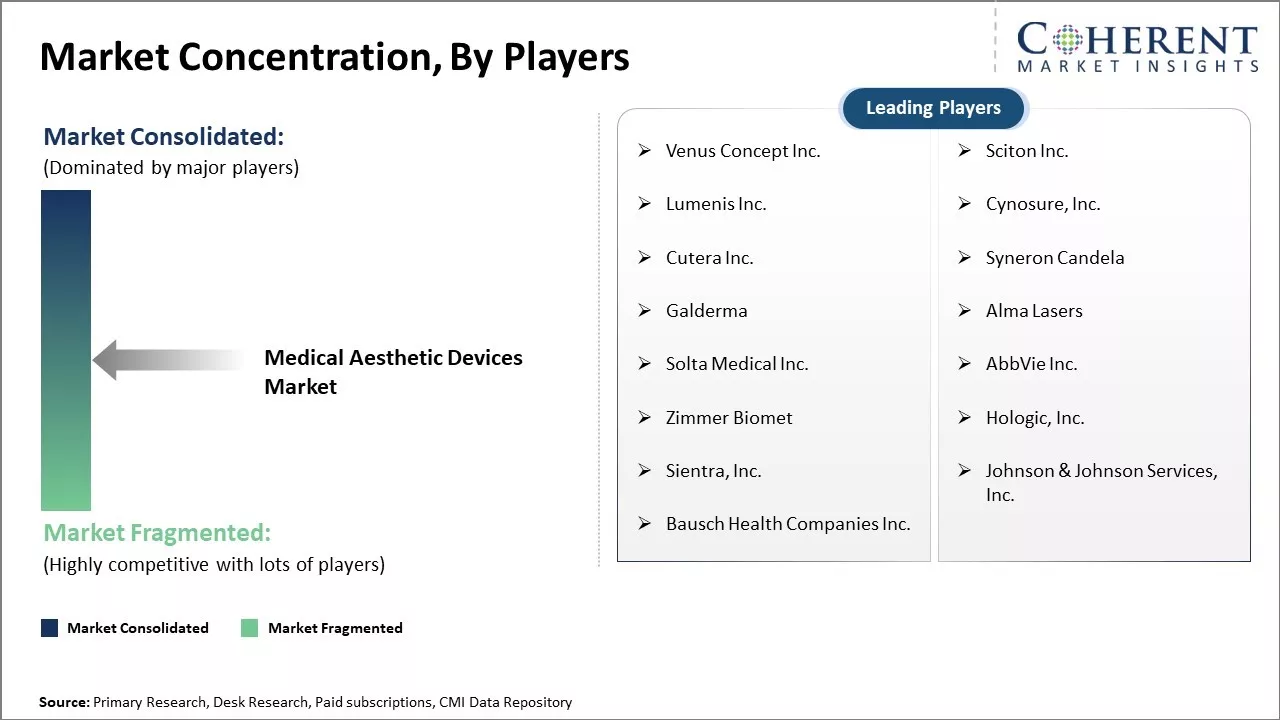
Market Concentration and Competitive Landscape
Medical Aesthetic Devices Industry News
- In June 2025, Uni-Bio Science Group Limited (the "Group") hosted a grand launch event in Changsha to unveil its new medical aesthetics products, introducing the high-end GeneQueens series under 肌顏態® as well as the medical device brand 金因敷®.
- In April 2025, Cynosure Lutronic, a global frontrunner in energy-based medical aesthetic devices, unveiled the Health Canada clearance of XERF—an innovative radio frequency (RF) device set to revolutionize skin tightening treatments.
- In January 2025, Nanoleaf launched an FDA Class II-certified LED face mask priced at $149.99. It offers seven light modes (e.g., red, blue, green) for acne, fine lines, and uneven skin tone.
- In March 2024, Allergan Aesthetics, a subsidiary company of AbbVie Inc., a healthcare company, announced that it had launched an Aesthetics-Ethics program named Moving the Needle on Ethics, with medical aesthetics experts from around the globe aiming to elevate discussions on ethics in aesthetics. The collection of interviews highlights the need for industry-wide transparency and integrity to meet the expected increase in global demand for aesthetic treatments.
- In February 2024, Lumenis Inc., a medical technology company, announced a distribution agreement with AESTHETICS SOLUTIONS, a licensed pharmacy specializing in supplying cosmetic and orthopedic injectables to independent practitioners in the U.K. to distribute the Lumenis portfolio across the U.K. Under the terms of the agreement, the Lumenis Beauty devices including Geneo X, Divine Pro, Maximus X, LightSheer Quattro, and NuEra Tight, as well as all consumables can now be purchased directly from Aesthetics Solutions, which distributes advanced skincare and aesthetic products.
Market Report Scope
Medical Aesthetic Devices Market Report Coverage
| Report Coverage | Details | ||
|---|---|---|---|
| Base Year: | 2025 | Market Size in 2026: | USD 23.22 Bn |
| Historical Data for: | 2020 To 2024 | Forecast Period: | 2026 To 2033 |
| Forecast Period 2026 to 2033 CAGR: | 12.6% | 2033 Value Projection: | USD 53.28 Bn |
| Geographies covered: |
| ||
| Segments covered: |
| ||
| Companies covered: | Venus Concept Inc., Sciton Inc., Lumenis Inc., Cynosure, Inc., Cutera Inc., Syneron Candela, Galderma, Alma Lasers, Solta Medical Inc., AbbVie Inc., Zimmer Biomet, Hologic, Inc., Sientra, Inc., Johnson & Johnson Services, Inc., and Bausch Health Companies Inc. | ||
| Growth Drivers: |
| ||
| Restraints & Challenges: |
| ||
Medical Aesthetic Devices Market Growth Driver
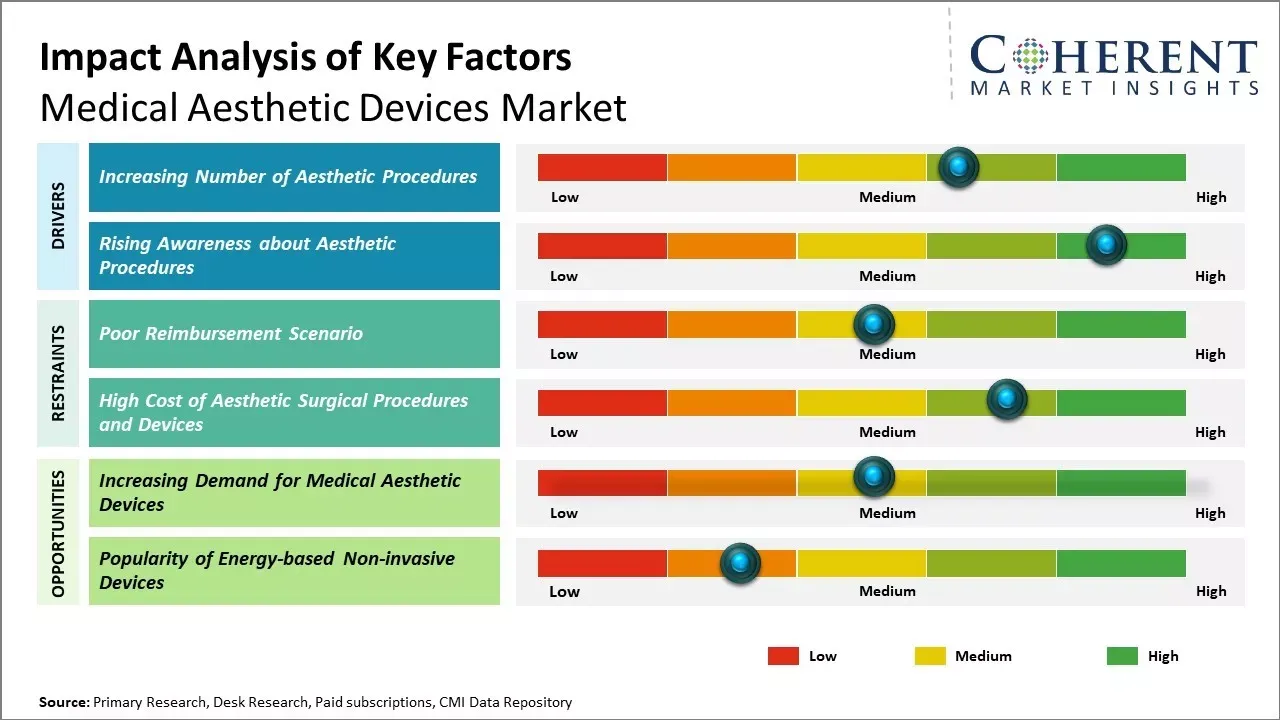
Rising Awareness about Aesthetic Procedures
Greater availability of information through online health forums and social media platforms has raised awareness about various non-invasive and minimally invasive aesthetic treatment options. Previously, certain cosmetic surgery carried social stigma due to underlying assumptions. However, attitudes are changing with expert advice easily accessible to people. They understand medical aesthetic procedures to be safe and effective when performed by certified professionals. Media coverage of star treatments and after-procedure celebrity selfies normalize the concept of aesthetic treatments. People are comfortable discussing procedures they have undergone with peers without stigma or judgment. Additionally, financing and installment options offered by device manufacturers have made procedures more affordable. This has allowed middle-income groups to avail treatments to enhance appearance without major financial constraints.
Market Opportunities – Increasing Demand for Medical Aesthetic Devices
Increasing demand for medical aesthetic devices due to rising awareness among people is expected to provide significant growth opportunities for players in the global medical aesthetic devices market. For instance, in August 2022, Allergan Healthcare India, a part of AbbVie Inc., a healthcare company, launche Juvéderm VOLUX under its business unit of Allergan Aesthetics. Allergan obtained all the necessary approvals from the Central Drugs Standards Control Organization before launching this product. Juvéderm VOLUX is a combination of Hyaluronic acid 25 mg + Lidocaine hydrochloride 3 mg and is intended to restore and create the volume of the face.
Analyst Opinion (Expert Opinion)
- The medical aesthetic devices market is becoming crowded, especially in areas like laser hair removal and body shaping. In this setting, devices that offer smart features—such as AI-based skin scanning, real-time treatment adjustments, and customized protocols—will stand out. For example, Cutera’s AviClear, a laser device for acne, saw quick success thanks to its FDA approval for treating acne—a need that had few strong options. This shows that companies focusing on solving specific problems rather than offering generic all-in-one devices will have a stronger position in the market.
- Doctors’ Choices Matter More Than Consumer Demand. Even though more people are showing interest in aesthetic treatments, it is mainly the clinics and doctors who decide which devices get use. Their decisions are based on how well the device works, how easy it is to learn, and whether it brings good returns. Candela’s Profound RF device is a good example—it became popular because it needed fewer repeat treatments and showed visible results after just one session. According to a 2024 survey by the American Society for Dermatologic Surgery, over 65% of dermatologists preferred it for these reasons. Companies that focus only on flashy marketing to consumers but ignore real-world clinic problems—like hard-to-use systems or poor customer service—will fall behind.
- Many smaller manufacturers don’t fail because their products are bad, but because they don’t plan well for rules and approvals in different countries. For example, Alma Lasers successfully launched its Hybrid CO₂ device across several regions by getting FDA, CE, and Health Canada approvals all around the same time in 2023. This allowed large clinic chains to use the same device in multiple countries, helping Alma increase its sales by more than 30%. On the other hand, companies that don’t plan for global rules often end up stuck, even if their devices work well.
Speak to the analyst
Want personalized insights?
Take the findings above to one of our principal consultants, or have the report rebuilt around the segments, geographies and competitors you actually track.
Market Segmentation
- Device Type Insights (Revenue, USD Bn, 2021 - 2033)
- Energy-based Aesthetic Device
- Non-energy-based Aesthetic Device
- Application Insights (Revenue, USD Bn, 2021 - 2033)
- Skin Resurfacing and Tightening
- Body Contouring and Cellulite Reduction
- Facial Aesthetic Procedures
- Breast Augmentation
- Others
- End User Insights (Revenue, USD Bn, 2021 - 2033)
- Hospitals
- Beauty Centers
- Skin Clinics
- Others
- Regional Insights (Revenue, USD Bn, 2021 - 2033)
- North America
- U.S.
- Canada
- Latin America
- Brazil
- Argentina
- Mexico
- Rest of Latin America
- Europe
- Germany
- U.K.
- Spain
- France
- Italy
- Russia
- Rest of Europe
- Asia Pacific
- China
- India
- Japan
- Australia
- South Korea
- ASEAN
- Rest of Asia Pacific
- Middle East
- GCC Countries
- Israel
- Rest of the Middle East
- Africa
- South Africa
- North Africa
- Central Africa
- North America
- Key Players Insights
- Venus Concept Inc.
- Sciton Inc.
- Lumenis Inc.
- Cynosure, Inc.
- Cutera Inc.
- Syneron Candela
- Galderma
- Alma Lasers
- Solta Medical Inc.
- AbbVie Inc.
- Zimmer Biomet
- Hologic, Inc.
- Sientra, Inc.
- Johnson & Johnson Services, Inc.
- Bausch Health Companies Inc.
Sources
Interviews from the following stakeholders
Stakeholders
Interviews with dermatologists, aesthetic practitioners, cosmetic surgeons, biomedical engineers, procurement managers in skin clinics and hospitals, product managers from device manufacturers, R&D heads in laser and RF technology firms, regulatory consultants, and business development executives involved in product development, deployment, and marketing of energy-based aesthetic devices.
Databases
- Eurostat – Trade data for laser/medical aesthetic devices across Europe
- UN Comtrade – International trade statistics for HS codes relevant to aesthetic medical devices
- OECD – R&D spending and innovation metrics for medical technology and aesthetic healthcare
- WHO Global Health Observatory – Data on dermatologic care infrastructure
- India Brand Equity Foundation (IBEF) – Medical device and beauty tech sector overviews
- U.S. FDA MAUDE Database – Post-market surveillance data on aesthetic devices
- CDSCO (India) – Registered medical device lists and import statistics
- World Bank – Healthcare access, dermatology-related metrics in developing markets
- Korea Ministry of Food and Drug Safety (MFDS) – Approved aesthetic device listings
- China Medical Device Regulations (NMPA) – Market entry data for aesthetic devices
Magazines
- MedEsthetics Magazine
- Aesthetic Medicine (UK)
- Modern Aesthetics
- Dermatology Times
- Prime Journal – Aesthetic & Anti-Ageing Medicine
- The Aesthetic Guide
- Beauty Launchpad – Professional Devices Section
- Practical Dermatology
- Cosmetic Surgery Times
- Medical Device Developments
Journals
- Journal of Cosmetic and Laser Therapy
- Lasers in Surgery and Medicine (LSM)
- Journal of Dermatological Treatment
- International Journal of Cosmetic Science
- Dermatologic Surgery
- Journal of Clinical and Aesthetic Dermatology (JCAD)
- International Journal of Dermatology
- Skin Research and Technology
- Aesthetic Surgery Journal (ASJ)
- Journal of Investigative Dermatology
Newspapers
- The Economic Times – Health & Wellness Section
- Business Standard – Devices and MedTech Features
- The Hindu BusinessLine – Healthcare Innovation
- Reuters – Global Medtech and Aesthetic Devices Reporting
- Financial Times – Beauty Tech and Market Trends
- Mint – Health Tech and Clinic Infrastructure
- Times of India – Beauty and Aesthetics Market Features
Associations
- American Society for Laser Medicine and Surgery (ASLMS)
- International Society of Aesthetic Plastic Surgery (ISAPS)
- American Academy of Dermatology (AAD)
- Indian Association of Dermatologists, Venereologists, and Leprologists (IADVL)
- European Academy of Dermatology and Venereology (EADV)
- International Confederation for Plastic Surgery Societies (ICOPLAST)
- Medical Device Manufacturers Association (MDMA)
- Association of Indian Medical Device Industry (AIMED)
- Indian Medical Association (IMA)
- Society of Cosmetic Scientists (SCS)
Public Domain Sources
- Ministry of Health & Family Welfare (India) – Aesthetic dermatology regulations and guidelines
- CDSCO (India) – Device approval pathways and safety guidelines
- U.S. FDA – Center for Devices and Radiological Health (CDRH)
- European Commission – Medical Device Regulation (MDR) Updates
- UK MHRA – Guidelines for Aesthetic Device Registration
- Department for Promotion of Industry and Internal Trade (DPIIT, India) – MedTech innovation frameworks
- International Society of Aesthetic and Cosmetic Dermatology (ISACD) – Best practices and trends
- National Medical Products Administration (China) – Aesthetic device regulatory data
- Korea MFDS – Device safety and performance data
- World Health Organization (WHO) – Non-invasive medical technology access metrics
Proprietary Elements
- CMI Data Analytics Tool, and the Proprietary CMI Existing Repository of information for the last 8 years.
*Definition: Medical aesthetic devices (energy-based and non-energy-based aesthetic devices) are medical devices often used to improve appearance. These devices are based on minimally invasive and non-invasive technology. They are used to address a wide range of aesthetic applications such as skin tightening, skin resurfacing, and body contouring, among others.
Get access to 250+ pages report
Every segment, forecast, competitor profile and data table behind the analysis above — available for instant download.
- ESOMAR Member
- ISO 9001:2015 Certified
- D-U-N-S Registered
- GDPR & CCPA Compliant
Missing comfort of reading report in your local language? Find your preferred language:
Transform your Strategy with Exclusive Trending Reports
Frequently Asked Questions
The Medical Aesthetic Devices Market is estimated to be valued at USD 23.22 Bn in 2026 and is expected to reach USD 53.28 Bn by 2033.
The CAGR of the Medical Aesthetic Devices Market is projected to be 12.6% from 2026 to 2033.
An increasing number of aesthetic procedures and rising awareness about aesthetic procedures are the major factors driving the growth of the medical aesthetic devices market.
Poor reimbursement scenarios and the high cost of aesthetic surgical procedures and devices are the major factors hampering the growth of the medical aesthetic devices market.
In terms of device type, energy-based aesthetic device is estimated to dominate the market revenue share in 2026.
Venus Concept Inc., Sciton Inc., Lumenis Inc., Cynosure, Inc., Cutera Inc., Syneron Candela, Galderma, Alma Lasers, Solta Medical Inc., AbbVie Inc., Zimmer Biomet, Hologic, Inc., Sientra, Inc., Johnson & Johnson Services, Inc., and Bausch Health Companies Inc. are the major players.
North America is expected to lead the medical aesthetic devices market.