

Global Healthcare Facility Management Market Size and Forecast – 2026-2033
The global healthcare facility management market is expected to grow from USD 380.9 Bn in 2026 to USD 648.6 Bn by 2033, registering a compound annual growth rate (CAGR) of 7.9%. Growing emphasis on cost optimization is propelling the demand for outsourced facility services across hospitals, clinics, and diagnostic centers, as it has the potential to save 15-25% in operational costs.
In addition, the increasing investments in healthcare infrastructure is positively influencing the market. According to the World Health Organization, the share of infrastructure investment for hospitals and ambulatory care providers rose sharply, from 30% to 39%, in high-income countries during the pandemic and continues to reflect sustained investment momentum in 2024–2025.
(Source: World Health Organization)
Key Takeaways of the Global Healthcare Facility Management Market
- Soft services are projected to hold 48.0% of the global healthcare facility management market share in 2026, making it the dominant service type segment. Soft services are largely the preferred choice for hospitals in North America, as they place high emphasis on infection control, hygiene, and regulatory compliance (such as standards set by the Centers for Disease Control and Prevention, Occupational Safety and Health Administration, and accreditation requirements by the Joint Commission).
- Hospitals are projected to hold 55.0% of the global healthcare facility management market share in 2026, making it the dominant facility type segment driven by 24/7 operations, and high patient inflow, which necessitate high-quality facility management. Hospitals allocate a substantial portion of their operational budgets to facility management, as they require continuous facility support in terms of maintenance, HVAC (Heating, Ventilation, and Air Conditioning), sanitation, and safety.
- On-site is projected to hold 70.0% of the global healthcare facility management market share in 2026, making it the dominant location of service delivery segment. This stems from the necessity of constant monitoring, swift responses, and consistent upkeep, given that healthcare facilities function continuously, especially in critical areas like ICUs, emergency departments, and surgical units.
- The North America region maintains dominance with an expected share of 37.0% in 2026. The region has a well-established healthcare infrastructure with high renovation and maintenance activities, thus making it a dominant market. According to the American Hospital Association, there are 6,100 hospitals in the U.S., with almost 40% of these being more than 50 years old. (Source: American Hospital Association)
- Asia Pacific is expected to contribute 28.0% of the market share in 2026, owing to the high rate of urbanization (Source: United Nations) and development of healthcare infrastructure. For instance, the USD 236.5 million Pacific Healthy Islands Transformation (PHIT) project, led by the World Bank with ADB co-financing, aims to modernize primary healthcare systems and develop a new regional hospital in Fiji. (Source: World Bank)
- Rising Demand for Asset Lifecycle Management: The focus of healthcare providers is shifting towards the optimization of the lifecycle of critical assets like HVAC systems, medical equipment support infrastructure, and utilities, thus giving rise to the need for advanced facility management solutions.
Segmental Insights
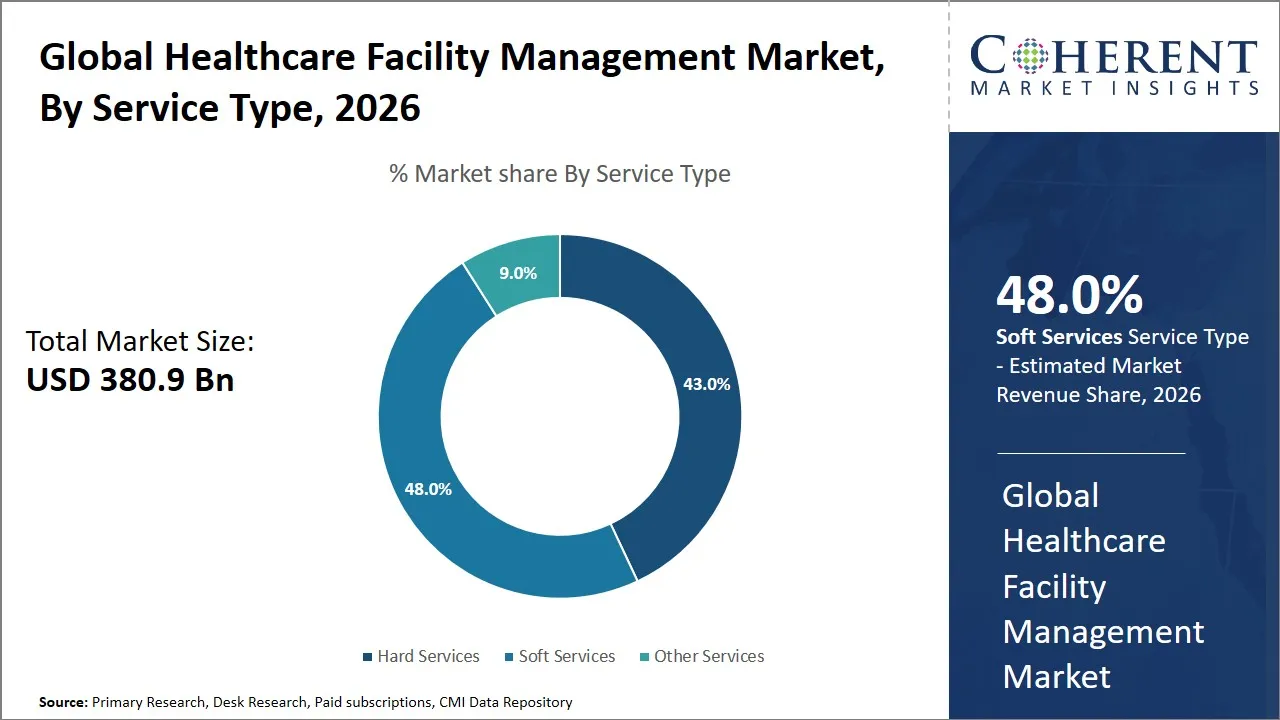
Why Do Soft Services Dominate the Global Healthcare Facility Management Market?
Soft services dominate the market for healthcare facility management because they play an important role in the areas of hygiene, infections, and compliance. This service type is expected to hold 48.0% of the healthcare facility management market share in 2026.
Cleaning, disinfection, waste management, laundry, and pest control are included in soft services that underpin safe and sterile healthcare environments. These services directly impact patient outcomes, as, 7 out of every 100 patients in high-income countries, as well as up to 15 out of every 100 patients in low- and middle-income countries, suffer from at least one hospital acquired infection (HAI), according to World Health Organization. This shows the necessity of cleaning, sanitation, and infection control services in healthcare facilities. (Source: World Health Organization)
This dominance of soft services has been witnessed in the North American and European markets, where the implementation of stringent infection control measures and healthcare hygiene laws (e.g. infection prevention frameworks by the European Centre for Disease Prevention and Control) demands the constant sanitization and surveillance of the healthcare facility.
Furthermore, the importance of patient safety, and the post-pandemic concern for hygiene have further boosted the outsourcing of soft services. This has ensured the sustained supremacy of soft services in the global healthcare facility management market.
- Current Industry Events of 2026
- Market Size Estimation
- Regional Breakdown
- Competitive Landscape
- Customer Intelligence
- Segmental Analysis
- Pricing Analysis
- Key Market Drivers, Challenges & Future Trends
- Customized Insights Section
Why are Hospitals the Most Preferred Facility Type in the Healthcare Facility Management Market?
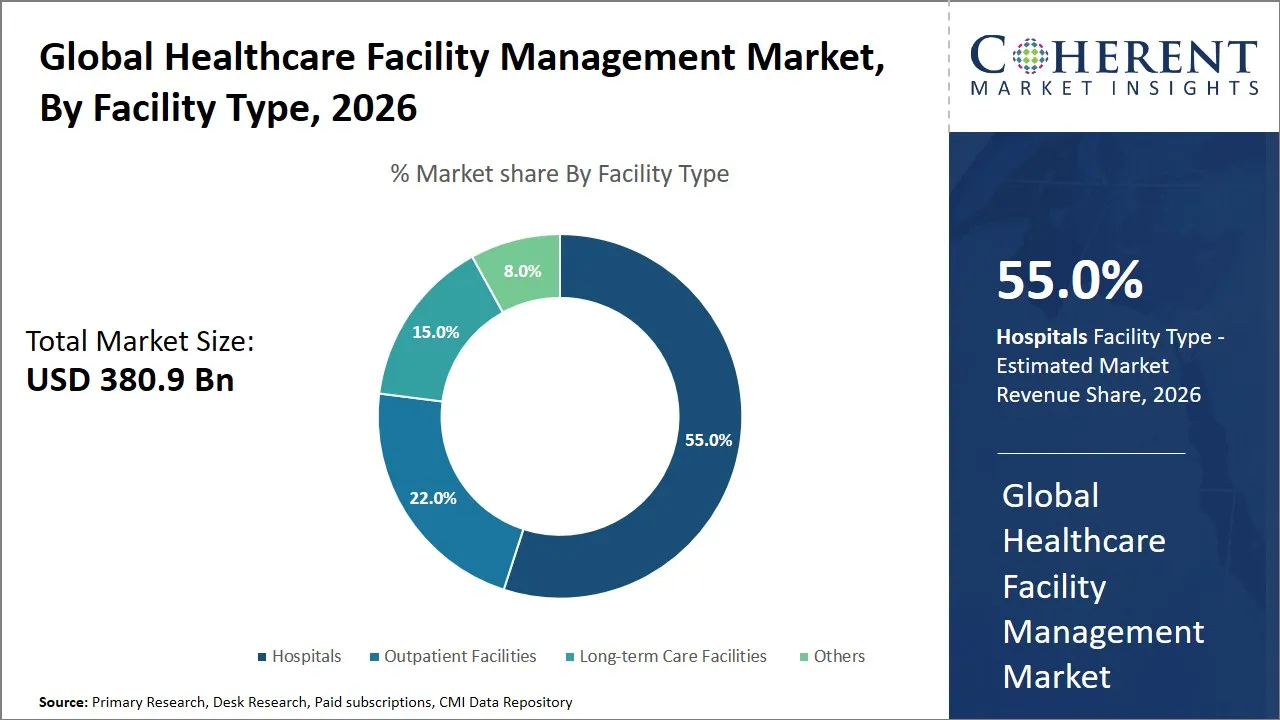
Hospitals have a significant market share in the healthcare facilities management industry owing to their highly specialized infrastructure and requirement for a controlled clinical environment. Hospitals are projected to hold 55.0% of the healthcare facility management market share in 2026. The management of critical facilities such as isolation rooms with negative pressure areas, sterile operating rooms, medical gas systems, and HVAC filtration systems requires strict control to maintain a high standard of patient safety and hygiene.
The dominance of hospitals in the healthcare facility management market is clearly visible in North America and European countries, where high standards of healthcare infrastructure and regulatory requirements demand constant monitoring and maintenance of facilities. According to the World Health Organization, the continuous prevalence of hospital-acquired infections has created a need for controlled environments and high standards of hygiene. Moreover, the implementation of smart facilities management solutions (e.g. AI-enabled predictive maintenance and IoT-based building management systems across U.S. hospitals, supported by initiatives from the U.S. DoE) has increased the importance of specialized facilities management solutions for hospitals.
On-site Segment Dominates the Global Healthcare Facility Management Market
The on-site segment is expected to lead and hold 70.0% of the global healthcare facility management market share in 2026, driven by the operational necessity to ensure the clinical appropriateness of the facility by immediate intervention and constant system monitoring.
Healthcare facilities need continuous on-site monitoring of critical infrastructures such as medical gas pipeline systems, which are critical for the direct supply of medical gases such as oxygen to patients. Various regulatory bodies, such as the National Fire Protection Association, require strict adherence to standards such as NFPA 99, which emphasizes the need for real-time monitoring, periodic inspection, and response systems for the smooth supply of medical gases. Any interruption or pressure fluctuation in medical gas pipeline systems can directly influence patient health, making on-site facility management a critical requirement for the smooth operation of healthcare facilities.
On-site facility management services in the healthcare sector is more visible in countries such as the U.S., Germany, and the U.K. as hospitals in these countries operate under tightly controlled parameters and highly advanced infrastructure systems requiring real-time supervision. According to the World Health Organization, infections in the healthcare sector pose a significant challenge. The infections must be contained by employing tightly controlled parameters in the facilities. The deployment of BMS and IoT technologies in these countries relies on on-site facility personnel for execution.
Currents Events and their Impact
Current Events | Description and its Impact |
Regulatory Shift: Strengthening Infection Control Standards (2024–2026) |
|
Macro Trend: Expansion of Healthcare Infrastructure Across Emerging and Developed Markets (2025–2030) |
|
Healthcare Facility Management Market Dynamics
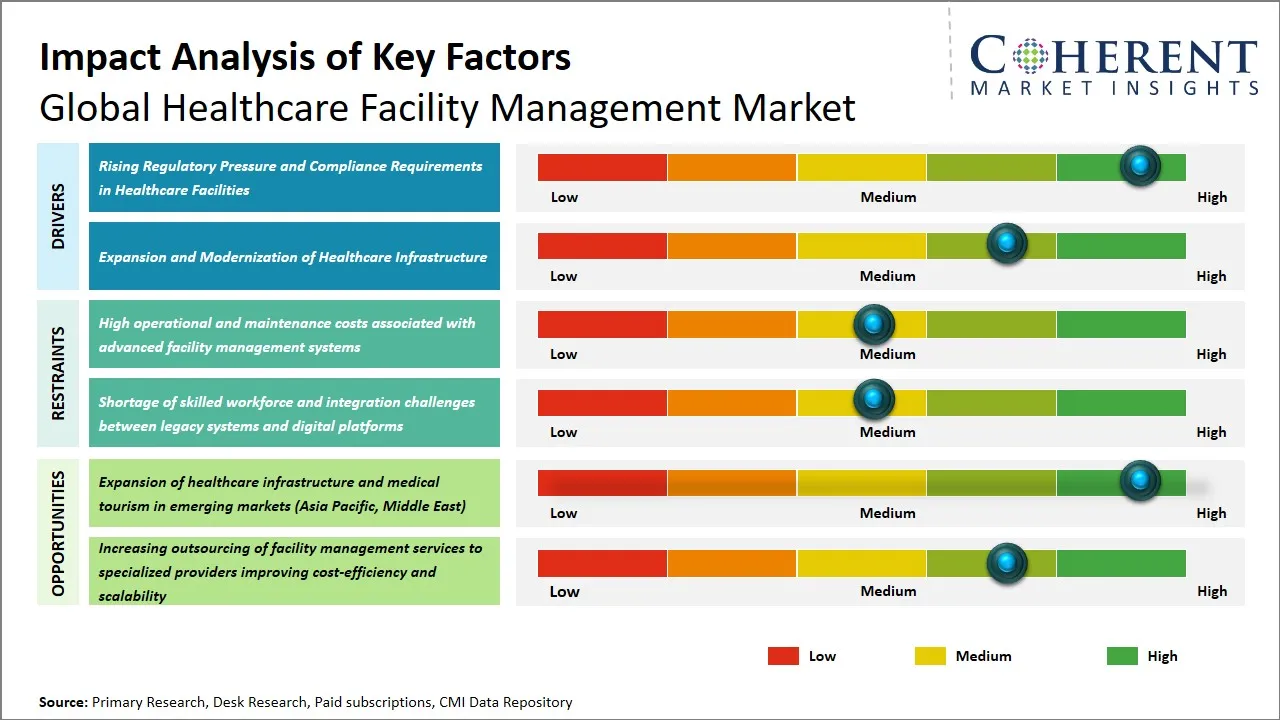
Market Drivers
- Rising Regulatory Pressure and Compliance Requirements in Healthcare Facilities: The rise in the implementation of healthcare regulations is one of the major factors in the growth of facility management service adoption. In the U.S., hospitals operate in a highly compliant manner, as the total expenditure incurred in hospitals amounts to more than 1.4 trillion dollars in 2023. This clearly indicates the high amount of spending in non-clinical activities like maintenance, sanitation, and infrastructure development. In the U.K., the maintenance backlog for the National Health Service (NHS) amounts to more than USD 17.4 billion (£ 13.8 billion) in 2023-2024. This highlights the high risk in terms of infrastructure and the urgent need for the adoption of facility management services. (Source: American Hospital Association, The King's Fund)
- Expansion and Modernization of Healthcare Infrastructure: The expansion and modernization of healthcare infrastructure in the large markets of India, China, and Germany have created a new opportunity for the management of healthcare facilities. India has planned to convert 1,50,000 sub-health centers into Health and Wellness Centers under the Ayushman Bharat Scheme. This has created a new opportunity for the management of healthcare facilities. (Source: Ministry of Health and Family Welfare, Government of India)
- In China, increased healthcare utilization, as a consequence of increased healthcare expenditure and patient numbers (China recorded over 8.4 billion medical and health institution visits in 2023, according to the National Health Commission of China), is putting immense pressure on hospital infrastructure, thereby creating an increased need for facility management solutions.
Emerging Trends
- Integration of Smart Facility Technologies: The adoption of IoT-enabled systems, AI-based predictive maintenance solutions, and building management solutions is increasing in hospitals and clinics.
- Heightened Emphasis on Infection Control Services: Hospital-acquired infections are increasing, which in-turn led to the need for efficient cleaning and disinfecting solutions while managing biomedical waste management solutions. Hygiene-based facility management is becoming a crucial aspect in managing healthcare infrastructure.
Regional Insights
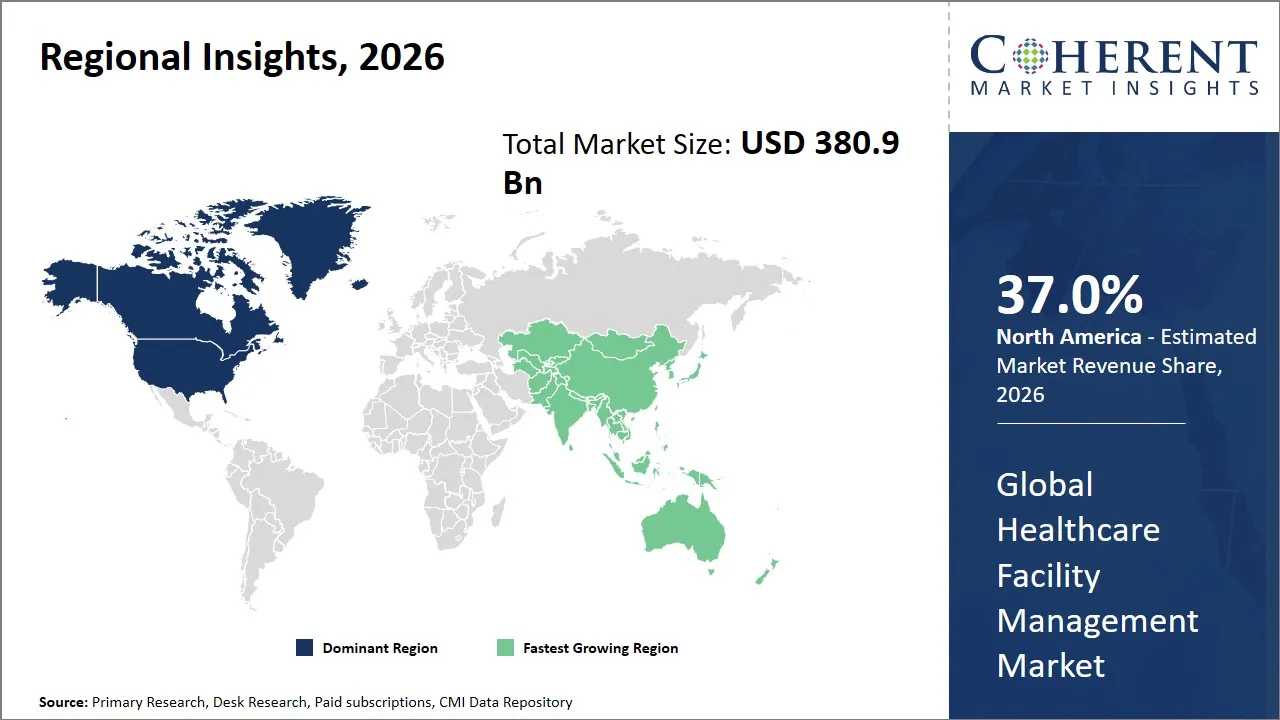
Why is North America a Strong Market for Healthcare Facility Management?
North America leads the global healthcare facility management market, accounting for an estimated 37.0% share in 2026, due to the high public spending in the region on healthcare services, which in turn, translates into the need for the operation of large-scale healthcare facilities. To illustrate, the U.S. spent a staggering USD 4.5 trillion in 2022 on national health expenditure, which translates into 17.3% of the gross domestic product of the country, according to the Centers for Medicare & Medicaid Services. This high public spending translates into the need for continuous improvement of healthcare facilities. (Source: Centers for Medicare & Medicaid Services)
The region’s leadership is further complemented by the presence of stringent regulatory and safety mechanisms that emphasize the need for high standards in the operations of facilities. The Occupational Safety and Health Administration ensures the implementation of workplace safety protocols in the health sector. Regulatory mechanisms and public spending make the North American region a mature and highly structured health facility management sector (e.g., government health expenditure in the U.S. accounted for ~49% of total health spending in 2022, according to the Centers for Medicare & Medicaid Services).
(Source: Occupational Safety and Health Administration)
Why Does the Asia Pacific Healthcare Facility Management Market Exhibit High Growth?
The Asia Pacific healthcare facility management market is expected to exhibit the fastest growth with an estimated contribution of 28.0% share to the global market in 2026. The region is an attractive geography for healthcare facility management, as it has high growth rates due to increased investments in healthcare infrastructure (e.g. Asia healthcare construction projects valued at approximately USD 143 billion, Source: Asia Infrastructure Investment Bank).
The region is home to countries like China and India, which are undertaking massive expansion programs for hospitals as part of healthy China 2030 and Ayushman Bharat, respectively. These programs are creating an increased need for facility management services like maintenance, sanitation, and utilities for hospitals and healthcare centres.
The region is undergoing a paradigm shift in outsourcing and integrated facility management, especially because of the increasing complexity in operations and the emphasis placed by governments and health authorities on quality standards in recent public health events. For example, there has been a rise in outsourcing facility management contracts in large-scale hospital expansion and modernization projects in Southeast Asia and India, thus making Asia Pacific market a significant growth area for healthcare facility management.
Global Healthcare Facility Management Market Outlook for Key Countries
Why is the U.S. Leading in the Healthcare Facility Management Market?
The U.S. is at the forefront of innovation and adoption in the healthcare facility management market owing to its highly developed healthcare infrastructure and high adoption rates for digital technologies (with ~96% EHR adoption and ~20–25% telehealth utilization). It has a high number of large-scale hospital chains and integrated health systems that require highly developed facility management solutions such as IoT-based asset tracking solutions, AI-based predictive maintenance solutions, and smart building management solutions.
Furthermore, the market in the U.S. has an established outsourcing platform, which is characterized by high involvement of facility management service providers in the private sector. This increases the possibility of adopting integrated facility management in the U.S.
Facilities in the U.S. outsource non-core facility management activities like maintenance, waste disposal, and security services from other specialized facility management providers in order to achieve cost efficiency. Key facility management organizations (e.g., the International Facility Management Association and the American Society for Health Care Engineering) have been established in the U.S. market, which increases the innovation strength of the market. This makes the U.S. market a trendsetter in adopting facility management in the healthcare sector.
Is U.K. a Favorable Market for Healthcare Facility Management?
The U.K. has been identified as a promising market for the provision of healthcare facility management services. This has been primarily driven by the centralized public health services provided in the U.K. under the National Health Service. The NHS has extensively outsourced and integrated facility management services for the provision of services such as maintenance, cleaning, and catering. Moreover, the U.K. has implemented stringent regulations by the Care Quality Commission to ensure the implementation of hygiene, safety, and infrastructure norms. Therefore, the U.K. has been identified as a promising market for the provision of facility management services.
Furthermore, the U.K. has been focusing on the infrastructure sector in the country. The government has implemented several initiatives to ensure the development of sustainable and energy-efficient hospitals (e.g., the NHS Net Zero Building Standard, which mandates low-carbon, energy-efficient design and operation for new healthcare facilities under the National Health Service). Therefore, the U.K. has been identified as a promising market for the provision of facility management services.
Is China Emerging as a Key Growth Hub for the Healthcare Facility Management Market?
China is also emerging as a significant growth center for the global healthcare facility management market, owing to the high growth rate of development in the country’s healthcare infrastructure and increased investments by the Chinese government in the development of hospitals. Implementation of the Healthy China 2030 initiative has resulted in the development and modernization of hospitals in China, thus increasing the need for various services like maintenance, sanitation, and technical facility management.
Further, the rise in the number of large public hospitals (e.g. China had over 11,700 public hospitals in 2024, including more than 4,100 top-tier (Grade III) hospitals) and growth in the private healthcare segment in China are also contributing to the growth of the healthcare facility management market in the country. In addition, China is gradually witnessing the outsourcing of non-core hospital services, which is being facilitated by the increased complexity and costs of hospital operations. Hospitals in China implement integrated facility management due to increased focus on safety, infections, and quality standards by the country’s regulatory authorities. Along with this, increased investments in smart hospital technology such as AI-powered diagnostics, IoT-enabled facility management systems, hospital automation, and digital health platforms are also making China a significant growth center for the global healthcare facility management market.
(Source: Caclp)
Why Does Germany Top the European Healthcare Facility Management Market?
Germany leads the European healthcare facility management market because of the country’s well-established and highly regulated healthcare infrastructure. The country has a high number of healthcare centers and specialized care centers (Germany had approximately 1,874 hospitals with around 476,000 hospital beds in 2023, according to the Federal Statistical Office – Statistisches Bundesamt). These require proper maintenance and other facility management services. The regulatory environment and quality standards enforced by the Federal Joint Committee also contribute to the adoption of professional and standardized facility management practices.
Germany leads the Europe healthcare facility management market because the country maintains high standards in energy efficiency and green facility management in hospitals. Hospitals in Germany are adopting the latest technologies in HVAC systems and green building technologies to comply with environmental regulations. The presence of facility management service providers such as Apleona Group, Dussmann Group, Geiger Facility Management, KÖTTER Services, and Savills also adds to the leadership position in the Europe healthcare facility management market.
Is the Healthcare Facility Management Market Developing in India?
India's healthcare facility management market is on the rise, fueled by expanding healthcare infrastructure and evolving government regulations concerning quality. The initiative taken by the government to develop and upgrade secondary and tertiary healthcare facilities, as seen in the Pradhan Mantri Swasthya Suraksha Yojana scheme, has resulted in the development and upgrading of AIIMS facilities across the country. Currently, as per reports received from Ministry of Health and Family Welfare, 22 AIIMS have been sanctioned out of which 18 are already operational. This expansion has, in turn, generated a heightened need for facility management services, including engineering maintenance, HVAC systems, and hospital asset management.
(Source: Ministry of Health and Family Welfare)
Furthermore, the 2016 Biomedical Waste Management Rules emphasize the critical need for proper separation, handling, and disposal of healthcare waste. This regulatory framework has also influenced the growing demand for facility management services. The market is also moving forward because of the growing interest in the development of infrastructures related to the efficiency of operations in the management of public and private sector healthcare facilities.
Initiatives like the National Quality Assurance Standards entail the continuous monitoring and maintenance of the upkeep, sanitation, and support services in district hospitals and healthcare facilities, with over 30,000 public health facilities assessed through the NQAS framework. This regulatory drive, together with the hospital infrastructural development and expansion, has created a strong case for the importance of facility management in the India healthcare industry.
Regional Regulatory Framework & Incentives Driving Healthcare Facility Management
Region
| Key Regulation | Policy Focus | Healthcare Facility Management Requirement |
North America | CMS Conditions of Participation, ASHRAE 170, NECB | Reimbursement-linked compliance, energy efficiency incentives, infrastructure modernization | Advanced HVAC systems, infection prevention protocols, asset lifecycle management, and energy-efficient operations |
Europe | EPBD, EU Green Deal, National Health Service (NHS) Standards | Net-zero targets, carbon reduction mandates, sustainability funding | Smart facility systems, energy monitoring, waste management compliance, and green hospital infrastructure |
Asia Pacific | NABH (India), ECBC, China Green Hospital Program, Japan CASBEE | Accreditation-driven quality improvement, rapid healthcare infrastructure expansion, energy efficiency push | Biomedical waste management, sanitation standards, efficient utilities, and integrated facility services |
Middle East & Africa | Estidama (UAE), Saudi Vision 2030, South Africa Green Building Codes | Healthcare infrastructure expansion, sustainability goals, privatization of FM services | Integrated facility management, energy optimization, smart hospital systems, and compliance-driven maintenance |
Latin America | Brazil Health Regulatory Agency (ANVISA), National Infrastructure Programs | Public healthcare upgrades, regulatory standardization, energy efficiency initiatives | Maintenance of critical infrastructure, hygiene compliance, and gradual adoption of energy-efficient systems |
How is the strong focus on infection control and hospital hygiene creating new growth opportunities in the healthcare facility management market?
The rising incidence of hospital-acquired infections (HAIs) is generating a high and quantifiable level of demand for specialized facility management services related to hygiene, sanitation, and air quality control. In the U.S., the Centers for Disease Control and Prevention found that 1 out of every 31 patients in a hospital has acquired at least one healthcare-associated infection on any given day. This is an indication of the lack of environmental hygiene and facility management. This is prompting a move away from fragmented and in-house cleaning and towards a more standardized and performance-driven facility management approach.
(Source: U.S. Centers for Disease Control and Prevention)
This demand is being realized in the form of the adoption of structured outcome-based facility management solutions. For example, Ecolab has demonstrated the effectiveness of the implementation of a standardized approach to environmental cleaning in hospitals in terms of the reduction of infections and the increase in levels of compliance with the process. This is helping drive the demand for facility management service partners offering integrated solutions in the area of infection control, monitoring, and compliance, which is a high-growth area of the market.
(Source: Ecolab)
Market Players, Key Development, and Competitive Intelligence
Key Developments
- On March 13, 2026, Krystal Integrated Services Limited secured a deal worth USD 44 million (INR 364 crores) to manage a healthcare facility with the Tamil Nadu Medical Services Corporation (TNMSC). This deal will involve the management of housekeeping, security, and other such services in different government hospitals. This deal will cover several government hospitals, thus emphasizing the trend of outsourcing non-clinical services in the hospital industry.
- In February 2025, Sodexo opened a new healthcare facility management center in Kolkata, India. This move was designed to bolster service delivery and operational efficiency within the area. The expansion underscores the growing need for well-organized and integrated facility management services throughout India's urban healthcare infrastructure.
Competitive Landscape
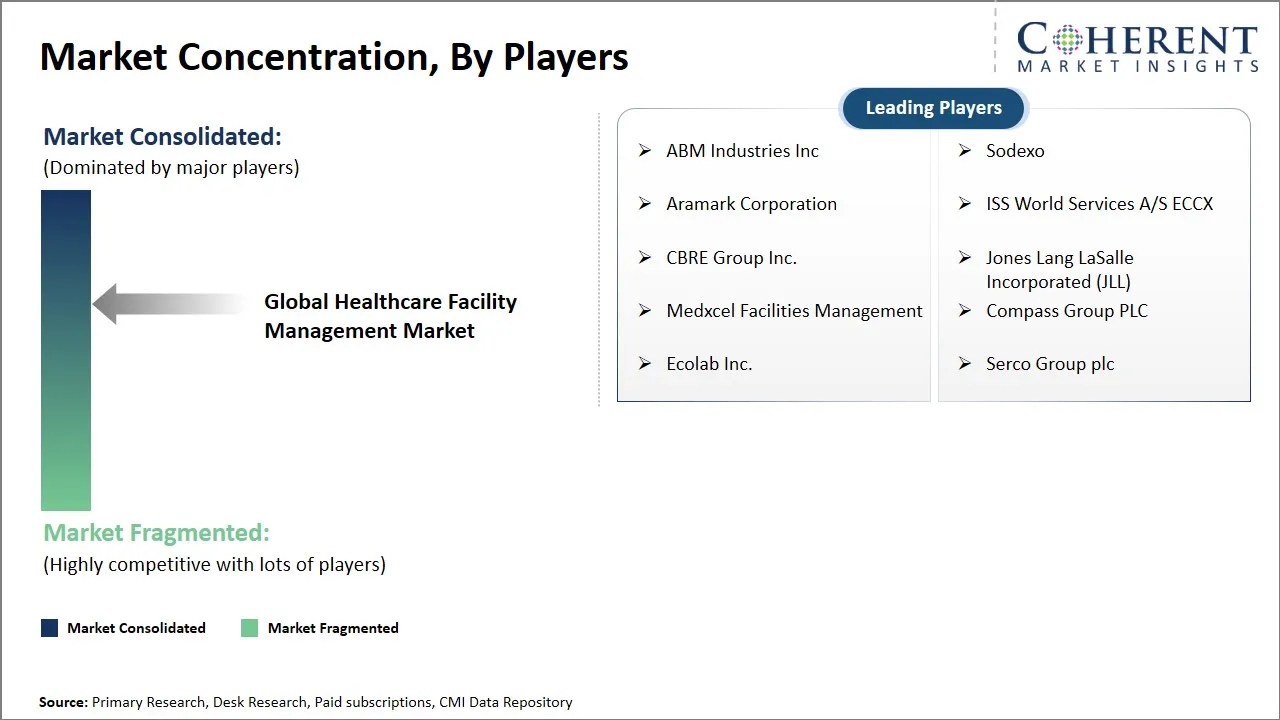
The healthcare facility management market is highly competitive and increasingly consolidating, with global players and regional service providers competing by integrating services, following regulations, and cost-efficiency. Companies with strong healthcare knowledge and established relationships with hospitals are more likely to win long-term contracts, especially as the industry increasingly outsources facility management. Key focus areas include:
- Integrated Service Offerings (IFM Models)
- Infection Control and Regulatory Compliance Capabilities
- Digitalization and Smart Facility Management
- Strategic Partnerships and Long-Term Contracts with Hospital Networks
Market Report Scope
Healthcare Facility Management Market Report Coverage
| Report Coverage | Details | ||
|---|---|---|---|
| Base Year: | 2025 | Market Size in 2026: | USD 380.9 Bn |
| Historical Data for: | 2020 To 2024 | Forecast Period: | 2026 To 2033 |
| Forecast Period 2026 to 2033 CAGR: | 7.9% | 2033 Value Projection: | USD 648.6 Bn |
| Geographies covered: |
| ||
| Segments covered: |
| ||
| Companies covered: | ABM Industries Inc, Sodexo, Aramark Corporation, ISS World Services A/S ECCX, CBRE Group Inc., Jones Lang LaSalle Incorporated (JLL), Medxcel Facilities Management, Compass Group PLC, Ecolab Inc., and Serco Group plc | ||
| Growth Drivers: |
| ||
| Restraints & Challenges: |
| ||
Analyst Opinion (Expert Opinion)
- The industry has outgrown the stage of outsourced housekeeping and maintenance and has now moved to mission-critical and integrated operational management, especially in large hospital groups in the U.S., the U.K., and the Middle East. Today, facility management has become a part of the clinical outcome and has been linked to the cost optimization process. However, the next stage in the evolution process will be the digitally integrated facility management ecosystems, especially in high-acuity settings such as tertiary care hospitals. Players in the industry will be able to command long-term contracts and premium pricing if they position themselves as enablers in the clinical support process.
- The biggest underpenetrated and high-growth potential area lies in infection control, sanitation, and biomedical waste management services offered in tier 2 and tier 3 hospitals in India and Southeast Asia. Although tier 1 hospitals in metropolitan cities are embracing integrated facility management solutions, there is still a large number of tier 2 hospitals, which are still in the early stages of managing fragmented in-house facility management teams despite increasing patient volumes. Government initiatives in infrastructure development, for instance, public health centers and district hospitals, are creating a high-volume, price-sensitive, yet recurring demand for facility management services, wherein a standard and scalable service model has the potential for high growth in a short period. In addition, the NABH accreditation drive in India is making outsourced facility management services a necessity for hospitals, thus offering a great opportunity for organized players in the facility management industry.
- Healthcare facility management is shifting towards the contract and compliance model. Therefore, early engagement has the potential to affect the long-term vendor relationship. The players involved in the design and commissioning phase of the hospital projects may be contracted for several years. They become an integral part of the facility. Bundling hard services like HVAC, MEP, soft services like cleaning, waste management, and digital services like CMMS, energy management systems, and infection control has the potential to transform these services from commodity-based services to high-value services.
Speak to the analyst
Want personalized insights?
Take the findings above to one of our principal consultants, or have the report rebuilt around the segments, geographies and competitors you actually track.
Market Segmentation
- Service Type Insights (Revenue, USD Bn, 2021 - 2033)
- Hard Services
- Soft Services
- Other Services
- Facility Type Insights (Revenue, USD Bn, 2021 - 2033)
- Hospitals
- Outpatient Facilities
- Long-term Care Facilities
- Others
- Location of Service Delivery Insights (Revenue, USD Bn, 2021 - 2033)
- On-site
- Off-site
- Service Model Insights (Revenue, USD Bn, 2021 - 2033)
- In-House
- Outsourced
- End User Insights (Revenue, USD Bn, 2021 - 2033)
- Hospitals and Clinics
- Long-term Care Centers
- Ambulatory Surgical Centers (ASCs)
- Others
- Regional Insights (Revenue, USD Bn, 2021 - 2033)
- North America
- U.S.
- Canada
- Latin America
- Brazil
- Argentina
- Mexico
- Rest of Latin America
- Europe
- Germany
- U.K.
- Spain
- France
- Italy
- Russia
- Rest of Europe
- Asia Pacific
- China
- India
- Japan
- Australia
- South Korea
- ASEAN
- Rest of Asia Pacific
- Middle East
- GCC Countries
- Israel
- Rest of Middle East
- Africa
- South Africa
- North Africa
- Central Africa
- North America
- Key Players Insights
- ABM Industries Inc
- Sodexo
- Aramark Corporation
- ISS World Services A/S ECCX
- CBRE Group Inc.
- Jones Lang LaSalle Incorporated (JLL)
- Medxcel Facilities Management
- Compass Group PLC
- Ecolab Inc.
- Serco Group plc
Sources
Primary Research Interviews
- Facility Manager of a multi-specialty hospital (tertiary care)
- Operations Head of a healthcare facility management service provider
- Infection Control Officer at a public hospital
- Procurement Head of hospital infrastructure services
- Sustainability/ESG Head of hospital network (energy & waste management
Stakeholders
- Healthcare Facility Management Service Providers (e.g., ISS A/S, Sodexo, Compass Group, CBRE Group)
- End-use Sectors
- Hospitals & Clinics (public and private hospital chains)
- Diagnostic Laboratories & Imaging Centers
- Long-term Care Facilities & Nursing Homes
- Regulatory & Certification Bodies: Centers for Medicare & Medicaid Services (CMS), World Health Organization (WHO), National Accreditation Board for Hospitals & Healthcare Providers (NABH), Joint Commission International (JCI)
- Suppliers & Equipment Providers: Medical equipment manufacturers, HVAC system providers, cleaning & sanitation product companies (e.g., 3M, Ecolab)
- Technology Integration Players: Smart hospital/IoT solution providers (e.g., Siemens Healthineers, Honeywell)
Databases
- World Bank – Healthcare expenditure & infrastructure data
- Organization for Economic Co-operation and Development (OECD) Health Statistics
- Centers for Medicare & Medicaid Services (CMS) National Health Expenditure Data
- National Health Authority (NHA) – Ayushman Bharat data
- National Health Service (NHS) Digital datasets (ERIC)
Magazines
- Health Facilities Management Magazine (American Society for Health Care Engineering)
- Healthcare Design Magazine – hospital infrastructure & operations
- FMJ (Facilities Management Journal) – global FM trends
- Cleaning & Maintenance Management (CMM) – sanitation practices in healthcare
- Healthcare Estate Journal – hospital infrastructure and estate management
Journals
- Journal of Healthcare Engineering – hospital systems & infrastructure
- Health Facilities Management Journal (ASHE publications)
- Building and Environment – indoor air quality & energy systems in hospitals
- Journal of Hospital Infection – sanitation and infection control
- Energy and Buildings – hospital energy efficiency and facility optimization
Newspapers
- The Wall Street Journal – healthcare infrastructure investments
- Financial Times – global hospital funding & outsourcing trends
- The Guardian – NHS infrastructure and backlog issues
- The Hindu BusinessLine – India healthcare infrastructure expansion
- Economic Times (India) – hospital investments and outsourcing trends
Associations
- International Facility Management Association (IFMA)
- American Society for Health Care Engineering (ASHE)
- Healthcare Information and Management Systems Society (HIMSS)
- Royal Institution of Chartered Surveyors (RICS)
- Indian Society of Healthcare Engineers
Public Domain Sources
- World Health Organization – Healthcare infrastructure & hygiene guidelines
- Centers for Disease Control and Prevention (CDC) – infection control in healthcare facilities
- U.S. Department of Health and Human Services – hospital operations & compliance
- Ministry of Health and Family Welfare – healthcare infrastructure initiatives
- National Health Service – infrastructure and facility datasets
Proprietary Elements
- CMI Data Analytics Tool, Proprietary CMI Existing Repository of information for last 10 years.
Get access to 250+ pages report
Every segment, forecast, competitor profile and data table behind the analysis above — available for instant download.
- ESOMAR Member
- ISO 9001:2015 Certified
- D-U-N-S Registered
- GDPR & CCPA Compliant
Missing comfort of reading report in your local language? Find your preferred language:
Transform your Strategy with Exclusive Trending Reports
Frequently Asked Questions
The global healthcare facility management market is estimated to be valued at USD 380.9 Bn in 2026 and is expected to reach USD 648.6 Bn by 2033.
Soft services dominate due to their high frequency of use and critical role in maintaining hygiene, infection control, and patient experience.
Healthcare facility management refers to the coordination and maintenance of hospital infrastructure, services, and operations to ensure safe, efficient, and compliant healthcare environments.
The CAGR of the global healthcare facility management market is projected to be 7.9% from 2026 to 2033.
Rising burden of chronic diseases and increasing patient admissions and growing adoption of smart hospital technologies (AI, IoT, predictive maintenance) are the major factors driving the growth of the global healthcare facility management market.
High operational and maintenance costs associated with advanced facility management systems and shortage of skilled workforce and integration challenges between legacy systems and digital platforms are the major factors hampering the growth of the global healthcare facility management market.
In terms of facility type, hospitals are estimated to dominate the market revenue share in 2026.