

Global Hemodialysis Membrane Market Size and Forecast – 2026 To 2033
The global hemodialysis membrane market is expected to grow from USD 11.2 Bn in 2026 to USD 16.5 Bn by 2033, registering a compound annual growth rate (CAGR) of 5.7% from 2026 to 2033. The market for hemodialysis membranes is poised for significant expansion, fueled by the soaring burden of chronic kidney disease (CKD) globally.
According to the National Kidney Foundation, 10% of the population globally is affected by chronic kidney disease (CKD), and millions die each year. Additionally, over 2 million people globally currently receive treatment with dialysis or a kidney transplant to stay alive.
(Source: National Kidney Foundation, Inc.)
Key Takeaways of the Global Hemodialysis Membrane Market
- The Polysulfone (PS) segment is projected to hold 42.8 % of the global hemodialysis membrane market share in 2026, making it the dominant material segment across North America due to the high prevalence of chronic kidney disease (CKD) and widespread adoption of advanced synthetic dialyzers. For instance, according to U.S. Centers for Disease Control and Prevention (CDC), kidney diseases are a leading cause of death in the U.S., accounting for about 35.5 million of deaths in the U.S. (Source: Centers for Disease Control and Prevention) The growing population of patients requiring dialysis generates a sustained demand for polysulfone-based membranes because of their frequent application in high-performance dialyzers.
- High-flux membranes are projected to hold 68.9 % of the global hemodialysis membrane market share in 2026, making it the dominant flux type segment across Europe due to rising burden of kidney replacement therapy and preference for advanced dialysis modalities. For instance, according to the European Renal Association (ERA) Registry Annual Report 2023, approximately 1,101 persons per million population (1 in every 910 inhabitants) in Europe were receiving kidney replacement therapy, including dialysis, in 2023. (Source: European Renal Association) The considerable dialysis patient population continues to support the adoption of advanced high-flux membranes across the region.
- Dialysis centers are projected to hold 61.4 % of the global hemodialysis membrane market share in 2026, making it the dominant end user segment across Asia Pacific due to government-backed expansion of dialysis infrastructure. For instance, India's Pradhan Mantri National Dialysis Programme (PMNDP) has introduced dialysis services at various public hospitals throughout India, facilitated numerous dialysis procedures and augmented the procurement of hemodialysis consumables such as dialysis membranes. (Source: Ministry of Health and Family Welfare) The growth of public dialysis centers is anticipated to drive the demand for hemodialysis membranes throughout the region.
- North America maintains its dominance with an expected share of 37.9 % in 2026, bolstered by favorable reimbursement policies for renal replacement therapies. For instance, the U.S. Centers for Medicare & Medicaid Services (CMS) incorporated oral-only renal dialysis service drugs and biological products into the ESRD Prospective Payment System (PPS) bundled payment effective January 1, 2025. (Source: Centers for Medicare & Medicaid Services) The persistent enhancement of reimbursement coverage for dialysis-related treatments is expected to support utilization of hemodialysis services and associated consumables across the region.
- Asia Pacific is expected to exhibit the fastest growth with an estimated contribution of 25.1 % share in 2026, driven by rising government investments in renal care infrastructure. For instance, under the Healthy China 2030 plan, the authorities in China place a high priority on strengthening the service capabilities of healthcare services, expanding medical resources, and improving the system for prevention and control of diseases. The persistent strengthening of renal care infrastructure is expected to support the adoption of hemodialysis treatments and associated membrane technologies across the region.
- Growing Adoption of Medium Cut-Off (MCO) Membranes: The next-generation membranes provide better clearance of the larger uremic toxins while preserving the vital proteins, thus decreasing the distinction between conventional hemodialysis and hemodiafiltration. As healthcare providers look for better patient outcomes without significant infrastructure upgrades, the sustained use of medium cut-off (MCO) membrane technologies in an advanced dialysis center is anticipated to grow at a steady rate.
- Expansion of Home Hemodialysis Programs: Home hemodialysis delivers more flexible medical treatment, decreases the workload of dialysis units, and offers more convenient service than in-center treatment, therefore healthcare systems are encouraging this method. The trend is driving the demand for simple to use, high-performing membranes with stable filtration performance for decentralized treatment sites, and new product development opportunities.
Segmental Insights
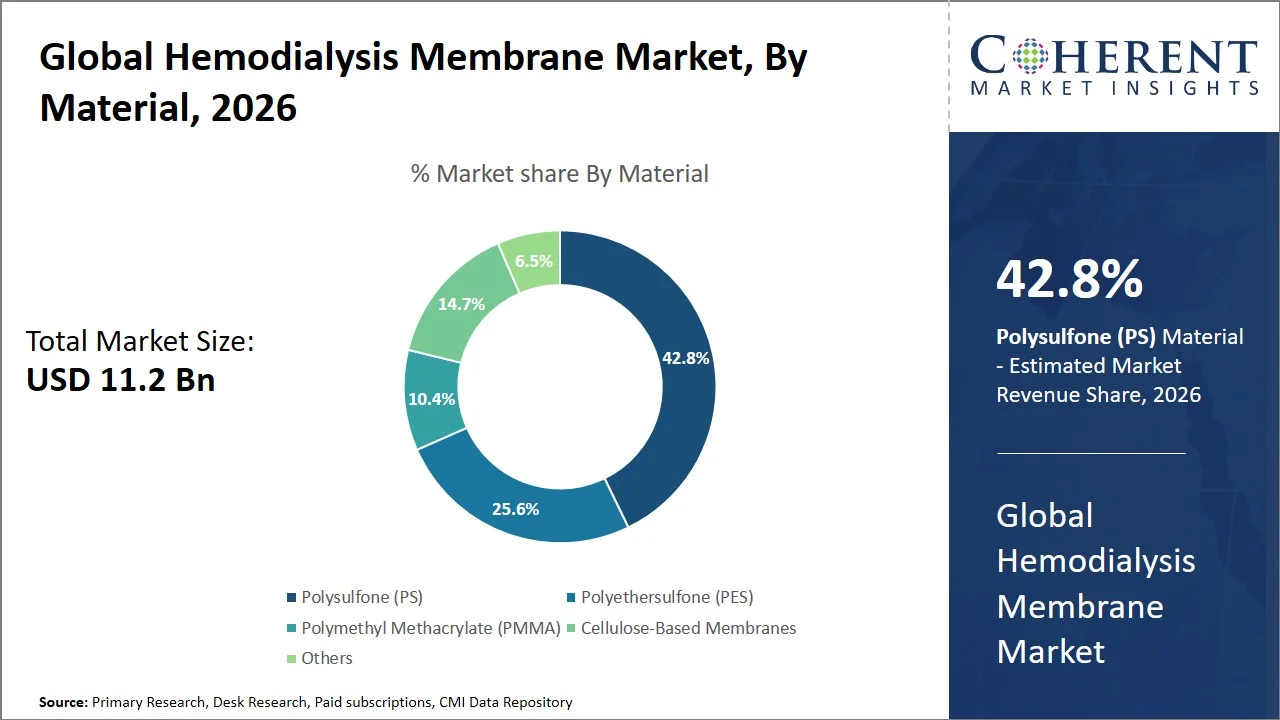
Why Does Polysulfone (PS) Dominate the Global Hemodialysis Membrane Market?
Polysulfone (PS) is projected to hold a market share of 42.8% in 2026, due to its biocompatibility, mechanical properties and excellent filtration efficiency. The material ensures high-flux dialysis through the removal of middle-molecular-weight toxins while minimizing the loss of protein. Additionally, it shows high thermal and chemical stability and ensures consistent quality during reusability. For instance, Fresenius FX CorAL series hemodialyzer incorporates innovative polysulfone-based membrane technology designed to enhanced hemocompatibility and hemodialysis efficiency. (Source: Fresenius Medical Care) The persistent advancements in polysulfone membrane design is expected to support segment growth.
- Current Industry Events of 2026
- Market Size Estimation
- Regional Breakdown
- Competitive Landscape
- Customer Intelligence
- Segmental Analysis
- Pricing Analysis
- Key Market Drivers, Challenges & Future Trends
- Customized Insights Section
Why Do High-Flux Membranes Represent the Largest Flux Type Segment in the Hemodialysis Membrane Market?
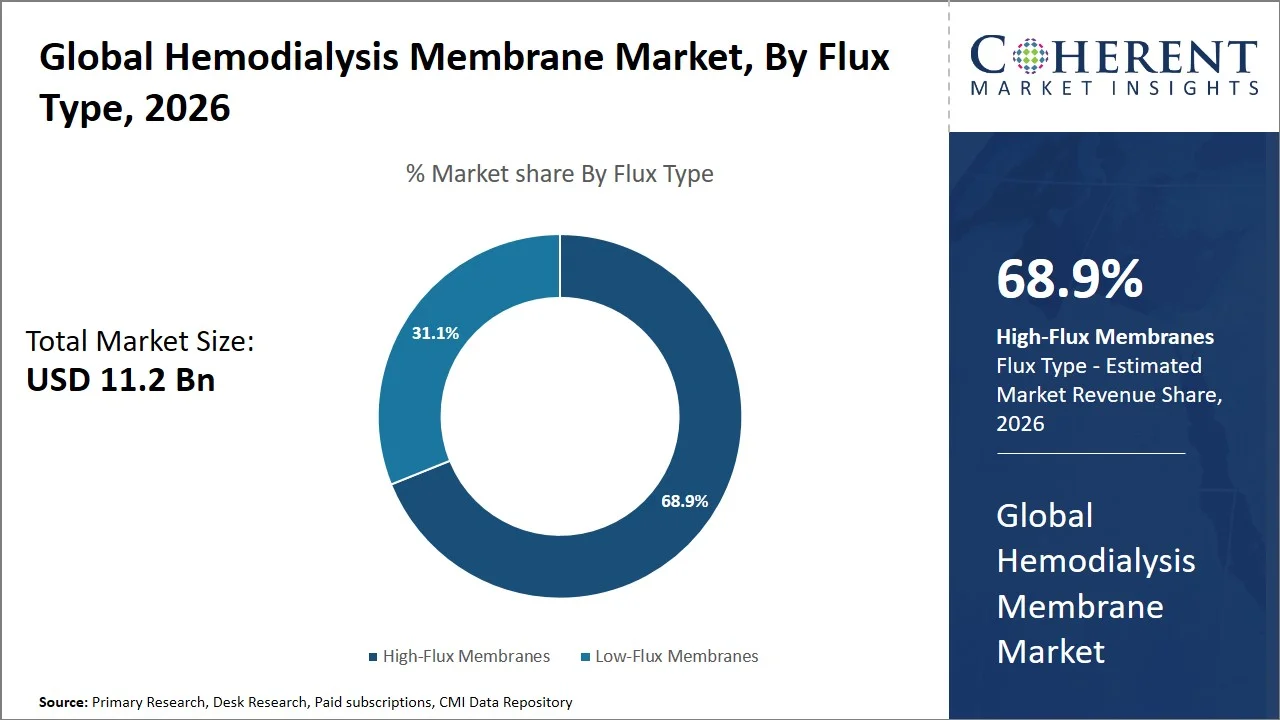
High-flux membranes are projected to hold a market share of 68.9% in 2026, as they effectively eliminate the middle molecular weight toxins while retaining vital proteins. High permeability of high-flux membranes increases the efficiency of dialysis, as well as the welfare of patients, in comparison to low-flux membranes. Increased acceptance of modern dialysis procedures and enhanced toxin clearance have favored the increase in use of these membranes in dialysis centers. For instance, according to the National Kidney Foundation, high-flux dialyzers allow greater clearance of larger molecules than traditional low-flux dialyzers, supporting their prevalent use in routine hemodialysis treatment. (Source: National Kidney Foundation)
Dialysis Centers Segment Dominates the Global Hemodialysis Membrane Market
The dialysis centers segment is projected to hold a market share of 61.4% in 2026 as these centers offer a well-developed infrastructure, access to healthcare professionals, and large-scale patient management required for systematic dialysis procedures. The dedicated facility setting within dialysis centers allows for the efficient usage of high-tech hemodialysis membranes and associated technologies while the central purchase procedure of dialysis centers results in increased consumption of dialysis membranes. For instance, as of December 2025, Fresenius Medical Care, cared for more than 292,000 patients in global network of around 3,600 dialysis centers globally. (Source: Fresenius Medical Care) The ubiquitous network of dialysis centers continues to support the demand for hemodialysis membranes globally.
Currents Events and their Impact
Current Events | Description and its Impact |
U.S. Centers for Medicare & Medicaid Services (CMS) Expands End Stage Renal Disease (ESRD) Prospective Payment System Coverage (January 2025) |
|
U.S. FDA adds Hemodialysis Bloodlines to Medical Device Shortage List (March 2025) |
|
(Source: Food and Drug Administration)
Hemodialysis Membrane Market Dynamics
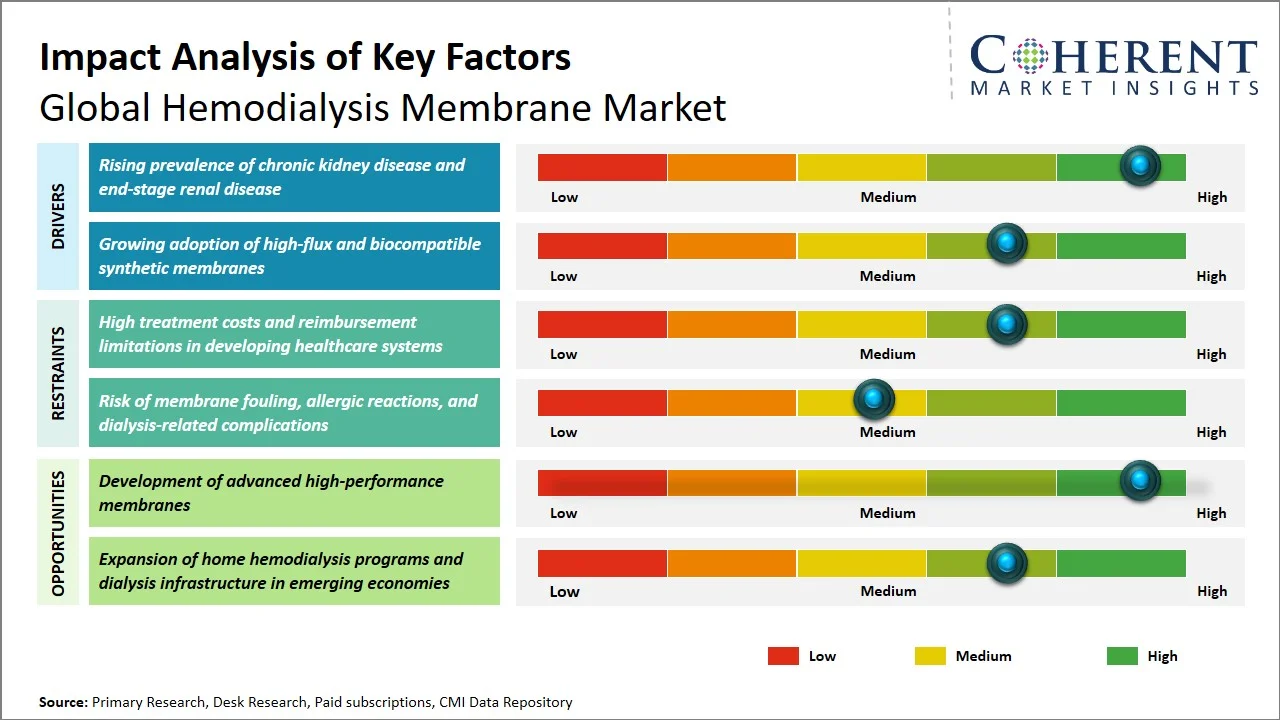
Market Drivers
- Rising prevalence of chronic kidney disease and end-stage renal disease: The increasing incidence of chronic kidney disease (CKD) and end-stage renal disease (ESRD) throughout the world is stimulating sustained demand for hemodialysis membranes. A rise in number of diabetes, hypertension, and aging population with kidney disorders are increasing the number of patients requiring long-term dialysis treatment, thereby pushing forward the use of improved, more permeable and biocompatible membranes. For instance, the U.S. Centers for Disease Control and Prevention (CDC) collaborate with academic institutions via the Kidney Disease Surveillance System to strengthen chronic kidney disease (CKD) monitoring, prevention, and disease management efforts.
- Growing adoption of high-flux and biocompatible synthetic membranes: In addition to the growing need for increased dialysis efficiency and reduced dialysis-related complications, biocompatible synthetic and high flux membranes are more commonly used. These membranes result in an improved middle-molecular-weight toxin clearance and lower levels of treatment-induced inflammation. Higher filtration characteristics and improved hemocompatibility of high flux membranes contributed to the increased acceptability across dialysis centers. For instance, in October 2024, membrane update symposium, published in Frontiers demonstrated increasing clinical interest in new generation membranes like bio-compatible or medium cut-off synthetic membranes to optimize end-stage kidney disease patient management. (Source: Frontiers)
Emerging Trends
- Development of Surface-Modified Hemocompatible Membranes: The manufacturers are increasingly focusing on surface-modified membranes, which can minimize blood-material interactions and inflammatory response in dialysis patients. The vitamin E-coated membranes and anti-thrombogenic membrane surfaces are gaining interest for their promising therapeutic advantages in the clinical treatment.
- Shift Toward Personalized Dialysis Membrane Selection: Clinicians are moving towards personalization of membranes, choosing membrane types for individual patient based on the classification of disease, the needs for toxin removal, and presence of co-morbidities. This trend pushes for the development of membranes with customized permeability or adsorption properties.
Regional Insights
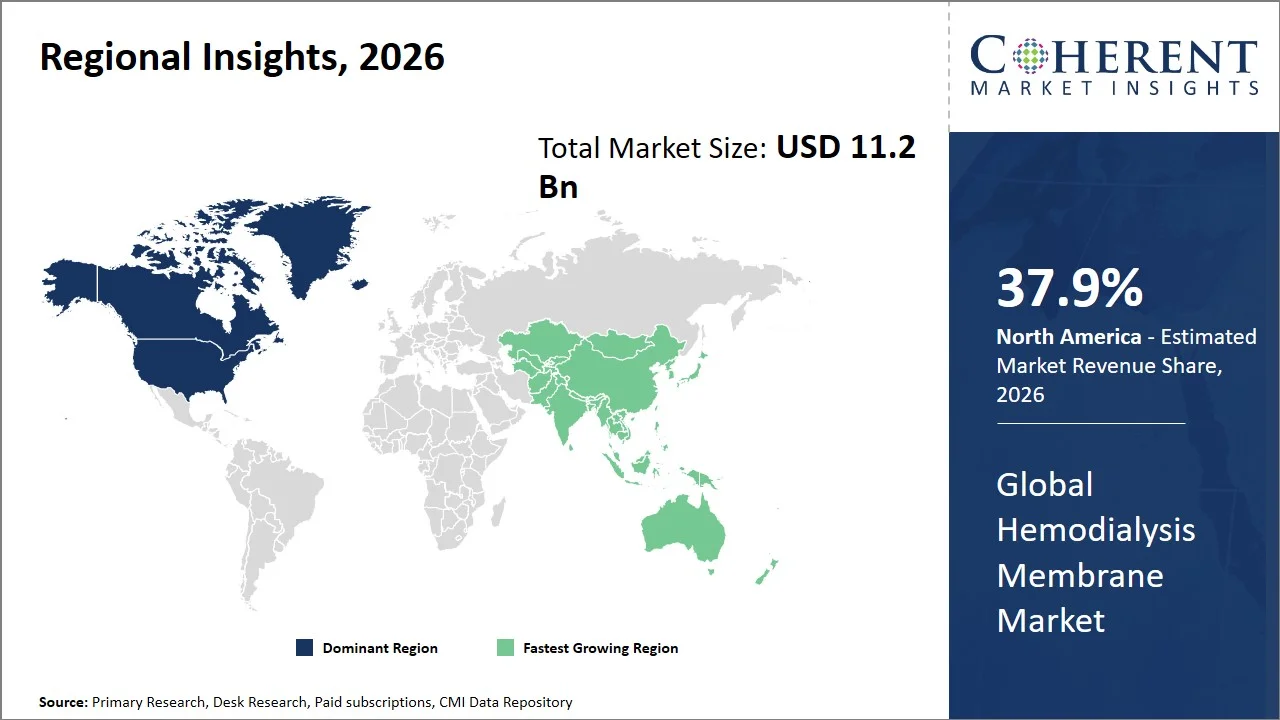
Why is North America a Strong Market for Hemodialysis Membranes?
North America leads the global hemodialysis membrane market, accounting for an estimated 37.9% share in 2026, due to a well-established health care system, significant governmental support for the treatment of chronic kidney disease (CKD), and leading medical device manufacturers based in the region. Advanced R&D, broad reimbursement programs and higher levels of awareness among the patients and medical professionals also play a key role. The U.S. in particular has well-developed regulatory frameworks providing assurance about the quality and advancement of the products developed. For instance, the U.S. Food and Drug Administration (FDA) demands resilient premarket review, quality system compliance, and post-market surveillance for dialysis devices and related components, including hemodialysis membranes. (Source: Food and Drug Administration) These regulations lead to stringent levels of safety, efficacy and product quality, encouraging the implementation of advanced membrane technology throughout the region.
Why Does the Asia Pacific Hemodialysis Membrane Market Exhibit High Growth?
The Asia Pacific hemodialysis membrane market is expected to exhibit the fastest growth, accounting for an estimated 25.1% share of the global market in 2026. The growth is driven by the rising incidence of chronic kidney disease (CKD) associated with increasing cases of diabetes and hypertension, a growing elderly population, and ongoing advancements in healthcare infrastructure across emerging economies in the region. Increasing demand due to government initiatives, focus on increased access to dialysis treatment and increasing healthcare expenditure are acting as significant market growth drivers.
For instance, the National Health Insurance Service (NHIS) of South Korea offers repayment assistance to dialysis treatments such as hemodialysis, so as to lighten patients' financial burdens. The well-established repayment system has brought about the high usage rates of dialysis as well as the wider application of advanced dialysis consumables in the country. Furthermore, high awareness and adoption of advanced medical technologies in the health sector is escalating the demand for these membranes.
Global Hemodialysis Membrane Market Outlook for Key Countries
Why is the U.S. Leading Innovation and Adoption in the Hemodialysis Membrane Market?
The U.S. dominates the hemodialysis membrane market owing to growing application of novel membrane technologies such as high-flux and medium cut-off dialyzer. The U.S. has some of the top dialysis providers (such as Fresenius Medical Care North America, DaVita Kidney Care, U.S. Renal Care) and membrane manufacturers (such as Baxter International, Fresenius Medical Care, B. Braun Medical Inc.) that focuses on developing new products and clinical researches. Additionally, strong partnerships between the various stake-holders in the market, including the industry players, renal care network, and government organizations has led to quick commercialization of these novel hemodialysis membrane products. For instance, in March 2025, the U.S. FDA reported its persistent work with manufacturers of hemodialysis and peritoneal dialysis devices to assess and mitigate risks of exposure associated with devices' components while supporting improvements and upgrades to dialysis products. (Source: Food and Drug Administration)
Is Japan a Favorable Market for Hemodialysis Membranes?
Japan represents an excellent market opportunity for hemodialysis membranes due to the established demand for high-performance and high-flux dialyzers that form the basis of Japanese dialysis. The dialysis providers in Japan tend to have high standards for membrane biocompatibility, middle molecule clearance, and the quality of dialysis treatment. This is spurring a strong market for novel synthetic membranes. Additionally, the presence of several key dialysis technology providers (such as Nipro, Asahi Kasei, and Toray Industries) fosters rapid commercialization of next-generation membrane technologies
Is China Emerging as a Key Growth Hub for the Hemodialysis Membrane Market?
China is positioned as a key growth hub in the global hemodialysis membrane market as high-flux and high-performance dialysis products are being adopted by the network of hospitals and independent dialysis centers in the country. With increasing development in domestically manufacturing dialysis consumables, high-performance membranes are readily available in the country. Additionally, the development of quality-oriented renal therapy will promote the widespread use of synthetic and biocompatible hemodialysis membranes in the country.
Why Does Germany Top the European Hemodialysis Membrane Market?
Germany is the leader in the European market for hemodialysis membranes, owing to the established presence of globally recognized dialysis technology companies (such as Fresenius Medical Care and B. Braun), promoting the innovation in the development of high-performance membrane. The country features an extensive network of dialysis centers that are inclined towards new high-flux and biocompatible membranes for efficient treatment. Besides this, the country is one of the main manufactures of dialysis consumables, which facilitate the availability of new generation of hemodialysis membrane across Europe.
Is the Hemodialysis Membrane Market Developing in India?
India has emerged as a favorable market for hemodialysis membranes as the dialysis services within the public and private sectors are continuously expanding with rise in the number of single-center standalone dialysis clinics and multi-specialty hospitals promoting high-flux, synthetic membranes. Moreover, increase in local medical device manufacturers, emphasis on cost-effective renal therapy services has led to wide availability of hemodialysis consumables.
Technological Evolution and Adoption Landscape in the Global Hemodialysis Membrane Market
Technology | Key Features | Clinical Advantage | Market Relevance |
Polysulfone (PS) Membranes | High biocompatibility, thermal stability, and mechanical strength | Efficient toxin removal with reduced inflammatory response | Dominant membrane material due to widespread use in modern dialyzers |
High-Flux Membranes | Larger pore size and higher ultrafiltration coefficient | Enhanced clearance of middle-molecular-weight toxins | Most widely adopted membrane type in chronic hemodialysis |
Medium Cut-Off (MCO) Membranes | Selective filtration of larger uremic toxins while retaining albumin | Improved toxin clearance compared to conventional high-flux membranes | Rapidly gaining adoption in expanded hemodialysis therapies |
Vitamin E-Coated Membranes | Antioxidant-coated membrane surface | Reduced oxidative stress and improved hemocompatibility | Increasing use in long-term dialysis patients to improve treatment tolerance |
Surface-Modified Biocompatible Membranes | Advanced surface treatments to reduce blood-material interactions | Lower complement activation and inflammatory reactions | Growing demand for patient-centric dialysis solutions |
Protein Adsorptive Membranes (PAMs) | Adsorptive properties for inflammatory mediators and protein-bound toxins | Enhanced removal of difficult-to-filter toxins | Emerging niche technology for complex dialysis and critical care applications |
How is the development of advanced high-performance membranes creating new growth opportunities in the hemodialysis membrane market?
The increased emphasis placed on the effective removal of middle and high molecular weight toxins will prompt further innovation in hemodialysis membrane technology. Membranes which are more biocompatible, have selective removal properties and do not trigger the immune response are in development at manufacturers and in universities and research departments; new materials and nanocomposite structures are being tested to replicate more of the natural function of the kidney. For instance, in September 2024, the GENESIS project was initiated by the University of North Carolina at Chapel Hill researchers. The project focuses on innovation in next-generation membrane technology, aiming for dramatic miniaturization of dialysis machinery to enhance the portability of dialysis machines. (Source: Gillings School of Global Public Health) The initiative emphasizes increased investment in next-generation membrane platforms aimed at enhancing both accessibility and efficiency of dialysis.
Market Players, Key Development, and Competitive Intelligence
Key Developments
- In May 2026, Rockwell Medical renewed and amended its product purchase agreement with aQua Dialysis. AQua Dialysis is one of the largest providers of in-center and home hemodialysis services in Texas, and Rockwell Medicals positioning in the renal care industry is expanded through this contract and sustained distribution of hemodialysis products to patients. This contract demonstrates an increasing need for dialysis services and illustrates growth in the worldwide renal care ecosystem.
- In September 2025, Quanta Dialysis Technologies and Innovative Renal Care (IRC) have entered into a multi-year strategic partnership to increase the utilization of the Quanta Dialysis System among several dialysis programs within the U.S. Through this alliance, Quanta and Innovative Renal Care (IRC) will provide better access to new dialysis therapies and increased flexibility in the way renal care is delivered. The partnership supports continued work toward increasing the reach of dialysis therapy and the adoption of renal care innovations.
Competitive Landscape
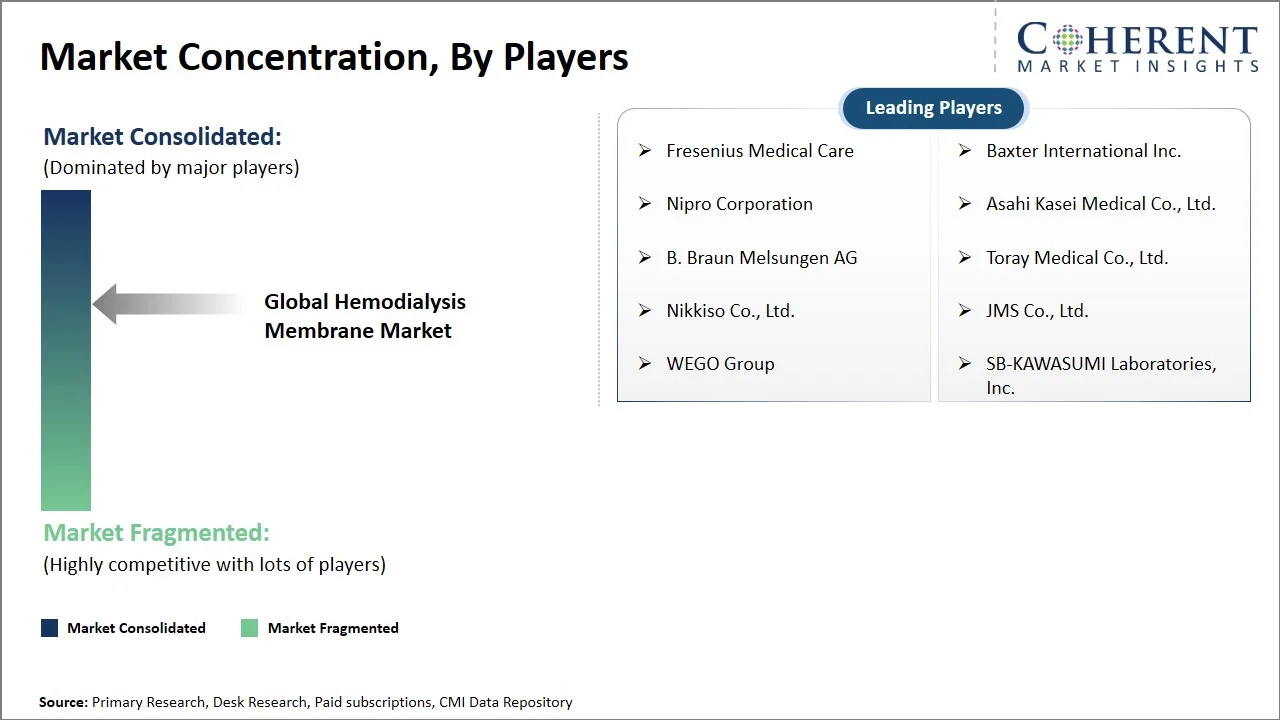
The global hemodialysis membrane market is moderately consolidated, with market players primarily focused on innovative membrane designs, increased biocompatibility, and increased development of high technology dialysis devices. Companies are investing significantly on the development of medium cut-off (MCO), high-flux, and surface-modified membranes to better eliminate toxins. Research and development investment, clinical validation, and manufacturing capability expansion is seen as critical for companies that intend to sustain and gain market position. Partnership with dialysis providers and geographic expansion to developing healthcare markets is expected to determine market dynamics during the forecast period. Key focus areas include:
- Development of high-flux and medium cut-off (MCO) membrane technologies
- Enhancement of membrane biocompatibility and hemocompatibility
- Expansion of manufacturing capabilities and global distribution networks
- Clinical studies supporting advanced dialysis modalities and membrane performance
- Strategic collaborations with dialysis centers and renal care providers
Market Report Scope
Hemodialysis Membrane Market Report Coverage
| Report Coverage | Details | ||
|---|---|---|---|
| Base Year: | 2025 | Market Size in 2026: | USD 11.2 Bn |
| Historical Data for: | 2020 To 2024 | Forecast Period: | 2026 To 2033 |
| Forecast Period 2026 to 2033 CAGR: | 5.7% | 2033 Value Projection: | USD 16.5 Bn |
| Geographies covered: |
| ||
| Segments covered: |
| ||
| Companies covered: | Fresenius Medical Care, Baxter International Inc., Nipro Corporation, Asahi Kasei Medical Co., Ltd., B. Braun Melsungen AG, Toray Medical Co., Ltd., Nikkiso Co., Ltd., JMS Co., Ltd., WEGO Group, and SB-KAWASUMI Laboratories, Inc. | ||
| Growth Drivers: |
| ||
| Restraints & Challenges: |
| ||
Analyst Opinion (Expert Opinion)
- Hemodialysis membrane market is expected to see consistent growth in the long term due to the adoption of new high-performance membrane technologies that enable increased toxin clearance, biocompatibility and a better patient outcome. Mid cut-off (MCO) membranes and surface-modified membranes and the like innovative filtration technologies are expected to come into favor with the growing trend in healthcare providers towards providing highly effective dialysis solutions and innovative new membrane technologies. The home and individual dialysis trend will also spur the innovation in the membranes.
- The maximum opportunities will probably exist within high-flux and advanced synthetic membranes across the Asia Pacific region specifically in China and India. The growth can be attributed to the increasing prevalence of chronic kidney disease (CKD), the development of the dialysis network and infrastructure, increasing expenditure on healthcare, and governmental drive toward renal care, there is high growth in demand for advanced dialysis consumables. The manufacturers that offer efficient, cost-effective membrane solutions for these growing markets will be the most promising.
- In order to obtain a competitive advantage, market participants must emphasize the development of differentiated membrane technologies that offer higher biocompatibility, selective toxin removal and decreased inflammation response. Capital investment for clinical validation, local manufacturing capability and partnerships with dialysis providers will play an important role in gaining stronger market footing. Emphasis must also be put on new avenues of expanded hemodialysis, portable dialysis units and future-generation materials for a promising future.
Speak to the analyst
Want personalized insights?
Take the findings above to one of our principal consultants, or have the report rebuilt around the segments, geographies and competitors you actually track.
Market Segmentation
- Material Insights (Revenue, USD Bn, 2021 - 2033)
- Polysulfone (PS)
- Polyethersulfone (PES)
- Polymethyl Methacrylate (PMMA)
- Cellulose-Based Membranes
- Others
- Flux Type Insights (Revenue, USD Bn, 2021 - 2033)
- High-Flux Membranes
- Low-Flux Membranes
- End User Insights (Revenue, USD Bn, 2021 - 2033)
- Dialysis Centers
- Hospitals
- Home Healthcare Settings
- Others
- Regional Insights (Revenue, USD Bn, 2021 - 2033)
- North America
- U.S.
- Canada
- Latin America
- Brazil
- Argentina
- Mexico
- Rest of Latin America
- Europe
- Germany
- U.K.
- Spain
- France
- Italy
- Russia
- Rest of Europe
- Asia Pacific
- China
- India
- Japan
- Australia
- South Korea
- ASEAN
- Rest of Asia Pacific
- Middle East
- GCC Countries
- Israel
- Rest of Middle East
- Africa
- South Africa
- North Africa
- Central Africa
- North America
- Key Players Insights
- Fresenius Medical Care
- Baxter International Inc.
- Nipro Corporation
- Asahi Kasei Medical Co., Ltd.
- Braun Melsungen AG
- Toray Medical Co., Ltd.
- Nikkiso Co., Ltd.
- JMS Co., Ltd.
- WEGO Group
- SB-KAWASUMI Laboratories, Inc.
Sources
Primary Research Interviews
- Nephrologists and renal care specialists managing chronic kidney disease (CKD) and end-stage renal disease (ESRD) patients
- Dialysis center directors and clinical managers overseeing hemodialysis operations
- Biomedical engineers and technical experts involved in dialysis membrane development
- Medical device regulatory and quality assurance professionals from dialysis product manufacturers
- Executives and product managers from hemodialysis membrane and renal care companies
Stakeholders
- Hemodialysis membrane manufacturers and dialyzer producers
- Dialysis service providers and renal care networks
- Contract manufacturers and raw material suppliers serving dialysis device manufacturers
- End-use Sectors
- Hospital-based dialysis units
- Independent dialysis centers
- Home hemodialysis service providers
- Ambulatory care and outpatient renal clinics
- Academic medical centers and teaching hospitals
- Specialty nephrology and kidney care centers
- Regulatory & Health Bodies
- U.S. Food and Drug Administration (FDA)
- European Commission Medical Device Regulation (EU MDR)
- Pharmaceuticals and Medical Devices Agency (PMDA), Japan
- National Medical Products Administration (NMPA), China
- Central Drugs Standard Control Organization (CDSCO), India
- Medicines and Healthcare products Regulatory Agency (MHRA), UK
Databases
- United States Renal Data System (USRDS)
- FDA Medical Device Registration and Listing Database
- World Health Organization (WHO) Global Health Observatory
- OECD Health Statistics Database
- World Bank Health Indicators Database
- ERA Registry (European Renal Association)
Magazines
- Nephrology News & Issues (NNI)
- Renal & Urology News
- MD+DI (Medical Device and Diagnostic Industry)
Journals
- Clinical Journal of the American Society of Nephrology (CJASN)
- American Journal of Kidney Diseases (AJKD)
- Hemodialysis International
- Journal of Renal Nutrition
Newspapers
- The Wall Street Journal
- Financial Times
- The New York Times
- The Guardian
Associations
- National Kidney Foundation (NKF)
- American Society of Nephrology (ASN)
- European Renal Association (ERA)
- International Society of Nephrology (ISN)
- Kidney Disease: Improving Global Outcomes (KDIGO)
- Asian Pacific Society of Nephrology (APSN)
Public Domain Sources
- World Health Organization (WHO) – Chronic Kidney Disease and Renal Health Statistics
- U.S. Centers for Disease Control and Prevention (CDC) – Chronic Kidney Disease Program
- National Institute of Diabetes and Digestive and Kidney Diseases (NIDDK)
- United States Renal Data System (USRDS)
Proprietary Elements
- CMI Data Analytics Tool, Proprietary CMI Existing Repository of information for last 10 years.
Get access to 250+ pages report
Every segment, forecast, competitor profile and data table behind the analysis above — available for instant download.
- ESOMAR Member
- ISO 9001:2015 Certified
- D-U-N-S Registered
- GDPR & CCPA Compliant
Missing comfort of reading report in your local language? Find your preferred language:
Transform your Strategy with Exclusive Trending Reports
Frequently Asked Questions
The global hemodialysis membrane market is estimated to be valued at USD 11.2 Bn in 2026 and is expected to reach USD 16.5 Bn by 2033.
Polysulfone (PS) dominates due to its excellent biocompatibility, high thermal stability, superior mechanical strength, and efficient toxin removal capabilities.
A hemodialysis membrane is a semi-permeable filtration barrier used in dialyzers to remove waste products, toxins, and excess fluids from the blood during dialysis treatment.
The CAGR of the global hemodialysis membrane market is projected to be 5.7% from 2026 to 2033.
In terms of end user, dialysis centers are estimated to dominate the market revenue share in 2026.
High-flux membranes have larger pores and higher permeability, enabling more effective removal of middle-molecular-weight toxins than low-flux membranes.
Membrane biocompatibility helps minimize inflammatory reactions and blood-material interactions, improving patient safety and treatment outcomes during dialysis.