

Medical Fiber Optics Market Size and Forecast - 2026 To 2033
The medical fiber optics market is anticipated to grow at a CAGR of 6% with USD 1.51 Bn share in 2026 and is expected to reach USD 2.28 Bn in 2033. Key drivers are the high occurrence of chronic diseases (4 million globally) as well as the subsequent need for early diagnosis and treatment, fueling demand for high-quality visualization tools. Additionally, the integration of fiber optics with imaging systems such as optical coherence tomography is expanding its application further.
Key Takeaways
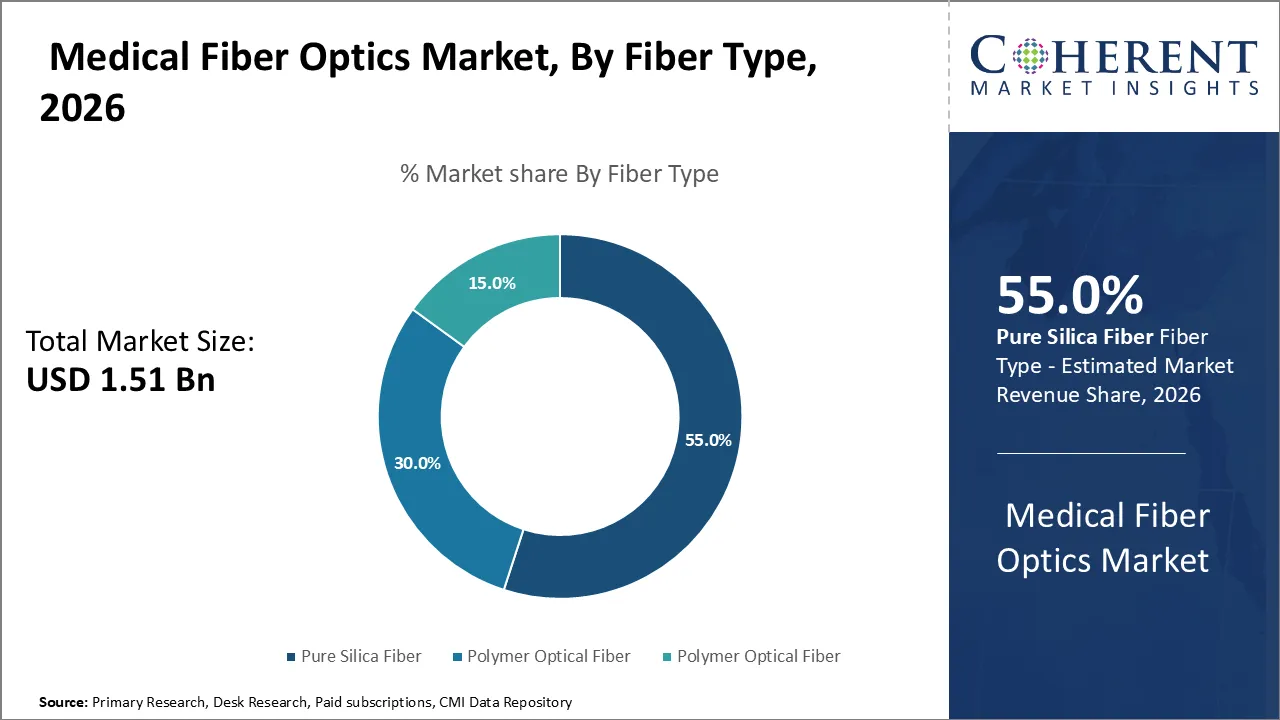
- Pure Silica Fiber is expected to account the largest share of 55% in 2026, as pure silica fibers are highly used in endoscopic systems, phototherapy devices, as well as laser delivery systems. The Mahout Silica Sand Project supports this demand by producing 100,000 tons of 98% pure silica annually, ensuring a steady supply of high-quality material.
- Based on end user, hospitals will dominate with 45% in 2026, fueled by their extensive infrastructure, broad spectrum of medical services, as well as growing investments in advanced medical technologies including fiber optics. According to the American Hospital Association, the United States alone has 6,100 hospitals, including 5,121 community hospitals, highlighting the scale of hospital-based adoption.
- Image transmission hold the dominant share of 42% in 2026, driven by widespread use in endoscopic systems, surgical imaging, and diagnostic equipment. Over 17.7 million gastrointestinal (GI) endoscopic procedures are performed annually, contributing to 68% of all endoscopic procedures in the United States.
- Reusable hold the dominant share of 60% in 2026, as high-volume medical facilities prefer tools that can be sterilized and reused. Supporting this, according to the American Journal of Infection Control, these reusable medical devices perform over 250 million endoscopic procedures globally each year, with the number of procedures steadily increasing.
- North America is expected to acquire the dominant share of 38% in 2026, due to its advanced healthcare systems, high adoption of minimally invasive procedures along with strong presence of major medical device manufacturers. U.S. healthcare spending rose more than 7% in 2024, surpassing 5 trillion, or USD 15,474 per capita.
Segmental Insights
Why is Pure Silica Fiber Acquiring the Largest Market Share?
Pure silica fiber is projected to account for the largest share of 55% in 2026, representing approximately 55% of the total volume. These fibers are broadly used in high-precision medical devices such as endoscopes, laser delivery systems, imaging instruments, etc., where clarity and durability are important. The significance of pure silica fiber is reflected by the sheer scale of the medical device market.
For instance, according to the World Health Organization, there are an estimated 2 million different medical devices globally, categorized into more than 7,000 generic device groups, highlighting the high demand for high-quality materials that enables reliable performance in diverse medical applications.
Pure silica fiber loses very little light, so it can send signals over long distances without much loss. This is important for safe and accurate minimally invasive surgeries and medical tests.
- Current Industry Events of 2026
- Market Size Estimation
- Regional Breakdown
- Competitive Landscape
- Customer Intelligence
- Segmental Analysis
- Pricing Analysis
- Key Market Drivers, Challenges & Future Trends
- Customized Insights Section
Hospitals Surgery Devices holds the Largest Market Share
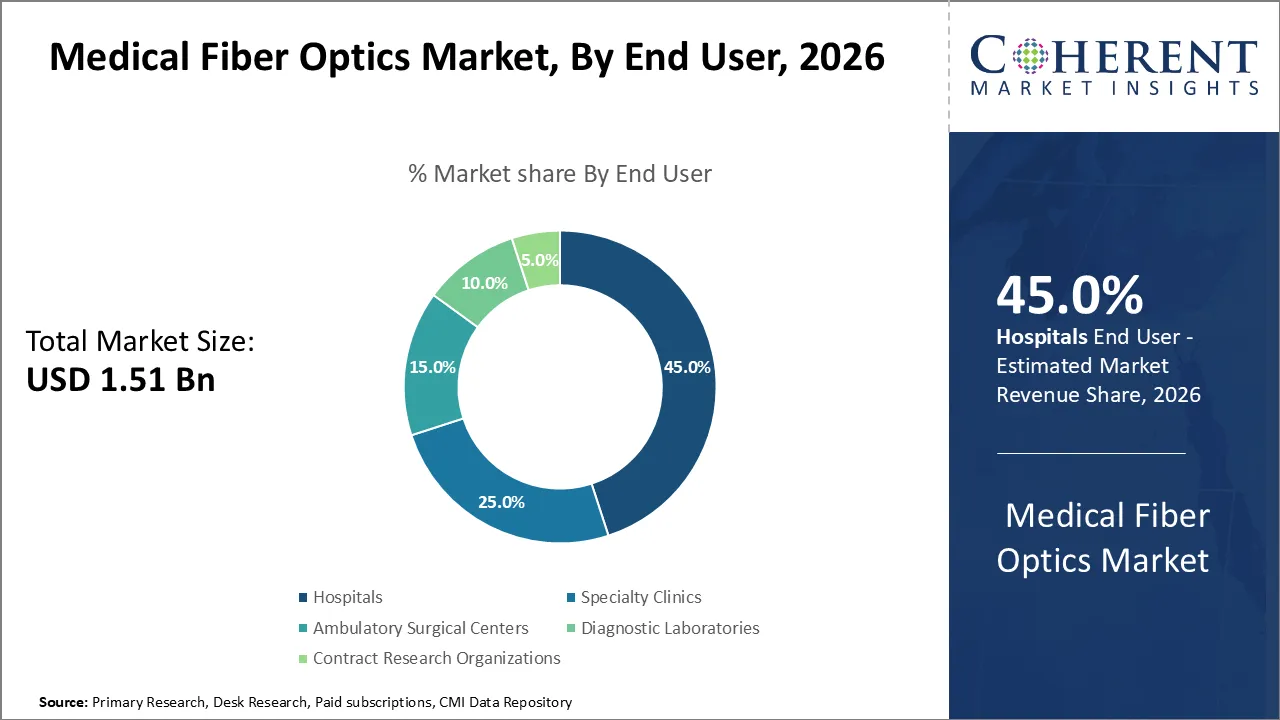
Hospitals dominate the market, accounting for a significant 45% share in 2026, hospitals hold a primary hub for complex surgeries, minimally invasive procedures, as well as a multitude of diagnostic services, thereby driving high demand for medical fiber optics. As per Australian Institute of Health and Welfare there were 3.1 million hospitalizations (or 25% of all hospitalizations) involved surgery, with 3 in 5 (59%) of these occurring in private hospitals between 2023-24.
Additionally, hospitals consistently invest in upgrading their medical equipment to adhere to stringent healthcare standards and improve patient outcomes. This trend is supported by government healthcare policies in many countries that aim to enhance infrastructure, expand access to quality care, as well as integrate cutting-edge technology in public health facilities. According to OECD 2025 report, health spending accounted for an average of 15.1% of total expenditure by government authorities across OECD countries in 2023, an increase of 1 percentage points (p.p.) compared to 2013.
Which Application segment dominates the market?
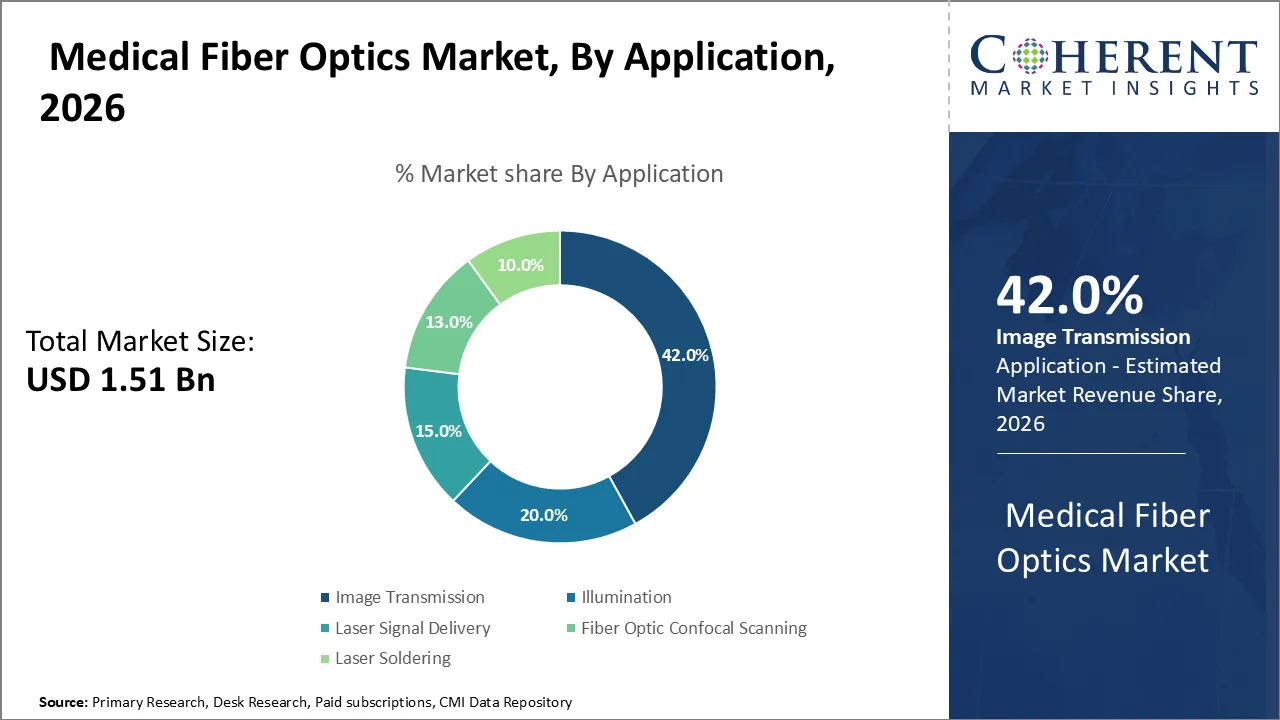
Image transmission account for the largest share of 42% in 2026 driven by its critical role in enhancing diagnostic and surgical procedures. High procedural volumes in endoscopic interventions illustrate this demand. Annual procedural volumes in large Thai medical centers typically range from 500 to 1,000 ERCPs and 300 to 600 EUS cases, while smaller hospitals perform 200 to 350 ERCPs and 100 to 300 EUS cases. These numbers shows the importance of high-quality image transmission systems in the country, supporting the dominance of this application segment in the medical fiber optics market.
Technological advancements have further held the leading position of Image Transmission in medical fiber optics. Recent innovations in high-definition (HD) and even ultra-high-definition (UHD) imaging systems rely heavily on fiber optics to transmit clear and detailed images from flexible scopes to display systems. Institutions like the U.S. National Institutes of Health (NIH) targets that advancements in imaging modalities such as Optical Coherence Tomography (OCT) also rely on fiber optic technology for superior image transmission inside delicate tissues.
Which Usage segment dominates the market?
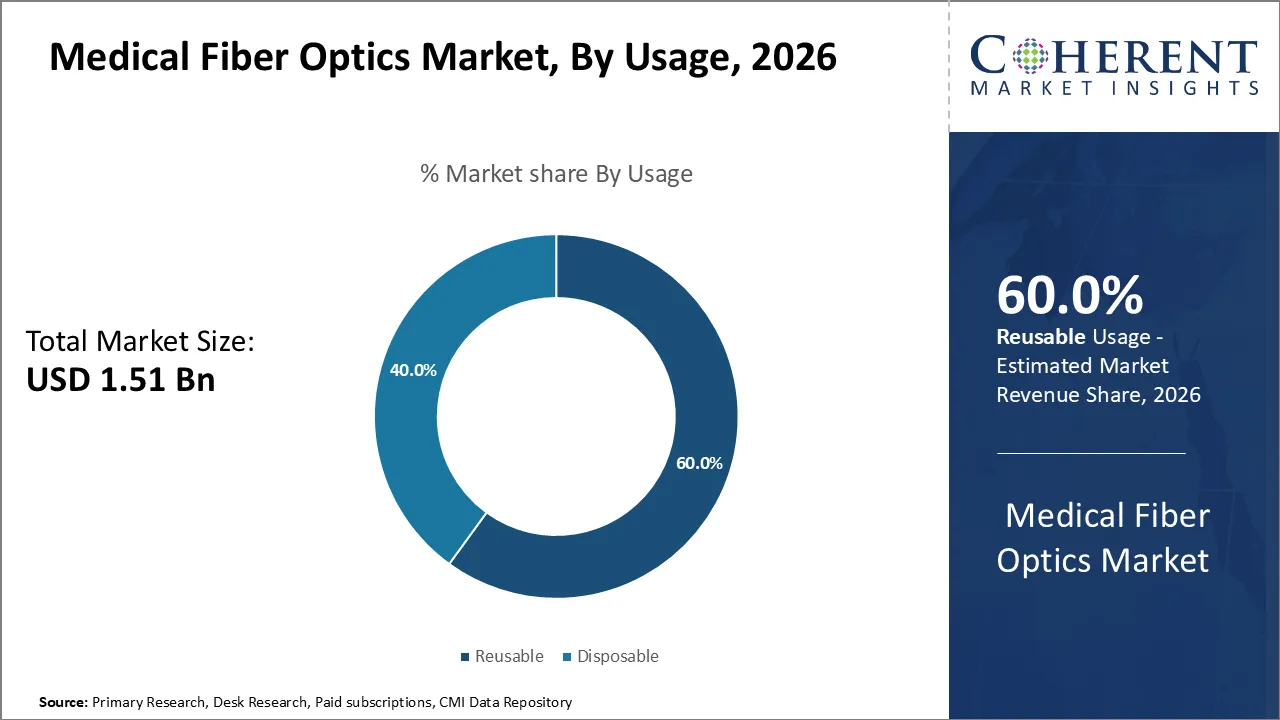
Reusable account for the largest share of 60% in 2026, medical fiber optics, especially reusable variants, have become integral components in a wide array of diagnostic and therapeutic procedures such as endoscopy, laparoscopy, and minimally invasive surgeries. In March 2026, Olympus launched its next-generation VISERA ELITE III surgical imaging platform in the U.S. The main system is reusable as well as designed for multiple procedures, with some disposable accessories used as needed. This supports the escalating demand for reusable medical fiber optic devices in hospitals, which are preferred for cost efficiency and repeated sterilization.
Ultra-thin Fiber Optic Probes: A major breakthrough in Medical Fiber Optics Procedure
Thin fiber optic probes make it easier to use them in robotic surgery systems. The precise control as well as dexterity offered by robotics combined with enhanced fiber optic imaging support surgeons in performing complex procedures like neurosurgery and ophthalmology with high accuracy and minimal invasiveness. According to a 2025 study published by the Mission:brain foundation, an estimated 72,967 neurosurgeons globally with a pooled density of 0.93 per 100,000 people. This shows the size of the global neurosurgical workforce that may highly adopt advanced imaging and robotic tools.
The NIH’s recent publications (2021-2023) focus advancements in fiber-optic-based imaging techniques such as Optical Coherence Tomography (OCT) along with robotic assistance to give microscopic resolution in vivo imaging during interventions.
Current Events and Their Impact on the Medical Fiber Optics Market
Current Event | Description and its Impact |
Regulatory Compliance along with Quality Certifications |
|
Increased Investment in Healt |
|
Medical Fiber Optics Market Trends
- The increasing demand for minimally invasive surgical procedures, technological advancements in medical imaging, and the rising prevalence of chronic diseases requiring precise diagnostic and therapeutic interventions. As per the WHO 2025 report, Chronic (noncommunicable) diseases are the top global cause of death, responsible for 41 million deaths each year—about 74% of all deaths. More than 90% of adults aged 65+ have at least one chronic condition, and 60% of U.S. adults live with at least one.
- Miniaturization Revolution: Continuous development of smaller, more flexible fiber optic systems gives access to previously unreachable anatomical areas.
- Additionally, the aging population and growing awareness about early disease detection are further propelling market expansion. India's senior citizen population is projected to surge to around 230 million by 2036, scaling up about 15% of the total population.
- Using disposable fiber optic devices reduces the risk of spreading infections, so they are more accepted in hospitals. For example, in October 2025, Coherent released the ACE Thulium Fiber Laser and Surgical Fiber Assemblies, showing more use of advanced disposable fiber optic tools.
Regional Insights
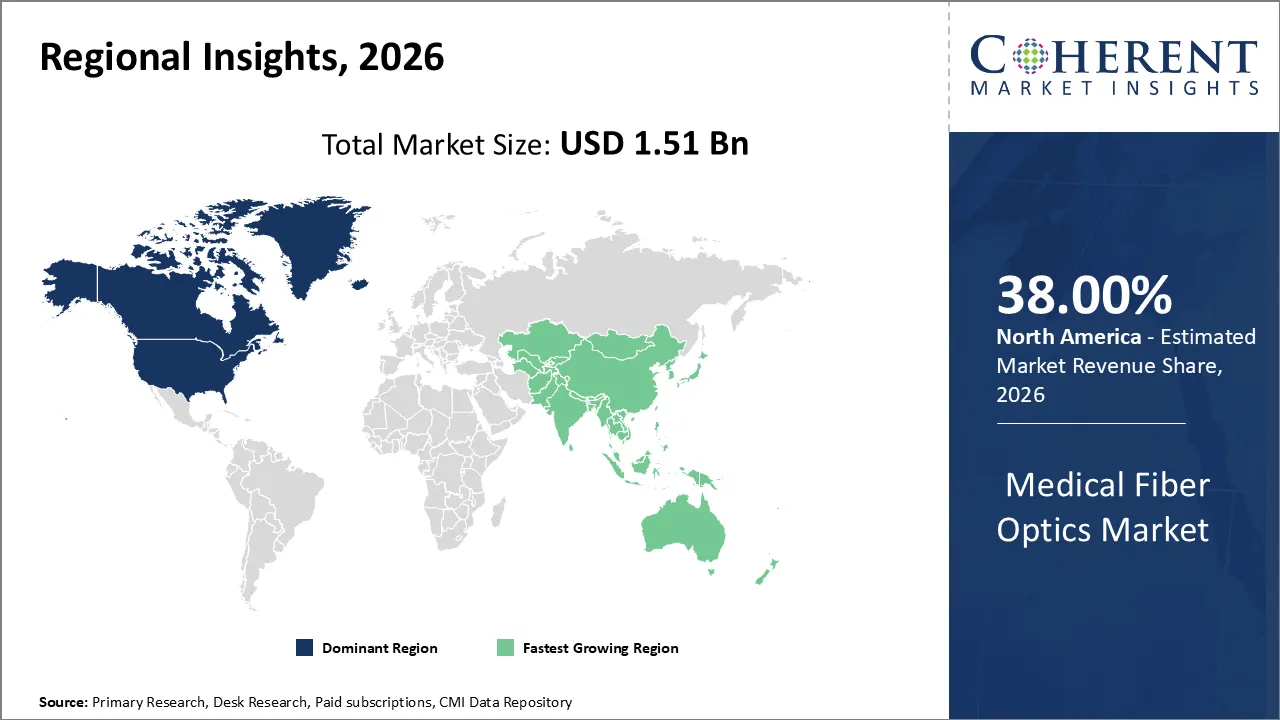
North America dominates owing to Growing prevalence of cataract surgeries
North America account 38% market share in 2026, As the number of procedures reaches a stable level, newer CMOS scopes are starting to taking over traditional fiber optic models. In one year, 19% of colonoscopies were moved from hospitals to outpatient centers using small, portable equipment that costs less than USD 35,000. In Canada, budget rules let the equipment last up to 7 years. In Mexico, private hospitals added 12 new Olympus 4K suites in 2024 as medical tourism grows.
Healthcare providers in North America use fiber optic medical imaging the most because many people have chronic diseases like heart problems and cancer, which need regular check-ups. Imaging utilization is projected to increase by 16.9% to 26.9% by 2055 compared with 2023, highly driven by population growth (73–88%) as well as aging (12–27%), highlighting the escalating demand for advanced imaging technologies, including fiber optic systems.
Asia Pacific Medical Fiber Optics Market Trends
The Asia-Pacific region is poised to be as the fastest-growing region through 2026-2033, expanding at a CAGR of approximately 5.74%. The proliferation of fiber optic technologies in this region is largely propelled by rising healthcare spending, government initiatives focused on rural healthcare penetration, and growing prevalence of chronic diseases requiring advanced diagnostic and therapeutic procedures. The increase in government healthcare spending, as shown by the INR 1,06,530.42 crore allocation in India’s 2026–27 Union Budget, supports the statement that rising healthcare expenditure and government initiatives are driving the adoption of fiber optic technologies, especially for advanced diagnostics and treatment in regions with growing healthcare needs.
Besides this, countries like China and Japan have also been largely promoting innovation in medical imaging as well as minimally invasive procedures through increased investment into research and development along with public-private partnerships aimed at deploying fiber optic-based endoscopic systems. A notable example illustrating APAC’s growth velocity can be seen in South Korea’s Ministry of Health and Welfare investment in smart hospitals and telemedicine projects that integrate fiber optic communication systems for real-time diagnostics and treatment monitoring.
Extensive employment of minimally invasive procedures in the Medical Fiber Optics Market Creates Demand in United States
The United States medical fiber optics market is undergoing a period of robust expansion. The extensive employment of minimally invasive procedures, which heavily rely on fiber optic technologies to provide accurate diagnosis and surgical precision. In 2025, approximately 1.21 million minimally invasive surgeries were performed in the United States, reflecting the growing reliance on fiber optic technologies for precise diagnostics as well as surgical procedures.
For instance, the Stealth AXiS surgical system, cleared for spine procedures in February, unifies surgical planning, navigation, and robotics into a single platform, relying on advanced optical and imaging technologies to deliver precise and minimally invasive interventions. Furthermore, hospital ents due to their high-resolution imaging capabilities and flexibility. Autonomous Interventions and Robotics (AIR) is a game-changing robotic surgery program aiming to increase access to life-saving surgeries. If successful, AIR will revolutionize surgery by enabling robots to perform entire interventions without direct human input.
According to recent data from the American Hospital Association (AHA), the penetration of advanced medical devices incorporating fiber optics is significantly higher in the U.S. compared to Canada, further reinforcing the dominant position of the U.S. subsegment in North America’s medical fiber optics market.
China Medical Fiber Optics Market Trends
The China medical fiber optics projected to grow significantly during the upcoming years. The adoption of advanced imaging technologies, such as endoscopic, fiber optic, and minimally invasive diagnostic systems, is rising rapidly to meet the growing demand for high-quality healthcare. In China, significant funding by government authorities, including a 100 billion yuan allocation to upgrade county‑level medical facilities as well as diagnostic equipment, is driving demand for advanced imaging and fiber optic‑based medical technologies, supporting substantial growth in the China medical fiber optics market.
Who are the Major Companies in Medical Fiber Optics Industry
Some of the major key players in medical fiber optics are Leoni AG, Sunoptic Technologies LLC, Gulf Fiberoptics, Inc., Integra LifeSciences Holdings Corporation, Coherent, Inc., Molex Incorporated, Fiberoptics Technology, Inc., Newport Corporation, and Schott AG.
Key News
- In May 2025, Sunoptic OEM announced new advances in fiberoptic lighting technology that are advancing surgical visualization as well as illumination in operating rooms. The latest innovations enhance light transmission efficiency, durability, and reduce heat output, helping surgeons see more clearly and work more precisely during procedures.
- In August 2025, PAVmed Inc. agreed in principle to work with Duke University to use their new endoscopic imaging technology. This device combines two methods, a/LCI and OCT, allowing doctors to see and treat precancerous conditions in the esophagus in one procedure. It could make treatment faster and more effective than traditional biopsies and help prevent esophageal cancer.
Market Report Scope
Medical Fiber Optics Market Report Coverage
| Report Coverage | Details | ||
|---|---|---|---|
| Base Year: | 2025 | Market Size in 2026: | USD 1.51 Bn |
| Historical Data for: | 2020 To 2024 | Forecast Period: | 2026 To 2033 |
| Forecast Period 2026 to 2033 CAGR: | 6% | 2033 Value Projection: | USD 2.28 Bn |
| Geographies covered: |
| ||
| Segments covered: |
| ||
| Companies covered: | Leoni AG, Sunoptic Technologies LLC, Gulf Fiberoptics, Inc., Integra LifeSciences Holdings Corporation, Coherent, Inc., Molex Incorporated, Fiberoptics Technology, Inc., Newport Corporation, and Schott AG. | ||
Analyst Opinion
- The Medical Fiber Optics Market is poised for significant advancement driven by the increasing adoption of minimally invasive surgical procedures. Research published in JAMA Surgery found that only about 30% of eligible procedures in the United States leverage minimally invasive techniques.
- Fiber optic technologies enable enhanced visualization during surgeries, improving precision as well as patient outcomes.
- More people have long-term diseases, and the number of older people is growing worldwide. This increases the need for better medical imaging and endoscopy devices. New technologies, like fiber optics in wearable devices and telemedicine, also make it easier to monitor and check patients from far away.
Speak to the analyst
Want personalized insights?
Take the findings above to one of our principal consultants, or have the report rebuilt around the segments, geographies and competitors you actually track.
Market Segmentation
- By Fiber Type
- Pure Silica Fiber
- UV-Silica
- Near Infrared (NIR) Silica
- Metal- Coated Silica
- Plastic Clad Silica
- Polycrystalline Fiber
- Polymer Optical
- Pure Silica Fiber
- By End User
- Hospitals
- Specialty Clinics
- Ambulatory Surgical Centers
- Diagnostic Laboratories
- Contract Research Organization
- By Application
- Image Transmission
- Illumination
- Laser Signal Delivery
- Fiber Optic Confocal Scanning
- Laser soldering
- By Usage
- Reusable
- Disposable
- Global Medical Fiber Optics Market, By Region
- North America
- U.S.
- Canada
- Latin America
- Brazil
- Mexico
- Argentina
- Rest of Latin America
- Europe
- Germany
- U.K.
- France
- Italy
- Spain
- Russia
- Rest of Europe
- Asia Pacific
- China
- India
- Japan
- Australia
- South Korea
- ASEAN
- Rest of Asia Pacific
- Middle East
- GCC
- Israel
- Rest of Middle East
- Africa
- South Africa
- Central Africa
- North Africa
- North America
Sources
Primary Research Interviews
- Medical device manufacturers and fiber optic component suppliers
- Healthcare facility procurement managers and biomedical engineers
- Medical fiber optic technology developers and R&D specialists
- Healthcare industry consultants and technology advisors
- Others
Databases
- World Health Organization (WHO)
- Centers for Disease Control and Prevention (CDC)
- National Institutes of Health (NIH)
- Organisation for Economic Co-operation and Development (OECD)
Magazines
- Medical Device & Diagnostic Industry (MD+DI)
- Photonics Spectra Magazine
- BioOptics World Magazine
- Medical Design & Outsourcing Magazine
- Others
Journals
- Journal of Biomedical Optics
- IEEE Journal of Selected Topics in Quantum Electronics
- Biomedical Optics Express
- Others
Newspapers
- Journal of Biomedical Optics
- IEEE Journal of Selected Topics in Quantum Electronics
- Biomedical Optics Express
- Others
Associations
- Optical Society of America (OSA)
- International Society for Optical Engineering (SPIE)
- Medical Device Manufacturers Association (MDMA)
- Healthcare Technology Management Biomedical Instrumentation & Technology Association
- Others
Public Domain Sources
- U.S. Food and Drug Administration (FDA) medical device databases
- European Medicines Agency (EMA) regulatory filings
- World Health Organization (WHO) medical technology reports
- National Institutes of Health (NIH) research publications
- Others
Proprietary Elements
- CMI Data Analytics Tool
- Proprietary CMI Existing Repository of information for last 10 years
Get access to 250+ pages report
Every segment, forecast, competitor profile and data table behind the analysis above — available for instant download.
- ESOMAR Member
- ISO 9001:2015 Certified
- D-U-N-S Registered
- GDPR & CCPA Compliant
Missing comfort of reading report in your local language? Find your preferred language:
Transform your Strategy with Exclusive Trending Reports
Frequently Asked Questions
The medical fiber optics market is expected to reach USD 1.51 Bn in 2033.
Major players operating in the global medical fiber optics market include Leoni AG, Sunoptic Technologies LLC, Gulf Fiberoptics, Inc., Integra LifeSciences Holdings Corporation, Coherent, Inc., Molex Incorporated, Fiberoptics Technology, Inc., Newport Corporation, and Schott AG.
Major factor hampering the growth of the medical fiber optics market during the forecast period constitutes of increasing use of non-invasive diagnostics and monitoring methods.
Major factor driving the growth of global medical fiber optics market during the forecast period are growing preference for minimally invasive surgery (MIS) and rising prevalence of gastrointestinal diseases
The medical fiber optics market is anticipated to grow at a CAGR of 6% between 2026 and 2033.
Among regions, North America is expected to account for a largest market share in the global medical fiber optics market over the forecast period.