

Global Medical Digital Imaging System Market Size and Forecast – 2026 to 2033
According to Coherent Market Insights, the global medical digital imaging system market is estimated to be valued at USD 37.89 Bn in 2026 and is expected to reach USD 58.11 Bn by 2033, exhibiting a compound annual growth rate (CAGR) of 6.3% from 2026 to 2033. This steady growth is driven by the increasing adoption of advanced imaging technologies, rising healthcare expenditures, and growing demand for early disease diagnosis across the globe. The market expansion is also supported by continuous innovations and integration of AI and machine learning in medical imaging systems.
Key Takeaways of the Medical Digital Imaging System Market
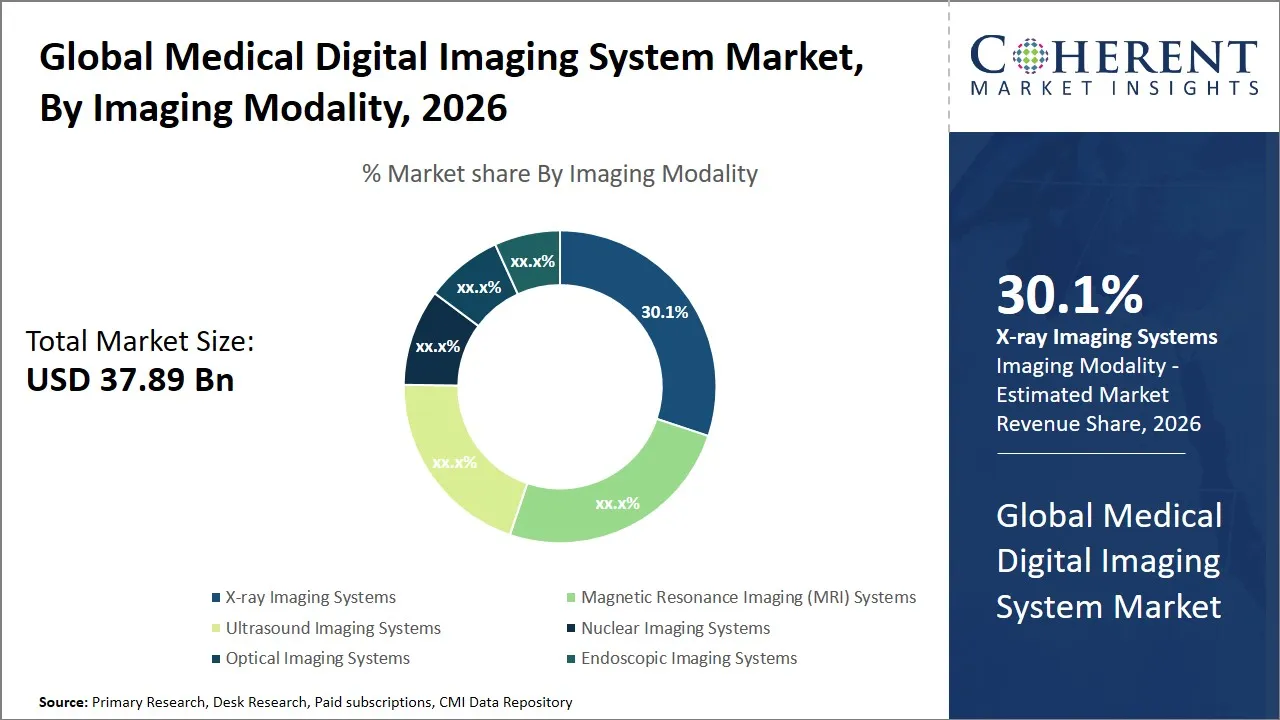
- X-ray Imaging Systems segment is expected to lead the global medical digital imaging system market with a 30.1% share in 2026.
- Radiology/General imaging segment is estimated to account for 32.4% of the market share in 2026.
- Hospitals segment is projected to hold 34.6% of the medical digital imaging system market share in 2026.
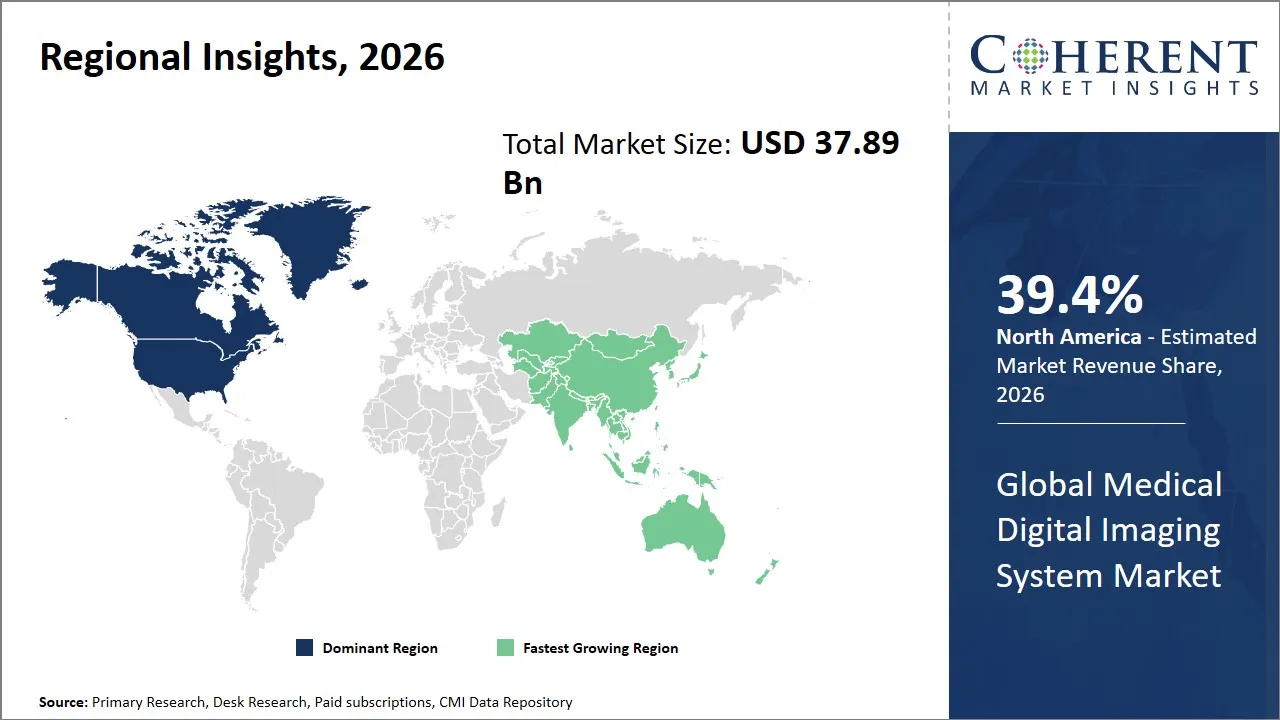
- North America is expected to lead the market, holding a share of 39.4% in 2026. Asia Pacific is anticipated to be the fastest-growing region, with 24.5% share in 2026.
Market Overview
- Emerging trends in the medical digital imaging system market include the integration of artificial intelligence for improved image analysis and diagnostic accuracy, which enhances clinical decision-making and workflow efficiency.
- Additionally, the rising use of portable and cloud-based imaging devices is enabling remote diagnostics and telemedicine, especially in underserved regions.
- There is also a growing emphasis on enhancing patient experience through faster and non-invasive imaging techniques, as well as an increasing trend toward personalized medicine fueled by high-resolution imaging data.
Currents Events and Its Impacts
Current Events | Description and its Impact |
Rapid integration of AI-based image analysis in radiology workflows |
|
Expansion of cloud-based PACS and teleradiology networks post‑pandemic |
|
Segmental Insights
- Current Industry Events of 2026
- Market Size Estimation
- Regional Breakdown
- Competitive Landscape
- Customer Intelligence
- Segmental Analysis
- Pricing Analysis
- Key Market Drivers, Challenges & Future Trends
- Customized Insights Section
Why Does X-ray Imaging Systems Dominate the Medical Digital Imaging System Market by Imaging Modality?
The X-ray imaging systems will take the largest portion within the world medical digital imaging system market with 30.1% share in 2026, because they are invaluable in the routine diagnostic imaging of various clinical environments. The basic reason behind the segment expansion is the availability and relative cheapness of X-ray technology to other modalities. X-ray systems offer high throughput and fast imaging solutions that are good in the diagnosis of patients in the emergency and outpatient units.
In September 2025, United Imaging, a global medical digital imaging system manufacturer, launched the AI-enabled uDR Aurora CX X-ray platform. The system features automated patient positioning, exposure control, and AI-driven image processing for improved low-dose clarity. It also includes real-time AI quality control to reduce repeat scans and support technologists under workforce pressure.
Why Does Radiology/General Imaging Hold the Highest Market Share in the Medical Digital Imaging System Market?
Radiology/General imaging segment is expected to hold 32.4% share in 2026, since it is the foundation of diagnostic medicine that includes a broad range of medical tests that use imaging to identify, monitor, and/or plan treatment initially.
The wide classification encompasses many critical fields such as chest radiography, abdominal imaging, and musculoskeletal evaluations, which are the routine diagnostic tests in both inpatient and outpatient settings. The general radiology imaging systems are in demand due to the growing number of chronic illnesses that need constant monitoring like cardiovascular and pulmonary illnesses.
Hospitals Segment Dominates the Global Medical Digital Imaging System Market
Hospitals segment is expected to capture 34.6% share in 2026, because of their comprehensive infrastructure, high medical specializations, and high patient population in need of a variety of diagnostic services.
The size and character of hospital work require sophisticated imaging equipment, which can serve various departments at the same time and include emergency care, inpatient diagnostics, outpatient clinics and surgical rooms. These mandates necessitate massive investment of hospitals in the state of art imaging technologies so as to satisfy clinical requirements as well as enhancing patient outcomes.
Cost Avoidance Through Enhanced Diagnostic Accuracy in Medical Digital Imaging Systems
- Cost avoidance in the medical digital imaging system market is strongly linked to improvements in diagnostic accuracy achieved through advanced imaging technologies and AI-enabled image analysis. High-resolution systems and automated detection tools minimize diagnostic errors, reducing the need for repeat scans, redundant tests, and unnecessary follow-up procedures. This directly lowers imaging workflow costs and optimizes the use of radiology resources across hospitals and diagnostic centers.
- Improved diagnostic precision also enables earlier disease detection and more targeted treatment planning, preventing complications that lead to prolonged hospital stays or expensive late-stage interventions. By supporting faster, evidence-based clinical decisions, accurate digital imaging systems help healthcare providers control treatment costs while maintaining high standards of patient care and operational efficiency.
Regional Insights
North America Medical Digital Imaging System Market Analysis and Trends
North America’s dominance in the global medical digital imaging system market, with a share of 39.4% in 2026, stems from a highly developed healthcare infrastructure, widespread adoption of advanced medical imaging technologies, and substantial investment in healthcare R&D. The area is well supported by the government, such as the good policies of reimbursement and the regulation, which are favorable to innovations and guarantee safety and effectiveness.
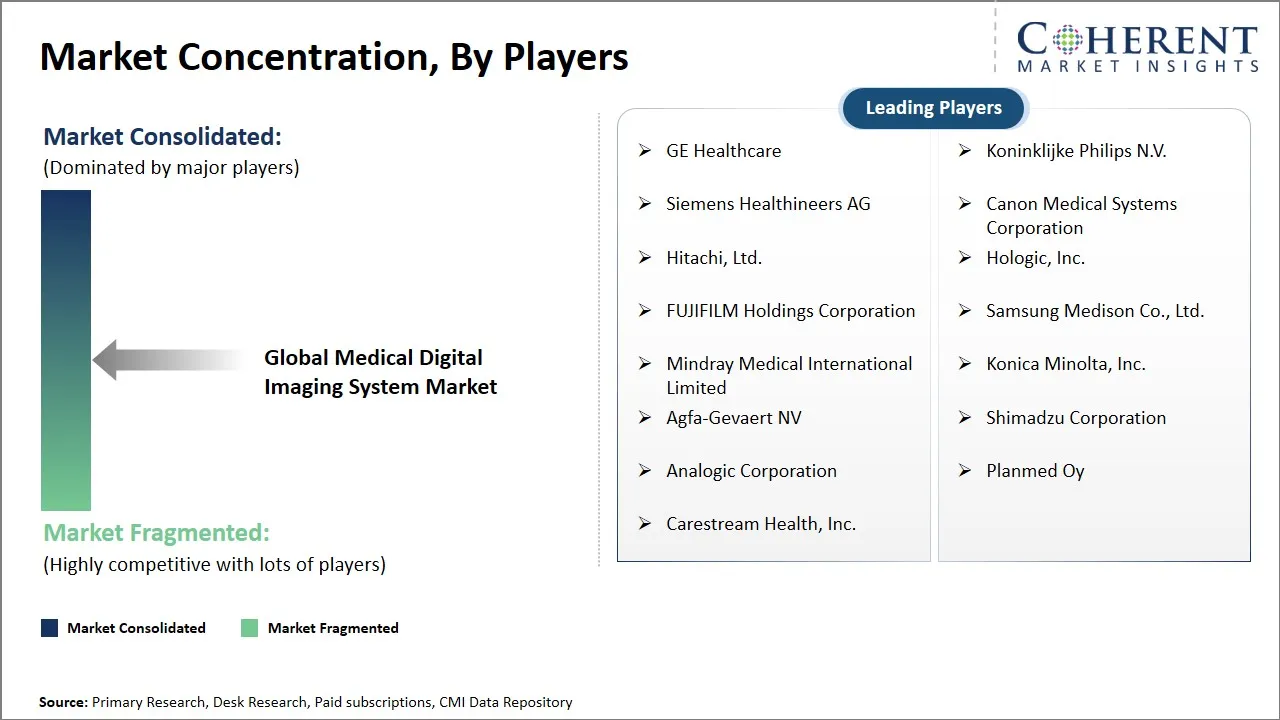
The availability of significant players in the industry including GE Healthcare, Siemens Healthineers, and Philips Healthcare lead to unending technological development and pricing competition plans. The developed marketplace environment in North America also enables the formation of strategic alliances between hospitals, diagnostic centers, and technology companies, which enhances the rate of product implementation and adoption.
Asia Pacific Medical Digital Imaging System Market Analysis and Trends
The Asia Pacific region is expected to exhibit the fastest growth in the market contributing 24.5% share in 2026, driven by the growing healthcare facility, increased awareness of patients, and government spending on healthcare. The modernization of healthcare delivery in such countries as China, India, Japan, and South Korea is really on the front burner, with plans to enhance medical imaging diagnostics and capacity being initiated in many governments.
The need to use sophisticated imaging technologies is increased by the accelerated urbanization and the rise in the number of people in the middle classes. It is a combination of domestic manufacturing players (including Mindray and Shimadzu) and international players setting up local businesses and joint ventures that strengthen the market ecosystem.
Global Medical Digital Imaging System Market Outlook for Key Countries
U.S. Medical Digital Imaging System Market Trends
The U.S. is the largest player in the medical digital imaging system market that has a highly developed healthcare system and operates numerous advanced technologies such as AI-based imaging and 3D imaging systems. The regulatory authorities, like USFDA, are very instrumental in certifying the next-generation devices which will allow them to access the market early.
There are major companies such as GE Healthcare, Philips Healthcare, and Canon Medical Systems that have robust R&D facilities in the U.S., which promote innovation. The collaboration between technology companies and providers of healthcare contributes to the evolution of new imaging solutions, which are specific to diagnostics of chronic diseases and cancer treatment.
China Medical Digital Imaging System Market Trends
The digital imaging sector of the Chinese medical field is developing at a rather fast pace because of the state programs, such as Healthy China 2030, that focus on the modernization of healthcare facilities and additional modern diagnostics. Local manufacturers like Mindray and United Imaging are on the rise providing affordable and new imaging systems specifically to meet the health care requirements locally.
Moreover, the population base in China is rather substantial, which promotes the scalable implementation in the urban cities and the tier-2 and tier-3 cities. A competitive market environment, as well as the accelerated uptake of digital imaging technologies is as a result of frequent public-private partnerships and increased foreign direct investment.
Germany Medical Digital Imaging System Market Trends
Germany remains on the first place in Europe due to a thoroughly developed healthcare system, substantial state spending on healthcare, and sufficient implementation of technological advancements in healthcare. It has subsidiaries and research and development facilities of international giants such as Siemens Healthineers and Siemens AG, which drive product innovation in technologies such as MRI and CT systems.
The tight regulation level in Germany provides high quality of diagnostic equipment and this brings trust and wide spread use in all hospitals and diagnostic centers. The focus on the precision medicine and the management of the chronic diseases also contributes to the need to have advanced technology of imaging.
India Medical Digital Imaging System Market Trends
The market for medical digital imaging system in India is experiencing increased growth rates because of the increasing health care investments, growth in medical tourism as well as government efforts to increase access to health care in rural and semi-urban regions. The local firms such as Transasia Bio-Medicals and the international firms such as Philips Healthcare, and Siemens have developed good distribution channels and service networks.
Updating of diagnostic facilities through policy frameworks that make the importation of technologies and tax incentives easy. Nevertheless, price sensitivity is also a characteristic trait that drives the companies towards the cost-efficient and scalable imaging solutions apt to the various healthcare environment.
Impact of AI Integration on Diagnostic Yield in Medical Digital Imaging Systems
- AI-assisted imaging adoption is transforming the Medical Digital Imaging System Market by significantly improving diagnostic yield and clinical confidence. Artificial intelligence algorithms enhance image quality, automate lesion detection, and flag subtle abnormalities that may be missed in manual reads, especially in high-volume radiology settings. This leads to higher detection rates, reduced interpretation variability, and faster reporting turnaround times across modalities such as CT, MRI, X-ray, and ultrasound.
- The increase in diagnostic yield directly supports better clinical decision-making and more targeted treatment pathways. By enabling earlier and more accurate identification of diseases, AI-assisted imaging reduces follow-up uncertainty, repeat imaging, and diagnostic delays. As a result, healthcare providers achieve improved patient outcomes while maximizing the value derived from existing imaging infrastructure and radiology workforce capacity.
Market Players, Key Developments, and Competitive Intelligence
Key Developments
- In November 2025, Konica Minolta Healthcare Americas Inc., a leader in medical diagnostic imaging, launched its KDR FMT and KDR FMT+ digital radiography systems at the RSNA 2025 Annual Meeting. These floor-mounted systems are designed to deliver high image quality, reliability, and improved workflow. The KDR FMT is a manual system for low to mid-volume imaging, while the KDR FMT+ adds motorized movement for higher throughput.
- In July 2025, GE HealthCare launched Definium Pace Select ET, an advanced floor-mounted digital X-ray system. GE HealthCare, a global leader in medical technologies, designed the system to improve diagnostic imaging while easing workflow burdens. The system reduces manual tasks and physical strain with AI-driven automation, ensuring high-quality images and accurate positioning.
- In April 2025, Tower Health, a prominent healthcare provider, and Siemens Healthineers, a global leader in medical technology, announced a 10-year Value Partnership to advance imaging systems and digital tools. The partnership will focus on upgrading radiology, oncology, and cardiology departments with Siemens Healthineers' equipment, including CT, MRI, interventional radiology, and Varian radiation therapies.
- In March 2025, Avalue Technology launched its new line of medical-grade edge computing systems to meet the growing demand for real-time AI processing in hospitals. The MAB Series, built around 12th and 13th generation Intel Core processors, enables hospitals to run AI models on-site, reducing reliance on cloud infrastructure and minimizing latency. The flagship MAB-T600, certified to medical safety and electromagnetic standards, supports PCIe expansion and NVIDIA GPUs for applications like surgical navigation and diagnostic imaging.
Top Strategies Followed by Global Medical Digital Imaging System Market Players
Player Type | Strategic Focus | Examples |
Established Market Leaders | Heavy R&D investment in high-performance imaging systems; integration of AI, 3D imaging, and advanced image resolution; strategic partnerships with OEMs and technology firms; global expansion with strong focus on emerging markets | GE Healthcare integrates AI-based image analytics across modalities; Siemens Healthineers expands imaging portfolios and strengthens presence in Asia-Pacific and Middle East |
Mid-Level Players | Emphasis on cost-effective imaging solutions with balanced quality and performance; targeting small to mid-sized hospitals and diagnostic centers; collaborations for technology access and manufacturing efficiency; licensing and joint ventures to scale capacity | Mindray Medical focuses on affordable yet reliable imaging systems for developing markets; Samsung Medison collaborates with technology partners to enhance ultrasound capabilities |
Small-Scale Players | Niche-focused innovation such as portable and point-of-care imaging systems; software-driven differentiation including cloud imaging and tele-imaging; agile adoption of emerging technologies; local partnerships to improve market access and regulatory navigation | Planmed develops compact imaging systems for specialized applications; regional startups focus on portable ultrasound and workflow optimization software for clinics |
Market Report Scope
Medical Digital Imaging System Market Report Coverage
| Report Coverage | Details | ||
|---|---|---|---|
| Base Year: | 2025 | Market Size in 2026: | USD 37.89 Bn |
| Historical Data for: | 2020 To 2024 | Forecast Period: | 2026 To 2033 |
| Forecast Period 2026 to 2033 CAGR: | 6.3% | 2033 Value Projection: | USD 58.11 Bn |
| Geographies covered: |
| ||
| Segments covered: |
| ||
| Companies covered: | GE Healthcare, Koninklijke Philips N.V., Siemens Healthineers AG, Canon Medical Systems Corporation, Hitachi, Ltd., Hologic, Inc., FUJIFILM Holdings Corporation, Samsung Medison Co., Ltd., Mindray Medical International Limited, Konica Minolta, Inc., Agfa-Gevaert NV, Shimadzu Corporation, Analogic Corporation, Planmed Oy, and Carestream Health, Inc. | ||
| Growth Drivers: |
| ||
| Restraints & Challenges: |
| ||
Medical Digital Imaging System Market Dynamics
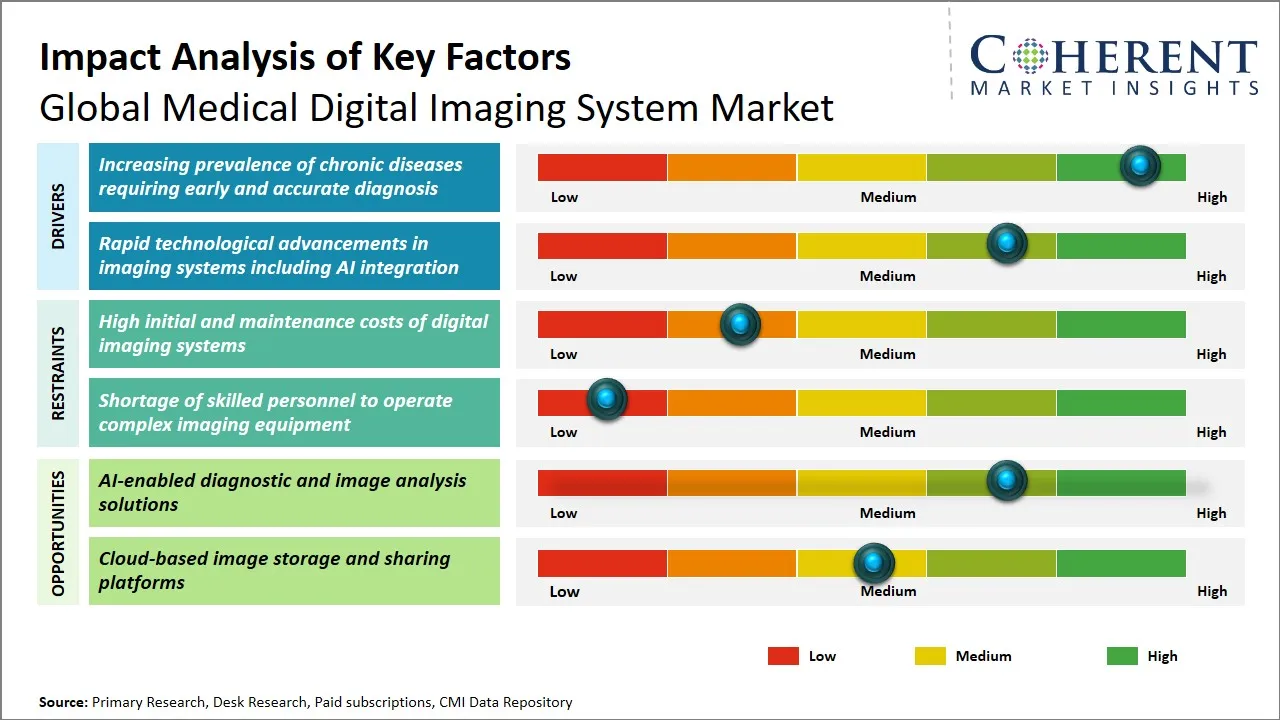
Medical Digital Imaging System Market Driver - Increasing Prevalence of Chronic Diseases Requiring Early and Accurate Diagnosis
The increasing rate of chronic illnesses like cancer, heart diseases, diabetes and respiratory diseases all around the world has highly increased the need to have high-end medical digital imaging systems. Diagnosis of these conditions as early and precisely as possible is essential in managing these conditions successfully since it allows it to intervene and develop a treatment plan that is personalized. MRI, CT scans, and ultrasound are just but digital imaging tools that are indispensable in identifying minor symptoms of disease and tracking progression with time, hence improving clinical outcomes. Moreover, the increasing age of the population that is more prone to chronic diseases contributes to the pressing need in more complex imaging options that offer images of high quality with a higher level of accuracy and speed.
In September 2025, the World Health Organization (WHO) reported a sharp rise in the global burden of chronic or noncommunicable diseases, which claimed around 43 million lives in 2021 accounting for 75% of non-pandemic-related deaths. The data highlighted cardiovascular diseases, cancers, chronic respiratory conditions, and diabetes as the leading causes, with 80% of premature deaths occurring in low- and middle-income countries.
Medical Digital Imaging System Market Opportunity - AI-Enabled Diagnostic and Image Analysis Solutions
Implementation of artificial intelligence (AI) into digital imaging systems in the medical sector is a big prospect to the market, owing to the rising need to have more accurate, efficient, and economical diagnostic devices. Diagnostic and image analysis AI solutions are machine learning solutions that utilize sophisticated machine learning algorithms to support image interpretation, minimize human error, and speed up the process of identifying anomalies in the form of tumors, fractures, and vascular diseases. These technologies allow radiologists to work efficiently in terms of the amount of imaging data they can process in a shorter time, resulting in an increased workflow and offering timely treatment, which is essential to the provision of improved patient outcomes.
Also, AI applications can be used to develop individual treatment plans, as they provide quantitative information and predictive analytics on the basis of imaging data. The latest development in deep learning models has also created the possibilities to broaden the field of medical imaging beyond the usual areas (MRI, CT, and X-ray) to the newly emerged fields such as pathology and dermatology imaging.
In March 2025, GE HealthCare, a global medical digital imaging system leader, partnered with NVIDIA, an AI computing pioneer. The collaboration targets autonomous X-ray and ultrasound imaging to reduce radiologist and technologist workload pressures. Using NVIDIA’s AI and simulation platforms, GE HealthCare aims to advance automated image acquisition and analysis.
Analyst Opinion (Expert Opinion)
- The market of the medical digital imaging system is changing swiftly due to the introduction of AI, the growth of the number of diagnoses, and the pressure on healthcare staff. To enhance efficiency and accuracy during radiologist shortages, hospitals are automating and integrating advanced imaging as a way to enhance efficiency. The adoption of AI-enabled imaging is being enhanced by regulatory support, but high costs of systems and interoperability issues are considered as crucial limitations. Similar platforms to the RSNA, ECR Congress, and Arab Health over the last several years have enhanced the speed of innovations through the opportunity to present technology, discuss clinical matters, and harmonize policies on the international level.
- The future momentum of the market is also backed with real-life alliances between imaging companies and AI technology developers, developing autonomous imaging and workflow optimization. Expansion of the government-funded hospitals and the development of screening programs within the emerging regions is enhancing the demand on the digital imaging systems. Pilot programs on portable imaging and tele-radiology are in the meantime enhancing access in remote locations. When combined, these efforts are an indicator of a definite change to smart connected medical digital imaging systems with long-range growth prospects.
Speak to the analyst
Want personalized insights?
Take the findings above to one of our principal consultants, or have the report rebuilt around the segments, geographies and competitors you actually track.
Market Segmentation
- Imaging Modality Insights (Revenue, USD Bn, 2021 - 2033)
- X-ray Imaging Systems
- Computed Tomography (CT)
- Digital Radiography (DR)
- Fluoroscopy
- Magnetic Resonance Imaging (MRI) Systems
- Ultrasound Imaging Systems
- 2D Ultrasound
- 3D/4D Ultrasound
- Nuclear Imaging Systems
- Positron Emission Tomography (PET)
- Single Photon Emission Computed Tomography (SPECT)
- Optical Imaging Systems
- Endoscopic Imaging Systems
- X-ray Imaging Systems
- Application Insights (Revenue, USD Bn, 2021 - 2033)
- Radiology/General Imaging
- Cardiology
- Oncology
- Neurology
- Orthopedics and Musculoskeletal
- Gastroenterology
- Obstetrics and Gynecology
- End User Insights (Revenue, USD Bn, 2021 - 2033)
- Hospitals
- Diagnostic Imaging Centers
- Research and Academic Institutes
- Ambulatory Surgical Centers
- Regional Insights (Revenue, USD Bn, 2021 - 2033)
- North America
- U.S.
- Canada
- Latin America
- Brazil
- Argentina
- Mexico
- Rest of Latin America
- Europe
- Germany
- U.K.
- Spain
- France
- Italy
- Russia
- Rest of Europe
- Asia Pacific
- China
- India
- Japan
- Australia
- South Korea
- ASEAN
- Rest of Asia Pacific
- Middle East
- GCC Countries
- Israel
- Rest of Middle East
- Africa
- South Africa
- North Africa
- Central Africa
- North America
- Key Players Insights
- GE Healthcare
- Koninklijke Philips N.V.
- Siemens Healthineers AG
- Canon Medical Systems Corporation
- Hitachi, Ltd.
- Hologic, Inc.
- FUJIFILM Holdings Corporation
- Samsung Medison Co., Ltd.
- Mindray Medical International Limited
- Konica Minolta, Inc.
- Agfa-Gevaert NV
- Shimadzu Corporation
- Analogic Corporation
- Planmed Oy
- Carestream Health, Inc.
Sources
Primary Research Interviews
Industry Stakeholders
- Medical imaging equipment manufacturers
- Imaging software developers
- Hospital biomedical engineering heads
- Radiology department directors
- Healthcare IT system integrators
- Clinical technology consultants
End Users
- Radiologists
- Sonographers
- Radiology technologists
- Hospital procurement managers
- Diagnostic center administrators
- Clinicians using point-of-care imaging
Government and International Databases
- World Health Organization
- U.S. Food and Drug Administration
- European Medicines Agency
- OECD Health Statistics
- National Institutes of Health
- World Bank Health Data
Trade Publications
- Radiology Today
- Diagnostic Imaging
- Health Imaging
- Medical Imaging International
- Imaging Technology News
- Journal of Digital Imaging Practice
Academic Journals
- Radiology
- European Radiology
- American Journal of Roentgenology
- Journal of Medical Imaging
- Ultrasound in Medicine and Biology
- Physics in Medicine and Biology
Reputable Newspapers
- The New York Times
- The Guardian
- The Wall Street Journal
- Financial Times
- The Washington Post
- The Economist
Industry Associations
- Radiological Society of North America
- European Society of Radiology
- American College of Radiology
- International Society of Radiology
- World Federation for Ultrasound in Medicine and Biology
- International Society for Magnetic Resonance in Medicine
Public Domain Resources
- ClinicalTrials.gov
- Google Scholar
- OpenGrey
- Data.gov
- Eurostat
Proprietary Elements
- CMI Data Analytics Tool: Proprietary analytics tool to analyze real-time market trends, consumer behavior, and technology adoption in market
- Proprietary CMI Existing Repository of Information for Last 8 Years
Get access to 250+ pages report
Every segment, forecast, competitor profile and data table behind the analysis above — available for instant download.
- ESOMAR Member
- ISO 9001:2015 Certified
- D-U-N-S Registered
- GDPR & CCPA Compliant
Missing comfort of reading report in your local language? Find your preferred language:
Transform your Strategy with Exclusive Trending Reports
Frequently Asked Questions
The global medical digital imaging system market is estimated to be valued at USD 37.89 Bn in 2026 and is expected to reach USD 58.11 Bn by 2033.
The CAGR of global medical digital imaging system market is projected to be 6.3% from 2026 to 2033.
Increasing prevalence of chronic diseases requiring early and accurate diagnosis and rapid technological advancements in imaging systems including AI integration are the major factors driving the growth of the global medical digital imaging system market.
High initial and maintenance costs of digital imaging systems and shortage of skilled personnel to operate complex imaging equipment are the major factors hampering the growth of the global medical digital imaging system market.
In terms of imaging modality, X-ray imaging systems segment is estimated to dominate the market revenue share in 2026.
GE Healthcare, Koninklijke Philips N.V., Siemens Healthineers AG, Canon Medical Systems Corporation, Hitachi, Ltd., Hologic, Inc., FUJIFILM Holdings Corporation, Samsung Medison Co., Ltd., Mindray Medical International Limited, Konica Minolta, Inc., Agfa-Gevaert NV, Shimadzu Corporation, Analogic Corporation, Planmed Oy, and Carestream Health, Inc. are the major players.
North America is expected to lead the global medical digital imaging system market in 2026.