HERBAL EXTRACT MARKET SIZE AND SHARE ANALYSIS - GROWTH TRENDS AND FORECASTS (2026-2033)
Herbal Extract Market, By Type (Turmeric, Rosemary, Ginseng, Aloe, Nutmeg, Sage, Garlic, Cranberry, Saw Palmetto, Cumin, Lecithin, Valerian, Cherry, Pygeum Africanum, Beet Root, Olive Leaf, Holy Basil, Elder Berry, Horehound, Lycium, Ginger, Orange, Cinnamon, Green Tea, Flax, Curcumin, Fenugreek Seed, Capsaicin, Anise, Ashwagandha, Kale), By Application (Personal Care & Cosmetics, Food & Beverages, Animal Feed, Pharmaceuticals, Nutraceuticals), By Geography (North America, Europe, Asia Pacific, Latin America, Middle East and Africa)
- Published In : 27 Mar, 2026
- Code : CMI6595
- Page number : 135
- Formats :
Excel and PDF
- Industry : Food and Beverages
- Historical Range : 2020 - 2024
- Base Year : 2025
- Estimated Year : 2026
- Forecast Period : 2026-2033
Herbal Extract Market Size and Share Analysis - 2026 to 2033
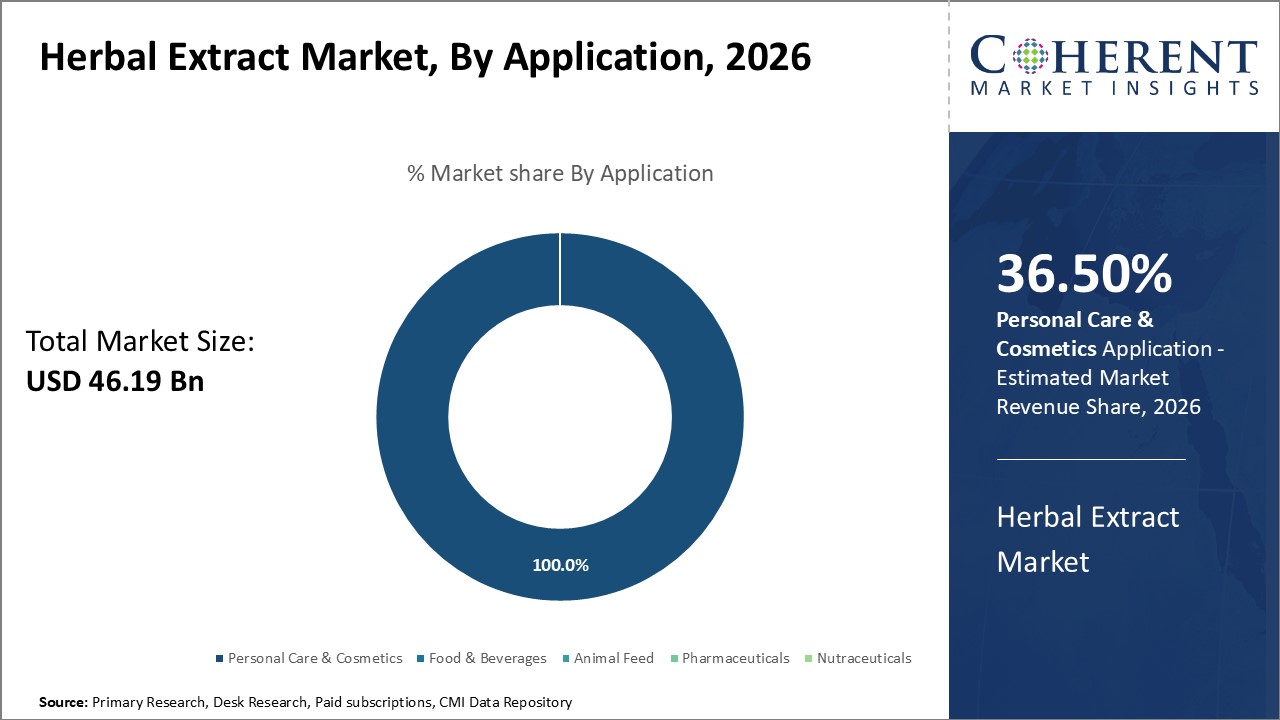
The Herbal Extract Market size is valued at USD 46.19 Bn in 2026 and is expected to reach USD 91.75 Bn by 2033, growing at a compound annual growth rate (CAGR) of 10.3% from 2026 to 2033.
Key Takeaways
- Based on Type, the Turmeric segment is expected to lead the market with largest share in 2026, driven by its powerful anti-inflammatory and antioxidant benefits.
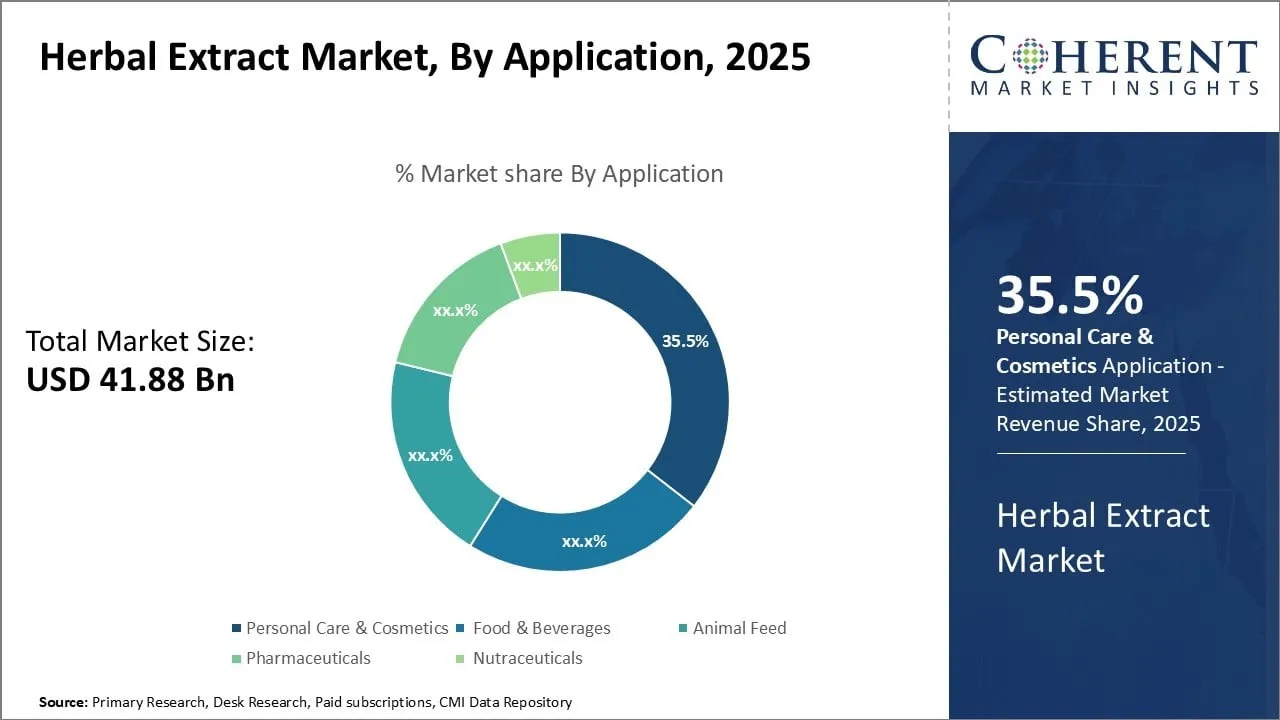
- Based on Application, the Personal Care & Cosmetics segment is expected to hold 36.5% share of the market in 2026, powered by aloe, rosemary, and green tea extracts.
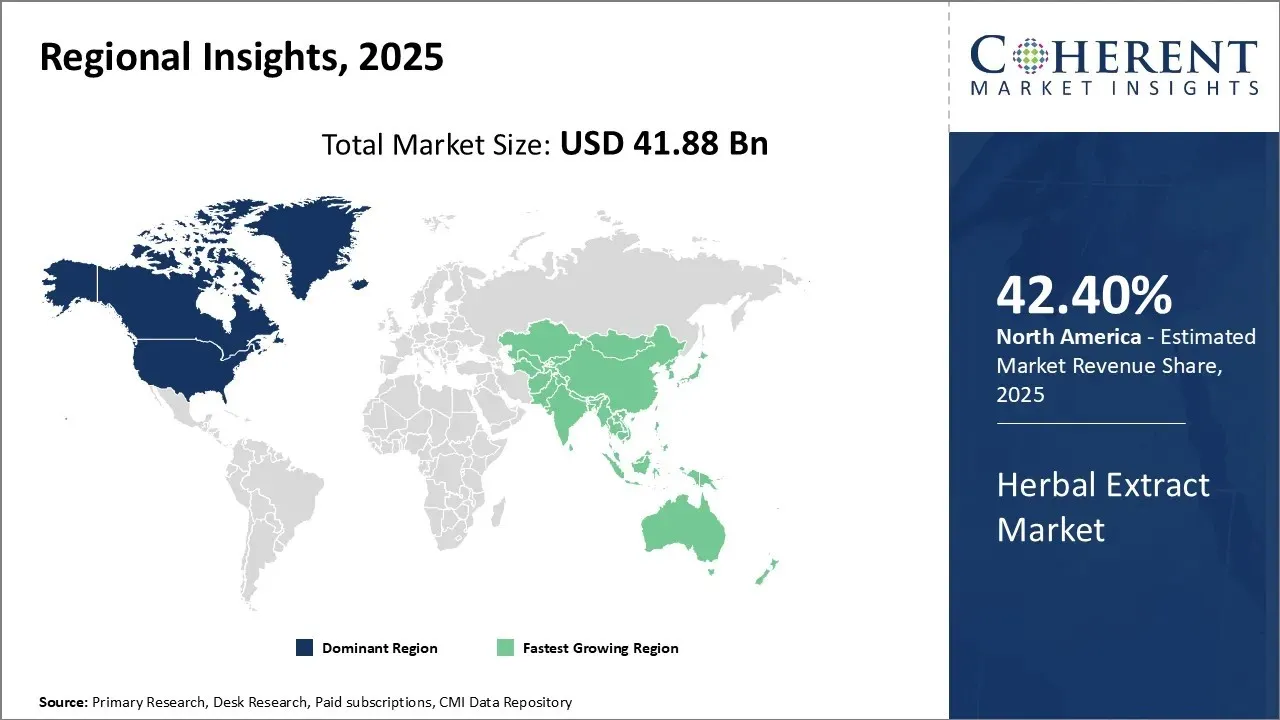
- Based on Region, North America is set to lead the herbal extract market with 42.40% share in 2026. While, Asia Pacific is anticipated to be the fastest growing region.
Market Overview
Herbal extracts are concentrated forms of plants extracted using various techniques like heating, freezing or chemical solvents. They are available in various forms like liquids, powders, capsules and tablets. The main types of herbal extracts are whole plant extracts, single compound extracts and standardized extracts.
Whole plant extracts contain the complete soluble matter of a given plant. They provide the synergistic benefits of all active compounds in the plant. However, their effects may vary between batches based on plant cultivation conditions. Single compound extracts focus on isolating and concentrating a single active compound from the plant. They deliver targeted effects of that compound but lack synergy. Standardized extracts have consistent levels of one or more marker compounds. Their concentrations are verified allowing reproducibility. However, the isolated compound may behave differently than in the whole plant.
Current Events and Its Impacts on the Herbal Extract Market
|
Current Event |
Description and its Impact |
|
Global Regulatory Harmonization and Standardization Initiatives |
|
|
Technological Advancements and Innovation Acceleration |
|
Uncover macros and micros vetted on 75+ parameters: Get instant access to report
Regulatory and Certification Effects
cGMP-Certified Facilities (like Biovivo's Indiana Plant)
- Current Good Manufacturing Practice (cGMP) certification makes sure that quality, safety, and consistency standards are strictly followed.
- Facilities like Biovivo's in Indiana make people more likely to trust them and draw in partnerships with pharmaceutical and nutraceutical
- Certification also makes it easier to get into regulated markets like the U.S. and Europe, where following the rules is required.
Certification for organic products in Europe and North America
- More and more, organic certification sets products apart in the market because customers want products that are chemical-free, eco-friendly, and have a clean label.
- The EU Organic logo is a strong sign of trust in Europe, and USDA Organic certification drives up prices in North America.
- Brands that use herbal extracts that have been certified as organic have an edge over their competitors, especially in cosmetics, dietary supplements, and functional drinks.
Ayush Standards in India
- The Ministry of AYUSH (Ayurveda, Yoga, Unani, Siddha, Homeopathy) in India sets rules for the herbal extracts that are utilized in Ayurvedic products.
- These standards make Ayurvedic extracts more trustworthy around the world by making sure they are real, safe, and scientifically sound.
- Following AYUSH rules makes India a more reliable supplier in the Asia-Pacific and global herbal extract markets, which increases its export potential.
Herbal Extract Market Insights, By Type: Turmeric Dominance Is Driven by Its Powerful Anti-Inflammatory and Antioxidant Benefits
In terms of type, the turmeric segment is expected to lead the market with largest share in 2026. Turmeric is a very valuable herbal extract that is known for its strong antioxidant and anti-inflammatory effects. In 2026, it is still in high demand in the nutraceutical and food industries since customers prefer natural remedies, functional foods, and preventive healthcare solutions. This makes it the most important part of the herbal extract market.
For instance, in October 2026, the Turmeric Co. launched with a new raw turmeric shot that has a plant-based collagen alternative in it. This new product shows off turmeric's strong anti-inflammatory and antioxidant properties while also meeting the need for natural, functional drinks.
To learn more about this report, Request Free Sample
Herbal Extract Market Insights, By Application: Personal Care & Cosmetics Lead Is Powered by Aloe, Rosemary, And Green Tea Extracts
In terms of application, the personal care & cosmetics segment is expected to hold 36.5% share of the market in 2026, driven by natural herbal extracts, especially aloe, rosemary, and green tea. These ingredients are highly valued for their ability to calm, protect against free radicals, and refresh skin and hair. They are also important in skincare and haircare products that meet the growing demand for plant-based beauty products.
For instance, in February 2025, the National Institute of Ayurveda launched with plant-based skincare products. This shows the way herbal extracts are becoming more important in cosmetics and personal care. These products use natural ingredients like aloe, rosemary, and green tea to calm, protect, and refresh skin. They are in high demand given that individuals want clean, plant-based beauty products.
Regional Insights
To learn more about this report, Request Free Sample
North America Herbal Extract Market Analysis & Trends
North America has established itself as the leading region in the global herbal extract market with 42.40% share in 2026. The presence of major herbal extract brands and suppliers has given the region an edge over others. Companies based in the United States and Canada have considerable experience and expertise in developing and marketing herbal extracts. They actively invest in research and development to come up with innovative product formulations using different plant-based ingredients. This has helped them capture a large consumer base in the pharmaceutical, cosmetic, and food and beverage sectors. Additionally, North American brands have strong distribution networks across the region as well as overseas. Their marketing campaigns promote herbal extracts as natural ingredients that provide health benefits. This has fueled demand consistently over the years.
For instance, in October 2026, Greenvit added Aronvit, an extract from the aronia berry, to its line of herbal products in the U.S. Aronia is full of antioxidants, which help keep the immune system healthy and well. This is in line with the growing demand for natural supplements.
Asia Pacific Herbal Extract Market Analysis & Trends
Asia Pacific has emerged as the fastest expanding herbal extract market globally. This can be attributed to factors like rising disposable incomes, growing health awareness, and increasing influence of Ayurveda and traditional Chinese medicine. Countries like China, India and Japan have lucrative opportunities for both domestic as well as international herbal extract players. Local manufacturers are recognizing the export potential due to systemic cost advantages. They are focusing on quality certifications to build trust among international buyers. Modern trade has boosted product awareness while e-commerce is facilitating broader distribution in the emerging Asian market for herbal extracts.
For instance, in December 2026, Botanic Healthcare, which is based in India, released Cornfit, a patented nutraceutical extract made from cornsilk. Cornsilk has been used in herbal medicine for a long time, however now it is being marketed as a modern plant-based health solution.
Herbal Extract Market Outlook Country-Wise
India Herbal Extract Market Trends
Ayurveda traditions and a booming nutraceutical industry make India a top place for herbal extracts in 2026. Strong demand for plant-based medicines at home drives growth, and more exports make the company stronger around the world. Asia-Pacific is the world's largest market for herbal extracts, and India's ability to innovate and produce more products strengthens this position.
For instance, in October 2026, Scientists in Bengaluru made a new milk freshness sensor using herbal extracts. They turned natural plant-based dyes into detectors. This breakthrough shows that herbal extracts can be used for more than just food, supplements, and cosmetics. It shows that they could be useful in food safety technology as well.
The U.S. Herbal Extract Market Trends
The herbal extract market in the United States is growing quickly in 2026, due to strong growth in dietary supplements and nutraceuticals. Increasingly, people want products that are plant-based, clean-label, and free of preservatives. Functional drinks and herbal capsules are the most popular types of herbal extracts, making the U.S. the fastest-growing region in the world for these products.
For instance, in July 2026, Biovivo Science opened a factory in Jeffersonville, Indiana, USA, to make ginseng extract. The 100,000-square-foot cGMP-certified plant is focused on American ginseng and supports
Market Report Scope
Herbal Extract Market Report Coverage
| Report Coverage | Details | ||
|---|---|---|---|
| Base Year: | 2025 | Market Size in 2026: | USD 46.19 Bn |
| Historical Data for: | 2020 To 2024 | Forecast Period: | 2026 To 2033 |
| Forecast Period 2026 to 2033 CAGR: | 10.3% | 2033 Value Projection: | USD 91.75 Bn |
| Geographies covered: |
|
||
| Segments covered: |
|
||
| Companies covered: |
Botanic Healthcare, VIDYA HERBS Pvt. Ltd, Allicin Pharm, HerbalHills, Acara bioherb PVt. LTD., Pioneer Enterprises (I) Private Limited, Sydler India Pvt. Ltd, Herbal Creations, Alpspure Lifesciences Private Limited, IDOBIO CO., LTD., Döhler GMB, MartinBauer. |
||
| Growth Drivers: |
|
||
| Restraints & Challenges: |
|
||
Uncover macros and micros vetted on 75+ parameters: Get instant access to report
Herbal Extract Market Drivers
- Improving Health Consciousness: These days people are becoming more health conscious and they want to lead a healthy lifestyle. Herbal extracts are gaining popularity as they are considered natural products obtained from plants and herbs. Many consumers believe that herbal extracts provide health benefits and have little to no side effects compared to synthetic medicines. Studies show that certain herbal extracts can help improve digestive health, boost immunity, lower cholesterol, reduce inflammation and even help with stress and anxiety. As people more research on health topics on the internet and via blogs, they are learning about how herbal extracts may help manage common health conditions. The demand for herbal medications and supplements is on the rise as people look for alternative remedies to maintain overall well-being. Manufacturers are innovating and introducing various herbal extracts in different forms like tablets, capsules and even infused in beverages and food products to make them more convenient for customers to include in their daily diet. Health-savvy individuals do not wish to compromise on their wellness goals and are fueling the need for herbal extracts.
- Growing Acceptance of Herbal Medicines: Over the past few decades, herbal medicines were considered a fringe practice in western cultures and the medical community promoted allopathic drugs. However, there is a change in perception now as scientific research validates some of the health benefits of certain herbal medicines. Mainstream customers are open to exploring herbal remedies to complement their healthcare regimen for minor ailments rather than always relying on pharmaceuticals. Even medical practitioners have started recognizing certain herbal medicines. Some of them recommend herbal treatments after evaluating their patients' medical history and symptoms. Various health organizations have also approved the use of select herbal medicines. As people become aware of evidence-based herbal practices and extracts through extensive research studies and awareness campaigns, there is more confidence among the masses. Herbal extracts satisfy the increasing consumer need for natural and traditional methods of self-care. Manufacturers effectively promote their herbal extracts as science-backed natural remedies. All these factors have led to rising cultural acceptance of herbal medicines in modern times.
Herbal Extract Market- Opportunities
- New product development through research and innovation: New product development through extensive research and innovation presents a tremendous opportunity for growth in the herbal extract industry. As consumers increasingly seek natural and plant-based remedies for health and wellness, introducing novel, scientifically validated herbal formulations could capture significant market share. With rising awareness of preventative healthcare and interest in traditional remedies, investing in large-scale clinical trials to verify the therapeutic properties and benefit specific herbal mixtures would give companies a competitive advantage. This can help expand the existing consumer base for herbal extracts and promote new usages. Considering many herbal plants' compounds are still untapped and their full benefits undiscovered, investment in laboratory and phytochemical research can unearth new, high-value extracts. Harnessing modern biotechnology to standardize extracts, identify active pharmacological components and understand how different herbs potentiate each other's effects when combined would unlock new commercial applications.
- Rising investments and partnerships in the market: The herbal extract market has great potential for growth with rising investments and partnerships. As consumers increasingly demand natural and plant-based ingredients in food and personal care products, there is a growing interest in herbal extracts. This changing consumer preference for herbal alternatives is attracting substantial investments in the research and development of herbal extracts.
Herbal Extract Market Trends
- Increasing spending on herbal supplements and remedies globally: The global demand for herbal supplements and remedies has been steadily rising in the past few years. Consumers are increasingly turning to natural options to support their health and wellness. This rising interest in herbal products is having a significant impact on the herbal extract market. As more people incorporate herbal supplements in their daily routines to boost immunity, address minor health issues or promote relaxation, the sales of herbal extracts used in formulating these supplements have also increased substantially. Many supplement manufacturers have reported a surge in demand for popular herbal extracts like turmeric, ginger, garlic, holy basil, ashwagandha etc. as such ingredients are considered beneficial for general wellness. The increased commercial cultivation and production of herbs used globally in supplements has also spurred the herbal extract industry's growth.
- Advancement in extraction technologies: The advancement in extraction technologies is having a significant impact on the herbal extract market. Newer and innovative extraction methods allow for more effective and efficient extraction of active compounds from herbs. This enables extraction of a wider variety of compounds from various plant parts like roots, bark, leaves, seeds etc. that previously were difficult to access and extract. Some of the modern extraction techniques gaining popularity include supercritical fluid extraction, ultrasonic-assisted extraction and enzyme-assisted extraction. Supercritical fluid extraction uses carbon dioxide under high pressure and temperature conditions as a solvent. It is a greener alternative to traditional organic solvents as CO2 is non-toxic, non-flammable and easily recyclable. This technique helps extract heat-sensitive or volatile compounds without degrading them.
Analyst Opinion (Expert Opinion)
The herbal extract market is doing excellent business, due to its growing use in nutraceuticals, pharmaceuticals, functional foods, and personal care. Numerous independent research entities consistently categorize it as a multi-billion-dollar global industry exhibiting continuous growth, propelled by clean-label preferences, an increasing emphasis on plant-derived actives, and advancements in extraction technology.
Europe and North America are two places where there is an abundance of demand for high-quality extracts. In regulated uses, standardized, high-quality extracts are preferred. Latin America is becoming increasingly known as a place where botanical raw materials come from.
The main things that drive the industry are more use of natural active ingredients in functional foods and cosmetics, a move toward clinically supported extracts, and ongoing spending on quality certifications. Vertical integration, traceability programs, and following global regulatory standards help major suppliers stay competitive.
Overall, the herbal extract industry is seeing steady growth in demand and more advanced technology, making it a key market for natural health, wellness, and clean-label consumer goods.
Herbal Extract Market- Recent Developments
- In October 2025, The American Botanical Council's program for Shatavari was taken on by Ixoreal Biomed in Hyderabad, India, in 2025. Shatavari is an important Ayurvedic herb that is good for women's health and helps the body adapt. This project increases India's role in the herbal extract market in the Asia-Pacific region and helps India become better known around the world through partnerships with the U.S.
- In June 2025, Avimee Herbal started an Ayurvedic hair care brand in India that is run by a family and is based on tradition and trust. The products are based on the wisdom of a visionary who has been around for 79 years. They use herbal extracts like amla and bhringraj. This project makes the herbal extract market in the Asia-Pacific region stronger, showing that there is a growing demand for natural, plant-based cosmetics and personal care products.
- In June 2023, a well-known skin care expert Anherb Natural unveiled its new product line in the cosmetic industry. Anherb Natural’s vision is to create an image on the beauty market with its best offerings and specialized skin care products.
Market Segmentation
- Herbal Extract Market, By Type (Revenue, USD Bn, 2021 - 2033)
- Turmeric
- Rosemary
- Ginseng
- Aloe
- Nutmeg
- Sage
- Garlic
- Cranberry
- Saw Palmetto
- Cumin
- Lecithin
- Valerian
- Cherry
- Pygeum Africanum
- Beet Root
- Olive Leaf
- Holy Basil
- Elder Berry
- Horehound
- Lycium
- Ginger
- Orange
- Cinnamon
- Green Tea
- Flax
- Curcumin
- Fenugreek Seed
- Capsaicin
- Anise
- Ashwagandha
- Kale
- Herbal Extract Market, By Application (Revenue, USD Bn, 2021 - 2033)
- Personal Care & Cosmetics
- Food & Beverages
- Animal Feed
- Pharmaceuticals
- Nutraceuticals
- Herbal Extract Market, By Regional (Revenue, USD Bn, 2021 - 2033)
- North America
- U.S.
- Canada
- Mexico
- Europe
- Germany
- UK
- France
- Italy
- Spain
- Asia Pacific
- China
- India
- Japan
- Malaysia
- Vietnam
- Central & South America
- Brazil
- Argentina
- Middle East & Africa
- South Africa
- Saudi Arabia
- North America
- Top Companies in Herbal Extract Market
- Botanic Healthcare,
- VIDYA HERBS Pvt. Ltd,
- Allicin Pharm,
- HerbalHills,
- Acara bioherb PVt. LTD.,
- Pioneer Enterprises (I) Private Limited,
- Sydler India Pvt. Ltd,
- Herbal Creations,
- Alpspure Lifesciences Private Limited,
- IDOBIO CO., LTD.,
- Döhler GMB,
Sources
Primary Research Interviews
- Herbal extract manufacturers (small, medium, large-scale)
- Contract manufacturers & toll processors (herbal extraction)
- Ingredient suppliers (botanical raw material farmers, collectors)
- Formulators — nutraceutical, functional food, cosmetic, & pharmaceutical R&D teams
- Quality control & analytical labs (HPLC/GC-MS specialists)
- Regulatory & compliance experts (GRAS, novel food, herbal monographs)
- Supply chain & procurement managers (commodity traders, import-export specialists)
- Retail & e-commerce category managers (natural products, pharmacies, supermarkets)
- Herbalists, ethnobotanists & traditional medicine practitioners
- Packaging & preservation technology providers
- Others
Databases
- Bloomberg Terminal
- Thomson Reuters Eikon
- SPINS (natural products retail data)
- Others
Magazines
- Nutraceuticals World
- Natural Products Insider
- HerbalGram
- Natura & Kosmetik / Botanical Beauty (trade magazines)
- Cosmetics & Toiletries (for botanical cosmetic use cases)
- Chemical & Engineering News (industry processing stories)
- Others
Journals
- Journal of Ethnopharmacology
- Phytotherapy Research
- Journal of Agricultural and Food Chemistry
- Planta Medica
- Fitoterapia
- Journal of Natural Products
- Others
Newspapers
- Financial Times
- The Wall Street Journal
- Reuters
- Bloomberg News
- The Hindu / Times of India (regional market developments)
- Others
Associations
- American Herbal Products Association (AHPA)
- American Botanical Council (ABC)
- European Herbal & Traditional Medicine Associations (regional bodies)
- International Federation of Herbal & Traditional Medicine Associations (where applicable)
- Herbal trade associations by country (e.g., Indian Herbal Industry associations / AYUSH federations)
- Others
Public Domain Sources
- U.S. Food & Drug Administration (FDA) — botanical & dietary supplement guidance
- U.S. Department of Agriculture (USDA) — crop & commodity reports
- World Health Organization (WHO) — traditional medicine / herbal monographs
- Food and Agriculture Organization (FAO) — agricultural statistics & trade data
- European Commission — DG SANTE (novel foods, health claims)
- National Institutes / Centers for Complementary & Integrative Health (NCCIH)
- National pharmacopoeias and monographs (USP, Indian Pharmacopeia, European Pharmacopoeia)
- Others
Proprietary Elements
- CMI Data Analytics Tool
- Proprietary CMI repository of herbal market reports (last 8 years)
Definition: An herbal extract is a preparation that uses a solvent to extract beneficial properties from an herb or herbs. The main advantage of using extracts over raw herbs is that once extracted from the plant matrix, the phytochemicals bypass the need for digestion and are far more readily absorbable. Herbal extracts come in various forms, such as liquid extracts, essential oils, and powdered extracts. Herbal extracts are often used as dietary supplements and alternative medicine, and they can be categorized by the solvent used to make them and/or by their form For example, liquid extracts made with alcohol are called tinctures, while watery extracts made by infusion or decoction are used as teas, rinses, and the base for syrups and other products.
Share
Share
Missing comfort of reading report in your local language? Find your preferred language :
Transform your Strategy with Exclusive Trending Reports :
Frequently Asked Questions
EXISTING CLIENTELE
Joining thousands of companies around the world committed to making the Excellent Business Solutions.
View All Our Clients