

Global Herbal Shampoo Market Size and Forecast – 2026-2033
The global herbal shampoo market is estimated to be valued at USD 3.83 Bn in 2026 and is expected to reach USD 5.18 Bn by 2033, exhibiting a compound annual growth rate (CAGR) of 4.4% from 2026 to 2033.
Key Takeaways of the Herbal Shampoo Market
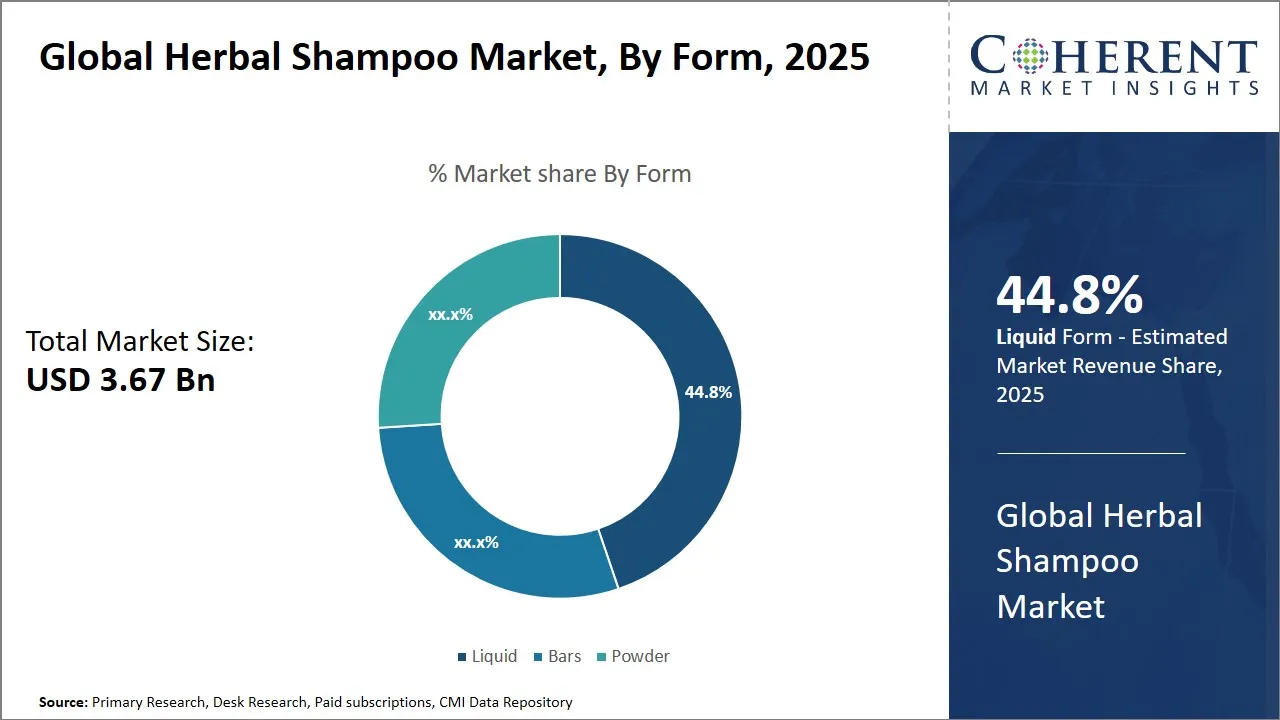
- The liquid segment is expected to account for 45.8 % of the herbal shampoo market share in 2026.
- The women segment is projected to capture 55.2 % of the global herbal shampoo market share in 2026.
- The offline segment is expected to command 57.9 % of the market share in 2026.
- Asia Pacific is expected to lead the global herbal shampoo market in 2026 with a 35.2% share. North America, holding an estimated share of 21.5% in 2026, and it is projected to be the fastest-growing region.
Market Overview
The market trends clearly indicate the shift toward organic and herbal formulations, wherein consumers are attracted to shampoos that provide therapeutic benefits like nourishment for scalps and strengthening hair. Furthermore, innovation in ingredients such as ayurvedic extracts and plant-based actives will drive product differentiation. The surging demand for cruelty-free and eco-friendly products is expected to drive clean-label certifications among manufacturers, placing the herbal shampoo segment in a position to deliver robust growth during the forecast period.
Current Events and Its Impact
Current Events | Description and its Impact |
EU crackdown on green claims |
|
India tightens Ayurveda/cosmetics oversight |
|
Segmental Insights
- Current Industry Events of 2026
- Market Size Estimation
- Regional Breakdown
- Competitive Landscape
- Customer Intelligence
- Segmental Analysis
- Pricing Analysis
- Key Market Drivers, Challenges & Future Trends
- Customized Insights Section
Herbal Shampoo Market Insights, By Form – Liquid Segment Dominates the Market due to Ease of Application and Consumer Preference
The liquid segment holds 45.8% of the herbal shampoo market share in 2026, due to convenience and suitability regarding modern hair care routines. Consumers prefer liquid shampoos as they are easy to apply and wash off, which is why these products are preferred for everyday use. The liquid form evenly spreads over the scalp and hair strands for proper cleansing and nourishment. In addition to that, liquid shampoos can be offered in different packaging formats, such as bottles with pumps or flip caps, improving user experience by facilitating controlled dispensing and minimizing product wastage.
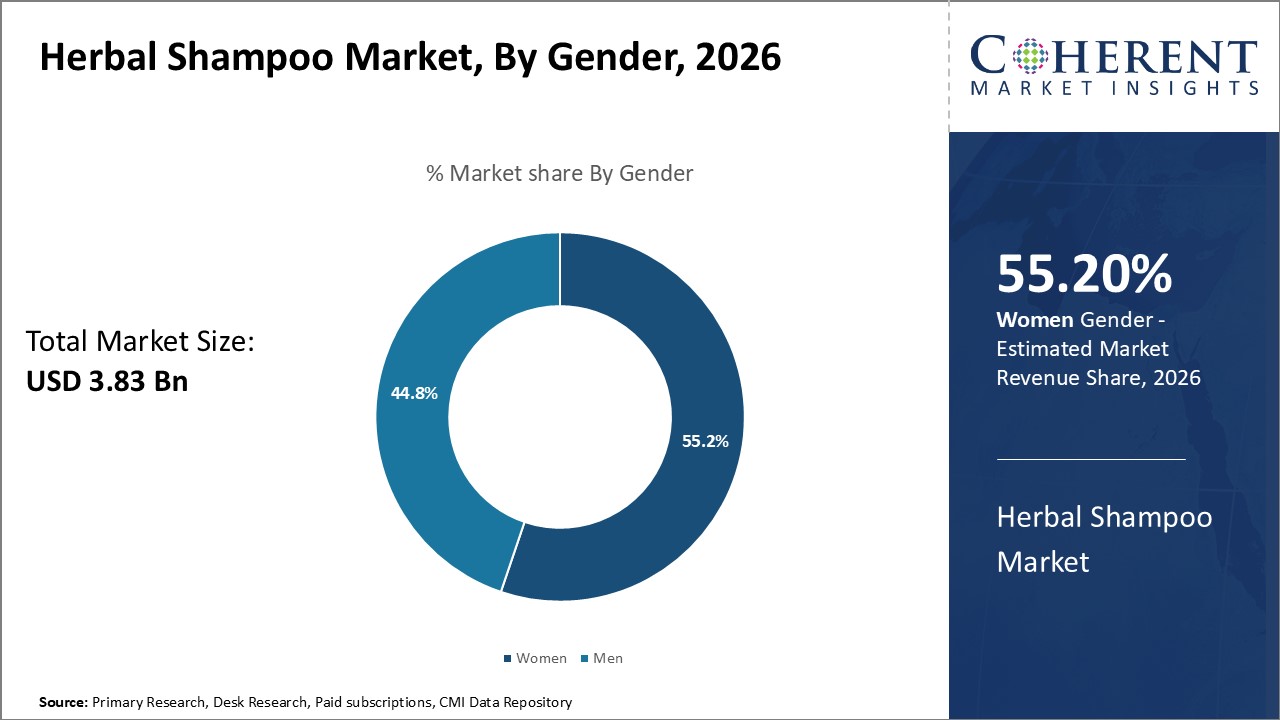
Herbal Shampoo Market Insights, By Gender – Women Segment Dominates the Market Driven by Strong Demand for Hair Care and Beauty Enhancement Products
Women segment capture 55.2% of the global herbal shampoo market share in 2026, due to a greater focus on hair care and usage of beauty-enhancing products. These demographics place substantial emphasis on maintaining hair health, appearance, and scalp conditions, establishing a continued the demand for these products that incorporate natural and herbal ingredients into them. Women often have more knowledge and awareness regarding the contents of their personal care products and hence prefer herbal shampoos that promise chemical-free and nourishing hair care solutions.
The wider hair care rituals that normally encompass treatments for hair damage, hair fall reduction, scalp nourishment, and color protection are beneficial for the market of women's herbal shampoos. Herbal ingredients in such formulations include aloe vera, amla, henna, and bhringraj, which appeal specifically to women who experience different hair needs at each stage of their lives, such as hormonal changes and postpartum hair loss.
Herbal Shampoo Market Insights, By Distribution Channel – Offline Segment Dominates the Market Share due to Established Consumer Buying Habits and Availability
The offline segment account for 57.9% of the market share in 2026, which will be driven by deep-rooted consumer purchasing practices. Even as digital shopping is on the rise, a significant chunk of consumers still prefers buying herbal shampoos in a physical retail environment where they can interact directly with the product, assess packaging, and get advice from sales personnel.
Offline stores offer on-the-spot product availability with no waiting time, as is often the case with online purchases. This especially appeals to consumers who value convenience and would like to see and feel the product before making a purchase. Most buyers prefer to make their purchases of herbal shampoos from reliable specialty stores or pharmacies because such outlets provide easy verification of authenticity and quality. Moreover, offline channels also have some key product displays and promotional offers like samples or bundling that facilitate impulsive purchases and bulk buying.
Regional Insights
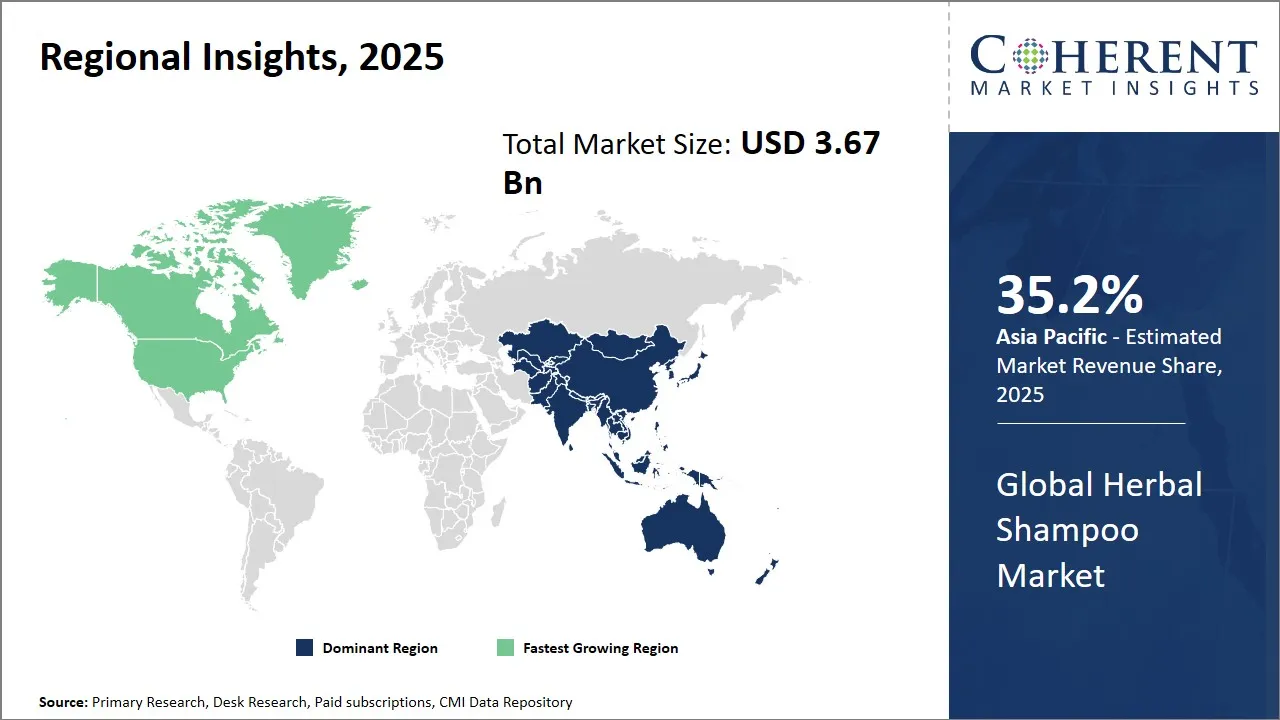
Asia Pacific Herbal Shampoo Market Analysis and Trends
The Asia Pacific region is projected to lead the market with a 35.2% share in 2026, mainly due to the strong cultural affinity toward natural and herbal products in countries such as India, China, and Japan. A long history with Ayurveda and traditional Chinese medicine supports a strong market ecosystem for herbal personal care products. Government policies toward organic and herbal agriculture, coupled with investments in research and development, further support market leadership by key players.
Major players in the industry like Himalaya Herbal Healthcare, Dabur of India, and Chinese Inoherb have expanded their product portfolios, with increased emphasis on herbal ingredients to meet domestic demand and export requirements. Trade dynamics further benefit from a vast supply of raw botanical materials and well-established export channels into Europe and North America.
North America Herbal Shampoo Market Analysis and Trends
The North America region is expected to exhibit the fastest growth in the market contributing 21.5% share in 2026, driven by increasing consumer awareness related to health and wellness, along with a considerable movement toward clean-label and sustainable personal care products. The advanced retail infrastructure and high disposable incomes in the region accelerate consumer adoption of natural and organic shampoos. Stringent government regulations regarding ingredient safety, set by the FDA, drive innovation among manufacturers to develop natural formulations.
Large companies like Aveda, part of Estée Lauder, and The Body Shop, combined with Jason Natural Products, spur innovation and market penetration. Further investments in organic farming locally and associations promoting natural products essentially validate the growth curve. Trade dynamics with European suppliers of organic products contribute to diversity and availability of herbal shampoo options.
Global Herbal Shampoo Market Outlook for Key Countries
India Herbal Shampoo Market Analysis and Trends
India herbal shampoo market gains from the age-old tradition of treating hair with bio-based remedies, as stated in Ayurveda. Key players such as Dabur and Himalaya keep innovating their formulations based on herbal extracts like amla, neem, and tulsi. Supportive government policies in the way of subsidies for organic farming to export incentives increase the supply chain reliability for raw material sourcing. Further, increasing urbanization and awareness of chemical-free beauty products increase domestic demand. India is not only a big consumer market but an important manufacturing hub to export herbal shampoos across the world.
China Herbal Shampoo Market Analysis and Trends
The herbal shampoo market of China is characterized by the application of Traditional Chinese Medicine, wherein herbal extracts such as ginseng, green tea, and goji berry are widely used. Companies like Inoherb and Herborist take advantage of local flora knowledge to create new herbal variants of shampoo products that meet the needs of both national consumers and the fast-growing demand for natural products worldwide. Supportive government initiatives to promote TCM and organic personal care products further facilitate industry growth. The country's large e-commerce platform contributes significantly to market growth by offering easy avenues for the brands of herbal shampoos to reach a wide range of customers.
U.S. Herbal Shampoo Market Analysis and Trends
This can be attributed to increased consumer preference for organic, cruelty-free, and eco-friendly products in the U.S. herbal shampoo market. Key companies, such as Aveda and Jason Natural Products, emphasize sustainably sourced botanical ingredients as key inputs to achieve these consumer expectations. The FDA-legislated environment, coupled with consumer watchdog groups, enforces transparency and quality assurance, compelling brands to maintain strict product standards. Partnerships with key botanical suppliers and manufacturers, along with wide retail distribution across both health stores and mainstream, have resulted in deeper market penetration. The increasing momentum of influencer marketing and wellness trends further accelerates consumer education and trials.
Germany Herbal Shampoo Market Analysis and Trends
Germany herbal shampoo market and rigid regulatory environment, which ensures safety and effectiveness, help the growth of the herbal shampoo market. With its reputation for high organic certifications, brands such as Weleda and Logona focus on sustainable sourcing and certified herbs, thereby gaining consumer trust. The well-developed retail landscape, with a strong presence of organic specialty stores and pharmacy chains, helps in making these products widely available. Moreover, government and EU policies toward environmental sustainability prompt manufacturers to further develop eco-friendly products. German consumers' belief in the established herbal remedies supported by innovation drives the steady growth of the market.
Brazil Herbal Shampoo Market Analysis and Trends
Brazil reflects a growing market driven by fast-increasing consumer interest in natural beauty products, which aligns with the nation's rich biodiversity. Domestic players like Natura take full advantage of Amazonian botanical species such as cupuaçu and açaí to develop exclusive herbal shampoos. Government initiatives on biodiversity preservation and its plan to develop sustainable harvesting practices guarantee a renewable raw material resource base and, at the same time, foster eco-conscious branding. Wide market access was achieved due to an expanding retail network, including modern trade and direct selling channels. Furthermore, consumers' growing ecological awareness and demand for cruelty-free products foster market growth.
Customer Buying Behavior in the Herbal Shampoo Market
- Customer buying behavior in the herbal shampoo market is significantly shaped by a growing consumer inclination toward natural, chemical-free products driven by health and environmental awareness. Consumers, particularly in urban and emerging markets, prefer herbal shampoos due to concerns about the harmful effects of synthetic chemicals typically found in conventional shampoos. This preference is reinforced by an increasing desire for products that promote holistic hair and scalp health, catering to issues like hair fall, dandruff, and sensitive scalps.
- Women represent the largest consumer segment, often seeking multifunctional shampoos that provide benefits such as hair strength, moisture, and shine, alongside the use of natural botanical ingredients. Buyers tend to be influenced by factors such as product formulation transparency, brand reputation, and endorsements by social media influencers and celebrities, which instills greater trust in herbal products. Payment preferences vary with a mix of cash, debit cards, credit cards, and online payments, reflecting the diversified purchasing channels including supermarkets, pharmacies, e-commerce, and specialty beauty stores.
Market Players, Key Development, and Competitive Intelligence
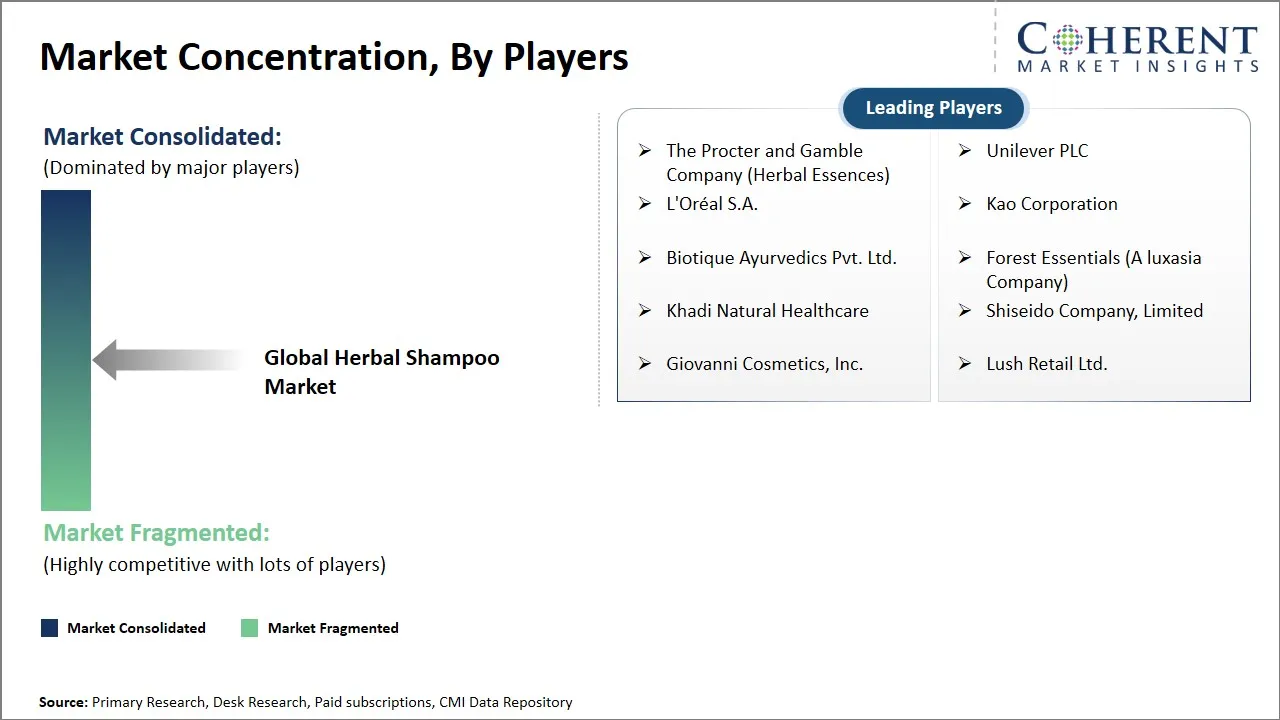
Key Developments
- In July 2025, Blending tradition, biodiversity, and scientific innovation, Nayan Teron, an MSc Botany student in his fourth semester at the University of Science and Technology Meghalaya (USTM), has successfully developed an eco-friendly herbal shampoo using native plant species found on the university campus.
- In April 2024, Kao introduced a new hair care brand called Melt, designed to offer "beauty care for relaxing moments." The Melt Moisture Shampoo and Moisture Treatment feature a hybrid repair formulation targeting both the outer and inner hair layers, aiming to enhance the user's self-care ritual through sensory experiences like sound, bubbles, texture, and aroma.
Top Strategies Followed by Global Herbal Shampoo Market Players
- These players are established businesses that emphasize innovation sufficiently to balance developing high performing products that utilize cutting-edge natural ingredients and different botanicals that can serve the evolving consumer demand for hair care products to provide safe and effective alternatives. These players are also aggressively expanding their geographic footprint by establishing more extensive distribution networks in emerging markets such as Asia Pacific, Latin America, and Africa, which offers opportunities for growth where there are growing consumer awareness and disposable income.
- For example, Himalaya’s “Anti Hair Fall Shampoo” can resolve hair loss by using bhringraj and palasha extracts to give users a historically learned and largely understood natural remedy for combating hair loss, L’Oreal has launched brand new paraben-free herbal product blends for consumers that creating alternatives after they pivot away from chemical products.
- Mid-tier players in the global herbal shampoo market are executing strategies focused on affordability and product offerings that balance cost with quality and reliability. These companies have identified that many consumers fall into price-sensitive segments and that brand loyalty can be accomplished through reliability without sacrificing affordability, and in many instances designed products around geographic styles and formatting that are preferred for use.
- As example, Dabur’s Vatika Herbal Shampoo has options for specific countries and regions such as “Olive Enriched Nourishment” for use with Middle Eastern consumers and “Cactus Enriched” for users in India that are consistent with local expectations and practices.
- Smaller players in the herbal shampoo marketplace function in a more localized and specialized way, looking to establish niche markets via unique product specifications and innovative formulations. Smaller players adopt new technology and differentiate themselves through incorporating exotic plant extracts, organic certifications, or sustainable packaging solutions that larger companies cannot offer.
- For example, Forest Essentials attempts to attract luxury herbal buyers by utilizing Ayurvedic formulations and eco-friendly glass packaging, while Biotique uses cold-pressed plant extracts and emphasizes organic certifications to attract green consumers.
Market Report Scope
Herbal Shampoo Market Report Coverage
| Report Coverage | Details | ||
|---|---|---|---|
| Base Year: | 2025 | Market Size in 2026: | USD 3.83 Bn |
| Historical Data for: | 2020 To 2024 | Forecast Period: | 2026 To 2033 |
| Forecast Period 2026 to 2033 CAGR: | 4.4% | 2033 Value Projection: | USD 5.18 Bn |
| Geographies covered: |
| ||
| Segments covered: |
| ||
| Companies covered: | The Procter and Gamble Company (Herbal Essences), Unilever PLC, L'Oréal S.A., Kao Corporation, Biotique Ayurvedics Pvt. Ltd., Forest Essentials (A luxasia Company), Khadi Natural Healthcare, Shiseido Company, Limited, Giovanni Cosmetics, Inc., and Lush Retail Ltd. | ||
| Growth Drivers: |
| ||
| Restraints & Challenges: |
| ||
Herbal Shampoo Market Dynamics
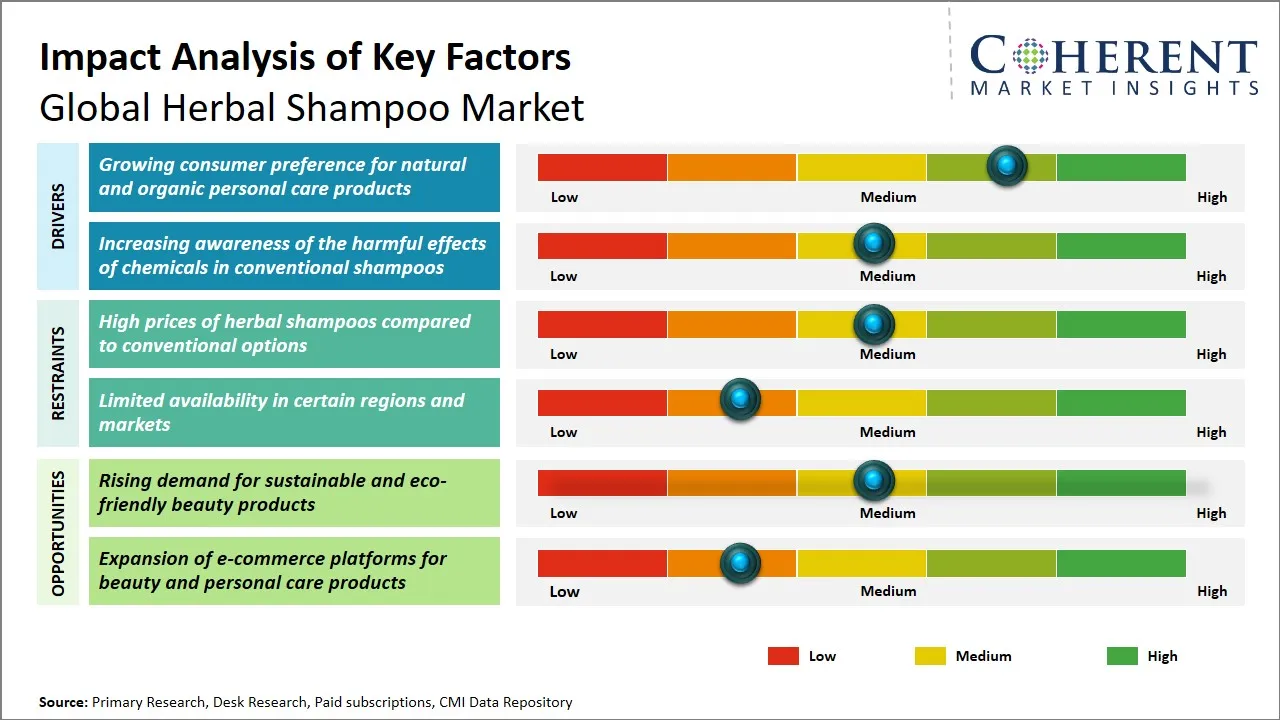
Herbal Shampoo Market Driver - Growing Consumer Preference for Natural and Organic Personal Care Products
As consumers become more aware of the harmful side effects of synthetic chemicals in traditional shampoos, the demand for herbal shampoos is growing globally. Consumers are increasingly requesting products that utilize natural ingredients to improve personal care products choices and focus on their health and safety. This preference reflects a lifestyle trend of increased attention to sustainability, wellness, and sourcing of ingredients. Herbal shampoos, generally containing plant extracts, essential oil, and organic material, are seen as milder to hair and scalp and provide consumers with safety against irritation, allergies, or long-term damage.
For instance, Khadi Natural has quickly expanded its sales in India by providing chemical-free shampoos that contain herbal ingredients like neem and lemongrass while being safe and gentle for all hair types.
Herbal Shampoo Market Opportunity - Rising Demand for Sustainable and Eco-Friendly Beauty Products
The global herbal shampoo market is expected to gain major benefits from increasing consumer demand for sustainable and environmentally-friendly beauty products. Rising environmental consciousness and concern about the negative impacts of chemical-filled personal care products have led consumers to seek alternative products that are natural, creating a meaningful opportunity for growth in herbal shampoos. Herbal shampoo is made from plant-based components and has no harmful additives like parabens, sulfates or synthetic fragrance, and is differentiated in a more sustainable way by environmentally conscious consumers. A good example of this would be Garnier's "Green Beauty" campaign because they used recycled plastic and sustainably sourced ingredients, which sets a standard for larger beauty production without sustainability.
Analyst Opinion (Expert Opinion)
- The herbal shampoo category is growing rapidly, and we are seeing increased consumer interest in naturally derived products and a desire to purchase clean products without chemicals. According to the Natural Products Expo (2023) and European Cosmetic and Personal Care Conference (22), we are continuing to see companies such as Aveda and Herbal Essences, rolling out new and innovative herbal formulations in a very rapidly emerging product category.
- Aveda, for example, recently launched a line of shampoos that utilize sustainably grown herbal extracts, signifying the importance of the market to develop product offerings aligned with consumers' interests in sustainability and ethically sourced ingredients. Also mentioned at both of the conferences was the move toward more transparency about the ingredients and where they come from, as increasingly consumers are interested in the brands they buy from and the products they purchase. Regardless of the interest and excitement regarding herbal shampoos, multiple discussions noted the toll of competing with mass distribution wellness brands and the importance of marketing efforts to keep the growth momentum going.
- Fostering brand loyalty will come from educating consumers about the benefits of the herbal ingredients and from spending on social media activation efforts. Going forward, the future of herbal shampoo will depend on continued innovation and understanding of consumers' demands for product quality, sustainability, and efficacy.
Speak to the analyst
Want personalized insights?
Take the findings above to one of our principal consultants, or have the report rebuilt around the segments, geographies and competitors you actually track.
Market Segmentation
- Form Insights (Revenue, USD Bn, 2021 - 2033)
- Liquid
- Bars
- Powder
- Gender Insights (Revenue, USD Bn, 2021 - 2033)
- Women
- Men
- Distribution Channel Insights (Revenue, USD Bn, 2021 - 2033)
- Offline
- Supermarket and Hypermarket
- Specialty Stores
- Others (Pharmacy, Drugstores, etc.)
- Online
- Company Owned Websites
- E-Commerce Websites
- Regional Insights (Revenue, USD Bn, 2021 - 2033)
- North America
- U.S.
- Canada
- Latin America
- Brazil
- Argentina
- Mexico
- Rest of Latin America
- Europe
- Germany
- U.K.
- Spain
- France
- Italy
- Russia
- Rest of Europe
- Asia Pacific
- China
- India
- Japan
- Australia
- South Korea
- ASEAN
- Rest of Asia Pacific
- Middle East
- GCC Countries
- Israel
- Rest of Middle East
- Africa
- South Africa
- North Africa
- Central Africa
- North America
- Key Players Insights
- The Procter and Gamble Company (Herbal Essences)
- Unilever PLC
- L'Oreal S.A.
- Kao Corporation
- Biotique Ayurvedics Pvt. Ltd.
- Forest Essentials (A luxasia Company)
- Khadi Natural Healthcare
- Shiseido Company, Limited
- Giovanni Cosmetics, Inc.
- Lush Retail Ltd.
Sources
Primary Research Interviews
- R&D Director – Leading Herbal Shampoo Manufacturer
- Procurement Manager – Major Herbal Product Retailer
- Product Development Head – Well-Known Herbal Shampoo Brand
- Sustainability Manager – Organic Cosmetic Certification Body
Stakeholders
- Manufacturers of Herbal Shampoos
- End-use Sectors
- Personal Care and Hair Care Brands focusing on herbal formulations
- Regulatory & Certification Bodies related to cosmetics and organic products
- E-commerce Platforms and Retailers specializing in personal care
- Technology Integration Players: AI-based personalization providers for cosmetic products
Databases
- UN Comtrade Database for cosmetic product trade data
- India Import Export (EXIM) Database for herbal shampoo export-import statistics
Magazines
- Cosmetics & Personal Care Magazine – Trends in herbal hair care products
- Organic Beauty Business – Innovations in herbal shampoo formulations
- Global Haircare Insights – Consumer trends in herbal shampoo consumption
- Herbal Products Journal – Market updates and growth opportunities in herbal shampoos
Journals
- International Journal of Cosmetic Science – Formulation trends in herbal shampoos
- Journal of Ethnopharmacology – Studies on herbal ingredients used in shampoos
- Journal of Applied Cosmetology – Benefits and efficacy of herbal shampoos
- Cosmetic Dermatology Journal – Research on consumer safety and products
- Natural Product Research Journal – Bioactive compounds in herbal shampoos
Newspapers
- The Financial Times – Market growth of herbal shampoos and natural personal care products
- The Guardian – Consumer trends in natural and herbal haircare
- Asia Health Journal – Growth of herbal shampoo markets in Asia-Pacific region
- European Cosmetic News – Regulation and health policies for herbal products
Associations
- Personal Care Products Council (PCPC)
- International Federation of the Societies of Cosmetic Chemists (IFSCC)
- Natural Products Association (NPA)
- Organic Trade Association
- European Cosmetics Regulation Authority
Public Domain Sources
- FDA – Guidelines for cosmetics and herbal products
- European Commission – Cosmetics Regulation and Herbal Product Guidelines
- World Health Organization – Safety standards for herbal cosmetic ingredients
Proprietary Elements
CMI Data Analytics Tool, Proprietary CMI Existing Repository of information for last 8 years.
Get access to 250+ pages report
Every segment, forecast, competitor profile and data table behind the analysis above — available for instant download.
- ESOMAR Member
- ISO 9001:2015 Certified
- D-U-N-S Registered
- GDPR & CCPA Compliant
Missing comfort of reading report in your local language? Find your preferred language:
Transform your Strategy with Exclusive Trending Reports
Frequently Asked Questions
The global herbal shampoo market is estimated to be valued at USD 3.83 Bn in 2026 and is expected to reach USD 5.18 Bn by 2033.
The CAGR of the global herbal shampoo market is projected to be 4.4% from 2026 to 2033.
Growing consumer preference for natural and organic personal care products and increasing awareness of the harmful effects of chemicals in conventional shampoos are the major factors driving the growth of the global herbal shampoo market.
High prices of herbal shampoos compared to conventional options and limited availability in certain regions and markets are the major factors hampering the growth of the global herbal shampoo market.
In terms of form, the liquid segment is estimated to dominate the market revenue share in 2026.
The Procter and Gamble Company (Herbal Essences), Unilever PLC, L'Oréal S.A., Kao Corporation, Biotique Ayurvedics Pvt. Ltd., Forest Essentials (A luxasia Company), Khadi Natural Healthcare, Shiseido Company, Limited, Giovanni Cosmetics, Inc., and Lush Retail Ltd. are the major players.
Asia Pacific is expected to lead the global herbal shampoo market in 2026.