

Global Hot Sauce Market Size and Forecast – 2026-2033
The global hot sauce market is estimated to be valued at USD 6.07 Bn in 2026 and is expected to reach USD 9.79 Bn by 2033, exhibiting a compound annual growth rate (CAGR) of 7.1% from 2026 to 2033.
Key Takeaways of the Hot Sauce Market
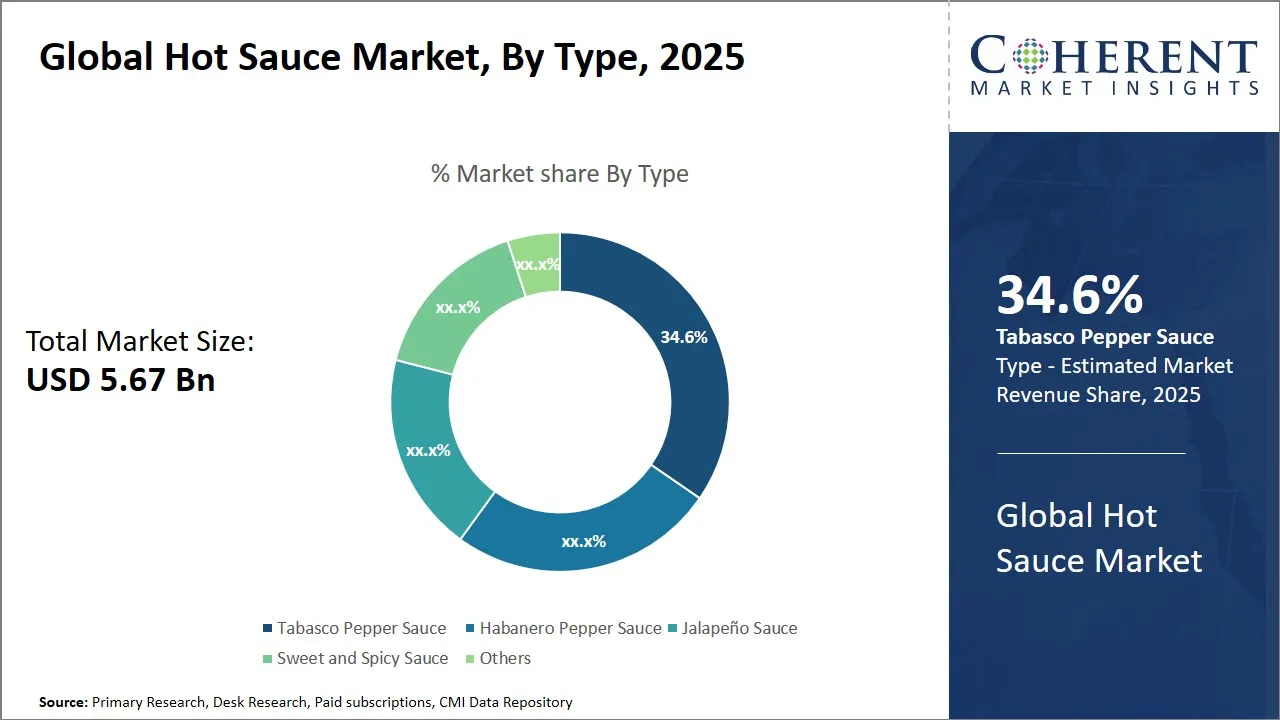
- The tabasco pepper sauce segment is expected to account for 35.6 % of the global hot sauce market in share 2026.
- The spicy segment is expected to capture 29.7 % of the global hot sauce market share in 2026.
- The online segment is projected to account for 53.7 % share in 2026.
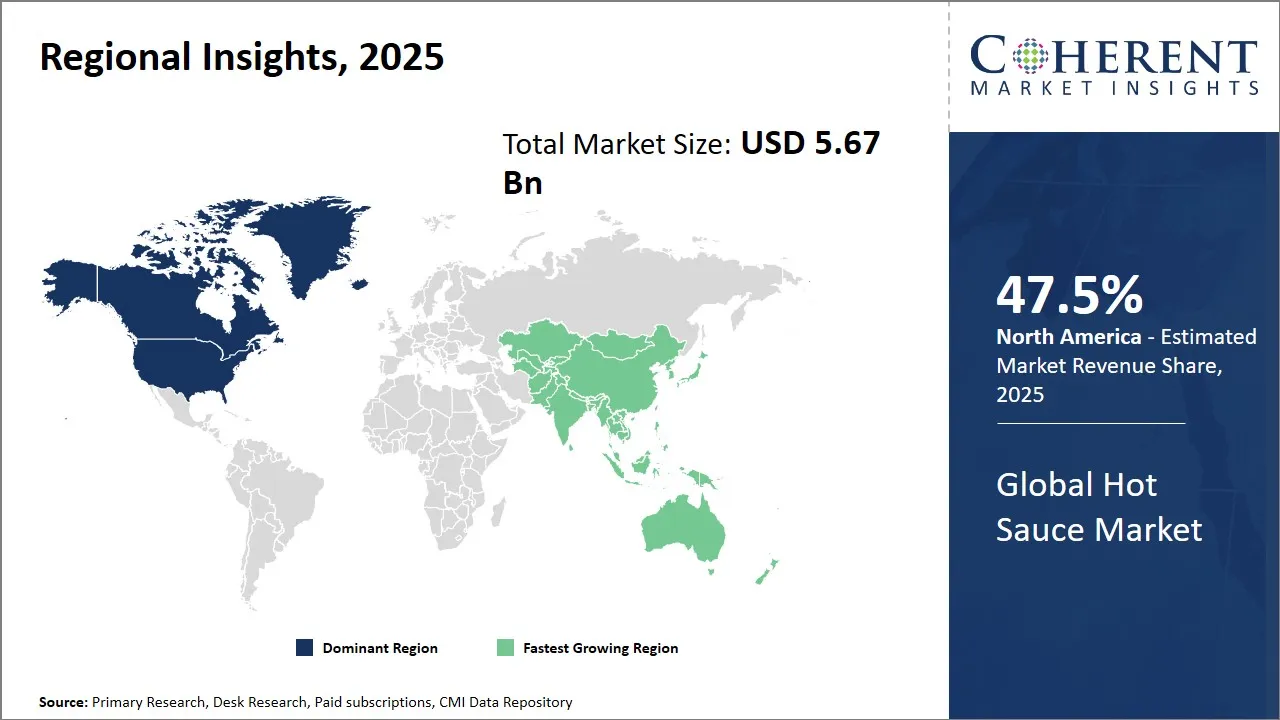
- North America is set to lead the global hot sauce market in 2026 with a 47.5 % share. Asia Pacific, with an estimated 21.5% share, will be the fastest-growing regional market.
Market Overview
A prominent trend in the hot sauce market is the rising demand for organic and natural and organic flavors ingredients, as consumers become more health-conscious and aware of product quality. Additionally, fusion flavors combining traditional spices with ethnic ingredients are gaining popularity, catering to adventurous taste preferences. E-commerce platforms and social media marketing are also playing a vital role in enhancing product accessibility and brand visibility, thereby shaping consumer buying behavior and accelerating the market growth in the coming years.
Current Events and Its Impact
Current Events | Description and its Impact |
Frank’s RedHot launches six new sauces (Apr 23, 2025) |
|
Micro-format innovation: Mini Hot Sauce |
|
Segmental Insights
- Current Industry Events of 2026
- Market Size Estimation
- Regional Breakdown
- Competitive Landscape
- Customer Intelligence
- Segmental Analysis
- Pricing Analysis
- Key Market Drivers, Challenges & Future Trends
- Customized Insights Section
Hot Sauce Market Insights, By Type - Tabasco Pepper Sauce Segment Dominates the Market Due to its Unmatched Brand Legacy and Versatile Flavor Profile
The tabasco pepper sauce segment is expected to hold 35.6% of the global hot sauce market share in 2026, due to its longstanding heritage and consistent consumer trust. Tabasco which started as a local specialty more than a hundred years ago has become a world brand, associated with quality and authenticity. The result of this legacy has been the development of a following customer base that cut across several generations of customers, which guarantees a steady demand.
For example, in March 2026, McIlhenny Company expanded its global footprint by introducing new limited-edition Tabasco variants in the Asia-Pacific and Latin American markets, capitalizing on regional flavor preferences and further strengthening brand recognition among emerging hot sauce consumers.
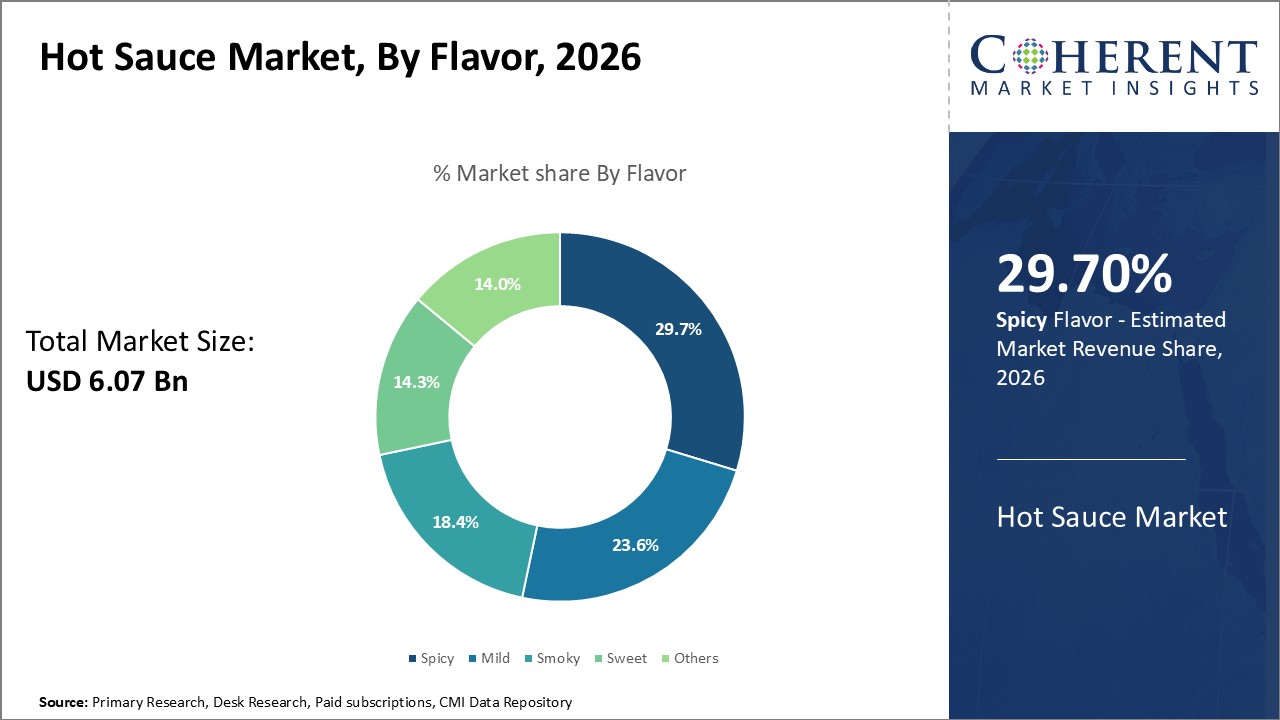
Hot Sauce Market Insights, By Flavor - Spicy Segment Dominates the Market Driven by Consumers’ Evolving Palate and Preference for Intense Heat Experiences
The spicy segment is projected to account for 29.7% of the global hot sauce market share in 2026, due to rising consumer inclination toward bold and intense taste profiles. The modern-day food lovers are becoming bolder and are demanding more sophisticated and exaggerated sensory satisfaction in their cuisine. This trend has contributed to a strong need of sauces that provide an intense spiciness, as an appetitious savoring of exuberant culinary experiences. Spicy hot sauces therefore include this necessity because they provide physical stimulation that adds excitement and flavor to otherwise, ordinary dishes. It is enhanced by the spread of spicy food contests, social media, and food culture influencers who glorify the presence of spicy food, further inscribing spicy sauces into food trends.
Hot Sauce Market Insights, By Distribution Channel – Online Segment Dominates the Market due to Convenience, Broader Product Variety, and Changing Consumer Shopping Behaviors
The online segment is expected to capture 53.7% share in 2026, attributed to evolving consumer preferences toward digital shopping and the convenience it offers. The internet offers a unique availability of a wide array of hot sauce brands and flavors that may not be easily found on local retailers, therefore, serving niche preferences and foreign delicacies. This greater option gives the consumers power to shop around, compare prices, and review to boost their buying confidence. An opportunity to purchase in smaller amounts or gifts via e-commerce is also of interest to consumers who want to receive personalized or new experiences and not be limited by the physical presence of the store.
Regional Insights
North America Hot Sauce Market Analysis and Trends
The North America region is projected to lead the market with a 47.5% share in 2026, because of the strong market ecosystem that includes a wide range of consumers who are increasingly becoming fond of spicy and ethnic food. The market leadership of the regions is supported by the presence of many hot sauce companies, the good distribution network of the retail outlets and the introduction of new products.
Also, there are government policies that encourage food safety and quality standards that guarantee high production quality by companies. The North America hot sauce market enjoys the advantage of trade relations that are easy to import and export with the Latin America which provides varieties of chili peppers and spices. Large firms like McIlhenny Company (Tabasco), Huy Fong Foods (Sriracha), and Kraft Heinz have played an important role in increasing the number of products and their availability that even more enhances the dominance of the market.
Asia Pacific Hot Sauce Market Analysis and Trends
The Asia Pacific region is expected to exhibit the fastest growth in the market contributing 21.5% share in 2026, due to its vast and culturally diverse population with an inherent preference for spicy foods. The increasing disposable income, urbanization, and adoption of western life styles have increased the demand of hot sauces other than those which were produced by the traditional regions.
In addition, government programs in favor of food processing businesses and export subsidies have contributed to growth in industries and some of the leading countries have been India and China. The trade processes related to exportation of the exotic spices and types of chilies also improve growth potential. The presence of major players in South Korea such as Yeos, Lee Kum Kee and Gochujang has increased product penetration and innovation in the region.
Global Hot Sauce Market Outlook for Key Countries
U.S. Hot Sauce Market Analysis and Trends
The U.S. still is an industry giant representing the hot sauce industry, which is backed by a sophisticated consumer base and willingness to experiment with cuisine. Famous brands such as Tabasco by McIlhenny Company and Sriracha sauce by Huy Fong Foods have dictated the market due to the presence of iconic brands and constant innovation within the industry. High consumer demand is maintained by the high supply of hot sauce in supermarkets, restaurants, and online stores. Also, the U.S. market is characterized by the presence of an energetic foodservice market and a changing trend to healthier, organic, and artisanal sauces.
Mexico Hot Sauce Market Analysis and Trends
The Mexico hot sauce market is capitalizing on the cultural connection acculturation with hot peppers and spicing up the food, making hot sauce a stable food product. The indigenous flavors have been used by the local companies, including Herdez and La Costena, that have combined old recipes with new production methods. The assistance by the government in developing agricultural varieties of chili and strengthening export channels are very critical. The Mexican hot sauces also have an international presence, of which robust trade agreements particularly in the Americas helped in making the country more visible in the international market.
China Hot Sauce Market Analysis and Trends
China’s market for hot sauce is undergoing a very rapid growth due to the exposure to food trends in the world and the rise in consumers in need of ready-to-eat foods and flavor-enhancing additives. The presence of major local players, such as Lee Kum Kee, and chili sauce experts, help to add their personal touch to the mix by offering the traditional flavor with new product formats that fit well into the modern consumer preferences.
The strong production power of China, the favorable government regulations in relation to food safety, and to the e-commerce infrastructure, makes the market growth and products supply much faster. There is also the export of chili products which contributes to the strategic position of the country in the international supply lines.
India Hot Sauce Market Analysis and Trends
The hot sauce market development in India is also driven by the fact that the country is traditionally addicted to spicy food, and its urban middle classes are looking for easy and tasty condiments. The large and small conglomerates such as Dabur and the Parag Milk Foods as well as small regional producers make this area of the competition dynamic.
The robustness of the market is enabled by the government policies that promote the food processing infrastructure and agricultural improvements that support the cultivation of chili. It has distribution opportunities in modern retail chains and online sites, which have further expanded its reach, and export opportunities to the neighboring countries and the Middle East increases its market strength.
South Korea Hot Sauce Market Analysis and Trends
In South Korea, hot sauce consumption is closely tied to cultural staples like gochujang and traditional chili pastes, which have gained international admiration. Companies such as CJ CheilJedang and Lotte Food lead the market by innovating gochujang-based sauces and flavored hot sauces tailored for both domestic and global consumers.
Government support in promoting Korean cuisine worldwide and facilitating export logistics reinforces global visibility. Technological advancements in production and packaging improve shelf life and consumer appeal, bringing South Korea to the forefront of premium hot sauce offerings.
End User Feedback and Unmet Needs – Hot Sauce Market
Example: Restaurant Chains Emphasizing Consistency and Brand Differentiation
Quick-service restaurant (QSR) operators report high satisfaction with co-branded or private-label hot sauce formulations. For example, a mid-sized North American QSR chain highlighted the success of introducing a custom smoky-chipotle blend that enhanced flavor profile consistency across outlets and improved customer retention.
Example: Supply Chain Instability and Lack of Customization for Industrial Buyers
Industrial and institutional buyers, including catering contractors and packaged meal producers, frequently express concerns about supply chain reliability and batch-to-batch variation. Users report challenges in securing steady volumes of chili-based raw materials, particularly due to crop yield fluctuations and import restrictions.
Market Players, Key Development, and Competitive Intelligence
Key Developments
- In October 2023, MegaMex Foods, a new Mexican food corporation, released its new Habanero Hot Sauce prepared with actual habanero peppers and the spicy under its brand name, HERDEZ.
- April 2023, The Kraft Heinz Company, a multinational food manufacturing company, has added to its product range with the introduction of its first-ever Heinz Hot 57 Sauce which has three spicy ketchups, Chipotle, Jalapeno and Habanero.
- In November 2022, Edible Garden AG Incorporated, a prominent producer of farming produce, purchased hot sauce production business Pulp. This kind of approach assisted the firm to increase the product availability and market under the established retail supermarkets and distributor system of Edible Garden AG in U.S.
Top Strategies Followed by Global Hot Sauce Market Players
- Established Players: The existing players in the industry invest in research and development (R&D) in order to design high-performance and innovative products that meet the changing consumer tastes and preferences of unique flavors, health, and high-quality packaging. These companies understand that to remain competitive in this competitive market, they have to keep innovating, and thus they are able to come up with new formulations that blend the conventional profiles of spicy taste with the health value or an exotic flavor.
- For example, Tabasco is continuously widening its product lines with other flavors such as Green Jalap and Scorpion Pepper Sauce in order to satisfy the different tastes of consumers. Kraft Heinz through its international distribution channels and investing in the development of healthier formulations of the sauces (low sodium, organic ingredients) to match with the current trend of wellness.
- Mid-level players: The players of the middle level in the hot sauce market follow a different yet equally efficient strategy and are oriented on providing the economically viable solutions that balance the quality and the price. When the companies focus on price-sensitive consumers, the target also includes a wide range of demographic consumers who are interested in reliable and tasty hot sauces but are not willing to pay the premium cost linked to the major brands.
- For example, the Franks RedHot, Texas Pete, and Nandos Brands focus on the value-based strategies, where the quality is consistently good at a moderate cost to win mainstream consumers.
- The small players in the international market of hot sauce characterize themselves by targeting niche segments and highly specialized product channels. Such companies tend to focus on product differentials like organic components, craftsman work, exotic peppers, or a new combination of flavors which will attract the refined customers who desire genuine or new flavors in their cuisine.
- For example, Heartbeat Hot Sauce, growing through partnerships with craft breweries, which indicates that the niche authenticity and cross-industry innovation could be the growth drivers.
Market Report Scope
Hot Sauce Market Report Coverage
| Report Coverage | Details | ||
|---|---|---|---|
| Base Year: | 2025 | Market Size in 2026: | USD 6.07 Bn |
| Historical Data for: | 2020 To 2024 | Forecast Period: | 2026 To 2033 |
| Forecast Period 2026 to 2033 CAGR: | 7.1% | 2033 Value Projection: | USD 9.79 Bn |
| Geographies covered: |
| ||
| Segments covered: |
| ||
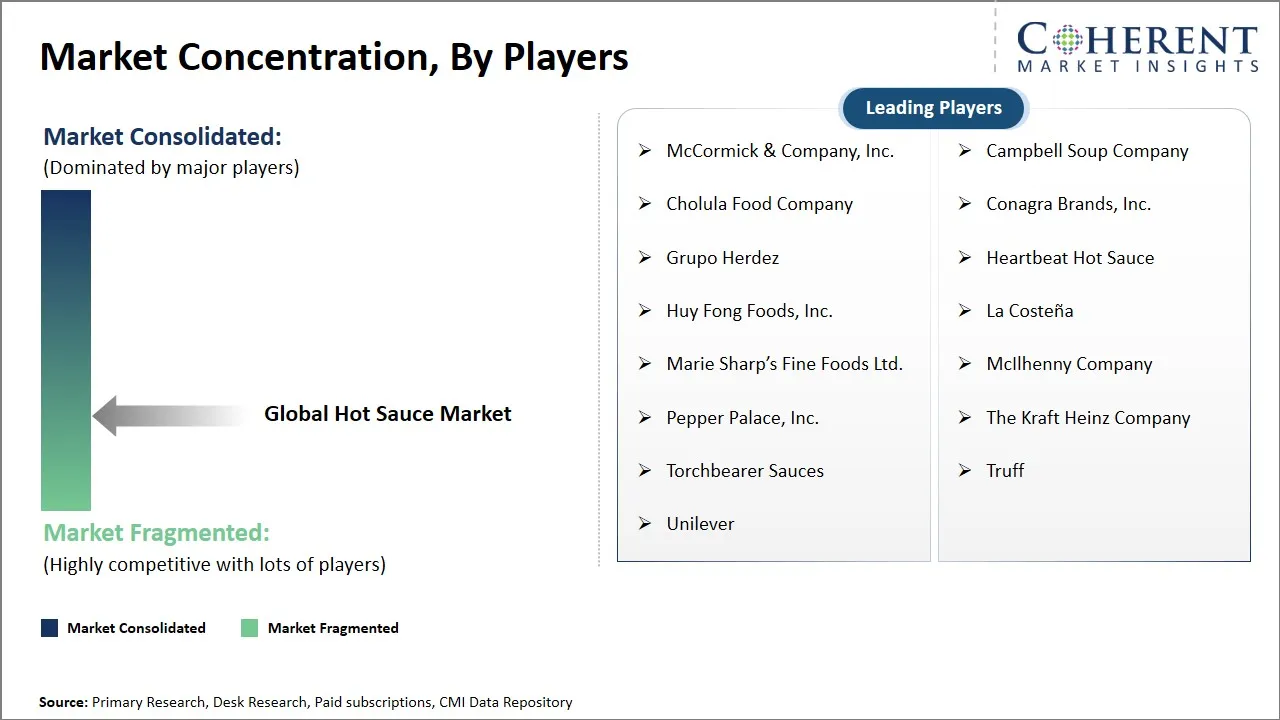
| Companies covered: | McCormick & Company, Inc., Campbell Soup Company, Cholula Food Company, Conagra Brands, Inc., Grupo Herdez, Heartbeat Hot Sauce, Huy Fong Foods, Inc., La Costeña, Marie Sharp’s Fine Foods Ltd., McIlhenny Company, Pepper Palace, Inc., The Kraft Heinz Company, Torchbearer Sauces, Truff, and Unilever | ||
| Growth Drivers: |
| ||
| Restraints & Challenges: |
| ||
Hot Sauce Market Dynamics
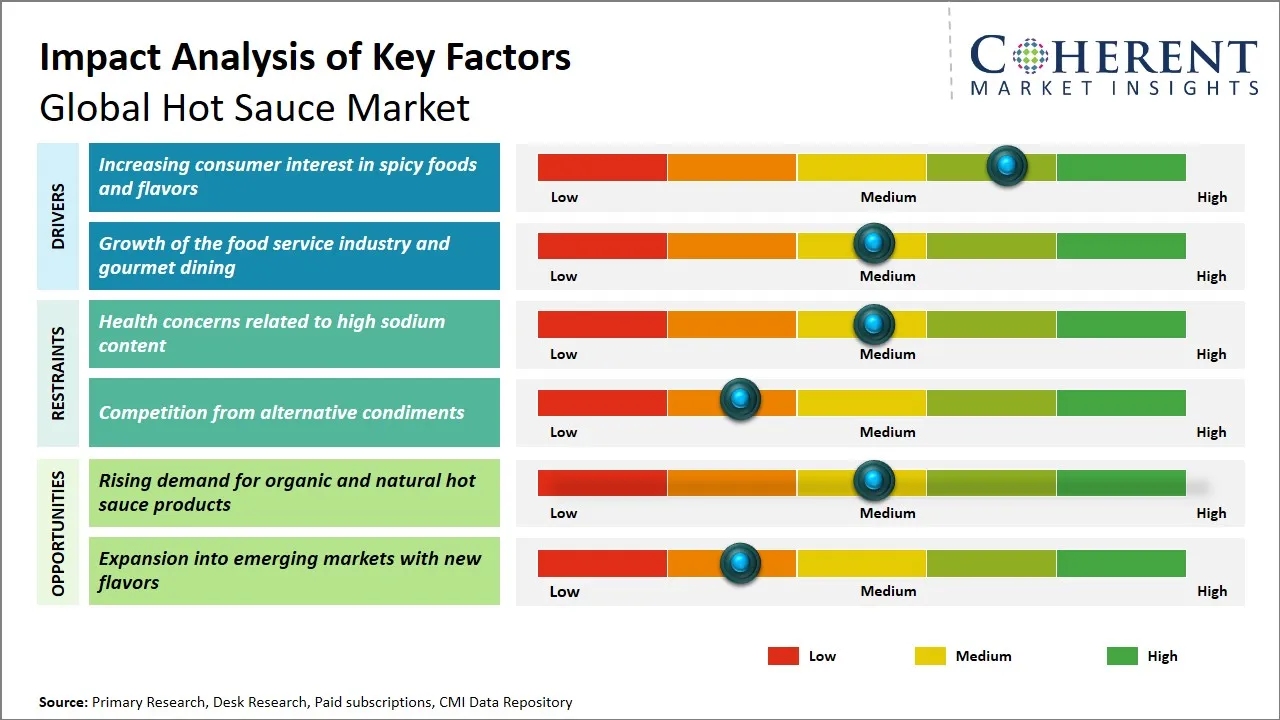
Hot Sauce Market Driver - Increasing Consumer Interest in Spicy Foods and Flavors
The hot sauce market in the world is greatly driven by the exploding consumer demand of hot-tasting foods and bold flavors. Due to the increased adventurousness of palates across the globe, there is a rising demand to use heat-based condiments to enrich and make ordinary food more exciting. Cultural change is driven by greater access to a wider range of dishes due to travel, social media and food-related entertainment, which is motivating people to try a hotter variety of dishes. Moreover, the use of unique flavor profiles with heat, complemented by either savory, smoky, or tangy, citrus flavors is especially appealing to millennials and Gen Z consumers, which leads to innovation and variety in the hot sauce segment.
As an illustration, Kikkoman launched spicy teriyaki sauces in Japan and Singapore to meet the increasing demand of condiments with chili. Impact: indicated an increase in spice acceptance in non-traditional hot sauce markets.
Hot Sauce Market Opportunity - Rising Demand for Organic and Natural Hot Sauce Products
The global hot sauce market is also experiencing a huge opportunity due to the rising demand of the consumers favoring organic and natural products. As people are becoming increasingly health-conscious and more prone to clean-label foods, people are strongly coming after hot sauce that is organic in nature and free of synthetic additives, preservatives, and artificial colors. This tendency is especially strong in the generation of millennials and Generation Z, which is more concerned with green and healthy food. Consequently, producers are reacting by diversifying their collections to accommodate organic hot sauces which focus on organic sourcing and making.
For example, Brands like Yellowbird Foods and Truff have launched certified-organic product lines using non-GMO peppers and natural sweeteners.
Analyst Opinion (Expert Opinion)
- The market for hot sauces all over the world is dynamically developing, driven by the rising demand of consumers on the strong taste, as well as a variety of flavors and their food experience. The Fiery Foods Show (2023) and the Hot Sauce Expo (2022) provided insights into the trends and indicated that such brands as Tabasco and Cholula are developing their own products lines with additional flavor profiles and sustainable packaging.
- The recent partnership with local farms to produce heirloom peppers is a sign of quality and sustainability, and the new strategy is attractive to the environmentally-concerned consumers. The events raised the popularity of artisanal and craft hot sauces, with discussions on the necessity of authenticity and narratives in branding. Nevertheless, market saturation and price volatility of ingredients were also cited as some of the obstacles that could hamper smaller brands.
- It is likely that companies that emphasize product differentiation and adopt marketing approaches based on social media and working with influencers will be unique in this competitive environment. Finally, the emergence of the global hot sauce market will depend on its capacity to be innovative, respond to changing tastes and preferences as well as on managing the complexities of supply chains and consumer demands of transparency and sustainability.
Speak to the analyst
Want personalized insights?
Take the findings above to one of our principal consultants, or have the report rebuilt around the segments, geographies and competitors you actually track.
Market Segmentation
- Type Insights (Revenue, USD Bn, 2021 - 2033)
- Tabasco Pepper Sauce
- Habanero Pepper Sauce
- Jalapeno Sauce
- Sweet and Spicy Sauce
- Others
- Flavor Insights (Revenue, USD BN, 2021 - 2033)
- Spicy
- Mild
- Smoky
- Sweet
- Others
- Distribution Channel Insights (Revenue, USD Bn, 2021 - 2033)
- Online
- Offline
- Supermarkets/Hypermarkets
- Convenience Stores
- Specialty Stores
- Others
- Regional Insights (Revenue, USD Bn, 2021 - 2033)
- North America
- U.S.
- Canada
- Latin America
- Brazil
- Argentina
- Mexico
- Rest of Latin America
- Europe
- Germany
- U.K.
- Spain
- France
- Italy
- Russia
- Rest of Europe
- Asia Pacific
- China
- India
- Japan
- Australia
- South Korea
- ASEAN
- Rest of Asia Pacific
- Middle East
- GCC Countries
- Israel
- Rest of Middle East
- Africa
- South Africa
- North Africa
- Central Africa
- North America
- Key Players Insights
- McCormick & Company, Inc.
- Campbell Soup Company
- Cholula Food Company
- Conagra Brands, Inc.
- Grupo Herdez
- Heartbeat Hot Sauce
- Huy Fong Foods, Inc.
- La Costeña
- Marie Sharp’s Fine Foods Ltd.
- McIlhenny Company
- Pepper Palace, Inc.
- The Kraft Heinz Company
- Torchbearer Sauces
- Truff
- Unilever
Sources
Primary Research Interviews
- R&D Director – Leading Hot Sauce Manufacturer
- Procurement Manager – Major Food Retail Chain Featuring Hot Sauces
- Product Development Head – Renowned Hot Sauce Brand
- Sustainability Manager – Food Certification & Clean Label Body
Stakeholders
- Manufacturers of Hot Sauce and Spicy Condiments
- End-use Sectors
- Retailers (Supermarkets, Specialty Stores)
- Foodservice Chains (QSRs, Restaurants, Cafés)
- E-commerce Platforms and Online Grocery Retailers
- Packaged Food Brands Integrating Hot Sauce Variants
- Technology Integration Players: Flavor Formulation & Sensory AI
Databases
- UN Comtrade Database (HS Codes for Hot Sauce and Condiments)
- India Import Export (EXIM) Database – Spicy Sauce Category
Magazines
- Food & Beverage Magazine – Trends in Spicy Condiments and Sauces
- Specialty Food Magazine – Hot Sauce Market Innovations
- Global Food Industry Reports – Consumer and Market Updates for Hot Sauces
- The Sauce Review – Brand and Recipe Innovations in Global Hot Sauce Sector
Journals
- International Journal of Food Science & Technology – Sensory Properties and Preservation of Hot Sauces
- Journal of Culinary Science – Recipe Development and Market Acceptance
- Food Research International – Capsaicin Research and Consumption Trends
- Journal of Taste Studies – Flavor Analysis and Consumer Behavior in Hot Sauces
- Asia Food Journal – Regional Hot Sauce Consumption Patterns
Newspapers
- The Wall Street Journal – Market Trends in Hot Sauce Industry
- The Guardian – Consumer Shifts in Spicy Food Preferences
- The New York Times – Regional and Global Hot Sauce Market Insights
- The Economic Times – Asia-Pacific Demand and Export Trends
Associations
- Specialty Food Association (SFA)
- Association for Dressings and Sauces (ADS)
- International Foodservice Manufacturers Association (IFMA)
- Clean Label Project
- American Culinary Federation
Public Domain Sources
- FDA – Guidelines for Pepper Sauces and Condiment Food Safety
- European Commission – Food Additives & Sauce Regulations
- World Health Organization – Consumption Safety Standards in Spicy Foods
Proprietary Elements
- CMI Data Analytics Tool, Proprietary CMI Existing Repository of information for last 8 years.
Get access to 250+ pages report
Every segment, forecast, competitor profile and data table behind the analysis above — available for instant download.
- ESOMAR Member
- ISO 9001:2015 Certified
- D-U-N-S Registered
- GDPR & CCPA Compliant
Missing comfort of reading report in your local language? Find your preferred language:
Transform your Strategy with Exclusive Trending Reports
Frequently Asked Questions
The global hot sauce market is estimated to be valued at USD 6.07 Bn in 2026 and is expected to reach USD 9.79 Bn by 2033.
The CAGR of the global hot sauce market is projected to be 7.1% from 2026 to 2033.
Increasing consumer interest in spicy foods and flavors and growth of the food service industry and gourmet dining are the major factors driving the growth of the global hot sauce market.
Health concerns related to high sodium content and competition from alternative condiments are the major factors hampering the growth of the global hot sauce market.
In terms of type, tabasco pepper sauce is estimated to dominate the market revenue share in 2026.
McCormick & Company, Inc., Campbell Soup Company, Cholula Food Company, Conagra Brands, Inc., Grupo Herdez, Heartbeat Hot Sauce, Huy Fong Foods, Inc., La Costeña, Marie Sharp’s Fine Foods Ltd., McIlhenny Company, Pepper Palace, Inc., The Kraft Heinz Company, Torchbearer Sauces, Truff, and Unilever are the major players.
North America is expected to lead the global hot sauce market in 2026.