

Global Hot Water Bottles Market Size and Forecast – 2026-2033
The Global Hot Water Bottles Market is estimated to be valued at USD 1.16 Bn in 2026 and is expected to reach USD 1.60 Bn by 2033, exhibiting a compound annual growth rate (CAGR) of 4.7% from 2026 to 2033.
Key Takeaways of the Hot Water Bottles Market
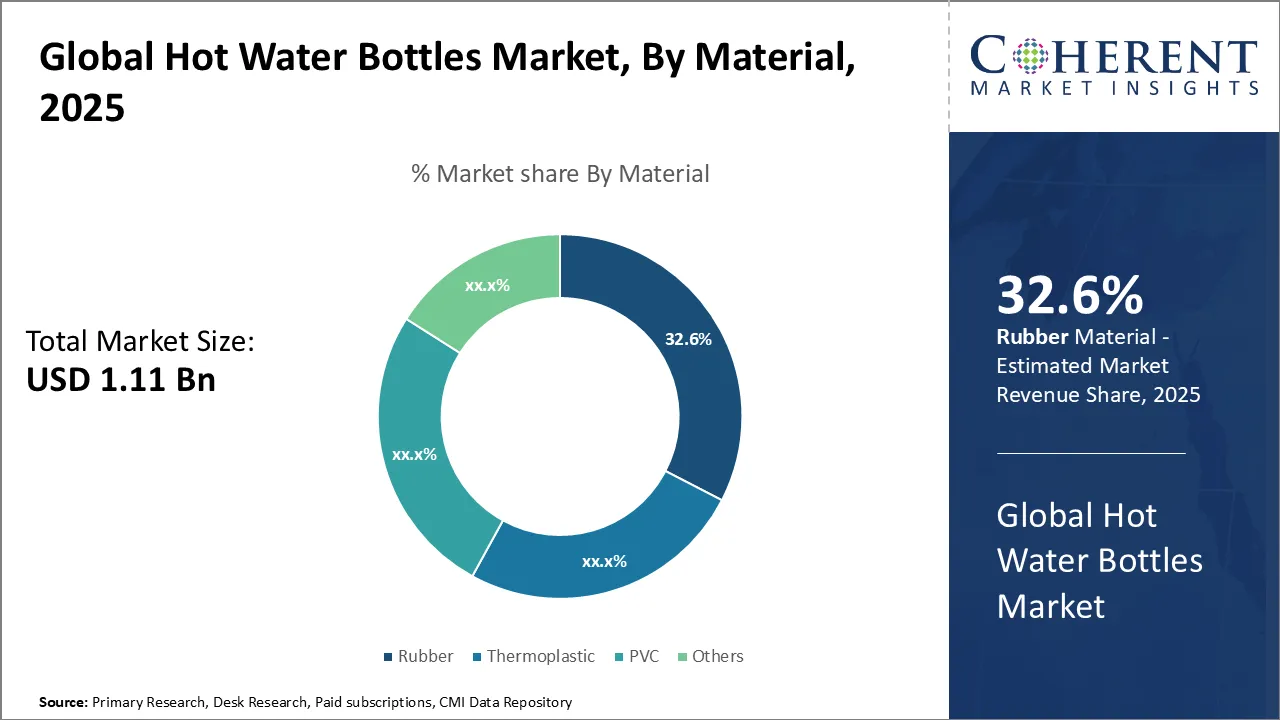
- The rubber segment is projected to account for 33.6% of the global hot water bottles market in 2026, largely owing to its superior flexibility, long-lasting durability, and strong heat retention capabilities.
- The less than 1 liter segment is expected to capture 46.7% of the market in 2026, due to the demand driven by consumer preference for the convenience and versatility that smaller capacity bottles provide.
- The healthcare segment is projected to command 36.9% share of the market in 2026, primarily supported by the well-recognized therapeutic benefits of hot water bottles in medical and wellness applications.
- Asia Pacific will dominate the global hot water bottles market with a 38. 5% share in 2026, driven by high demand for home healthcare and natural pain relief solutions, while Europe, with a 23.5% share, will be the fastest-growing region due to rising wellness awareness and e-commerce expansion.
Market Overview
The market trend highlights a shift towards sustainable and eco-friendly materials, with manufacturers innovating by incorporating natural rubber, biodegradable components, and even recyclable solutions such as PET bottles and pharmaceuticals plastic bottles. Additionally, there is a growing preference for ergonomic designs and enhanced safety features, catering to the aging population and individuals seeking pain relief through traditional methods. The rise in health consciousness coupled with expanding e-commerce platforms further supports the market’s sustained expansion globally.
Current Events and Its Impact
Current Events | Description and its impact |
EU General Product Safety Regulation (EU) 2023/988 in force (from December 13, 2024) |
|
U.K.: BSI launches committee to review/update BS 1970 hot water bottle specification (May 7, 2025) |
|
Segmental Insights
- Current Industry Events of 2026
- Market Size Estimation
- Regional Breakdown
- Competitive Landscape
- Customer Intelligence
- Segmental Analysis
- Pricing Analysis
- Key Market Drivers, Challenges & Future Trends
- Customized Insights Section
Hot Water Bottles Market Insights, By Material - Rubber Segment Dominates the Market due to its Superior Performance in Hot Water Bottles
Rubber segment is expected to hold 33.6% share of the global hot water bottles market in 2026, driven primarily by its inherent flexibility, durability, and excellent heat retention properties. Rubber’s natural elasticity allows it to stretch and conform without cracking, making it ideally suited for repeated use in hot water bottles. This quality also ensures a secure seal and reduced risk of leaks, which is paramount for consumer safety and satisfaction. Unlike thermoplastics and PVC which can become brittle over time or degrade when exposed to heat, rubber maintains its integrity, enhancing the product’s lifespan. Additionally, rubber is naturally resistant to heat, which minimizes the risk of deformation, and provides consistent and comfortable warmth, crucial for user comfort.
The growing preference for materials with environmental considerations further bolsters rubber’s appeal. Natural rubber is biodegradable and, compared to synthetic materials like PVC, presents fewer environmental concerns during disposal. This eco-friendly attribute resonates well among environmentally conscious consumers, pushing demand in regions with strong environmental regulations or consumer awareness.
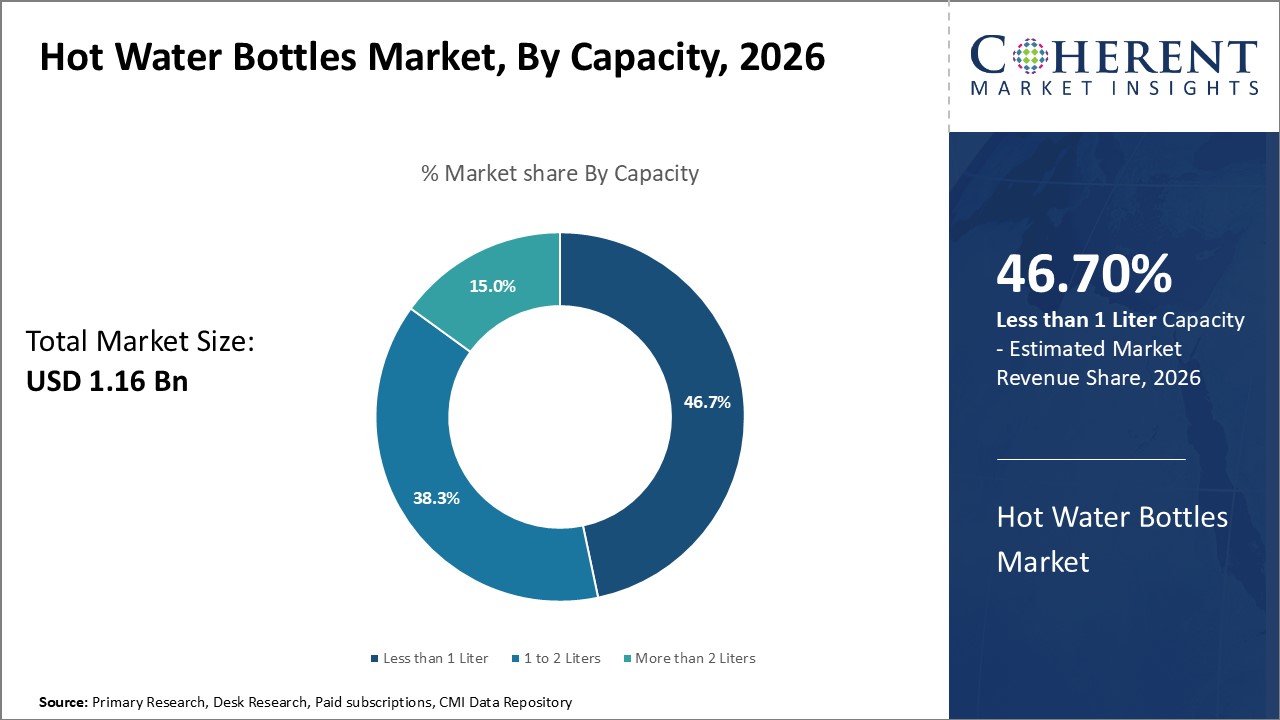
Hot Water Bottles Market Insights, By Capacity - Less than 1 Liter Segment Dominates the Market due to Majority Consumer Interest
The less than 1 liter segment is expected to hold 46.7% share of the market in 2026. The preference for smaller capacity bottles stems primarily from convenience and versatility offered to the consumers. Bottles under 1 liter are lightweight, compact, and easier to handle, which appeals to a broad range of users including elderly people and children who require heat therapy or comfort but may find larger bottles cumbersome or difficult to manage. The ease of filling, carrying, and controlling the warmth discharge makes these smaller bottles highly user-friendly.
Additionally, smaller capacity bottles heat up rapidly and maintain a consistent temperature for a sufficient duration to provide relief, without the need for excessive water weight. This not only reduces the risk of burns due to overfilled or heavier bottles but also enhances portability for use in various environments such as travel or small living spaces. The compact size fits easily into beds or under blankets, optimizing therapeutic benefits during rest or sleep.
Hot Water Bottles Market Insights, By Application - Healthcare Segment Dominates the Market due to the Driving Demand for Hot Water Bottles
The healthcare segment is projected to hold 36.9% share of the market in 2026. This is largely due to the recognized therapeutic benefits hot water bottles provide in medical and wellness settings. Heat therapy is a widely accepted treatment for a variety of health conditions, including muscle pain, menstrual cramps, joint stiffness, and arthritis. Hot water bottles offer a simple, cost-effective, and non-invasive method to deliver controlled warmth which promotes blood circulation, reduces muscle tension, and aids in pain management. Healthcare professionals often recommend their use as complementary to other treatments for effective symptom relief.
Hospitals, clinics, and physiotherapy centers deploy hot water bottles extensively because they provide targeted heat application without requiring complex equipment. Their portability and ease of use make them essential tools in both inpatient and outpatient care. Furthermore, hot water bottles are used for comforting patients who suffer from chills or hypothermia due to illness or exposure, highlighting their critical role in patient care.
Regional Insights
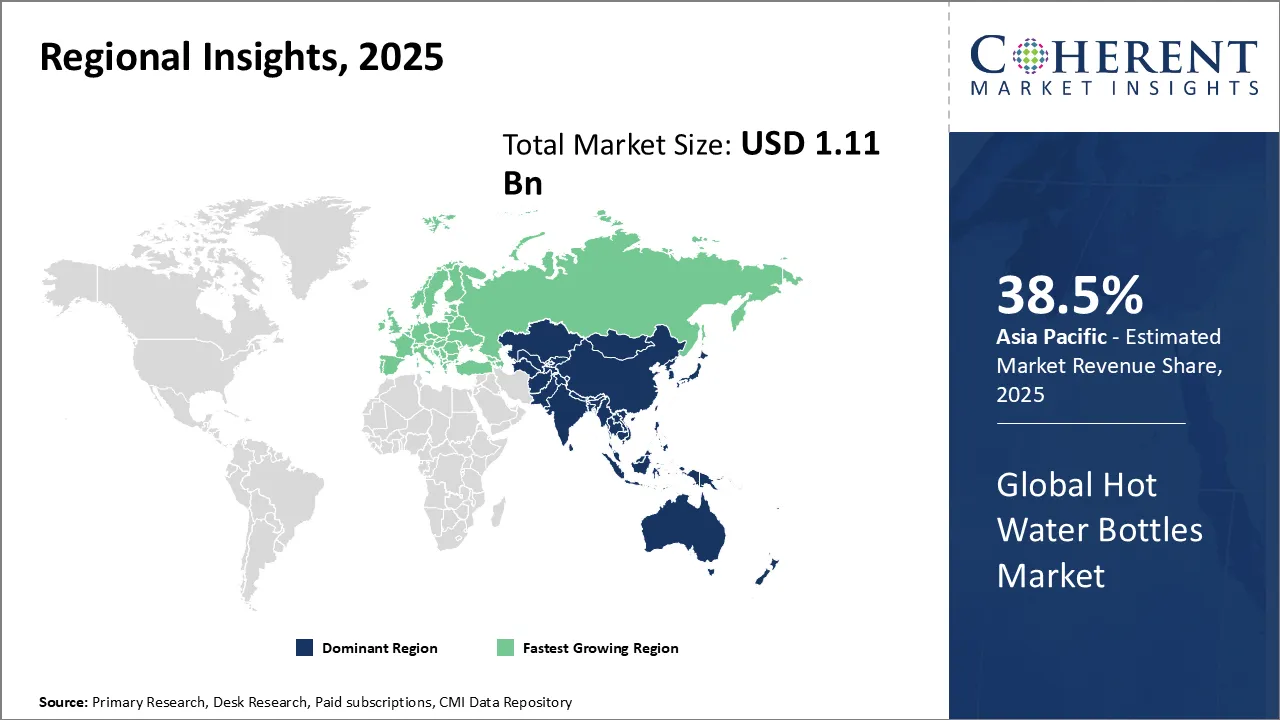
Asia Pacific Hot Water Bottles Market Analysis and Trends
The Asia Pacific region is expected to exhibit the fastest growth in the market contributing 38.5% share in 2026, owing to rising disposable incomes, expansion of healthcare services, and increasing consumer preference for traditional remedies coupled with modern products. Rapid urbanization and improving standards of living lead to heightened awareness about health and wellness, propelling demand. Government initiatives aimed at boosting manufacturing via “Make in India” and China’s growing focus on health-related exports have stimulated local production and innovation.
The region’s extensive population base combined with evolving retail channels, from traditional markets to online platforms, enhances product accessibility significantly. Notable players like Guangdong Rijiang Industrial Co. and Zhejiang Banguo Packing Co. contribute to competitive pricing and innovation. Trade policies increasingly support exports across the Asia Pacific and beyond, positioning the region as a burgeoning market with substantial growth potential.
Europe Hot Water Bottles Market Analysis and Trends
The Europe region is projected to lead the market with a 23.5% share in 2026, driven by a mature healthcare infrastructure, widespread consumer awareness about wellness products, and well-established manufacturing hubs. The region benefits from stringent government regulations ensuring product safety and quality, which have bolstered consumer trust and market penetration. Countries like Germany and the U.K. house several reputable manufacturers known for their innovation and premium quality products, such as Fashy GmbH and HotSnapZ.
Additionally, Europe’s strong retail and e-commerce ecosystems enhance product accessibility. The presence of sustainability-focused initiatives in packaging and materials is also significant, aligning with consumers’ growing preference for eco-friendly products. Trade dynamics favor intra-regional distribution with harmonized standards facilitating smooth export processes, reinforcing Europe’s position as the key market leader.
Global Hot Water Bottles Market Outlook for Key Countries
Germany Hot Water Bottles Market Trends
Germany's hot water bottles market is characterized by strong consumer focus on product safety and environmental standards, supported by rigorous regulatory frameworks. The country’s advanced manufacturing sector, with players, such as Fashy GmbH, ensures high-quality hot water bottles that cater to both medical and home comfort needs. German consumers appreciate durability and design innovation, which local companies have integrated with eco-conscious materials. The well-established distribution networks encompass both specialty healthcare retailers and mainstream e-commerce platforms, facilitating widespread availability and steady demand across urban and rural areas.
U.K. Hot Water Bottles Market Trends
The U.K. hot water bottles market continues to lead in terms of brand recognition and innovation within Europe. Established companies like HotSnapZ innovate by incorporating reusable heat pack technology with traditional hot water bottles, providing added convenience and safety. The U.K. benefits from strong healthcare endorsements and a large wellness-oriented customer base. Government policies promoting healthcare product safety and a robust retail infrastructure encourage frequent new product launches and competitive pricing strategies. Furthermore, the U.K. serves as an export hub to other European countries, amplifying its influence within the regional market.
India Hot Water Bottles Market Trends
India's hot water bottles market growth accelerates due to increasing health awareness and the growing middle-class population with greater purchasing power. The government’s “Make in India” initiative encourages local manufacturing by offering incentives, thus attracting investments into the hot water bottle sector. Indian companies are focusing on producing budget-friendly and culturally tailored products, blending traditional usage with modern designs.
Distribution channels are diversifying from traditional retail outlets in tier-2 and tier-3 cities to expanding e-commerce platforms, increasing product penetration. Notable companies like Qmi Hygienics are contributing to product standardization and quality improvements.
China Hot Water Bottles Market Trends
China continues to lead as a manufacturing powerhouse, supplying a significant portion of hot water bottles worldwide. The market benefits from extensive raw material availability and a well-established supply chain network. Domestic companies, such as Guangdong Rijiang Industrial Co., innovate on both product quality and cost efficiency, catering to domestic and international markets. Regulatory reforms aimed at improving product safety and export standards are enhancing the reputation of Chinese-made hot water bottles globally. Growing health consciousness among Chinese consumers also boosts demand, alongside rapidly evolving retail landscapes including the rise of digital commerce platforms like Alibaba and JD.com.
U.S. Hot Water Bottles Market Trends
The U.S. hot water bottles market is marked by consumer preference for high-quality, innovative health and wellness products. Premiumization drives product diversification, including ergonomic designs and multifunctional hot water bottles. Leading companies such as Thermos LLC and Carex Health Brands focus on integrating advanced materials and safety features to meet stringent U.S. FDA regulations.
Healthcare sector endorsements and presence in pharmacies and specialty health stores facilitate trust and accessibility. E-commerce growth further supports market expansion, with consumers valuing convenience and product variety, including eco-friendly options. Additionally, imports from Europe and Asia Pacific complement domestic offerings, creating a competitive but dynamic marketplace.
End User Feedback and Unmet Needs in the Hot Water Bottles Market
Positive Experience Example: Innovation in Materials and Safety
- A frequently cited positive among institutional buyers (such as healthcare and eldercare facilities) is the improved safety and sealing mechanisms in modern hot water bottle designs. Advanced models with reinforced necks and high-quality vulcanized rubber provide reliable, long heat retention while minimizing the risk of accidental leaks.
- These improvements have increased user satisfaction by enhancing patient comfort and reducing burn incidents, resulting in wider adoption in hospital pain management routines and eldercare settings. In industrial environments, durability advances have allowed repeated, long-duration use without loss of function—addressing a core operational requirement.
Unmet Needs in the Hot Water Bottles Market
- Technological Gaps: Few products offer advanced features like integrated temperature monitoring, leak detection sensors, or smart filling mechanisms—demands that are increasing among institutional and industrial users who prioritize operational efficiency and safety.
- Customization and Ergonomics: There is a clear lack of customizable options for application-specific needs (e.g., large-capacity bottles for industrial tasks, ergonomic shapes for medical patients), as well as a limited range of materials suitable for diverse, sensitive user groups (e.g., hypoallergenic or antimicrobial variants).
- Affordability and Accessibility: End users in price-sensitive or developing regions note that the rising cost of sustainable, high-performance models restricts access, resulting in reliance on lower-quality, less safe alternatives.
Market Players, Company Insights, and Competitive Intelligence
Company Insights
- Everich Commerce Group Limited, based in Zhejiang, China, offers a range of vacuum-insulated stainless steel hot water bottles designed to keep beverages hot or cold for long periods. Their key products include lock-lid, double-wall, and wide-mouth bottles, all made from food-grade 304/18-8 stainless steel, BPA-free, and certified for safety. The company provides strong OEM/ODM customization for logos, finishes, and packaging, with MOQs starting from 3,000 units (some models from 500).
Top Strategies Followed by Global Hot Water Bottles Market Players
- Established market leaders invest heavily in research and development (R&D) to innovate high-performance products that enhance user experience, safety, and durability. These companies focus on incorporating advanced materials and ergonomic designs, aligning their offerings with modern consumer expectations and regulatory standards.
- For instance, Fashy’s hot water bottles made with thermoplastic materials are designed to be odorless, recyclable, and safer compared to traditional rubber bottles. These players integrate advanced materials and ergonomic designs to improve durability and user comfort while adhering to regulatory standards like EU safety certifications.
- Mid-level companies in the hot water bottles market operate with a focused approach on offering cost-effective solutions that strike a balance between quality and affordability. Recognizing the growing segment of price-sensitive consumers, these players prioritize optimizing their production processes to reduce manufacturing costs without compromising on safety and reliability. By doing so, they cater to budget-conscious buyers looking for reliable yet economical options.
- For example, Sainsburys offers budget-friendly hot water bottles that still meet safety compliance, targeting mass-market buyers who want dependable everyday solutions without premium pricing. Its focus is on cost-effectiveness without compromising the fundamental qualities of safety and performance.
- Small-scale players in the global hot water bottles market distinguish themselves by carving out specialized niches through customized or innovative product offerings. These companies often focus on incorporating unique features, such as eco-friendly materials, smart temperature control, or ergonomic designs tailored to specific user groups like the elderly or athletes.
- For example, Yuyao Jiying Rubber Co., Ltd. (China) produces eco-friendly natural rubber bottles, while brands like Warmies (U.K.) create microwavable plush hot water bottles that combine functionality with comfort, targeting children, the elderly, and wellness-conscious consumers.
Market Report Scope
Hot Water Bottles Market Report Coverage
| Report Coverage | Details | ||
|---|---|---|---|
| Base Year: | 2025 | Market Size in 2026: | USD 1.16 Bn |
| Historical Data for: | 2020 To 2024 | Forecast Period: | 2026 To 2033 |
| Forecast Period 2026 to 2033 CAGR: | 4.7% | 2033 Value Projection: | USD 1.60 Bn |
| Geographies covered: |
| ||
| Segments covered: |
| ||
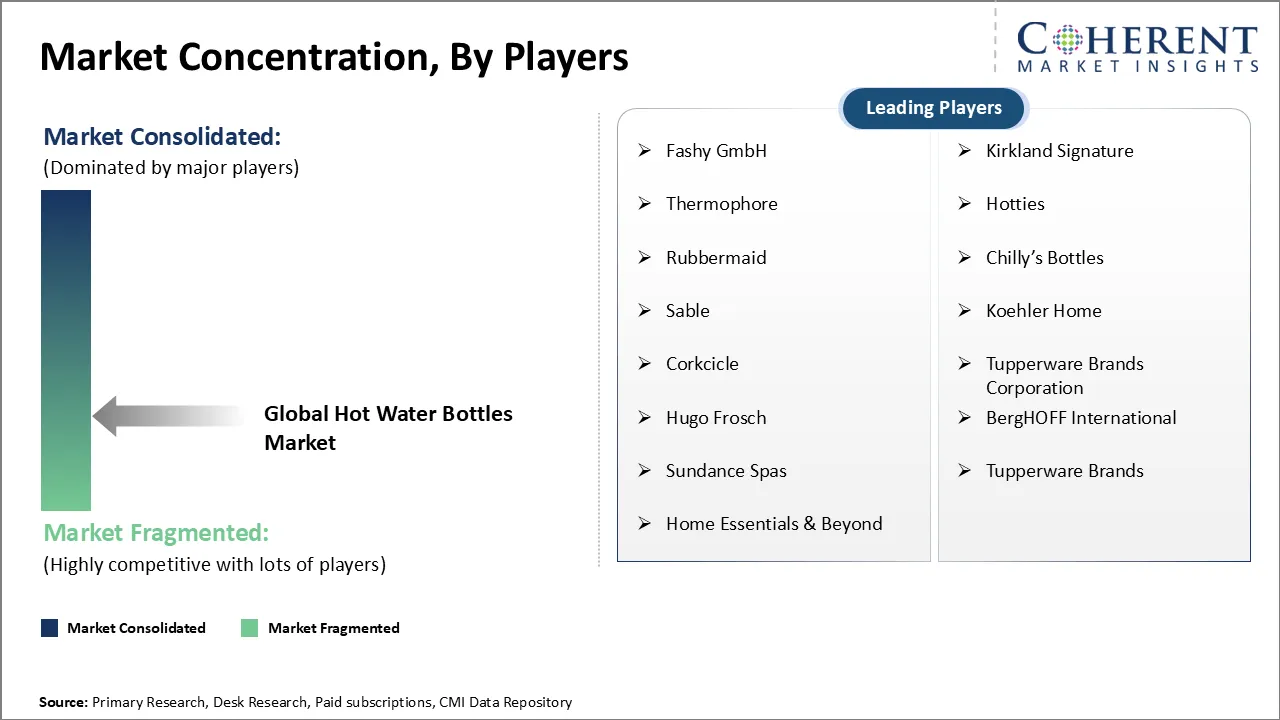
| Companies covered: | Fashy GmbH, Kirkland Signature, Thermophore, Hotties, Rubbermaid, Chilly’s Bottles, Sable, Koehler Home, Corkcicle, Tupperware Brands Corporation, Hugo Frosch, BergHOFF International, Sundance Spas, Tupperware Brands, and Home Essentials & Beyond | ||
| Growth Drivers: |
| ||
| Restraints & Challenges: |
| ||
Hot Water Bottles Market Dynamics
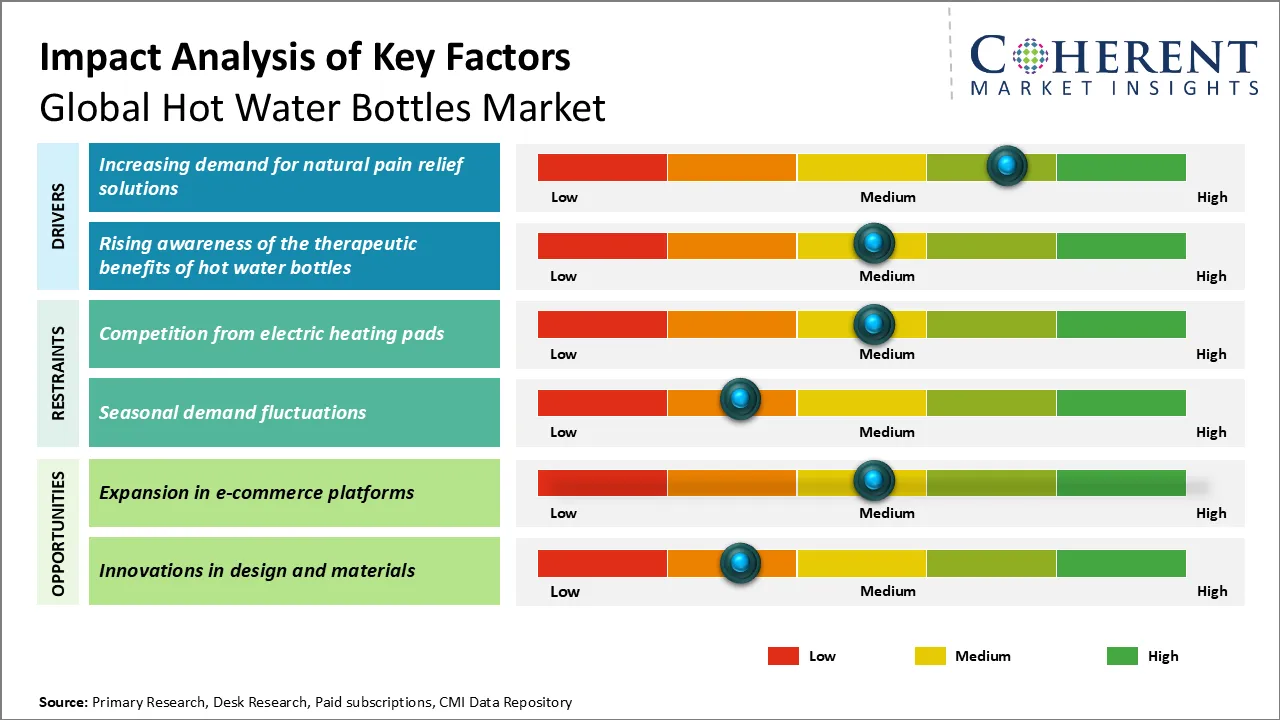
Hot Water Bottles Market Driver - Increasing Demand for Natural Pain Relief Solutions
A significant driver propelling the global hot water bottles market is the growing consumer preference for natural and non-invasive pain relief methods. With heightened awareness about the adverse effects associated with prolonged use of pharmaceutical painkillers, individuals are actively seeking alternative remedies that offer comfort without side effects. Hot water bottles serve as an effective, chemical-free option to alleviate muscle soreness, menstrual cramps, joint stiffness, and other types of bodily discomfort. Their simplicity, ease of use, and the soothing warmth they provide align well with the increasing trend toward holistic wellness and self-care practices.
For example, in countries, such as India and China, where traditional therapies like Ayurveda and Traditional Chinese Medicine (TCM) are widely practiced, hot water bottles are commonly used as a complementary remedy for relieving menstrual cramps and joint stiffness. A consumer survey conducted by health and wellness retailers in the U.K. also revealed that nearly 42% of respondents prefer hot water bottles and heating pads over oral painkillers for managing recurring back pain, citing fewer side effects and better comfort.
Hot Water Bottles Market Opportunity - Expansion in E-Commerce Platforms for Market Growth
The expansion of e-commerce platforms presents a significant opportunity for the global hot water bottles market, driven by increasing digital adoption and changing consumer purchase behaviors. With the proliferating use of smartphones and improved internet connectivity worldwide, more consumers are turning to online channels for health and wellness products, including hot water bottles. E-commerce platforms provide manufacturers and retailers with a broader reach, allowing them to tap into previously underserved or hard-to-reach markets, including remote and rural areas. Additionally, online marketplaces offer extensive product variety and competitive pricing, enhancing consumer choice and convenience.
For example, on Amazon and Flipkart, hot water bottles are consistently among the top-searched products in the winter and wellness categories, with seasonal sales spikes of up to 35% during colder months in India and Southeast Asia. Similarly, in Europe, online pharmacies such as Boots (U.K.) and DocMorris (Germany) report growing sales of hot water bottles as part of bundled wellness products, driven by promotions and doorstep delivery services.
Analyst Opinion (Expert Opinion)
- The global hot water bottles market is poised for a resurgence, driven by a growing consumer preference for natural remedies and comfort products. Insights from the Home and Wellness Expo (2023) and the Thermal Comfort Conference (2022) highlighted innovative trends, with brands like Fashy and Hotties leading in the development of eco-friendly materials and ergonomic designs.
- Fashy’s recent introduction of a biodegradable hot water bottle aligns with increasing consumer demand for sustainable products, showcasing a proactive response to environmental concerns. Discussions at these conferences emphasized the importance of product safety and the integration of modern aesthetics, appealing to younger demographics seeking both functionality and style. However, challenges such as competition from electric heating pads and potential regulatory scrutiny over materials were noted as obstacles.
- Companies that focus on R&D to enhance durability and thermal efficiency will likely gain a competitive advantage. Additionally, leveraging e-commerce platforms to reach a broader audience can facilitate market penetration. Ultimately, the hot water bottles market's future will depend on its ability to innovate while effectively catering to the evolving needs of health-conscious consumers.
Speak to the analyst
Want personalized insights?
Take the findings above to one of our principal consultants, or have the report rebuilt around the segments, geographies and competitors you actually track.
Market Segmentation
- Material Insights (Revenue, USD Bn, 2021 - 2033)
- Rubber
- Thermoplastic
- PVC
- Others
- Capacity Insights (Revenue, USD Bn, 2021 - 2033)
- Less than 1 Liter
- 1 to 2 Liters
- More than 2 Liters
- Application Insights (Revenue, USD Bn, 2021 - 2033)
- Healthcare
- Household
- Outdoor Activities
- Others
- Distribution Channel Insights (Revenue, USD Bn, 2021 - 2033)
- Online
- Supermarkets/Hypermarkets
- Specialty Stores
- Others
- Regional Insights (Revenue, USD Bn, 2021 - 2033)
- North America
- U.S.
- Canada
- Latin America
- Brazil
- Argentina
- Mexico
- Rest of Latin America
- Europe
- Germany
- U.K.
- Spain
- France
- Italy
- Russia
- Rest of Europe
- Asia Pacific
- China
- India
- Japan
- Australia
- South Korea
- ASEAN
- Rest of Asia Pacific
- Middle East
- GCC Countries
- Israel
- Rest of Middle East
- Africa
- South Africa
- North Africa
- Central Africa
- North America
- Key Players Insights
- Fashy GmbH
- Kirkland Signature
- Thermophore
- Hotties
- Rubbermaid
- Chilly’s Bottles
- Sable
- Koehler Home
- Corkcicle
- Tupperware Brands Corporation
- Hugo Frosch
- BergHOFF International
- Sundance Spas
- Tupperware Brands
- Home Essentials & Beyond
Sources:
Primary Research Interviews
- Product Innovation Manager – Leading Hot Water Bottle Manufacturer
- Procurement Head – Major Retail Chain (Household & Wellness Products)
- Sustainability Officer – Reusable & Eco-Friendly Home Products Company
- Quality & Safety Manager – Consumer Goods Certification Body
Stakeholders
- Manufacturers
- End-use Sectors:
- Household (personal warmth, pain relief, relaxation)
- Healthcare & Wellness (physiotherapy, muscle pain, stress relief)
- Travel & Outdoor Brands (camping, emergency warmth)
- Regulatory & Certification Bodies
- E-commerce Platforms and Retailers
- Material & Technology Providers (rubber, thermoplastics, eco-friendly materials, reusable packaging solutions)
Databases
- UN Comtrade Database (imports & exports of hot water bottles and related rubber/plastic goods)
- India Import Export (EXIM) Database
- Eurostat Trade Database (EU imports/exports of household wellness goods)
Magazines
- Home & Wellness Magazine – Consumer trends in household and wellness products
- Healthcare & Lifestyle Business – Innovations in therapeutic wellness tools
- Global Consumer Goods Review – Household products and personal care updates
- Retail Insights Journal – Market updates on household and wellness retail products
- Sustainable Living Today – Eco-friendly and reusable consumer goods trends
Journals
- Journal of Consumer Product Safety – Compliance and safety in hot water bottle use
- Journal of Materials Science – Advances in thermoplastics and rubber for heat retention products
- International Journal of Home Healthcare – Role of hot water bottles in home-based therapy
- Journal of Applied Ergonomics – User comfort and design considerations in household products
- Journal of Sustainable Materials – Eco-friendly alternatives to PVC and rubber
Newspapers
- The Financial Times – Market growth and demand in household consumer products
- The Guardian – Consumer lifestyle trends and eco-friendly product adoption
- Asia Business Daily – Growth of hot water bottle demand in Asia-Pacific regions
- European Consumer News – Regulation and product safety updates in wellness goods
Associations
- British Standards Institution (BSI) – Standards for hot water bottles (BS 1970)
- European Committee for Standardization (CEN) – Household product regulations
- International Rubber Study Group (IRSG) – Rubber trade and usage insights
- American Home & Wellness Association
Public Domain Sources
- U.S. FDA – Consumer product safety guidelines (for therapeutic household goods)
- European Commission – Regulations on household goods and safety certifications
- World Health Organization – Thermal therapy guidelines for pain relief
- OECD – Consumer goods safety, trade and environmental assessments
- Bureau of Indian Standards (BIS) – Rubber and thermoplastic product standards
Proprietary Elements
- CMI Data Analytics Tool, Proprietary CMI Existing Repository of information for last 8 years.
Get access to 250+ pages report
Every segment, forecast, competitor profile and data table behind the analysis above — available for instant download.
- ESOMAR Member
- ISO 9001:2015 Certified
- D-U-N-S Registered
- GDPR & CCPA Compliant
Missing comfort of reading report in your local language? Find your preferred language:
Transform your Strategy with Exclusive Trending Reports
Frequently Asked Questions
The global hot water bottles market is estimated to be valued at USD 1.16 Bn in 2026 and is expected to reach USD 1.60 Bn by 2033.
The CAGR of global hot water bottles market is projected to be 4.7% from 2026 to 2033.
Increasing demand for natural pain relief solutions and rising awareness of the therapeutic benefits of hot water bottles are the major factors driving the growth of the global hot water bottles market.
Competition from electric heating pads and seasonal demand fluctuations are the major factors hampering the growth of the global hot water bottles market.
In terms of material, rubber is estimated to dominate the market revenue share in 2026.
Fashy GmbH, Kirkland Signature, Thermophore, Hotties, Rubbermaid, Chilly’s Bottles, Sable, Koehler Home, Corkcicle, Tupperware Brands Corporation, Hugo Frosch, BergHOFF International, Sundance Spas, Tupperware Brands, and Home Essentials & Beyond are the major players.
Asia Pacific is expected to lead the global hot water bottles market in 2026.