

Pharmaceutical Plastic Bottles Market Size and Forecast – 2026 to 2033
The global pharmaceutical plastic bottles market is estimated to be valued at USD 11.64 Bn in 2026 and is expected to reach USD 16.59 Bn by 2033, exhibiting a compound annual growth rate (CAGR) of 5.2% from 2026 to 2033.
Key Takeaways:
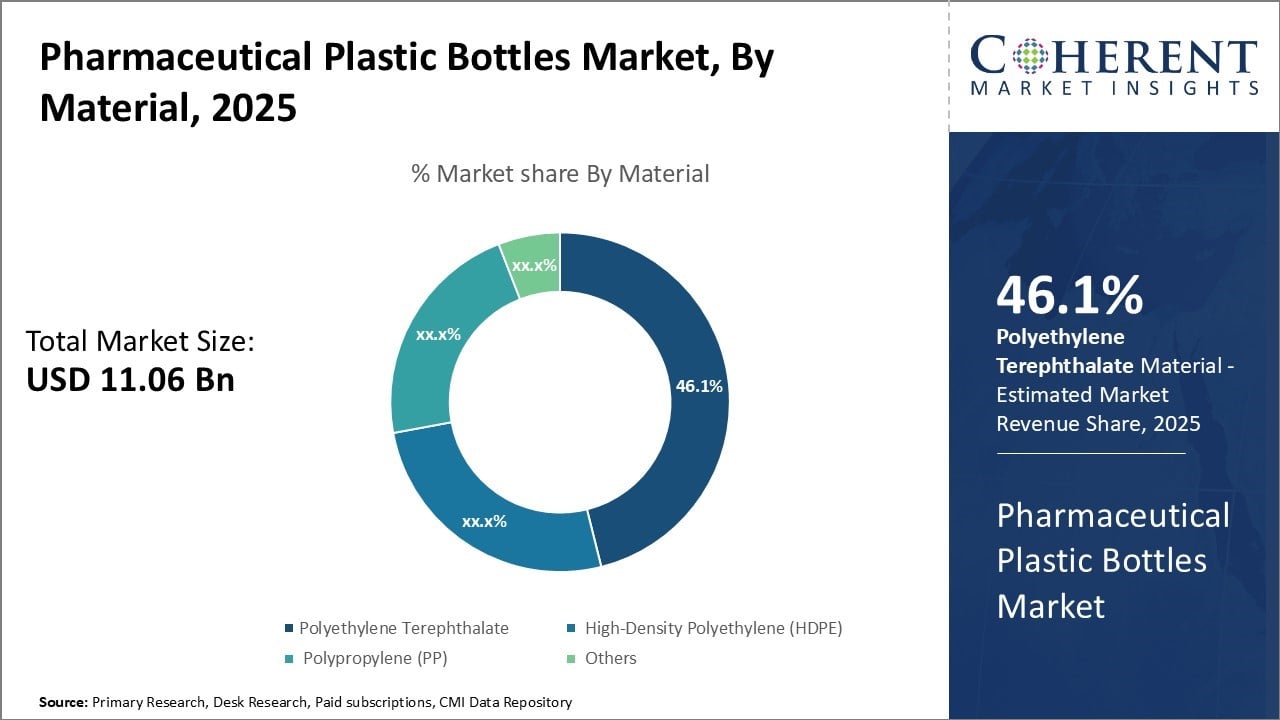
- By Material, Polyethylene Terephthalate (PET) segment is expected to contribute 47.1%share of the market in 2026, owing to its exceptional barrier properties and recyclability.
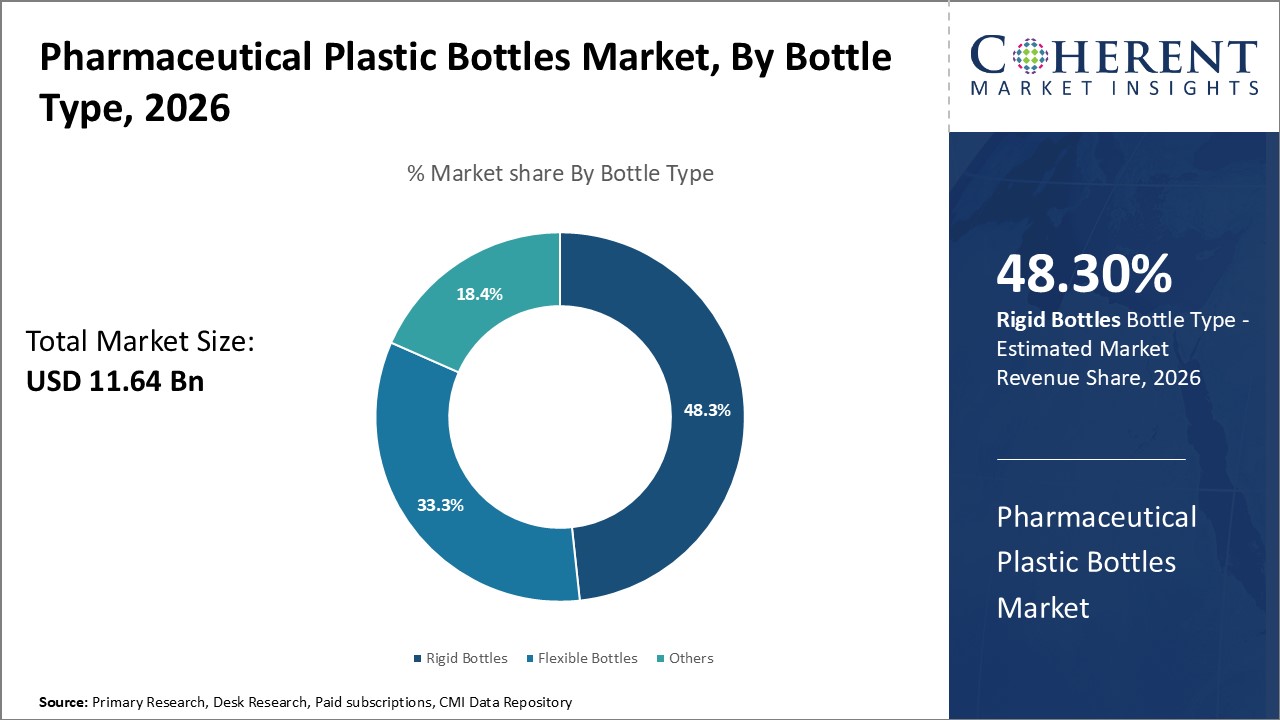
- By Bottle Type, Rigid Bottles segment is expected to contribute 48.3%share of the market in 2026, owing to their multi-purpose utility and tamper-evidence.
- By Application, Oral Medications segment is expected to contribute 50%share of the market in 2026, owing to users' preference and need for adherence.
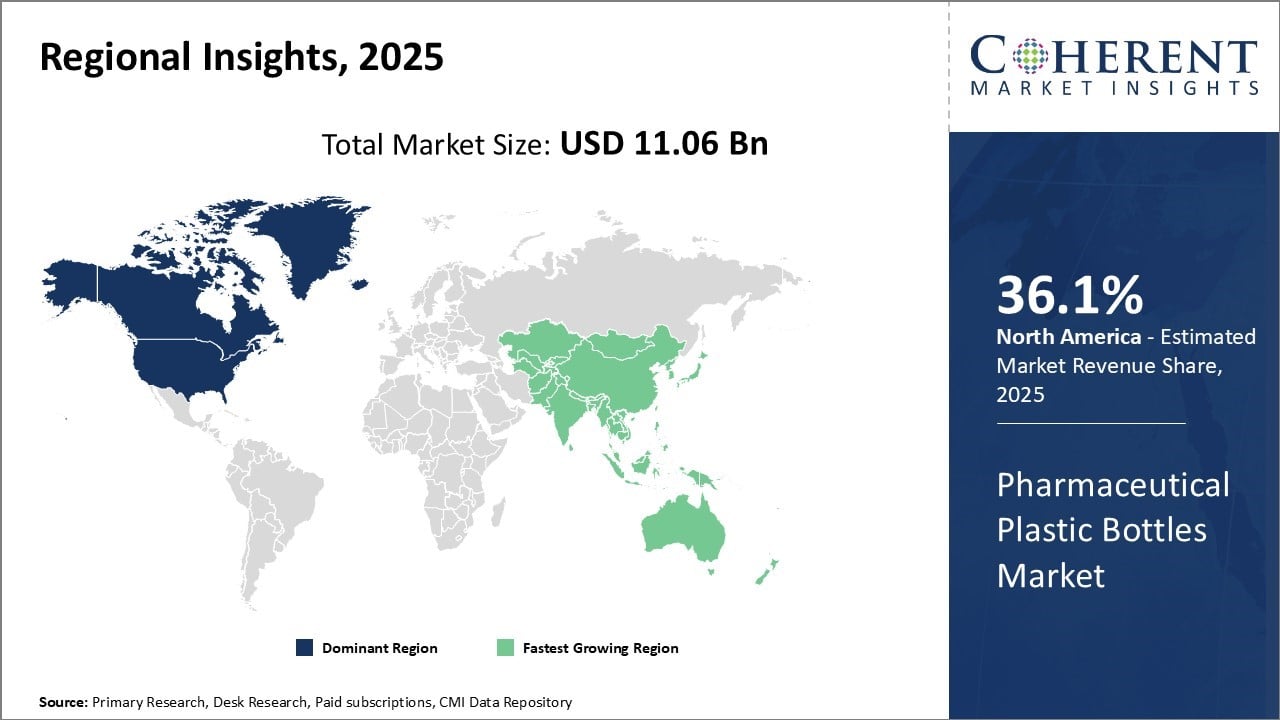
- By Region, North America acquired the prominent market share of 36.1% in 2026 owing to its Increasing Prevalence of Chronic Diseases.
Market Overview
Increasing healthcare spending across countries and rising demand for lightweight, safe, and tamper proof packaging from pharmaceutical companies has been driving the demand for pharmaceutical plastic bottles. Moreover, plastic as a material for pharmaceutical packaging offers benefits over other traditional materials like glass as plastic bottles are much lighter in weight and provide better protection to drugs from breakage. Plastic also acts as barrier to moisture, gas, and light, thereby increasing the shelf life of drugs. Rapid growth of pharmaceutical industry coupled with consumer preference for advanced packaging will continue supporting the market expansion for pharmaceutical plastic bottles.
Current Events and their Impact on the Pharmaceutical Plastic Bottles Market
Current Events | Description and its impact |
Global Regulatory Shifts on Single-Use Plastics |
|
Supply Chain Disruptions Due to Geopolitical Tensions |
|
Economic Trends Affecting Raw Material Pricing |
|
End-user Feedback and Unmet Needs in the Pharmaceutical Plastic Bottles Market
- Demand for Enhanced Child-Resistant Features: End users consistently request more effective child-resistant closures to prevent accidental ingestion. Current designs sometimes fail to provide adequate safety, prompting the need for innovations that combine ease of use for adults with robust protection for children.
- Need for Improved Sustainability: Consumers and healthcare providers express concerns about environmental impact. There is a growing demand for biodegradable and fully recyclable plastic bottles that reduce waste without compromising product safety or shelf life.
- Desire for Better Tamper-Evident Solutions: End users want packaging that clearly indicates tampering or contamination. Existing tamper-evident features can be difficult to detect or bypassed; driving calls for more reliable and visible tamper-proof designs.
- Current Industry Events of 2026
- Market Size Estimation
- Regional Breakdown
- Competitive Landscape
- Customer Intelligence
- Segmental Analysis
- Pricing Analysis
- Key Market Drivers, Challenges & Future Trends
- Customized Insights Section
Segmental Insights
Pharmaceutical Plastic Bottles Market Insights, By Material
Polyethylene Terephthalate (PET) contribute the highest share of the market owing to its lightweight and shatter-resistant
Polyethylene Terephthalate (PET) segment is expected to contribute 47.1% share of the market in 2026. PET provides excellent protection against permeation of oxygen, carbon dioxide, and moisture vapor, thus ensuring long shelf-life for packaged pharmaceutical products. Its high tensile strength and shatter resistance allows it to withstand fall impacts and bumps during transportation and storage. PET material is also lightweight yet sturdy, making it cost-effective for producers to transport larger volumes. For instance, in January 2025, Loop Industries, Inc., a clean technology company focused on advancing a circular plastics economy through the production of 100% recycled polyethylene terephthalate (PET) plastic and polyester fiber, partnered with Bormioli Pharma, a global leader in pharmaceutical packaging and medical devices, to unveil an innovative pharmaceutical packaging bottle. This new bottle, made entirely from virgin-quality Loop™ PET resin, will be showcased at the Bormioli booth, highlighting the companies’ commitment to sustainability and innovation in medical packaging. This is further propelling the pharmaceutical plastic bottles market share.
Pharmaceutical Plastic Bottles Market Insights, By Bottle Type
Rigid Bottle contribute the highest share of the market owing to its demand for biologics and injectable drugs
Rigid Bottles segment is expected to contribute 48.3% share of the market in 2026, owing to their multi-purpose utility and tamper-evidence. Rigid bottles keep pharmaceutical products safer and more potent than flexible pouches through effective barrier protection. Their sturdiness enables vertical storage without stacking concerns. The rigidity allows for precision dosing via integrated measuring cups or dropper caps. Additionally, rigid bottles provide better grips than flexible pouches for users of all ages and abilities. For instance, in April 2025, Coveris, a leading packaging manufacturer, launched SleeveFlexR Stretch, a new circular stretch sleeve solution containing up to 75% recycled content. In alignment with PPWR regulations, the company is increasing the use of post-consumer recycled (PCR) material in rigid plastic bottles, which may alter their appearance while enhancing sustainability. This is further adding to the pharmaceutical plastic bottles market revenue.
Pharmaceutical Plastic Bottles Market Insights, By Application
Oral Medication contribute the highest share of the market owing to its rising prevalence of chronic diseases
Oral Medications segment is expected to contribute 50% share of the market in 2026. For oral medications, plastic bottles facilitate reliable twice-daily or thrice-daily self-administration through straightforward dispensing regimes. Consumers appreciate bottles over blister packs for their intuitive dosing via dedicated cavities. The bottles' portability and direct observability of remaining quantity encourage treatment compliance.
Regional Insights
North America Pharmaceutical Plastic Bottles Market Trends
The North America pharmaceutical plastic bottles market is growing rapidly as manufacturers respond to the increasing demand for safe and sustainable packaging solutions. The rise in chronic diseases and an aging population drives the need for oral medication packaging. Companies are innovating with child-resistant and tamper-evident designs to improve patient safety. Additionally, regulatory requirements and environmental concerns encourage manufacturers to use recyclable materials like PET and HDPE. This shift toward lightweight, durable, and convenient packaging is actively shaping the market across the region. For instance, in May 2026, SC Johnson launched its first refill machine in North America at London Drugs, a Canadian retailer and drugstore. This initiative enables consumers to refill reusable bottles with hand or dish soap from popular brands like Method and Mrs. Meyer's Clean Day, promoting sustainability and reducing single-use plastic waste.
Asia Pacific Pharmaceutical Plastic Bottles Market Trends
Asian manufacturers are increasingly choosing PET plastic bottles because of their lightweight nature, low cost, and versatile designs. PET bottles comply with strict safety and quality standards, making them ideal for pharmaceutical packaging. The rise in chronic diseases and aging population in the Asia-Pacific region drives the demand for pharmaceuticals. This demographic change requires the use of efficient packaging solutions to ensure medicine stability, ease of use, and accurate dosing. For instance, in June 2026, PT Asia Pramulia, a plastic packaging manufacturer, has announced its plans to go public through an initial public offering (IPO) on the Indonesia Stock Exchange. The company will allocate 50% of the IPO proceeds to purchase new production machinery, which will enhance its packaging operations across various sectors, including beverages, food, paint, cosmetics, chemicals, pharmaceuticals, and utility support products.
United States Pharmaceutical Plastic Bottles Market Trends
Pharmaceutical makers in the United States are quickly integrating smart technologies such as QR codes, NFC chips, and temperature sensors into plastic bottles. These technologies enhance product traceability, prevent counterfeiting, and engage consumers by providing real-time information and personalized content. Rising safety concerns drive manufacturers to develop advanced child-resistant and tamper-evident packaging, improving closures and designs to prevent accidental ingestion while complying with regulations and building consumer trust. For instance, in June 2023, New York-based sustainable health care company Cabinet Health, known for developing a refillable and compostable medicine system, introduced its first nationwide pill bottle recycling program to tackle the issue of pharmaceutical plastic waste.
China Pharmaceutical Plastic Bottles Market Trends
China’s aging population is causing a rise in chronic diseases, which drives higher demand for pharmaceuticals. This demographic change requires manufacturers to use effective packaging techniques that ensure drug stability, ease of use, and accurate dosing. Pharmaceutical plastic bottles play a key role in meeting these standards. Chinese manufacturers increasingly prefer PET plastic bottles because they are lightweight, cost-effective, and versatile in design. PET bottles also meet strict safety and quality standards, making them ideal for pharmaceutical packaging. For instance, in July 2022, The Coca-Cola Company, after recently streamlining its brand portfolio by cutting over 200 products, introduced Self-Heal Spike, its first bottled Chinese herbal tea, as part of its effort to expand its healthy beverage offerings. This is further accelerating the pharmaceutical plastic bottles market growth.
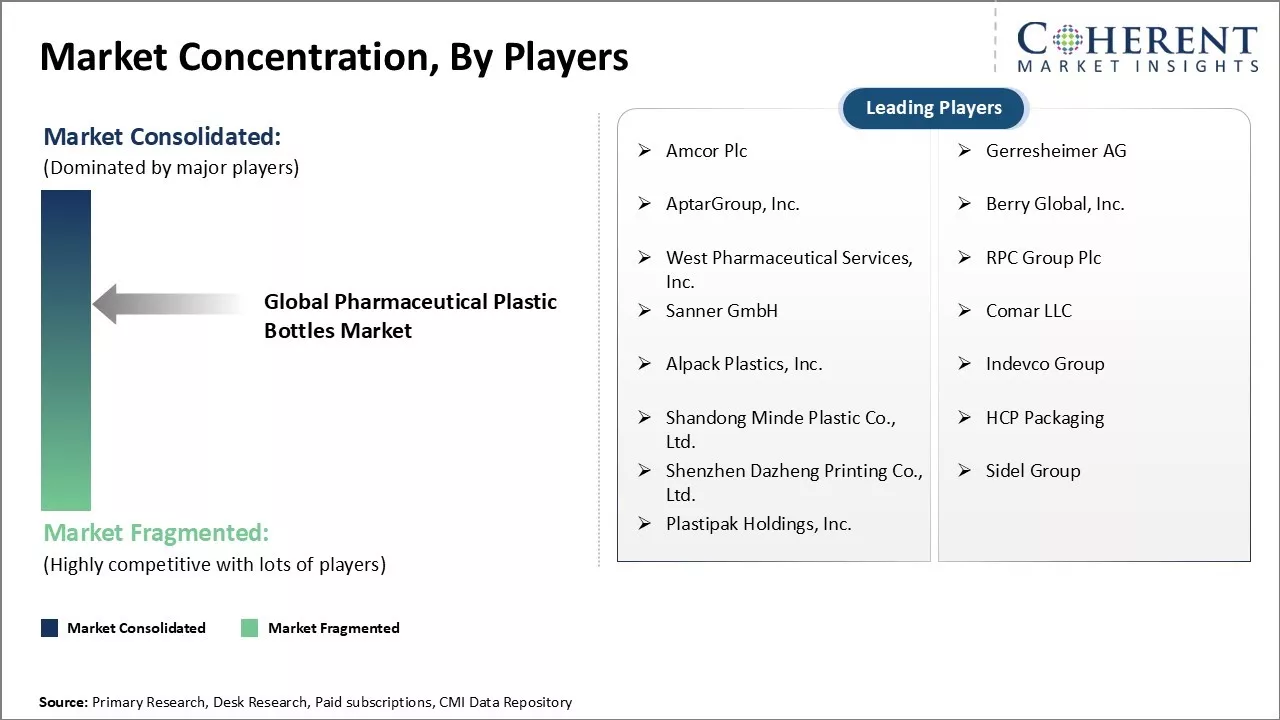
Market Concentration and Competitive Landscape
Pharmaceutical Plastic Bottles Market News
- In January 2025, West Pharmaceutical Services introduced Daikyo PLASCAP Ready-to-Use Validated (RUV) closures in a new nested format with multiple configuration options at this year’s Pharmapack event in Paris, France.
- In November 2024, UPM Biochemicals, Selenis, and Bormioli Pharma partnered to create the world’s first pharmaceutical bottles made from partially wood-based PET, setting a new benchmark for sustainability in pharmaceutical packaging.
- In October 2024, Berry Global, a leading packaging solutions provider, introduced a line of clarified polypropylene (PP) bottles for healthcare use. These bottles deliver improved sustainability and better product protection than traditional colored PET pill bottles.
Market Report Scope
Pharmaceutical Plastic Bottles Market Report Coverage
| Report Coverage | Details | ||
|---|---|---|---|
| Base Year: | 2025 | Market Size in 2026: | USD 11.64 Bn |
| Historical Data for: | 2020 To 2024 | Forecast Period: | 2026 To 2033 |
| Forecast Period 2026 to 2033 CAGR: | 5.2% | 2033 Value Projection: | USD 16.59 Bn |
| Geographies covered: |
| ||
| Segments covered: |
| ||
| Companies covered: | Amcor Plc, Gerresheimer AG, AptarGroup, Inc., Berry Global, Inc., West Pharmaceutical Services, Inc., RPC Group Plc, Sanner GmbH, Comar LLC, Alpack Plastics, Inc., Indevco Group, Shandong Minde Plastic Co., Ltd., HCP Packaging, Shenzhen Dazheng Printing Co., Ltd., Sidel Group, and Plastipak Holdings, Inc. | ||
| Growth Drivers: |
| ||
| Restraints & Challenges: |
| ||
Pharmaceutical Plastic Bottles Market Trend
Integration of Smart Packaging Technologies
Pharmaceutical companies are increasingly incorporating smart packaging features such as QR codes, NFC chips, and temperature sensors into plastic bottles. These technologies enhance product traceability by allowing real-time tracking throughout the supply chain and help combat counterfeiting by verifying authenticity. Additionally, smart packaging improves consumer engagement by providing personalized information and dosage reminders, ultimately promoting better medication adherence and safety. This trend reflects the industry's focus on innovation and leveraging digital tools to enhance packaging functionality.
Growing Demand for Child-Resistant and Tamper-Evident Packaging
Safety concerns are driving the pharmaceutical industry to prioritize child-resistant and tamper-evident packaging designs. Manufacturers are developing advanced closure systems that prevent accidental ingestion by children while remaining user-friendly for adults, especially seniors. Tamper-evident features provide visible signs if a package has been opened or altered, increasing consumer confidence and meeting stringent regulatory standards.
Pharmaceutical Plastic Bottles Market Opportunity
Expansion into Emerging Markets
Emerging economies in Asia-Pacific, Latin America, and Africa present significant growth opportunities for pharmaceutical plastic bottle manufacturers. Rising healthcare awareness, expanding medical infrastructure, and increasing government support for healthcare access are driving pharmaceutical demand in these regions. Companies can capitalize on this by offering cost-effective, locally tailored packaging solutions. Understanding regional regulatory requirements and consumer preferences will help businesses establish a strong foothold and cater to growing pharmaceutical production and distribution networks.
Analyst Opinion (Expert Opinion)
- The pharmaceutical plastic bottles market is undergoing a transformative phase driven by innovation and evolving regulatory landscapes, rather than mere volume growth. The decisive factor shaping this market will be the integration of smart packaging technologies that significantly enhance product security and patient adherence.
- Moreover, the market’s future hinges critically on sustainability innovations. The current reliance on PET and HDPE is challenged by increasing regulatory pressure, such as the EU’s Single-Use Plastics Directive and U.S. FDA guidelines encouraging recycled content. Leading players investing in bio-based polymers, such as BASF’s Ecovio, are setting a benchmark, signaling a shift from conventional plastics. Failure to adapt to these demands’ risks not only environmental backlash but also market exclusion, as hospitals and pharmacies increasingly mandate green packaging.
- Furthermore, the competitive edge will be gained by companies focusing on advanced child-resistant and tamper-evident solutions. With the U.S. Poison Control Center reporting over 50,000 pediatric medication exposures annually, innovations that balance stringent safety with ease of use are indispensable. West Pharmaceutical’s proprietary closures exemplify this balance, demonstrating that investment in R&D for safety features yields both regulatory approval and customer loyalty.
- Apart from this, regional dynamics cannot be overlooked. The U.S. and Europe remain innovation leaders; however, Asia-Pacific’s rapid pharmaceutical expansion demands localized packaging solutions. Indian manufacturers, for example, are pivoting toward affordable yet compliant plastic bottles, often partnering with global firms to meet stringent export requirements. This localized customization, paired with global standards compliance, will be a key differentiator in a fragmented and price-sensitive market.
Speak to the analyst
Want personalized insights?
Take the findings above to one of our principal consultants, or have the report rebuilt around the segments, geographies and competitors you actually track.
Market Segmentation
- Material Insights (Revenue, USD Bn, 2021 2033)
- Polyethylene Terephthalate (PET)
- High-Density Polyethylene (HDPE)
- Polypropylene (PP)
- Others
- Bottle Type Insights (Revenue, USD Bn, 2021 2033)
- Rigid Bottles
- Flexible Bottles
- Others
- Application Insights (Revenue, USD Bn, 2021 2033)
- Oral Medications
- Injectables
- Topical Applications
- Others
- Regional Insights (Revenue, USD Bn, 2021 2033)
- North America
- U.S.
- Canada
- Latin America
- Brazil
- Argentina
- Mexico
- Rest of Latin America
- Europe
- Germany
- U.K.
- Spain
- France
- Italy
- Russia
- Rest of Europe
- Asia Pacific
- China
- India
- Japan
- Australia
- South Korea
- ASEAN
- Rest of Asia Pacific
- Middle East
- GCC Countries
- Israel
- Rest of Middle East
- Africa
- South Africa
- North Africa
- Central Africa
- Key Players Insights (Revenue, USD Bn, 2021 - 2033)
- Amcor Plc
- Gerresheimer AG
- AptarGroup, Inc.
- Berry Global, Inc.
- West Pharmaceutical Services, Inc.
- RPC Group Plc
- Sanner GmbH
- Comar LLC
- Alpack Plastics, Inc.
- Indevco Group
- Shandong Minde Plastic Co., Ltd.
- HCP Packaging
- Shenzhen Dazheng Printing Co., Ltd.
- Sidel Group
- Plastipak Holdings, Inc.
Sources
Primary Research Interviews
- Pharmaceutical packaging manufacturers
- Packaging material suppliers
- Regulatory affairs specialists
- R&D scientists in pharmaceutical companies
- Healthcare providers and pharmacists
- Supply chain and logistics experts
Databases
- U.S. Food and Drug Administration (FDA) database
- European Medicines Agency (EMA) database
- China National Medical Products Administration (NMPA) database
- PubMed
- United Nations Comtrade Database
Magazines
- Packaging World
- Pharmaceutical Technology
- Drug Development & Delivery
- Packaging Digest
- Plastics News
Journals’
- Journal of Pharmaceutical Sciences
- International Journal of Pharmaceutics
- Packaging Technology and Science
- Journal of Controlled Release
- Journal of Pharmaceutical Innovation
Newspapers
- The Wall Street Journal (Healthcare Section)
- The New York Times (Health and Science)
- Financial Times (Pharmaceuticals)
- South China Morning Post (Business Section)
Associations
- International Society of Pharmaceutical Engineering (ISPE)
- Parenteral Drug Association (PDA)
- Packaging Machinery Manufacturers Institute (PMMI)
- Healthcare Packaging Association
- Society of Plastics Engineers (SPE)
Public Domain sources
- World Health Organization (WHO) reports
- United States Environmental Protection Agency (EPA) publications
- United Nations Environment Programme (UNEP) resources
- Government health ministry publications
- Patent databases (e.g., Google Patents)
Proprietary Elements
- CMI Data Analytics Tool, and Proprietary CMI Existing Repository of information for last 8 years
Get access to 250+ pages report
Every segment, forecast, competitor profile and data table behind the analysis above — available for instant download.
- ESOMAR Member
- ISO 9001:2015 Certified
- D-U-N-S Registered
- GDPR & CCPA Compliant
Missing comfort of reading report in your local language? Find your preferred language:
Transform your Strategy with Exclusive Trending Reports
Frequently Asked Questions
The Pharmaceutical Plastic Bottles Market is estimated to be valued at USD 11.64 Bn in 2026, and is expected to reach USD 16.59 Bn by 2033.
The CAGR of the Pharmaceutical Plastic Bottles Market is projected to be 5.2% from 2026 to 2033.
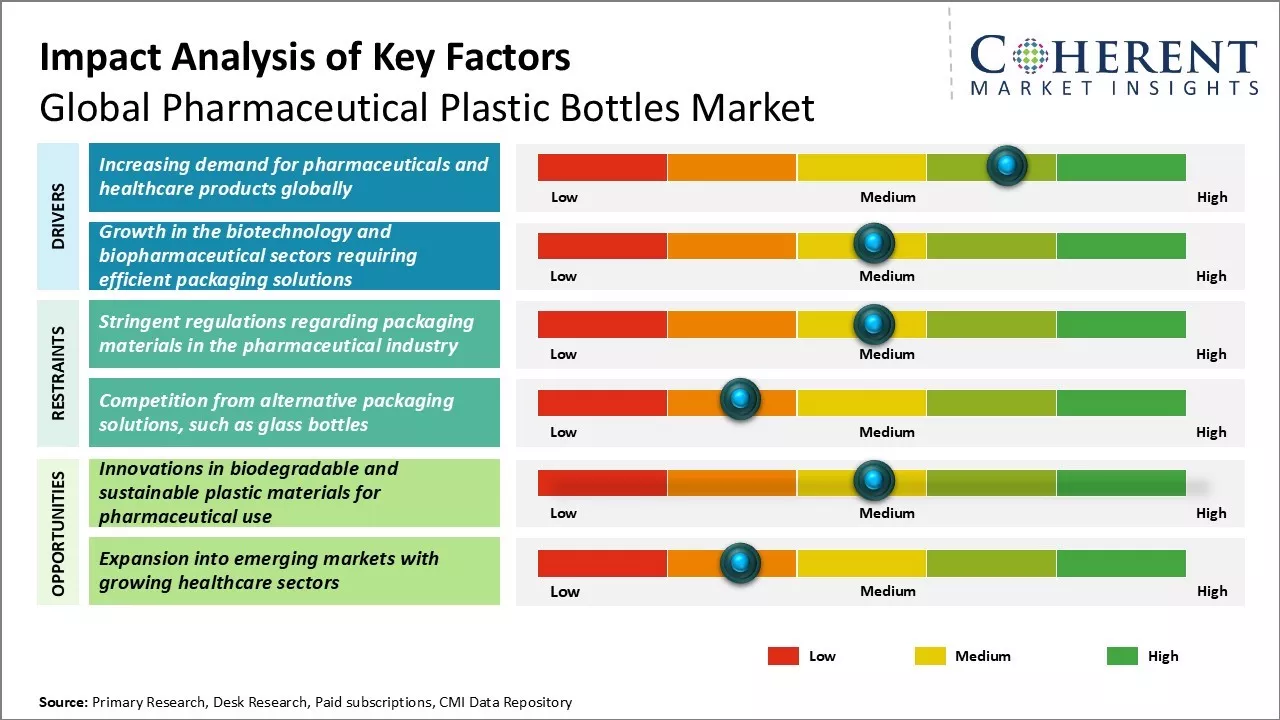
Increasing demand for pharmaceuticals and healthcare products globally and growth in the biotechnology and biopharmaceutical sectors requiring efficient packaging solutions are the major factors driving the global market for pharmaceutical plastic bottles.
Stringent regulations regarding packaging materials in the pharmaceutical industry and competition from alternative packaging solutions, such as glass bottles are the major factors hampering the global market for pharmaceutical plastic bottles.
In terms of material, Polyethylene Terephthalate (PET) is estimated to dominate the market revenue share in 2026.
Amcor Plc, Gerresheimer AG, AptarGroup, Inc., Berry Global, Inc., West Pharmaceutical Services, Inc., RPC Group Plc, Sanner GmbH, Comar LLC, Alpack Plastics, Inc., Indevco Group, Shandong Minde Plastic Co., Ltd., HCP Packaging, Shenzhen Dazheng Printing Co., Ltd., Sidel Group, and Plastipak Holdings, Inc. are the major players.
North America is expected to lead the global pharmaceutical plastic bottles market in 2026.