

Cling Films Market Analysis & Forecast: 2026-2033
Cling Films Market is estimated to be valued at USD 13,694.5 Mn in 2026 and is expected to reach USD 19,489.0 Mn in 2033, exhibiting a compound annual growth rate (CAGR) of 5.2% from 2026 to 2033.
Key Takeaways
- By Material Type, Polyethylene segment is estimated to have a 37.2% stake in the global market in 2026.
- Regionally, Europe is projected to account for 34.05% of the global Cling Film Market by 2026. The region's well-established retail sector, stringent food safety regulations, and growing preference for sustainable packaging solutions are key drivers of market growth.
Market overview
Increasing demand for easy-to-handle, hygienic, and convenient packaging solutions is significantly contributing to the rising demand for cling films. This shift toward flexible and efficient packaging is driven by increasing hygiene standards and the need for practical storage options. Key factors propelling market growth include advancements in material science and packaging technologies, as well as the growing recognition of cling films as a vital global solution for ensuring food safety and product preservation.
For instance, in 2024, leading packaging manufacturer named Berry Global made his latest Eco Fresh ™ Bio cling films, which contained increased breathing, livestock manure and anti-fog techniques to improve food's visibility and freshness. The launch represents major changes to environmentally friendly, travel-tire and consumer-sensitive packaging solutions.
Current Events and Its Impact
Current Event | Description and its impact |
Rise in Packaged Food Consumption |
|
Sustainability Regulations and Green Packaging Trends |
|
Price Analysis: cling films Market
- Polyethylene: Polyethylene cling films usually come within the cheapest price range because of their widely used and cost-effective production processes. Prices usually range from USD 1.50 to USD 5 per roll depending on thickness, length and quality.
- Oriented polypropylene (BOP): BOP cling films are slightly more expensive than polyethylene, ranging from USD 3 to USD 10 per roll. This is due to their better clarity, glossy properties, and further treatment stages required during production. These films are usually used for high-quality food packaging and consumables.
- PVC (polyvinyl chloride): PVC films are more expensive than polyethylene and BOP, usually USD 5 is at USD priced between 12 per roll. The award is inspired by their excellent clarity, stretches, and the opportunity to provide a strong, airtight seal, as they are ideal for both food and medical packaging.
- PVDC (Polyvinylidene Chloride): PVDC films are the most expensive in the cling films market, with prices from $ 10 to USD 20 per roll. Their better obstacle properties, resistance to moisture, oxygen and aroma leakage, make them highly in demand in packaging of sensitive food and pharmaceutical products.
- Current Industry Events of 2026
- Market Size Estimation
- Regional Breakdown
- Competitive Landscape
- Customer Intelligence
- Segmental Analysis
- Pricing Analysis
- Key Market Drivers, Challenges & Future Trends
- Customized Insights Section
Market Dynamics
Growing awareness around consumer safety and environmental sustainability is transforming the cling film market. By March 2019 report the US-based Forcetia Foundation emphasized the importance of using safe materials in food packaging, noting that consumers effectively consume both the food and the substances it comes into contact with. Consequently, packaging materials are increasingly being evaluated with the same level of safety scrutiny as the food products themselves.
In May 2024, Washington State implemented an expanded ban on food packaging containing intentionally added per- and polyfluoroalkyl substances (PFAS). This legislation prohibits the manufacture, sale, and distribution of various fresh food packaging products, including wraps, plates, food boats, pizza boxes, bags, bowls, and clamshell containers, if they contain PFAS. The law aims to reduce PFAS contamination in the environment and minimize human exposure through food contact materials.
The regulatory focus on eliminating harmful chemicals from food packaging has intensified in recent years. This is evident in legislative actions such as California’s Assembly Bill 1200, signed in October 2023, and more recently, Assembly Bill (AB) 347, signed into law by Governor Gavin Newsom on September 29, 2024. AB 347 directs the Department of Toxic Substances Control (DTSC) to enforce a ban on the use of per- and polyfluoroalkyl substances (PFAS) in food packaging made from plant-based fibres.
Cling Films Market Opportunities: Bio-based Cling Films Market and Medical Sector
The increasing use of bio -based Cling films for permanent food packaging design service is expected to create attractive opportunities in the market. Rising concern about the health risk associated with the use of synthetic films increases the demand for bio-based alternatives.
In addition, the increasing demand for cling films in the medical field for packaging medical products is estimated to offer significant development opportunities. The need to ensure product safety and maintain the integrity of medical objects increases the demand for packaging materials with high damping as Cling films. These films guarantee safety and sterility while understanding extreme temperature, humidity, pollution and bacteria.
Segmental Insights
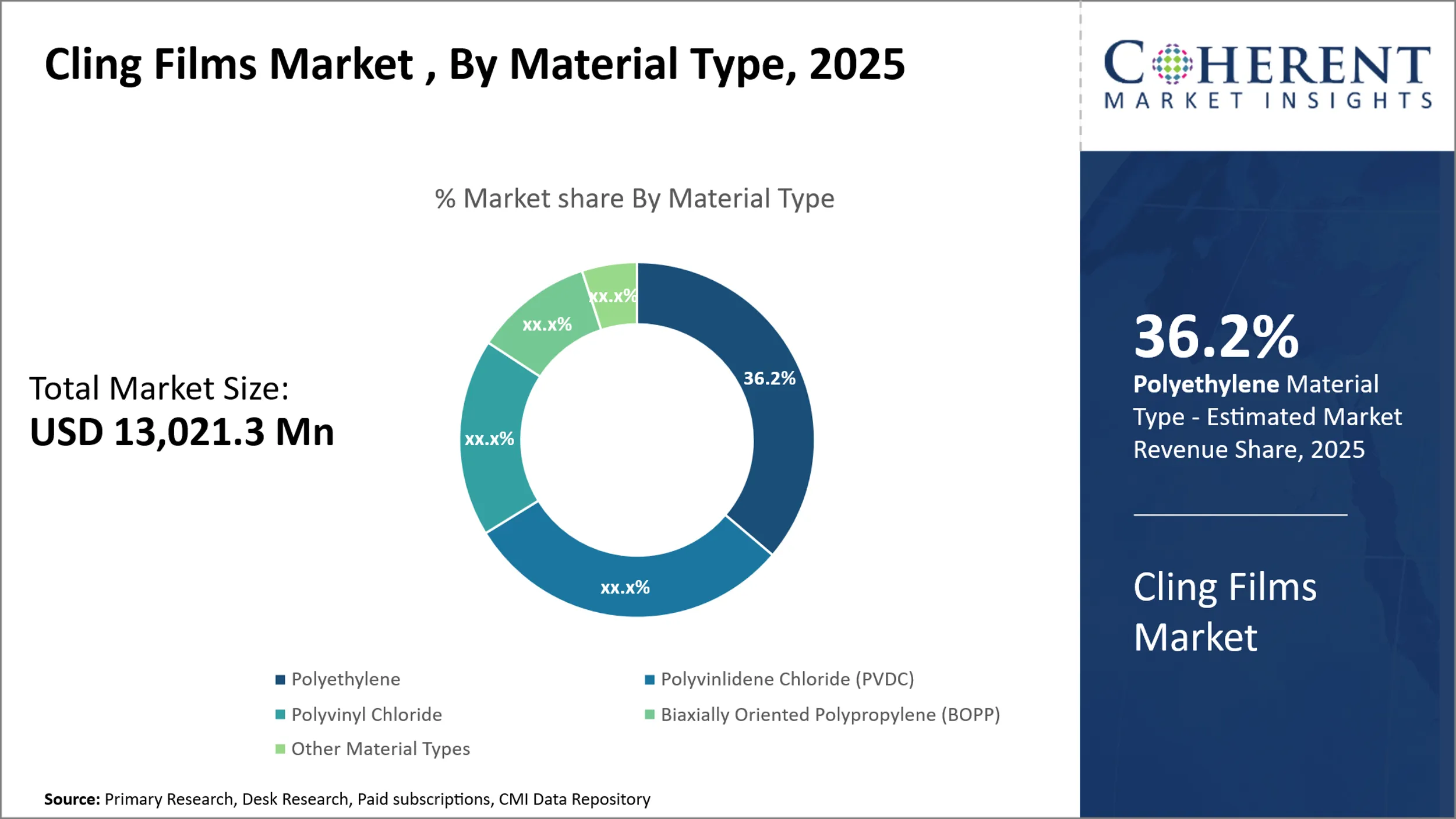
Global Cling Films Market Insights, by Material Type- Polyethylene Dominates Due to Superior Barrier and Handling Properties
Polyethylene, including LDPE and LLDPE, remains the most widely used material in cling films owing to its excellent tear resistance, flexibility, and barrier performance. It is favoured in both food and industrial packaging for maintaining freshness and preventing contamination. BOPP is also gaining momentum for its clarity and shine, enhancing product visibility in retail applications.
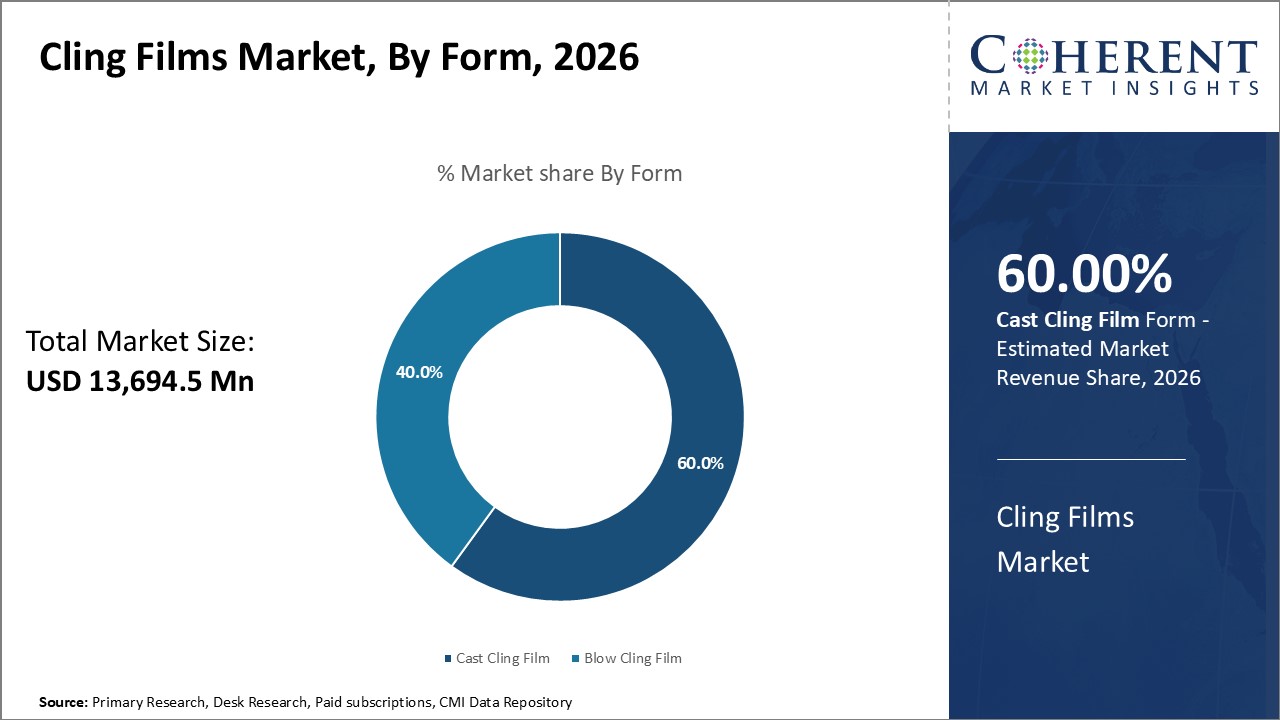
Global Cling Films Market, Insights by Form- Cast Cling Films Lead Owing to Superior Stretch ability and Transparency
Cast cling films hold a major market share because of their high clarity, consistent thickness, and better cling properties, making them suitable for food wrapping and pallet unitization. Blown cling films are also experiencing increased demand, especially in heavy-duty packaging, due to their superior puncture resistance and load-holding capabilities.
Global Cling Films Market Insights, by End-User Industry- Food Industry Drives Growth Due to High Demand for Safe and Hygienic Packaging
The food segment dominates the cling film market as these films are extensively used to wrap fresh produce, meat, and bakery items, ensuring freshness and reducing spoilage. The healthcare industry is also emerging as a key segment, with cling films used for the secure packaging of sterile instruments and medical supplies.
Regional Insights
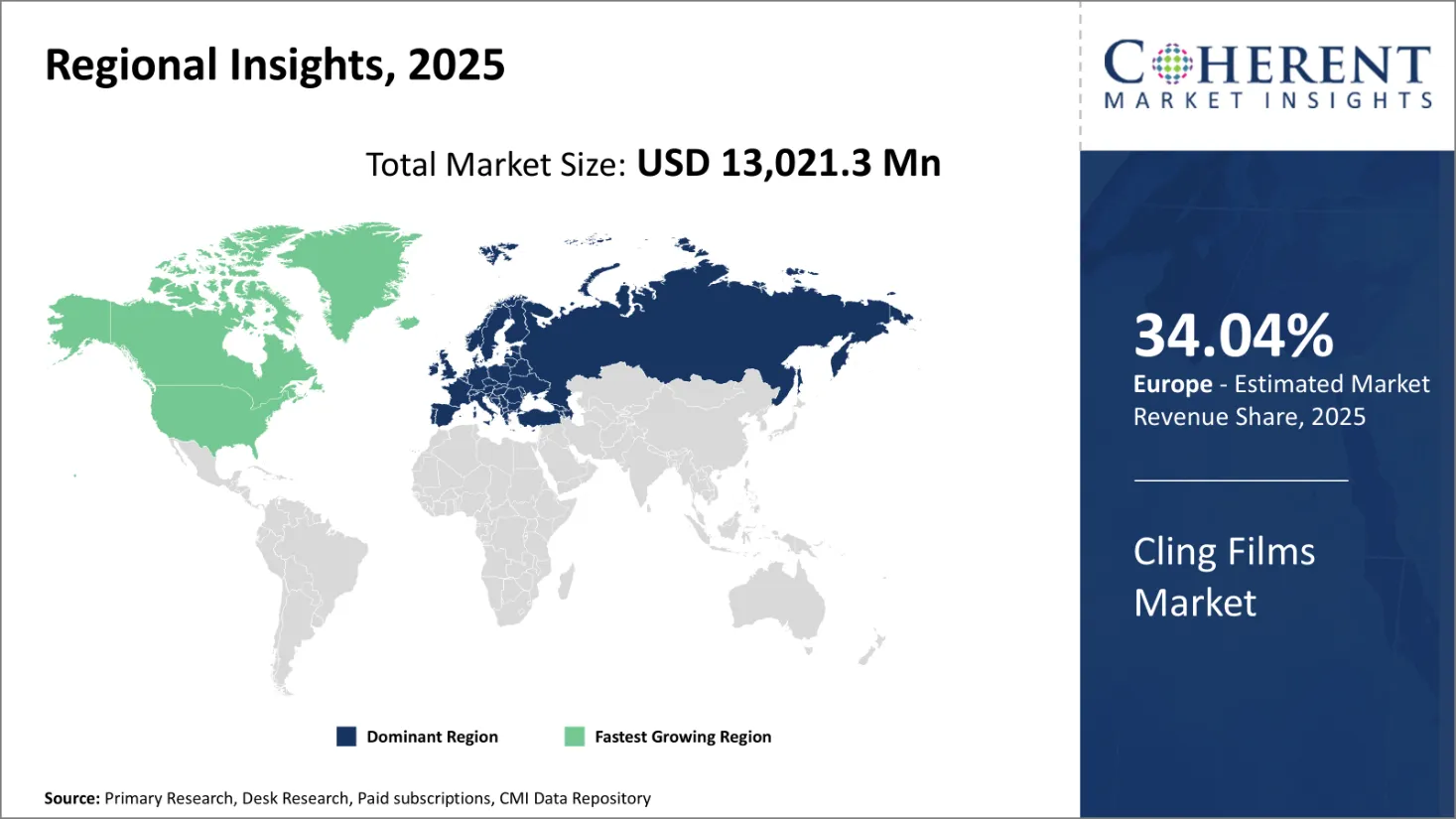
North America Cling Films Market Analysis and Trends
Regionally, North America is expected to hold the largest share of the global cling film market. This growth is primarily fuelled by increased healthcare investments and a rising demand for ready-to-eat and packaged food products, which rely on cling films for secure and sanitary packaging. The increase in this sector is primarily motivated by an increase in health care investments and increases the demand for finished food products.
Asia Pacific Cling Films Market Analysis and Trends
Asia Pacific is also expected to experience sufficient growth during the forecast period. The region's market is expected to benefit from the growing demand for hygiene and clear foods, which is the most important driver for the development of the film market for cling films. In addition, the growth of online retail platforms is estimated to offer a wide range of alternatives to consumers. In addition, the increasing incidence of health problems among consumers is likely to promote the demand for food packaging.
Cling Films Market Dominating Countries:
United States Cling Films Market Analysis and Trends
The United States plays a significant role in the global cling film market. Its strong food industry, combined with the growing demand for ready-to-eat and processed foods, makes it a major consumer of cling film. Additionally, the country's advanced healthcare system drives demand for medical product packaging, which also relies on cling films for hygiene and safety. The rising preference for convenient food packaging, especially in fast-paced urban lifestyles, further contributes to the continued growth in cling film demand.
Canada Cling Films Market Analysis and Trends
Canada contributes significantly to the North American cling film market. The country's focus on convenience in hygiene and packaging, especially in the food industry, has increased the demand for cling film. With a growing trend towards permanent packaging solutions, the quality-conscious consumer base in Canada actively transfers to environmentally friendly fastening films.
Market Report Scope
Cling Films Market Report Coverage
| Report Coverage | Details | ||
|---|---|---|---|
| Base Year: | 2025 | Market Size in 2026: | USD 13,694.5 Mn |
| Historical Data for: | 2020 To 2024 | Forecast Period: | 2026 To 2033 |
| Forecast Period 2026 to 2033 CAGR: | 5.2% | 2033 Value Projection: | USD 19,489.0 Mn |
| Geographies covered: |
| ||
| Segments covered: |
| ||
| Companies covered: | 3M, ADEX Srl, Alliance Plastics, All American Poly, Amcor plc, Anchor Packaging, Berry Global Inc., Deriblok SpA, HIPAC SpA, Inteplast Group, Intertape Polymer, ITS BV, Jindal Poly Films, Malpack, Mitsubishi Chemicals Corporation, Nan Ya Plastics, Novamont, Paragon Films, Sigma Plastics, and Technovaa | ||
| Growth Drivers: |
| ||
| Restraints & Challenges: |
| ||
Analyst Viewpoint – Cling Films Market
- The global cling film market is primarily driven by growing consumer demand for convenient, hygienic, and effective food preservation solutions. As awareness around food waste and the importance of extending food shelf-life increases, cling films have emerged as a practical option for maintaining freshness. Factors such as rapid urbanization, hectic lifestyles, and the rising consumption of ready-to-eat foods further fuel this demand, as consumers seek quick and efficient methods for food storage.
- The food industry and health services primarily use Cling film, especially for packaging, conservation, and safety purposes. In the food industry, cling films are widely used to keep their food fresh, prevent pollution and expand durability. In the health care system, Cling films play an important role in packaging and sterilization of medical products. Both fields benefit from the versatility and functionality of the Cling Films, making them an important component of daily operations.
- North America is still an important area in the cling film market, which is inspired by the strong presence of major manufacturers, the high demand for food packaging, and the improvement of environmentally friendly packaging solutions. Meanwhile, Asia Pacific is expected to demonstrate the fastest growth due to rapid urbanization, an increasing middle-class population, and an increase in the demand for hygienic food packaging.
Speak to the analyst
Want personalized insights?
Take the findings above to one of our principal consultants, or have the report rebuilt around the segments, geographies and competitors you actually track.
Cling films Market: Major Development
- In June 2025, UK packaging distributor Kite Packaging launched a new budget-friendly stretch film that delivers excellent performance at a competitive price.
- In April 2025, Dole Food Company launched an expanded commercial use of Oxifilm®—a cutting-edge, macro-perforated, 100% recyclable stretch film—across its banana and pineapple operations in Latin America, marking another significant step in its sustainability journey.
Market Segmentation
- Global Cling Films Market, By Material Type (Revenue, USD Mn, 2021 - 2033)
- Polyethylene
- Biaxially Oriented Polypropylene
- PVC
- PVDC
- Other Material Types
- Global Cling Films Market, By Form (Revenue, USD Mn, 2021 - 2033)
- Cast Cling Film
- Blow Cling Film
- Global Cling Films Market, By End User Industry (Revenue, USD Mn, 2021 - 2033)
- Food
- Healthcare
- Consumer Goods
- Industrial
- Other End User Industries
- Global Cling Films Market By Geography (Revenue, USD Mn, 2021 - 2033)
- North America
- U.S.
- Canada
- Latin America
- Brazil
- Argentina
- Mexico
- Rest of Latin America
- Europe
- Germany
- U.K.
- Spain
- France
- Italy
- Russia
- Rest of Europe
- Asia Pacific
- China
- India
- Japan
- Australia
- South Korea
- ASEAN
- Rest of Asia Pacific
- Middle East
- GCC Countries
- Israel
- Rest of Middle East
- Africa
- South Africa
- North Africa
- Central Africa
- Company Profiles
- 3M,
- ADEX Srl
- Alliance Plastics
- All American Poly
- Amcor plc
- Anchor Packaging
- Berry Global Inc
- Deriblok SpA
- HIPAC SpA
- Inteplast Group
- Intertape Polymer
- ITS BV
- Jindal Poly Films
- Malpack, Mitsubishi Chemicals Corporation
- Nan Ya Plastics
- Novamont
- Paragon Films
- Sigma Plastics
- Technovaa
Sources
The Stakeholders Consulted
- Manufacturers and suppliers of cling film materials
- Producers of bio-based packaging solutions
- Food packaging companies and end-users across the food industry
- Healthcare packaging professionals
- Regulatory bodies overseeing packaging standards
- Environmental sustainability advisors and consultants
- Retailers and distributors of packaging materials
- Industry experts and market analysts in packaging and sustainability
Databases Opened
- International Packaging Association (IPA) – Industry and Packaging Data
- U.S. Food and Drug Administration (FDA) – Packaging and Food Safety Reports
Magazines & Trade Publications
- Packaging World Magazine
- Flexible Packaging Magazine
- Food Packaging Forum
- Packaging Europe Magazine
- The Packaging News
- Plastics Today – Packaging Section
Scientific and Industry Journals
- Journal of Packaging Technology and Research
- International Journal of Food Science and Technology
- Journal of Materials Science: Materials in Electronics
- Polymer Degradation and Stability Journal
- Packaging Technology and Science
Newspapers & Media Outlets
- The Wall Street Journal – Packaging and Sustainability News
- Bloomberg – Packaging Industry Trends
- Reuters – Global Packaging and Environmental Policies
- Packaging Digest – Industry Insights
- Business Standard – Sustainable Packaging and Market Development
Associations and Regulatory Bodies
- International Packaging Association (IPA)
- U.S. Food and Drug Administration (FDA) – Packaging Regulations
- European Commission – Packaging and Waste Regulations
- Environmental Protection Agency (EPA) – Sustainable Packaging Guidelines
- Food and Drug Administration (FDA) – Food Safety and Packaging Regulations
Public Domain Sources
- U.S. Environmental Protection Agency (EPA) – Packaging Waste and Recycling Reports
- European Commission – Waste Management and Packaging Reports
- World Economic Forum – Circular Packaging Solutions Reports
- United Nations Environment Programme (UNEP) – Global Plastic Waste Reports
Proprietary Research Elements
- CMI Data Analytics Tool
- Proprietary CMI Repository of Market Data (covering past 8 years)
- CMI Expert Interviews and Transcripts (focused on food packaging, sustainability, and material science)
Get access to 250+ pages report
Every segment, forecast, competitor profile and data table behind the analysis above — available for instant download.
- ESOMAR Member
- ISO 9001:2015 Certified
- D-U-N-S Registered
- GDPR & CCPA Compliant
Missing comfort of reading report in your local language? Find your preferred language:
Transform your Strategy with Exclusive Trending Reports
Frequently Asked Questions
The global Market is estimated to be valued at USD 13,694.5 Mn in 2026, and is expected to reach USD 19,489.0 Mn by 2033.
The CAGR of the Cling Films industry is projected to be 5.2% from 2026 to 2033.
Increasing demand for hygienic food packaging and growing preferences for packaged food are fuelling the market.
The polyethylene segment is the leading component segment in the market.
High maintenance cost and strict global regulation pertaining to use of plastic packaging are the major factors restraining the market.
3M, ADEX Srl, Alliance Plastics, All American Poly, Amcor plc, Anchor Packaging, Berry Global Inc., Deriblok SpA, HIPAC SpA, Inteplast Group, Intertape Polymer, ITS BV, Jindal Poly Films, Malpack, Mitsubishi Chemicals Corporation, Nan Ya Plastics, Novamont, Paragon Films, Sigma Plastics, and Technovaa