

Global HSV Testing Market Size and Forecast – 2026 - 2033
The Global HSV Testing Market is estimated to be valued at USD 682.9 Mn in 2026 and is expected to reach USD 1047.3 Mn by 2033, exhibiting a compound annual growth rate (CAGR) of 6.3% from 2026 to 2033. This growth reflects increasing awareness about herpes simplex virus infections, advancements in diagnostic technologies, and expanding healthcare infrastructure worldwide, driving higher demand for reliable and rapid HSV testing solutions.
Key Takeaways of the global HSV testing market
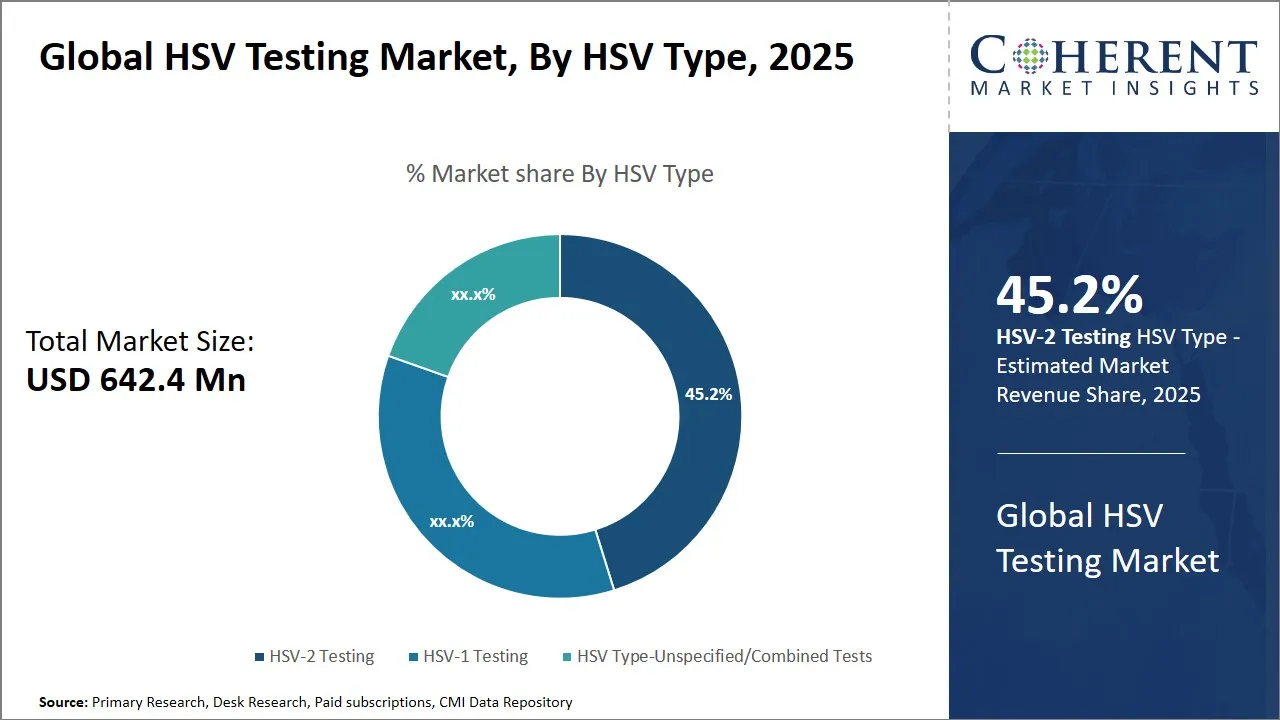
- In 2026, HSV-2 testing is expected to capture the largest share of the global HSV testing market, accounting for 46.2 %.
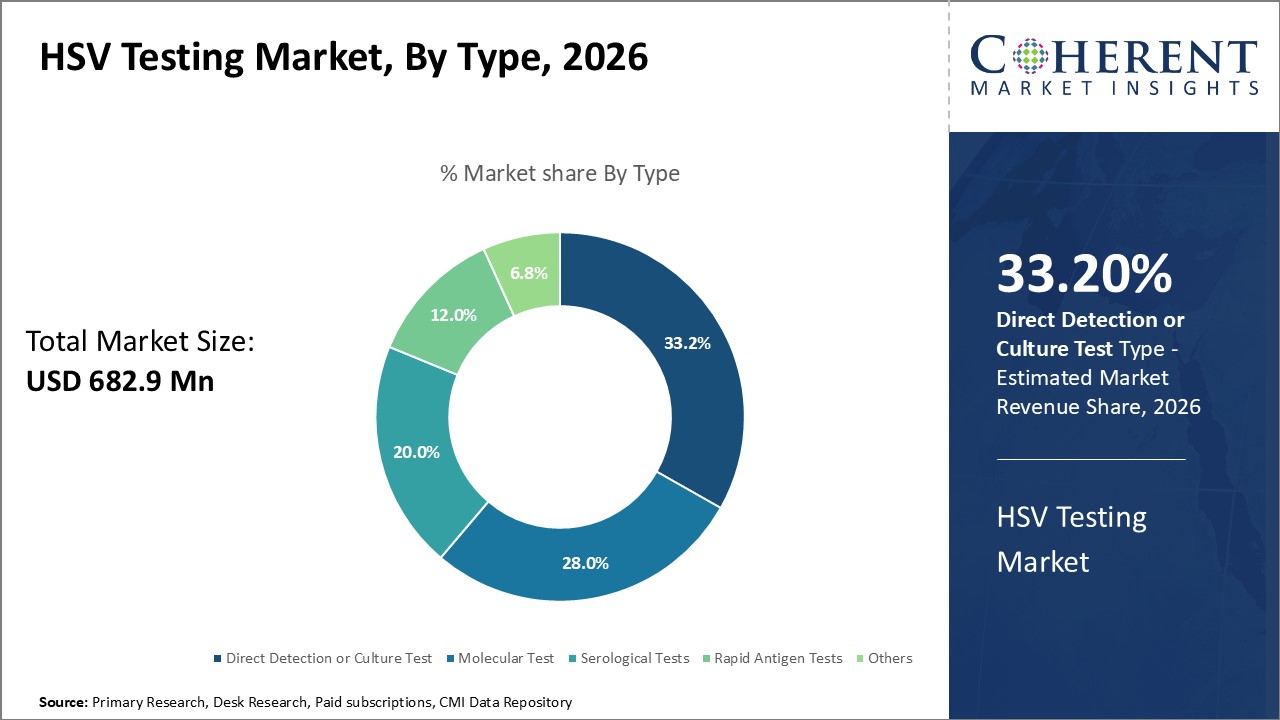
- In terms of test type, direct detection or culture tests, particularly viral culture methods, lead the market with a share of 33.2 % in 2026.
- Regarding sample type, blood, serum, and plasma specimens will dominate the global HSV testing market, holding a share of 34.4 % in 2026.
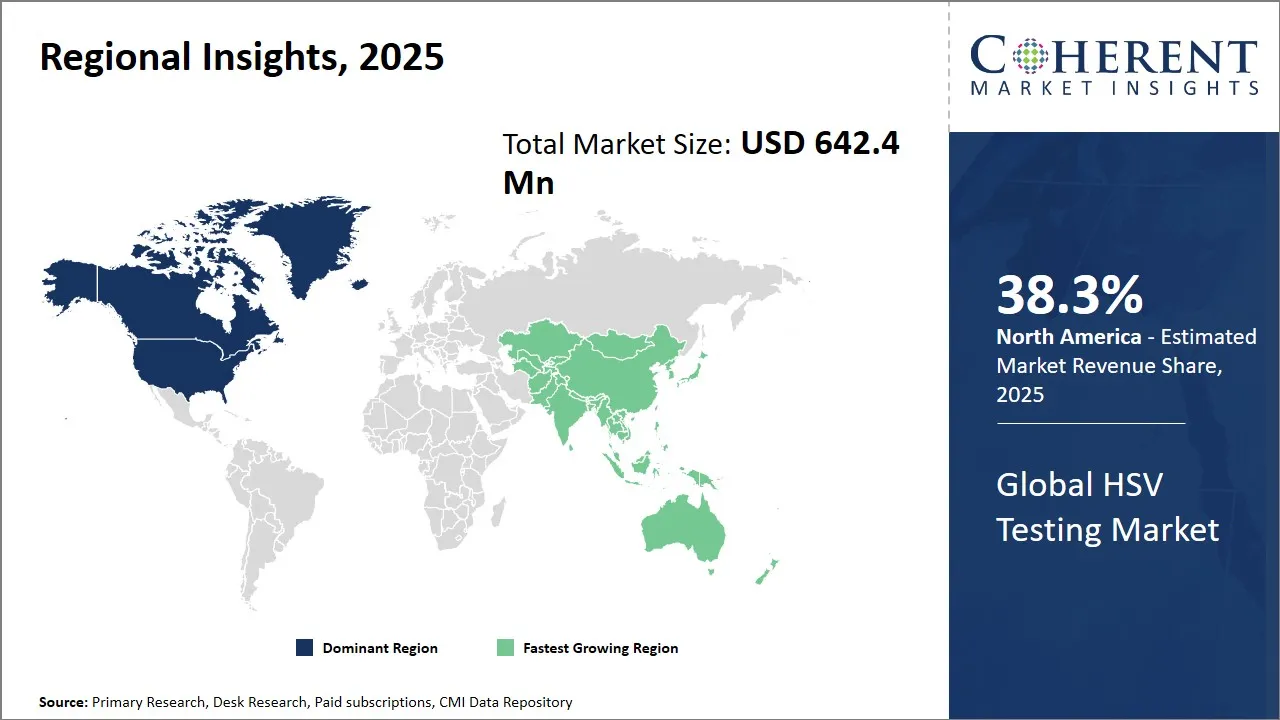
- North America is expected to lead the market, holding a share of 38.3 % in 2026. Asia Pacific is anticipated to be the fastest-growing region, with a market share of 25.2% in 2026.
Market Overview
Key market trends highlight the rising adoption of point-of-care testing kits and the integration of advanced molecular diagnostic techniques, such as PCR, which offer improved accuracy and faster results. Additionally, growing emphasis on early diagnosis and management of sexually transmitted infections is prompting healthcare providers to invest more in HSV testing. The increasing prevalence of HSV infections, coupled with government initiatives promoting sexual health awareness, further propels market expansion during the forecast period.
Current Events and Its Impact
Current Events | Description and its impact |
Increased Global STI Awareness Campaigns |
|
Adoption of AI-Powered Diagnostic Platforms |
|
Segmental Insights
- Current Industry Events of 2026
- Market Size Estimation
- Regional Breakdown
- Competitive Landscape
- Customer Intelligence
- Segmental Analysis
- Pricing Analysis
- Key Market Drivers, Challenges & Future Trends
- Customized Insights Section
HSV Testing Market Insights, By HSV Type - HSV-2 Testing Dominates with High Clinical Significance and Diagnostic Demand
In terms of HSV type, HSV-2 testing is projected to hold the largest share of the global HSV testing market with 46.2% in 2026 primarily due to the virus's significant clinical and epidemiological implications. HSV-2 is the leading cause of genital herpes, a persistent and highly prevalent sexually transmitted infection (STI) worldwide. The high incidence and recurrent nature of HSV-2 infections drive the demand for accurate diagnosis and ongoing management. Unlike HSV-1, which often presents as orolabial herpes and has a generally milder clinical course, HSV-2 infections are more frequently associated with recurrent genital lesions and complications such as neonatal herpes and increased susceptibility to HIV transmission. BioNTech
Further contributing to the dominant share of HSV-2 testing is increased public health focus on sexually transmitted infections. Many health authorities globally prioritize screening programs for HSV-2, especially among high-risk groups like sexually active young adults, immunocompromised individuals, and pregnant women. Early detection via HSV-2 specific testing helps in counseling patients about transmission risk reduction and informing antiviral therapy decisions, which collectively curtail the spread of the virus.
In December 2022, BioNTech SE, a global leader in mRNA-based therapies, initiated a Phase 1 trial for its HSV-2 vaccine candidate, BNT163, aimed at preventing genital lesions caused by HSV-2. This marks the first vaccine from BioNTech’s mRNA collaboration with the University of Pennsylvania to enter clinical trials.
HSV Testing Market Insights, By Type - Direct Detection or Culture Tests Lead Owing to Their Diagnostic Reliability and Clinical Preference
In terms of test type, direct detection or culture tests, particularly viral culture methods, with an estimated share of 33.2% in 2026, dominate the HSV testing market due to their high diagnostic reliability and established clinical acceptance. Viral culture is regarded as a gold standard especially for diagnosing active HSV infections presenting with visible lesions. This method’s ability to isolate live virus enables definitive diagnosis and assists clinicians in confirming HSV infection actively causing symptoms, which is vital for timely and targeted patient management.
The clinical preference for viral culture is reinforced by its utility in assessing antiviral susceptibility and viral load, which other test types cannot provide as effectively. Especially in cases of treatment failure or atypical presentations, culture tests reveal phenotypic variations helping guide therapeutic adjustments. This capability is crucial in managing chronic or severe HSV infections, therefore encouraging widespread use in hospital and specialized laboratory settings.
HSV Testing Market Insights, By Sample Type - Blood/Serum/Plasma Samples Capture the Largest Share Due to Non-Invasive Accessibility and Broad Applicability
With respect to sample type, blood, serum, and plasma specimens account for the largest share within the global HSV testing market with an estimated share of 34.4% in 2026. This predominance is largely attributed to the non-invasive nature of blood collection and its wide applicability across multiple HSV testing methodologies, especially serological assays that detect antibodies against HSV-1 and HSV-2. Since serology relies on the immune response rather than direct viral detection, blood-derived samples become the specimen of choice in screening asymptomatic individuals and in epidemiological surveillance programs.
The accessibility and routine nature of blood collection during medical examinations facilitate integration of HSV testing into broader health check-ups and STI screening panels. Blood draws are widely accepted by patients and healthcare providers, supporting extensive testing coverage. Furthermore, blood-based HSV tests play a pivotal role in identifying past exposure and latent infections, which is not feasible through lesion swabbing or other direct detection techniques. This factor is critical in counseling patients on transmission risks and in prenatal screening to identify women at risk of transmitting HSV to newborns.
Regional Insights
North America HSV Testing Market Analysis and Trends
North America’s dominance in the global HSV testing market with share of 38.3% in 2026 can be attributed to the well-established healthcare infrastructure, high prevalence of HSV infections, and strong government initiatives supporting early diagnosis and disease management. The presence of robust reimbursement frameworks and widespread healthcare awareness drives demand for advanced diagnostic solutions.
Moreover, the region houses significant industry players such as Abbott Laboratories, Roche Diagnostics, and Bio-Rad Laboratories, which invest heavily in research and development and introduce cutting-edge HSV testing kits and molecular diagnostics. Regulatory agencies like the USFDA ensure stringent quality standards, fostering innovation and market trust.
In March 2024, Moderna, Inc., a frontrunner in mRNA vaccines, provided updates on its mRNA vaccine pipeline, including advancements in vaccines targeting HSV-related viruses. Moderna anticipates the U.S. launch of its RSV vaccine following FDA approval and recommendations in 2024.
Asia Pacific HSV Testing Market Analysis and Trends
The Asia Pacific exhibits the fastest growth in the global HSV testing market with share of 25.2% in 2026, propelled by rising healthcare expenditures, expanding medical infrastructure, and increasing prevalence of sexually transmitted infections in emerging economies. Government policies focusing on improving public health and accessibility to diagnostics, particularly in countries such as India and China, have intensified market expansion.
Additionally, the growing middle-class population and heightened healthcare awareness contribute to increased diagnosis rates. Key local and multinational companies like Qiagen, Becton Dickinson, and local players such as Mylab Discovery Solutions are actively expanding their footprints by launching affordable and rapid HSV testing solutions tailored for the regional patient pool. The trade dynamics, including favorable import-export policies and partnerships with global diagnostic firms, further support swift market penetration.
Global HSV Testing Market Outlook for Key Countries
U.S. HSV Testing Market Trends
The U.S.’ market remains the benchmark for HSV testing innovation and adoption due to its sophisticated healthcare infrastructure and active research environment. Major players such as Abbott Laboratories and Roche Diagnostics lead with advanced molecular HSV tests and point-of-care devices. Extensive patient awareness campaigns and insurance coverage aid in high testing rates, while government organizations like the CDC provide guidelines supporting early diagnosis and management of HSV infections. Collaborations between diagnostic companies and healthcare providers reinforce the country’s leadership in HSV testing technologies, emphasizing rapid turnaround times and accuracy.
In August 2023, U.S. Preventive Services Task Force (USPSTF) has recommended against routine herpes screening for adolescents, adults, and pregnant women who are asymptomatic. Only individuals showing symptoms or those with a partner diagnosed with herpes should be tested. Herpes, caused by HSV-1 and HSV-2, can lead to sores on or near the mouth or genital areas, but routine screening is not advised since herpes has no cure and testing doesn’t significantly alter behavior or prevent transmission. Swabbing during an outbreak remains the most reliable test, while blood tests can produce false positives and cause unnecessary stress.
Germany HSV Testing Market Trends
Germany’s market benefits from a strong healthcare system combined with progressive health insurance policies that encourage routine STD screening, including HSV testing. The presence of companies like Siemens Healthineers and Euroimmun fosters innovation in immunoassay and molecular diagnostics. Additionally, public health initiatives aimed at STI prevention promote testing and early treatment, boosting market penetration. The country’s strategic location within Europe facilitates trade and distribution, enabling efficient deployment of diagnostic products across neighboring regions.
In July 2026, Innovative Molecules GmbH, a biopharmaceutical company specializing in antiviral therapies, announced the successful completion of patient enrollment for its IM-250 clinical trial, a next-generation helicase-primase inhibitor targeting HSV, marking a major milestone in its development for recurrent genital herpes.
India HSV Testing Market Trends
India’s rapidly growing HSV testing market is driven by expanding healthcare services, government-led awareness programs, and increasing STI prevalence. Local companies such as Mylab Discovery Solutions and Transasia Bio-Medicals are instrumental in developing cost-effective testing kits tailored for the population’s diverse socioeconomic segments.
Policies supporting public health infrastructure development and partnerships with multinational firms enhance access to reliable diagnostics. Urbanization, coupled with rising health consciousness, is creating new opportunities for market growth, especially in tier 2 and tier 3 cities.
China HSV Testing Market Trends
China continues to lead in the Asia Pacific region due to its massive healthcare modernization efforts and increasing focus on infectious disease control. Companies like BGI Group and Shenzhen Bioeasy are significant contributors, offering rapid and sensitive molecular HSV testing platforms. Government policies aimed at controlling STDs and promoting diagnostic accuracy support market advancement. Additionally, increasing private healthcare investments and expanding laboratory networks in urban centers bolster testing accessibility, driving steady demand.
In March 2026, A modified herpes simplex virus (HSV-1) therapy, HSV-1 VG161, being developed in China, is showing potential in treating late-stage cancer patients, especially those resistant to conventional treatments. In Phase 1 trials, it demonstrated significant survival benefits, nearly doubling life expectancy in liver cancer patients. Unlike other therapies like CAR-T, HSV-1 VG161 directly targets tumors and boosts immune response. The therapy has been approved for further research under China's emergency breakthrough protocol after promising results in early trials.
End User Feedback and Unmet Needs in the HSV Testing Market
- End user feedback within the HSV testing market has highlighted a mix of satisfaction and concern regarding the accessibility and performance of diagnostic tools. On the positive side, many users, particularly healthcare providers in clinical settings, appreciate the convenience and rapid results provided by point-of-care testing solutions. For example, a large hospital group in the U.S. reported significant improvements in patient throughput due to the introduction of rapid HSV PCR tests, which allowed for quicker diagnosis and timely treatment initiation. Healthcare practitioners noted the ease of integration with existing workflows, helping reduce wait times and enhancing overall patient care. These positive experiences underscore the growing demand for accurate, fast, and user-friendly diagnostic solutions.
- However, there are also recurring concerns within the market, especially around the affordability and accessibility of these testing solutions. A significant challenge highlighted by end users in low-income regions is the high cost of advanced diagnostic tools, which limits widespread adoption, especially in underfunded clinics or rural areas. Furthermore, users frequently cite the lack of customization in testing kits, with some users expressing frustration over the absence of tailored solutions for different patient demographics. Addressing these unmet needs, such as improving cost-effectiveness and developing customizable, scalable testing solutions, could open up significant market opportunities. By enhancing affordability, expanding accessibility, and incorporating more flexible testing options, manufacturers can improve customer retention and drive innovation, ultimately fostering broader adoption in underserved markets.
Market Players, Key Developments, and Competitive Intelligence
Key Developments
- On July 28 2025, Bio-Diagnostics Ltd., a leader in diagnostic innovations, introduced the HSV-2 BioCard Rapid Test, a point-of-care diagnostic tool designed to detect circulating antibodies to HSV-2 in blood samples. This test provides more accurate and timely detection compared to traditional methods like ELISA, addressing the needs of millions of Americans living with genital herpes.
- In January 2023, Molbio Diagnostics, a prominent player in molecular diagnostics, launched the Truenat HSV 1/2 Real-Time PCR test, offering rapid results within one hour. Approved by CDSCO, the test integrates with Truelab infrastructure, making it ideal for resource-limited settings and providing cost-effective, accurate testing for HSV-1 and HSV-2.
- In April 2023, BioPerfectus Technologies, a leading molecular diagnostic company, launched the HSV Type I/II Real-Time PCR Kit, combined with their Automated Nucleic Acid Extraction Workstation. This CE-marked product offers early detection of HSV-1 and HSV-2 and helps prevent transmission, particularly in individuals with weakened immune systems.
- In May 2023, Mylab Discovery Solutions, known for pioneering diagnostic solutions, introduced the PathoDetect HSV Type 1 & 2 Detection Kit, a multiplex real-time PCR test. This CDSCO-approved kit detects and differentiates HSV-1 and HSV-2 in just two hours, offering high sensitivity and efficiency compared to virus culture.
Top Strategies Followed by Global HSV Testing Market Players
- Established Market Leaders dominate this landscape by heavily investing in research and development (R&D) to continuously innovate and release high-performance diagnostic products. These innovations often focus on enhancing accuracy, reducing testing time, and improving patient convenience, thereby maintaining a technological edge. In addition to R&D, these key players prioritize forming strategic partnerships and alliances with other major industry stakeholders, including original equipment manufacturers (OEMs) and global healthcare providers. Such collaborations not only fortify their market position but also facilitate integration of complementary technologies.
- For Example: In September 2024, GSK plc, a global biopharmaceutical leader, announced the completion of primary data analysis for its HSV vaccine candidate, GSK3943104, which did not meet the primary efficacy objective in Phase II trials and will not progress to Phase III. However, the trial will continue for safety monitoring and follow-up data collection.
- Mid-level players in the HSV testing arena adopt strategies that emphasize offering cost-effective diagnostic solutions with a balanced focus on quality and affordability. These players specifically target price-sensitive segments, which are prevalent in emerging economies and among lower-income demographics in developed regions. By optimizing production processes and utilizing scalable manufacturing techniques, mid-tier companies manage to keep their product costs competitive without significantly compromising on performance. To strengthen their technological capabilities and market reach, these companies actively seek collaborations with both larger firms and technology providers.
- For Example: In October 2024, Microbix Biosystems, a biotechnology company focused on diagnostics, introduced a Quality Assessment Product (QAP) for HSV detection in formalin-fixed paraffin-embedded (FFPE) tissue. Co-developed with Sunnybrook Research Institute and tested in collaboration with QuidelOrtho, this product enhances the reliability of molecular HSV diagnostics.
- Small-scale players in the HSV testing market typically operate within niche segments, where they compete by emphasizing specialized features or unique innovations that differentiate their offerings from mass-market products. Many of these smaller companies incorporate cutting-edge technologies such as molecular diagnostics, point-of-care testing platforms, or mobile health integration to attract specific user groups that prioritize convenience or advanced capabilities.
- For Example: In December 2023, QuidelOrtho, a leader in molecular diagnostic platforms, received 510(K) clearances from the U.S. FDA for its Savanna Multiplex Molecular Platform and the Savanna HSV 1+2/VZV PCR Assay, designed for rapid, accurate detection of HSV-1, HSV-2, and VZV from swab samples in 25 minutes or less.
Market Report Scope
HSV Testing Market Report Coverage
| Report Coverage | Details | ||
|---|---|---|---|
| Base Year: | 2025 | Market Size in 2026: | USD 682.9 Mn |
| Historical Data for: | 2020 To 2024 | Forecast Period: | 2026 To 2033 |
| Forecast Period 2026 to 2033 CAGR: | 6.3% | 2033 Value Projection: | USD 1047.3 Mn |
| Geographies covered: |
| ||
| Segments covered: |
| ||
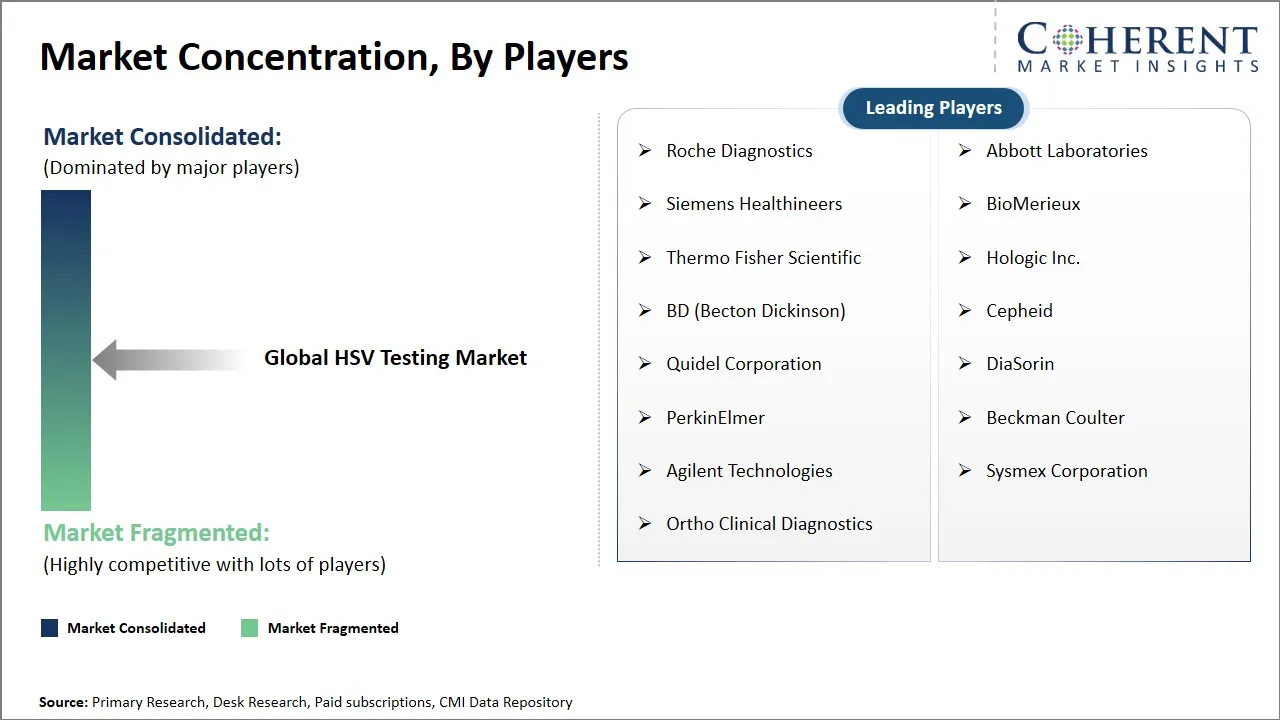
| Companies covered: | Roche Diagnostics, Abbott Laboratories, Siemens Healthineers, BioMerieux, Thermo Fisher Scientific, Hologic Inc., BD (Becton Dickinson), Cepheid, Quidel Corporation, DiaSorin, PerkinElmer, Beckman Coulter, Agilent Technologies, Sysmex Corporation, and Ortho Clinical Diagnostics | ||
| Growth Drivers: |
| ||
| Restraints & Challenges: |
| ||
HSV Testing Market Dynamics
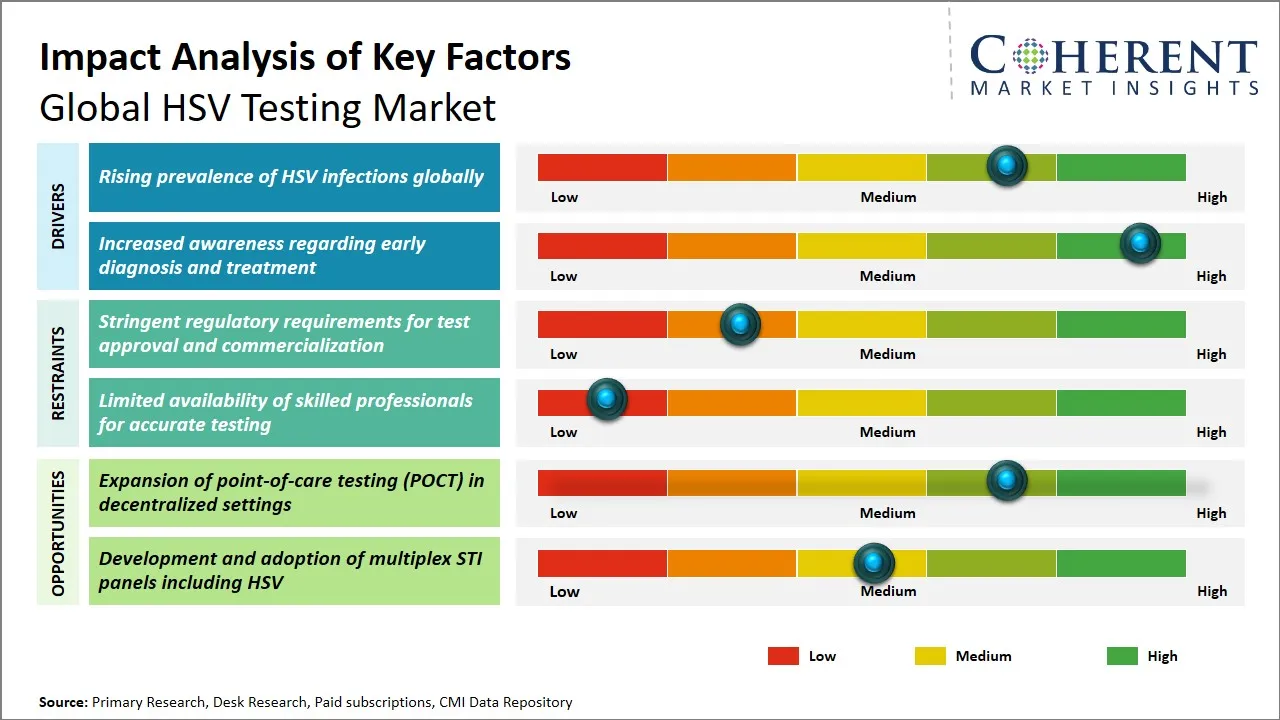
HSV Testing Market Driver - Rising Prevalence of HSV Infections Globally
The increasing prevalence of Herpes Simplex Virus (HSV) infections worldwide significantly drives the demand for advanced HSV testing methods. HSV, comprising primarily HSV-1 and HSV-2 strains, remains one of the most widespread viral infections, affecting millions across diverse demographics. Factors such as changes in sexual behaviors, inadequate awareness about prevention, and limited access to effective antiviral treatments contribute to the persistent transmission of the virus. Moreover, asymptomatic carriers often remain undiagnosed, inadvertently spreading the infection further, which underscores the critical need for improved diagnostic solutions. Additionally, the global rise in immunocompromised populations, including individuals with HIV/AIDS and organ transplant recipients, increases susceptibility to more severe HSV complications.
According to new estimates from the World Health Organization (WHO) published in December 2024, over 846 million people aged 15-49 worldwide are living with genital herpes infections, with at least 42 million new cases reported annually. While many individuals experience few symptoms, some suffer from recurrent painful sores and blisters, leading to a significant number of healthcare visits. In 2020 alone, more than 200 million people experienced at least one symptomatic episode. The need for new treatments and vaccines is urgent, as current therapies only manage the symptoms
HSV Testing Market Opportunity: Expansion of Point-of-Care Testing (POCT) in Decentralized Settings
The Global Herpes Simplex Virus (HSV) testing market stands to gain significantly from the expansion of Point-of-Care Diagnostics testing in decentralized settings, which is reshaping diagnostic paradigms worldwide. POCT facilitates rapid, on-site detection of HSV infections, enabling timely clinical decision-making without reliance on centralized laboratories. This shift is especially critical in resource-limited and remote areas where access to conventional lab facilities remains a challenge. The growing emphasis on early diagnosis of sexually transmitted infections to curb transmission rates has driven demand for POCT platforms that offer simplicity, portability, and quick turnaround times. Moreover, advancements in molecular and immunoassay technologies have enhanced the sensitivity and specificity of POCT devices for HSV, bolstering their clinical reliability.
On February 29 2024, the UN Special Programme on Human Reproduction (HRP) and the World Health Organization (WHO) will launch a new supplement in BMC Infectious Diseases. The supplement features seven journal articles from the PRoSPeRo project, an independent multi-country study evaluating STI diagnostics. This project, involving over 17,000 participants across 15 countries and 30 sites, has provided critical insights into the effectiveness of point-of-care tests in controlling sexually transmitted infections (STIs). The findings have already influenced national policies in several countries.
Analyst Opinion (Expert Opinion)
- The HSV testing market is experiencing significant growth driven by key factors such as technological advancements in diagnostic tools, increasing awareness of sexually transmitted infections (STIs), and regulatory support for improved healthcare access. Innovations in point-of-care testing, alongside faster and more accurate diagnostic methods like PCR-based tests, are revolutionizing HSV detection, while governments and healthcare organizations are prioritizing STI prevention through public health campaigns. The rising demand for convenient and accessible testing solutions, especially at home, also plays a pivotal role in expanding market opportunities. However, challenges such as the stigma associated with STIs and the lack of a definitive cure for HSV continue to hinder widespread testing and treatment uptake, which could impact long-term market growth.
- Emerging opportunities within the market include the development of targeted antiviral therapies and preventive vaccines for HSV, which could change the landscape of treatment and testing. Notable events, such as the World Health Organization’s Global Health Sector Strategy on STIs and the American Medical Women’s Association’s STI Awareness Campaign, have contributed to raising awareness and improving diagnostic capabilities. Furthermore, pilot projects in various countries, such as mobile health units for rural populations and expanded STI testing initiatives in public health centers, are expected to positively impact market dynamics by increasing accessibility to reliable testing and care. These initiatives play a crucial role in shaping policies and fostering greater adoption of testing methods globally.
Speak to the analyst
Want personalized insights?
Take the findings above to one of our principal consultants, or have the report rebuilt around the segments, geographies and competitors you actually track.
Market Segmentation
- HSV Type Insights (Revenue, USD Mn, 2021 - 2033)
- HSV-2 Testing
- HSV-1 Testing
- HSV Type-Unspecified/Combined Tests
- Type Insights (Revenue, USD Mn, 2021 - 2033)
- Direct Detection or Culture Test (Viral Culture)
- Molecular Test (PCR Tests, TMA Tests, NAATs etc.)
- Serological Tests (Antibody Detection etc.)
- Rapid Antigen Tests (Immunochromatographic)
- Others (Prenatal Screening Panels and Home Collection Kits, etc.)
- Sample Type Insights (Revenue, USD Mn, 2021 - 2033)
- Blood/Serum/Plasma
- Vesicular Swab/Fluid
- Ulcer/Crust Swab
- Cerebrospinal Fluid (CSF)
- Other Body Fluids (e.g., Bronchoalveolar Lavage)
- Age Group Insights (Revenue, USD Mn, 2021 - 2033)
- Infants and Neonates
- Children
- Adults
- Elderly
- Application Insights (Revenue, USD Mn, 2021 - 2033)
- Clinical Disease Diagnosis
- Epidemiological Studies (Screening)
- Surveillance and Monitoring
- Others
- End User Insights (Revenue, USD Mn, 2021 - 2033)
- Hospitals
- Clinical Diagnostic Laboratories
- Home Care Settings
- Point-of-care Settings
- Blood Banks and Plasma Collection Centers
- Others (Research and Academic Institutes)
- Regional Insights (Revenue, USD Mn, 2021 - 2033)
- North America
- U.S.
- Canada
- Latin America
- Brazil
- Argentina
- Mexico
- Rest of Latin America
- Europe
- Germany
- U.K.
- Spain
- France
- Italy
- Russia
- Rest of Europe
- Asia Pacific
- China
- India
- Japan
- Australia
- South Korea
- ASEAN
- Rest of Asia Pacific
- Middle East
- GCC Countries
- Israel
- Rest of Middle East
- Africa
- South Africa
- North Africa
- Central Africa
- North America
- Key Players Insights
- Roche Diagnostics
- Abbott Laboratories
- Siemens Healthineers
- BioMerieux
- Thermo Fisher Scientific
- Hologic Inc.
- BD (Becton Dickinson)
- Cepheid
- Quidel Corporation
- DiaSorin
- PerkinElmer
- Beckman Coulter
- Agilent Technologies
- Sysmex Corporation
- Ortho Clinical Diagnostics
Sources
Primary Research Interviews
- Industry Stakeholders List
- Healthcare Providers (Hospitals, Clinics)
- Pharmaceutical Manufacturers
- Medical Equipment Suppliers
- End Users List
- Patients (Individuals diagnosed with HSV)
- Physicians
- Healthcare Practitioners (General Practitioners, Dermatologists)
Government and International Databases
- World Health Organization (WHO)
- Centers for Disease Control and Prevention (CDC)
- European Centre for Disease Prevention and Control (ECDC)
- United Nations Population Fund (UNFPA)
- National Institutes of Health (NIH)
- Centers for Medicare & Medicaid Services (CMS)
Trade Publications
- Medical Device and Diagnostic Industry
- Pharmaceutical Technology
- Clinical Microbiology Reviews
- Infectious Disease News
- The Lancet Infectious Diseases
Academic Journals
- Journal of Clinical Microbiology
- Sexually Transmitted Infections
- The Journal of Infectious Diseases
- Lancet HIV
- Emerging Infectious Diseases
Reputable Newspapers
- The New York Times
- The Guardian
- BBC News
- Reuters Health
- The Washington Post
Industry Associations
- American Medical Association (AMA)
- Infectious Diseases Society of America (IDSA)
- International Society for Sexually Transmitted Diseases Research (ISSTDR)
- American Academy of Dermatology (AAD)
- World Association for Sexual Health (WAS)
Public Domain Resources
- PubMed Central (PMC)
- Google Scholar
- National Library of Medicine (NLM)
- ClinicalTrials.gov
- National Health Service (NHS) Resources
Proprietary Elements
- CMI Data Analytics Tool: Proprietary analytics tool to analyze real-time market trends, consumer behavior, and technology adoption in market
- Proprietary CMI Existing Repository of Information for Last 8 Years
Get access to 250+ pages report
Every segment, forecast, competitor profile and data table behind the analysis above — available for instant download.
- ESOMAR Member
- ISO 9001:2015 Certified
- D-U-N-S Registered
- GDPR & CCPA Compliant
Missing comfort of reading report in your local language? Find your preferred language:
Transform your Strategy with Exclusive Trending Reports
Frequently Asked Questions
The Global HSV Testing Market is estimated to be valued at USD 682.9 Mn in 2026 and is expected to reach USD 1047.3 Mn by 2033.
The CAGR of global HSV testing market is projected to be 6.3% from 2026 to 2033.
Rising prevalence of HSV infections globally and increased awareness regarding early diagnosis and treatment are the major factors driving the growth of global HSV testing market.
Stringent regulatory requirements for test approval and commercialization and limited availability of skilled professionals for accurate testing are the major factors hampering the growth of the global HSV testing market.
In terms of HSV Type, HSV-2 Testing is estimated to dominate the market revenue share in 2026.
Point-of-care HSV tests are increasingly in demand due to their convenience, speed, and ability to provide results at the patient’s location, enhancing treatment and management.
Technological advancements, such as the development of faster, more accurate tests like PCR and CRISPR-based diagnostics, are significantly impacting the HSV testing market by improving test sensitivity and speed.