

Global Huntington’s Disease Therapeutics Market Size and Forecast – 2026 To 2033
The global Huntington’s disease therapeutics market is expected to grow from USD 6,608.4 Mn in 2026 to USD 21,751.3 Mn by 2033, registering a compound annual growth rate (CAGR) of 18.6% from 2026 to 2033. The market for Huntington’s disease therapeutics is poised for significant expansion, fueled by the increasing prevalence of Huntington’s disease and rising efforts to develop disease-modifying therapies.
According to a 2022 systematic review and meta-analysis by Rare Disease Advisor, the pooled global prevalence of Huntington’s disease reached 4.88 cases per 100,000 persons, up from 2.7 cases per 100,000 persons reported in 2012, reflecting an enlarging diagnosed patient population and surging demand for therapeutic interventions.
(Source: Rare Disease Advisor)
Key Takeaways of the Global Huntington’s Disease Therapeutics Market
- Vesicular monoamine transporter inhibitors are projected to hold 35.4 % of the global Huntington’s disease therapeutics market share in 2026, making it the dominant drug class segment, across North America due to the established clinical focus on managing Huntington’s disease chorea. For instance, the Huntington Study Group (HSG) continues to support large-scale observational and interventional research evaluating chorea management and patient outcomes in Huntington’s disease, with VMAT2 inhibitors remaining the primary pharmacological option for symptom control. These ongoing clinical efforts reinforce physician familiarity and sustained utilization of VMAT-targeting therapies across the region. (Source: Huntington Study Group)
- Oral is projected to hold 72.3 % of the global Huntington’s disease therapeutics market share in 2026, making it the dominant route of administration segment, across Europe due to the strong emphasis on long-term outpatient management of neurodegenerative diseases. For instance, the European Huntington’s Disease Network (EHDN) operates the ENROLL-HD platform, one of the world's largest Huntington’s disease observational studies spanning dozens of countries and thousands of participants. The initiative facilitates standardized long-term patient management, supporting the continued preference for convenient oral therapeutic regimens in routine clinical practice. (Source: European Huntington’s Disease Network)
- Hospital pharmacies are projected to hold 65.9 % of the global Huntington’s disease therapeutics market share in 2026, making it the dominant distribution channel segment, across Asia Pacific due to the concentration of Huntington’s disease diagnosis and treatment within tertiary-care hospitals and specialized neurology centers. For instance, Japan's Ministry of Health, Labour and Welfare (MHLW) has officially designated Huntington's disease as an intractable disease under its Specified Disease Treatment Research Program. This designation gives patients access to treatment within hospital networks and provides them with a subsidized treatment pathway. This hospital-centered system facilitates prescribing, management and dispensing of Huntington's disease therapeutics via institutional pharmacies throughout the nation. (Source: Teikyo University School of Medicine)
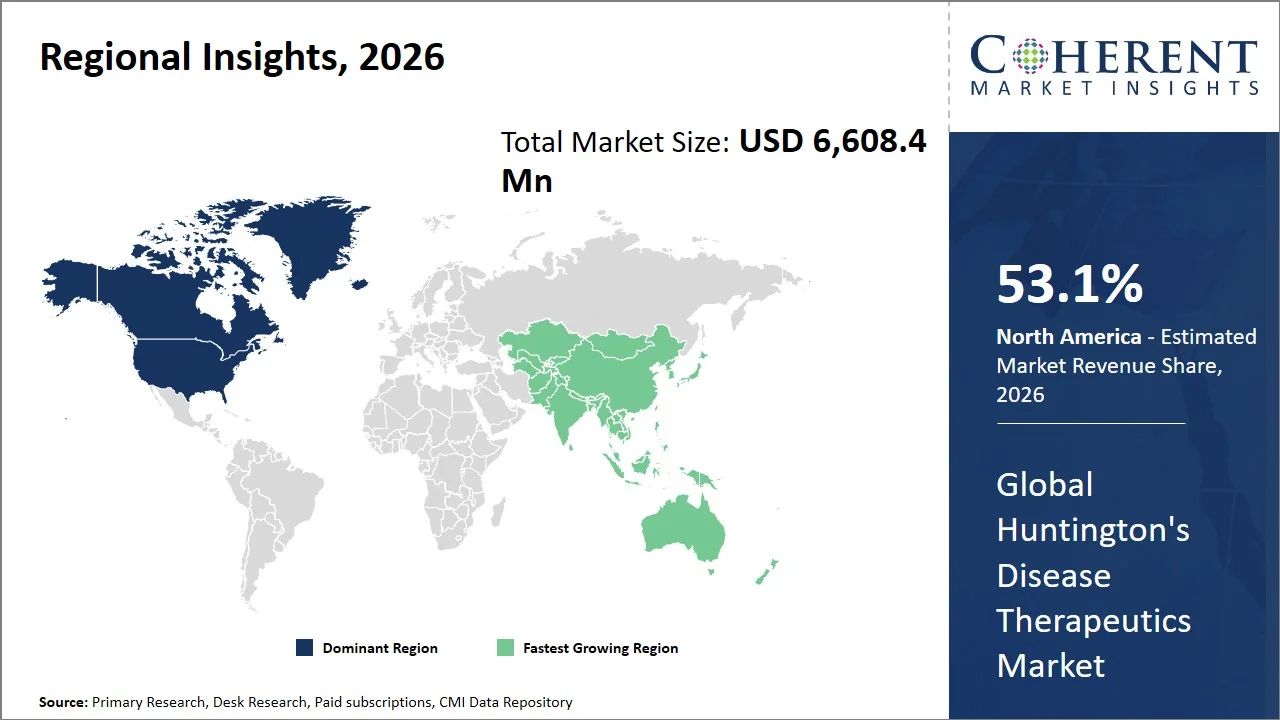
- North America maintains its dominance with an expected share of 53.1 % in 2026, bolstered by strong rare disease research ecosystem, favorable orphan drug regulations, and the presence of leading biotechnology companies advancing Huntington’s disease therapies. For instance, the National Institute of Neurological Disorders and Stroke (NINDS) continues to support Huntington's disease research through the Huntington’s Disease Society of America (HDSA) Centers of Excellence, along with many translational research initiatives to develop therapeutic targets. (Source: National Institute of Neurological Disorders and Stroke) These initiatives further reinforce the region's dominance in Huntington's disease therapeutics market.
- Asia Pacific is expected to exhibit the fastest growth with an estimated contribution of 15.9 % share in 2026, driven by improving rare disease diagnosis rates, expanding access to genetic testing, and increasing investments in neurological healthcare infrastructure. For instance, China's National Health Commission has expanded the country's First National List of Rare Diseases and established a nationwide rare disease diagnosis and treatment network comprising more than 300 hospitals, improving access to specialized care for patients with rare neurological disorders, including Huntington's disease. (Source: The People's Republic of China) These initiatives are expected to accelerate diagnosis rates and therapeutic uptake across the region.
- Expansion of Genetic Screening and Predictive Testing Programs: The rising prevalence of predictive genetic testing by Huntington's patients with a family history of disease will create more early diagnosis and intervention. With an increase in the strength of rare disease screening within health systems, an ever-expanding pool of pre-symptomatic patients are diagnosed and entered into monitoring and clinical trial programs and a significant pre-symptomatic patient base will increase the demand for novel disease-modifying treatments in the early stages of the disease.
- Growing Investment in Gene-Silencing and RNA-Based Therapeutics: Recent developments in gene-silencing technologies like antisense oligonucleotides (ASOs) and RNA targeted therapies have expanded the opportunities for Huntington's disease treatment. Many biotech companies and pharmaceutical manufacturers are developing approaches that work to decrease the expression of mutant huntingtin protein and target the cause of the disease instead of its symptoms. Developments through the clinical pipeline of these technologies are likely to generate new strategies and market-leading collaborations and funding.
Segmental Insights
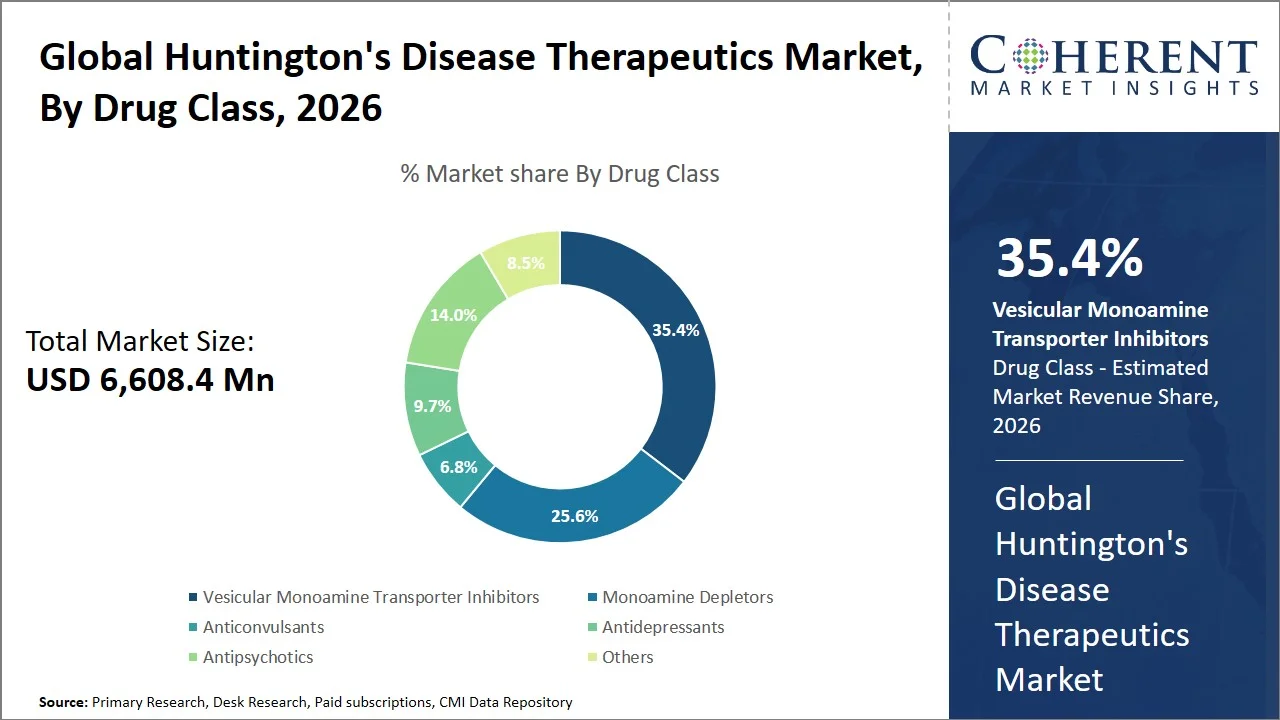
Why Do Vesicular Monoamine Transporter Inhibitors Dominate the Global Huntington’s Disease Therapeutics Market?
Vesicular monoamine transporter inhibitors are projected to hold a market share of 35.4% in 2026, due to their precise mechanisms of action in the management of chorea, which is one of the most debilitating symptoms of the disease. Also, high clinical efficacy and good tolerability along with established treatment regime contribute to their wide adoption among healthcare providers. For instance, in August 2023, Neurocrine Biosciences, Inc’s INGREZZA (valbenazine) capsules received U.S. FDA approval to treat Huntington's disease chorea, marking the first new treatment approved for this indication in more than a decade. (Source: Neurocrine Biosciences, Inc.) The approval enhanced the therapeutic relevance and commercial importance of VMAT inhibitors in the treatment of Huntington's disease.
- Current Industry Events of 2026
- Market Size Estimation
- Regional Breakdown
- Competitive Landscape
- Customer Intelligence
- Segmental Analysis
- Pricing Analysis
- Key Market Drivers, Challenges & Future Trends
- Customized Insights Section
Why Does Oral Represent the Largest Route of Administration Segment in the Huntington’s Disease Therapeutics Market?
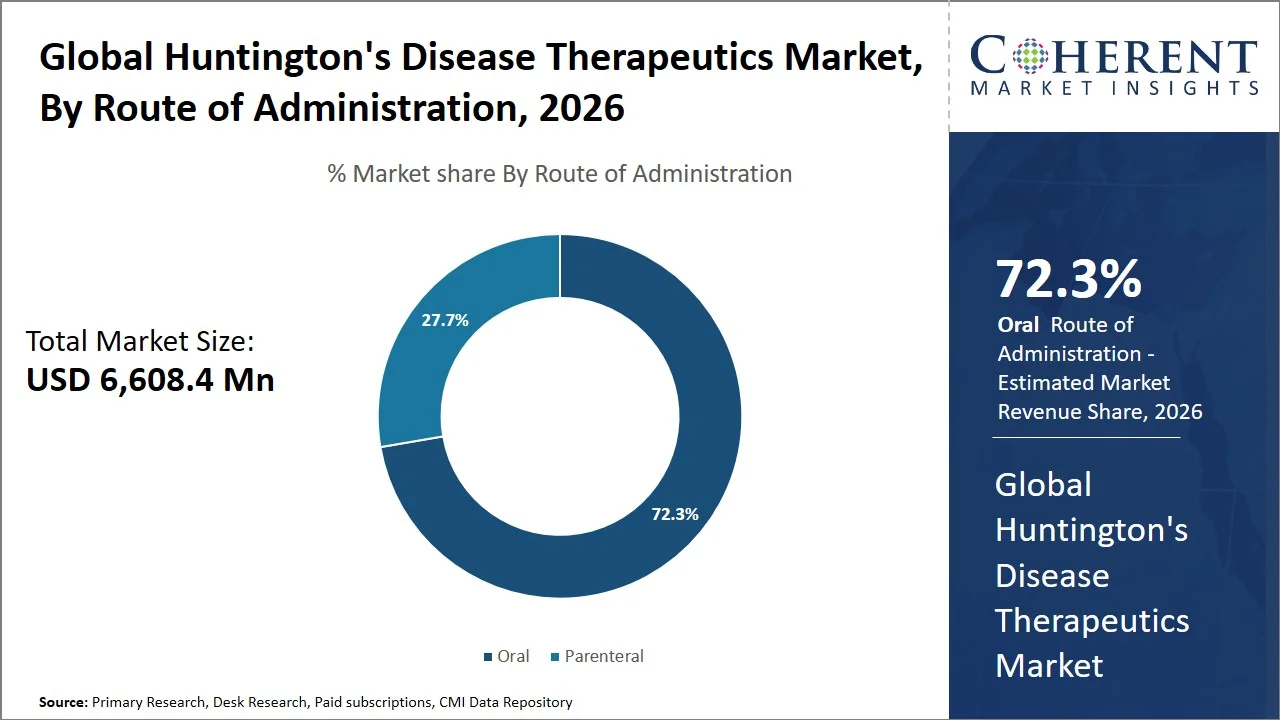
Oral is projected to hold a market share of 72.3% in 2026, owing to its ease of use, self-administration potential and the convenience it offers for managing a chronic illness. The oral administration route contributes to higher treatment compliance among patients and also minimizes the healthcare costs associated with hospital visits and parenteral delivery. The availability of several approved oral therapies has led to greater preference by physician and patient. For instance, in March 2026, Australia's Therapeutic Goods Administration (TGA) found Skyhawk Therapeutics orally administered investigational therapy, SKY-0515, to be eligible for registration under the Provisional Approval Pathway, which may allow patients to have quicker access to a once-daily oral therapy for Huntington's disease. (Source: Skyhawk Therapeutics) These regulatory developments demonstrate the increased interest in oral therapeutics for Huntington's disease management.
Hospital Pharmacies Segment Dominates the Global Huntington’s Disease Therapeutics Market
The hospital pharmacies segment is projected to hold a market share of 65.9% in 2026, owing to the significant role that they play in specialist-directed therapy, prescription tracking, and unified neurological treatment. Tertiary hospitals and movement disorder centers provide routine care to patients suffering from Huntington's disease, access to prescription therapies is integrated with their clinical management. For instance, in the U.K., care provision for Huntington's disease remained under the National Health Service (NHS) at specialized regional neuroscience and movement disorder centers where prescription medicines are standard and managed via hospital pharmacies as part of shared specialist care. (Source: National Library of Medicine) The concentration of therapy in these centers reinforces the dominance of hospital pharmacies in the global Huntington’s disease therapeutics market.
Currents Events and their Impact
Current Events | Description and its Impact |
U.S. FDA Grants Breakthrough Therapy Designation to AMT-130 (April 2025) |
|
Roche Advances GENERATION HD2 Program Following Positive Interim Review (May 2026) |
|
(Source: European Huntington's Disease Network, National Library of Medicine)
Huntington’s Disease Therapeutics Market Dynamics
Market Drivers
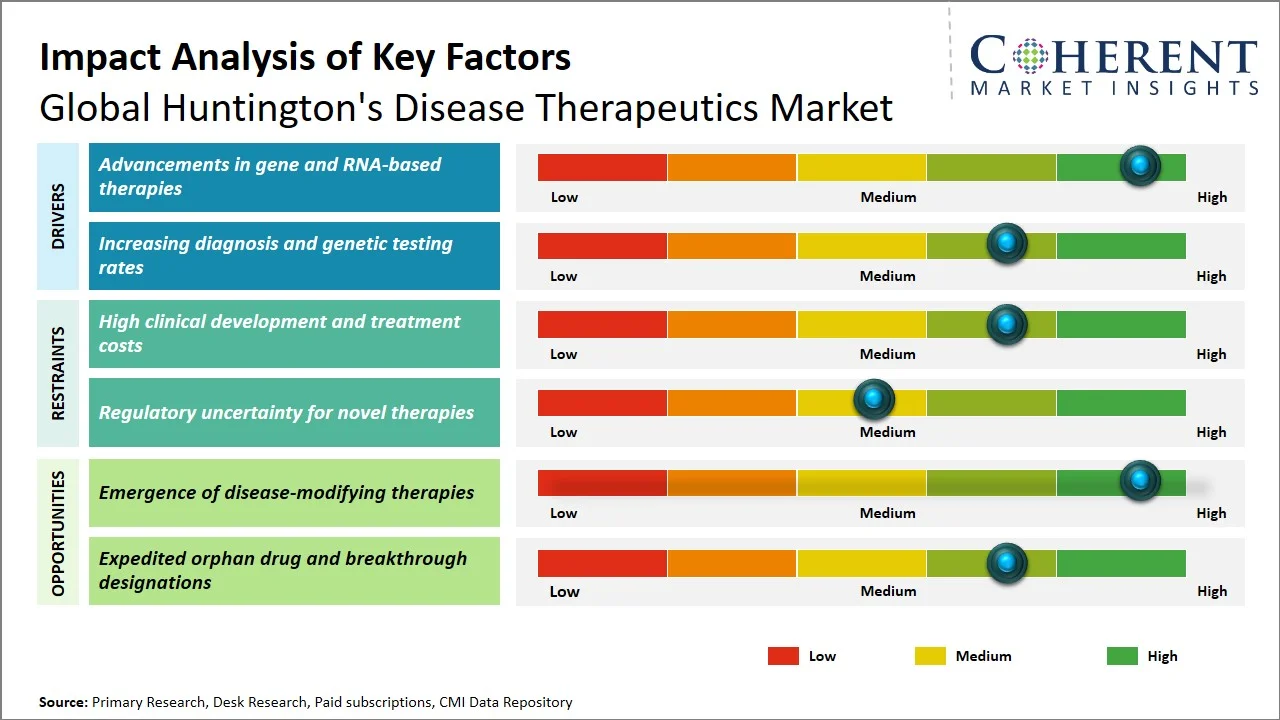
- Advancements in gene and RNA-based therapies: Gene- and RNA-based therapeutic developments are accelerating the movement towards disease modifying therapeutics for Huntington’s disease by addressing the root cause of the disease-the gene mutation. Technological progress with gene-silencing strategies, RNA targeting and delivery technologies are increasingly offering better therapeutics and are increasing clinical development pipelines. With the increasing clinical validation and regulatory endorsement, investment is growing for novel neurologic therapeutics. For instance, in August 2024, an article published by Oxford Academic demonstrated significant progress in gene-editing, stem cell-based, and huntingtin-lowering therapeutic strategies, underscoring the expanding scope of next-generation approaches being developed to slow disease progression and improve long-term patient outcomes. (Source: Oxford Academic)
- Increasing diagnosis and genetic testing rates: Higher awareness of Huntington's disease and increased availability of genetic testing services have contributed to timely and precise diagnosis, which has led to the identification of more affected patients. Developments in molecular diagnostics and genetic counseling have led to the successful predictive testing in the patients at risk. Availability of testing service has expanded the participation of patients into studies and thus hastened the search for effective therapies. For instance, Fulgent Genetics provides a targeted test for Huntington Disease (HTT) Repeat Expansion Analysis to detect pathological CAG repeat expansions within the HTT gene, useful for the confirmatory diagnosis and risk assessment in families affected with Huntington's disease. (Source: Fulgent Genetics)
Emerging Trends
- Increasing Adoption of Digital Biomarkers and Remote Patient Monitoring: Wearable devices and smartphone-based assessments are increasingly being used to monitor motor, cognitive, and behavioral symptoms of Huntington’s disease on an ongoing basis, enabling the collection of real-world data, improved disease tracking, and the support of decentralized clinical trial models.
- Growing Emphasis on Personalized and Biomarker-Guided Treatment Strategies: The application of biomarkers and patient-specific disease parameters has been exploited to increase the efficiency of treatment development and clinical trial designs. Marker-based strategy is increasingly becoming essential for patient stratification, therapy evaluation and moving toward a personalized approach to disease management in Huntington's disease.
Regional Insights
Why is North America a Strong Market for Huntington’s Disease Therapeutics?
North America leads the global Huntington’s disease therapeutics market, accounting for an estimated 53.1% share in 2026, owing to the availability of advanced healthcare infrastructure, strong research funding available for neurodegenerative diseases research and availability of established biopharmaceutical industry. The U.S. is the largest market in North America and is largely attributed to the favorable government initiatives such as NIH support for research and development of neurodegenerative diseases, availability of relevant policy framework for research and innovation in this field.
For instance, the Orphan Drug Designation program and Rare Disease Development programs implemented by the U.S. Food and Drug Administration promote the development of therapies for Huntington's disease through incentives like market exclusivity, fee waivers, and regulatory support, and incentivize biopharmaceutical companies to invest in the novel therapeutics targeting the rare neurodegenerative disorder. (Source: Food and Drug Administration) Furthermore, well-established trade practices and Intellectual property protection in the region helped it to drive rapid development and commercialization of the novel treatments, maintaining the leading position in the market.
Why Does the Asia Pacific Huntington’s Disease Therapeutics Market Exhibit High Growth?
The Asia Pacific Huntington’s disease therapeutics market is expected to exhibit the fastest growth with an estimated contribution of 15.9% share to the global market in 2026, propelled by the enhanced consciousness of neurodegenerative diseases, better healthcare infrastructure and broadening research activities. The countries like China, Japan, South Korea and India are investing in the fields of Biotechnology and Precision Medicine, assisted by beneficial government policies of developing research and stimulating foreigner cooperation. For instance, India's National Policy for Rare Diseases (NPRD) will facilitate a better diagnostic, management and research environment for rare neurodegenerative disorders such as Huntington's Disease through identified Centers of Excellence and increased access to super specialty care. (Source: Ministry of Health and Family Welfare) Furthermore, the increase in clinical research activities and greater availability of diagnostics in Asia Pacific help boost the rapid growth of the Huntington's disease therapeutics market.
Global Huntington’s Disease Therapeutics Market Outlook for Key Countries
Why is the U.S. Leading Innovation and Adoption in the Huntington’s Disease Therapeutics Market?
The U.S. dominates the Huntington’s disease therapeutics market primarily owing to the strong existence of the biotechnology companies (such as Roche, uniQure, PTC Therapeutics, Wave Life Sciences, Skyhawk Therapeutics, Voyager Therapeutics, and Neurocrine Biosciences) engaged in the R&D of disease modifying therapies such as gene, RNA and huntingtin-lowering agents. Being a highly organized clinical trial infrastructure, abundant R&D collaborations between industry and research centers, early adoption of emerging therapy modalities. Moreover, the prevalence of neurological and orphan-specific treatment centers facilitates quicker clinical translation of the new therapies thus reinforcing US to lead the Huntington's disease therapeutics market.
Is Japan a Favorable Market for Huntington’s Disease Therapeutics?
Japan is one of the most promising markets for the Huntington’s disease therapeutics market driven by its high level of knowledge in the area of neurological disorders, established framework of rare disease treatment, and its high involvement in sophisticated drug development activities. Presence of domestic and international pharmaceutical players (such as Takeda Pharmaceutical Company, Otsuka Pharmaceutical, Daiichi Sankyo, Roche, and Novartis) that possesses strengths and competence to handle research on neurodegenerative disorders would contribute to the introduction of Novel therapies such as gene and RNA based medicines. Further, focus of country in novel neurological treatments and research activities on clinical development will benefit new-generation of Huntington's disease therapies.
Is China Emerging as a Key Growth Hub for the Huntington’s Disease Therapeutics Market?
China is positioned as a key growth hub in the global Huntington’s disease therapeutics market attributed to the growth of its biotechnology sector, increasing emphasis on development of novel neurodegenerative drug discovery and research, development in cell and gene therapy. Domestic biopharmaceutical companies (such as WuXi AppTec, GenScript Biotech and Innovent Biologics) along with multinational pharmaceutical companies (such as Roche, Novartis, Pfizer, AstraZeneca, and Sanofi) are bolstering the neurodegenerative disease ecosystem in China.
Why Does Germany Top the European Huntington’s Disease Therapeutics Market?
Germany is the leader in the European market for Huntington’s disease therapeutics attributed to its abundance of research institutions (such as Charité – Universitätsmedizin Berlin, University Hospital Heidelberg, and Ludwig Maximilian University (LMU) Hospital Munich) focused on neurology, centers of excellence in movement disorders and its strong involvement in neurodegenerative disease clinical development. The country has a central role in the European Huntington's disease research arena with ties to academic hospitals and specific neurological networks, assisting with patient access to clinical trials and assessment of developing treatments. The country’s comprehensive infrastructure for managing rare diseases also allows patients easier access to specialized diagnosis, treatment, and long-term management of the disease.
Is Huntington’s Disease Therapeutics Market Developing in India?
India is a high-potential market for Huntington’s disease therapeutics due to rising awareness regarding rare neurological diseases, enhancing accessibility of genetic testing facilities, growing competence of neurogenetics research. Well-established health and research centers (such as the National Institute of Mental Health and Neurosciences (NIMHANS), All India Institute of Medical Sciences (AIIMS), and the National Brain Research Centre (NBRC)) provide momentum to improve the diagnosis and clinical care for Huntington's disease. Increasing involvement in international clinical trials, and an extension of specialty neurology services further contribute to changes in the treatment domain for Huntington's disease in India.
Clinical Trial Landscape in the Global Huntington's Disease Therapeutics Market
Therapy/Drug Candidate | Developer | Technology Type | Clinical Phase | Development Status |
AMT-130 | uniQure | Gene Therapy (AAV) | Phase I/II | Ongoing |
Tominersen | Roche/Ionis | Antisense Oligonucleotide (ASO) | Phase II | Ongoing |
WVE-003 | Wave Life Sciences | Allele-Selective RNA Therapy | Phase I/II | Ongoing |
PTC518 (Votoplam) | PTC Therapeutics | Splicing Modifier | Phase II | Ongoing |
SKY-0515 | Skyhawk Therapeutics | RNA-Targeted Therapy | Phase I | Ongoing |
How is the emergence of disease-modifying therapies creating new growth opportunities in the Huntington’s disease therapeutics market?
The emergence of disease-modifying therapies (DMTs) in the Huntington's disease therapeutics market, and a transition away from the solely symptomatic approach, will yield significant market growth. Emerging opportunities through advanced molecular biology, gene targeted therapies and huntingtin lowering therapies are likely to expand future treatment possibilities and patient outlooks. Increased investment in neurodegenerative disease research and facilitative regulatory pathways may even expand market possibilities further. For instance, in May 2024, Latus Bio, Inc. launched State-of-the-Art Gene Therapy Development Technologies with USD 54 million funding in Series A to advance its proprietary gene therapy platform, and first Huntington's disease program, showing increasing investor confidence in disease modifying treatments for neurodegenerative disease.(Source: Latus Bio, Inc.)
Market Players, Key Development, and Competitive Intelligence
Key Developments
- On June 5, 2026, Teva Pharmaceutical Industries Ltd released new patient- and caregiver-reported improvements with AUSTEDO (deutetrabenazine) and AUSTEDO XR in Huntington's disease chorea. The results emphasize its therapeutic utility in improved symptom management and quality of life and support the continued use of the therapy in clinical practice. Additionally, they emphasize the increasing importance of patient-centered outcomes in measuring treatment efficacy for neurodegenerative disorders.
- In January 2026, Sarepta Therapeutics announced the submission of a Clinical Trial Application (CTA) for SRP-1005, its potential treatment for Huntington's disease. The first-in-human INSIGHTT study, planned to be initiated in Q2 2026, will be another step forward in innovative genetic therapy for the disease. The news highlights the increasing interest among companies in developing innovative therapies that target the underlying cause of Huntington's disease, rather than its symptoms.
Competitive Landscape
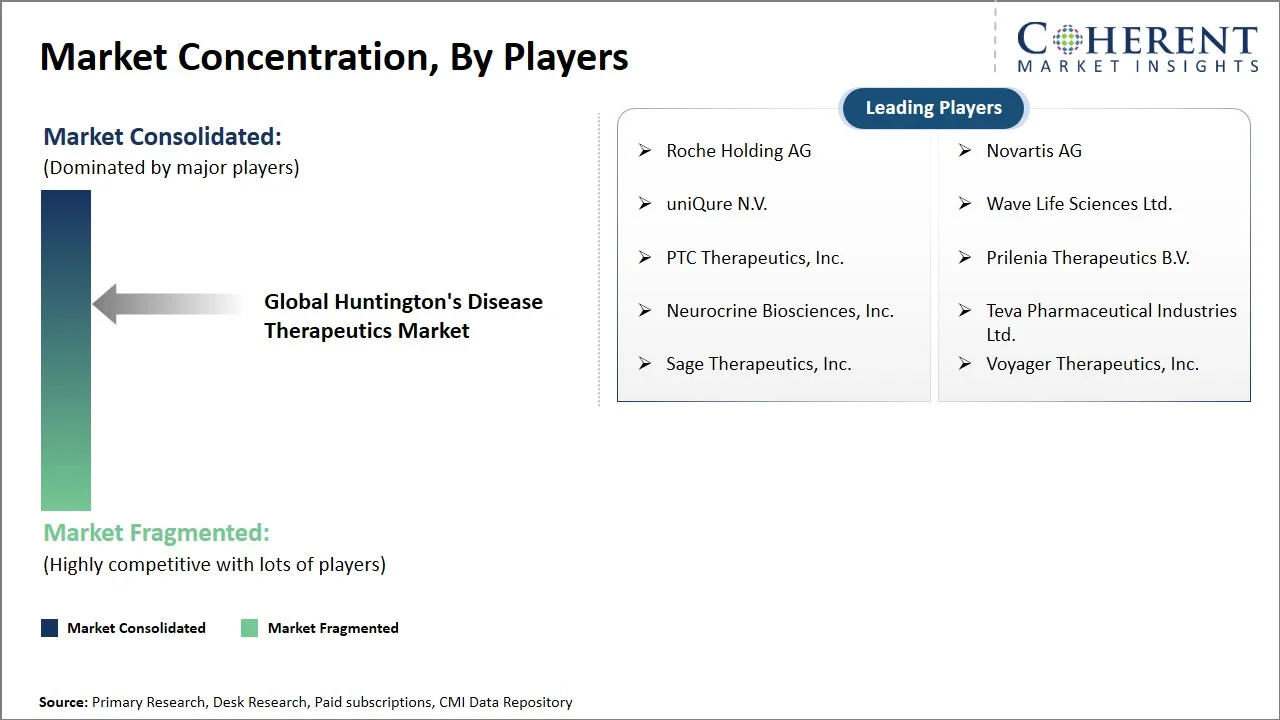
The global Huntington’s disease therapeutics market is moderately concentrated, with market players focused on innovation through development of disease-modifying therapies, growth of clinical pipelines, and formation of collaborations for accelerated drug development. Gene-therapy-based treatment approaches, RNA-targeting techniques and precision medicine platforms that target the root cause (the gene) are areas of increasing interest. Progression in clinical trials, designation by regulatory bodies and investment in biomarker-based studies remain key discriminators.
Key focus areas include
- Development of disease-modifying therapies, including gene therapy, RNA-targeting, and huntingtin-lowering approaches
- Expansion of clinical trial programs and biomarker-based patient stratification strategies
- Strategic collaborations, licensing agreements, and funding initiatives to strengthen pipeline development
- Regulatory engagement and accelerated development pathways for innovative neurological therapies
- Geographic expansion of clinical research networks and patient access programs
Market Report Scope
Huntington’s Disease Therapeutics Market Report Coverage
| Report Coverage | Details | ||
|---|---|---|---|
| Base Year: | 2025 | Market Size in 2026: | USD 6,608.4 Mn |
| Historical Data for: | 2020 To 2024 | Forecast Period: | 2026 To 2033 |
| Forecast Period 2026 to 2033 CAGR: | 18.6% | 2033 Value Projection: | USD 21,751.3 Mn |
| Geographies covered: |
| ||
| Segments covered: |
| ||
| Companies covered: | Roche Holding AG, Novartis AG, uniQure N.V., Wave Life Sciences Ltd., PTC Therapeutics, Inc., Prilenia Therapeutics B.V., Neurocrine Biosciences, Inc., Teva Pharmaceutical Industries Ltd., Sage Therapeutics, Inc., and Voyager Therapeutics, Inc. | ||
| Growth Drivers: |
| ||
| Restraints & Challenges: |
| ||
Analyst Opinion (Expert Opinion)
- In the coming years, the Huntington’s disease therapeutics market is anticipated to revolve around a shift from symptomatic treatment approaches to disease-modifying therapies that seek to address the genetic root of the disorder. Further development of gene therapy and RNA targeting technologies alongside precision medicine approaches will likely fuel new innovations with a greater acceptance of this trend on the part of regulatory bodies and increased investment in and development of these therapies. Increased number of disease modifying candidates will likely move into later stage clinical trials leading to an increase in treatment earlier in the disease course.
- The maximum opportunities will probably exist within gene and RNA-based therapeutics aimed at the early and pre-symptomatic Huntington’s disease patient population in the U.S., due to a strong clinical research framework, advantageous regulatory mechanisms and strong adoption of innovative therapies. Increasing patient identification through genetic screening programs is also expected to increase the available treatment population and offer opportunities for next-generation disease-modifying therapeutics.
- In order to obtain a competitive advantage, market participants should focus on investments in diversified and differentiated disease-modifying platforms, refine the biomarker-driven clinical development strategy and leverage collaborations to accelerate innovation. Companies with differentiated and significant clinical results, approved designations and established patient access and commercialization strategies will be better equipped to win share as the therapeutic landscape changes.
Speak to the analyst
Want personalized insights?
Take the findings above to one of our principal consultants, or have the report rebuilt around the segments, geographies and competitors you actually track.
Market Segmentation
- Drug Class Insights (Revenue, USD Mn, 2021 - 2033)
- Vesicular Monoamine Transporter Inhibitors
- Monoamine Depletors
- Anticonvulsants
- Antidepressants
- Antipsychotics
- Others
- Route of Administration Insights (Revenue, USD Mn, 2021 - 2033)
- Oral
- Parenteral
- Distribution Channel Insights (Revenue, USD Mn, 2021 - 2033)
- Hospital Pharmacies
- Retail Pharmacies
- Online Pharmacies
- Regional Insights (Revenue, USD Mn, 2021 - 2033)
- North America
- U.S.
- Canada
- Latin America
- Brazil
- Argentina
- Mexico
- Rest of Latin America
- Europe
- Germany
- U.K.
- Spain
- France
- Italy
- Russia
- Rest of Europe
- Asia Pacific
- China
- India
- Japan
- Australia
- South Korea
- ASEAN
- Rest of Asia Pacific
- Middle East
- GCC Countries
- Israel
- Rest of Middle East
- Africa
- South Africa
- North Africa
- Central Africa
- North America
- Key Players Insights
- Roche Holding AG
- Novartis AG
- uniQure N.V.
- Wave Life Sciences Ltd.
- PTC Therapeutics, Inc.
- Prilenia Therapeutics B.V.
- Neurocrine Biosciences, Inc.
- Teva Pharmaceutical Industries Ltd.
- Sage Therapeutics, Inc.
- Voyager Therapeutics, Inc.
Sources
Primary Research Interviews
- Neurologists and movement disorder specialists involved in Huntington’s disease diagnosis and treatment
- Clinical researchers and principal investigators conducting Huntington’s disease therapeutic trials
- Genetic counselors and neurogenetics experts specializing in predictive and confirmatory testing
- Pharmaceutical executives and product development leaders from Huntington’s disease-focused biotechnology companies
Stakeholders
- Pharmaceutical and biotechnology companies developing Huntington’s disease therapeutics
- Contract research organizations (CROs) supporting neurological clinical trials
- Patient advocacy organizations and rare disease networks
- End-use Sectors
- Hospitals and neurology departments
- Specialized movement disorder and neurogenetics clinics
- Academic medical centers and research institutions
- Genetic testing and counseling centers
- Clinical trial and rare disease treatment centers
- Regulatory & Health Bodies
- U.S. Food and Drug Administration (FDA)
- European Medicines Agency (EMA)
- Pharmaceuticals and Medical Devices Agency (PMDA), Japan
- National Medical Products Administration (NMPA), China
- Medicines and Healthcare products Regulatory Agency (MHRA), UK
- Health Canada
Databases
- ClinicalTrials.gov
- FDA Drugs Database
- EMA Medicines Database
- Orphanet Rare Disease Database
- OECD Health Statistics
- Global Health Observatory (WHO)
Magazines
- Pharmaceutical Technology
- Drug Discovery World
- BioCentury
- Pharmaceutical Executive
- Applied Clinical Trials
Journals
- Huntington Study Group Journal Publications
- Journal of Huntington’s Disease
- Movement Disorders
- Neurology
- The Lancet Neurology
Newspapers
- The New York Times
- The Washington Post
- The Guardian
- The Times
- The Wall Street Journal
- USA Today
Associations
- Huntington’s Disease Society of America (HDSA)
- European Huntington Association (EHA)
- Huntington Study Group (HSG)
- European Huntington’s Disease Network (EHDN)
- International Huntington Association (IHA)
Public Domain Sources
- World Health Organization (WHO) – Neurological Disorders and Rare Disease Statistics
- National Institutes of Health (NIH) – Huntington’s Disease Research and Clinical Updates
- National Institute of Neurological Disorders and Stroke (NINDS) – Huntington’s Disease Information
- Centers for Disease Control and Prevention (CDC) – Genetic and Neurological Disease Resources
- European Commission – Rare Disease and Pharmaceutical Regulatory Framework
- World Bank – Healthcare Expenditure and Demographic Statistics
Proprietary Elements
- CMI Data Analytics Tool, Proprietary CMI Existing Repository of information for last 10 years.
Get access to 250+ pages report
Every segment, forecast, competitor profile and data table behind the analysis above — available for instant download.
- ESOMAR Member
- ISO 9001:2015 Certified
- D-U-N-S Registered
- GDPR & CCPA Compliant
Missing comfort of reading report in your local language? Find your preferred language:
Transform your Strategy with Exclusive Trending Reports
Frequently Asked Questions
The global Huntington’s disease therapeutics market is estimated to be valued at USD 6,608.4 Mn in 2026 and is expected to reach USD 21,751.3 Mn by 2033.
Vesicular monoamine transporter inhibitors dominate due to their proven efficacy in managing chorea, one of the most common and debilitating motor symptoms of Huntington’s disease, along with established regulatory approvals and widespread clinical adoption.
Huntington’s disease therapeutics are treatments used to manage the motor, cognitive, and psychiatric symptoms of Huntington’s disease and, increasingly, to modify the underlying disease progression.
The CAGR of the global Huntington’s disease therapeutics market is projected to be 18.6% from 2026 to 2033.
Mutant huntingtin protein accumulates in neurons, leading to progressive neurodegeneration and the characteristic symptoms of Huntington’s disease.
Gene-silencing therapies reduce the production of mutant huntingtin protein by targeting HTT gene expression through approaches such as antisense oligonucleotides (ASOs) and RNA interference (RNAi).
In terms of route of administration, oral is estimated to dominate the market revenue share in 2026.