

Global Hydrocephalus Shunts Market Size and Forecast – 2026 To 2033
The global hydrocephalus shunts market is expected to grow from USD 1.54 Bn in 2026 to USD 2.28 Bn by 2033, registering a compound annual growth rate (CAGR) of 5.8% from 2026 to 2033. The global market for hydrocephalus shunts is poised for significant expansion, fueled by the soaring burden of hydrocephalus and congenital neurological disorders necessitating cerebrospinal fluid (CSF) diversion procedures.
According to the World Health Organization, an estimated 240,000 newborns die worldwide within 28 days of birth every year due to congenital disorders. Congenital disorders cause a further 170,000 deaths of children between the ages of 1 month to 5 years.
(Source: World Health Organization)
Key Takeaways of the Global Hydrocephalus Shunts Market
- Ventriculoperitoneal (VP) shunts are projected to hold 46.8 % of the global hydrocephalus shunts market share in 2026, making it the dominant product type segment, with significant dominance in North America attributed to their widespread usage in long term cerebrospinal fluid diversion procedures within the children's neurosurgical centers and neurological treatment hospitals. VP shunt is mostly preferred on the basis of an effective cerebrospinal fluid diversion from brain ventricles to abdominal cavity along with relatively known surgical familiarity and clinical long-term treatment procedures. Further, the segment growth is expected to be aided by their ever-rising acceptance in the U.S. pediatric neurosurgical centers. For instance, Hydrocephalus Clinical Research Network (HCRN) is actively implementing the standardized management protocol for pediatric hydrocephalus and for VP shunts among prominent neurosurgery centers in North America. (Source: Hydrocephalus Clinical Research Network)
- Valves are projected to hold 38.7 % of the global hydrocephalus shunts market share in 2026, making it the dominant component segment, particularly in Europe with more clinical centers beginning to prefer programmable valve systems which can control intracranial pressure and prevent over drainage in difficult hydrocephalus treatment cases. In Germany, France, and the U.K., centers for neurosurgery are beginning to incorporate programmable valves that combine with MR-resistant and pressure-controlled valves for chronic patient management. Increased interest and growing concerns regarding precise neurosurgery and postoperative complications reduction will also stimulate the market for advanced shunt valve in neurological centers in Europe. For instance, Miethke extends to the further development of programmable hydrocephalus shunt valve technologies used extensively in neurosurgical centers throughout Europe in applications requiring adjustable pressures of cerebrospinal fluid management, such as the Miethke ProGAV 2.0. Adjustable Valve System, furthering the programmable hydrocephalus shunt valve technology with adjustable differential pressure and MRI-compatible capabilities for cerebrospinal fluid management in the European neurosurgery departments for a prolonged time. (Source: Christoph Miethke GmbH & Co. KG)
- Pediatric segment is projected to hold 48.9 % of the global hydrocephalus shunts market share in 2026, making it the dominant age group segment, with dominance in Asia Pacific attributed to the rising demand for pediatric hydrocephalus treatment across the region driven by the high and increasing burden of neonatal neurological disorders, congenital brain abnormalities, and pediatric neurosurgery disorders demanding cerebrospinal fluid diversion procedures. Both children's hospitals and tertiary neurology centers located in China, India, and South East Asia have been enhancing their pediatric neurosurgery capabilities for the diagnosis and early treatment of pediatric hydrocephalus. Continuous upgrading and expanding neonatal neurology care infrastructure along with the implementation of pediatric surgery treatment programs have also contributed towards the increased utilization of hydrocephalus shunt procedures in the region. For instance, the India Newborn Action Plan (INAP) implemented by the Ministry of Health & Family Welfare is helping strengthen neonatal and pediatric health infrastructure in all over India which aids in the early detection and treatment of congenital neurological abnormalities and neonatal medical conditions needing neurosurgical expertise. (Source: Ministry of Health & Family Welfare)
- North America maintains dominance with an expected share of 41.2 % in 2026, attributed to the higher prevalence of specific neurosurgery centers within the region, coupled with the higher use of programmable shunts for long-term treatment of hydrocephalus. The U.S. employs the wide application of MR conditional, pressure adjustable, hydrocephalus shunts in tertiary neuro care centers, specifically for treatment of congenital and acquired hydrocephalus. Moreover, increased collaboration in neurosurgery research programs and guidelines-based hydrocephalus treatment protocols are boosting procedure volumes across North America. For instance, the Hydrocephalus Clinical Research Network (HCRN) is working with top pediatric hospitals and neurosurgery centers across the U.S. and Canada to perform multicenter clinical research in the optimal use of hydrocephalus therapies, prevention of shunt infections, and standardization of neurosurgical pathways (Source: Hydrocephalus Clinical Research Network). Through such collaborative efforts, advanced hydrocephalus shunt technology and evidence-based treatment regimens are becoming widespread in the region.
- Asia Pacific is expected to exhibit the fastest growth with a contribution of 27.8 % share in 2026, owing to the rapidly developing pediatric neurosurgery and neonatal intensive care facilities along with tertiary neurological treatment infrastructure in China, India, and Southeast Asia. Several healthcare organizations are currently in the process of enhancing the diagnosis and surgical treatment programs for neonatal hydrocephalus, pediatric abnormalities in brain which need cerebrospinal fluid diversion as well as congenital neurological disorder. Additionally, government initiatives toward child and mother neurology healthcare programs further enhance the usage of hydrocephalus shunting procedures at leading urban healthcare centers. For instance, the Rashtriya Bal Swasthya Karyakram (RBSK) program in India is further extending early childhood screening and treatment services for congenital disabilities and neurological abnormalities needing medical treatment. (Source: Ministry of Health & Family Welfare)
- Increasing Adoption of Programmable and MRI-Resistant Shunt Systems: The market growth for programmable and MRI resistant hydrocephalus shunt systems is attributed to enhanced pressure regulation precision and elimination of side effects such as cerebrospinal fluid over-drainage. Neurosurgeons widely employ the usage of adjustable valve systems for customized hydrocephalus management especially for pediatrics and complex neurological cases that necessitate long-term observation. These systems help with non-invasive valve adjustment and provide better MRI compatibility in case of multiple scans.
- Expansion of Pediatric Neurosurgical Infrastructure in Emerging Economies: Pediatric neurosurgery and neonatal intensive care infrastructure development in developing regions presents growth avenues in the hydrocephalus shunts market. Governments of countries in the APAC, Latin America, and Middle Eastern regions are increasingly boosting their efforts in congenital neurological condition diagnosis and treatment as well as treatment of neonates with hydrocephalus. Establishment of exclusive children’s hospitals and tertiary neurology treatment centers in the health markets likely to boost demand for hydrocephalus shunt surgeries and cerebrospinal fluid (CSF) diversion technologies.
Segmental Insights
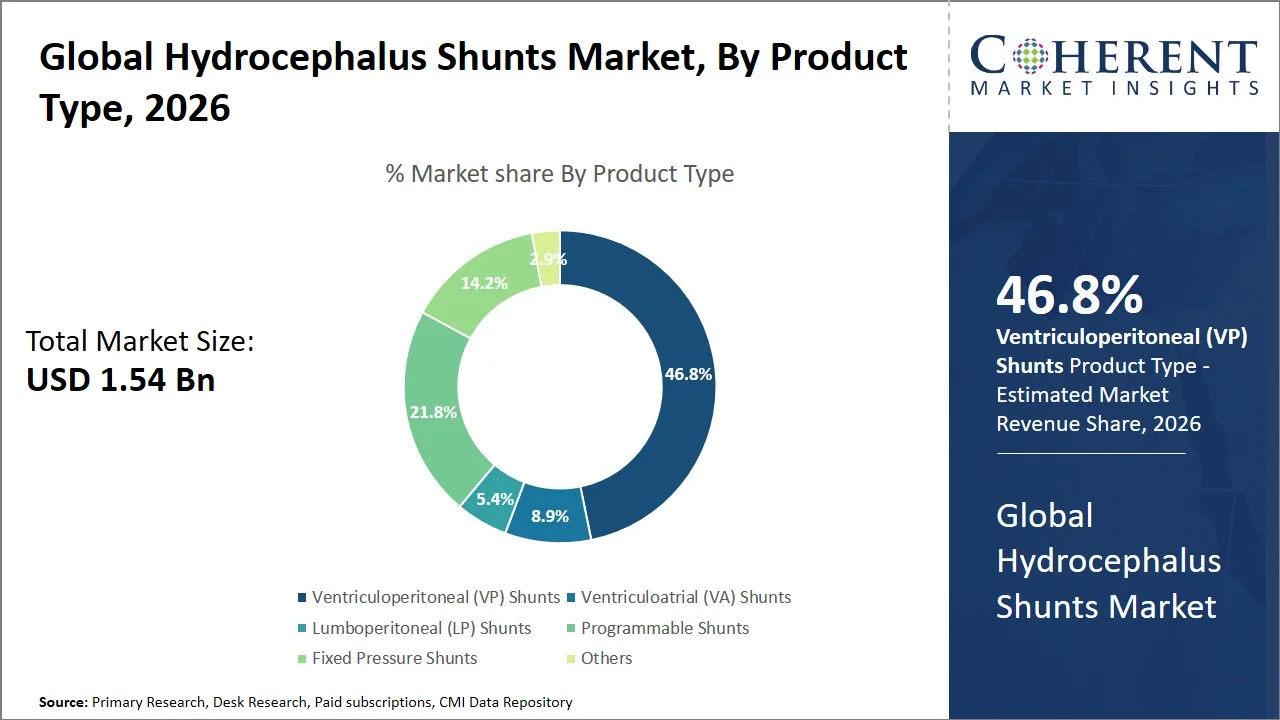
Why Does Ventriculoperitoneal (VP) Shunts Segment Dominate the Global Hydrocephalus Shunts Market?
Ventriculoperitoneal (VP) shunts are projected to hold the market share of 46.8% in 2026, owing to their high clinical efficacy, diverse application in pediatrics as well as in adults, and established success as long-term treatment for hydrocephalus. Ventriculoperitoneal (VP) shunts are the most commonly employed shunt systems in neurosurgical practice for the diversion of excess cerebrospinal fluid from brain ventricles into peritoneal cavity and subsequent absorption of cerebrospinal fluid through the natural mechanism with least operative complexity and associated complication rates compared to other shunt systems. The high prevalence of ventriculoperitoneal (VP) shunt is attributed to their standard operating procedures, physician familiarity, use in treating congenital, tumor related and post-hemorrhagic hydrocephalus, the rising incidence and popularity of technological innovation in programmable pressure valves, anti-siphon valves, MRI compatible systems and infection resistant biocompatible materials are also enhancing their application while overcoming the disadvantages of existing shunt systems such as accuracy and complication related re-operations.
For instance, in February 2025, CereVasc released data from their pilot clinical study of the eShunt System in elderly Normal Pressure Hydrocephalus (NPH), patients showing that 97% of the patients that underwent therapy showed improvement of clinical symptoms and experienced no major adverse event associated with the device or the therapy procedure. This development shows continued innovation in minimally invasive hydrocephalus shunt technologies striving to make the therapy safe, more reliable, and with greater potential for long-term patient benefit. (Source: CereVasc)
- Current Industry Events of 2026
- Market Size Estimation
- Regional Breakdown
- Competitive Landscape
- Customer Intelligence
- Segmental Analysis
- Pricing Analysis
- Key Market Drivers, Challenges & Future Trends
- Customized Insights Section
Why Do Valves Represent the Largest Component Segment in the Global Hydrocephalus Shunts Market?
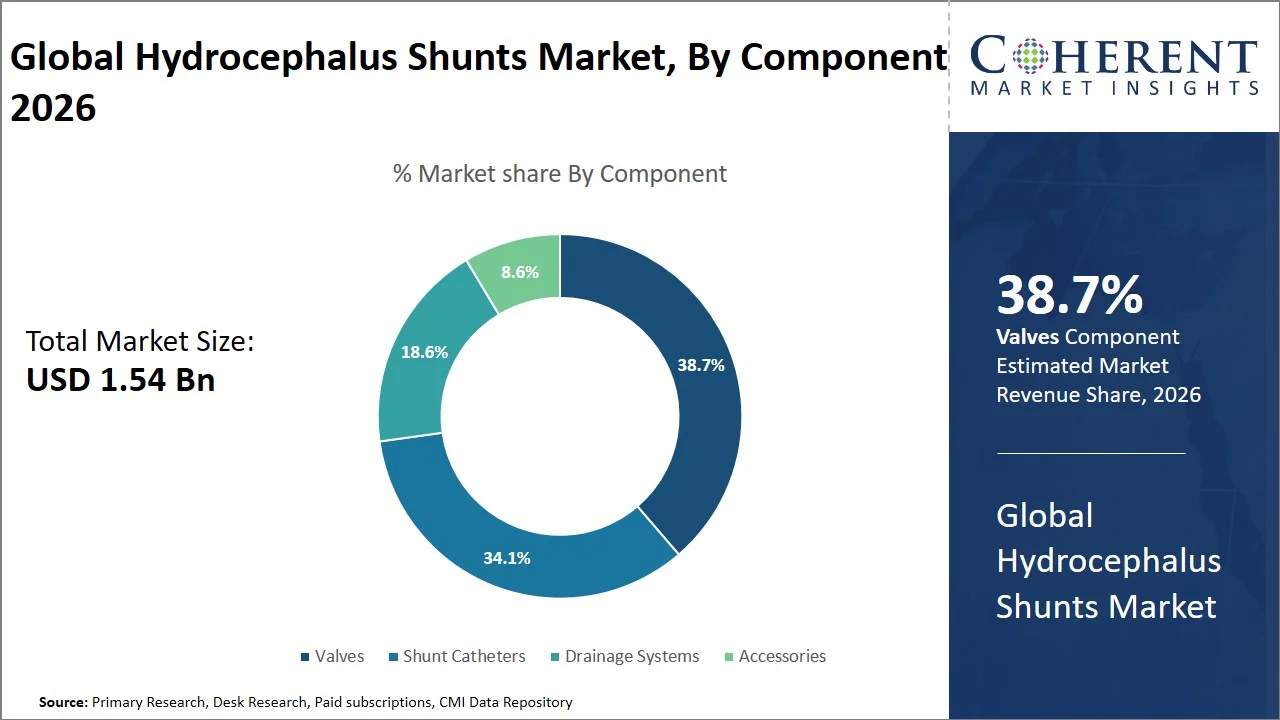
Valves are projected to hold a market share of 38.7% in 2026, because these components play a vital role in controlling the flow of cerebrospinal fluid (CSF) and maintaining a normal intracranial pressure for hydrocephalus patients. These parts are crucial for the efficient management of fluid passage between the brain ventricles and the drainage system and are therefore intrinsically related to the therapeutic efficacy and safety of these shunts. Programmable and pressure-adjustable valves are witnessing increased demand, due to the possibility of adjusting the drainage system pressure without external surgery, thus avoiding risks related to over-drainage and improving the clinical prognosis.
Growing technological development in anti-siphon technology, MRI-compatible programmable valves and anti-microbial materials also contributes to the increasing use of valves in adult and pediatric neurosurgery procedures. High rates of replacement and revision procedures due to valve failure are another key factor that ensures consistent demand for valves in the market. For instance, selected abstracts delivered during the Hydrocephalus World Congress 2025 emphasized the increased clinical implementation of adjustable shunt valve devices (such as the Certas Plus with SiphonGuard) for noninvasive pressure adjustments and improvement in hydrocephalus care. (Source: National Library of Medicine)
Pediatric Segment Dominates the Global Hydrocephalus Shunts Market
The pediatric segment is projected to hold a market share of 48.9% in 2026, owing to the higher incidence of congenital or infant-onset hydrocephalus which demands timely implantation of shunts in infants and children to avoid severe neurodevelopmental disorders and sequelae. Pediatric patients form a majority share of the long-term dependence on shunt and are also accountable for the constant need for the improved and sustainable systems for diversion of cerebrospinal fluid. Hence the companies are actively engaged in R&D and manufacture the age-specific child friendly shunt technology including programmable valve, flexible catheter, and growth compatible design, to reduce re-operation and establish long term treatment success. Improvement in neonatal detection, Pediatric neurosurgery support infrastructure, and increased uptake of early intervention are contributing to the rising need globally.
For instance, in March 2025, the Hydrocephalus Association in conjunction with the Cincinnati Children's Hospital Medical Center and the Rudi Schulte Research Institute released research priorities. The priorities were based on a need for non-invasive treatments to help increase outcomes in hydrocephalus. This project shows that more and more research worldwide is being focused towards a better hydrocephalus treatment technology. (Source: National Library of Medicine)
Currents Events and their Impact
Current Events | Description and its Impact |
Expansion of EU MDR Harmonized Standards for Medical Devices (January 2026) |
|
FDA Breakthrough Device Designation for Pediatric Hydrocephalus Treatment (April 2025) |
|
(Source: MDI Europa, CereVasc, Inc)
Global Hydrocephalus Shunts Market Dynamics
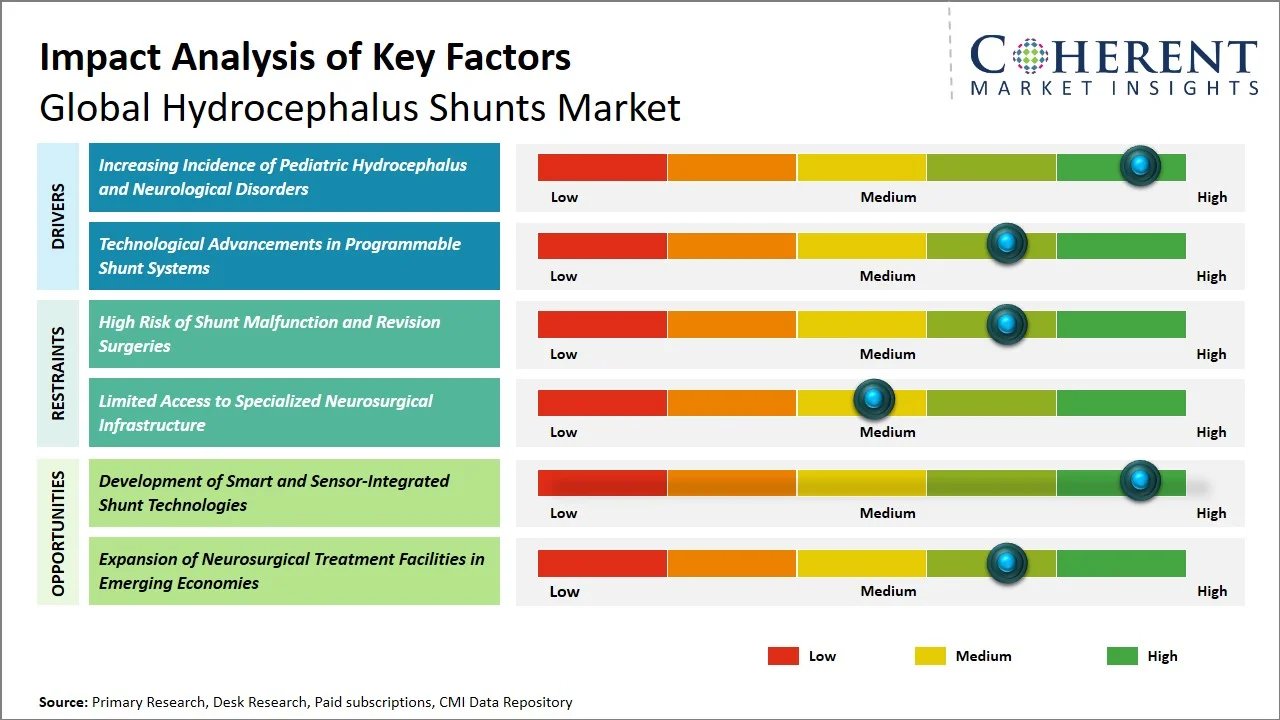
Market Drivers
- Increasing Incidence of Pediatric Hydrocephalus and Neurological Disorders: The growing incidences of congenital neurologic defects, neonatal brain injuries, preterm related complexities, and pediatric hydrocephalus cases are major drivers that contribute to the expanding world hydrocephalus shunts market. Widespread use of ventriculoperitoneal (VP) shunt and implantable programmable cerebrospinal fluid drainage devices in pediatric neurosurgery centers is contributing to chronic intracranial pressure management in neonates and infants. Improved diagnostic technologies and care procedures in pediatrics and neonates are leading to an increased rate of diagnoses and surgical procedures in hydrocephalus patients. Hydrocephalus Association reports that one out of every 770 babies born in the U.S develops hydrocephalus, demonstrating the increasing demand in clinic practice for hydrocephalus management and neurosurgical procedure. (Source: Hydrocephalus Association)
- Technological Advancements in Programmable Shunt Systems: The growth is spurred by ongoing innovation in the programmable hydrocephalus shunt systems through enhanced intracranial pressure control, decreasing over drainage-related complications and allowing customized cerebrospinal fluid delivery. The innovative features of programmable valves, such as adjustable pressure setting without invasive procedure and superior MRI compatibility, facilitates the long-term treatment for both pediatric and adult hydrocephalus patients. Growing integration of pressure-control mechanisms and precise neurosurgical technologies is speeding up global clinical adoption of newer generation hydrocephalus shunts. For instance, Codman Certas Plus Programmable Valve from Integra LifeSciences: an MRI-resistant programmable mechanism with various performance features which enable physician to non-invasively change the flow rate of cerebrospinal fluid and improve managing of hydrocephalus as well as patients' safety. (Source: Integra LifeSciences)
Emerging Trends
- Growing Adoption of Programmable and MRI-Compatible Shunt Systems: Neurosurgical units are becoming more receptive to utilizing programmable hydrocephalus shunt valves that allow non-invasive pressure modification, along with MRI-resistant functionality for management of long-term cerebrospinal fluid diversion. The use of these shunts reflects a movement towards personalized treatment, elimination of over drainage complications and more accurate control of ICP in both pediatric and adult patients with hydrocephalus.
- Increasing Integration of Telemetric and Sensor-Based Monitoring Technologies: The market for hydrocephalus shunts are experiencing growing integration of telemetric intracranial pressure (ICP) monitoring and shunt-enabling sensors to provide consistent neurological examination and postoperative remote monitoring. These advanced techniques aid in early identification of shunt malfunction, the collection of data for informed neurosurgical decision-making, and the improvement of long-term hydrocephalus patient outcomes.
Regional Insights
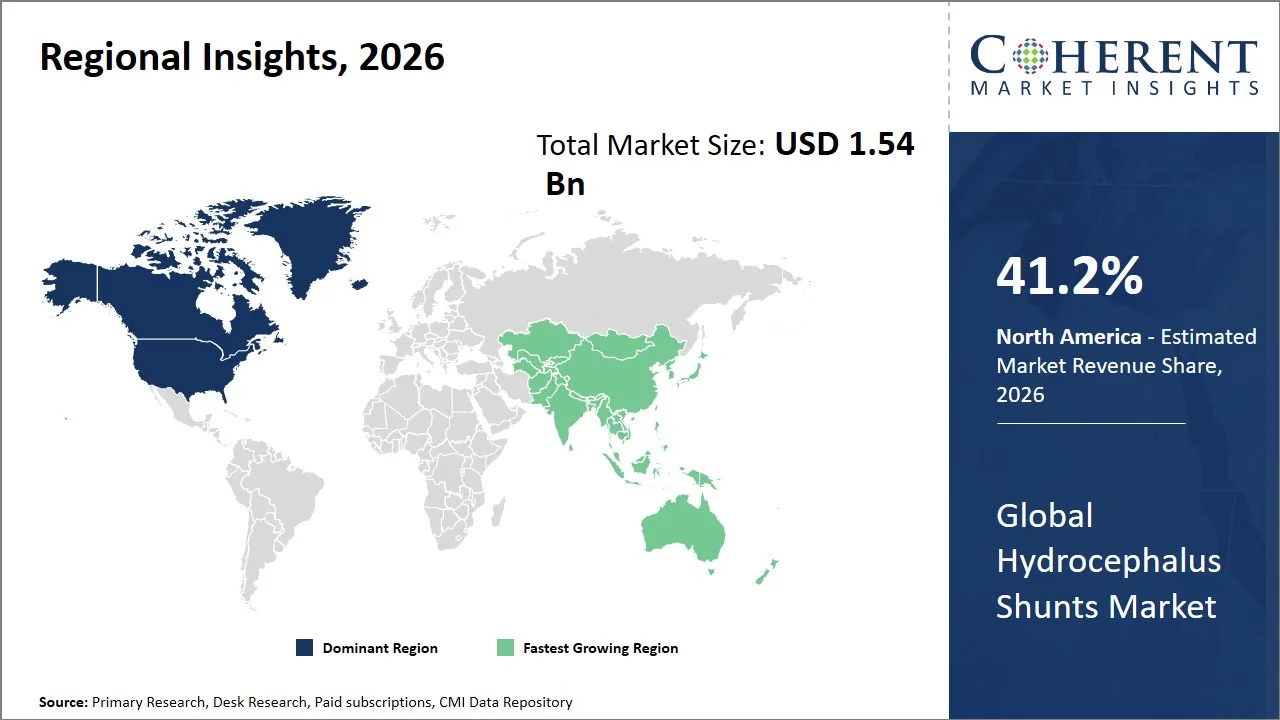
Why is North America a Strong Market for Hydrocephalus Shunts?
North America leads the global hydrocephalus shunts market, accounting for an estimated 41.2% share in 2026, attributed to established healthcare infrastructure, increased consciousness of neurological disorders, and continuous research investment. The region houses some of the leading medical device manufacturers of hydrocephalus shunts such as Medtronic, Integra LifeSciences, and DePuy Synthes. Additionally, favorable government policies, approval of medical devices, and reimbursement policies (such as the U.S. FDA 510(k) approval pathway, Centers for Medicare & Medicaid Services (CMS) reimbursement framework, Pediatric Device Consortia Grant Program, and NIH-supported neurological research initiatives) help in the early implementation of new technologies.
Furthermore, the region is an attractive hub for extensive clinical studies and rigorous research activities. For instance, The Hydrocephalus Clinical Research Network published a multicenter trial entitled "Shunt infection prevention practices in Hydrocephalus Clinical Research Network-Quality" designed to enhance hydrocephalus management, minimize shunt infections, and establish uniform neurosurgical quality practices among neurosurgical centers throughout North America. (Source: National Library of Medicine) These continued joint clinical research projects continue to aid in the technology development and evidence-based acceptance of hydrocephalus shunt systems in the region.
Why Does Asia Pacific Hydrocephalus Shunts Market Exhibit High Growth?
The Asia pacific hydrocephalus shunts market is expected to exhibit the fastest growth with a contribution of 27.8% share to the market in 2026, driven by increasing investment in healthcare infrastructure, growing prevalence of neurological disorders, and increasing patient awareness. Supportive government initiatives like introduction of pro health policies by government of countries like China, India, and Japan to improve healthcare infrastructure and develop medical devices' regulatory framework is enhancing the penetration of new shunt systems in the market. The region advantages from better distribution network and increasing numbers of health care professionals specialized in neurosurgery. Along with the global players like Stryker Corporation and Johnson & Johnson Corporation, emergence of local players also plays a major role to satisfy the growing demand.
Urbanization and increase in the percentage of people covered with health insurance and improving hospital infrastructure continue to fuel the demand. For instance, India's Ayushman Bharat Digital Mission (ABDM) is continuously improving its digital health interconnectivity and the integration of its hospital network with ease in accessing specialized neurological health service care throughout India to improve the diagnosis, referral, and treatment accessibility of hydrocephalus and other neurological conditions in tertiary health care networks in the Asia Pacific region. (Source: National Health Authority)
Global Hydrocephalus Shunts Market Outlook for Key Countries
Why is the U.S. Leading Innovation and Adoption in the Hydrocephalus Shunts Market?
The U.S. is at the forefront of technological adoption and development in the hydrocephalus shunts market, because of their huge concentration of pediatric neurosurgery programs that carry out complicated hydrocephalus and shunt revision procedures within specialized neurological hospital centers. They have high clinical use of programmable, MRI-resistant, and pressure-adjustable shunt devices to provide long-term cerebrospinal fluid (CSF) diversion in both congenital and acquired forms of hydrocephalus. Integrated use of telemetric intraparenchymal pressure monitoring technologies as well as high-precision neurosurgical approaches and technologies to manage hydrocephalus patients contributes to further increased adoption of novel and next-generation treatment solutions in U.S. Hospital centers. Moreover, the existence of treatment networks dedicated to hydrocephalus management and neurosurgical pathways for multidisciplinary care promote ongoing development of evidence-based practices and improvement of shunts.
Is Japan a Favorable Market for Hydrocephalus Shunts?
Japan is an attractive market for hydrocephalus shunts due to sophisticated neurosurgical treatment environment and high clinical usage of precise-controlled neurosurgical implant technology. The use of programmable and MRI compatible shunt systems for the management of normal pressure hydrocephalus (NPH), pediatric hydrocephalus and neurodegenerative disorders requiring chronic cerebrospinal fluid diversion has been growing significantly across the neurosurgical facilities in Japan. High procedure focus in Japan can also be seen toward less invasive neurosurgical treatment, accuracy in post-operative pressure management and chronic hydrocephalus patient’s long-term neurological evaluation. It is supported by continued high adoption rate of cutting-edge diagnostic imaging and neurological evaluation equipment within tertiary hospitals.
Is China Emerging as a Key Growth Hub for the Hydrocephalus Shunts Market?
The hydrocephalus shunts market is a principal growth area in China because the nation's pediatric neurosurgery and neonatal intensive care capacities, together with tertiary neurological treatment capabilities, are growing at a pace unmatched within the major metropolitan hospitals of China. Chinese hospitals are seeing a rise in hydrocephalus surgeries accompanying congenital neurologic conditions and traumatic head injuries along with acquired age-related neurologic conditions and disorders associated with cerebrospinal fluid (CSF) diversion procedures. High volume neurological treatment centers utilizing high levels of precision in intracranial pressure (ICP) management are adopting the use of programmable valve shunts along with innovative neurosurgical implants within China's neurological settings. China's efforts at improving neurological rehabilitation and the rapid increase of specialized pediatric healthcare centers also serve to sustain its growing market demand for hydrocephalus shunt systems.
Why Does Germany Top the Europe Hydrocephalus Shunts Market?
Germany leads the Europe hydrocephalus shunts market because of its specialization in neurosurgery implant technologies, the implementation of advanced programmable pressure regulating shunt systems in neurological tertiary centers and clinical dedication to complicated hydrocephalus management in hospitals. Hospitals in Germany exhibit considerable clinical expertise in normal pressure hydrocephalus management (NPH), complex childhood hydrocephalus, and complex cerebrospinal fluid diversion over long periods with critical intracranial pressure manipulation. Furthermore, German hospitals have better integrated neurological imaging, post-surgery surveillance and shunt calibration into its neurosurgery tertiary procedures pathway.
Is Hydrocephalus Shunts Market Developing in India?
India is emerging as a significant hydrocephalus shunts market driven by the increasing adoption of pediatric neurosurgery programs and the growing number of comprehensive hydrocephalus treatment services offered at tertiary care hospitals in India. Indian neurosurgical centers have also seen an increase in both ventriculoperitoneal (VP) shunt placement procedures and the adoption of the management of advanced pediatric neurosurgical diseases, such as congenital abnormalities, neonatal pathologies, and traumatic brain injuries, via the insertion of the required cerebrospinal fluid diversion shunts. The country also shows increasing adoption rates of programmable shunt systems and dedicated pediatric neuro care clinics at multispecialty neuro hospitals. Increased promotion of pediatric neurosurgery training programs and specialized hydrocephalus treatment routes further supports the continued growth of the hydrocephalus shunt procedure numbers in India.
Regulatory Landscape Governing the Global Hydrocephalus Shunts Market
Region | Authority & Classification | Approval Pathway | Key Regulatory Insight |
North America | U.S. Food and Drug Administration (FDA) – Class II neurological implantable medical devices | FDA 510(k) premarket notification pathway for hydrocephalus shunts and programmable valve systems | Strong regulatory focus on long-term shunt safety, MRI compatibility, infection reduction technologies, and post-market surveillance for implantable neurosurgical devices |
Europe | European Medicines Agency (EMA) and European Commission MDR Framework – Class III implantable medical devices under EU MDR | CE Mark approval under EU Medical Device Regulation (MDR) supported by clinical evaluation and conformity assessment | Increased emphasis on clinical evidence, biocompatibility validation, implant traceability, and long-term performance monitoring for neurological implants |
Asia Pacific | National Medical Products Administration (NMPA - China), Pharmaceuticals and Medical Devices Agency (PMDA - Japan), CDSCO (India) | Country-specific device registration, local clinical evaluation, and import approval pathways | Expanding regulatory harmonization and strengthening oversight for implantable neurosurgical devices to improve pediatric neurological treatment safety and quality standards |
Latin America | ANVISA (Brazil), COFEPRIS (Mexico) – implantable neurosurgical device regulation | Medical device registration supported by technical documentation and safety evaluation | Increasing regulatory focus on imported neurosurgical device quality standards, hospital safety compliance, and implant performance monitoring |
Middle East & Africa | Saudi Food and Drug Authority (SFDA), UAE Ministry of Health & Prevention (MOHAP), South African Health Products Regulatory Authority (SAHPRA) | Device registration and market authorization based on international conformity approvals and local compliance review | Growing adoption of internationally approved hydrocephalus shunt systems and strengthening neurosurgical device procurement standards across tertiary healthcare facilities |
How is development of smart and sensor-integrated shunt technologies creating new growth opportunities in the global hydrocephalus shunts market?
The advent of smart and sensor-based hydrocephalus shunts is paving the way for accelerated growth within the hydrocephalus shunts market as the technology allows real-time intracranial pressure (ICP) monitoring, improved cerebrospinal fluid (CSF) flow control, and earlier identification of shunt blockage or malfunction. Increasingly non-invasive monitoring, wireless transmission and customizable pressure setting features are built into smart and sensor-based shunts that could assist neurosurgeons in enhancing long-term patient care and reduce the incidence of revision surgery. Such a technology, which integrates digital sensors and a pressure-monitoring platform, is vital in cases of pediatrics or difficult hydrocephalus that necessitates constant neurological observation and long-term follow-up.
Moreover, an increasing demand for accurate neurosurgery and telemedicine is fostering greater investment in the development of intelligent shunt systems across neurologists, medical researchers, and device manufacturers. For instance, the Miethke SENSOR RESERVOIR Telemetric ICP Monitoring System allows for wireless intracranial pressure (ICP) monitoring of hydrocephalus patients with the use of implantable sensor integrated system technology which helps neurosurgeons monitor intracranial pressure noninvasively and effectively manage cerebrospinal fluid (CSF) long-term in complicated hydrocephalus treatment cases. (Source: Christoph Miethke GmbH & Co. K)
Market Players, Key Development, and Competitive Intelligence
Key Developments
- In September 2025, MadSci raised USD 10 million in seed funding in support of further development of its SmartShunt platform that will help in treating hydrocephalus. This investment is intended to improve intelligent shunt devices, which will lower the incidence of shunt malfunction, better manage cerebrospinal fluid, and monitor patients with hydrocephalus more effectively.
- In June 2025, Aesculap developed and launched XABO antibiotic-impregnated catheters to be used in the treatment of hydrocephalus, thereby minimizing the risk of infections related to shunting procedures of the cerebrospinal fluid. This innovation emphasizes the growing trend within the healthcare sector concerning developing highly infection-resistant shunts.
Competitive Landscape
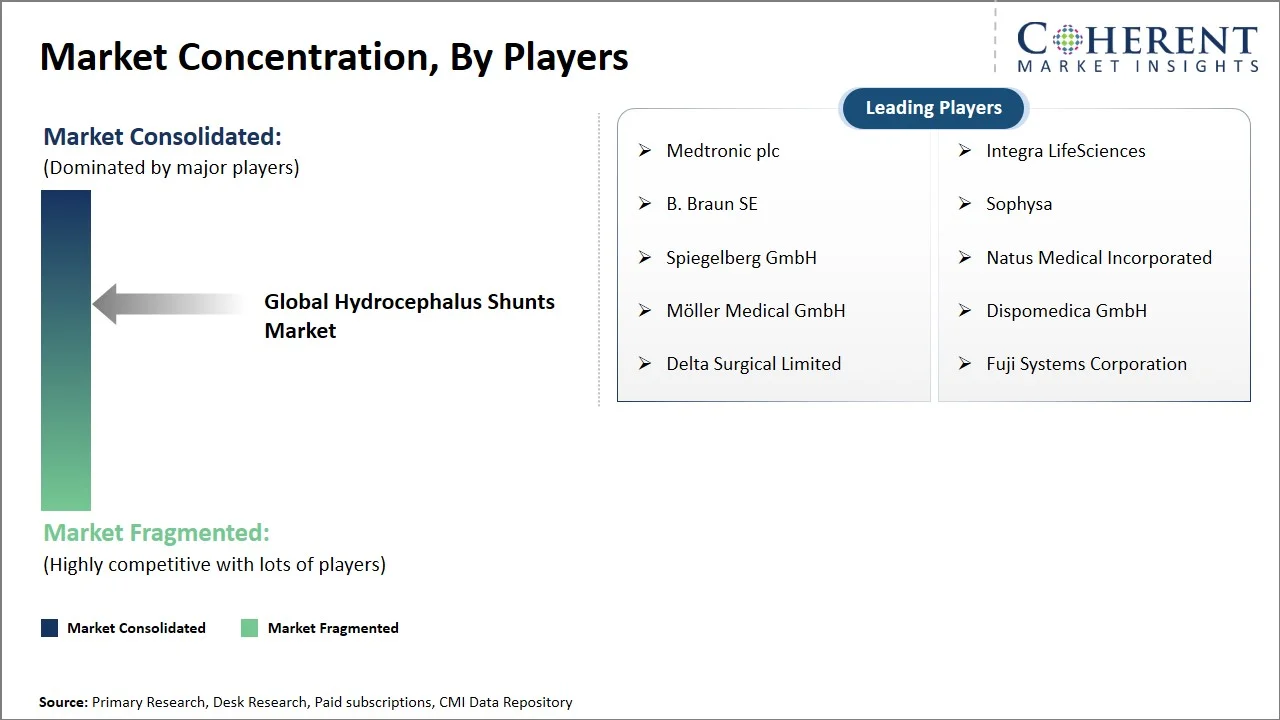
The global hydrocephalus shunts market is moderately competitive, where the companies are mainly competing on technology upgradation related to programmable valves, MRI resistant shunt systems, infection control mechanism and the efficiency and longevity in managing cerebrospinal fluid. Investments are seen on the development of high-precision pressure regulating valves, antimicrobial catheter material, minimally invasive neurosurgery techniques etc. The companies are enhancing collaboration with pediatric neurosurgery centers, neurological research institutes, tertiary care centers to quickly establish clinical validation of the advanced hydrocephalus treatment systems and achieve market adoption. The rise of smart and adjustable valve systems for personalized treatment and long-term monitoring of post-operative conditions is contributing to market growth. Key focus areas include:
- Development of programmable and pressure-adjustable hydrocephalus shunt valve systems
- Expansion of MRI-resistant and infection-reducing shunt technologies
- Integration of precision intracranial pressure management capabilities in shunt systems
- Strategic collaborations with pediatric neurosurgery and neurological treatment centers
- Investments in minimally invasive and long-term hydrocephalus management solutions
Market Report Scope
Hydrocephalus Shunts Market Report Coverage
| Report Coverage | Details | ||
|---|---|---|---|
| Base Year: | 2025 | Market Size in 2026: | USD 1.54 Bn |
| Historical Data for: | 2020 To 2024 | Forecast Period: | 2026 To 2033 |
| Forecast Period 2026 to 2033 CAGR: | 5.8% | 2033 Value Projection: | USD 2.28 Bn |
| Geographies covered: |
| ||
| Segments covered: |
| ||
| Companies covered: | Medtronic plc, Integra LifeSciences, B. Braun SE, Sophysa, Spiegelberg GmbH, Natus Medical Incorporated, Möller Medical GmbH, Dispomedica GmbH, Delta Surgical Limited, and Fuji Systems Corporation | ||
| Growth Drivers: |
| ||
| Restraints & Challenges: |
| ||
Analyst Opinion (Expert Opinion)
- The global hydrocephalus shunts market is anticipated to shift towards more technological and customizable solutions which offer the ability to precisely manage cerebrospinal fluid and provide better neurological outcomes over the long term while also reducing the risks and complications associated with shunts. Advancements in precisely controlled intracranial pressure, least invasive surgery procedures and MRI compatible technologies are anticipated to foster increased innovations in treatment options. Further increasing the acceptance of anti-microbial catheter components and customizable valves together with advanced patient monitoring features will also fuel the shift to new treatment methods both for pediatric and adult neurosurgery. Furthermore, increased neurological screening in newborns, specialized pediatric neurosurgical infrastructure across different regions of the world will also positively impact the long-term market.
- The largest opportunity for growth in programmable ventriculoperitoneal (VP) shunt systems for use in pediatric hydrocephalus application will likely arise in China, India, South East Asia and selected areas of the Middle East due to their aggressive development of neonatal intensive care and pediatric neurosurgery infrastructure and capacity. Pediatric hydrocephalus resulting from congenital neural deficits and neonatal sequela will remain a consistent driving factor for long term cerebrospinal fluid diversion procedures in this market segment. High-end markets like North America and Western Europe will continue to represent premium markets for MRI resistant, pressure- adjustable and infection-control hydrocephalus shunt technology as they are employed in complicated neural deficits and revision surgery settings in advanced tertiary care hospitals and neurological centers of excellence.
- In order to secure a competitive advantage, the market players must focus on developing accurate, MRI-safe, and programmable hydrocephalus shunting systems that reduce chances of infection and over drainage. Antimicrobial catheters, smart valve systems, and neurosurgery accuracy to ensure long-term treatment efficacy while minimizing reoperation are key. Market penetration into less developed and new markets can be achieved by leveraging relationships with pediatric neurosurgery organizations and research institutions and specialized hospitals to confirm new technologies, increase physician awareness, and adopt evidence-based protocols. Also, presence in emerging health markets through enhanced educational programs, neurosurgery collaborations, and cost-effective treatment solutions can further penetrate the global market.
Speak to the analyst
Want personalized insights?
Take the findings above to one of our principal consultants, or have the report rebuilt around the segments, geographies and competitors you actually track.
Market Segmentation
- Product Type Insights (Revenue, USD Bn, 2021 - 2033)
- Ventriculoperitoneal (VP) Shunts
- Ventriculoatrial (VA) Shunts
- Lumboperitoneal (LP) Shunts
- Programmable Shunts
- Fixed Pressure Shunts
- Others
- Component Insights (Revenue, USD Bn, 2021 - 2033)
- Shunt Catheters
- Valves
- Drainage Systems
- Accessories
- Age Group Insights (Revenue, USD Bn, 2021 - 2033)
- Pediatric
- Adult
- Geriatric
- End User Insights (Revenue, USD Bn, 2021 - 2033)
- Hospitals
- Neurosurgery Centers
- Specialty Clinics
- Ambulatory Surgical Centers
- Others
- Regional Insights (Revenue, USD Bn, 2021 - 2033)
- North America
- U.S.
- Canada
- Latin America
- Brazil
- Argentina
- Mexico
- Rest of Latin America
- Europe
- Germany
- U.K.
- Spain
- France
- Italy
- Russia
- Rest of Europe
- Asia Pacific
- China
- India
- Japan
- Australia
- South Korea
- ASEAN
- Rest of Asia Pacific
- Middle East
- GCC Countries
- Israel
- Rest of Middle East
- Africa
- South Africa
- North Africa
- Central Africa
- North America
- Key Players Insights
- Medtronic plc
- Integra LifeSciences
- Braun SE
- Sophysa
- Spiegelberg GmbH
- Natus Medical Incorporated
- Möller Medical GmbH
- Dispomedica GmbH
- Delta Surgical Limited
- Fuji Systems Corporation
Sources
Primary Research Interviews
- Pediatric neurosurgeons and hydrocephalus treatment specialists involved in ventriculoperitoneal (VP) shunt implantation and cerebrospinal fluid (CSF) diversion procedures
- Biomedical engineers and neurodevice developers working on programmable hydrocephalus shunt valves and MRI-compatible neurosurgical systems
- Hospital neurology and neurosurgery departments utilizing hydrocephalus shunts for congenital and acquired neurological disorder management
- Clinical researchers involved in intracranial pressure regulation, shunt infection prevention, and long-term hydrocephalus management studies
- Pediatric healthcare specialists and neonatal intensive care professionals managing congenital hydrocephalus and neonatal neurological abnormalities
Stakeholders
- Hydrocephalus shunt manufacturers and neurosurgical device technology providers
- End-use Sectors
- Hospitals and tertiary neurosurgery centers
- Pediatric neurological treatment and neonatal intensive care units
- Neurological research and academic institutions
- Ambulatory neurosurgical and specialty neurological clinics
- Regulatory & Health Bodies: U.S. Food and Drug Administration (FDA) – hydrocephalus shunt and neurological implant approvals, European Medicines Agency (EMA) – neurosurgical device and implantable medical device regulations, National Institutes of Health (NIH) – neurological disorder and hydrocephalus research initiatives, World Health Organization (WHO) – congenital neurological disorder and pediatric healthcare frameworks
Databases
- ClinicalTrials.gov – hydrocephalus shunt and neurosurgical clinical studies
- FDA Medical Device Databases – hydrocephalus shunt system approvals and safety records
- WHO Global Health Observatory – congenital disorder and pediatric neurological healthcare statistics
- OECD Health Statistics – neurosurgical procedure and healthcare infrastructure data
Magazines
- NeuroNews International – neurosurgery and neurovascular device technology developments
- Medical Device Network – implantable neurological device and shunt technology advancements
- MedTech Dive – neurological device innovation and healthcare technology trends
Journals
- Journal of Neurosurgery: Pediatrics
- Child’s Nervous System
- Fluids and Barriers of the CNS
- Neurosurgery
- World Neurosurgery
Newspapers
- Financial Times – medical technology and healthcare investment developments
- The Wall Street Journal – healthcare innovation and neurological treatment coverage
- The New York Times (Health Section) – neurological disorders and pediatric healthcare trends
- The Guardian (Health & Science Section) – medical device and neurosurgical technology developments
Associations
- Hydrocephalus Association
- American Association of Neurological Surgeons (AANS)
- Congress of Neurological Surgeons (CNS)
- International Society for Pediatric Neurosurgery (ISPN)
Public Domain Sources
- National Institutes of Health (NIH) – neurological disorders and hydrocephalus research
- U.S. Food and Drug Administration (FDA) – neurosurgical implant and shunt regulatory framework
- Centers for Disease Control and Prevention (CDC) – congenital neurological disorder statistics
- World Health Organization (WHO) – pediatric neurological healthcare and congenital disorder initiatives
Proprietary Elements
- CMI Data Analytics Tool, Proprietary CMI Existing Repository of information for last 10 years.
Get access to 250+ pages report
Every segment, forecast, competitor profile and data table behind the analysis above — available for instant download.
- ESOMAR Member
- ISO 9001:2015 Certified
- D-U-N-S Registered
- GDPR & CCPA Compliant
Missing comfort of reading report in your local language? Find your preferred language:
Transform your Strategy with Exclusive Trending Reports
Frequently Asked Questions
The global hydrocephalus shunts market is estimated to be valued at USD 1.54 Bn in 2026 and is expected to reach USD 2.28 Bn by 2033.
Ventriculoperitoneal (VP) shunts dominate due to their widespread clinical adoption for long-term cerebrospinal fluid (CSF) diversion, established surgical familiarity, effective intracranial pressure management, and suitability across both pediatric and adult hydrocephalus treatment applications.
Hydrocephalus shunts are implantable neurosurgical devices designed to divert excess cerebrospinal fluid (CSF) from the brain ventricles to another part of the body to relieve elevated intracranial pressure.
The CAGR of global hydrocephalus shunts market is projected to be 5.8% from 2026 to 2033.
Increasing incidence of pediatric hydrocephalus and neurological disorders and technological advancements in programmable shunt systems are the major factors driving the growth of the global hydrocephalus shunts market.
High risk of shunt malfunction and revision surgeries and limited access to specialized neurosurgical infrastructure are the major factors hampering the growth of the global hydrocephalus shunts market.
Programmable shunt valves regulate cerebrospinal fluid drainage by allowing non-invasive adjustment of valve pressure settings to control intracranial pressure more precisely.