

Global Industrial Truck Market Size and Forecast – 2026 - 2033
The Global Industrial Truck Market is estimated to be valued at USD 38.40 Bn in 2026 and is expected to reach USD 55.13 Bn by 2033, exhibiting a compound annual growth rate (CAGR) of 5.3% from 2026 to 2033.
Key Takeaways of the Industrial Truck Market
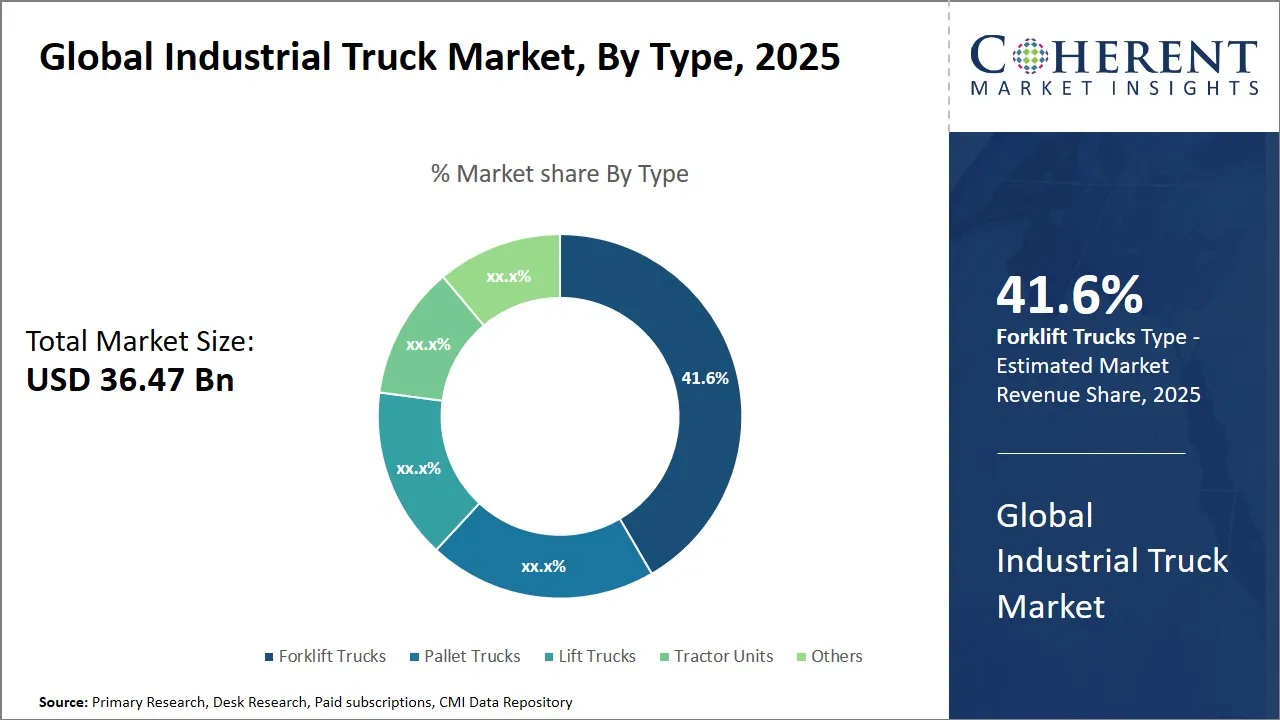
- The Forklift Trucks segment leads the market holding an estimated share of 42.6 % in 2026.
- The electric segment leads the market holding an estimated share of 36.3 % in 2026.
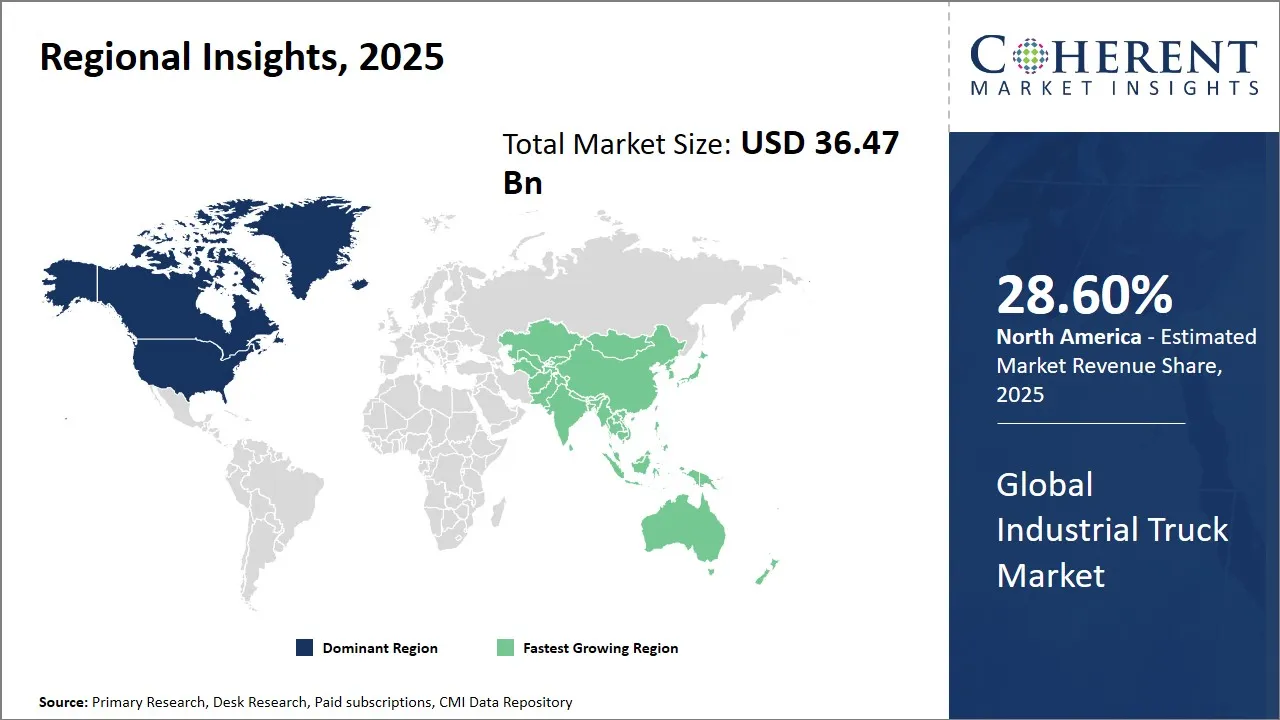
- North America is estimated to lead the market with a share of 28.6 % in 2026. Asia Pacific, holding a share of 26.9% in 2026, is projected to be the fastest growing region.
Market Overview
The market is seeing the use of advanced technologies such as IoT, AI, and electric powertrains which improve operational efficiency and reduce environmental impact. There is also a growing preference to be seen for electric and automated industrial trucks because of stricter emission regulations and the push towards sustainability. Also, increasing e-commerce activities are adding to warehouse expansions, thus creating demand for versatile and reliable industrial trucks capable of handling diverse material handling requirements effectively.
Current Events and Its Impact
Current Events | Description and Impact |
Geopolitical and Trade Developments |
|
Environmental & Regulatory Shifts |
|
Energy & Fuel Market Disruptions |
|
Economic & Infrastructure Trends |
|
Segmental Insights
- Current Industry Events of 2026
- Market Size Estimation
- Regional Breakdown
- Competitive Landscape
- Customer Intelligence
- Segmental Analysis
- Pricing Analysis
- Key Market Drivers, Challenges & Future Trends
- Customized Insights Section
Global Industrial Truck Market Insights, by Type - Forklift Trucks Lead Owing to Their Versatility and Operational Efficiency
Forklift trucks, holding an estimated share of 42.6% in 2026, dominate the market. They can handle different load sizes and weights, which makes them very important in environments that need quick and reliable movement of goods. Forklift trucks come in different configurations such as counterbalance, reach, and pallet trucks, helping businesses choose the specific type that fulfils their operational requirements.
In warehouses and distribution centers where speed and precision are crucial, forklifts facilitate quicker loading and unloading of materials, significantly boosting operational throughput. Additionally, advancements in safety features such as better stability controls, operator-assist technologies, and ergonomic design have increased user confidence and reduced workplace accidents, further promoting their adoption.
The rise of automation and integration of smart technologies are also pivotal growth drivers within this segment. Modern forklift trucks increasingly incorporate telematics and IoT-enabled systems, allowing operators and fleet managers to monitor performance, optimize routes, and schedule maintenance proactively. This shift toward intelligent material handling equipment aligns with broader Industry 4.0 trends and enhances asset utilization, helping companies reduce downtime and operational costs.
Furthermore, the ability of forklift trucks to operate efficiently in diverse environments—from narrow warehouse aisles to outdoor construction sites—adds to their broad appeal. Their robustness and reliability in handling heavy loads over varied terrains make them the preferred choice for many industries. Support services including easy availability of spare parts, coupled with a well-established global service and supply network, also sustain their leading market position.
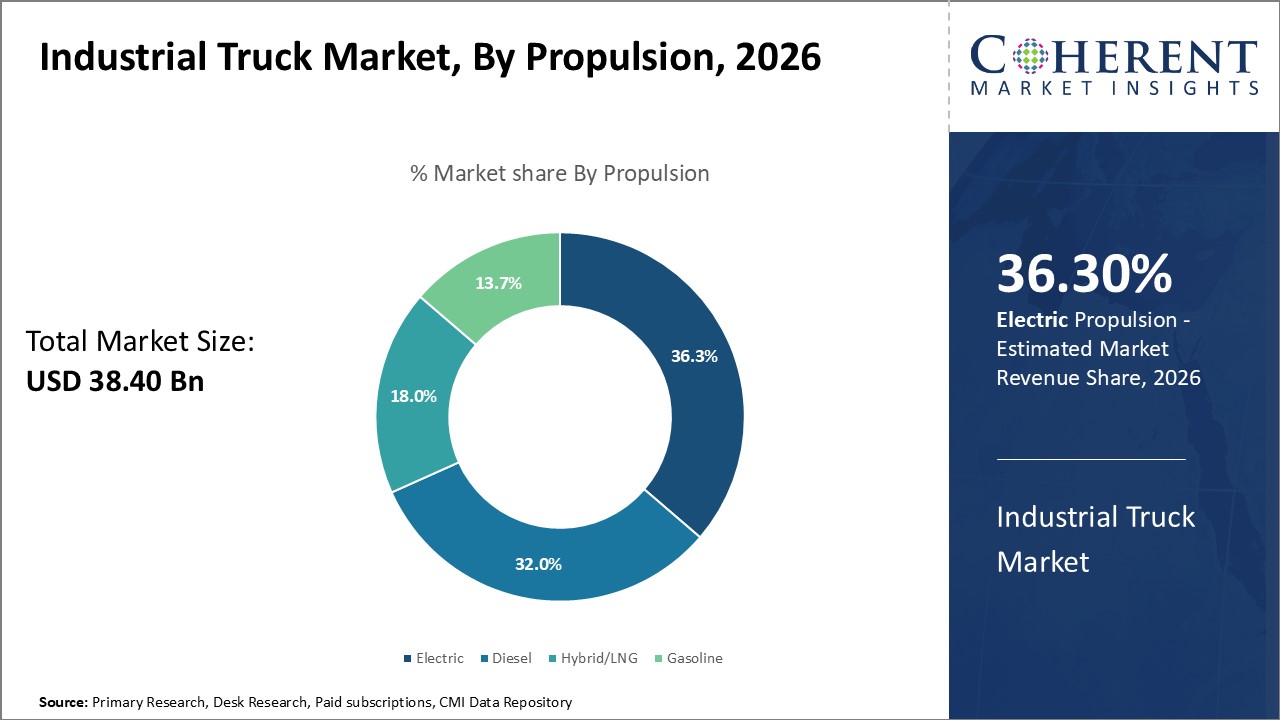
Global Industrial Truck Market Insights, by Propulsion - Electric Industrial Trucks Lead Due to Environmental Benefits and Operational Cost Savings
Electric propulsion has emerged as the preferred choice in the industrial truck market, holding a share of 36.3% in 2026. The shift toward electric industrial trucks is particularly prominent across sectors striving to achieve sustainability targets, such as warehousing, retail, and manufacturing. Unlike traditional diesel or gasoline-powered trucks, electric models produce zero direct emissions. This environmental advantage is reinforced by urban regulations limiting the use of internal combustion engines in confined spaces.
Although the initial investment may be higher compared to diesel counterparts, electric trucks offer significantly lower fuel and maintenance costs over their lifespan. Electric motors have fewer moving parts, require less maintenance, and benefit from reduced wear and tear, translating to improved total cost of ownership. Additionally, improvements in battery technology have extended operational hours, mitigated charging times, and enhanced overall reliability, making electric trucks increasingly practical for continuous industrial use.
The advancements in battery management systems and the availability of fast-charging infrastructure contribute further to the adoption of electric industrial trucks. Enterprises operating large fleets can implement efficient charging schedules, minimizing downtime while maximizing productivity. Coupled with innovations in battery capacity and durability, electric trucks are now capable of meeting the demanding operational cycles of busy warehouses and distribution centers.
Moreover, the growing preference for electric trucks is supported by incentives and subsidies offered by governments in many regions to promote the adoption of clean technologies. These measures lower the total acquisition cost and encourage fleet modernization, accelerating the transition away from fossil fuel-powered trucks.
Pricing Analysis of the Industrial Truck Market
Truck Type | New Price Range (USD) | Used Price Range (USD) |
Electric Forklift | USD 20,000 – 45,000 (standard); up to USD 80,000 for high-capacity units) | USD 10,000 – 40,000 (varies by age and hours) |
Internal Combustion Forklift (Diesel/Propane) | USD 20,000 – 50,000 | USD 5,000 – 25,000 |
Industrial Forklift (10k+ lbs) | USD 30,000 – 65,000 | USD 10,000 – 30,000 |
Rough-terrain Forklift | USD 40,000 – 80,000+ | USD 10,000 – 30,000 |
Reach Truck | USD 25,000 – 60,000 | USD 8,000 – 30,000 |
Order Picker | USD 10,000 – 25,000 | USD 7,000 – 20,000 |
Walkie Stacker | USD 2,500 – 25,000 | USD 1,000 – 15,000 |
Pallet Jack | USD 300 – 6,500 | USD 100 – 4,000 |
Regional Insights
North America Industrial Truck Market Analysis and Trends
North America, holding an estimated share of 28.6% in 2026, dominates the industrial truck market, supported by a combination of technological advancements, increasing automation in warehouses, and rising demand from the retail and logistics sectors. The U.S. and Canada benefit from well-established regulatory frameworks that encourage safety and efficiency, stimulating investments in advanced industrial trucks, including electric and automated guided vehicles (AGVs).
Key players such as Crown Equipment Corporation, Hyster-Yale Materials Handling, and Raymond Corporation are innovating with energy-efficient and smart industrial trucks, propelling market expansion. In early 2026, Crown released its V-Hub platform, enabling real-time data analytics, predictive maintenance, operator behavior tracking, and energy use monitoring across industrial truck fleets. Additionally, North America’s strong logistics network, government incentives for green technologies, and a mature aftermarket ecosystem drive rapid adoption of newer industrial truck solutions.
Asia Pacific Industrial Truck Market Analysis and Trends
Asia Pacific region, holding an estimated share of 26.9% in 2026, dominates the global industrial truck market, driven by a robust manufacturing ecosystem, extensive industrialization, and expanding e-commerce activities. Countries like China, Japan, and South Korea serve as manufacturing hubs, fostering high demand for industrial trucks such as forklifts and pallet jacks. Government initiatives promoting infrastructure development and industrial automation further fuel this dominance.
Moreover, the presence of major industrial truck manufacturers like Toyota Industries Corporation (Japan), KION Group’s Jungheinrich (with significant operations in China), and Hyster-Yale Group’s subsidiaries in the region underpins the market leadership here. In January 2026, Toyota Material Handling launched its A-Series autonomous forklifts with integrated AI-driven obstacle detection, adaptive routing, and energy-efficient lithium-ion batteries. Favorable trade policies and investment in logistics infrastructure also contribute to a competitive market environment that sustains the region’s commanding position.
Industrial Truck Market Outlook for Key Countries
China Industrial Truck Market Analysis and Trends
China industrial truck market is characterized by large-scale manufacturing and rapidly growing warehousing infrastructure to support its vast export economy. The government’s “Made in China 2026” initiative emphasizes automation and smart manufacturing, increasing demand for advanced industrial trucks. Companies like Lonking Holdings Limited and BYD contribute significantly through manufacturing electric industrial trucks and integrating IoT-enabled fleet management solutions. The evolving e-commerce sector in China also fuels warehouse automation, intensifying industrial truck usage.
U.S. Industrial Truck Market Analysis and Trends
The U.S. remains a vital component of global industrial truck demand, led by innovations focusing on battery technology, safety, and automation. Crown Equipment Corporation and Raymond Corporation invest heavily in research and development to produce durable, efficient, and smart forklifts. The growing e-commerce sector and government regulations promoting workplace safety and environmental sustainability enhance market prospects. Additionally, the demand for electric-powered trucks aligns with the U.S. push for greener industrial operations.
Japan Industrial Truck Market Analysis and Trends
Japan continues to lead with a strong focus on precision manufacturing and automation, reflected in sophisticated industrial truck designs emphasizing energy efficiency and ergonomic features. Toyota Industries Corporation, a pioneer in forklift technology, plays a central role in advancing the market through innovative product launches. The country’s emphasis on robotics and automation in manufacturing plants drives sustained industrial truck demand, supported by governmental subsidies for automation and green technology.
Germany Industrial Truck Market Analysis and Trends
Germany industrial truck market is shaped by its strong automotive and manufacturing sectors, emphasizing durability and performance. The presence of influential industry players like KION Group, which owns brands such as Linde and STILL, consolidates the region’s market strength. Germany’s regulatory environment encourages adherence to environmental standards, prompting manufacturers to offer electric and hybrid trucks. Additionally, robust export-import activities create a thriving demand for logistics solutions involving industrial trucks.
Brazil Industrial Truck Market Analysis and Trends
Brazil’s showcases growing industrial activity and expanding logistics infrastructure, spurred by increased investments in agriculture, mining, and manufacturing sectors. The market sees participation from global manufacturers with localized operations, such as Hyster-Yale and Toyota Material Handling Latin America. Despite some economic volatility, government incentives aimed at modernizing logistics and customs processes stimulate demand for industrial trucks. Brazil’s growth in e-commerce and retail sectors is also a significant market driver.
Market Players, Key Development, and Competitive Intelligence
Key Developments
- On July 11, 2025, India's Union Minister for Heavy Industries, Mr. HD Kumaraswamy, announced the launch of the first-ever scheme to incentivise electric trucks under the PM E-DRIVE initiative. The scheme has a financial outlay of Rs 10,900 crore over a period of two years.
- In June 2025, Steyr Automotive signed a contract manufacturing agreement with Chinese company, SuperPanther, to produce electric trucks in Austria. The deal marks SuperPanther’s market entry in Europe.
- In June 2025, Volvo Group and Daimler Truck, two of the leaders in the commercial vehicle industry, announced the launch of Coretura AB, their joint venture aimed at transforming the commercial vehicle industry through a new software-defined vehicle platform and establishing a new industry standard.
- In May 2024, Volvo Trucks announced that it is developing trucks with combustion engines that run on hydrogen. On-road tests with trucks using hydrogen in combustion engines will begin in 2026, and the commercial launch is planned towards the end of this decade.
Top Strategies Followed by Industrial Truck Market Players
- Established industry leaders invest heavily in research and development (R&D) to innovate and introduce high-performance products that meet the evolving demands of diverse industrial applications.
- In 2025, Toyota Material Handling expanded its Innovation Center in Takahama, focusing on AI, hydrogen fuel cell integration, and autonomous forklift systems. It is investing over US$ 350 million annually in R&D to develop zero-emission and AI-powered trucks, reinforcing its leadership in the automation and sustainability space.
- Mid-level players within the industrial truck market adopt a different approach, focusing primarily on cost-effective solutions that strike a balance between quality and affordability.
- Heli introduced a new line of affordable lithium-ion electric forklifts (≤3-ton range) in Southeast Asia and Africa in 2024–25.
- Small-scale players in the industrial truck market typically focus on carving out specialized niches by developing unique product features or innovative solutions tailored to specific applications or regional requirements.
- Combilift continues to specialize in multi-directional and narrow-aisle trucks for industries like timber, steel, and long-load logistics. In 2025, it launched a customized multidirectional forklift for the modular construction sector, addressing unique maneuverability and height constraints.
Market Report Scope
Industrial Truck Market Report Coverage
| Report Coverage | Details | ||
|---|---|---|---|
| Base Year: | 2025 | Market Size in 2026: | USD 38.40 Bn |
| Historical Data for: | 2020 To 2024 | Forecast Period: | 2026 To 2033 |
| Forecast Period 2026 to 2033 CAGR: | 5.3% | 2033 Value Projection: | USD 55.13 Bn |
| Geographies covered: |
| ||
| Segments covered: |
| ||
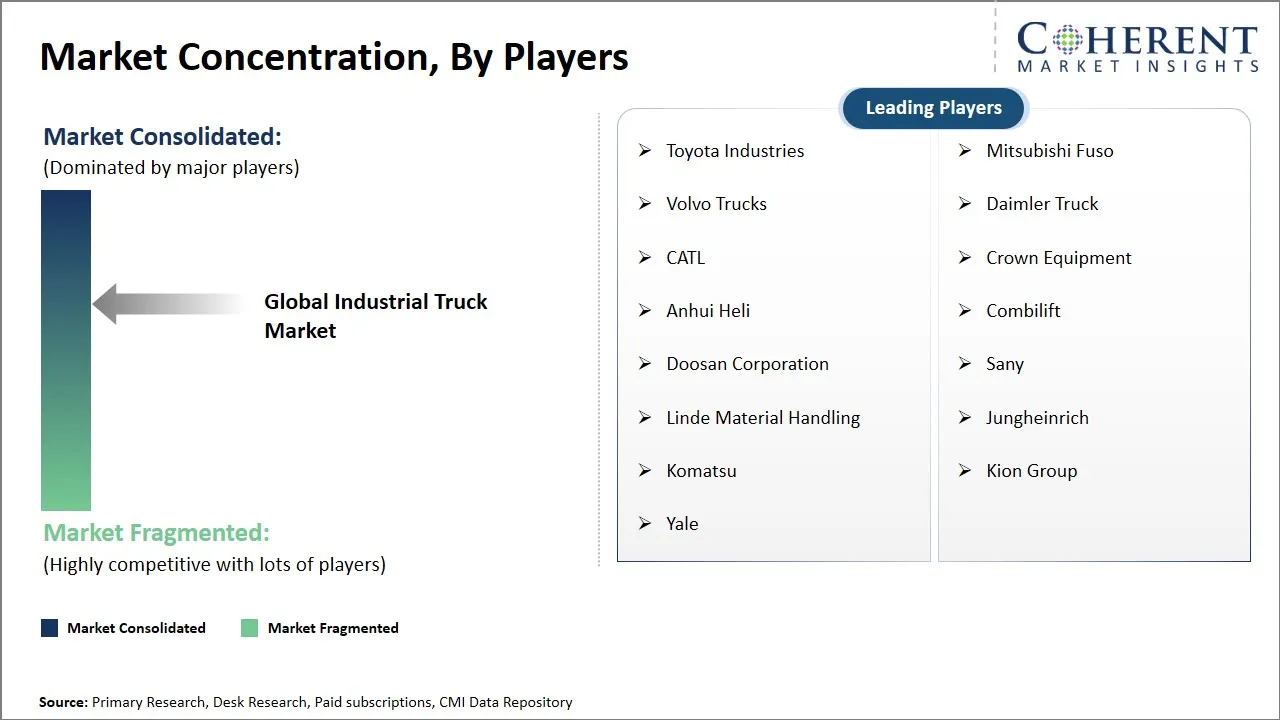
| Companies covered: | Toyota Industries, Mitsubishi Fuso, Volvo Trucks, Daimler Truck, CATL, Crown Equipment, Anhui Heli, Combilift, Doosan Corporation, Sany, Linde Material Handling, Jungheinrich, Komatsu, Kion Group, and Yale | ||
| Growth Drivers: |
| ||
| Restraints & Challenges: |
| ||
Market Dynamics
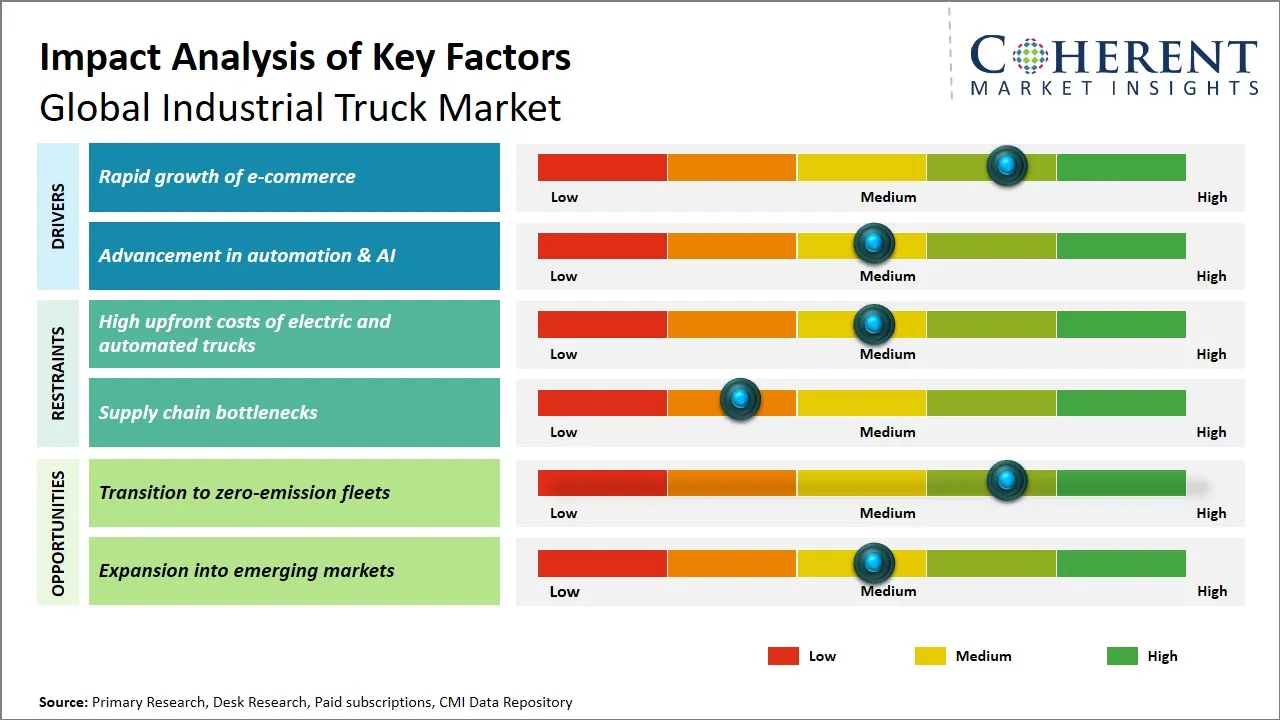
Global Industrial Truck Market Driver – Rapid Growth of E ‑ commerce
As online retail continues to flourish, businesses are under rising pressure to enhance order fulfillment speed, accuracy, and efficiency. This surge in direct-to-consumer deliveries necessitates the constant movement of goods within large-scale storage facilities, prompting companies to invest heavily in industrial trucks such as forklifts, pallet jacks, and stackers. In 2024–2025, Amazon opened multiple high-tech fulfillment centers across North America, Europe, and India featuring extensive use of automated forklifts, pallet jacks, and Automated Guided Vehicles (AGVs).
Moreover, the need for flexible and versatile material handling equipment has grown alongside the diversification of product types and packaging formats handled by e-commerce warehouses. Industrial trucks play a critical role in managing increased inventory turnover, optimizing storage space, and supporting last-mile delivery logistics. Additionally, the integration of automation and smart technologies in industrial trucks aligns perfectly with the digitization trends in e-commerce operations, further reinforcing their importance in modern supply chains.
Global Industrial Truck Market Opportunity – Transition to Zero-Emission Fleets in the Global Industrial Truck Market
Governments worldwide are implementing tougher emissions standards and offering incentives for cleaner technologies, pushing manufacturers and fleet operators to adopt electric and hydrogen fuel cell industrial trucks over traditional diesel-powered models. In early 2025, Volvo Trucks introduced a 600 km-range FH Electric model designed for industrial applications including distribution yards and logistics hubs. The model targets European clients seeking zero-emission solutions due to the EU Green Deal mandates.
Additionally, advances in battery technology, such as increased energy density and faster charging capabilities, are making electric industrial trucks more viable for diverse industrial applications, ranging from warehousing to large-scale manufacturing. The evolving preference for zero-emission vehicles also aligns with the rising demand for automated and connected industrial trucks, as these technologies often complement electric powertrains in boosting productivity and operational safety. Furthermore, the expansion of urban warehouses and distribution centers, where emissions regulations are particularly stringent, is expected to increase demand for cleaner indoor transportation solutions.
Analyst Opinion (Expert Opinion)
- The global industrial truck market is witnessing robust growth, fueled by dynamic shifts across key end-use industries. Foremost, the rapid expansion of e-commerce and omnichannel retail has significantly elevated the need for efficient and scalable logistics. Warehouses and distribution centers are increasingly deploying electric and autonomous industrial trucks—such as forklifts, stackers, and pallet jacks—to meet the high throughput demands of same-day and next-day delivery models. These vehicles enhance operational efficiency, optimize storage, and support last-mile fulfillment in fast-paced environments.
- Simultaneously, Industry 4.0 adoption across manufacturing sectors is generating strong demand for intelligent material handling systems. In industries like automotive, electronics, and pharmaceuticals, where downtime and precision directly impact productivity, smart trucks with IoT integration, telematics, and real-time diagnostics are becoming essential.
- Moreover, in emerging regions like Southeast Asia and the Middle East, governments are ramping up infrastructure development through mega construction projects. This trend is driving demand for heavy-duty and rough-terrain industrial trucks, particularly diesel-powered models capable of withstanding challenging outdoor conditions. Collectively, these sector-specific demands are reshaping the competitive and technological landscape of the industrial truck market.
Speak to the analyst
Want personalized insights?
Take the findings above to one of our principal consultants, or have the report rebuilt around the segments, geographies and competitors you actually track.
Market Segmentation
- Type Insights (Revenue, USD Bn, 2021 - 2033)
- Forklift Trucks
- Pallet Trucks
- Lift Trucks
- Tractor Units
- Others
- Propulsion Insights (Revenue, USD Bn, 2021 - 2033)
- Electric
- Diesel
- Hybrid/LNG
- Gasoline
- Regional Insights (Revenue, USD Bn, 2021 - 2033)
- North America
- U.S.
- Canada
- Latin America
- Brazil
- Argentina
- Mexico
- Rest of Latin America
- Europe
- Germany
- U.K.
- Spain
- France
- Italy
- Russia
- Rest of Europe
- Asia Pacific
- China
- India
- Japan
- Australia
- South Korea
- ASEAN
- Rest of Asia Pacific
- Middle East
- GCC Countries
- Israel
- Rest of Middle East
- Africa
- South Africa
- North Africa
- Central Africa
- North America
- Key Players Insights
- Toyota Industries
- Mitsubishi Fuso
- Volvo Trucks
- Daimler Truck
- CATL
- Crown Equipment
- Anhui Heli
- Combilift
- Doosan Corporation
- Sany
- Linde Material Handling
- Jungheinrich
- Komatsu
- Kion Group
- Yale
Sources
Primary Research Interviews
Stakeholders
- Logistics & Supply Chain Managers (e.g., 3PLs, Fulfillment Centers)
- Fleet Managers from Manufacturing Plants
- Material Handling Equipment Dealers and Service Providers
- E-Commerce and Retail Warehouse Operators
- Procurement Heads at Construction and Infrastructure Firms
- Automation Consultants and Warehouse Design Experts
Databases
- World Industrial Vehicle Statistics (WIVS)
- U.S. Bureau of Transportation Statistics
- Asia-Pacific Logistics Database (APLD)
- European Materials Handling Index (EMHI)
Magazines
- Fleet Logistics Monthly
- Material Handling World Magazine
- Industrial Vehicle News
- Logistics & Automation Review
Journals
- Journal of Industrial Mobility & Equipment
- Logistics Technology & Automation Journal
- Journal of Warehouse Operations & Optimization
- International Journal of Supply Chain Logistics
Newspapers
- The Logistics Post (Global)
- North America Trucking Chronicle
- Asia Industrial Times
- The Economic Times (India)
Associations
- Industrial Truck Association (ITA) – U.S.
- Federation of European Material Handling (FEM)
- Asia-Pacific Industrial Logistics Council (APILC)
- National Forklift Safety Association (NFSA)
- American Logistics & Supply Chain Association (ALSCA)
Public Domain Sources
- U.S. Census Bureau
- EUROSTAT
- International Energy Agency (IEA)
- United Nations Industrial Development Organization (UNIDO)
- World Bank
- ResearchGate
Proprietary Elements
- CMI Data Analytics Tool, Proprietary CMI Existing Repository of Information for the Last 8 Years
Get access to 250+ pages report
Every segment, forecast, competitor profile and data table behind the analysis above — available for instant download.
- ESOMAR Member
- ISO 9001:2015 Certified
- D-U-N-S Registered
- GDPR & CCPA Compliant
Missing comfort of reading report in your local language? Find your preferred language:
Transform your Strategy with Exclusive Trending Reports
Frequently Asked Questions
The global industrial truck market is estimated to be valued at USD 38.40 billion in 2026 and is expected to reach USD 55.13 billion by 2033.
The CAGR of global industrial truck market is projected to be 5.3% from 2026 to 2033.
Rapid growth of e‑commerce and advancement in automation & AI are the major factors driving the growth of global industrial truck market.
High upfront costs of electric and automated trucks and supply chain bottlenecks are the major factors hampering the growth of the global industrial truck market.
In terms of Type, Forklift Trucks are estimated to dominate the market revenue share in 2026.
Toyota Industries, Mitsubishi Fuso, Volvo Trucks, Daimler Truck, CATL, Crown Equipment, Anhui Heli, Combilift, Doosan Corporation, Sany, Linde Material Handling, Jungheinrich, Komatsu, Kion Group, and Yale are the major players in the global industrial truck market.
North America is expected to lead the global industrial truck market in 2026.