

Global Injection Flu Shot Market Size and Forecast – 2026 to 2033
The global injection flu shot market is estimated to be valued at USD 9.81 Bn in 2026 and is expected to reach USD 16.39 Bn by 2033, exhibiting a compound annual growth rate (CAGR) of 7.6% from 2026 to 2033. This significant growth reflects increased adoption of flu vaccination programs worldwide, driven by rising awareness about flu prevention and government initiatives to boost immunization coverage among vulnerable populations.
Key Takeaways of the Global Injection Flu Market
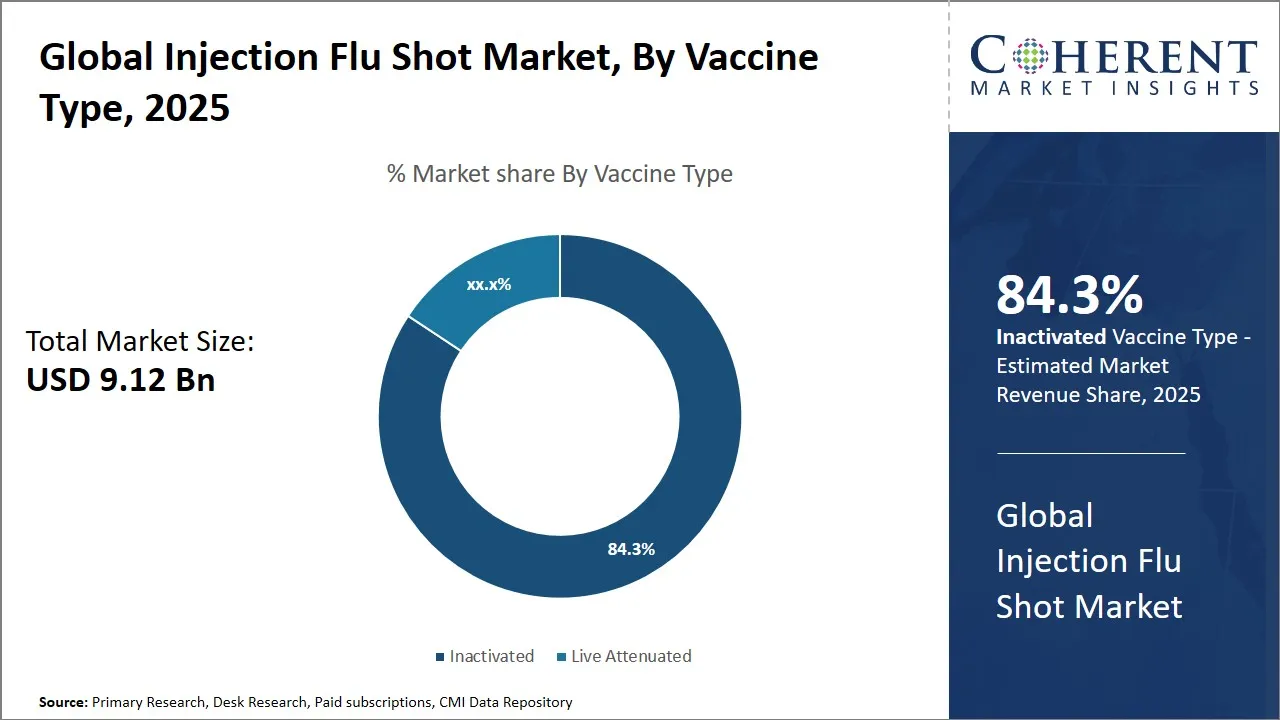
- In 2026, inactivated segment is expected to dominate the global injection flu shot market, accounting for 85.3 % of the market share.
- Quadrivalent segment is expected to capture 66.4 % of the market share in 2026.
- The injection segment is projected to hold 71.5 % of the global injection flu shot market share in 2026.
- North America is expected to lead the market, holding a share of 37.3 % in 2026. Asia Pacific is anticipated to be the fastest-growing region, with an estimated market share of 23.5% in 2026.
Market Overview
Market trends indicate a growing preference for advanced injection technologies that enhance vaccine efficacy and patient comfort. Additionally, the development of more targeted flu vaccines to address evolving strains is propelling innovation within the market. Increasing healthcare infrastructure in emerging economies and the integration of digital tracking for vaccination compliance are further fueling the market expansion, making the injection flu shot segment a dynamic and rapidly evolving sector.
Current Events and Its Impact
Current Events | Description and its Impact |
Adoption of mRNA Vaccine Technology for Influenza |
|
Increased Government Recommendations for High-Dose & Adjuvanted Vaccines |
|
Segmental Insights
- Current Industry Events of 2026
- Market Size Estimation
- Regional Breakdown
- Competitive Landscape
- Customer Intelligence
- Segmental Analysis
- Pricing Analysis
- Key Market Drivers, Challenges & Future Trends
- Customized Insights Section
Injection Flu Shot Market Insights, By Vaccine Type - Inactivated Contributes the Highest Share of the Market Owning to its Widespread Acceptance and Proven Safety Profile
The global injection flu shot market is mainly led by the inactivated vaccine type due to its long-standing safety and effectiveness, which is anticipated to come at a whopping share of 85.3% in 2026. This is especially true of the high-risk groups of people like the elderly, pregnant women, and people with weak immune systems. In contrast to live attenuated vaccines that are composed of weaker but still active virus strains, inactivated vaccines are made using killed virus particles, thereby virtually eliminating the risk of adverse effects and allowing them to be administered to practically all age groups.
For example, Bharat Biotech, a telluric biotechnology firm, has disclosed the launch of HNVAC, the human inactivated Influenza A (H1N1) 2009 vaccine. The vaccine is manufactured using the pandemic strain as authorized by the WHO-accredited Centers for Disease Control and Prevention, USA and is cultured in Madin-Darby Canine Kidney (MDCK) cells.
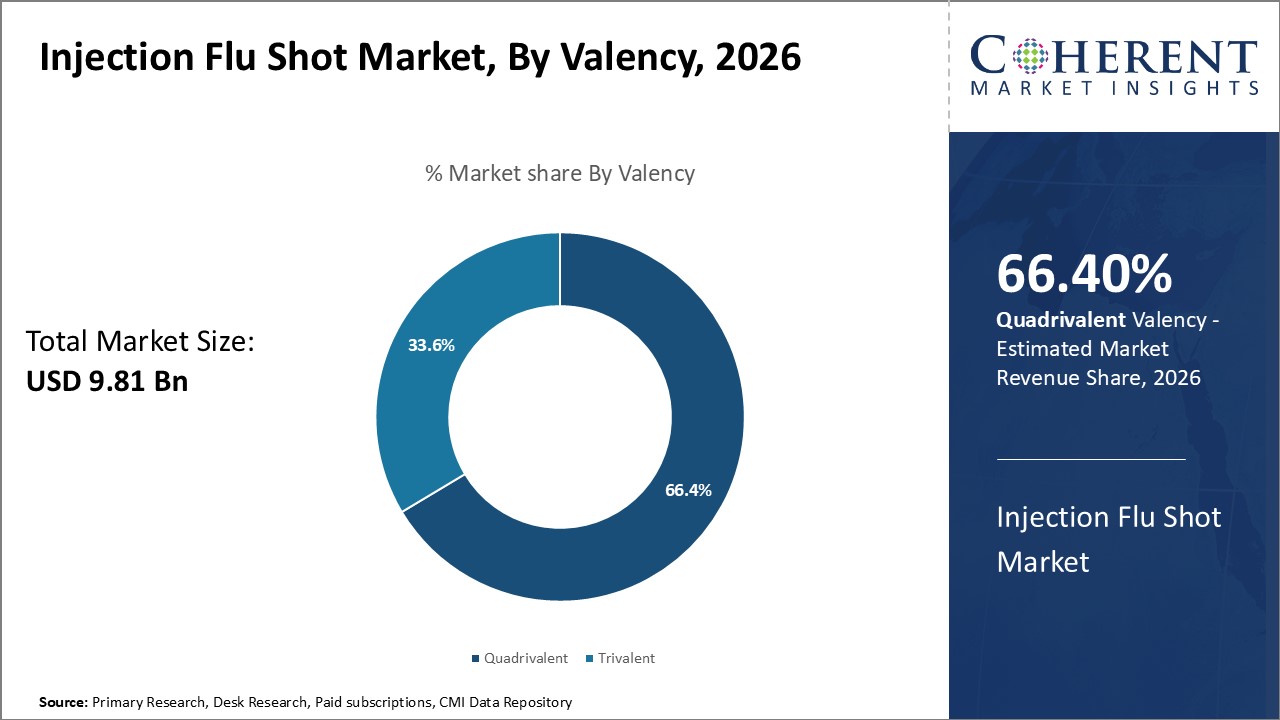
Injection Flu Shot Market Insights, By Valency - Quadrivalent Contributes the Highest Share of the Market due to its Broader Protection Against Multiple Influenza Strains
The quadrivalent vaccines are slowly but surely becoming the preferred option for the global injection flu shot market, set at a 66.4% share in 2026, primly because of their being able to provide more extensive protection. While the trivalent vaccines are effective against three strains of the virus, the quadrivalent vaccines also incorporate one more B strain, consequently diminishing the chances of mismatches and boosting the efficacy of the vaccine.
For example, in July 2021, Seqirus, a global leader in influenza prevention and part of CSL Limited, announced it had begun shipping its portfolio of innovative influenza vaccines for the 2021/22 U.S. season. This includes FLUCELVAX QUADRIVALENT, the first cell-based quadrivalent flu vaccine for individuals aged two and older, and FLUAD QUADRIVALENT, the only adjuvanted flu vaccine for adults 65 and older.
Injection Flu Shot Market Insights, By Route of Administration - Injection Contributes the Highest Share of the Market due to its Established Delivery Method and Broad Applicability
Injection remains the predominant route of administration for flu vaccination globally with share of 71.5% in 2026, driven by its reliability, effectiveness, and acceptance among healthcare professionals and recipients. Intramuscular injection delivers the vaccine directly into muscle tissue, ensuring an appropriate immune response by facilitating better antigen uptake and stimulating long-lasting immunity.
The availability of healthcare infrastructure that can administer injectable vaccines widely, is one of the reasons why this segment holds the largest market share. Injection clinics, hospitals, and pharmacies are already outfitted with the necessary tools and skilled personnel who are able to perform injections in a secure and effective manner.
Reimbursement Policy for Injection Flu Shot Market
- In August 2023, the Centers for Medicare & Medicaid Services (CMS) announced increased payment allowances for seasonal flu vaccines for the 2023–2024 season. Sanofi Pasteur, a leading pharmaceutical company, saw the payment for its Fluzone High-Dose Quadrivalent vaccine (code 90662) rise from USD 69.94 to USD 73.40, reflecting a 5% increase. These payments are for the vaccine product itself, while clinicians must report an additional code for vaccine administration. This move aims to support healthcare providers in delivering flu shots to Medicare beneficiaries, with no deductible or coinsurance required for flu vaccines under Part B.
- A key change introduced for 2024 is the additional reimbursement of approximately USD 40 for providers administering flu vaccines at home to Medicare beneficiaries who are unable to leave their homes for medical reasons. This adjustment is designed to increase vaccine access to homebound patients, with specific guidelines for when and how this additional payment can be claimed. The new payment adjustments reflect CMS's continued efforts to improve vaccine accessibility and incentivize healthcare providers to reach underserved populations, such as the elderly or homebound patients.
Regional Insights
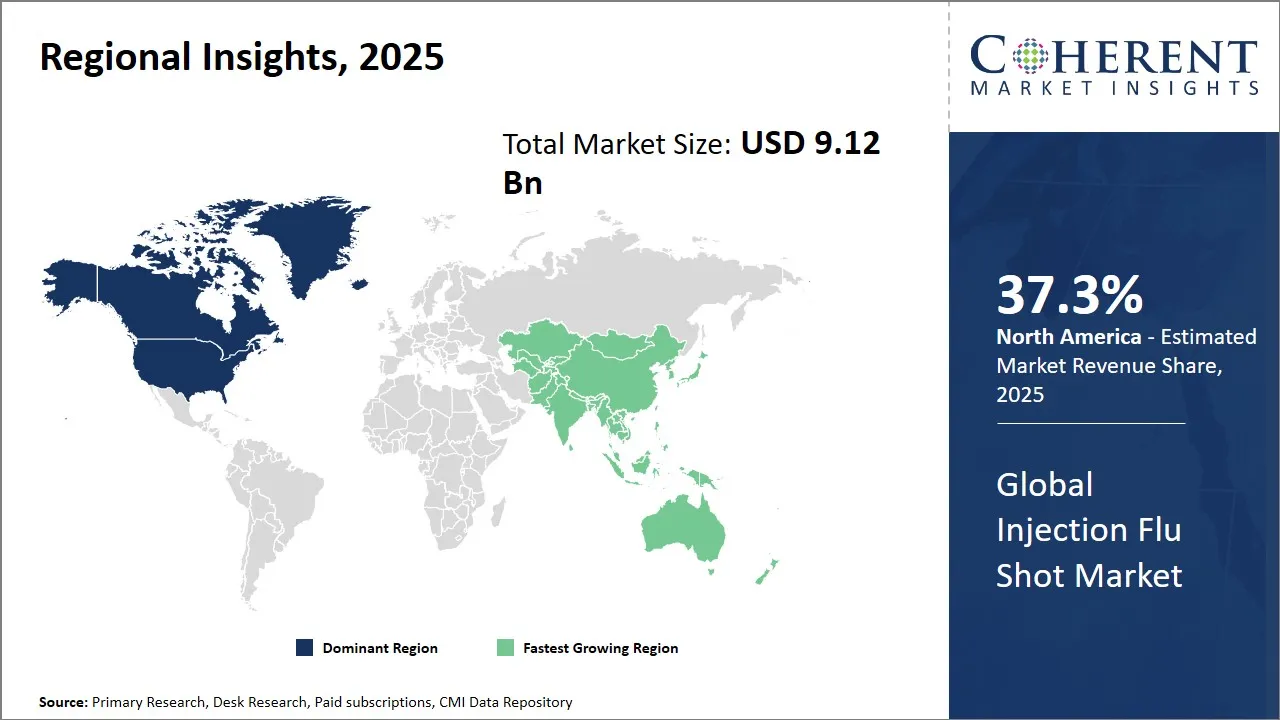
North America Injection Flu Shot Market Analysis and Trends
In 2026, North America will position itself at the top of the global injection flu shot market with a 37.3% share, thanks to its superb healthcare system, governmental backing, and vigorous industry presence. The U.S. and Canada, on the other hand, enjoy the benefits of comprehensive inoculation programs, which are not only backed by entities like the CDC and Health Canada but also supported by the widespread acceptance of advanced vaccines developed by companies such as Pfizer, Moderna, and Sanofi.
According to Centers for Disease Control and Prevention, in June 2024, In the 2024–25 flu season, influenza activity in the U.S. was classified as high severity, with influenza A viruses (A(H1N1) pdm09 and A(H3N2)) being the most prevalent. Activity peaked in early February 2026, resulting in significant hospitalizations and deaths, marking the most severe season since 2017–18.
Asia Pacific Injection Flu Shot Market Analysis and Trends
The fastest growth in the global injection flu shot market is shown by Asia Pacific region, as the share is expected to reach 23.5% in 2026, due to improved healthcare awareness, expansion of government immunization programmes and investment in healthcare infrastructure growing. In China, India, Japan and South Korea, the demand is increasing due to the combination of larger populations and urbanization, along with the increasing number of flu cases.
In September 2023, Clover Biopharmaceuticals, a global biotechnology company, launched AdimFlu-S (QIS), the only imported quadrivalent seasonal influenza vaccine approved for use in mainland China for individuals aged three and older. The vaccine, which includes hemagglutinin from two A and two B influenza strains, offers improved effectiveness compared to trivalent vaccines, regardless of which B strain becomes prevalent
Global Injection Flu Shot Market Outlook for Key Countries:
U.S. Injection Flu Shot Market Analysis and Trends
The injection flu shot market in the U.S. benefits from the country's dedication to vaccine research and development that has led to breakthroughs. The Government's commitment to immunization through the Vaccines for Children (VFC) program and the flu vaccination campaigns creates an uninterrupted flow of consumers. The country’s state-of-the-art healthcare systems and insurance coverage facilitate the reception of vaccines, while strong regulatory frameworks guarantee vaccine safety and efficacy, consequently keeping the consumers’ trust in the market.
In the U.S., the injection flu vaccine market is mainly dominated by companies like Pfizer, Moderna, and Sanofi Pasteur, which continuously come up with new formulations like Comirnaty, mRNA flu vaccines, and FLUZONE High-Dose. Such companies are leading the way for the betterment of flu vaccination technology. Besides, the Vaccines for Children (VFC) program enhances their activities by allowing free vaccines for children who meet eligibility requirements, so the price does not prevent these very important vaccinations from being administered.
China Injection Flu Shot Market Analysis and Trends
The markets of China’s injection flu shots manufactured are mainly driven by large vaccination campaigns and the gradual rise in health consciousness among the public. Locally made vaccines by Sinovac and Beijing Tiantan Biological Products have helped ensure that the domestic market is self-sufficient as they have been able to produce enough and even more to cut down on the reliance on foreign vaccines. The government plans are to make vaccines available in every part of the country, both in the cities and the countryside, and this has been made possible by the health sector's infrastructure investments and cold chain technology, which are now cooling product transportation channels.
In April 2023, Sinovac Biotech, a leading Chinese biopharmaceutical company, announced the opening of its new influenza vaccine production facility in Beijing. The state-of-the-art plant, designed to meet global demand, features fully automated production processes, advanced quality control systems, and eco-friendly practices. The
India Injection Flu Shot Market Analysis and Trends
India is not only the largest vaccine manufacturer in the world; the Serum Institute of India is also one of the largest producers of vaccines globally. The central government is adopting nationwide vaccination programs to educate and protect with the increasing number of people immunized and thus having access to the shots. The rising healthcare cost and the private sector’s growth will also help the vaccine markets penetrate the areas where vaccines are not so easily accessible. On the other hand, the problems of affordability and remote distribution continue to be the key issues, which lead to the increased efficiency of the supply chain and the continuous raising of health literacy levels through outspreading campaigns.
In September 2026, Zydus Lifesciences Ltd., a top player in the global healthcare market, released VaxiFlu, the first trivalent influenza vaccine in India, in line with the WHO's global recommendations. The new vaccine offers an efficient means to prevent seasonal flu by targeting the most common flu viruses that are responsible for millions of cases of severe illness and death annually.
Japan Injection Flu Shot Market Analysis and Trends
Japan injection flu shot market is enhanced by the measures taken by the government to place emphasis on preventive healthcare and the compliance of public to vaccination guidelines. Among the pharmaceutical companies contributing actively to the vaccine pipeline of development and distribution are Takeda Pharmaceutical and Daiichi Sankyo. The country’s elderly population, which is especially exposed to the complications of influenza, is the one that keeps on creating the demand.
In October 2026, Japan's health authorities declared an early start of the flu season with over 6,000 hospitalizations reported and confirmed the outbreak. The Ministry of Health, Labor and Welfare (MHLW) verified the increase, pointing out that the infection rates were particularly high in certain areas such as Tokyo and Okinawa.
Market Players, Key Developments, and Competitive Intelligence
Key Developments
- In August 2025, AstraZeneca, a global biopharmaceutical company, launched FluMist Home, the first at-home delivery service for FLUMIST (Influenza Vaccine Live, Intranasal). This U.S. FDA-approved, needle-free flu vaccine is now available for self-administration by adults aged 18 to 49 or by a caregiver for individuals aged 2-17. FluMist Home provides a convenient option for protecting against the flu, eliminating the need for waiting rooms or needles.
- In July 2025, GSK, a global healthcare company, announced it has begun shipping doses of its trivalent influenza vaccines, FLULAVAL and FLUARIX, to U.S. healthcare providers and pharmacies for the 2025-26 flu season. These vaccines, approved by the U.S. FDA, are available in a 0.5mL, single-dose, pre-filled syringe for individuals aged six months and older.
- In June 2025, Novavax reported strong immune responses for its COVID-19–influenza combination vaccine and stand-alone trivalent flu vaccine in a Phase 3 study involving 2,000 seniors. The results highlighted the potential of both vaccine candidates to provide effective protection against both viruses in this vulnerable age group.
- In March 2025, Sanofi, a global leader in flu vaccines, announced it had adopted the influenza strains selected by the U.S. FDA for the 2025-26 flu season. The company has already begun manufacturing vaccines, including FLUZONE, FLUBLOK, and FLUZONE High-Dose, to ensure robust supply.
Top Strategies Followed by Global Injection Flu Shot Market Players
- The leading multinational companies in the world have made significant investments in vaccine R&D and regulatory compliance, thus increasing the efficacy, and delivery of the vaccines. Moreover, they have also built strong partnerships with OEMs and firms in biotechnology, for the purpose of sharing and building expertise and resources.
- In August 2024, Pfizer and BioNTech announced that their combined mRNA vaccine for influenza and COVID-19 met its primary goal for influenza A and COVID-19, but fell short for influenza B. The companies are exploring adjustments to improve responses against influenza B and will discuss next steps with health authorities. Additionally, Pfizer’s trivalent influenza mRNA vaccine showed promising results in a separate Phase 2 trial.
- The mid-level manufacturers of the injection flu shot market are utilizing a different strategy altogether, which is mainly centred on full-blown cost-effective solutions that combine quality with cheapness. Acknowledging the large number of price-sensitive consumers, the companies involved are making it a priority to produce the shots that only possess the minimum required efficacy and yet are still able to reach the widest possible audience.
- In September 2025, AHIP (America's Health Insurance Plans) reaffirmed its commitment to ensuring affordable access to vaccines. The organization announced that health plans will continue to cover all ACIP-recommended immunizations, including updated COVID-19 and influenza vaccine formulations, with no cost-sharing for patients through the end of 2026.
- The small players in the global injection flu shot market are adopting strategies that cater to specific sectors of the market by being different in terms of product features or adopting innovation-oriented business models. A good number of them are investing in modern technologies such as the use of novel adjuvants, non-needle delivery systems, or stable formulations to set their products apart in the increasingly congested market.
- For example, companies like Vaxine Pty Ltd. have developed proprietary adjuvants that enhance the immune response, while others, like PharmaJet, have introduced needle-free injection technology, improving patient comfort and accessibility.
Market Report Scope
Injection Flu Shot Market Report Coverage
| Report Coverage | Details | ||
|---|---|---|---|
| Base Year: | 2025 | Market Size in 2026: | USD 9.81 Bn |
| Historical Data for: | 2020 To 2024 | Forecast Period: | 2026 To 2033 |
| Forecast Period 2026 to 2033 CAGR: | 7.6% | 2033 Value Projection: | USD 16.39 Bn |
| Geographies covered: |
| ||
| Segments covered: |
| ||
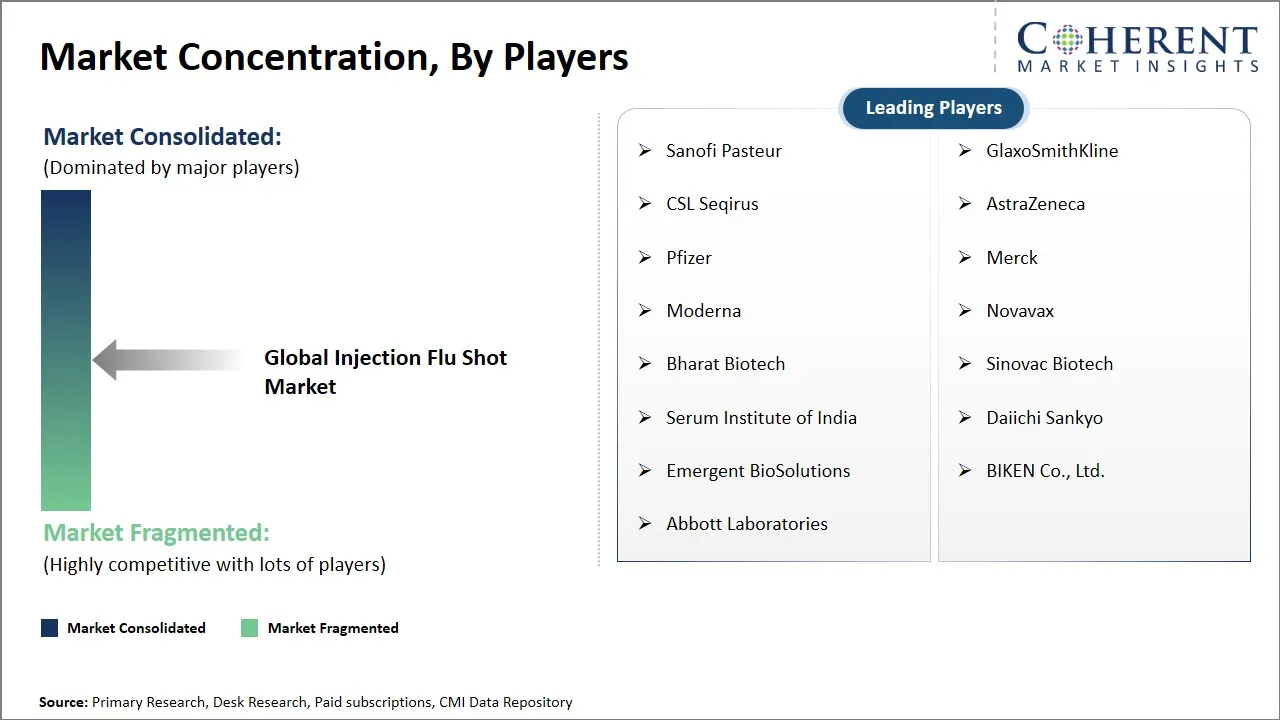
| Companies covered: | Sanofi Pasteur, GlaxoSmithKline, CSL Seqirus, AstraZeneca, Pfizer, Merck, Moderna, Novavax, Bharat Biotech, Sinovac Biotech, Serum Institute of India, Daiichi Sankyo, Emergent BioSolutions, BIKEN Co., Ltd., and Abbott Laboratories | ||
| Growth Drivers: |
| ||
| Restraints & Challenges: |
| ||
Injection Flu Shot Market Dynamics
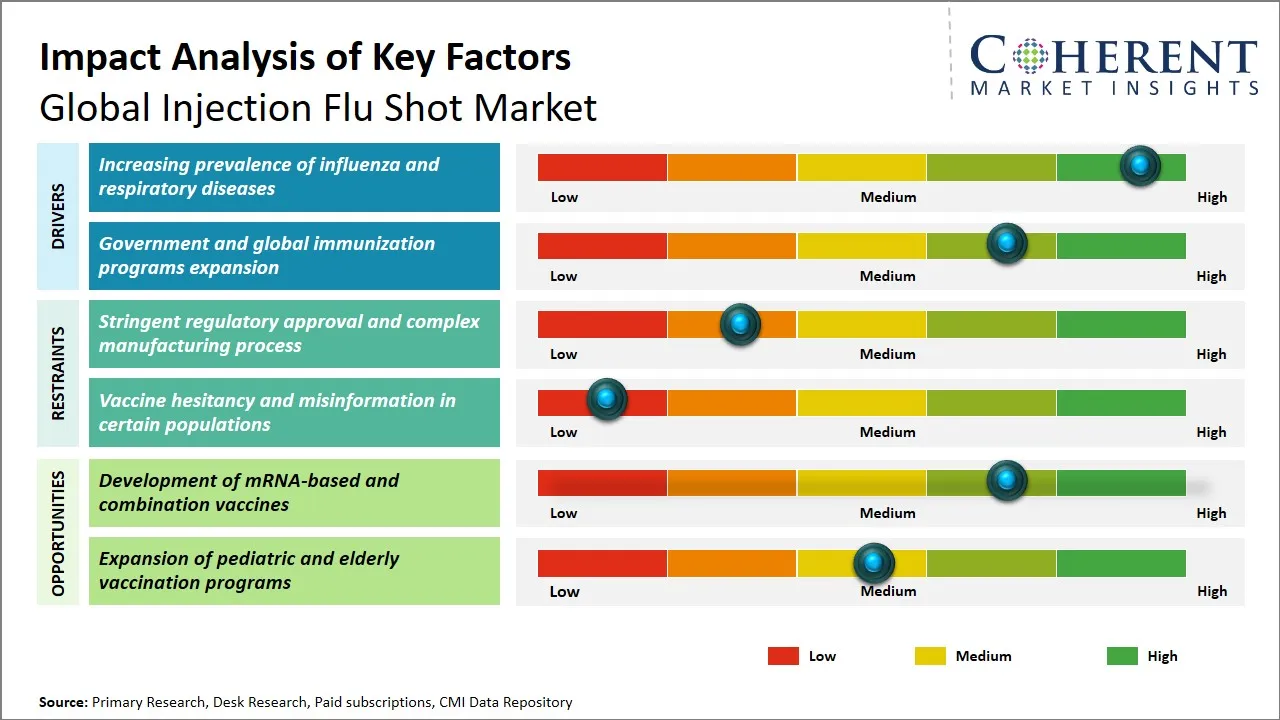
Injection Flu Shot Market Driver - Increasing Prevalence of Influenza and Respiratory Diseases
The global injection flu shot market is largely influenced by the increasing incidence of influenza and other respiratory infections. The seasonal flu outbreaks continue to make it very hard for healthcare systems all over the world, which makes that the necessity of and demand for effective preventive measures very urgent. Besides, the circulation of new influenza strains and the possibility of pandemics contribute to the overall demand for flu vaccinations. The old, very young, and people with some chronic diseases are the at-risk groups who would suffer most from respiratory illnesses, and therefore, issuing broad-immunization-programs is becoming more of a necessity.
In February 2025, the World Health Organization (WHO) reported that seasonal influenza affects around one billion people annually, causing 3-5 million cases of severe illness and 290,000 to 650,000 respiratory deaths worldwide. Ninety-nine percent of influenza-related deaths in children under 5 occur in developing countries. Symptoms typically appear 1-4 days after infection and last around a week.
Injection Flu Shot Market Opportunity - Development of mRNA-Based and Combination Vaccines in the Global Injection Flu Shot Market
mRNA technology has come forth and made rapid progress which opens up a large area of growth in the global injection flu shot market. The difference between mRNA vaccines and traditional flu vaccines is that mRNA vaccines use synthetic messenger RNA to instruct the cells to make antigens, which in turn will cause the production of a strong immune response, whereas the traditional ones generally use either weakened or inactive virus strains. With this new method, the development time is shorter and the vaccines can be distributed to the public quicker since they are not specific to one particular influenza virus strain. Thus, one of the major problems that lead to vaccine inefficacy due to the mismatch of strains is being solved.
In July 2025, Moderna withdrew its application for an mRNA-based combination flu and COVID-19 injection vaccine, mRNA-1083, after the U.S. FDA requested more efficacy data. The company plans to resubmit the vaccine application in 2026 with new data showing a 26.6% improvement over current flu injections. Other companies, including Pfizer, Novavax, and GeoVax, are also working on combination flu shots, but the regulatory path remains uncertain due to evolving FDA requirements and mRNA technology challenges.
Analyst Opinion (Expert Opinion)
- The injection flu shot market is expanding not only as a result of the continued development of mRNA vaccines but also due to the backing of regulators like the WHO and U.S. FDA. The COVID-19 pandemic has increased the global demand for vaccines, the global vaccination program has strengthened the position of the world's poorest countries, and the vaccine makers' sales are expected to grow in those markets. The only thing that might hinder this scenario is vaccine hesitancy and complications in delivering vaccines to remote areas.
- Meeting places like the World Vaccine Congress and the Global Influenza Summit have been very important for the dissemination of information and the alteration of policy. The company's cooperation with governments to distribute vaccines worldwide has made the public health concern more evident. These activities, along with rising investments in health infrastructure, are still giving a pretty good market outlook despite challenges.
Speak to the analyst
Want personalized insights?
Take the findings above to one of our principal consultants, or have the report rebuilt around the segments, geographies and competitors you actually track.
Market Segmentation
- Vaccine Type Insights (Revenue, USD Bn, 2021 - 2033)
- Inactivated
- Live Attenuated
- Valency Insights (Revenue, USD Bn, 2021 - 2033)
- Quadrivalent
- Trivalent
- Route of Administration Insights (Revenue, USD Bn, 2021 - 2033)
- Injection
- Nasal Spray
- Age Group Insights (Revenue, USD Bn, 2021 - 2033)
- Pediatric
- Adult
- Technology Platform Insights (Revenue, USD Bn, 2021 - 2033)
- Egg-based
- Cell-based
- Recombinant
- mRNA-based
- Distribution Channel Insights (Revenue, USD Bn, 2021 - 2033)
- Hospital and Retail Pharmacies
- Government & Institutional Suppliers
- Others (e.g., NGOs, International Organizations)
- Indication Insights (Revenue, USD Bn, 2021 - 2033)
- Seasonal
- Pandemic
- Strain Type Insights (Revenue, USD Bn, 2021 - 2033)
- A(H1N1)
- A(H3N2)
- B (Yamagata)
- B (Victoria)
- Regional Insights (Revenue, USD Bn, 2021 - 2033)
- North America
- U.S.
- Canada
- Latin America
- Brazil
- Argentina
- Mexico
- Rest of Latin America
- Europe
- Germany
- U.K.
- Spain
- France
- Italy
- Russia
- Rest of Europe
- Asia Pacific
- China
- India
- Japan
- Australia
- South Korea
- ASEAN
- Rest of Asia Pacific
- Middle East
- GCC Countries
- Israel
- Rest of Middle East
- Africa
- South Africa
- North Africa
- Central Africa
- North America
- Key Players Insights
- Sanofi Pasteur
- GlaxoSmithKline
- CSL Seqirus
- AstraZeneca
- Pfizer
- Merck
- Moderna
- Novavax
- Bharat Biotech
- Sinovac Biotech
- Serum Institute of India
- Daiichi Sankyo
- Emergent BioSolutions
- BIKEN Co., Ltd.
- Abbott Laboratories
Sources
Primary Research Interviews
- Industry Stakeholders
- U.S. Centers for Disease Control and Prevention (CDC)
- World Health Organization (WHO)
- End Users
- National Institutes of Health (NIH)
- U.S. Food and Drug Administration (FDA)
Government and International Databases
- European Centre for Disease Prevention and Control (ECDC)
- World Health Organization (WHO) Global Influenza Surveillance and Response System (GISRS)
- Centers for Disease Control and Prevention (CDC) Flu View
- U.S. National Institutes of Health (NIH) – National Institute of Allergy and Infectious Diseases (NIAID)
- OECD Health Statistics
- Immunization Data from UNICEF
Trade Publications
- Vaccine (Elsevier)
- Journal of Infectious Diseases
- The Lancet Infectious Diseases
- Journal of Clinical Microbiology
- BioMed Central – Infectious Diseases
- Influenza and Other Respiratory Viruses
Academic Journals
- The Lancet Infectious Diseases
- Vaccine (Elsevier)
- Clinical Infectious Diseases
- Journal of Clinical Microbiology
- Journal of Infectious Diseases
- Emerging Infectious Diseases (CDC)
Reputable Newspapers
- The New York Times
- The Washington Post
- The Guardian
- Reuters Health News
- The Wall Street Journal
- Bloomberg Health News
Industry Associations
- American Medical Association (AMA)
- National Foundation for Infectious Diseases (NFID)
- International Society for Influenza and Other Respiratory Virus Diseases (ISIRV)
- European Society of Clinical Microbiology and Infectious Diseases (ESCMID)
- Infectious Diseases Society of America (IDSA)
- Global Influenza Initiative
Public Domain Resources
- Wikipedia – Seasonal Influenza Vaccine
- GISAID (Global Initiative on Sharing All Influenza Data)
- PubMed Central (PMC) – Free access to biomedical and life sciences literature
- Flu Vaccine Tracker (CDC)
- NIH Vaccine Research Center
- World Health Organization – Influenza Vaccines
Proprietary Elements
- CMI Data Analytics Tool: Proprietary analytics tool to analyze real-time market trends, consumer behavior, and technology adoption in market
- Proprietary CMI Existing Repository of Information for Last 8 Years
Get access to 250+ pages report
Every segment, forecast, competitor profile and data table behind the analysis above — available for instant download.
- ESOMAR Member
- ISO 9001:2015 Certified
- D-U-N-S Registered
- GDPR & CCPA Compliant
Missing comfort of reading report in your local language? Find your preferred language:
Transform your Strategy with Exclusive Trending Reports
Frequently Asked Questions
The global injection flu shot market is estimated to be valued at USD 9.81 Bn in 2026 and is expected to reach USD 16.39 Bn by 2033.
The CAGR of the global injection flu shot market is projected to be 7.6% from 2026 to 2033.
Increasing prevalence of influenza and respiratory diseases and government and global immunization programs expansion are the major factors driving the growth of global injection flu shot market.
Stringent regulatory approval and complex manufacturing process and vaccine hesitancy and misinformation in certain populations are the major factors hampering the growth of the global injection flu shot market.
In terms of vaccine type, the inactivated is estimated to dominate the market revenue share in 2026.
Sanofi Pasteur, GlaxoSmithKline, CSL Seqirus, AstraZeneca, Pfizer, Merck, Moderna, Novavax, Bharat Biotech, Sinovac Biotech, Serum Institute of India, Daiichi Sankyo, Emergent BioSolutions, BIKEN Co., Ltd., and Abbott Laboratories are the major players.
North America is expected to lead the global injection flu shot market in 2026.