

Global Insect Feed Market Size and Forecast – 2026 - 2033
The Global Insect Feed Market is estimated to be valued at USD 2.98 Bn in 2026 and is expected to reach USD 9.32 Bn by 2033, growing at a compound annual growth rate (CAGR) of 17.7% from 2026 to 2033.
Key Takeaways of the Insect Feed Market
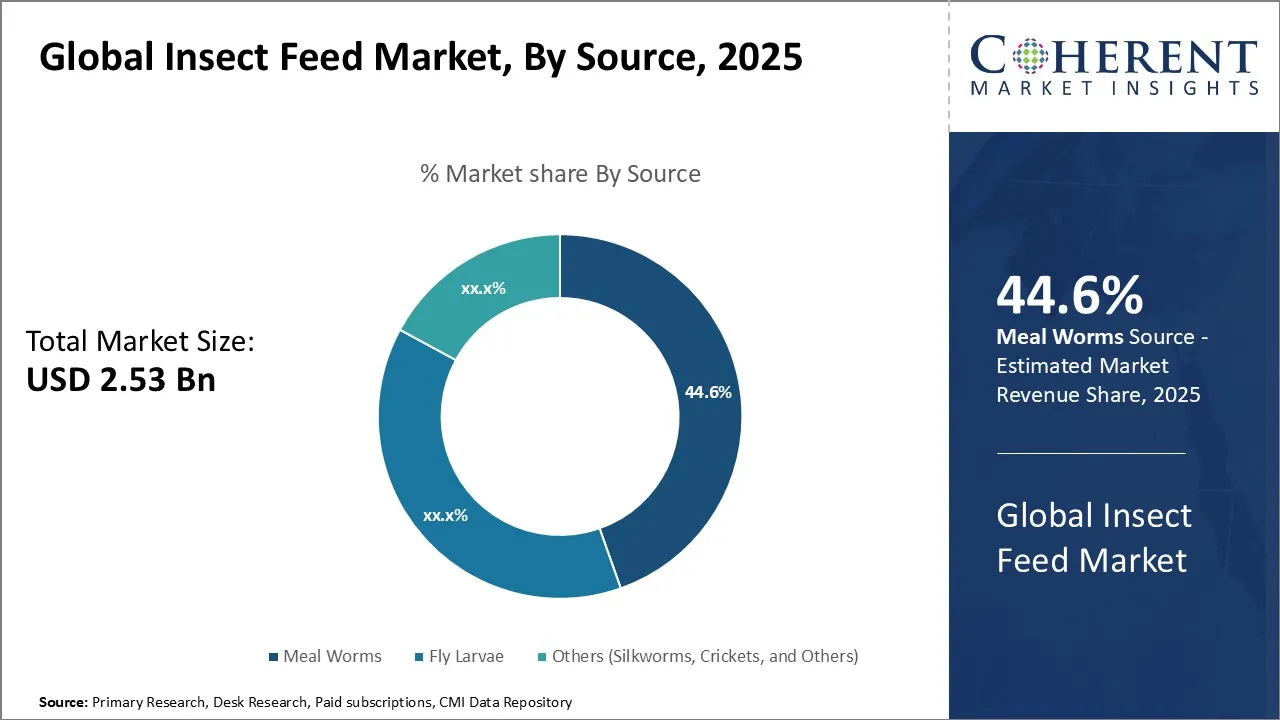
- The meal worms segment is expected to hold 45.6 % share of the market in 2026, driven by their outstanding nutritional value and the sustainability of their production.
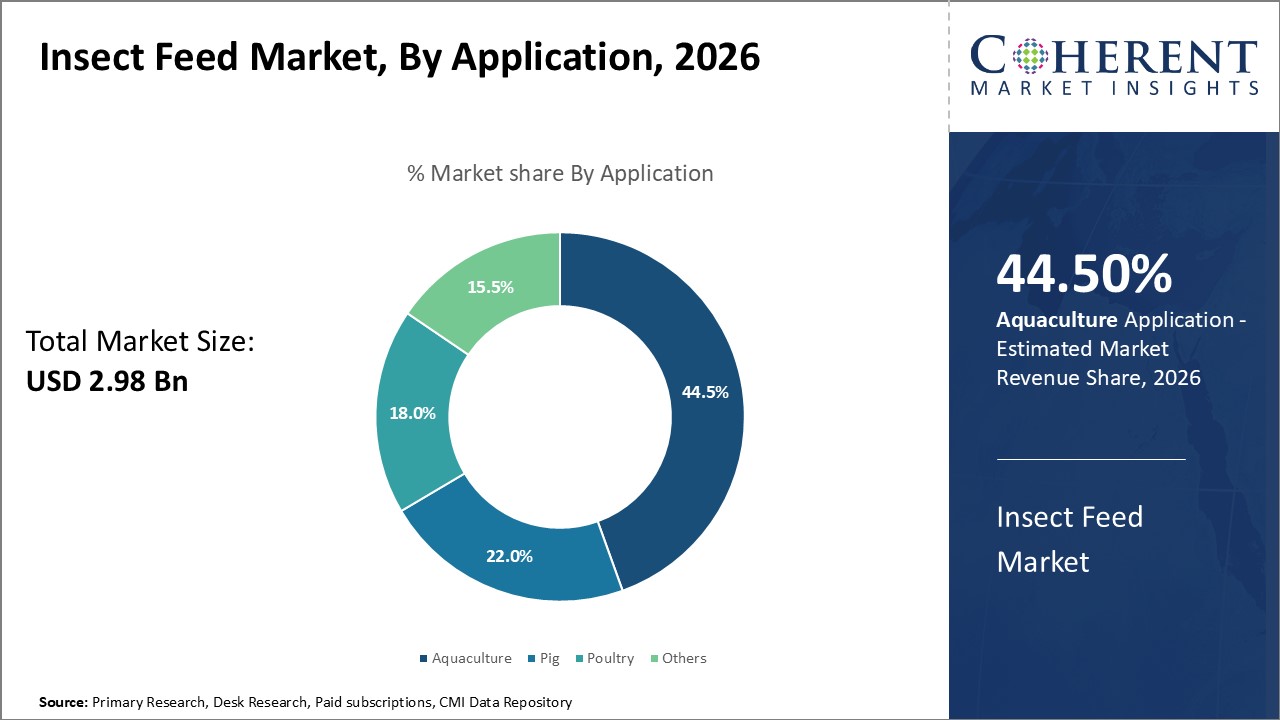
- The aquaculture segment is expected to account for 44.5 % of the global insect feed market in 2026, fueled by rising demand for sustainable, high-quality fish nutrition.
- The meal segment is projected to capture 33.7 % of the insect feed market in 2026, due to its easy integration into feed and greater stability over other forms.
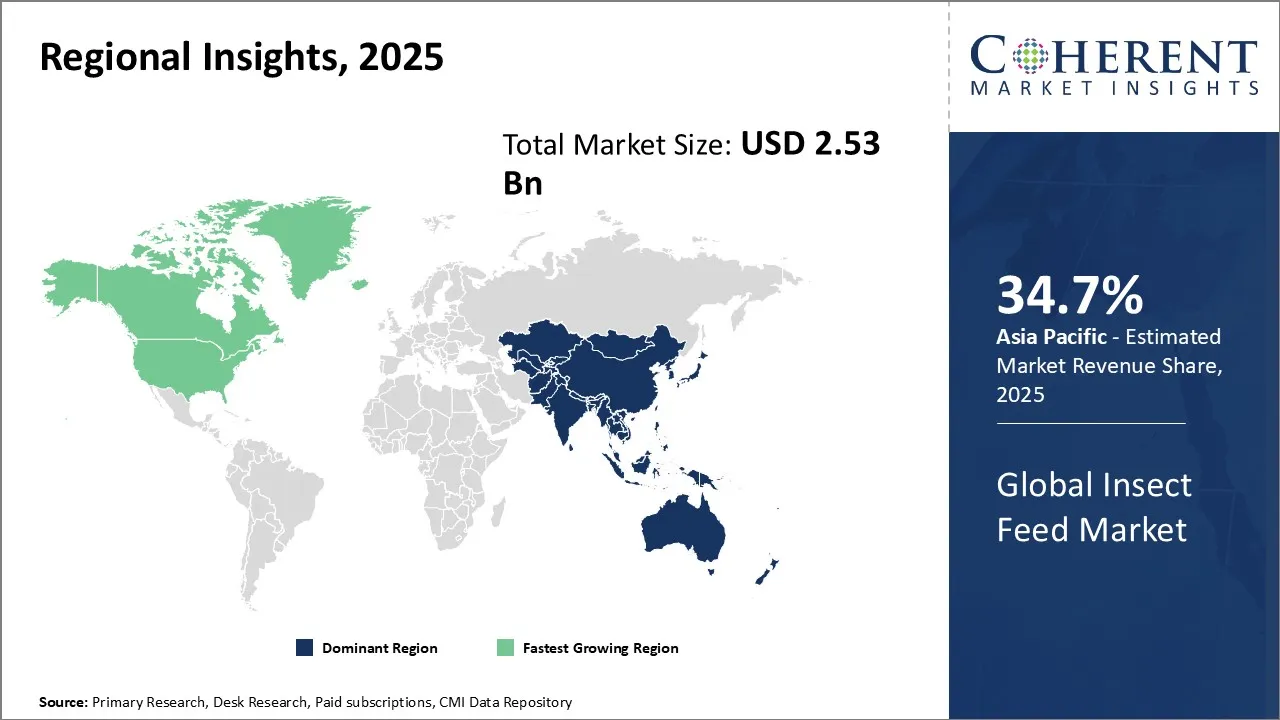
- Asia Pacific is expected to dominate the global insect feed market in 2026 with 34.7 % share, propelled by government incentives, traditional insect farming, and expanding aquaculture and livestock industries. North America, with a 18.5% share in 2026, will be the fastest-growing region fueled by technological innovation, sustainability policies, and rising regulatory support for insect-based feeds.
Market Overview
Key market trends include a growing shift towards insect-based protein as a sustainable alternative to traditional feed components such as soy and fishmeal. Advancements in insect farming technologies and regulatory support are facilitating large-scale production, reducing costs, and improving the quality and safety of insect feed. Additionally, increased adoption of insect feed in aquaculture, poultry, and livestock sectors highlights its potential to enhance animal health and productivity, aligning with global efforts to address food security and environmental sustainability challenges.
Current Events and Its Impact
Current Events | Description and its impact |
Easing of Regulatory Restrictions in Europe, North America, and Asia |
|
Supply Chain Disruptions and Tariff Volatility |
|
Segmental Insights
- Current Industry Events of 2026
- Market Size Estimation
- Regional Breakdown
- Competitive Landscape
- Customer Intelligence
- Segmental Analysis
- Pricing Analysis
- Key Market Drivers, Challenges & Future Trends
- Customized Insights Section
Insect Feed Market Insights, By Source – Meal Worms Segment Dominates, due to Rich Protein Content and Essential Amino Acids
Meal worms segment is expected to contribute 45.6% share of the market in 2026, owing to their exceptional nutritional profile and sustainable production advantages. Meal worms have emerged as a leading source in the global insect feed market primarily due to their rich protein content, essential amino acids, and favorable fatty acid profile that make them an ideal ingredient in animal nutrition.
Compared to traditional feed protein sources, meal worms provide a highly digestible and bioavailable nutrient structure, which contributes directly to improved growth performance and health of farmed animals. Their ability to efficiently convert organic waste into high-quality protein also opens avenues for sustainable and circular feed production systems, which is gaining increasing traction amid rising environmental concerns in the feed industry.
Insect Feed Market Insights, By Application – Aquaculture Segment Dominates, Due to Sustainability and High Nutritional Value
Aquaculture segment is projected to represent 44.5% share of the global insect feed market in 2026, driven by the increasing demand for sustainable, high-quality ingredients to enhance fish nutrition and production efficiency.
Aquaculture’s dominance in the insect feed market segment stems from the sector’s urgent need to find viable alternatives to conventional fishmeal and fish oil, whose supplies have been under growing pressure due to overfishing and environmental concerns. Insect-based feeds, especially those containing proteins from meal worms and fly larvae, offer high digestibility and balanced amino acid profiles that closely mimic natural diets of many farmed fish species.
Insect Feed Market Insights, By Form – Meal Segment Dominates, Due to High Nutritional Density and Easy Integration in Animal Feed
Meal segment is expected to hold 33.7% share of the insect feed market in 2026, due to its ease of integration into feed formulations and its superior stability compared to other forms. Meal form insect products are highly favored across various animal feed sectors because they offer a practical and efficient way to incorporate insect-derived nutrients into compound feeds. The meal form involves drying and grinding whole insects or insect larvae into a fine powder, which can be seamlessly mixed with other feed ingredients. This blendability is key for feed manufacturers who require uniform distribution of nutrients to meet specific dietary standards and ensure consistent animal performance.
End User Feedback and Unmet Needs in the Insect Feed Market
- End users across aquaculture and livestock industries routinely praise insect feed for its high protein content and nutritional benefits, which contribute to enhanced animal growth rates and improved feed conversion ratios. For example, poultry and pig farmers report that insect-based feeds help regulate gut health due to bioactive elements like antimicrobial peptides and chitin, leading to better productivity and reduced disease risks. Moreover, commercial users appreciate the sustainability aspect, as insect farming reduces reliance on traditional feedstocks such as soymeal and fishmeal, thereby lowering environmental footprint and greenhouse gas emissions.
- A commercial poultry farm utilizing black soldier fly larvae-based feed reported significant improvements in feed conversion efficiency and animal health. The high palatability and digestibility resulted in quicker growth cycles and lower protein-deficiency related setbacks. The farm management highlighted that insect feed's consistent nutrient profile and reduced disease transmission risk allowed seamless integration into their operations, boosting overall farm profitability and sustainability metrics.
Regional Insights
Asia Pacific Insect Feed Market Analysis and Trends
The Asia Pacific region is projected to lead the market with a 34.7% share in 2026, driven by a combination of rising demand for sustainable protein sources, rapid urbanization, and growing pressure on traditional feed resources such as soy and fishmeal. Countries like China, Thailand, and Vietnam are investing heavily in alternative protein technologies to meet the nutritional needs of their expanding aquaculture and livestock industries. Supportive government initiatives, such as subsidies and pilot programs for insect farming, particularly in Southeast Asia, have created a favorable environment for market expansion.
China has emerged as a major player in insect protein development, especially for aquafeed. In 2021, the Ministry of Agriculture and Rural Affairs endorsed the use of insect protein in livestock and aquaculture, signaling strong regulatory support. Companies like YNsect (through joint ventures) and Protix have initiated R&D partnerships in China to tap into its vast aquaculture industry, which is the largest in the world.
North America Insect Feed Market Analysis and Trends
North America is expected to exhibit significant growth in the market, contributing an estimated 18.5% share in 2026. This growth is driven by increasing investments in sustainable agriculture and rising awareness of the environmental benefits of alternative protein sources. The livestock industry in the region is actively seeking cost-effective, nutrient-rich feed options to address the challenges of high feed costs and supply chain volatility.
For instance, the U.S. FDA and Association of American Feed Control Officials (AAFCO) have gradually opened pathways for the use of insect protein in feed. As of 2020, AAFCO approved black soldier fly larvae (BSFL) for use in poultry and aquaculture feed, paving the way for commercial expansion.
Global Insect Feed Market Outlook for Key Countries
Germany Insect Feed Market Trends
Germany’s insect feed market is bolstered by strong government support for sustainable farming and circular economy principles. Companies like Insect Technology Group are pioneering insect protein innovations, integrating them into aquaculture and poultry feed sectors. Germany’s advanced research landscape and regulatory clarity facilitate swift technology adoption, attracting investments and collaborations, which help push the market forward.
China Insect Feed Market Trends
China’s insect feed market is rapidly evolving due to the immense demand for alternative protein sources driven by the country’s large livestock and aquaculture industries. Companies such as Guangdong VTR Bio-tech focus on commercial insect farming to cater to growing feed demand. Government initiatives supporting biotechnology innovation and sustainable agriculture enhance the ecosystem, making China a center for new feed ingredient development with significant export potential to neighboring Asian countries.
Brazil Insect Feed Market Trends
Brazil’s vast agricultural sector and rising livestock production create fertile ground for insect feed adoption. Government incentives aimed at sustainable livestock practices increasingly support the insect protein sector. Companies like Symbiotics Global utilize Brazil’s rich biodiversity by integrating local organic waste streams into insect farming. As demand for sustainable feeds grows domestically and in export markets, Brazil’s insect feed sector is poised for accelerated development.
Japan Insect Feed Market Trends
Japan serves as a significant market for insect feed owing to its advanced aquaculture and poultry farming industries seeking eco-friendly feed solutions. Firms such as ENAGIC lead in developing functional insect-based feed products aligned with Japan’s sustainability initiatives. Active government policies promoting biotechnology and food security further strengthen market growth, positioning Japan as an influential player in the Asia Pacific insect feed landscape.
Market Players, Key Development, and Competitive Intelligence
Key Developments
- In February 2024, Vinh Hoan, the world’s leading producer of pangasius fish, entered into a strategic partnership with Entobel, a major player in insect protein production. Through this collaboration, Vinh Hoan will integrate significant quantities of insect protein into its aquafeed, advancing its commitment to sustainability.
- In January 2024, The European Investment Bank (EIB) has approved a loan of up to USD 39.1 million (EUR 37 million) for Protix, a leading insect protein company. The funding will support Protix’s expansion into new markets and help scale up its sustainable protein production by financing the development of a new facility in Poland.
Top Strategies Followed by Global Insect Feed Market Players
- Established market leaders invest heavily in research and development (R&D) to innovate and develop high-performance insect feed products that meet stringent quality and nutritional requirements. These companies often engage in strategic partnerships with major industry stakeholders and original equipment manufacturers (OEMs) to integrate their products into broader supply chains, thereby reinforcing their market presence.
- For example, Protix invests in technological innovation to ensure its Black Soldier Fly (BSF) larvae-derived feed meets nutrition and safety standards. The company has developed its own breeding, feeding, and harvesting systems tailored for the insect protein industry, powered by AI and big-data analytics.
- Mid-level players in the insect feed market adopt a somewhat different approach, focusing primarily on cost-effective solutions that strike a balance between quality and affordability. This strategy enables them to target price-sensitive consumers, including small to medium-sized livestock farmers and aquaculture operators who seek reliable but economically accessible insect-based feed alternatives.
- For example, companies such as AgriProtein and Hexafly cater to price-sensitive consumers, including small to medium-sized livestock farmers and aquaculture operators seeking reliable yet economical insect-based feed alternatives. AgriProtein, for instance, operates large-scale production facilities that optimize cost-efficiency while maintaining acceptable quality levels.
- Small-scale players, meanwhile, differentiate themselves by carving out niche markets based on specialized product features or innovative applications of insect feed. These companies frequently adopt cutting-edge technologies such as automated insect farming systems, novel drying techniques, or bioactive ingredient enhancement to remain competitive despite limited resources. Moreover, they build strategic local alliances with startups, research institutions, and regional manufacturers to gain market entry and boost visibility in specific geographic segments.
- For example, companies like Livin Farms in Austria illustrate this approach by offering compact, modular insect farming systems designed for decentralized use. Their “Hive Explorer” enables individuals and educational institutions to cultivate mealworms at home, addressing educational and small-scale protein needs—sectors often neglected by industrial-scale producers.
Market Report Scope
Insect Feed Market Report Coverage
| Report Coverage | Details | ||
|---|---|---|---|
| Base Year: | 2025 | Market Size in 2026: | USD 2.98 Bn |
| Historical Data for: | 2020 To 2024 | Forecast Period: | 2026 To 2033 |
| Forecast Period 2026 to 2033 CAGR: | 17.7% | 2033 Value Projection: | USD 9.32 Bn |
| Geographies covered: |
| ||
| Segments covered: |
| ||
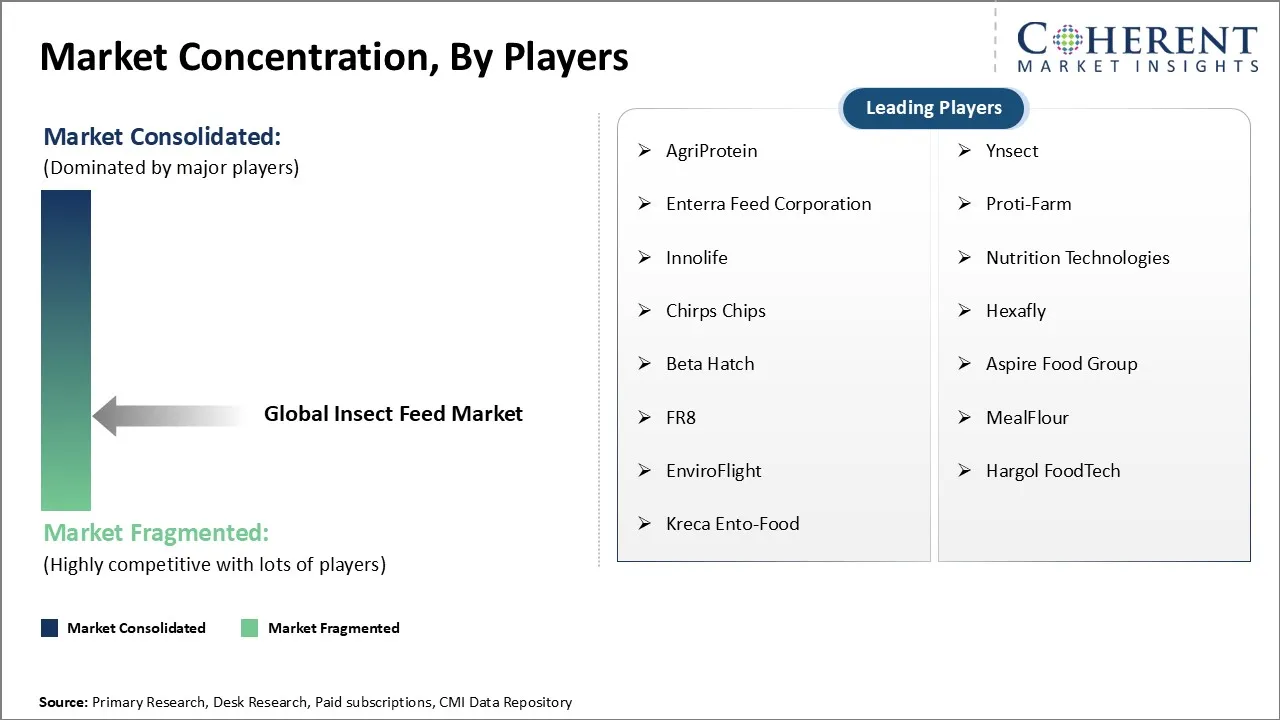
| Companies covered: | AgriProtein, Ynsect, Enterra Feed Corporation, Proti-Farm, Innolife, Nutrition Technologies, Chirps Chips, Hexafly, Beta Hatch, Aspire Food Group, FR8, MealFlour, EnviroFlight, Hargol FoodTech, and Kreca Ento-Food | ||
| Growth Drivers: |
| ||
| Restraints & Challenges: |
| ||
Insect Feed Market Dynamics
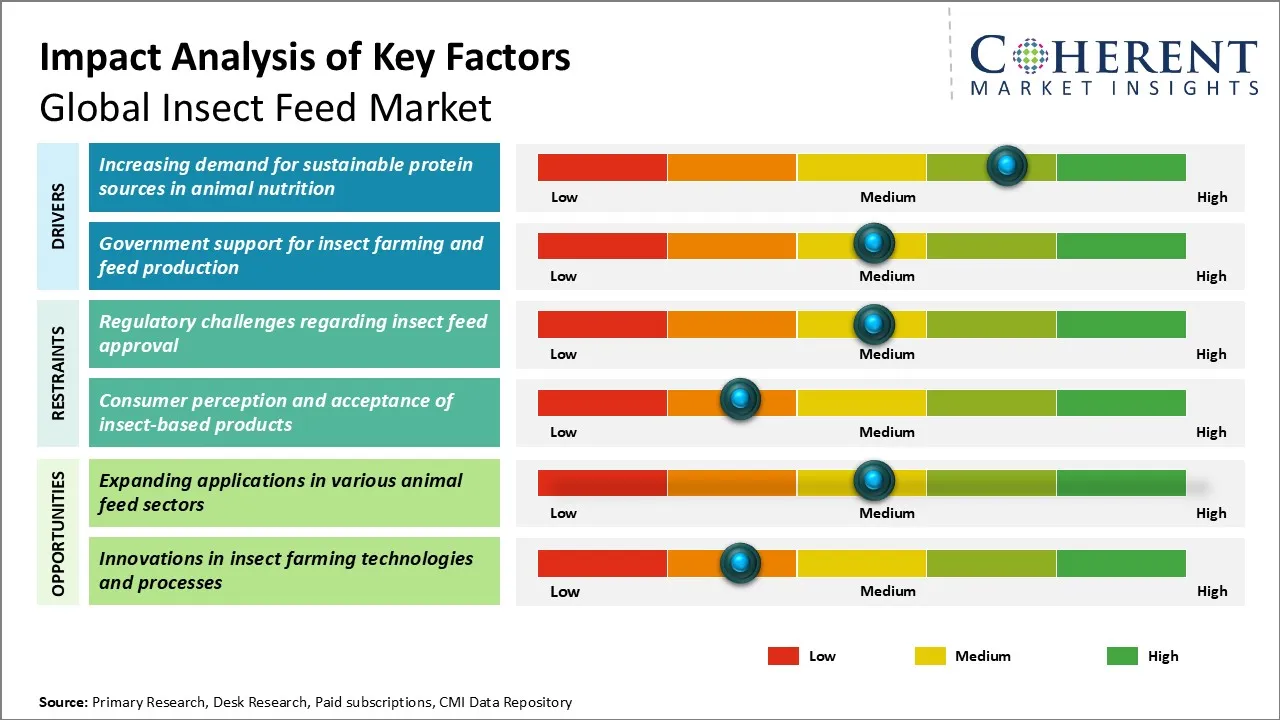
Insect Feed Market Driver - Increasing Demand for Sustainable Protein Sources in Animal Nutrition
The growing emphasis on sustainable agricultural practices and the urgent need to reduce environmental impact have significantly fueled the demand for alternative protein sources in animal nutrition, positioning insect feed as a compelling solution. Traditional protein ingredients such as fishmeal and soybean meal face increasing scrutiny due to their substantial environmental footprint.
For example, overfishing to supply fishmeal has led to the depletion of wild fish stocks, threatening marine ecosystems. According to the United Nations Food and Agriculture Organization (FAO), around 30% of fish stocks are overexploited or depleted globally. Similarly, soybean cultivation has been linked to deforestation and habitat loss, particularly in the Amazon rainforest, contributing to biodiversity decline and increased carbon emissions.
Insect Feed Market Opportunity - Expanding Applications in Various Animal Feed Sectors
The global insect feed market presents a significant opportunity through its expanding applications across diverse animal feed sectors, driven by increasing demand for sustainable and nutrient-rich feed alternatives. Insects such as black soldier fly larvae, mealworms, and crickets offer high protein content, essential amino acids, and beneficial fats, making them an ideal ingredient to enhance animal nutrition. This versatility has facilitated their adoption not only in aquaculture, which has traditionally been the largest consumer of insect-based feed, but also in poultry, swine, pet food, and livestock sectors.
For instance, companies like Protix and Ynsect supply BSF larvae meal as a partial replacement for fishmeal in feeds for species such as tilapia, salmon, and shrimp. Research from the Food and Agriculture Organization (FAO) has shown that incorporating insect protein can improve growth performance and reduce the reliance on wild-caught fish, making aquaculture more sustainable.
Analyst Opinion (Expert Opinion)
- The global insect feed market is on the cusp of significant growth, driven by the urgent need for sustainable protein sources in animal feed. Companies like AgriProtein and Enterra Feed Corporation are pioneering innovative insect-based solutions that not only address food security but also minimize environmental impact.
- Recent conferences, such as the Insect Protein Summit (2023) and the International Conference on Insects for Food and Feed (2022), have highlighted the market's potential, showcasing successful case studies where insect protein has been integrated into aquaculture and livestock feed. Presentations at these events revealed how these products enhance nutritional value while reducing reliance on traditional feed sources, aligning with global sustainability goals.
- The push for regulatory frameworks supporting the use of insects in feed is gaining momentum, with many countries exploring guidelines to facilitate market entry. As consumer awareness around sustainable practices rises, the insect feed market is poised for exponential growth. The combination of innovation, regulatory support, and increasing demand for eco-friendly protein sources will drive this sector forward, positioning insect feed as a critical component in the future of sustainable agriculture.
Speak to the analyst
Want personalized insights?
Take the findings above to one of our principal consultants, or have the report rebuilt around the segments, geographies and competitors you actually track.
Market Segmentation
- Source Insights (Revenue, USD Bn, 2021 - 2033)
- Meal Worms
- Fly Larvae
- Others (Silkworms, Crickets, and Others)
- Application Insights (Revenue, USD Bn, 2021 - 2033)
- Aquaculture
- Pig
- Poultry
- Others (Cattle, Sheep, and Others)
- Form Insights (Revenue, USD Bn, 2021 - 2033)
- Meal
- Oil
- Whole Insects
- Others
- Regional Insights (Revenue, USD Bn, 2021 - 2033)
- North America
- U.S.
- Canada
- Latin America
- Brazil
- Argentina
- Mexico
- Rest of Latin America
- Europe
- Germany
- U.K.
- Spain
- France
- Italy
- Russia
- Rest of Europe
- Asia Pacific
- China
- India
- Japan
- Australia
- South Korea
- ASEAN
- Rest of Asia Pacific
- Middle East
- GCC Countries
- Israel
- Rest of Middle East
- Africa
- South Africa
- North Africa
- Central Africa
- North America
- Key Players Insights
- AgriProtein
- Ynsect
- Enterra Feed Corporation
- Proti-Farm
- Innolife
- Nutrition Technologies
- Chirps Chips
- Hexafly
- Beta Hatch
- Aspire Food Group
- FR8
- MealFlour
- EnviroFlight
- Hargol FoodTech
- Kreca Ento-Food
Sources
Primary Research Interviews
- R&D Director – Leading Insect Protein Feed Manufacturer
- Procurement Manager – Large Livestock Feed Integrator
- Product Development Head – Fish Farm Using Insect-Based Feed
- Sustainability Manager – Global Feed Industry Certification Body
Stakeholders
- Manufacturers
- End-use Sectors:
- Animal Feed Producers (Poultry, Aquaculture, Swine, Pet Food)
- Agri-tech Startups Focused on Insect Nutrition
- Regulatory & Certification Bodies
- Distributors, Exporters, Importers of Animal Feed Ingredients
- Technology Integration Players: Automation & AI Providers in Insect Rearing
Databases
- UN Comtrade Database – International Trade of Preps. of a Kind Used in Animal Feeding (including insect meals)
- FAOSTAT – Feed Ingredient Production and Consumption
- India Import Export (EXIM) Database
Magazines
- Feed International – Innovations in animal feed, spotlight on insect meal trends
- All About Feed – Sustainability in feed, insect protein features
- Aquafeed Magazine – Fish and shrimp feed formulation including insect ingredients
- The Feedinfo Review – Strategic feed market trends, regulatory updates for novel feed components
Journals
- Journal of Insect Science – Insect species for industrial-scale feed use
- Animal Feed Science & Technology – Performance of insect-based diets
- Aquaculture Nutrition – Effects of insect protein on fish health and growth
- Frontiers in Nutrition – Nutritional properties, digestibility, and sustainability studies
Newspapers
- The Financial Times – Insect protein investments and global feed market analysis
- The Guardian – Consumer trends and regulatory debates on novel feeds
- Nikkei Asia – Asia-Pacific growth in insect meal feed adoption
- The Wall Street Journal – Agri-tech and alternative protein financing
Associations
- International Platform of Insects for Food and Feed (IPIFF)
- European Feed Manufacturers’ Federation (FEFAC)
- American Feed Industry Association (AFIA)
- Asia-Pacific Insect Protein Association (APIPA)
Public Domain Sources
- FAO – Insects as animal feed, assessment reports and guidelines
- European Commission – Feed Hygiene and Novel Feed Ingredient Approvals
- U.S. FDA Center for Veterinary Medicine – Guidance on insect ingredients in animal feeds
- EFSA – Scientific Opinions on insect processed animal proteins (PAPs)
Proprietary Elements
- CMI Data Analytics Tool, Proprietary CMI Existing Repository of information for last 8 years.
Get access to 250+ pages report
Every segment, forecast, competitor profile and data table behind the analysis above — available for instant download.
- ESOMAR Member
- ISO 9001:2015 Certified
- D-U-N-S Registered
- GDPR & CCPA Compliant
Missing comfort of reading report in your local language? Find your preferred language:
Transform your Strategy with Exclusive Trending Reports
Frequently Asked Questions
The global insect feed market is estimated to be valued at USD 2.98 Bn in 2026 and is expected to reach USD 9.32 Bn by 2033.
The CAGR of global insect feed market is projected to be 17.7% from 2026 to 2033.
Increasing demand for sustainable protein sources in animal nutrition and the government support for insect farming and feed production are the major factors driving the growth of global insect feed market.
Regulatory challenges regarding insect feed approval and consumer perception and acceptance of insect-based products are the major factors hampering the growth of global insect feed market.
In terms of Source, Meal Worms are estimated to dominate the market revenue share in 2026.
AgriProtein, Ynsect, Enterra Feed Corporation, Proti-Farm, Innolife, Nutrition Technologies, Chirps Chips, Hexafly, Beta Hatch, Aspire Food Group, FR8, MealFlour, EnviroFlight, Hargol FoodTech, and Kreca Ento-Food are the major players in the global insect feed market.
Asia Pacific is expected to lead the global insect feed market in 2026.