

Global Interdental Brush Market Size and Forecast – 2026 to 2033
The Global Interdental Brush Market is estimated to be valued at USD 315.9 Mn in 2026 and is expected to reach USD 465.7 Mn by 2033, exhibiting a compound annual growth rate (CAGR) of 5.7% from 2026 to 2033. This steady growth reflects increasing awareness about oral hygiene and the growing adoption of interdental brushes as a preferred tool for effective dental care globally.
Key Takeaways of the Global Interdental Brush Market
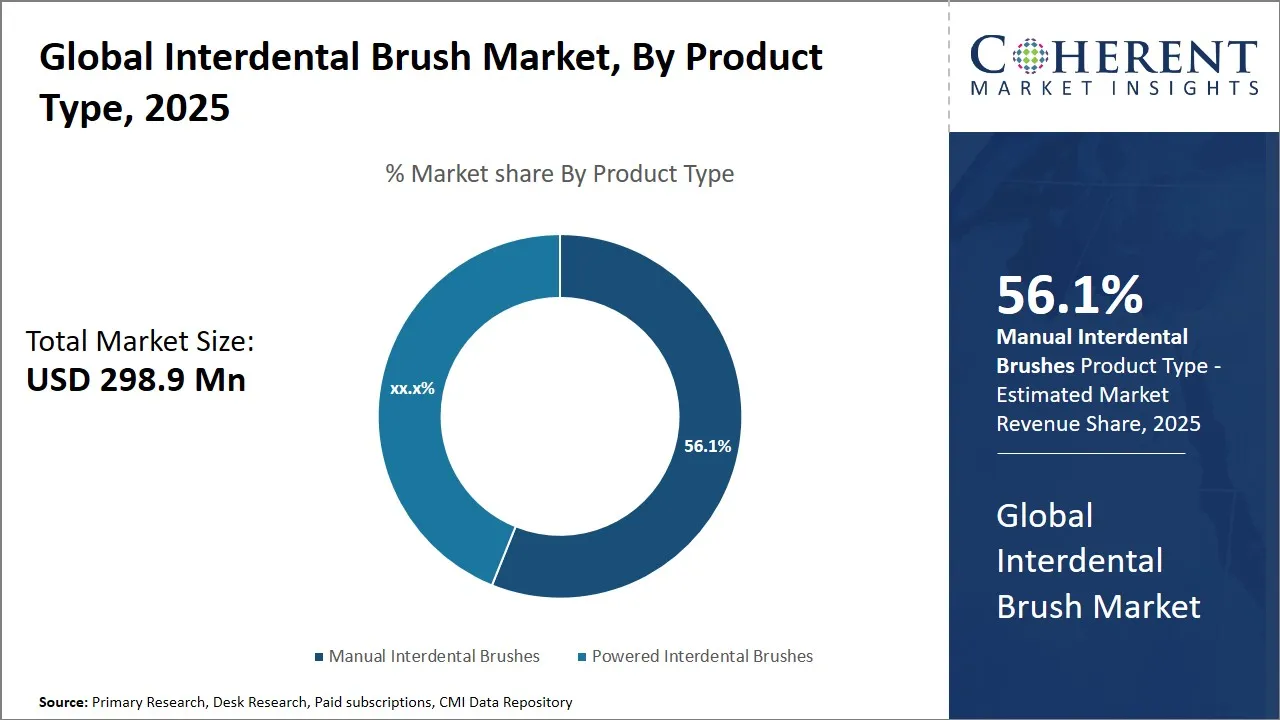
- Manual interdental brushes continue to lead the market, accounting for an estimated 57.1% of the market share in 2026.
- Reusable interdental brushes are increasingly favored over disposable options with an estimated market share of 65.5% in 2026.
- The geriatric demographic is projected to hold a significant share of 43.1% in the interdental brush market in 2026.
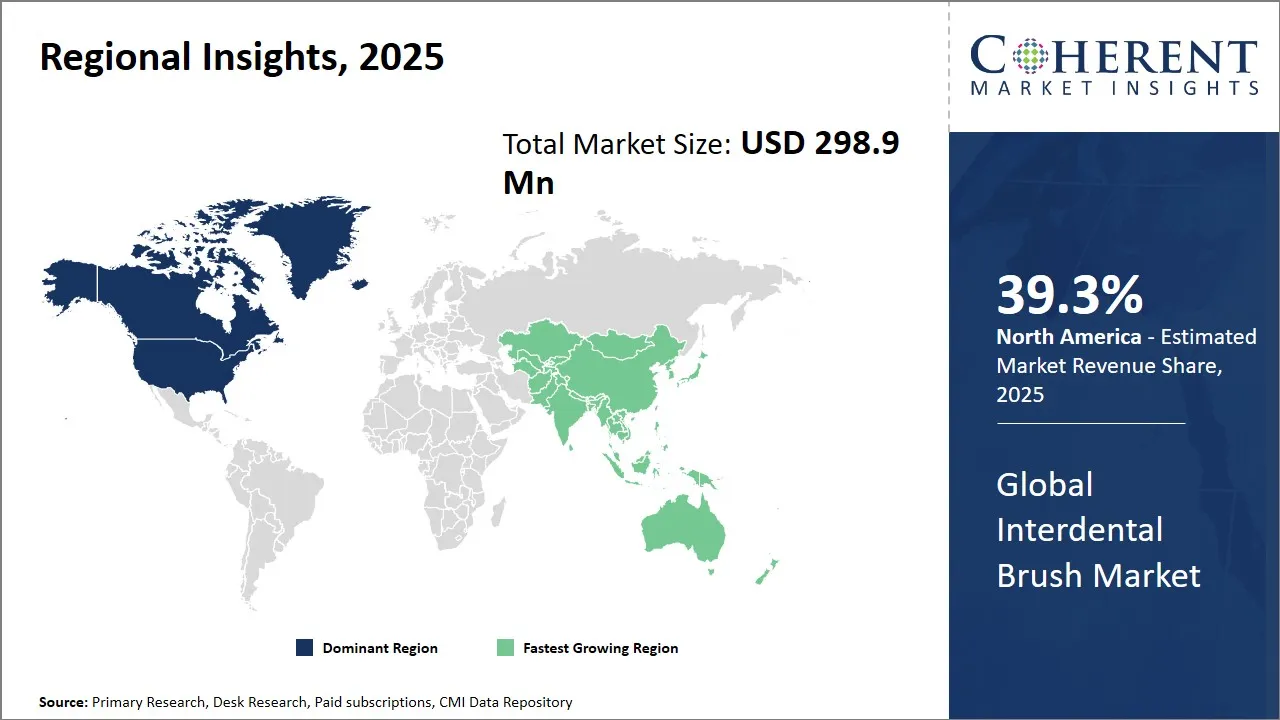
- North America is expected to lead the market, holding a share of 39.3% in 2026. Asia Pacific is anticipated to be the fastest-growing region, with an estimated market share of 23.6% in 2026.
Market Overview
Market trends indicate a rising consumer preference for convenient and efficient oral care products, driving the demand for interdental brushes. Innovations in brush design and materials, along with growing dental health awareness campaigns, are further boosting market expansion. Additionally, the increase in dental disorders and emphasis on preventive oral care are prompting dental professionals to recommend interdental brushes, positively influencing market dynamics throughout the forecast period.
Currents Events and Its Impact
Current Events | Description and its Impact |
Technological innovation and premiumization in oral‑care products |
|
Heightened global focus on preventive oral healthcare |
|
Segmental Insights
- Current Industry Events of 2026
- Market Size Estimation
- Regional Breakdown
- Competitive Landscape
- Customer Intelligence
- Segmental Analysis
- Pricing Analysis
- Key Market Drivers, Challenges & Future Trends
- Customized Insights Section
Interdental Brush Market Insights, By Product Type - Manual interdental brushes contribute the highest share of the market owing to their simplicity, cost-effectiveness, and ease of use
The manual interdental brushes segment became the leader in global sales, accounting for an estimated 57.1% share in 2026, largely driven by the proven effectiveness and widespread availability of these interdental brushes. These brushes are universally attractive to consumers since they do not need any external source of power or any charging and therefore could be used by different users in their day-to-day oral health tasks.
Their simple structure allows them to move easily when cleaning between the teeth and significantly removes plaque and helps prevent gum disease which is one of the most important issues in taking care of the mouth. For example, the brand Oral‑B (owned by Procter & Gamble) is a major global oral‑care player. It offers manual interdental brushes widely available across international markets and known for consistency, quality control and ease of use.
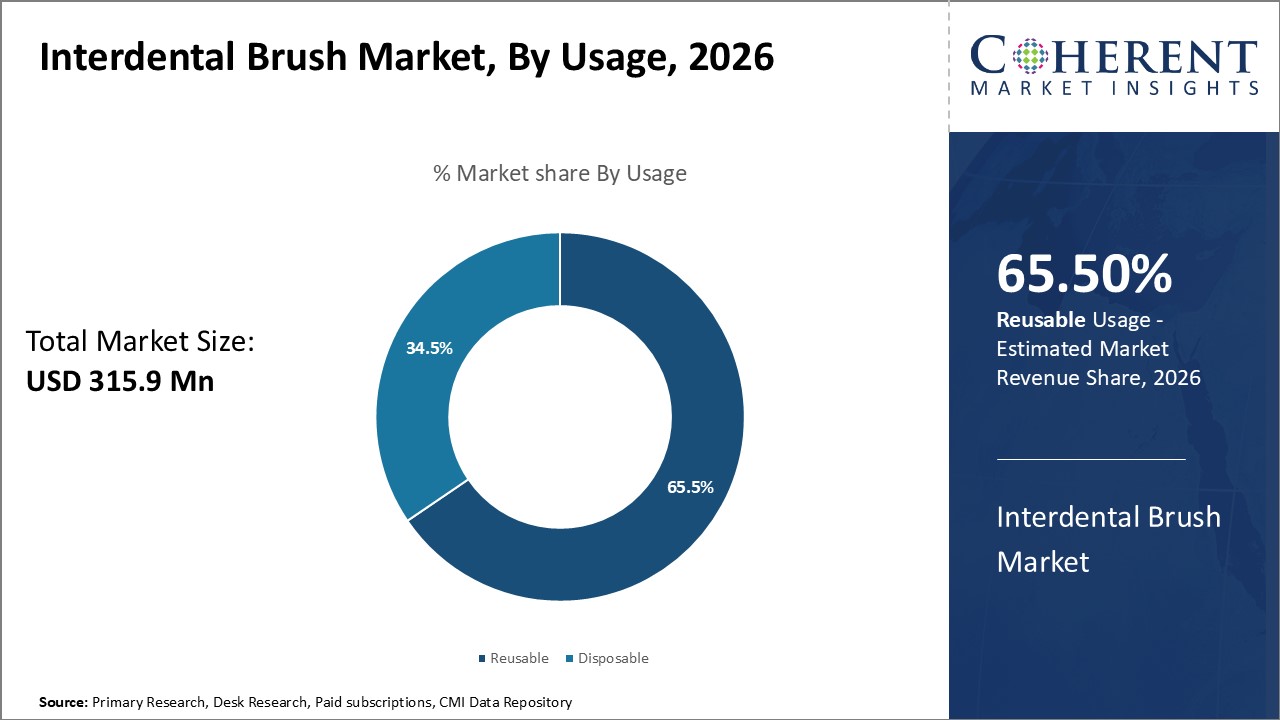
Interdental Brush Market Insights, By Usage - Reusable interdental brushes contribute the highest share of the market due to environmental awareness, durability, and cost-efficiency
The growing popularity of reusable interdental brushes over disposable ones is attributed to heightened consumer awareness about sustainability and environmental impact, with reusable brushes are expected to capture 65.5% of the market share in 2026. With the increasing awareness towards the environment, there has been an increase in demand of products that reduce waste.
Reusable brushes are very compatible with this kind of mentality, as they provide a long-life span and can be used in numerous ways before being discarded. These brushes offer a more responsible option that would attract buyers who care about the environment, as they can be disposed of less often.
Interdental Brush Market Insights, By Patient Demographics - The geriatric segment contributes the highest share of the market driven by increasing awareness about oral health in aging populations and specific dental needs
The geriatric population is a crucial segment for the interdental brush market and is expected to account for 43.1% of the market share in 2026, as oral health needs become more complex with age. The elderly also typically face a problem of shrinking gums, missing teeth and wearing dental prosthetics, which require careful cleaning of interdental areas to avoid infection, gum disease and its complications.
The confidence in this age group to oral health problems is higher, which makes them more dependent on successful interdental hygiene equipment. Another important aspect that is increasing this segment is the increasing awareness about maintaining oral health among the aging population.
Insurance Coverage and Out-of-Pocket Cost Impact on the Interdental Brush Market
- Insurance and reimbursement coverage for interdental brushes varies significantly across countries, influencing consumer access to these products. In regions with comprehensive dental insurance plans, such as in the U.S. and many European countries, coverage for preventive dental care, including interdental brushes, is typically included. However, in countries with limited dental insurance or high out-of-pocket expenses, such as in emerging markets, consumers may face financial barriers to access these products, which can hinder widespread adoption.
- Out-of-pocket costs are a critical factor in shaping market dynamics, especially for cost-sensitive populations. In developed countries, while dental insurance often covers part of the cost, high co-pays or exclusions can still burden consumers. Conversely, in countries where dental care is largely out-of-pocket, such as in certain Asian and Latin American markets, the cost of interdental brushes may be a significant deterrent for regular use, limiting the growth potential of the market.
Regional Insights
North America Interdental Brush Market Analysis and Trends
The global market of interdental brushes has a dominant position in North America with an estimated share of 39.3% in 2026 due to the high level of understanding of oral health and extensive dental care system. The area is advantaged with a high focus on preventive health care, facilitated by the public health programs on oral hygiene. It plays a major role in the U.S. and Canada whereby the majority of the population practices modern oral care, such as interdental cleaning.
Large firms in the oral care industry, including Procter & Gamble, Colgate-Palmolive, and GlaxoSmithKline, are present, and they are spurring the growth of the market with new product offerings. There are also a large network of outlets via pharmacies, supermarkets and online stores that makes interdental brushes readily available, cementing the domination of the market in North America.
Asia Pacific Interdental Brush Market Analysis and Trends
Asia Pacific has the highest growth rate in the market of interdental brushes with an estimated share of 23.6% in 2026 due to rising spending capacity, growing health awareness, and the growing middle-class population in nations such as China, India, Japan and South Korea. The region enjoys high speed of urbanization and campaigns by the government on oral health awareness especially among the emerging economies.
Such companies like Lion Corporation (Japan), Unilever, and local brands like Amway India are taking advantage of the growing retail and online platforms to penetrate the market further. Efficient importation and distribution of high-quality interdental products is also facilitated by the trade liberalization and enhancement of the supply chain infrastructure, which also adds to the acceleration of the market.
Interdental Brush Market Outlook for Key Countries
Germany Interdental Brush Market Trends
The market of interdental brushes in Germany is highly regulated and high-quality dental products are preferred by consumers. Major European brands like Curaden AG and TePe have a long tradition of operations, with innovative designs that suit the varied interdental spaces. The established system of dental professionals in the country promotes the use of an interdental brush as well, causing a positive change in the consumer behavior. The availability of products is boosted by having efficient channels of distribution via pharmacies and online sellers and the government programs promote awareness among the population strengthening the market development prospects.
In Germany, brands, such as GUM (Sunstar) and TePe, lead the market with their wide range of interdental brushes, catering to various consumer needs, from sensitive to wider interdental spaces. These companies focus on providing superior product quality, backed by strong educational initiatives aimed at promoting proper oral hygiene through dental professionals.
Japan Interdental Brush Market Trends
The interdental brush business in Japan enjoys the advantage of strong level of oral hygiene awareness as well as the increase in ageing population that is prone to dental complications. Strategic presence of companies, such as Lion Corporation and Sunstar, comprise a line of technologically superior interdental brushes customized to suit the delicate gums and the senescence of the consumers. Besides, the e-commerce market in Japan facilitates accessibility and adoption, which makes it a central market in the fast-developing markets of Asian Pacific.
In Japan, brands like Curaprox and MCM Corporation offer products that are particularly suited for sensitive gums and the needs of an aging population. Curaprox, known for its high-quality, innovative brush designs, has capitalized on Japan’s emphasis on oral hygiene.
U.S. Interdental Brush Market Trends
The interdental brush market of the U.S. has a vibrant healthcare ecosystem that has dental professionals prescribing interdental brushes as a component of oral care. The key participants are Procter and Gamble (Oral-B), Johnson and Johnson (Reach) and lesser specialized companies that are inventive in product design and material. The trend in product development is determined by consumer emphasis on preventative health and cosmetic dentistry. Wide distribution is accomplished through the presence of robust retail chains, such as mass merchandisers and pharmacies, and increased sales made online.
In the U.S., companies like Colgate-Palmolive and the Waterpik brand play key roles in shaping consumer preferences for interdental brushes. Waterpik's Water Flosser, combined with its line of interdental products, offers an integrated oral care solution.
China Interdental Brush Market Trends
The growing market of interdental brushes in China can be attributed to the increasing awareness about oral health and the promotion of preventive dental care especially in the urban centers by the government. The domestic companies are improving the quality of the products, and the multi-national companies like Unilever or Lion Corporation are collaborating with local firms to gain penetration. The fast growth of the organized retail, pharmacy chains, and online stores contributes to the high accessibility, which places China as a key contributor to the overall increase of the Asian Pacific interdental brush market.
In China, local companies like Yunnan Baiyao and Unilever’s Signal brand are driving market growth with innovative interdental brushes designed for the rising health-conscious urban population. Yunnan Baiyao, traditionally known for its health products, has leveraged its strong brand recognition to expand into the oral care sector, offering brushes that cater to the needs of both young and aging consumers.
End User Feedback and Unmet Needs - Global Interdental Brush Market
- Healthcare users, particularly dental professionals, appreciate the precision of interdental brushes in cleaning hard-to-reach areas, especially for patients with braces or dental implants. However, many report a lack of options for those with sensitive gums, such as people undergoing periodontal treatments. This gap in the market is a frequent concern among both professionals and consumers.
- Addressing these unmet needs could foster growth opportunities within the market. By focusing on customization and affordability developing brushes tailored for different oral health conditions and price points manufacturers could not only enhance customer satisfaction but also build stronger brand loyalty. Additionally, the integration of smart technology, such as sensors that alert users about optimal brushing time or pressure, could further align products with consumer expectations, leading to greater adoption and market expansion.
Market Players, Key Developments, and Competitive Intelligence
Key Developments
- In October 2025, NLS Pharmaceutics, a Swiss clinical-stage biopharmaceutical company, and Kadimastem, an Israeli biotech firm, announced a strategic collaboration with TargetGene. The partnership combines Kadimastem’s cell therapy platforms, including AstroRx for ALS, with TargetGene’s precision gene-editing technology. The goal is to develop advanced, gene-edited cell therapies to treat severe diseases like ALS and diabetes.
- In September 2024, TePe launched sustainable interdental brushes, reducing their carbon footprint by 80% through the use of fossil-free pine oils. The brushes are made with 100% renewable energy at TePe’s Malmö facility. Designed in collaboration with dental professionals, the range includes nine color-coded sizes. TePe aims for CO₂ neutrality in all products and packaging by 2022, aligning with the UN's 2030 Sustainable Development Goals.
- In September 2024, KRAIBURG TPE introduced its THERMOLAST R-RC/FC/PCR/AP series for interdental brushes in the Asia Pacific interdental brush market. This sustainable material series features up to 35% post-consumer recycled content, ensuring a balance of performance and eco-friendliness. The TPE material offers customizable surfaces, from soft-touch to high friction, ideal for ergonomic grips.
- In November 2022, STIM Oral Care, a leading Indian manufacturer of interdental brushes, introduced a range of brushes aimed at improving oral hygiene. Founded in 1965, STIM has earned global recognition for its products, supported by renowned dental professionals. The company’s interdental brushes, available in seven sizes and compliant with ISO color-coding, are designed to clean areas between the teeth that toothbrushes miss, helping maintain better gum health.
Top Strategies Followed by Global Interdental Brush Market Players
- Established players in the market usually exercise their dominance through heavy investment on research and development (R&D). Their innovation commitment has led to the launching of high-performance interdental brushes that have to be of the type of the brushes such as ergonomic, antibacterial and environment-friendly materials. Moreover, such leaders also establish strategic alliances with major stakeholders such as OEMs in order to consolidate their market.
- Leading companies like TePe and Curaden maintain their market dominance by investing heavily in R&D, offering high-quality brushes with ergonomic designs and sustainable materials, while forming key partnerships with OEMs
- Mid-level players in the interdental brush market pursue a strategy that focuses on providing affordable solutions that find the balance between quality and cost. Since a large percentage of consumers are price sensitive, particularly in developing countries, these companies develop products that would offer consistent performance, yet at affordable prices.
- Mid-level companies such as GUM (Sunstar) and Oral-B provide cost-effective interdental brushes, balancing affordability and quality, catering to price-sensitive markets in developing regions. Also brands like Dr. Fischer and DenTek focus on delivering affordable, quality interdental brushes, ensuring accessibility to price-sensitive consumers in emerging markets.
- Small-scale players in the international interdental brush market operate in a more focused way with reserves of niches that focus on unique or innovative capabilities to meet a niche consumer need. They frequently invest in new technology like biodegradable products, personalized brush sizes, or intelligent packaging that can be differentiated to the mass-market products.
- Small-scale players like The Humble Co. and Biodent focus on niche markets, offering eco-friendly options like biodegradable materials and customized sizes to attract environmentally conscious consumers.
Market Report Scope
Interdental Brush Market Report Coverage
| Report Coverage | Details | ||
|---|---|---|---|
| Base Year: | 2025 | Market Size in 2026: | USD 315.9 Mn |
| Historical Data for: | 2020 To 2024 | Forecast Period: | 2026 To 2033 |
| Forecast Period 2026 to 2033 CAGR: | 5.7% | 2033 Value Projection: | USD 465.7 Mn |
| Geographies covered: |
| ||
| Segments covered: |
| ||
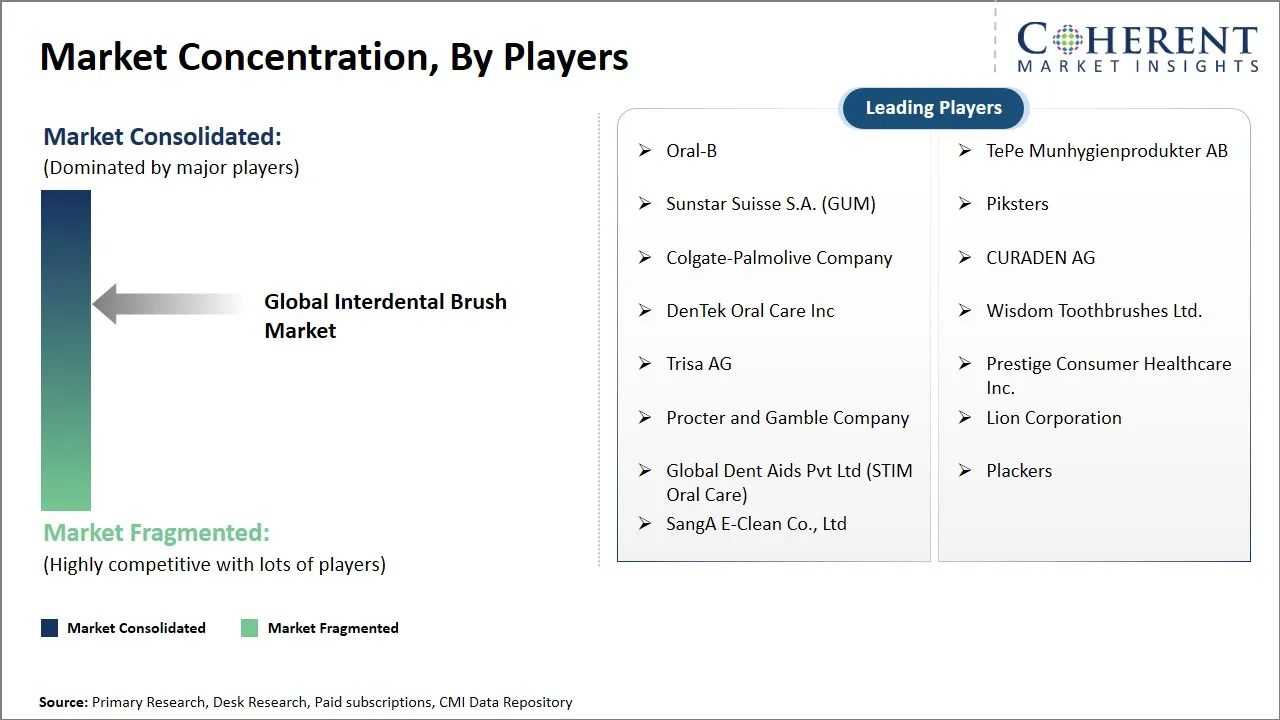
| Companies covered: | Oral‑B, TePe Munhygienprodukter AB, Sunstar Suisse S.A. (GUM), Piksters, Colgate‑Palmolive Company, CURADEN AG, DenTek Oral Care Inc, Wisdom Toothbrushes Ltd., Trisa AG, Prestige Consumer Healthcare Inc., Procter and Gamble Company, Lion Corporation, Global Dent Aids Pvt Ltd (STIM Oral Care), Plackers, and SangA E‑Clean Co., Ltd | ||
| Growth Drivers: |
| ||
| Restraints & Challenges: |
| ||
Interdental Brush Market Dynamics
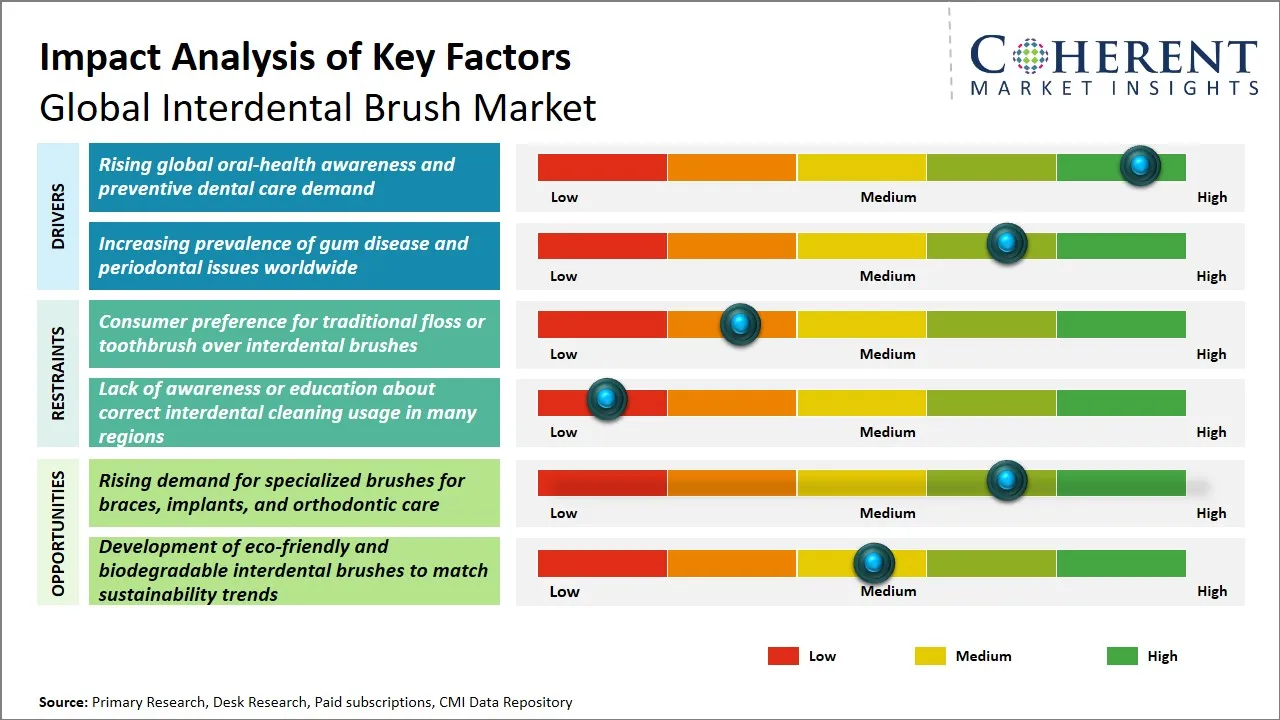
Interdental Brush Market Driver - Rising Global Oral ‑health Awareness and Preventive Dental Care Demand
The growing focus on oral and preventive dental health in the world has been a major catalyst towards the interdental brush industry. The increasing interest in taking care of healthy gum and teeth due to the large-scale campaigns on health issues and the availability of dental education have stimulated the consumer to consider more efficient oral cleaning devices other than the conventional toothbrushes. Interdental brushes that help in cleaning the interstitial areas between the teeth where normal brushing fails to reach are increasingly becoming part of routine oral health habits. In addition, the increase in the dental problems including plaque accumulation, gingivitis and periodontitis have increased the need to find specific preventive measures.
In September 2023, FDI World Dental Federation launched its three-year "A Happy Mouth is..." World Oral Health Day campaign at the World Dental Congress in Sydney. The campaign, running from 2024 to 2026, aims to raise oral health awareness globally. The 2024 focus, "A Happy Mouth, Is A Happy Body," highlights the link between oral health and overall well-being. Moreover, as per WHO data, in March 2025, oral diseases continue to affect nearly 3.7 billion people worldwide. Dental caries, periodontal disease, and oral cancer are prevalent, while conditions like noma and oro-dental trauma remain significant health issues.
Interdental Brush Market Opportunity - Rising Demand for Specialized Interdental Brushes for Braces, Implants, and Orthodontic Care
The global interdental brush market offers a huge growth prospect as it is supported by the increasing rate of demand for special brushes that are customizable to suit the demands of people with braces, dental implants, as well as orthodontic appliances. With the ever-growing popularity of orthodontic treatments all over the world, especially among adolescents and adults who wish to experience better dental appearance and dental health, the demand of efficient interdental cleaning tools, which will be able to move within complex dental complications, has exploded. Conventional flossing techniques can easily be used to clean the area around brackets, wires, and implant fixtures, and leave a gap that can be well addressed by interdental brushes.
In September 2024, Great Gums launched its bioelectric toothbrushes, the Great Gums One and Clinical Grade, in the U.S. These toothbrushes use patented bioelectric technology to remove plaque effectively, offering superior cleaning in hard-to-reach areas. Great Gums, an innovator in oral care, has sold over 600,000 bioelectric brushes in South Korea since 2020.
Analyst Opinion (Expert Opinion)
- The interdental brush market is expanding due to growing awareness of oral health and advancements in dental care technologies. Increased demand for preventive dental care and innovations in brush design and materials are driving market growth. Consumers, especially millennials and the aging population, are increasingly turning to interdental brushes as a more effective solution for better oral health.
- New opportunities lie in the demand for eco-friendly, biodegradable brushes. However, challenges such as price sensitivity in developing markets and a lack of consumer education remain. Key industry events like the International Dental Show (IDS) and Dental Expo play a critical role in showcasing innovations and shaping market trends.
Speak to the analyst
Want personalized insights?
Take the findings above to one of our principal consultants, or have the report rebuilt around the segments, geographies and competitors you actually track.
Market Segmentation
- Product Type Insights (Revenue, USD Mn, 2021 - 2033)
- Manual Interdental Brushes
- Powered Interdental Brushes
- Usage Insights (Revenue, USD Mn, 2021 - 2033)
- Reusable
- Disposable
- Patient Demographics Insights (Revenue, USD Mn, 2021 - 2033)
- Geriatric
- Pediatric
- Adult
- Clinical Indication Insights (Revenue, USD Mn, 2021 - 2033)
- Gum Diseases (Gingivitis, Periodontitis)
- Orthodontic Applications (Braces, Retainers, Bridges)
- Dental Implants and Crowns
- General Preventive Oral Care
- End User Insights (Revenue, USD Mn, 2021 - 2033)
- Hospitals (Inpatient and Outpatient Dental Departments)
- Dental Clinics and Practices
- Long-term Care Facilities and Nursing Homes
- Individual Consumers (At-home Use)
- Distribution Channel Insights (Revenue, USD Mn, 2021 - 2033)
- Online
- Offline
- Regional Insights (Revenue, USD Mn, 2021 - 2033)
- North America
- U.S.
- Canada
- Latin America
- Brazil
- Argentina
- Mexico
- Rest of Latin America
- Europe
- Germany
- U.K.
- Spain
- France
- Italy
- Russia
- Rest of Europe
- Asia Pacific
- China
- India
- Japan
- Australia
- South Korea
- ASEAN
- Rest of Asia Pacific
- Middle East
- GCC Countries
- Israel
- Rest of Middle East
- Africa
- South Africa
- North Africa
- Central Africa
- North America
- Key Players Insights
- Oral‑B
- TePe Munhygienprodukter AB
- Sunstar Suisse S.A. (GUM)
- Piksters
- Colgate‑Palmolive Company
- CURADEN AG
- DenTek Oral Care Inc
- Wisdom Toothbrushes Ltd.
- Trisa AG
- Prestige Consumer Healthcare Inc.
- Procter and Gamble Company
- Lion Corporation
- Global Dent Aids Pvt Ltd (STIM Oral Care)
- Plackers
- SangA E‑Clean Co., Ltd
Sources
Primary Research Interviews
- Industry Stakeholders
- Practicing dental hygienists
- Oral-care product retailers
- End Users
- Long-term users of interdental brushes
- General dental-care consumers
Government and International Databases
- World Health Organization (WHO)
- National Institute of Dental and Craniofacial Research (NIDCR)
- Centers for Disease Control and Prevention (CDC)
- Public oral-health datasets (US, global)
- Global Burden of Disease database
- National health surveys
Trade Publications
- Dental hygiene literature guides
- Professional dentistry journals
- Oral-health newsletters from public-health agencies
- Global oral-health strategy reports from WHO
- Periodontal-science newsletters
- Dental-hygiene market reports
Academic Journals
- PMC articles on interdental brush effectiveness
- Studies on the development of interdental brushes
- Comparative efficacy studies
- User satisfaction surveys
- Research on microbial sampling with brushes
- Studies on plaque removal using interdental tools
Reputable Newspapers
- Public health press releases
- Government health ministry bulletins
- Media coverage of global oral-health meetings
- Oral-health reports by international organizations
- Oral-health studies in media outlets
- Global health policy briefs
Industry Associations
- European Federation of Periodontology (EFP)
- Toothfriendly International
- National dental associations
- Dental-hygiene academic associations
- Regional oral-health coalitions
- Public-health professional bodies
Public Domain Resources
- Open-access PMC articles
- WHO Global Oral Health Data Portal
- Open-source public health oral-health datasets
- University dental-hygiene resource guides
- Open-access journal databases
- Public epidemiological studies
Proprietary Elements
- CMI Data Analytics Tool: Proprietary analytics tool to analyze real-time market trends, consumer behavior, and technology adoption in market
- Proprietary CMI Existing Repository of Information for Last 8 Years
Get access to 250+ pages report
Every segment, forecast, competitor profile and data table behind the analysis above — available for instant download.
- ESOMAR Member
- ISO 9001:2015 Certified
- D-U-N-S Registered
- GDPR & CCPA Compliant
Missing comfort of reading report in your local language? Find your preferred language:
Transform your Strategy with Exclusive Trending Reports
Frequently Asked Questions
The global interdental brush market is estimated to be valued at USD 315.9 Mn in 2026 and is expected to reach USD 465.7 Mn by 2033.
The CAGR of the global interdental brush market is projected to be 5.7% from 2026 to 2033.
Rising global oral‑health awareness and preventive dental care demand and increasing prevalence of gum disease and periodontal issues worldwide are the major factors driving the growth of the global interdental brush market.
Consumer preference for traditional floss or toothbrush over interdental brushes and lack of awareness or education about correct interdental cleaning usage in many regions are the major factors hampering the growth of the global interdental brush market.
In terms of product type, manual interdental brushes are estimated to dominate the market revenue share in 2026.
Oral‑B, TePe Munhygienprodukter AB, Sunstar Suisse S.A. (GUM), Piksters, Colgate‑Palmolive Company, CURADEN AG, DenTek Oral Care Inc, Wisdom Toothbrushes Ltd., Trisa AG, Prestige Consumer Healthcare Inc., Procter and Gamble Company, Lion Corporation, Global Dent Aids Pvt Ltd (STIM Oral Care), Plackers, and SangA E‑Clean Co., Ltd are the major players.
North America is expected to lead the global interdental brush market in 2026.