

Global Lactose Monohydrate Market Size and Forecast – 2026-2033
The Global Lactose Monohydrate Market is estimated to be valued at USD 1.52 Bn in 2026 and is expected to reach USD 2.11 Bn by 2033, exhibiting a compound annual growth rate (CAGR) of 4.8% from 2026 to 2033.
Key Takeaways of the Lactose Monohydrate Market
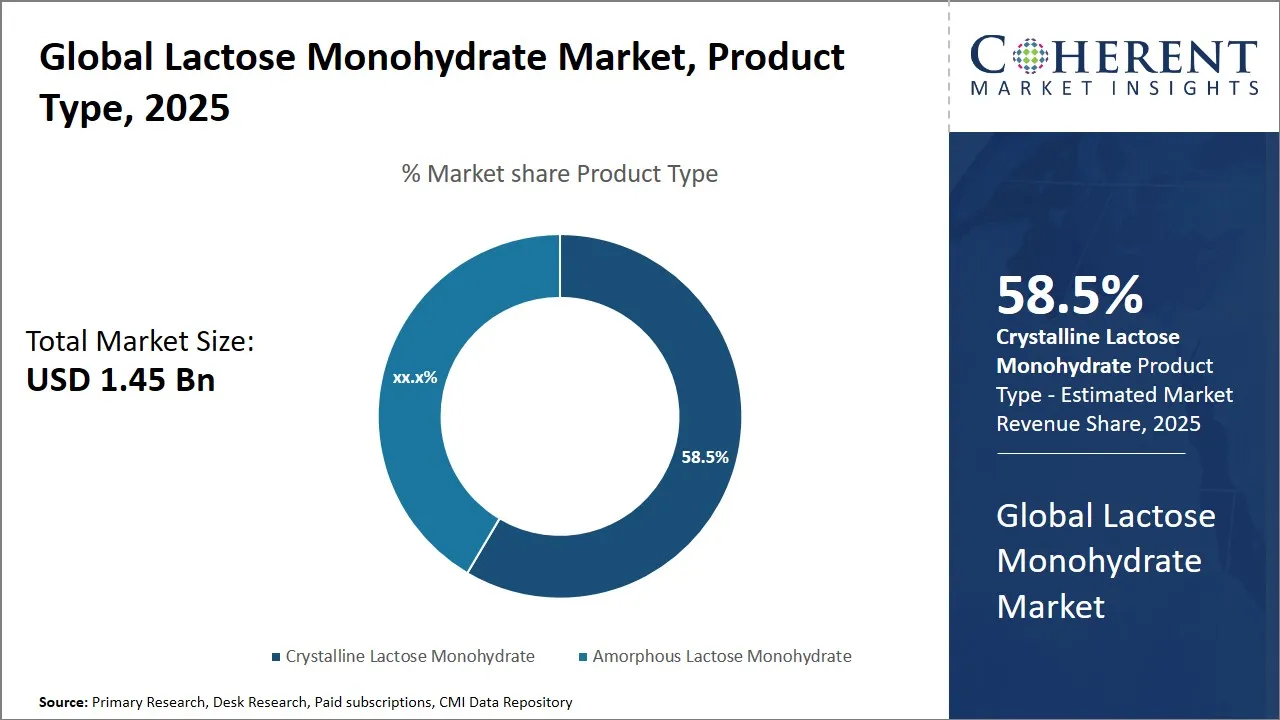
- Crystalline lactose monohydrate is expected to account for 59.5% of the global lactose monohydrate market share in 2026.
- The pharmaceuticals segment is expected to capture 29.6% of the global lactose monohydrate market share in 2026.
- The food grade segment is projected to account for 58.9 % of the market share in 2026.
- Asia Pacific is expected to lead the global lactose monohydrate market in 2026 with a 33.5 % share. Europe, with an estimated share of 23.5% in 2026, and will be the fastest-growing region.
Market Overview
A key market trend is the growing preference for natural and functional ingredients in end-use industries, which is propelling lactose monohydrate adoption due to its natural origin and beneficial properties. Additionally, expanding pharmaceutical applications, particularly in excipients and vaccine formulations, are fueling market growth. Sustainability initiatives and innovation in lactose extraction and processing methods are also shaping the market landscape, enabling manufacturers to cater to the increasing demand while maintaining product quality and cost-efficiency.
Current Events and Its Impact
Current Events | Description and its Impact |
Surge in Global Dairy Trade & Price Volatility |
|
Technological Advances in Lactose Processing & Purification |
|
Segmental Insights
- Current Industry Events of 2026
- Market Size Estimation
- Regional Breakdown
- Competitive Landscape
- Customer Intelligence
- Segmental Analysis
- Pricing Analysis
- Key Market Drivers, Challenges & Future Trends
- Customized Insights Section
Lactose Monohydrate Market Insights, By Product Type - Crystalline Lactose Monohydrate Segment Dominates the Market due to its Superior Functional Properties and Widespread Industrial Applicability
Crystalline lactose monohydrate is projected to account for 59.5% share in 2026, because of its highly desirable physical and chemical characteristics. Its crystalline structure provides it with a high level of stability, flowability and compressibility properties which are considered very useful in pharmaceutical preparations. These characteristics have led to its widespread applications in direct compression tablets where the homogeneity of particle size and compressibility is important in determining consistent dose and efficacy.
For example, pharmaceutical grade crystalline lactose monohydrate is offered by Merck KGaA under its Parteck L brand, which is specifically designed to meet the direct compression operations whereby, high levels of flow and compressibility are required.
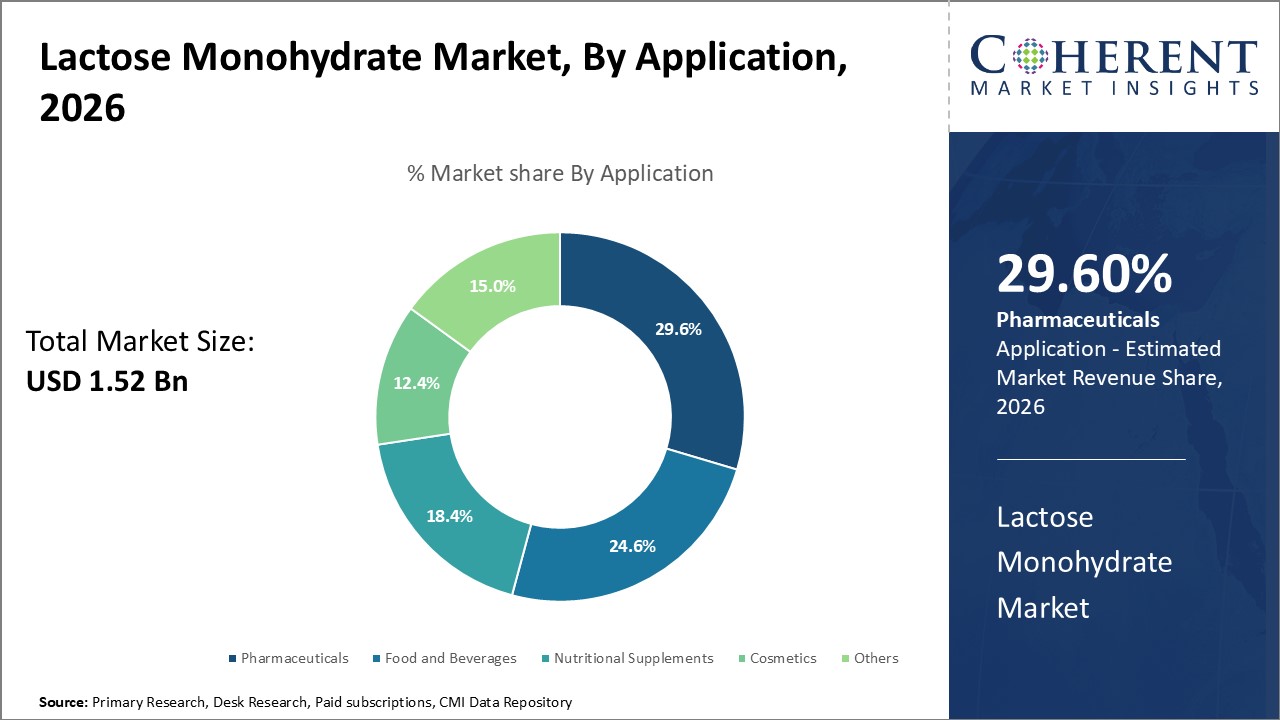
Lactose Monohydrate Market Insights, By Application – Pharmaceuticals Segment Dominates the Market due to Driven by the Critical Role of Lactose Monohydrate as a Versatile Excipient Essential for Drug Formulation and Delivery
The pharmaceuticals segment is expected to capture 29.6% of the global lactose monohydrate market share in 2026, because the ingredient plays a central role in the formulation and production of different oral solid dosage forms such as tablets and capsules. It is a preferred excipient due to its inert nature, non-toxicity and compatibility with most active pharmaceutical ingredients. Pharmaceutical grade lactose monohydrate increases the formulation properties of pills such as the flow of the powder, compressibility and hardness of the tablet without affecting its solubility or bioavailability.
Lactose Monohydrate Market Insights, By Purity - Food Grade Segment Dominates the Market Driven by Consumer Demand for Natural and Clean-Label Ingredients
Food grade segment is projected to hold 58.9% of the market share in 2026. This grade is safe and meets the standards required to be consumed by humans and is perceived well by the consumers who want natural and minimally processed ingredients. Increased demand of functional foods and fortified nutrition products presents strong uses of lactose monohydrate especially in infant formula, dairy analogs, and protein supplements.
In the dairy and bakery industries lactose monohydrate is a natural sweetener, texture modifier and browning enhancer, which ensures sensory and shelf life of products in the industry. Its capacity to enrich the mouthfeel and increase the Maillard reactions facilitate the production of favorable flavors and color of baked goods and confectioneries. There is also growing demand to use lactose in clean-label formulations, which further moves towards the synthetic additives as food manufacturers switch over.
Regional Insights
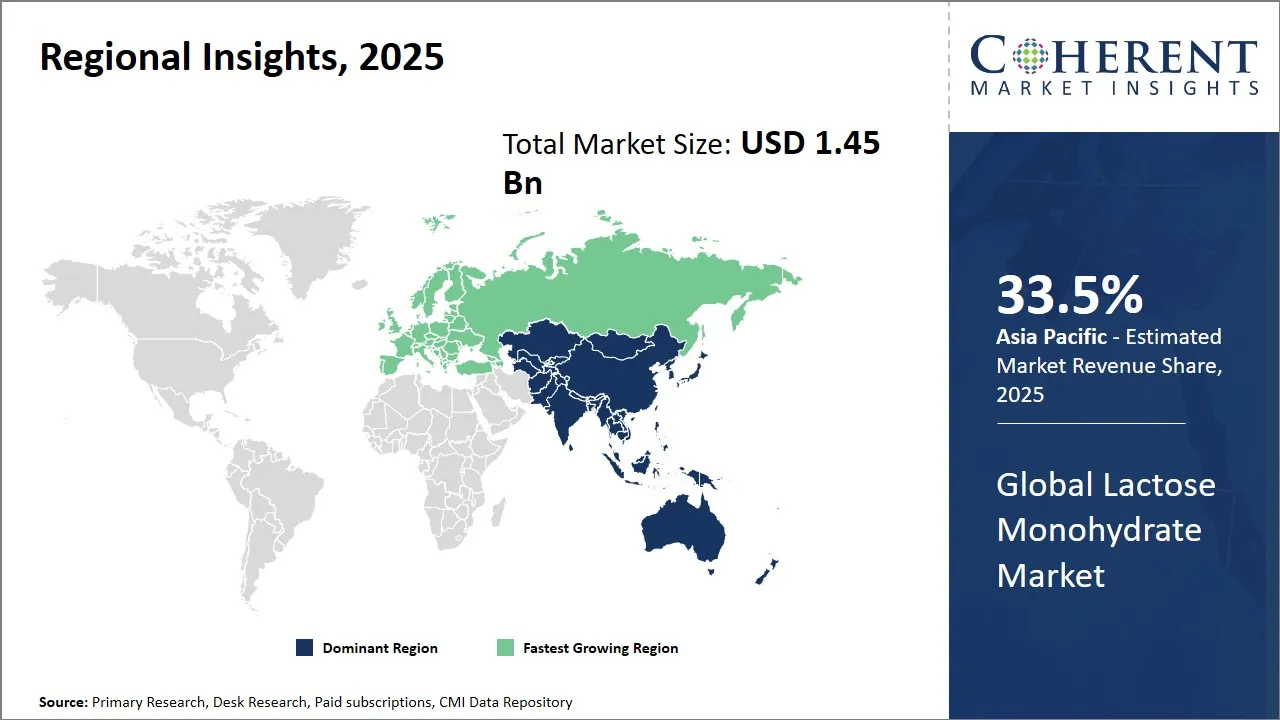
Asia Pacific Lactose Monohydrate Market Analysis and Trends
The Asia Pacific region is projected to lead the market with a 33.5% share in 2026, driven by increasing demand from emerging economies including China, India, Japan, and Southeast Asian countries. The increasing awareness of health and nutrition and the high rate of urbanization contribute to the increase in the consumption of dairy products and lactose derivatives in large amounts in infant nutrition, pharmaceutical and functional foods. The efforts made by the government to build domestic dairy industries especially in India and China contribute to increasing the production capacity and to lessen the dependence on imports.
Europe Lactose Monohydrate Market Analysis and Trends
The Europe region is expected to exhibit the fastest growth in the market contributing 23.5% share in 2026, can be attributed to the region’s well-established dairy industry, strong regulatory frameworks, and extensive R&D capabilities. Germany, France, and the Netherlands are some of the countries which have highly developed dairy farming structures and well-developed supply chains that guarantee a continuous and quality supply of raw materials.
The existence of major multinational companies like Friesland Campina, Arla Foods and Lactalis that are into processing lactose also strengthens the market leadership of Europa because they invest so much on technologies relating to lactose processing. Distribution further is facilitated within the European Union through trade, which facilitates penetration of the markets and availability of products to the local as well as export markets.
Global Lactose Monohydrate Market Outlook for Key Countries:
Germany Lactose Monohydrate Market Analysis and Trends
The market of lactose monohydrate in Germany is an advantageous market due to the strong dairy farming industry and the presence of well-developed processing industries in the country which makes it one of the major producers of lactose monohydrate in Europe. DMK Group and Sudzucker AG companies are the key contributors to the lactose supply chain, and both of them are concerned with innovation and sustainability.
The policies of the German government that support the research in agriculture and organic dairy farming contribute even more to the quality of the products and their variety. The strategic location of the country in the middle of Europe leads to easy access to the neighboring markets which helps in exports as well as intra-regional trade.
India Lactose Monohydrate Market Analysis and Trends
The market of India lactose monohydrate is growing at a high rate with the high base of dairy production supported by the government initiative such as National Dairy Plan which is intended to raise the milk production. Leading dairy companies in India like the Hatsun Agro and the Amul are investing in lactose processing units to satisfy the increasing demands in the pharmaceuticals and infant nutrition market.
U.S. Lactose Monohydrate Market Analysis and Trends
The U.S. remains a huge consumer and producer of lactose monohydrate, and has an established pharmaceutical and food processing sector with heavy reliance on lactose derivatives. Such major market participants as Ingredion Incorporated and Cargill focus on lactose-based products innovation and effective supply chains. The regulatory environment of the U.S., which is controlled by the FDA, is assuring of product safety and quality, which promotes trust in the market. In addition, high export potentials sustain access to global lactose monohydrate market, especially Latin America and Asia Pacific.
China Lactose Monohydrate Market Analysis and Trends
The China lactose monohydrate business environment is dynamic in the sense that it has witnessed a growing dairy and a developing pharmaceutical market. Extensive domestic producers like the Beingmate Baby and Child Food and Synlait Milk actively invest in the production of lactose and its improvement. The establishment of food safety standards and government subsidies on the modernization of dairy contribute to the credibility of the market. Besides, the growing involvement of China in the trade agreements with other countries enhances the game of importation of raw materials and exports of processed lactose products.
Japan Lactose Monohydrate Market Analysis and Trends
Japan lactose monohydrate market is characterized by high demand for lactose monohydrate in infant formula, pharmaceuticals, and food industries. Established companies like Morinaga Milk Industry leverage advanced technology and R&D to innovate lactose applications catering to health-conscious consumers. Japan’s rigorous regulatory environment ensures high quality and safety standards, which enhance consumer confidence. Limited domestic raw materials prompt reliance on imports, but strategic partnerships with suppliers in Europe and Asia Pacific help maintain stable supply chains.
Macro and Micro Economic Factors Impacting on Lactose Monohydrate Market Growth
Macroeconomic Factors
- Pharma Industry Growth: The increasing production of pharmaceutical products, and this is particularly in developed and emerging economies, drives the demand of lactose monohydrate as a major drug and medical excipient.
- Population Growth & Aging: The growing global population, especially the aging population in some parts of the world such as Europe and North America, puts additional demand on pharmaceutical medication and infant food, which is among the key application of lactose monohydrate.
- Urbanization & Income Levels: Urbanization and increased disposable incomes particularly in Asia-Pacific and India are also making people consume more processed food and pharmaceuticals which are also leading to increase in the market.
- Technological Advancement: Technological advancement in lactose purification, processing and product development (e.g. increased solubility, lactose-free products) is driving expansion and increasing the range of application.
- Trade Dynamics & Regulatory Environment: The good trade conditions, government activities that encourage modernization and stringent pharmaceutical controls affect the production, distribution, and compliance prices.
Microeconomic Factors
- Industry Demand Shifts: This is supported by the strong demand driven by pharmaceuticals (tablets and capsules), infant formula and clean-label nutritional products where lactose monohydrate has been found to be compressible, stabilizing and neutral.
- Raw Material Availability: The stability of the margin and access to low-cost dairy-based raw materials are supported by the competitive pricing and easy access to low-cost dairy farming and agricultural production, though the volatility of the dairy farming industry and agricultural production might affect the costs and availability.
- Competitive Dynamics: Intense competition among the manufacturers, particularly of the pharmaceutical grade and high purity lactose, perpetuates innovation, differentiation and production technology.
- Consumer Behavior: The changing preference of consumers to less processed and natural foods, and lactose-free products as a result of lactose intolerance influences the product development strategies and segmentation.
Market Players, Key Development, and Competitive Intelligence
Key Development
- In April 2025, LBB Specialties (LBBS), a leader in specialty chemicals and ingredient distribution in North America, announced a new partnership with Kerry Group, a world leading taste and nutrition partner for the food, beverage, and pharmaceutical markets with innovative, sustainable specialty ingredients for the industry.
Top Strategies Followed by Global Lactose Monohydrate Market Players
- Established industry leaders dominate through robust investments in research and development (R&D), aiming to continuously innovate and produce high-performance lactose monohydrate products. These companies focus on the improvement of product purity, solubility and other functional properties necessary in pharmaceutical, food and beverage application.
- For example, DFE Pharma, produced high flow lactose grades such as Pharmatose 200M to increase the compressibility and consistency of solid dosage formulations. MEGGLE has introduced Tablettose series, which is intended to be directly compressed, has a better solubility level as well as purity levels that are suitable in pharmaceutical and nutraceutical usage.
- The mid-level firms operating in the lactose monohydrate market mainly cut their market base through focusing on the cost-efficient product provision that balances the quality and affordability. Such players target the needs of price-sensitive customers such as pharmaceutical companies in the region, nutraceutical companies, and food processors who desire quality lactose, but not at premium prices.
- For example, Ankit Pulps & Boards Pvt. Ltd. produces lactose monohydrate as a pharmaceutical/food-grade excipient.
- Smaller industry participants, who may be a niche market in the lactose monohydrate market, distinguish themselves by focusing on specialized attributes or novel variations of products that are custom crafted to a particular end use. These can be lactose with tailored particle sizes, superior solubility profiles, or organic certifications that are directed towards specialty pharmaceutical preparations or high-quality food use.
Market Report Scope
Lactose Monohydrate Market Report Coverage
| Report Coverage | Details | ||
|---|---|---|---|
| Base Year: | 2025 | Market Size in 2026: | USD 1.52 Bn |
| Historical Data for: | 2020 To 2024 | Forecast Period: | 2026 To 2033 |
| Forecast Period 2026 to 2033 CAGR: | 4.8% | 2033 Value Projection: | USD 2.11 Bn |
| Geographies covered: |
| ||
| Segments covered: |
| ||
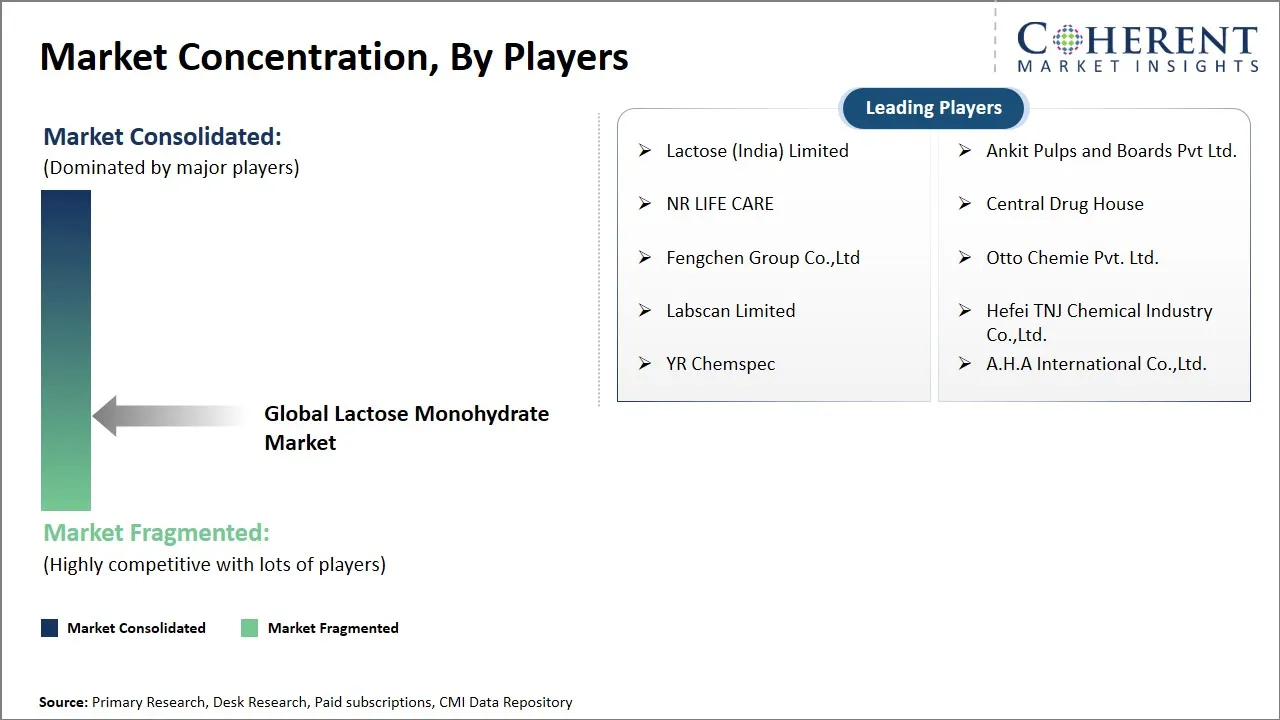
| Companies covered: | Lactose (India) Limited, Ankit Pulps and Boards Pvt Ltd., NR LIFE CARE, Central Drug House, Fengchen Group Co.,Ltd, Otto Chemie Pvt. Ltd., Labscan Limited, Hefei TNJ Chemical Industry Co.,Ltd., YR Chemspec, and A.H.A International Co.,Ltd. | ||
| Growth Drivers: |
| ||
| Restraints & Challenges: |
| ||
Lactose Monohydrate Market Dynamics
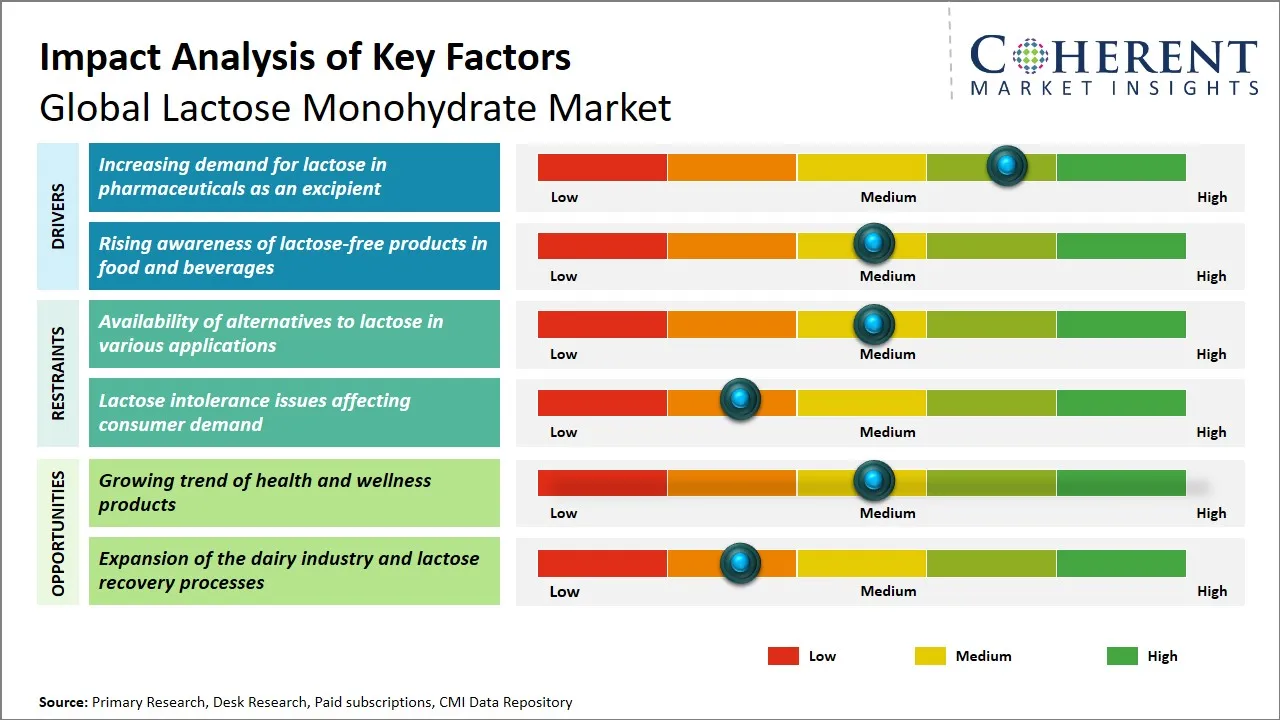
Lactose Monohydrate Market Driver - Increasing Demand for Lactose in pharmaceuticals as an Excipient
Increased demand of lactose monohydrate in pharmaceutical industry is one of the engines which is driving the market. Lactose monohydrate is a preferred excipient because of its high level of compressibility, stability and compatibility with a wide variety of active pharmaceutical ingredients (APIs). It is mostly applied in tablet preparations as a filler and binder to improve the mechanical integrity and homogeneity of dosage forms. Moreover, it tastes sweet enough to counter the bitterness of some medicines enhancing patient compliance. As the pharmaceutical industry continues to grow and the number of oral solid dosage form of production is on the rise, there is a growing demand to rely on lactose monohydrate.
DFE Pharma as an example increased the production of lactose monohydrate by increasing its plant at Norten-Hardenberg in Germany to satisfy the increasing demand of pharmaceutical. The firm distributes high grade lactose that is used as compressible excipient in oral solid dosage to global pharma giants like Pfizer and GlaxoSmithKline.
Lactose Monohydrate Market Opportunity - Rising Demand for Health and Wellness Products
The ever-increasing health and wellness concern in the world has provided a massive market opportunity to lactose monohydrate as more consumers are willing to buy products that will enhance their nutrition and general health. Lactose monohydrate as a nutritional supplements and commonly used excipient is particularly important in the formation of functional food, dietary supplement and pharmaceutical products targeted at health-conscious customers. This is especially true in those markets where incidences of lifestyle diseases have increased the concern of a balanced diet and nutritional consumption. With clean-label and natural ingredients on the rise, the lactose monohydrates natural origin and multifunctional characteristics make it a popular food and pharmaceutical ingredient.
Analyst Opinion (Expert Opinion)
- The lactose monohydrate market in the world will experience a huge growth owing to the growing demand of dairy products, and the rising awareness of the lactose in medicine and nutraceuticals. The topics of the International Dairy federation world dairy summit (2023) and the food ingredients Europe conference (2022) have shown some important trends with companies, such as Arla Foods and Lactalis, developing lactose processing technologies to increase purity and functionality.
- The recent progress made by Arlas to perfect the lactose extraction procedures reflects a quality-oriented outlook that is attracting to both the food and pharmaceutical companies. The need to find a solution to lactose intolerance among consumers was a key subject of discussion during these events at which lactose-free products are driving new product innovations. Nevertheless, fluctuations in the price of raw materials and regulatory barriers were often cited as the possible threats.
- Those companies, which pay much attention to product diversification and invest their resources into promotion strategies to emphasize the health advantages of lactose will probably be successful. Furthermore, the collaboration with health and wellness brands is a prospect to increase the market presence. Finally, the development of the global lactose monohydrate business will rely on its capacity to get innovative, address the needs of customers, and cope with the changing regulatory environment.
Speak to the analyst
Want personalized insights?
Take the findings above to one of our principal consultants, or have the report rebuilt around the segments, geographies and competitors you actually track.
Market Segmentation
- Product Type Insights (Revenue, USD Bn, 2021 - 2033)
- Crystalline Lactose Monohydrate
- Amorphous Lactose Monohydrate
- Application Insights (Revenue, USD Bn, 2021 - 2033)
- Pharmaceuticals
- Food and Beverages
- Nutritional Supplements
- Cosmetics
- Others
- Purity Insights (Revenue, USD Bn, 2021 - 2033)
- Food Grade
- Pharmaceutical Grade
- Distribution Channel Insights (Revenue, USD Bn, 2021 - 2033)
- Online
- Offline
- Regional Insights (Revenue, USD Bn, 2021 - 2033)
- North America
- U.S.
- Canada
- Latin America
- Brazil
- Argentina
- Mexico
- Rest of Latin America
- Europe
- Germany
- U.K.
- Spain
- France
- Italy
- Russia
- Rest of Europe
- Asia Pacific
- China
- India
- Japan
- Australia
- South Korea
- ASEAN
- Rest of Asia Pacific
- Middle East
- GCC Countries
- Israel
- Rest of Middle East
- Africa
- South Africa
- North Africa
- Central Africa
- North America
- Key Players Insights
- Lactose (India) Limited
- Ankit Pulps and Boards Pvt Ltd.
- NR LIFE CARE
- Central Drug House
- Fengchen Group Co.,Ltd
- Otto Chemie Pvt. Ltd.
- Labscan Limited
- Hefei TNJ Chemical Industry Co.,Ltd.
- YR Chemspec
- H.A International Co.,Ltd.
Sources
Primary Research Interviews
- R&D Director – Leading Lactose Monohydrate Manufacturer
- Procurement Manager – Major Dairy Ingredients Supplier
- Product Development Head – Well-Known Lactose Ingredient Brand
- Sustainability Manager – Dairy Ingredient Certification Body
Stakeholders
- Manufacturers of lactose monohydrate
- End-use Sectors
- Pharmaceuticals (excipient and active formulation)
- Food & Beverage (infant formula, bakery, confectionery)
- Animal Feed Industry
- Regulatory & Certification Bodies
- E-commerce Platforms and Ingredient Retailers
- Technology Integration Players: Supply chain traceability and quality assurance platforms
Databases
- UN Comtrade Database
- India Import Export (EXIM) Database
Magazines
- Dairy Ingredients Magazine – Trends in lactose and dairy markets
- Food Processing Magazine – Innovations in lactose applications
- Ingredient Insight – Market updates and growth opportunities in lactose ingredients
- Pharmaceutical Technology – Excipient market developments
Journals
- International Dairy Journal – Studies on lactose and derivatives
- Journal of Food Science & Technology – Applications and formulation trends for lactose
- Journal of Pharmaceutical Sciences – Excipient properties and lactose use
- Food Chemistry – Functional aspects of lactose monohydrate
Newspapers
- The Financial Times – Market growth of lactose and dairy ingredients
- The Guardian – Consumer trends in dairy ingredient usage
- Asia Health Journal – Growth of lactose consumption in Asia-Pacific region
- European Nutrition News – Regulation and policies on dairy ingredients
Associations
- International Dairy Federation (IDF)
- American Dairy Products Institute (ADPI)
- European Food Safety Authority (EFSA)
- U.S. FDA – Regulations for lactose as food ingredient
Public Domain Sources
- FDA – Guidelines for lactose use in foods and pharmaceuticals
- European Commission – Food ingredient regulations for dairy products
- World Health Organization – Safety assessments on lactose consumption
Proprietary Elements
- CMI Data Analytics Tool, Proprietary CMI Existing Repository of information for last 8 years.
Get access to 250+ pages report
Every segment, forecast, competitor profile and data table behind the analysis above — available for instant download.
- ESOMAR Member
- ISO 9001:2015 Certified
- D-U-N-S Registered
- GDPR & CCPA Compliant
Missing comfort of reading report in your local language? Find your preferred language:
Transform your Strategy with Exclusive Trending Reports
Frequently Asked Questions
The global lactose monohydrate market is estimated to be valued at USD 1.52 Bn in 2026 and is expected to reach USD 2.11 Bn by 2033.
The CAGR of the global lactose monohydrate market is projected to be 4.8% from 2026 to 2033.
Increasing demand for lactose in pharmaceuticals as an excipient and rising awareness of lactose-free products in food and beverages are the major factors driving the growth of the global lactose monohydrate market.
Availability of alternatives to lactose in various applications and lactose intolerance issues affecting consumer demand are the major factors hampering the growth of the global lactose monohydrate market.
In terms of product type, the crystalline lactose monohydrate is estimated to dominate the market revenue share in 2026.
Lactose (India) Limited, Ankit Pulps and Boards Pvt Ltd., NR LIFE CARE, Central Drug House, Fengchen Group Co.,Ltd, Otto Chemie Pvt. Ltd., Labscan Limited, Hefei TNJ Chemical Industry Co.,Ltd., YR Chemspec, and A.H.A International Co.,Ltd. are the major players.
Asia Pacific is expected to lead the global lactose monohydrate market in 2026.