

Insoluble Dietary Fibers Market Size and Forecast — 2026 - 2033
The global insoluble dietary fibers market is estimated to be valued at USD 2.7 billion in 2026 and is projected to reach USD 4.8 billion by 2033, registering a compound annual growth rate (CAGR) of 8.3% during the forecast period from 2026 to 2033.
Overview
The global Insoluble Dietary Fibers market is driven by rising consumer awareness of digestive health, increasing demand for functional foods, and growing preference for natural and plant-based ingredients. Food manufacturers are incorporating insoluble fibers into bakery, cereals, snacks, and beverages to improve nutritional value and support gut health. The expanding aging population and higher incidence of obesity, diabetes, and gastrointestinal disorders are also boosting demand for fiber-rich diets. Additionally, regulatory support for clean-label and fortified food products encourages market growth. Technological advancements in fiber extraction and processing, along with increasing applications in pharmaceuticals and animal nutrition, further contribute to the expansion of the Insoluble Dietary Fibers market globally.
Key Takeaways
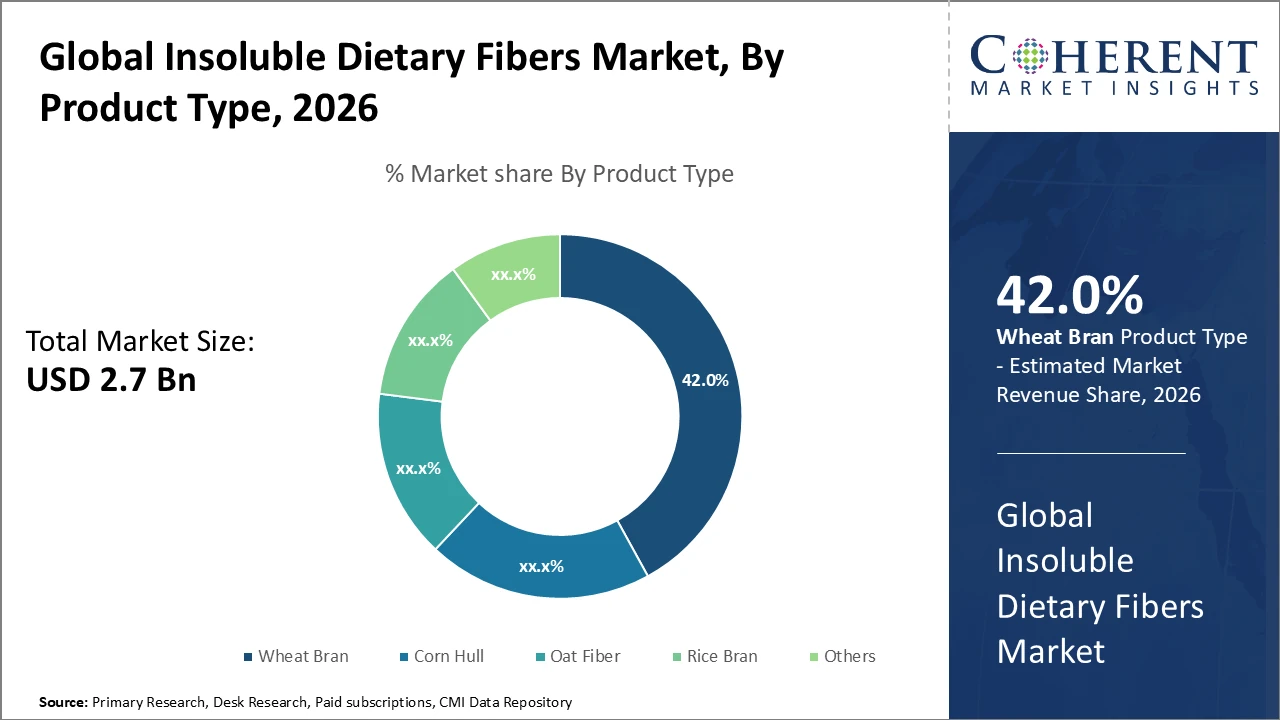
Wheat bran dominates the product type segment, capturing over 42% of the insoluble dietary fibers market share due to its availability and functional benefits. Product innovations improving fiber purity and solubility are expected to drive further growth.
Bakery and confectionery lead applications, generating the largest market revenue, fueled by demand for functional baked goods enriched with dietary fibers. Emerging applications in beverages and dairy alternatives indicate expanding opportunities.
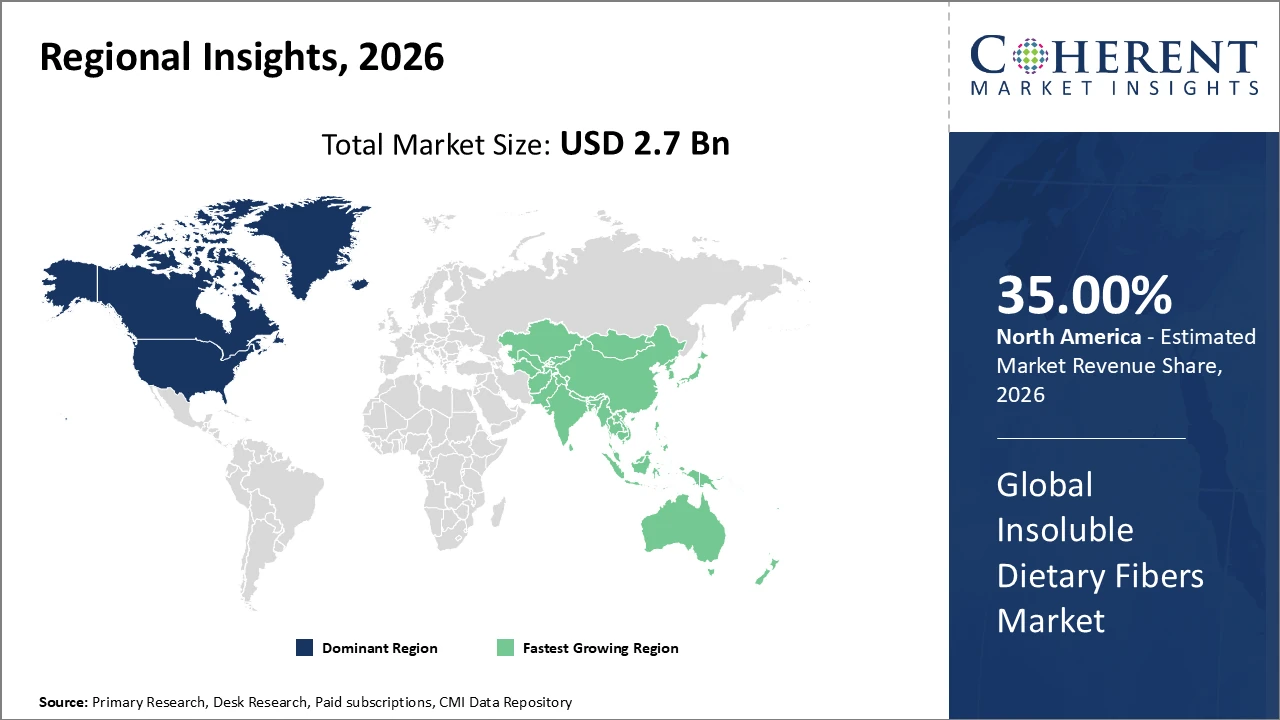
North America holds a commanding market share, supported by health-conscious consumer trends, mature supply chains, regulatory encouragement, and steady R&D investments.
Asia Pacific is the fastest-growing region, with a CAGR exceeding 9%, driven by rising health awareness, expanding plant-based food markets, strong agricultural fiber production, government incentives for sustainable agriculture, and increasing disposable incomes.
Insoluble Dietary Fibers Market Segmentation Analysis
Insoluble Dietary Fibers Market Insights, By Product Type
Wheat bran dominates the insoluble dietary fibers market with around 42% share, driven by its high availability, cost-effectiveness, and functional properties like water retention and bulking effect. Advances in milling technologies have improved wheat bran purity, enhancing its use in premium food products. Oat fiber is the fastest-growing subsegment, supported by rising demand among health-conscious consumers for heart-healthy and versatile applications in bakery and dairy alternatives. Corn hull is valued for its neutral flavor and texture enhancement, while rice bran is gaining popularity in Asia Pacific due to local crop abundance. The others category includes barley, sugarcane, and psyllium husk fibers for niche applications.
Insoluble Dietary Fibers Market Insights, By Application
Bakery and confectionery dominate the insoluble dietary fibers market, driven by the widespread use of fibers to enhance texture, shelf-life, and nutritional value in baked goods. Growing consumer focus on digestive health has further fueled R&D for fiber-enriched products. The fastest-growing application is dairy alternatives, such as plant-based yogurts and milk substitutes, where fiber improves mouthfeel and nutrient content. The beverages segment is expanding with functional fiber-infused juices and shakes, while the animal feed sector uses fibers primarily to support livestock gut health. The others category includes nutraceuticals and personal care products, reflecting diverse emerging applications.
Insoluble Dietary Fibers Market Insights, By Form
The powdered form dominates the insoluble dietary fibers market, driven by its ease of blending, consistent quality, and compatibility with diverse food processing techniques, making it the preferred choice for manufacturers. Its versatility allows application across bakery, beverage, and other functional food products. The granular form is the fastest-growing segment, supported by demand for textured and specialty applications, including meat analogs and snack coatings. Flake form is primarily used in cereals and health bars due to its visible structure and consumer appeal. The others category includes innovative fiber delivery systems incorporated into tablets and capsules for dietary supplements.
Insoluble Dietary Fibers Market Trends
Recent developments in the insoluble dietary fibers market emphasize sustainability and health-driven innovation.
There is a growing shift toward using by-products such as wheat and rice bran, promoting sustainability and reducing food waste.
In 2025, several food companies increased the use of upcycled bran fiber by 25%, enhancing nutritional value while minimizing waste.
Integration of insoluble dietary fibers in plant-based products is rising, with a leading U.S. food manufacturer reporting a 30% increase in fiber-enriched product launches between 2024 and 2026.
Rapid urbanization in developing economies is driving demand for convenient, fiber-enriched foods and supplements.
The trend toward clean-label and organic fibers continues to shape global product reformulation strategies.
Insoluble Dietary Fibers Market Insights, By Geography
North America Insoluble Dietary Fibers Market Analysis and Trends
In North America, the insoluble dietary fibers market is dominated by mature consumer health trends, well-established supply chains, and supportive regulatory frameworks. The region accounted for around 35% of the global market share in 2026. The United States leads the market, with major companies investing in research and development, production capacity expansion, and innovative fiber solutions. Government dietary guidelines promoting fiber intake further support market growth. Industry leaders such as Ingredion Incorporated have introduced advanced fiber products for bakery, beverages, and dairy applications, strengthening their market position and driving the adoption of functional and high-fiber food products across the region.
Asia Pacific Insoluble Dietary Fibers Market Analysis and Trends
The Asia Pacific region is experiencing the fastest growth in the insoluble dietary fibers market, with a CAGR exceeding 9% during the forecast period. This rapid expansion is driven by factors such as the rising popularity of plant-based foods, increasing disposable incomes, and supportive agricultural policies promoting fiber-rich crop production. Countries like China and India are at the forefront, benefiting from abundant raw material availability and a growing health-conscious consumer base. Both regional manufacturers and global companies are leveraging efficient supply chains and emerging market opportunities to meet escalating demand, positioning Asia Pacific as a key growth hub in the global fiber market.
Insoluble Dietary Fibers Market Outlook for Key Countries
USA Insoluble Dietary Fibers Market Analysis and Trends
The USA plays a central role in the global insoluble dietary fibers market, supported by advanced food technology infrastructure and growing consumer interest in digestive health. In 2025, U.S. manufacturers increased production of fiber-enriched foods by 18%, reflecting strong market momentum. Regulatory support from agencies like the FDA, including approval of health claims related to insoluble fiber, has encouraged innovation and product development. Leading companies such as Archer Daniels Midland Company and DuPont Nutrition & Health have introduced a wide range of fiber-enhanced bakery and dairy alternative products. These initiatives have significantly contributed to market revenue and reinforced the U.S. market’s global leadership.
Germany Insoluble Dietary Fibers Market Analysis and Trends
Germany holds a significant position in the European insoluble dietary fibers market, driven by advanced food processing infrastructure, high consumer health awareness, and strong regulatory support. Wheat bran and oat fiber dominate the product landscape, primarily used in bakery, confectionery, and functional food products. Rising demand for plant-based and high-fiber alternatives has fueled innovation in fiber-enriched beverages, dairy substitutes, and snack bars. The market also benefits from sustainable sourcing practices, including upcycled bran and fiber-rich by-products. Additionally, research initiatives focusing on gut health and clean-label formulations are shaping product development, reinforcing Germany’s role as a key hub for fiber innovation in Europe.
Analyst Opinion
The surge in production capacity is a key supply-side driver, with global plant fiber extraction facilities increasing output by approximately 15% in 2025 compared to 2024, ensuring steady market growth and competitive availability.
On the demand side, imports of raw materials such as wheat bran, corn hull, and oat fiber grew by 12% in 2026, supporting expansion of fiber-enriched products and reflecting a widening consumer base in developing regions.
Diversified end-use applications across bakery, dairy alternatives, and healthcare products drive market demand; bakery applications alone contributed 35% of market revenue in 2025.
Expanding organic cultivation of fiber-rich crops positively influenced market size, with countries like India and Brazil reporting a 9% growth in organic fiber crop yields in 2026, supporting sustainable sourcing and market resilience.
- Current Industry Events of 2026
- Market Size Estimation
- Regional Breakdown
- Competitive Landscape
- Customer Intelligence
- Segmental Analysis
- Pricing Analysis
- Key Market Drivers, Challenges & Future Trends
- Customized Insights Section
Market Scope
| Report Coverage | Details | ||
|---|---|---|---|
| Base Year: | 2025 | Market Size in 2026: | USD 2.7 billion |
| Historical Data for: | 2020 To 2024 | Forecast Period: | 2026 To 2033 |
| Forecast Period 2026 to 2033 CAGR: | 8.3% | 2033 Value Projection: | USD 4.8 billion |
| Geographies covered: |
| ||
| Segments covered: |
| ||
| Companies covered: | Cargill, Incorporated, Ingredion Incorporated, Tate & Lyle Plc, Kerry Group Plc, Fiberstar, Inc., SCM Ingredients, Naturex SA, SunOpta Inc., Beneo GmbH | ||
| Growth Drivers: |
| ||
Insoluble Dietary Fibers Market Growth Factors
The rising prevalence of lifestyle diseases such as diabetes and obesity has driven demand for insoluble dietary fibers, valued for benefits like improved bowel regularity and glycemic control. Clinical trials in 2025 demonstrated a 15% reduction in postprandial glucose levels with increased fiber intake, highlighting its health impact. Growth in vegan and plant-based diets has further fueled market expansion, with plant-based food sales in the U.S. rising by 22% in 2026. Advances in fiber extraction technology have enhanced purity and functionality, reduced production costs, and improved product quality, while regulatory approvals, including the FDA’s 2025 inclusion of certain fibers in daily intake recommendations, support broader adoption and market confidence.
Insoluble Dietary Fibers Market Development
In January 2026, Warburtons introduced its Fibre Fix range, including a loaf and rolls. The Fibre Fix Loaf is a sliced wholemeal bread made with wheat bran and a mix of seeds and grains, such as linseed, lentils, chia, sunflower, pumpkin, sesame, hemp, millet, and malted barley flour. The supplier states it provides 8g of fibre per 100g, or about 4g per typical 50g slice.
Key Players
Leading Companies of the Market
Cargill, Incorporated
Ingredion Incorporated
Fiberstar Inc.
Tate & Lyle Plc
Kerry Group Plc
SCM Ingredients
Beneo GmbH
SunOpta Inc.
Naturex SA
Several leading companies in the insoluble dietary fibers market have pursued strategic partnerships and expansion initiatives to strengthen their market presence. For example, Ingredion’s investment in expanding fiber processing capacity in North America led to a 20% increase in market penetration by 2025. Likewise, Roquette Frères introduced innovative oat-derived fibers in 2026, creating new opportunities in functional food applications and driving additional market revenue. These initiatives underscore the emphasis on product innovation, capacity enhancement, and strategic expansion as key approaches for maintaining competitiveness and capturing growth in the evolving global insoluble dietary fibers market.
Insoluble Dietary Fibers Market Future Outlook
The future outlook for the insoluble dietary fibers market is highly promising, driven by rising consumer awareness of digestive health and preventive nutrition. Increasing demand for functional foods, high-fiber snacks, and fortified beverages is expected to propel market growth. Technological advancements in fiber extraction and formulation are enabling improved solubility, texture, and sensory properties, expanding their application across bakery, dairy, and beverage products. Emerging markets in Asia Pacific and Latin America offer significant growth opportunities due to changing dietary habits and urbanization. Additionally, regulatory support for health claims and ongoing research on gut health benefits will further reinforce market expansion globally.
Insoluble Dietary Fibers Market Historical Analysis
The insoluble dietary fibers market has witnessed steady growth over the past decade, driven by increasing consumer awareness of digestive health and the role of fiber in preventing chronic diseases. Historically, wheat bran, cellulose, and oat hulls dominated the product landscape, primarily used in bakery, cereals, and snack products. North America and Europe led the market due to established health-conscious populations and advanced food processing industries. Over time, innovations in extraction techniques and functional formulation enabled broader application in beverages, dairy, and dietary supplements. Rising interest in preventive nutrition and high-fiber diets laid the foundation for sustained global market growth.
Sources
Primary Research Interviews:
R&D managers, product developers, and nutrition scientists from companies manufacturing insoluble dietary fibers.
Food technologists and technical specialists from bakery, beverage, and dairy product manufacturers using dietary fibers.
Industry experts from firms providing functional food ingredients, fiber blends, and dietary supplements.
Magazines:
Food Business News – Updates on functional foods, dietary fiber innovations, and market adoption trends.
Food Processing – Insights on ingredient technologies, product launches, and fiber incorporation in processed foods.
Nutraceuticals World – Reports on fiber-based supplements, fortification, and consumer health trends.
Journals:
Journal of Food Science – Research on insoluble fiber properties, applications, and processing techniques.
Food Hydrocolloids – Studies on fiber functionality, texturizing effects, and formulation innovations.
International Journal of Food Science & Technology – Insights on dietary fiber integration, stability, and health impacts.
Newspapers:
The Wall Street Journal – Company strategies, mergers, and investments in functional food and fiber ingredient companies.
Financial Times – Market trends, regulatory updates, and global demand for high-fiber products.
Reuters – News on ingredient innovations, product launches, and industry collaborations.
Bloomberg – Corporate performance and market insights in the food ingredients and dietary fiber sector.
Associations:
International Food Information Council (IFIC) – Guidelines and research on dietary fibers and consumer health.
Institute of Food Technologists (IFT) – Technical standards, best practices, and innovation insights for fiber applications.
World Health Organization (WHO) – Global dietary guidelines and recommendations for fiber intake and nutrition.
Get access to 250+ pages report
Every segment, forecast, competitor profile and data table behind the analysis above — available for instant download.
- ESOMAR Member
- ISO 9001:2015 Certified
- D-U-N-S Registered
- GDPR & CCPA Compliant
Missing comfort of reading report in your local language? Find your preferred language:
Transform your Strategy with Exclusive Trending Reports
Frequently Asked Questions
Dominant players include Ingredion Incorporated, Cargill, Tate & Lyle plc, and Beneo GmbH, all of whom have expanded production capacity and launched fibrous product innovations between 2024 and 2026.
The market size for insoluble dietary fibers is projected to grow from USD 2.7 billion in 2026 to USD 4.8 billion by 2033, following a CAGR of 8.3%.
The bakery and confectionery segment holds the largest growth opportunity, commanding the highest market revenue share due to the incorporation of fibers in functional bakery products.
Market trends show a movement towards organic, clean-label fiber sources and integration in emerging food categories like plant-based meats and dairy alternatives, fueled by biotechnological advancements.
The competitive landscape is increasingly driven by product innovation, capacity expansion, and geographic diversification. Challenges include raw material price volatility and regulatory compliance across regions.
Market players prioritize strategic partnerships, capacity scaling, product diversification, and sustainability initiatives to enhance market reach and meet growing consumer demands.