

Global Laser Cut SMT Stencil Market Size and Forecast – 2026-2033
The Global Laser Cut SMT Stencil Market is estimated to be valued at USD 731.4 Mn in 2026 and is expected to reach USD 1,269.9 Mn by 2033, exhibiting a compound annual growth rate (CAGR) of 8.2% from 2026 to 2033.
Key Takeaways of the Global Laser Cut SMT Stencil Market
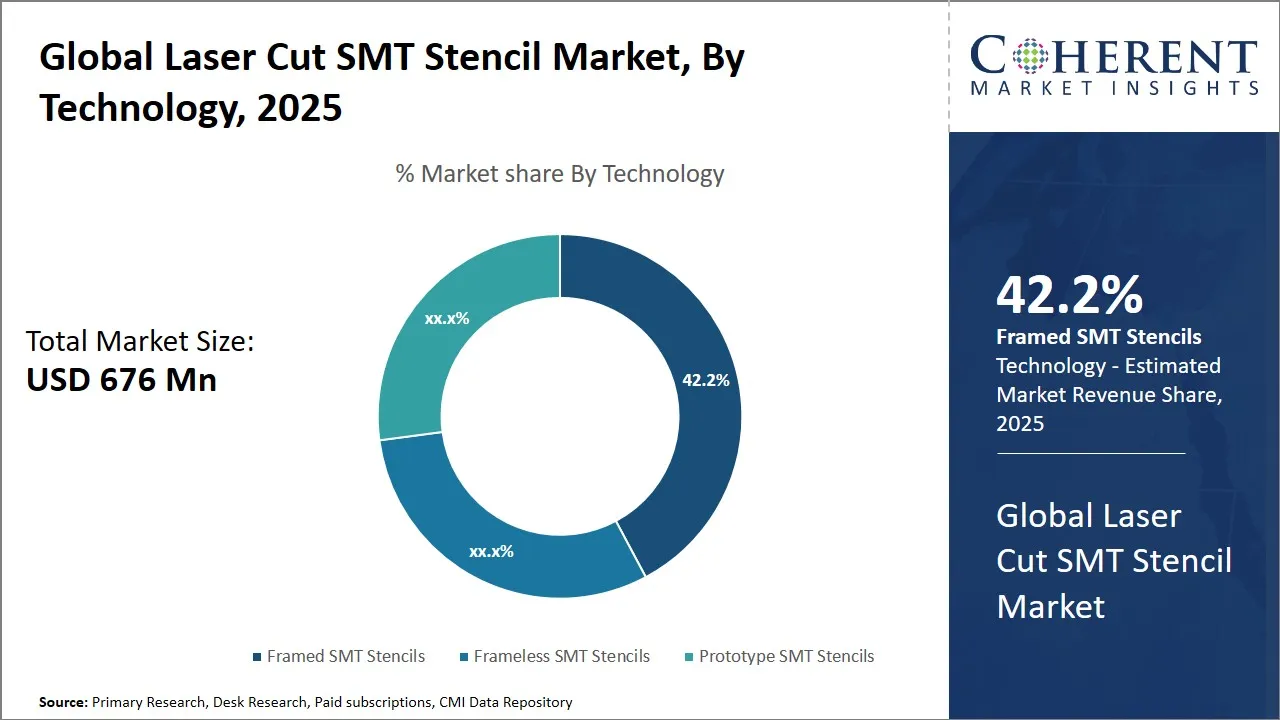
- The framed SMT stencils segment leads the market holding an estimated share of 43.2% in 2026.
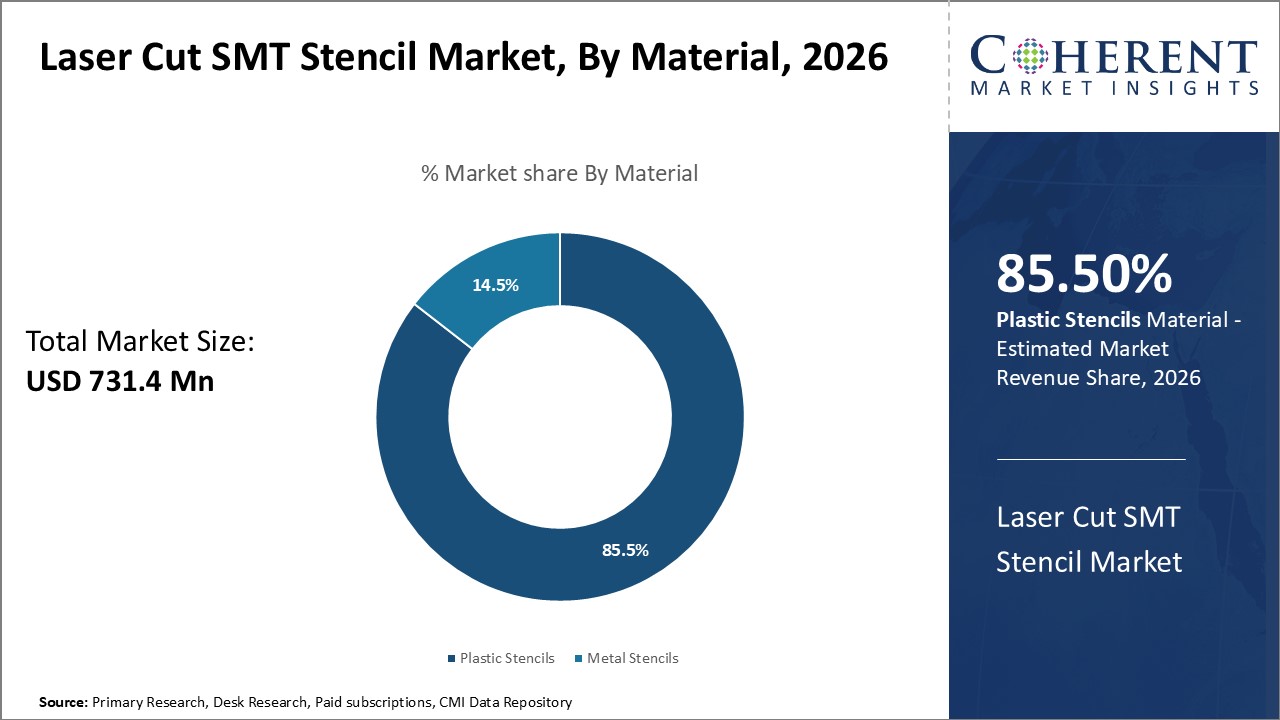
- The plastic stencils segment is expected to dominate with a share of 85.5% in 2026.
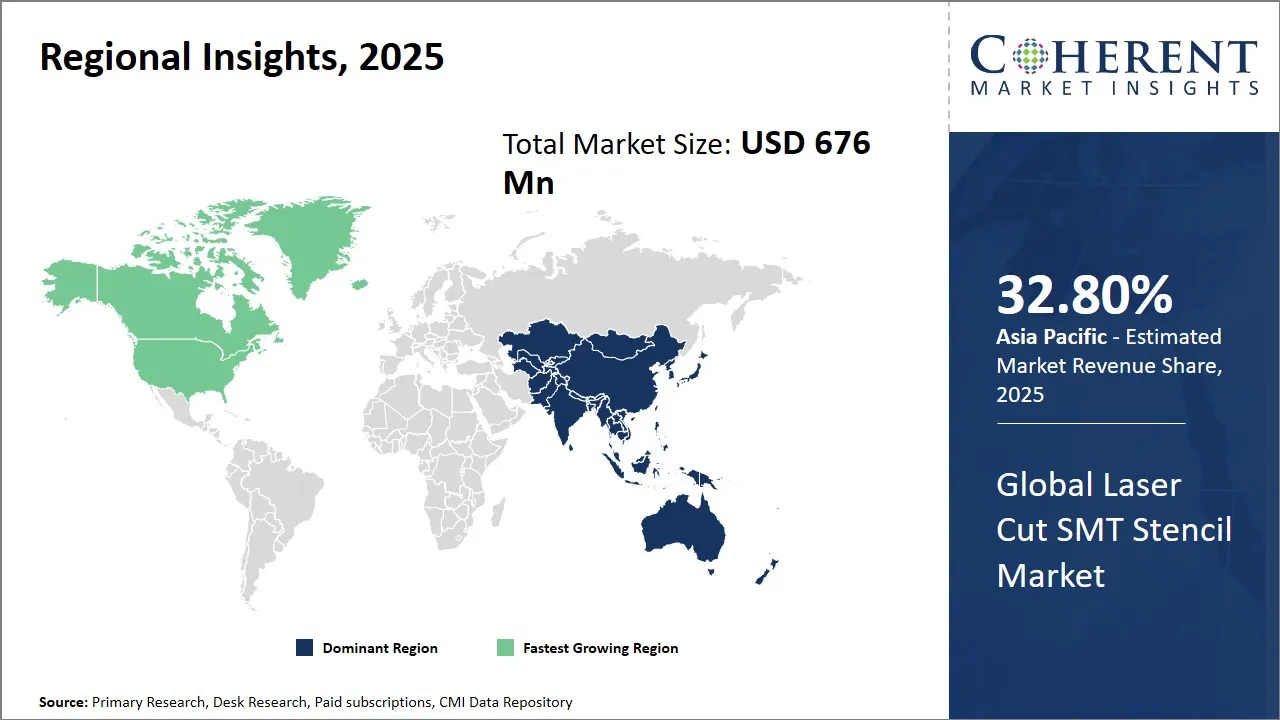
- Asia Pacific, holding a share of 32.8% in 2026, is projected to dominate the market.
- North America, holding a share of 26.8% in 2026, is projected to show the fastest growth in the market.
Market Overview
The market sees a shift towards advanced laser cutting technologies that make possible greater stencil accuracy and reduced production time. Manufacturers are using automation and AI to improve stencil design and quality control, aligning with the growing demand for miniaturized and complex electronic components. Additionally, sustainability considerations are pushing the development of eco-friendly materials and processes within the laser cut SMT stencil industry.
Current Events and Its Impact
Current Events | Description and its impact |
Geopolitical and Trade Developments |
|
Economic and Industrial Trends |
|
Segmental Insights
- Current Industry Events of 2026
- Market Size Estimation
- Regional Breakdown
- Competitive Landscape
- Customer Intelligence
- Segmental Analysis
- Pricing Analysis
- Key Market Drivers, Challenges & Future Trends
- Customized Insights Section
Global Laser Cut SMT Stencil Market Insights, By Technology – Framed SMT Stencils Lead Because of Their Enhanced Durability and Precision in Complex PCB Assemblies
Framed SMT stencils are expected to hold the highest share of 43.2% in the global laser cut SMT stencil market in 2026 because of their robust structural advantages and suitability for high-volume, consistent manufacturing environments. The framed design adds rigidity and support, which improves the stencil’s stability in the printing process. This stability is needed for ensuring uniform solder paste deposition, which impacts the quality and reliability of the assembled printed circuit boards (PCBs).
Surface Mount Technology (SMT) stencils can maintain dimensional accuracy over long production runs. The frame acts as a protective barrier against warping and bending, which can be common issues in more flexible or frameless designs. This is useful when working with complex and fine-pitched components in modern electronics manufacturing because minor inaccuracies in solder paste application can lead to defects or rework.
BlueRing Stencils, a U.S.-based leader in precision stencil manufacturing, introduced an upgraded line of high-tension framed laser-cut SMT stencils specifically designed for automotive electronic control units (ECUs) and Advance Driver Assistance System (ADAS) modules.
Also, the framed format makes handling and installation on stencil printing machines easier. The compatibility of framed SMT stencils with advanced laser-cutting technologies makes possible the creation of highly precise apertures. This allows accurate control of paste volume and placement, improving solder joint quality and minimizing variations. By using laser-cut framed stencils, manufacturers can follow the miniaturization trend in electronics, supporting the assembly of small, densely packed components.
Also, framed SMT stencils support improved cleaning and maintenance protocols. They are easier to handle during cleaning cycles because of their solid frames, extending stencil lifespan and reducing the frequency of replacements. For manufacturers focused on cost-efficiency and sustainable production, this durability factor plays a crucial role in driving preference toward framed stencils.
Global Laser Cut SMT Stencil Market Insights, By Material – Plastic Stencils Dominate Because of Cost-Effectiveness and Versatility in Diverse Manufacturing Scenarios
Plastic stencils have gained the highest market share of 85.5% in the global laser cut SMT stencil market in 2026 because of their affordability, ease of manufacturing, and adaptability across various application contexts. As the electronics industry expands into diverse product categories, from consumer gadgets to automotive electronics, plastic stencils offer an optimal balance between performance and cost, making them highly attractive in price-sensitive and prototyping environments.
Plastic stencils have a lower production cost relative to metal alternatives. Plastic materials need less energy-intensive processing and can be produced more quickly, making them suited for rapid turnaround applications, especially in prototype development and low-to-medium volume production. This cost efficiency enables smaller manufacturers or startups to access advanced stencil technology without incurring prohibitive expenses, fostering innovation and market entry.
Plastic stencils are also flexible for design customization. Their manufacturing process makes quick modifications and iterations possible, which is important product development phases when design changes are frequent. This flexibility reduces lead times and aligns well with agile manufacturing approaches that prioritize speed to market.
In 2023, Epec Engineered Technologies launched a low-cost laser-cut plastic SMT stencil range as part of its Quick-Turn PCB Prototyping Program. These plastic stencils, made from PET (polyethylene terephthalate), target consumer electronics startups and IoT device developers.
Plastic stencils are lightweight, making handling easier and setup fast on assembly lines. Their non-metallic nature also reduces the risk of damage to sensitive components during handling. Also, the compatibility of plastic materials with laser cutting techniques allows for aperture precision, helping maintain adequate solder paste deposition quality despite their cost advantages.
Environmental considerations also add to the popularity of plastic stencils. Advancements in bioplastics and recyclable materials have made plastic stencils more sustainable. Plastic stencils can be reused and recycled, adding to their appeal in manufacturers looking to reduce waste without affecting operational efficiency.
Pricing Analysis of the Laser Cut SMT Stencil Market
Product/Service | Typical Price (USD) | Price Range (USD) |
Framed stainless-steel laser-cut stencil (standard framed glue-in) | USD 205.00 | USD 150.00 – USD 410.00 |
Frameless stainless-steel foil stencil (prototype/tensioned foil) | USD 100.00 (est.) | USD 30.00 – USD 200.00 |
Multi-level/Step (framed or frameless) | USD 250.00 | USD 200.00 – USD 350.00 |
Electroformed (nickel) stencil (framed) | USD 550.00 | USD 400.00 – USD 800.00 |
Premium coated/PVD/UltraSlic (premium surface treatment) | USD 410.00 | USD 300.00 – USD 600.00 |
Mini/rework/hand stencils (small single-use masks, rework) | USD 45.00 (est.) | USD 15.00 – USD 120.00 |
Large format/high-area stencils (>=23"/29") | USD 300.00 (est.) | USD 200.00 – USD 700.00 |
Expedite/24–48 hour turn (lead-time premium) | +25% to +75% on typical price (est.) | +20% – +100% premium |
Volume discount (large qty/contract) | -10% to -70% (depending on qty) | -10% – -70% (at very high volume) |
Regional Insights
Asia Pacific Laser Cut SMT Stencil Market Analysis and Trends
Asia Pacific, holding a share of 32.8% in 2026, is expected to dominate the global laser cut SMT stencil market, because of the region’s strong electronics manufacturing ecosystem, particularly in countries such as China, Japan, South Korea, and Taiwan. This region has some of the largest electronics manufacturing hubs globally because of well-established supply chains and advanced production capabilities.
Government policies in several Asia Pacific countries promote electronics exports and innovation, fostering substantial investments in surface mount technology (SMT) equipment and accessories, including laser-cut stencils. Companies like JUKI Corporation (Japan), DEK (with strong regional presence), and MIKRO-MEGA (India) capitalize on locally-sourced raw materials and expertise to provide high precision laser cut SMT stencils.
North America Laser Cut SMT Stencil Market Analysis and Trends
North America, holding a share of 26.8% in 2026, is projected to exhibit the fastest growth in the global laser cut SMT stencil market because of rising adoption of advanced manufacturing technologies, including Industry 4.0 integration and automation in electronics assembly plants. Strong government support through initiatives pushing advanced manufacturing, research and development, and semiconductor production add to market expansion.
The presence of major semiconductor and electronics players like Intel, Texas Instruments, and Applied Materials has made demand for high-quality SMT stencils. Big companies specializing in stencil manufacturing like Electro Scientific Industries (ESI) and Stensource use innovation, customization, and service excellence to grab growing market opportunities. The North American trade climate, with established logistics and quality control frameworks, supports fast market penetration.
Laser Cut SMT Stencil Market Outlook for Key Countries
China Laser Cut SMT Stencil Market Analysis and Trends
China laser cut SMT stencil market benefits from the country’s role as the world’s manufacturing hub for consumer electronics, automotive components, and telecommunications hardware. With a government focus on “Made in China 2026” and semiconductor self-reliance, investments in SMT stencil production technology have grown. Domestic companies like Suzhou Chuangxin Precision and Shenzhen Lianhe take advantage of low-cost manufacturing and fast scalability, while foreign firms also maintain significant operations. The strong supplier ecosystem and proximity to OEMs streamline production cycles and reduce lead times.
Japan Laser Cut SMT Stencil Market Analysis and Trends
Japan continues to lead in precision manufacturing and high-quality stencil solutions because of its technology-driven industrial landscape. Companies like JUKI Corporation and Hirosawa make advanced laser-cut SMT stencils renowned for accuracy and durability. Japan’s focus on innovation and governmental support for robotics and automation in electronics assembly, makes its market position stronger. Japan’s use of precision machining and quality control makes a lot of demand in sectors like automotive electronics, consumer devices, and medical instruments.
South Korea Laser Cut SMT Stencil Market Analysis and Trends
South Korea laser cut SMT stencil market thrives on its globally competitive semiconductor and electronics industries, with major players like Samsung Electronics and LG Electronics pushing the envelope in SMT technology. The government’s investments in semiconductor fabrication and smart factory initiatives make demand for high-precision stencils. Korean companies like SEHO and JPC Tech give innovative solutions that fulfil domestic manufacturing needs. South Korea’s efficient supply chain and technological advancements support ongoing market expansion.
U.S. Laser Cut SMT Stencil Market Analysis and Trends
The U.S. laser cut SMT stencil market’s strength lies in its extensive presence of semiconductor fabs, defense electronics, and aerospace manufacturing. Companies such as Electro Scientific Industries (ESI) and Chemcut lead in delivering highly customizable laser cut stencils tailored to high-mix, low-volume production lines. U.S. policies supporting high-tech manufacturing and private sector investments in research and development add to the fast adoption of cutting-edge SMT stencil technologies. The focus on sustainability and precision in electronics assembly further underpins market growth.
Germany Laser Cut SMT Stencil Market Analysis and Trends
Germany laser cut SMT stencil market is driven by its automotive electronics powerhouse and precision engineering sector. The presence of renowned firms like DEK and Hansa-Maschinen contributes high-quality laser cutting solutions tailored for industrial SMT applications. Strong vocational training, Industry 4.0 initiatives, and extensive export infrastructure create a supportive environment for stencil manufacturers. Germany’s emphasis on quality and technological integration fosters steady demand, especially from automotive suppliers and industrial electronics manufacturers.
Market Players, Key Development, and Competitive Intelligence
Key Developments
- In August 2025, Tannlin announced a new strategic collaboration with Tecan, following the acquisition of Tecan’s stencil assets. As part of this agreement, Tannlin will now support Tecan’s customer base with its industry-leading laser-cut SMT stencils and support tooling products, backed by existing technical specifications and historical data.
- In June 2025, BEST Inc., a leader in electronic component rework services, training, and products, introduced StikNPeel rework stencils. This product is designed for printing solder paste for the placement of gull wing devices such as quad flat packs (QFPs) or bottom terminated components.
- In April 2025, StenTech Inc., the industry leader in SMT printing solutions, announced its strategic merger with BlueRing Stencils, bringing together two of the most technologically advanced suppliers in precision manufacturing. This partnership combines over 50 years of expertise to drive innovation, efficiency, and reliability across the industry.
- In February 2024, StenTech Inc., a leading global company specializing in SMT Printing Solutions, introduced its latest innovation in stencil coating technology, the StenTech BluPrint Chemical Vapor Deposited (CVD) Surface Treatment.
Top Strategies Followed by Laser Cut SMT Stencil Market Players
- Established market leaders distinguish themselves through substantial investments in research and development, aiming to innovate high-performance and precision-oriented stencil products that cater to the evolving demands of advanced electronic manufacturing.
- StenTech Inc. (North America) has invested significantly in advanced coating and surface treatment technologies, such as its BluPrint and NanoSlic PVD/CVD coatings, which improve solder paste release and stencil longevity.
- Mid-level players in the laser cut SMT stencil market adopt strategies centered around delivering cost-effective and reliable solutions that balance quality with affordability.
- Tannlin Technology (UK) focuses on optimizing laser-cutting efficiency and material utilization to reduce production costs while maintaining precision.
- Small-scale players in the global laser cut SMT stencil market carve out distinctive niches by focusing on specialized or innovative product features that differentiate them from larger competitors.
- OSH Stencils and PCBWay/JHYPCB specialize in low-volume, quick-turn prototype stencils for makers and small electronics startups, focusing on frameless and rework stencils that serve rapid prototyping needs.
Market Report Scope
Laser Cut SMT Stencil Market Report Coverage
| Report Coverage | Details | ||
|---|---|---|---|
| Base Year: | 2025 | Market Size in 2026: | USD 731.4 Mn |
| Historical Data for: | 2020 To 2024 | Forecast Period: | 2026 To 2033 |
| Forecast Period 2026 to 2033 CAGR: | 8.2% | 2033 Value Projection: | USD 1,269.9 Mn |
| Geographies covered: |
| ||
| Segments covered: |
| ||
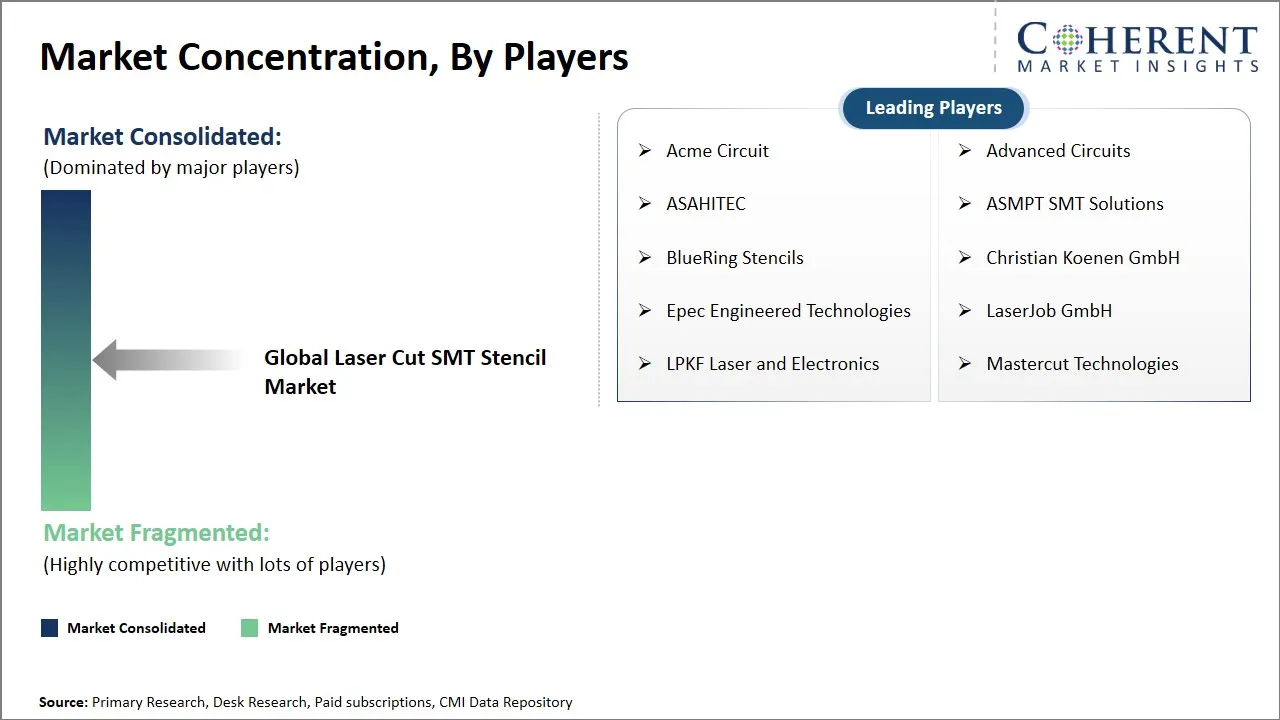
| Companies covered: | Acme Circuit, Advanced Circuits, ASAHITEC, ASMPT SMT Solutions, BlueRing Stencils, Christian Koenen GmbH, Epec Engineered Technologies, LaserJob GmbH, LPKF Laser and Electronics, and Mastercut Technologies | ||
| Growth Drivers: |
| ||
| Restraints & Challenges: |
| ||
Market Dynamics
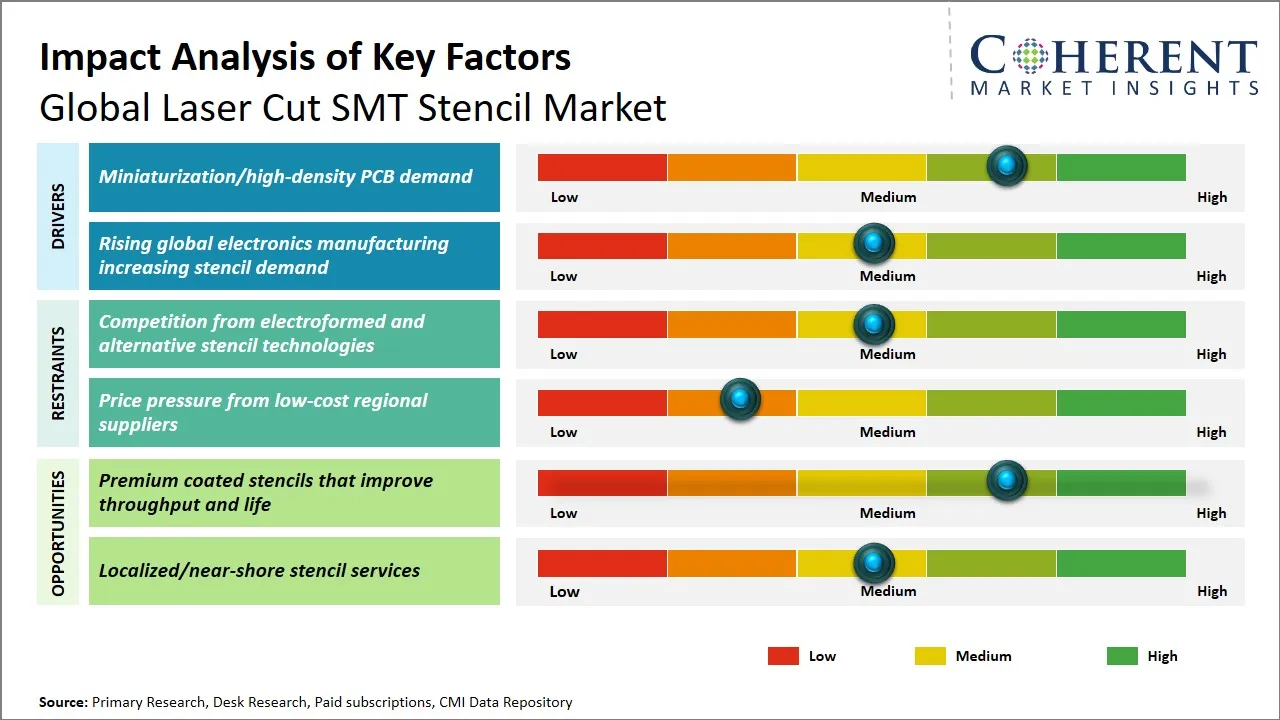
Global Laser Cut SMT Stencil Market Driver - Miniaturization/High-Density PCB Demand
The growing trend towards the miniaturization of electronic devices and the increasing complexity of printed circuit boards (PCBs) are key drivers fueling the demand for laser cut SMT stencils in the electronics manufacturing industry. As consumer electronics, automotive electronics, and telecommunication devices become smaller yet more powerful, there is a heightened need for high-density PCBs that accommodate a larger number of components within limited space.
Laser cut SMT stencils offer superior precision and accuracy in solder paste application compared to traditional stenciling methods, which is crucial for maintaining the integrity and reliability of these miniaturized and densely populated boards. Moreover, the ability of laser technology to produce fine apertures with high repeatability supports the manufacturing of components with ultra-fine pitch, thereby enabling more intricate circuit layouts.
Global Laser Cut SMT Stencil Market Opportunity – Growth Potential of Premium Coated Stencils Enhancing Throughput and Longevity
The global laser cut SMT stencil market presents significant growth opportunities through the adoption of premium coated stencils designed to enhance both throughput and stencil lifespan. Premium coatings, such as nickel, electroless nickel, and anti-clogging polymer layers, offer superior surface finish and durability compared to standard stainless steel stencils. These advanced coatings reduce solder paste adhesion and clogging, enabling more consistent and precise paste deposition, which directly translates to higher first-pass yields and reduced rework costs on the production line.
Additionally, the improved wear resistance of coated stencils extends their operational life, minimizing replacement frequency and associated downtime. As manufacturers in automotive electronics, consumer electronics, and industrial sectors increasingly prioritize cost-efficiency and process reliability amidst complex, miniaturized PCB assemblies, demand for high-performance stencils is expected to rise substantially.
This trend is further fueled by growing investments in automation and Industry 4.0-enabled manufacturing systems, where quality and repeatability are critical. Suppliers offering innovative premium coatings that can be tailored to specific solder paste types and board designs stand to capture a larger share of this market segment, especially in regions experiencing rapid electronics manufacturing growth such as Asia Pacific.
Analyst Opinion (Expert Opinion)
- The rapid miniaturization of electronic components in smartphones, wearables, and advanced PCBs is sustaining strong demand for high-precision laser-cut SMT stencils. As manufacturers move toward finer pitch designs and higher component densities, the demand for ultra-accurate stencil apertures and premium coatings (like NanoSlic or PVD) continues to rise across Asia Pacific and North America.
- With the accelerating shift toward electric vehicles and ADAS, automakers are increasingly integrating complex electronic assemblies. This is fueling the use of laser-cut stencils for reliable solder deposition in power management modules, sensors, and control systems—particularly in Germany, Japan, and China—making the automotive sector one of the fastest-growing end-user verticals.
- Growth in industrial IoT devices, medical equipment, and aerospace electronics is stimulating the demand for customized, small-batch laser-cut stencils designed for high reliability and stringent quality control. These industries prioritize precision, repeatability, and consistent solder quality, prompting higher adoption of multi-level and coated laser stencils for mission-critical circuit assemblies.
Speak to the analyst
Want personalized insights?
Take the findings above to one of our principal consultants, or have the report rebuilt around the segments, geographies and competitors you actually track.
Market Segmentation
- Technology Insights (Revenue, USD Mn, 2021 - 2033)
- Framed SMT Stencils
- Frameless SMT Stencils
- Prototype SMT Stencils
- Material Insights (Revenue, USD Mn, 2021 - 2033)
- Plastic Stencils
- Metal Stencils
- Regional Insights (Revenue, USD Mn, 2021 - 2033)
- North America
- U.S.
- Canada
- Latin America
- Brazil
- Argentina
- Mexico
- Rest of Latin America
- Europe
- Germany
- U.K.
- Spain
- France
- Italy
- Russia
- Rest of Europe
- Asia Pacific
- China
- India
- Japan
- Australia
- South Korea
- ASEAN
- Rest of Asia Pacific
- Middle East
- GCC Countries
- Israel
- Rest of Middle East
- Africa
- South Africa
- North Africa
- Central Africa
- North America
- Key Players Insights
- Acme Circuit
- Advanced Circuits
- ASAHITEC
- ASMPT SMT Solutions
- BlueRing Stencils
- Christian Koenen GmbH
- Epec Engineered Technologies
- LaserJob GmbH
- LPKF Laser and Electronics
- Mastercut Technologies
Sources
Primary Research Interviews
Stakeholders
- SMT Equipment Manufacturers and Distributors (e.g., ASMPT/DEK, Nordson, JUKI Automation Systems)
- Laser-Cutting Equipment Producers (e.g., Tannlin Technology, LPKF Laser & Electronics AG)
- PCB and EMS Companies (e.g., Foxconn, Jabil, Flex Ltd.)
- SMT Stencil Manufacturers and Coating Specialists (e.g., StenTech, BlueRing Stencils, MicroScreen LLC)
- Raw Material Suppliers (e.g., Sandvik Materials Technology, Nippon Steel, Posco)
- Industry Consultants and Process Engineers (specialized in SMT assembly and solder paste applications)
- Electronics Industry Associations and Standardization Bodies (e.g., IPC, SMTA)
Databases
- IPC Global Electronics Database
- U.S. International Trade Commission (USITC) Electronics Trade Data
- Japan Electronics and Information Technology Industries Association (JEITA) Statistics Portal
- Taiwan Industrial Technology Research Institute (ITRI) – Electronics Manufacturing Index
- United Nations Comtrade Database
- World Semiconductor Trade Statistics (WSTS)
Magazines
- SMT Today
- Circuits Assembly Magazine
- EPP Europe (Electronics Production & Packaging)
- Global SMT & Packaging
- Electronics Manufacturing Asia
- PCB007 Magazine
Journals
- Journal of Surface Mount Technology
- IEEE Transactions on Components, Packaging, and Manufacturing Technology
- Soldering & Surface Mount Technology Journal
- Journal of Manufacturing Processes
- Microelectronics Reliability Journal
- International Journal of Advanced Manufacturing Technology
Newspapers
- The Business Times (Singapore)
- Nikkei Asia
- Electronics Weekly (U.K.)
- The Economic Times (India)
- South China Morning Post (Hong Kong)
- The Wall Street Journal – Tech Section
Associations
- Surface Mount Technology Association (SMTA)
- Institute for Printed Circuits (IPC)
- International Microelectronics Assembly and Packaging Society (IMAPS)
- Semiconductor Equipment and Materials International (SEMI)
- European Electronics Manufacturing Association (EEEMA)
- Printed Circuit Engineering Association (PCEA)
Public Domain Sources
- U.S. Census Bureau – Manufacturing Data
- EUROSTAT – Industrial Production Statistics
- Ministry of Economy, Trade, and Industry (METI – Japan)
- World Bank – Global Manufacturing Indicators
- United Nations Industrial Development Organization (UNIDO)
- ResearchGate – Open-Access Electronics Manufacturing Papers
Proprietary Elements
- CMI Data Analytics Tool, Proprietary CMI Repository of Market Intelligence
Get access to 250+ pages report
Every segment, forecast, competitor profile and data table behind the analysis above — available for instant download.
- ESOMAR Member
- ISO 9001:2015 Certified
- D-U-N-S Registered
- GDPR & CCPA Compliant
Missing comfort of reading report in your local language? Find your preferred language:
Transform your Strategy with Exclusive Trending Reports
Frequently Asked Questions
The global laser cut SMT stencil market is estimated to be valued at USD 731.4 million in 2026 and is expected to reach USD 1,269.9 million by 2033.
The CAGR of global laser cut SMT stencil market is projected to be 8.2% from 2026 to 2033.
Miniaturization/high-density PCB demand and rising global electronics manufacturing increasing stencil demand are the major factors driving the growth of global laser cut SMT stencil market.
Competition from electroformed and alternative stencil technologies and price pressure from low-cost regional suppliers are the major factors hampering the growth of the global laser cut SMT stencil market.
In terms of technology, framed SMT stencils are estimated to dominate the market revenue share in 2026.
It is a precision metal sheet used to apply solder paste onto PCBs during surface-mount technology (SMT) assembly, created using high-accuracy laser-cutting systems.
Innovations in laser precision, step stencil design, and advanced coating technologies like NanoSlic and PVD are shaping the market.