

Global Leather Belts Market Size and Forecast – 2026 - 2033
The Global Leather Belts Market is estimated to be valued at USD 8.59 Bn in 2026 and is expected to reach USD 14.45 Bn by 2033, growing at a compound annual growth rate (CAGR) of 7.7% from 2026 to 2033.
Key Takeaways of the Leather Belts Market
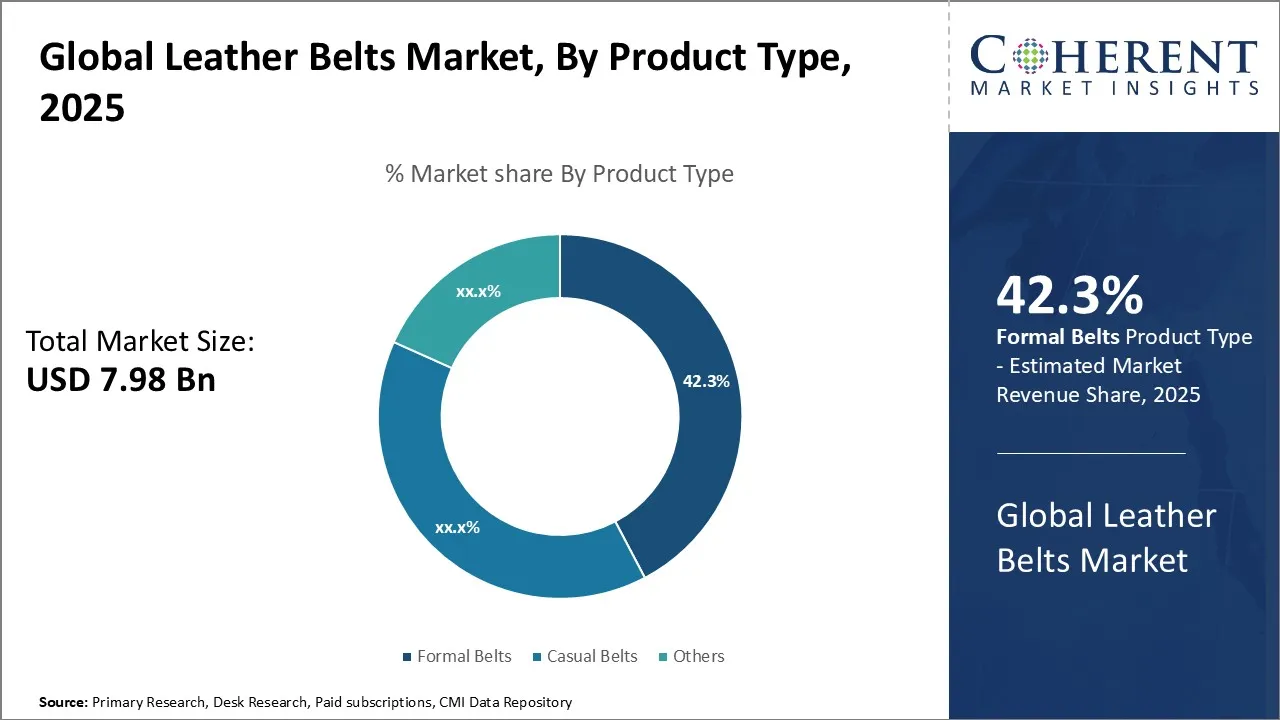
- The Formal Belts segment is projected to account for 43.3 % of the market share in 2026, driven by the increasing focus on professional attire across industries globally.
- The Men's segment is expected to capture 58.9 % of the market share in 2026, reflecting the growing trends in male grooming and the increasing awareness of fashion among men.
- The Online Retail segment is set to dominate the market, contributing 65.3 % of the share in 2026, driven by the convenience, wide product variety, and increased digital engagement.
- North America is set to lead the global leather belts market in 2026 with a 39.3 % share, driven by strong consumer demand, increasing disposable incomes, and a growing fashion-conscious population. Asia Pacific, with a 24.5% share, will be the fastest-growing region, fueled by expanding e-commerce platforms, rising urbanization, and increasing interest in fashion and personal accessories.
Market Overview
Current market trends highlight a shift towards sustainable and ethically sourced leather materials in the leather goods industry, as environmentally conscious consumers drive demand for eco-friendly products. Additionally, digitalization in retail, including e-commerce platforms, is enhancing accessibility and variety, further fueling growth. The rise of fast fashion is also contributing to the increasing demand for affordable leather belts, as consumers seek trendy and cost-effective options. Innovations in leather processing and designs catering to diverse demographics are also shaping the market, alongside collaborations between fashion brands and leather manufacturers to create unique, high-quality belts and other leather goods that align with evolving consumer preferences.
Current Events and Its Impact
Current Events | Description and its impact |
Rising Demand for Sustainable and Ethically Sourced Leather |
|
Stringent Environmental Regulations and Compliance Costs |
|
Segmental Insights
- Current Industry Events of 2026
- Market Size Estimation
- Regional Breakdown
- Competitive Landscape
- Customer Intelligence
- Segmental Analysis
- Pricing Analysis
- Key Market Drivers, Challenges & Future Trends
- Customized Insights Section
Leather Belts Market Insights, By Product Type - Formal Belts Segment Dominates the Market, due to the Increasing Demand for Sophisticated and Professional Accessories in Global Fashion and Corporate Culture
Formal Belts segment is expected to hold 43.3% share of the market in 2026, primarily attributed to the growing emphasis on professional dressing across various industries worldwide. As more workplaces adopt formal or business-casual dress codes, the demand for accessories that complement suits, dress pants, and business attire has surged. Formal leather belts are appreciated for their sleek design, high-quality craftsmanship, and ability to convey a polished look, making them an essential component of the modern professional wardrobe.
Additionally, the resurgence of classic and timeless fashion trends has reinforced the appeal of formal belts. Unlike casual belts that often experiment with colors, patterns, and materials, formal belts typically feature minimalist designs, refined leather finishes, and subtle buckles—a combination that resonates with consumers seeking versatile accessories for occasions ranging from business meetings to formal events. The preference for genuine leather in formal belts further contributes to their market share, as consumers associate leather with durability and luxury.
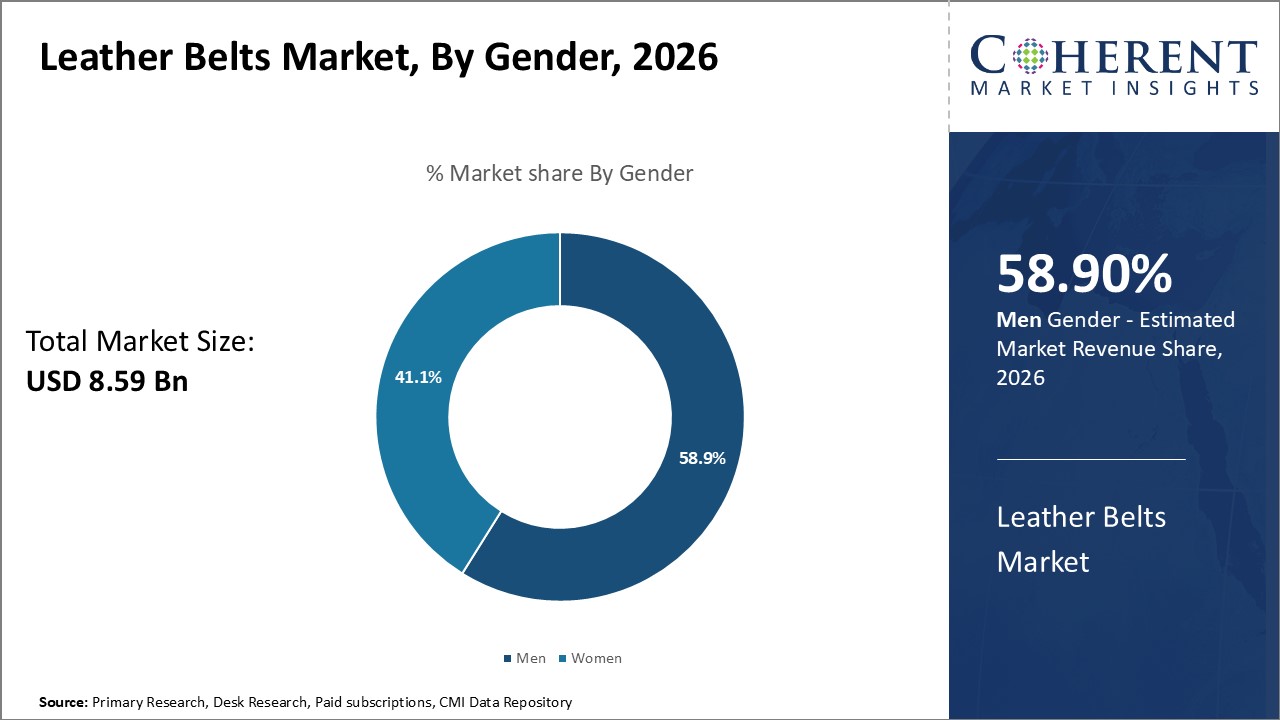
Leather Belts Market Insights, By Gender – The Men's Segment Dominates Market, Due To Factors Like Growing Fashion Consciousness, Rising Disposable Income, Increasing E-Commerce, and The Versatility of Belts for Both Formal and Casual Wear
Men’s segment is projected to contribute 58.9% market share in 2026, reflecting evolving male grooming trends and expanding men's fashion consciousness. The masculine leather belts segment dominates primarily because men's fashion accessories have become integral to expressing personality, status, and style in daily and formal settings. Men's belts are no longer just functional; they serve as critical style elements that can elevate an outfit, aligning with a broader shift towards menswear sophistication worldwide. As awareness around men’s grooming and fashion increases, so does the inclination to invest in quality belts that complement both casual and formal ensembles.
Leather Belts Market Insights, By Distribution Channel - The Online Retail Segment Dominates the Leather Belts Market, due to E-Commerce's Convenience, Wide Selection, Competitive Pricing, and the Ability to Easily Compare Products and Brands
Online Retail segment is expected to lead the market with a 65.3% share in 2026, driven by convenience, expansive product variety, and digital engagement. Online retail channels have revolutionized the way consumers purchase leather belts, playing a pivotal role in driving growth within this segment. The unparalleled convenience offered by e-commerce platforms allows customers to browse extensive collections, compare prices, and read peer reviews—all from the comfort of their homes. This convenience factor resonates strongly with younger, tech-savvy consumers who prioritize time efficiency and seamless shopping experiences.
Regional Insights
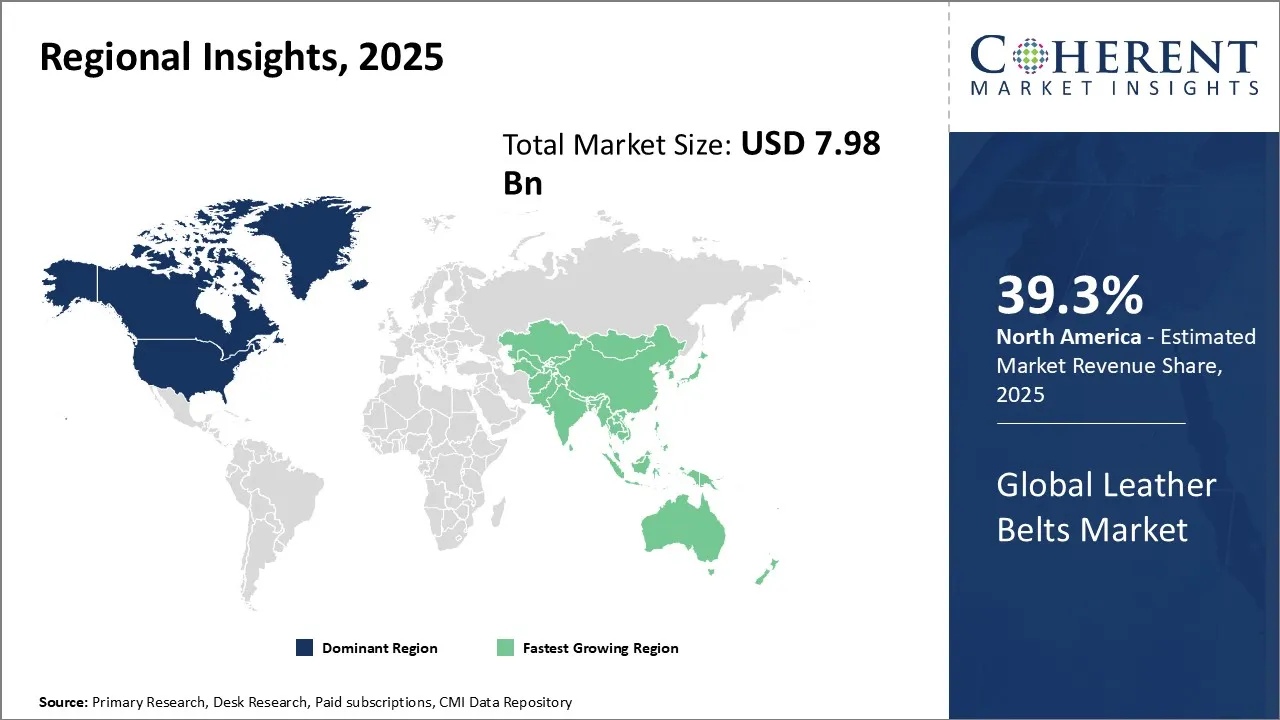
North America Leather Belts Market Analysis and Trends
The North America region is projected to lead the market with a 39.3% share in 2026, driven by factors such as increasing fashion awareness, rising disposable incomes, and a growing demand for premium and luxury accessories. The region benefits from a mature retail infrastructure and a strong presence of leading fashion brands, both domestic and international. Additionally, the rising popularity of e-commerce platforms is expanding the market's reach, making it easier for consumers to access a variety of leather belt products.
Key drivers include the growing interest in sustainable and ethically produced leather goods, with consumers becoming more conscious of the environmental and social impact of their purchases. Brands are responding by focusing on high-quality craftsmanship, eco-friendly materials, and innovative designs. Companies such as Fossil Group, Coach, and Levi Strauss & Co. are leading the market with their premium offerings, leveraging their established brand presence to maintain market dominance.
Asia Pacific Leather Belts Market Analysis and Trends
The Asia Pacific region is expected to exhibit the fastest growth in the market contributing 24.5% share in 2026, driven by a well-established leather industry ecosystem, abundant raw material availability, and a strong manufacturing base, particularly in countries like India, China, and Vietnam.
The region benefits from a skilled workforce and cost-effective production capabilities, making it a preferred hub for both domestic consumption and exports. Supportive government policies focused on leather industry development, such as subsidies and export incentives, boost competitiveness. Major companies such as Woodland (India), Red Tape (India), and Goldlion (China) play significant roles in product innovation and expanding market reach. Trade dynamics involving favorable export agreements further enhance the region’s leadership position.
Global Leather Belts Market Outlook for Key Countries
India Leather Belts Market Trends
The Indian leather belts market thrives on the country’s robust tanning industry and abundant cattle population. Local brands such as Woodland and Bata leverage domestic manufacturing strength to offer a wide range of belts catering to diverse consumer segments. The government’s Make in India initiative and export incentives support both production and global sales. India’s blend of traditional leather craftsmanship with growing modern retail formats ensures sustained demand. Additionally, increasing focus on sustainable leather production practices is influencing industry trends and consumer preferences.
China Leather Belts Market Trends
China’s market reflects strong integration of advanced manufacturing technology and mass production capabilities. Leading players like Goldlion and Septwolves capitalize on vast domestic demand fueled by increasing urban middle-class consumers and growing fashion consciousness. Government policies promoting export-oriented manufacturing and improving supply chain infrastructure further enhance market accessibility. The presence of numerous small and medium enterprises (SMEs) specializing in leather accessories bolsters innovation, competitive pricing, and rapid product turnaround, making China a significant player in global leather belts supply.
Italy Leather Belts Market Trends
Italy continues to lead the global leather belts space through its heritage of leather craftsmanship and luxury brand presence. Renowned companies such as Gucci, Prada, and Salvatore Ferragamo maintain significant influence by emphasizing premium quality, artisanal production techniques, and strong global branding. Italy’s market benefits from stringent quality control processes, innovative design, and a rich tradition of leather goods manufacturing. The government’s support for small-scale artisans and protection of “Made in Italy” branding enhances market differentiation, driving demand internationally among fashion-forward consumers.
U.S. Leather Belts Market Trends
The U.S. leather belts market is characterized by a mix of premium fashion brands and functional utility products. Brand leaders like Coach, Timberland, and Levi’s emphasize quality, durability, and style, targeting diverse consumer segments. The presence of a mature retail infrastructure, combined with increasing online sales channels, supports market expansion. Government regulations on environmental standards encourage sustainable sourcing and production methods, aligning with consumer awareness. Moreover, domestic leather manufacturers benefit from supply chain integration and strong brand loyalty, enabling competitive positioning.
Brazil Leather Belts Market Trends
Brazil’s leather belts market capitalizes on the country’s large livestock sector and established leather processing capabilities. Companies such as Vicunha and Jorge Bischoff focus on both affordable and premium segments, incorporating local cultural aesthetics into product designs. Government incentives supporting agricultural and leather goods export help expand market presence beyond Latin America. The country’s growing middle class and developing retail environment also contribute to rising demand. Emphasis on eco-friendly tanning techniques aligns with global sustainability trends and enhances Brazil’s competitive edge in international markets.
End-user Feedback and Unmet Needs for the Leather Belts Market
- A frequently cited example of satisfaction among fashion-conscious consumers is the demand for durable, high-quality leather belts with stylish, customizable features. Many users have expressed a positive experience with belts that offer a blend of style and practicality, such as adjustable belt lengths, unique buckle designs, and the availability of different leather finishes. For instance, a leading luxury brand received acclaim for its high-end belts that maintain their aesthetics and functionality over extended use. Customers praised the superior stitching, long-lasting leather quality, and the belts' resistance to wear and tear, even in high-temperature environments.
- Customization: A noticeable demand for greater product personalization exists. Consumers are increasingly seeking belts that can be tailored to their unique preferences, from color options to custom embossing or engraving. However, many mass-market products fail to meet these personalized needs. Addressing this gap could improve customer satisfaction and expand brand loyalty.
- Technological Integration: Another emerging need is the integration of technology into leather belts. For example, there is growing interest in belts equipped with smart features, such as built-in RFID tags for security or health monitoring sensors for wearable tech. Leather belt manufacturers have yet to widely adopt these innovations, leaving a gap in the market for smart, stylish accessories that could appeal to tech-savvy consumers.
Market Players, Key Development, and Competitive Intelligence
Key Developments
- In July 2025, ARM Championship Belts launched its premium, customizable championship belts, offering a unique and memorable way to honor achievements. Designed for a variety of occasions, including corporate events, military retirements, and personal milestones, these fully personalized belts provide an innovative alternative to traditional awards like plaques and trophies. ARM Championship Belts aims to elevate recognition ceremonies with a lasting symbol of success.
- In December 2024, Transport for London (TfL) introduced a new eco-friendly uniform for its staff, marking a significant step towards sustainability. The £12 million initiative includes vegan-friendly leather belts and shoes, demonstrating TfL's commitment to environmentally conscious fashion. This bold move reflects the growing trend in the transportation sector to adopt greener, more sustainable practices. The new uniforms aim to provide a modern, eco-conscious appearance for TfL’s rail staff while reducing environmental impact.
- In September 2023, Australia’s Plant Forged Physique launched a new line of vegan weightlifting belts, offering a sustainable and ethical alternative to traditional options. Made from synthetic vegan leather and microsuede, these belts provide core support for powerlifters, bodybuilders, and gym-goers during intense strength training, filling a gap in the market for eco-friendly fitness gear.
Top Strategies Followed by Global Leather Belts Market Players
- Established players in the industry heavily invest in research and development (R&D) to drive innovation and create high-performance products that meet evolving consumer demands. Their R&D focus spans improved leather processing techniques, durability enhancements, and incorporating sustainable materials, which align with the growing consumer preference for environmentally friendly products.
- For instance, Hugo Boss has been investing in eco-friendly materials, including recycled leather and plant-based alternatives, to appeal to environmentally conscious consumers. The brand has integrated these innovations into its premium lines, ensuring that sustainability and luxury go hand in hand. By maintaining a strong focus on R&D, these companies aim to stay ahead in the competitive landscape while meeting consumer demand for high-quality, environmentally friendly products.
- Mid-level players in the leather belts market adopt a different approach centered on delivering cost-effective solutions that balance quality and affordability. By targeting price-sensitive consumer segments, these companies carve out a significant niche, especially in developing countries where cost remains a decisive purchase factor. Mid-level manufacturers typically focus on streamlining production processes, securing affordable raw materials, and optimizing supply chains to maintain competitive pricing without compromising on product standards.
- For example, Leatherworld which has gained popularity in developing markets by offering affordable yet durable leather belts. Their strategy involves working with local suppliers to secure cost-effective raw materials, as well as simplifying production processes to maintain competitive pricing.
- Small-scale players in the global leather belts industry find their competitive edge by targeting niche segments through specialized features or innovative product designs. They often emphasize unique value propositions such as bespoke belts, custom craftsmanship, or incorporation of advanced materials like vegan leather alternatives or smart belt functionalities.
- For instance, Plant Forged Physique has developed vegan leather weightlifting belts, tapping into the growing demand for ethical and cruelty-free fitness gear. Moreover, small-scale players often leverage digital platforms for direct-to-consumer sales, bypassing traditional retail channels.
Market Report Scope
Leather Belts Market Report Coverage
| Report Coverage | Details | ||
|---|---|---|---|
| Base Year: | 2025 | Market Size in 2026: | USD 8.59 Bn |
| Historical Data for: | 2020 To 2024 | Forecast Period: | 2026 To 2033 |
| Forecast Period 2026 to 2033 CAGR: | 7.7% | 2033 Value Projection: | USD 14.45 Bn |
| Geographies covered: |
| ||
| Segments covered: |
| ||
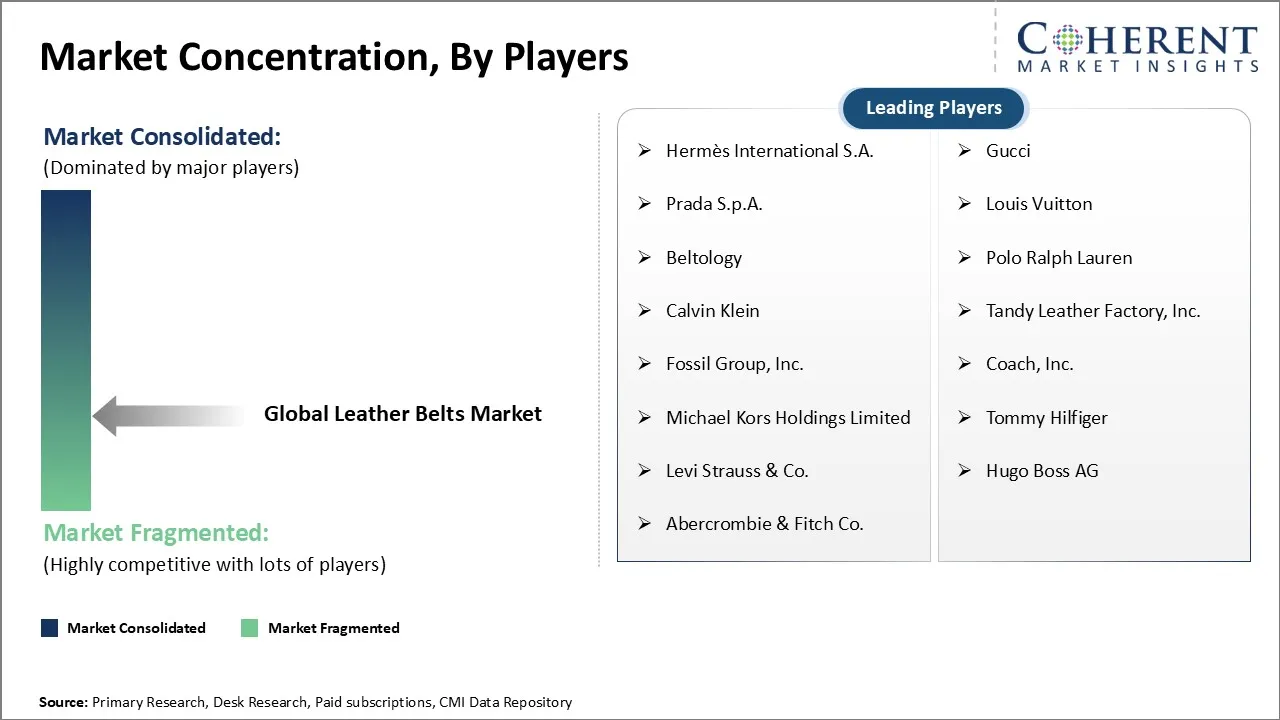
| Companies covered: | Hermès International S.A., Gucci, Prada S.p.A., Louis Vuitton, Beltology, Polo Ralph Lauren, Calvin Klein, Tandy Leather Factory, Inc., Fossil Group, Inc., Coach, Inc., Michael Kors Holdings Limited, Tommy Hilfiger, Levi Strauss & Co., Hugo Boss AG, and Abercrombie & Fitch Co. | ||
| Growth Drivers: |
| ||
| Restraints & Challenges: |
| ||
Leather Belts Market Dynamics
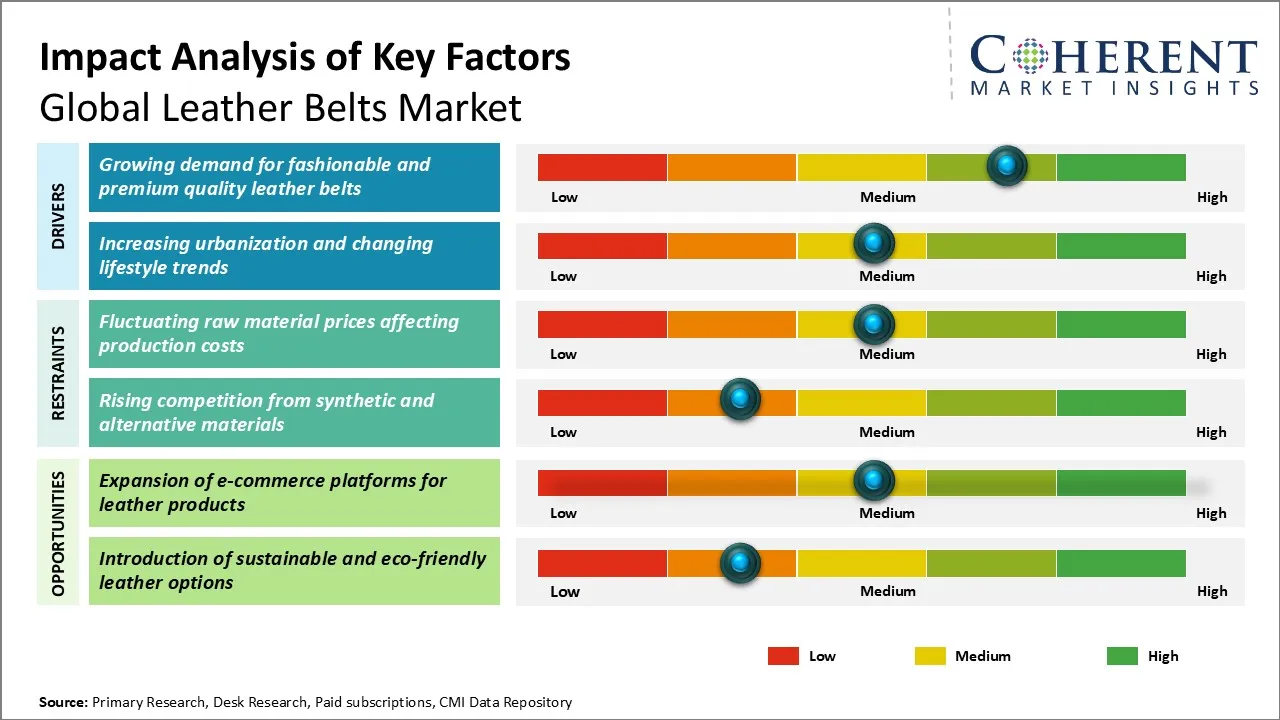
Leather Belts Market Driver - Growing Demand for Fashionable and Premium Quality Leather Belts
The contemporary fashion landscape has witnessed a remarkable shift toward premium quality leather belts, driven primarily by evolving consumer preferences for sophisticated accessories that blend functionality with style. Modern consumers, particularly millennials and Gen Z demographics, increasingly view leather belts not merely as functional items but as essential fashion statements that reflect personal style and social status. This transformation has been amplified by social media influence and celebrity endorsements, where luxury leather accessories are prominently featured across digital platforms.
The demand spans across various categories, from artisanal handcrafted belts featuring exotic leather types to designer collections incorporating sustainable production methods. Premium brands like Hermès, Gucci, and emerging boutique manufacturers are capitalizing on this trend by introducing innovative designs, incorporating smart technology, and emphasizing craftsmanship quality. According to the International Trade Centre's Trade Map data from 2022, global leather goods exports reached significant volumes, with belts and accessories representing a substantial portion of international trade flows, indicating robust cross-border demand for quality leather products.
Leather Belts Market Opportunity - Expansion of E-commerce Platforms for Leather Products
The expansion of e-commerce platforms presents a significant growth opportunity for the global leather belts market. With increasing internet penetration and smartphone adoption worldwide, consumers are increasingly shifting toward online shopping, seeking convenience, wider product variety, and competitive pricing. E-commerce platforms enable leather belt manufacturers and retailers to reach a broader and more diverse customer base beyond traditional brick-and-mortar outlets.
For instance, in 2023, Indian leather goods brand Hidesign reported a significant increase in online sales through its own website and third-party platforms such as Amazon and Myntra, with e-commerce contributing over 35% of its total revenue. Similarly, Fossil Group expanded its leather accessories segment through online flagship stores and digital marketplaces across North America and Europe, highlighting the rising preference for e-commerce among premium belt buyers.
Analyst Opinion (Expert Opinion)
- The global leather belts market is witnessing a notable shift as consumer preferences evolve towards premium quality and sustainability. Brands like Gucci and Coach are setting new standards, as showcased at the International Fashion Accessories Trade Show (2023) and the Sustainable Leather Forum (2022). Presentations highlighted innovative approaches to leather sourcing, with Gucci's commitment to traceable materials resonating strongly with environmentally conscious consumers.
- For instance, Coach's recent launch of a collection featuring vegetable-tanned leather was well-received, illustrating the growing demand for eco-friendly alternatives. Moreover, the impact of e-commerce on consumer purchasing behavior was a significant topic, with brands investing in digital platforms to enhance customer engagement and streamline sales.
- As online shopping continues to gain traction, companies that leverage technology to offer personalized experiences will likely stand out in this competitive landscape. Additionally, the resurgence of classic styles and artisanal craftsmanship is driving interest among consumers seeking unique, high-quality products. In this context, brands that prioritize sustainability and innovation will not only capture market share but also foster long-term loyalty among discerning customers.
Speak to the analyst
Want personalized insights?
Take the findings above to one of our principal consultants, or have the report rebuilt around the segments, geographies and competitors you actually track.
Market Segmentation
- Product Type Insights (Revenue, USD Bn, 2021 - 2033)
- Formal Belts
- Casual Belts
- Others
- Gender Insights (Revenue, USD Bn, 2021 - 2033)
- Men
- Women
- Distribution Channel Insights (Revenue, USD Bn, 2021 - 2033)
- Online Retail
- Offline Retail
- Department Stores
- Specialty Stores
- Regional Insights (Revenue, USD Bn, 2021 - 2033)
- North America
- U.S.
- Canada
- Latin America
- Brazil
- Argentina
- Mexico
- Rest of Latin America
- Europe
- Germany
- U.K.
- Spain
- France
- Italy
- Russia
- Rest of Europe
- Asia Pacific
- China
- India
- Japan
- Australia
- South Korea
- ASEAN
- Rest of Asia Pacific
- Middle East
- GCC Countries
- Israel
- Rest of Middle East
- Africa
- South Africa
- North Africa
- Central Africa
- North America
- Key Players Insights
- Hermes International S.A.
- Gucci
- Prada S.p.A.
- Louis Vuitton
- Beltology
- Polo Ralph Lauren
- Calvin Klein
- Tandy Leather Factory, Inc.
- Fossil Group, Inc.
- Coach, Inc.
- Michael Kors Holdings Limited
- Tommy Hilfiger
- Levi Strauss & Co.
- Hugo Boss AG
- Abercrombie & Fitch Co.
Sources
Primary Research Interviews
- Marketing Director – Leading Leather Goods Manufacturer
- Product Development Manager – Premium Fashion Belt Retailer
- Supply Chain Head – Global Leather Belt Distributor
- Sustainability Manager – Leather Processing Certification Body
Stakeholders
- Manufacturers
- End-use Sectors:
- Fashion and Apparel Brands (Luxury, Casual, Formal Belts)
- E-commerce Platforms and Online Retailers
- Wholesalers and Distributors
- Leather Processing and Tanning Companies
- Regulatory & Certification Bodies
- Leather Industry Associations
- Retail Chains and Department Stores
Databases
- UN Comtrade Database
- India Import Export (EXIM) Database
- Leather Production and Export Databases
Magazines
- Leather International – Trends in Leather Fashion
- Leather & Footwear News – Market Innovations and Insights
- The Fashion Belt Journal – Updates on Belt Trends and Consumer Preferences
- Apparel Manufacturing Today – Leather Products and Fashion Trends
- Leather Goods & Fashion Trends – Insights into Belt Manufacturing and Sales
Journals
- Journal of Fashion Technology & Textile Engineering – Leather Belt Design and Production Techniques
- Leather Science Journal – Leather Material Technology and Sustainable Practices
- Journal of Textile Science & Engineering – Innovations in Leather Processing for Fashion Accessories
- Journal of Applied Fashion – Leather Fashion Accessories and Consumer Behavior
Newspapers
- The Financial Times – Leather Goods Market and Fashion Industry Growth
- The Guardian – Ethical Fashion and Leather Goods Market Trends
- The New York Times – Shifts in Consumer Preferences for Leather Fashion
- The Wall Street Journal – Global Leather Goods Market Overview
Associations
- Leather Working Group (LWG)
- International Council of Tanners (ICT)
- The Leather Institute
- European Leather Association
- International Leather Goods Manufacturers’ Association (ILGMA)
Public Domain Sources
- U.S. Federal Trade Commission – Guidelines for Textile and Leather Products
- European Commission – Leather Goods Regulation and Sustainability Standards
- International Labour Organization – Leather Industry Labor Standards and Safety Regulations
- World Leather – Global Leather Industry Reports and Sustainability Practices
Proprietary Elements
- CMI Data Analytics Tool, Proprietary CMI Existing Repository of information for last 8 years.
Get access to 250+ pages report
Every segment, forecast, competitor profile and data table behind the analysis above — available for instant download.
- ESOMAR Member
- ISO 9001:2015 Certified
- D-U-N-S Registered
- GDPR & CCPA Compliant
Missing comfort of reading report in your local language? Find your preferred language:
Transform your Strategy with Exclusive Trending Reports
Frequently Asked Questions
The global leather belts market is estimated to be valued at USD 8.59 Bn in 2026 and is expected to reach USD 14.45 Bn by 2033.
The CAGR of global leather belts market is projected to be 7.7% from 2026 to 2033.
Growing demand for fashionable and premium quality leather belts and increasing urbanization and changing lifestyle trends are the major factors driving the growth of global leather belts market.
Fluctuating raw material prices affecting production costs and rising competition from synthetic and alternative materials are the major factors hampering the growth of global leather belts market.
In terms of Product Type, Formal Belts are estimated to dominate the market revenue share in 2026.
Leather belts became popular in the late 19th century, especially with the rise of industrialization and fashion trends.
Hermès International S.A., Gucci, Prada S.p.A., Louis Vuitton, Beltology, Polo Ralph Lauren, Calvin Klein, Tandy Leather Factory, Inc., Fossil Group, Inc., Coach, Inc., Michael Kors Holdings Limited, Tommy Hilfiger, Levi Strauss & Co., Hugo Boss AG, and Abercrombie & Fitch Co. are the major players in the global leather belts market.