

Global Ligase Enzymes Market Size and Forecast – 2026 to 2033
The global ligase enzymes market is estimated to be valued at USD 287.9 Mn in 2026 and is expected to reach USD 477.6 Mn by 2033, exhibiting a compound annual growth rate (CAGR) of 7.5% from 2026 to 2033. This growth is driven by increasing demand for ligase enzymes in molecular diagnostics applications, including genetic engineering, DNA repair, and recombinant DNA technology, which are pivotal in advancing biotechnological research and pharmaceutical developments worldwide.
Key Takeaways of the Global Ligase Enzymes Market
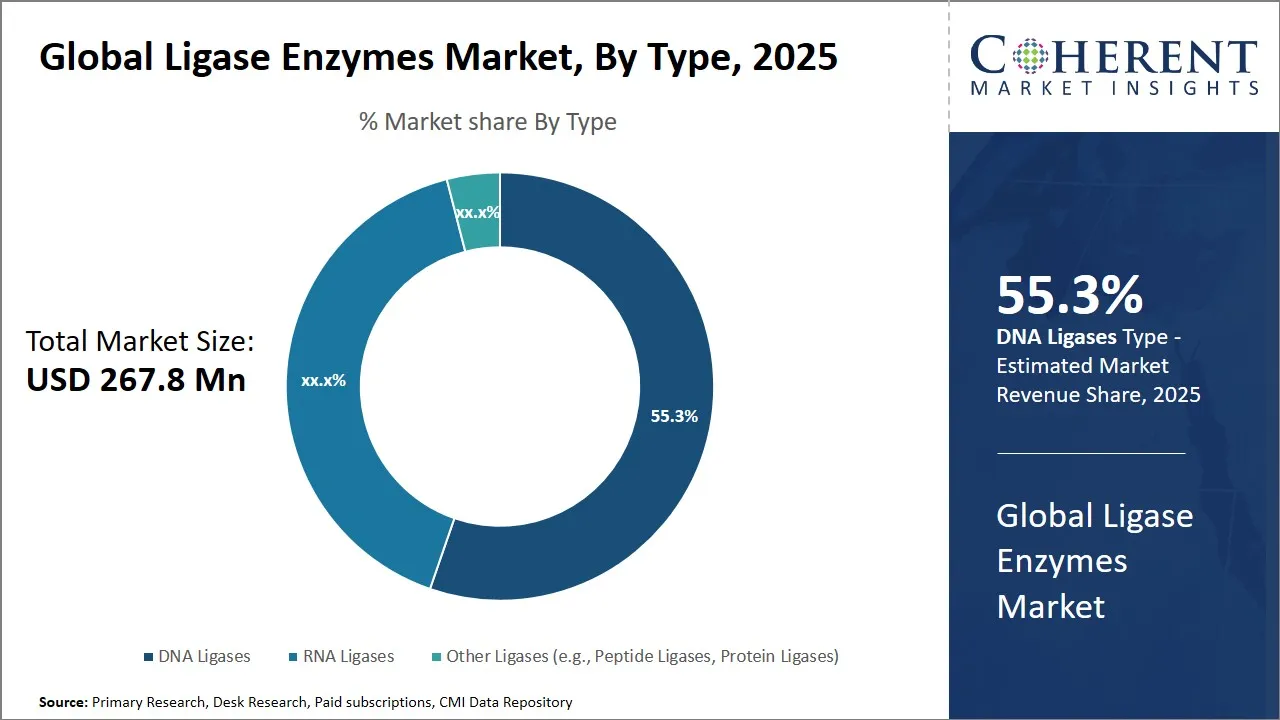
- The DNA ligases segment is expected to hold a 56.3% of the market share in 2026.
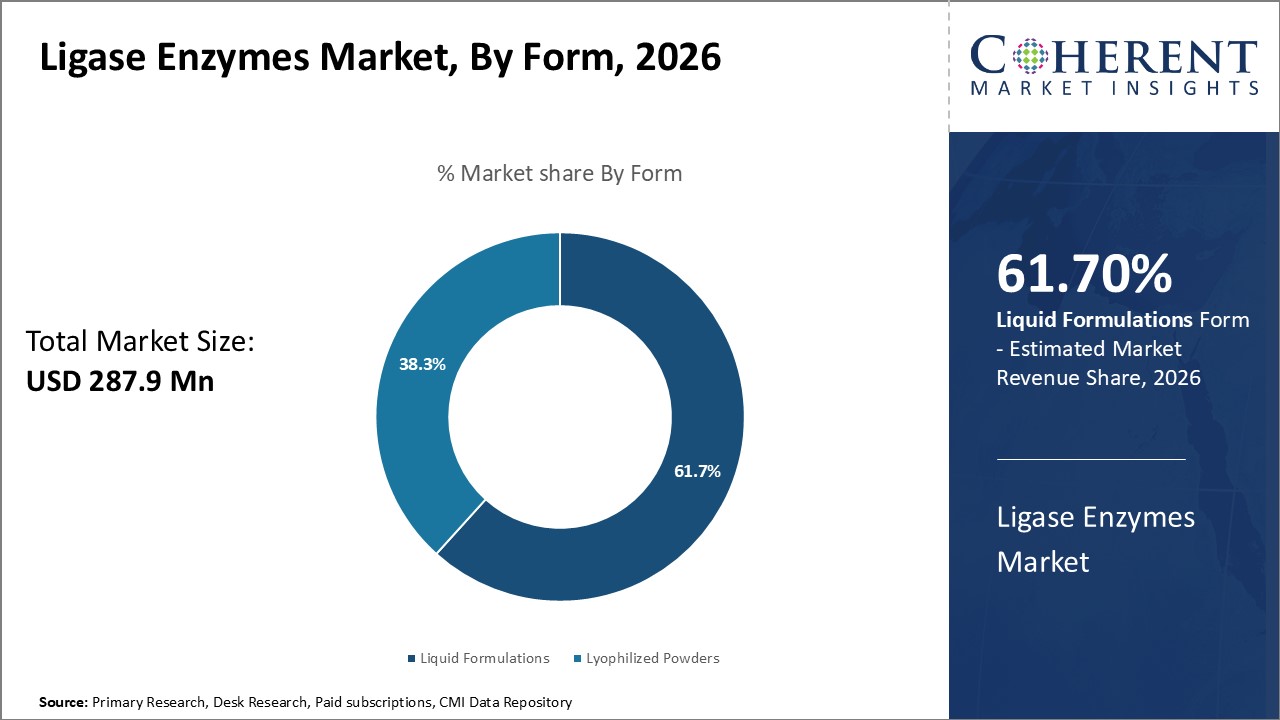
- The liquid formulations segment is expected to dominate with a 61.7% hare in 2026.
- The research and development segment is projected to capture 41.3% f the market share in 2026.
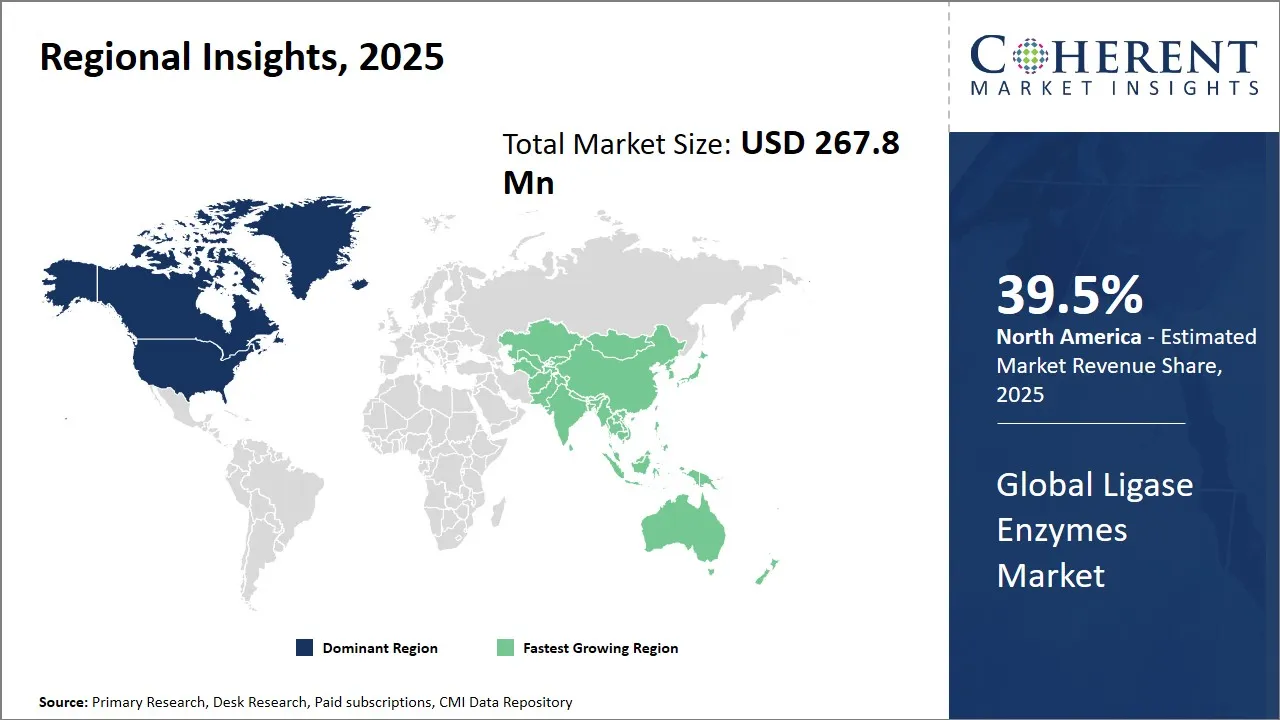
- North America is expected to lead the market, holding a share of 39.5% in 2026. Asia Pacific is anticipated to be the fastest-growing region, with an estimated market share of 24.5% in 2026.
Market Overview
A current market trends indicate a strong focus on the development of highly specific and efficient ligase enzymes to support precision medicine and synthetic biology. Innovations in enzyme engineering, coupled with rising investments in genomic research and clinical diagnostics, are propelling the market expansion. Additionally, the growing adoption of automated and high-throughput technologies in laboratories is facilitating enhanced enzyme performance, thereby boosting the overall demand within the ligase enzymes market.
Current Events and Its Impact
Current Events | Description and its Impact |
Advances in DNA Repair Research and CRISPR Integration |
|
Expansion of Biomanufacturing Infrastructure in Asia Pacific |
|
Segmental Insights
- Current Industry Events of 2026
- Market Size Estimation
- Regional Breakdown
- Competitive Landscape
- Customer Intelligence
- Segmental Analysis
- Pricing Analysis
- Key Market Drivers, Challenges & Future Trends
- Customized Insights Section
Ligase Enzymes Market Insights, By Type - DNA Ligases Contribute the Highest Share of the Market Owing to their Pivotal Role in Genetic Research and Biotechnological Applications
The DNA ligases segment is projected to account for 56.3% share in 2026. Their superiority is attributed to their wide application in cloning, DNA repair and genome sequencing. They are essential to recombinant DNA technology and diagnostics since they are versatile and capable of connecting both single- and double-stranded DNA.
For example, GenScript, a worldwide leader in the provision of life science research services and products, is equipped with T4 DNA Ligase, which is an enzyme derived out of E. coli carrying a cloned gene 30 of bacteriophage T4. This enzyme facilitates the process of forming a phosphodiester bond between termini containing 5’-phosphate and 3’-hydroxyl groups in duplex DNA or RNA and is critical in repairing single-strand nicks in duplex DNA, RNA and DNA-RNA hybrids.
Ligase Enzymes Market Insights, By Form - Liquid Formulations Contribute the Highest Share of the Market Driven by Ease of Use, Enhanced Stability, and Compatibility with Diverse Workflows
Liquid formulations have become the most preferred among researchers and clinicians with an estimated market share of 61.7% in 2026. Their popularity is due to convenience and efficiency in their operations since they do not need the process of reconstitution before they can be used.
Liquid ligase formulations are ready to use unlike the powdered form, which is common in the lyophilized form and is suitable in high-throughput and automated laboratory systems. They reduce the impact of human error, save time on preparation, and are more efficient in the workflow, which is why they became indispensable in the field of high-level molecular biology, diagnostics, and clinical research.
Ligase Enzymes Market Insights, By Application - Research and Development Leads the Market Driven by Expanding Genetic Research Initiatives and Advancing Biotechnological Innovations
The research and development segment is expected to capture 41.3% of the market share in 2026, due to the increasing involvement in understanding the mechanisms of genes and developing other medicines. Ligases play an important role in molecular cloning, gene editing, and synthetic biology, and are central to the contemporary lab. Continued advancement in genomics, proteomics, and cell biology is escalating the need to be able to properly manipulate DNA with ligase enzymes.
In January 2022, ArcticZymes Technologies, a leader in the development and production of high-performance enzymes for molecular biology applications, launched its ArcticZymes R2DTM Ligase. This enzyme is designed for use in therapeutic applications, next-generation sequencing (NGS), molecular diagnostics (MDx), and other emerging technologies.
Regional Insights
North America Ligase Enzymes Market Analysis and Trends
In North America, the dominance in the global ligase enzymes market is driven by an advanced biotechnology ecosystem with an estimated share of 39.5% in 2026, substantial R&D expenditures, and the presence of established pharmaceutical and life sciences companies. The U.S. and Canada have strong regulatory provisions that encourage innovation, such as a large amount of money invested in genomics, molecular diagnostics, and synthetic biology applications where ligase enzymes play an important role.
For example, QIAGEN, a global leader in molecular biology and sample technologies, highlighted its range of high-efficiency DNA and RNA ligase enzymes, including T4 DNA Ligase and Taq DNA Ligase. These enzymes are essential for repairing nucleic acids and performing precise DNA end-joining reactions in applications such as cloning, sequencing, and gene editing
Asia Pacific Ligase Enzymes Market Analysis and Trends
The Asia Pacific region has the fastest growth pattern in the global ligase enzymes market because of the growing biotechnology industries with an estimated share of 24.5% in 2026. The growth is driven by growing investment in the health care infrastructures and expanding pharmaceutical production units. The availability of new biotech enterprises and increased partnerships with the world industry leaders boosts transfer of technology and the market penetration.
For example, Meridian Bioscience, a leader in molecular and immunoassay reagents, offers the Glycerol-Free T4 DNA Ligase (HC), a high-concentration enzyme (50U/µL) ideal for joining blunt and cohesive ends, as well as repairing single-stranded nicks in DNA, RNA, and DNA/RNA hybrids. This glycerol-free ligase is particularly suited for lyophilization and ambient temperature storage, making it an excellent choice for point-of-care (POC) applications.
Global Ligase Enzymes Market Outlook for Key Countries
U.S. Ligase Enzymes Market Analysis and Trends
The prevailing biotechnology industry and great investment in genomic research has made the U.S. dominate the ligase enzymes market. Key players such as New England Biolabs and Thermo Fisher Scientific have their centre of operation here; which is the further development of enzyme engineering and application in the field of diagnostics and therapeutics. Product innovation is promoted by the vast ecosystem of university research and commercial biotech cooperations in the country.
For example, Creative Enzymes, a U.S.-based company specializing in high-quality enzymes for research and industrial applications, showcased its T4 DNA Ligase. This enzyme facilitates the creation of phosphodiester bonds between 5'-phosphate and 3'-hydroxyl ends in duplex DNA or RNA, enabling the repair of single-strand breaks in DNA, RNA, and DNA/RNA hybrids.
China Ligase Enzymes Market Analysis and Trends
The ligase enzymes market of China is growing fast with a large-scale governmental support to develop the biotechnology and a rise in pharmaceutical research and development. Local companies like MCLAB and BGI have increased the production capacity of the enzymes and developed tailor-made ligases that can cover local and international markets. Competitive pricing and innovation are impelled by focus on self-reliance in high-tech industries and increasing biotech start-ups in the country.
For example, TIANGEN Biotech, a China-based company specializing in molecular biology reagents and cloning solutions, offers its T4 DNA Ligase, an essential enzyme for molecular cloning and genetic engineering applications.
U.K. Ligase Enzymes Market Analysis and Trends
The U.K. ligase enzymes market is also growing as a result of the innovation of molecular diagnostics and the growing uptake of personalized medicine. This is being enhanced by the growing uses of ligase enzymes in genetic studies, biotechnology and molecular diagnostics. The rise in cases of chronic diseases and the focus of the U.K. on precision medicine is further driving up the demand of enzyme-based treatments.
For example, Biosynth Ltd, a U.K.-based company specializing in high-quality enzymes and research chemicals, highlighted its range of ligase enzymes, including DNA ligase and tRNA ligases. These enzymes are essential for joining DNA strands, repairing nucleic acids, and facilitating aminoacylation reactions in molecular biology research.
Japan Ligase Enzymes Market Analysis and Trends
The ligase enzymes market in Japan is a strong one as it has an infrastructure of high biotechnological research and the industry giants such as Takara Bio and Nippon Gene are highly involved. The interest of Japan in next-generation medical technologies supports the creation of high-performance ligases, clinical diagnostics, gene editing, and synthetic biology. The funding programs by the government on regenerative medicine and precision medicine also facilitate the innovation of enzymes. Also, the involvement of Japan in the world pharmaceutical chains makes it one of the players in the market of ligase enzyme in the Asian region.
For example, Takara Bio, a leader in biotechnology, offers a variety of ligation enzymes designed to join nucleic acid fragments for molecular biology applications. Its product portfolio features T4 DNA Ligase, which catalyzes the joining of DNA fragments through phosphodiester bond formation, and T4 RNA Ligase, which enables the efficient ligation of RNA molecules.
End User Feedback and Unmet Needs for the Global Ligase Enzymes Market
- End users across biotechnology and pharmaceutical research consistently praise ligase enzymes for reliability and precision in DNA assembly. Liquid formulations are especially valued for saving time and reducing errors in automated workflows. For instance, a genomics lab in Germany reported faster turnaround and higher reproducibility after adopting ready-to-use thermostable ligases for sequencing and cloning applications.
- Common concerns include high pricing, limited customization, and integration issues with diverse lab systems. Smaller labs often struggle with affordability and insufficient technical support. Users seek more flexible formulations, broader compatibility, and better supplier collaboration. Meeting these needs would expand accessibility, strengthen customer retention, and drive innovation in enzyme engineering.
Market Players, Key Developments, and Competitive Intelligence
Key Developments
- In November 2024, Codexis, a leading provider of enzymatic solutions for scalable therapeutics manufacturing, showcased groundbreaking data at the TIDES Europe conference. The company revealed the successful enzymatic synthesis of the approved siRNA therapeutic inclisiran, using its proprietary ECO Synthesis platform, marking a first in the industry.
- In October 2024, Pfizer Inc. entered into a collaboration with Triana Biomedicines, valued at up to USD 1.5 billion, to discover molecular glue degraders for multiple disease targets, including oncology. Triana’s platform uses ligase enzymes to facilitate protein: protein interactions, which promote the degradation of disease-causing proteins via the ubiquitin-proteasome system. This collaboration highlights the growing interest in molecular glues and ligase enzymes as a new approach for targeting challenging proteins.
- In October 2024, Twist Bioscience announced the launch of its FlexPrep Ultra-High Throughput Library Preparation Kit, designed to enhance next-generation sequencing (NGS) workflows, particularly in agrigenomics and population genomics. The kit utilizes Twist's proprietary enzyme and Normalization by Ligation (NBL) technology, which simplifies sample preparation by eliminating the need for time-consuming sample quantitation and allowing for early sample pooling and multiplexing.
- In January 2024, Almac Sciences, part of the Almac Group, expanded its selectAZyme enzyme screening collection to include a new RNA Ligase (RNAL) enzyme kit for therapeutic oligonucleotide synthesis. This new capability leverages a focused library of 10 double-stranded RNA Ligase enzymes selected from Almac's extended RNAL enzyme panel, enabling the synthesis of both single- and double-stranded RNA.
Top Strategies Followed by Global Ligase Enzymes Market Players
- Established companies in this space prioritize heavy investments in research and development (R&D) to innovate and refine high-performance ligase enzymes that meet the evolving demands of biotechnology, pharmaceutical, and molecular diagnostics sectors. These market leaders often engage in strategic partnerships and collaborations with other industry giants or original equipment manufacturers (OEMs), enabling them to integrate their products into broader technological platforms and secure a larger customer base.
- Merck KGaA (MilliporeSigma) and Agilent Technologies dominate through continual R&D and strategic collaborations. Merck’s Blirt Ligase Series supports high-fidelity DNA repair and cloning, used widely in pharmaceutical biomanufacturing. The company partners with global biotech firms to integrate ligase enzymes into advanced genomic and proteomic platforms.
- Mid-level market players, while operating with comparatively limited resources than industry giants, wield cost leadership as their primary strategic lever. These companies emphasize delivering cost-effective ligase enzyme products that maintain a satisfactory balance between quality and affordability, aiming to attract price-sensitive consumer segments including academic institutes, small biotech firms, and contract research organizations.
- Bio-Rad Laboratories and Qiagen N.V. operate as mid-level innovators emphasizing affordability and accessibility. Bio-Rad’s ligase-based DNA assembly kits are positioned for university and clinical research use, focusing on precision with cost efficiency.
- Small-scale players in the ligase enzymes market adopt highly specialized strategies to establish their niche amid dominant competitors. These firms often focus on developing innovative products with unique or enhanced features, such as ligases optimized for novel applications or stability under extreme conditions, thereby differentiating themselves from mass-market offerings.
- Lucigen Corporation and ApexBio Technology exemplify agile entrants with niche specialization. Lucigen produces custom T4 RNA and DNA Ligases optimized for RNA-seq library preparation and microRNA studies, focusing on high sensitivity under low-template conditions.
Market Report Scope
Ligase Enzymes Market Report Coverage
| Report Coverage | Details | ||
|---|---|---|---|
| Base Year: | 2025 | Market Size in 2026: | USD 287.9 Mn |
| Historical Data for: | 2020 To 2024 | Forecast Period: | 2026 To 2033 |
| Forecast Period 2026 to 2033 CAGR: | 7.5% | 2033 Value Projection: | USD 477.6 Mn |
| Geographies covered: |
| ||
| Segments covered: |
| ||
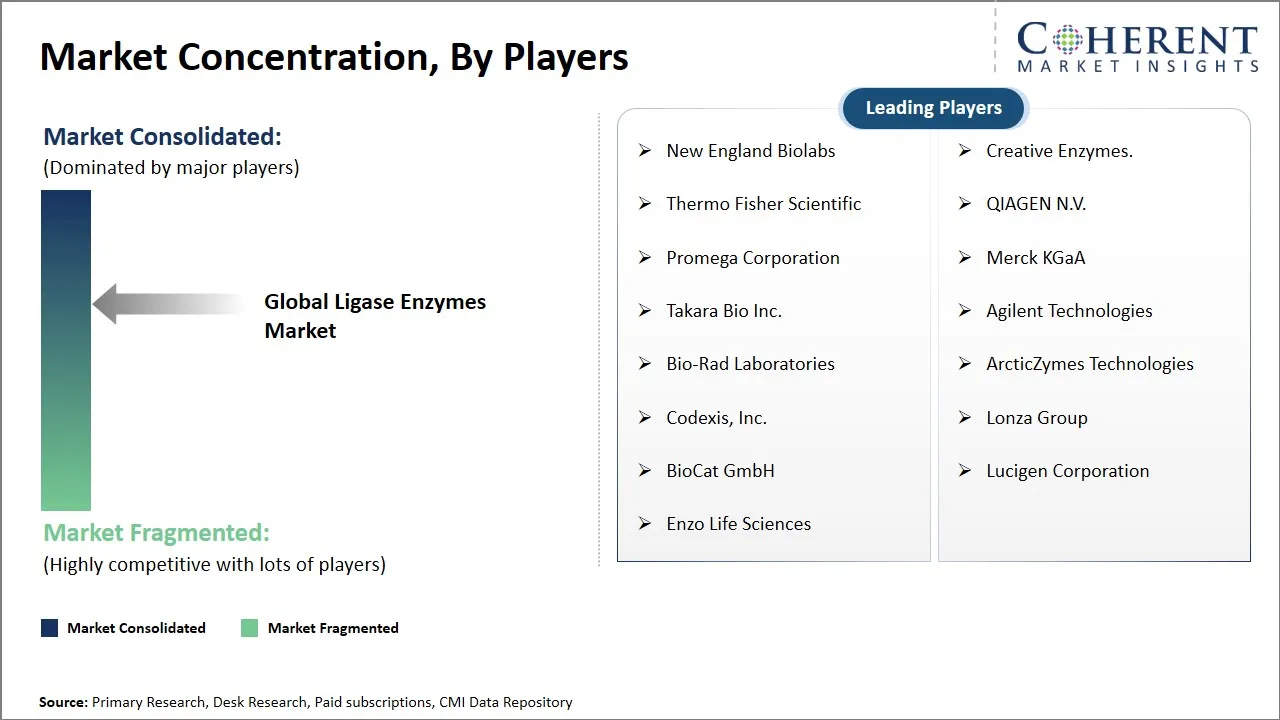
| Companies covered: | New England Biolabs, Creative Enzymes., Thermo Fisher Scientific, QIAGEN N.V., Promega Corporation, Merck KGaA, Takara Bio Inc., Agilent Technologies, Bio-Rad Laboratories, ArcticZymes Technologies, Codexis, Inc., Lonza Group, BioCat GmbH, Lucigen Corporation, and Enzo Life Sciences | ||
| Growth Drivers: |
| ||
| Restraints & Challenges: |
| ||
Ligase Enzymes Market Dynamics
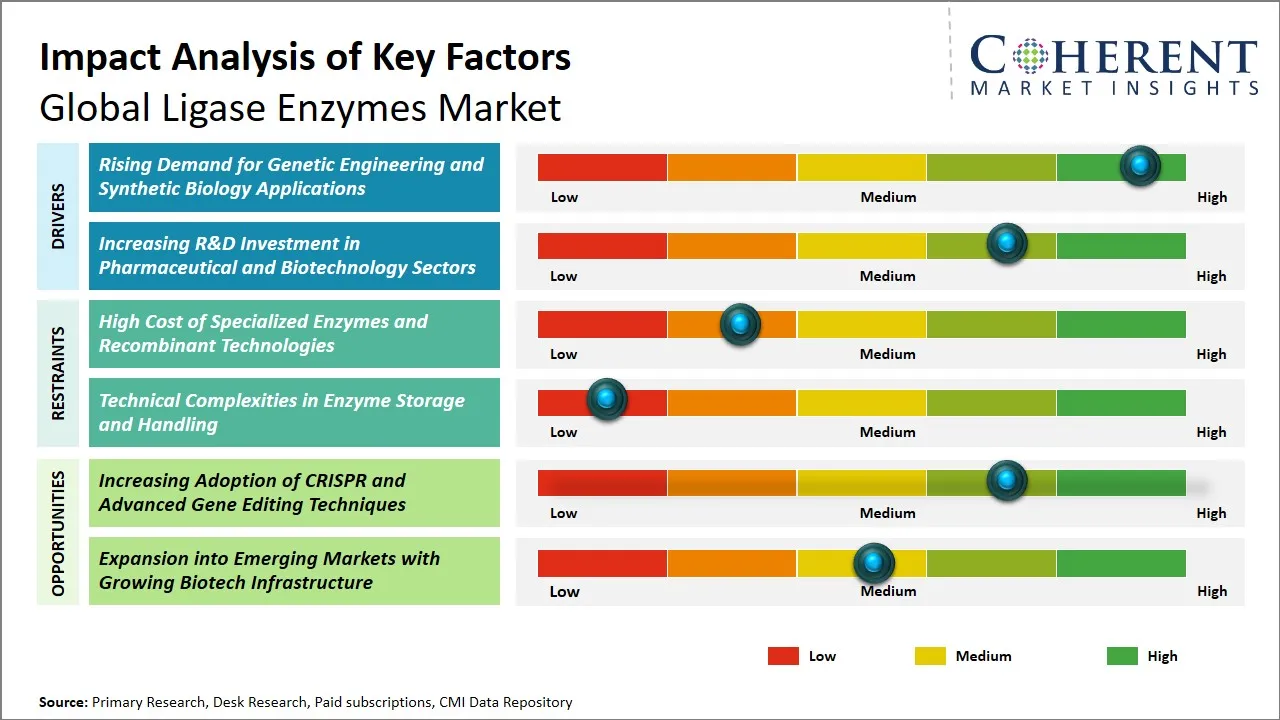
Ligase Enzymes Market Driver - Rising Demand for Genetic Engineering and Synthetic Biology Applications
The growing adoption of genetic engineering and synthetic biology is a major force driving ligase enzyme demand globally. Ligases are required to mate DNA strands in cloning, gene synthesis, and to do core steps in the process of modifying biotechnology. With the improvement in research, the need in precision instruments such as ligase enzymes has increased especially in recombinant DNA and synthesis of synthetic genes.
In June 2022, Nurix Therapeutics, a biotechnology firm specializing in the use of targeted protein degradation to create new therapies, began a continuing Phase 1 trial of NX-2127, an oral BTK inhibitor. NX-2127 is a preclinical immunomodulatory agent which is based on E3 ligase-mediated ubiquitin-proteasome degradation of BTK, providing a new way of immunomodulation. It shows the increasing role of ligase-based processes as key to the development of therapeutic innovation, and the increasing importance of ligases not just in the basic biology of genetic studies, but also in the next-generation drug-development.
Ligase Enzymes Market Opportunity - Increasing Adoption of CRISPR and Advanced Gene Editing Techniques
The global ligase enzymes market stands to benefit significantly from the rapid adoption of CRISPR and other advanced gene editing technologies, which are revolutionizing biomedical research and therapeutic development. Ligase enzymes are also essential in the CRISPR gene-editing process as they help in the combination of DNA strands to allow the introduction of specific genetic alterations. With the CRISPR technology becoming a popular application in various applications such as genetic disease repair, and farming, among others, the demand of high quality ligase enzymes is projected to skyrocket.
CRISPR Therapeutics, a Swiss-U.S. biotech company, introduced its new SyNTase gene editing technology
On October 1, 2025, at the ESGCT Congress, the annual meeting of the European Society of Gene & Cell Therapy, SyNTase achieved a major breakthrough by using Cas9 and polymerases in combination with ligase enzymes to deliver up to 95% accuracy in DNA repair for Alpha-1 Antitrypsin Deficiency. This represents a significant milestone in the advancement of sophisticated genetic engineering techniques.
Analyst Opinion (Expert Opinion)
- Global ligase enzymes market growth is increasing because of the developments in molecular biology, increasing applications in both the studies of Deoxyribonucleic Acid (DNA) and Ribonucleic Acid (RNA), and in the Next-Generation Sequencing (NGS) and therapeutic oligonucleotide synthesis. Growth is occurring due to supportive regulatory frameworks, more investments made in biotechnology, and more demand of specific gene editing with CRISPR (Clustered Regularly Interspaced Short Palindromic Repeats) and synthetic biology. The difficulties are high cost of production, stability of enzymes and special storage conditions.
- Major conferences such as Synthetic Biology Based Therapeutics Summit, BIO international convention and TIDES (Therapeutic Oligonucleotides) meetings have been used to exchange knowledge and demonstrate the technology. In the real-world, examples are RNA Ligase kits of therapeutic oligonucleotides by Almac Sciences, optimized T4 and Taq DNA Ligases of cloning by QIAGEN, and government-funded genomics in the U.S., Europe and Asia Pacific. Such initiatives are also boosting the enzyme accessibility, increasing the efficiency of research, and broadening the research uses in diagnostics and therapy worldwide.
Speak to the analyst
Want personalized insights?
Take the findings above to one of our principal consultants, or have the report rebuilt around the segments, geographies and competitors you actually track.
Market Segmentation
- Type Insights (Revenue, USD Mn, 2021 - 2033)
- DNA Ligases
- RNA Ligases
- Other Ligases (e.g., Peptide Ligases, Protein Ligases)
- Form Insights (Revenue, USD Mn, 2021 - 2033)
- Liquid Formulations
- Lyophilized Powders
- Application Insights (Revenue, USD Mn, 2021 - 2033)
- Research and Development
- Cloning and Mutagenesis
- Next-Generation Sequencing (NGS) Library Preparation
- DNA Synthesis and Assembly (e.g., Gibson Assembly)
- SNP Detection and Genotyping
- Other Research
- Diagnostics
- Molecular Diagnostic Assays (e.g., LAMP, PCR-based tests)
- Infectious Disease Detection
- Other Genetic Disorder Identification
- Therapeutics
- Drug Discovery and Development
- Gene Therapy Vector Construction
- Others (e.g., Plasmid Construction)
- Research and Development
- Source Insights (Revenue, USD Mn, 2021 - 2033)
- Microorganisms (Bacteria, Virus, Others)
- Animal
- Plant
- End User Insights (Revenue, USD Mn, 2021 - 2033)
- Pharmaceutical and Biotechnology Companies
- Hospitals and Diagnostic Laboratories
- Contract Research and Manufacturing Organizations (CROs/CMOs)
- Academic and Research Institutes
- Regional Insights (Revenue, USD Mn, 2021 - 2033)
- North America
- U.S.
- Canada
- Latin America
- Brazil
- Argentina
- Mexico
- Rest of Latin America
- Europe
- Germany
- U.K.
- Spain
- France
- Italy
- Russia
- Rest of Europe
- Asia Pacific
- China
- India
- Japan
- Australia
- South Korea
- ASEAN
- Rest of Asia Pacific
- Middle East
- GCC Countries
- Israel
- Rest of Middle East
- Africa
- South Africa
- North Africa
- Central Africa
- North America
- Key Players Insights
- New England Biolabs
- Creative Enzymes.
- Thermo Fisher Scientific
- QIAGEN N.V.
- Promega Corporation
- Merck KGaA
- Takara Bio Inc.
- Agilent Technologies
- Bio-Rad Laboratories
- ArcticZymes Technologies
- Codexis, Inc.
- Lonza Group
- BioCat GmbH
- Lucigen Corporation
- Enzo Life Sciences
Sources
Primary Research Interviews
- Industry Stakeholders
- Enzyme engineering scientists
- Laboratory directors
- End Users
- Academic researchers
- Clinical laboratory professionals
Government and International Databases
- U.S. National Institutes of Health (NIH)
- European Medicines Agency (EMA)
- World Health Organization (WHO)
- U.S. Food and Drug Administration (FDA)
- Centers for Disease Control and Prevention (CDC)
- European Centre for Disease Prevention and Control (ECDC)
Trade Publications
- BioTechniques
- Genetic Engineering & Biotechnology News
- Nature Biotechnology
- Journal of Molecular Biology
- Biotechnology Advances
- Trends in Biotechnology
Academic Journals
- Nature Communications
- Journal of Biological Chemistry
- Nucleic Acids Research
- Journal of Molecular Biology
- Biotechnology and Bioengineering
- Gene Therapy
Reputable Newspapers
- The New York Times
- The Guardian
- The Washington Post
- The Wall Street Journal
- Financial Times
- Reuters
Industry Associations
- American Society for Biochemistry and Molecular Biology (ASBMB)
- European Federation of Biotechnology (EFB)
- International Union of Biochemistry and Molecular Biology (IUBMB)
- Biotechnology Industry Organization (BIO)
- American Chemical Society (ACS)
- Society for Industrial Microbiology and Biotechnology (SIMB)
Public Domain Resources
- National Center for Biotechnology Information (NCBI)
- U.S. National Library of Medicine
- ClinicalTrials.gov
- Open Access Journals
- World Health Organization (WHO) Global Health Observatory
Proprietary Elements
- CMI Data Analytics Tool: Proprietary analytics tool to analyze real-time market trends, consumer behavior, and technology adoption in market
- Proprietary CMI Existing Repository of Information for Last 8 Years
Get access to 250+ pages report
Every segment, forecast, competitor profile and data table behind the analysis above — available for instant download.
- ESOMAR Member
- ISO 9001:2015 Certified
- D-U-N-S Registered
- GDPR & CCPA Compliant
Missing comfort of reading report in your local language? Find your preferred language:
Transform your Strategy with Exclusive Trending Reports
Frequently Asked Questions
The global ligase enzymes market is estimated to be valued at USD 287.9 Mn in 2026 and is expected to reach USD 477.6 Mn by 2033.
The CAGR of the global ligase enzymes market is projected to be 7.5% from 2026 to 2033.
Rising demand for genetic engineering and synthetic biology applications and increasing R&D investment in pharmaceutical and biotechnology sectors are the major factors driving the growth of the global ligase enzymes market.
High cost of specialized enzymes and recombinant technologies and technical complexities in enzyme storage and handling are the major factors hampering the growth of the global ligase enzymes market.
In terms of type, the DNA ligases segment is estimated to dominate the market revenue share in 2026.
New England Biolabs, Creative Enzymes., Thermo Fisher Scientific, QIAGEN N.V., Promega Corporation, Merck KGaA, Takara Bio Inc., Agilent Technologies, Bio-Rad Laboratories, ArcticZymes Technologies, Codexis, Inc., Lonza Group, BioCat GmbH, Lucigen Corporation, and Enzo Life Sciences are the major players.
North America is expected to lead the global ligase enzymes market in 2026.