

Global Liquid Hydrogen Tank Market Size and Share Analysis - 2026 to 2033
Global liquid hydrogen tank market is estimated to be valued at USD 78.8 Mn in 2026 and is expected to reach USD 130.7 Mn by 2033, exhibiting a compound annual growth rate (CAGR) of 7.5% from 2026 to 2033.
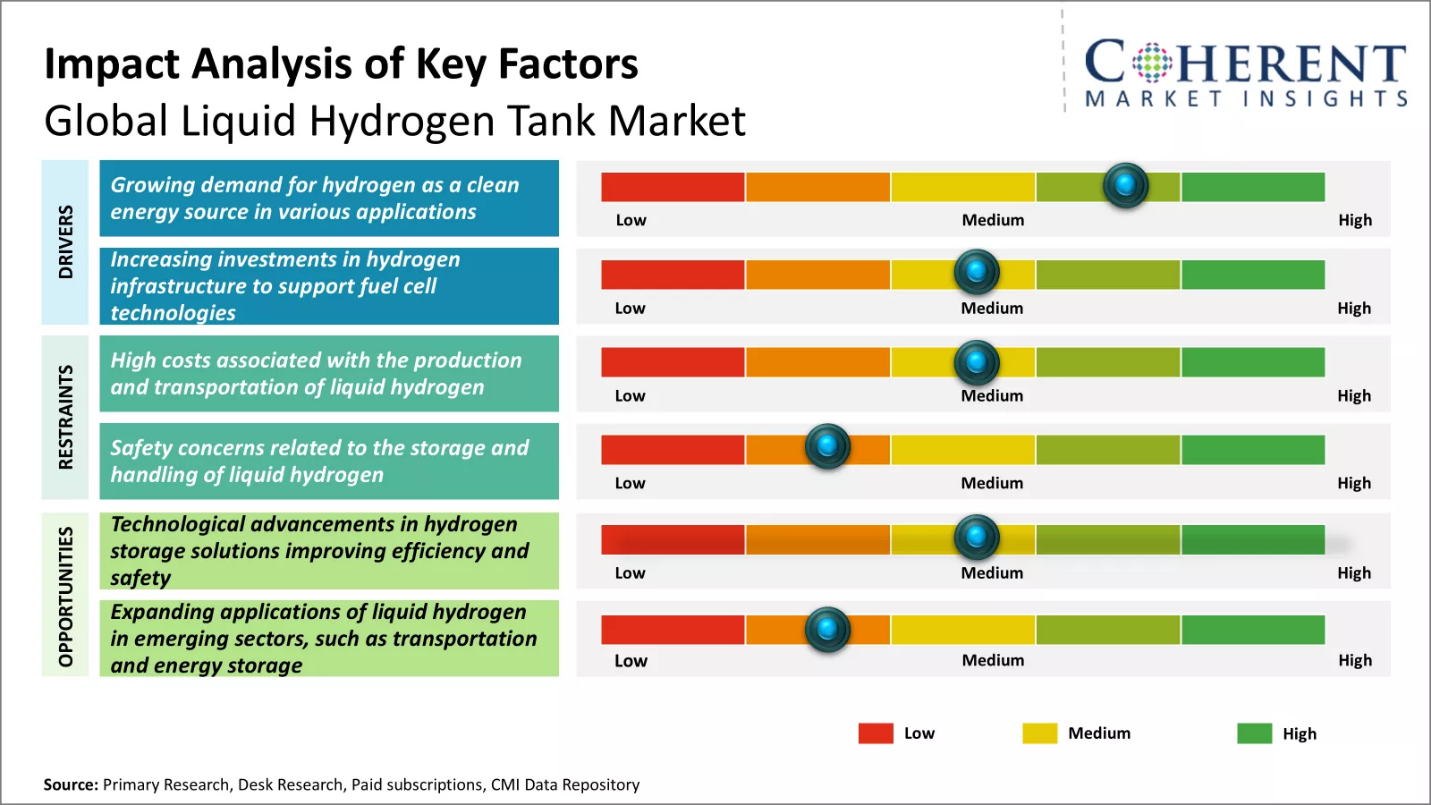
Key Takeaways
- Based on Type, Below 25 M³ Segment is estimated to contribute market share of 43.1% in 2026.
- Based on Application, Aerospace Segment is estimated to contribute the highest market share of 37.1% in 2026.
- North America is projected to lead the liquid hydrogen tank market in 2026, with an estimated market share of 50.0%.
Market Overview
The global liquid hydrogen tank market demand will witness robust growth over the forecast period due to increased demand for clean energy storage technologies and increasing applications of hydrogen fuel cell technologies in automotive, industrial, and power sectors. Hydrogen storage is critical to enable transportation and storage of hydrogen gas in high-pressure conditions to support the operation of hydrogen-powered vehicles and stationary power units.
Advances in technology in the areas of composite materials and light designs are enhancing tank efficiency, durability, and safety, thereby expanding their use in the automotive and portable markets. Further, government programs supporting hydrogen infrastructure development and carbon emission controls are driving the growth of the market.
Current Events and Its Impact on Liquid Hydrogen Tanks Market
Current Events | Description and its impact |
Hoegh Evi's Ammonia-Derived Hydrogen Project in Germany |
|
Plug Power Speeds Up U.S. Liquid Hydrogen Production Capacity |
|
Pricing Analysis
The cost analysis of the hydrogen tank market is a combination of higher technology costs and increasing economies of scale due to rising demand. Hydrogen storage tanks, especially those for fuel cell vehicles and industrial uses, are generally made out of high-strength composite materials, like carbon fiber reinforced polymers, which make up a substantial part of their overall expense. These materials facilitate the storage of hydrogen at extremely high pressures (usually between 350 to 700 bar) safely, but increase production costs over traditional metal tanks.
Today, composite hydrogen tanks cost anywhere from a function of their size, pressure class, and end use, typically $1,000 to $3,500 per tank for automotive-quality products. Industrial-scale storage tanks larger in capacity may cost more due to increased complexity and certification. Nevertheless, costs per kilogram of hydrogen stored have been decreasing over time, supported by advances in materials science, robotic manufacturing, and more efficient supply chain management.
Regionally, the prices vary, fueled by native manufacturing capabilities, domestic raw material prices, as well as compliance demands. For example, the Asia-Pacific region, particularly Japan and South Korea, have native production as well as advanced hydrogen technology value chains, which comes down to relatively competitive costs. On the other hand, in Europe and North America, ongoing investment in clean energy infrastructure is expected to reduce costs over the period until five years from now.
Government subsidies and incentives for hydrogen infrastructure influence effective pricing as well, with consumers paying lower-cost hydrogen tanks and accelerating market penetration. While premium prices dominate the market at the moment, increased levels of volume production and technological advances will continue to decrease the cost, further increasing the supply of hydrogen tanks to be used commercially in mass quantities.
- Current Industry Events of 2026
- Market Size Estimation
- Regional Breakdown
- Competitive Landscape
- Customer Intelligence
- Segmental Analysis
- Pricing Analysis
- Key Market Drivers, Challenges & Future Trends
- Customized Insights Section
Role of Emerging technologies
Emerging technologies are increasingly taking a revolutionary role in shaping the hydrogen tank market by resolving critical challenges involving safety, weight, storage volume, and cost-effectiveness. The most significant technological innovation is the use of advanced composite materials such as carbon fiber reinforced polymers (CFRP), which have high strength-to-weight ratios. They enable the production of lightweight, high-pressure hydrogen tanks to safely store hydrogen at pressures up to 700 bar, needed for automotive and aerospace applications where lightening means directly performance and efficiency.
Material advances and nanotechnology are also enhancing tank longevity and resistance to hydrogen embrittlement, a chronic problem wherein hydrogen can make metals increasingly brittle with time. Scientists are creating new coatings and polymer liners that extend hydrogen tanks' lifespan and make them safer, lower maintenance costs, and ensure higher reliability.
Additive manufacturing (3D printing) is capable of being an interesting method for the production of complex components of tanks with tailored geometries, minimizing waste and allowing quick prototyping. This will shorten innovation cycles and minimize the cost of manufacturing, making hydrogen tanks usable for a range of purposes. Smart sensor integration is also a major breakthrough, with pressure, temperature, and leak detection sensors embedded in the tank allowing real-time monitoring of tank status. This improves safety and enables predictive maintenance, especially crucial for massive storage and transportation infrastructure.
Additionally, advances in solid-state hydrogen storage material including metal hydrides and porous materials are being developed as potential replacements for high-pressure tanks, potentially transforming how hydrogen will be stored and transported in the future. These new technologies are enabling the overcoming of today's constraints, inducing market expansion by making hydrogen storage cheaper, lighter, and safer, and promoting the use of hydrogen as a clean energy carrier globally.
Segmental Insights
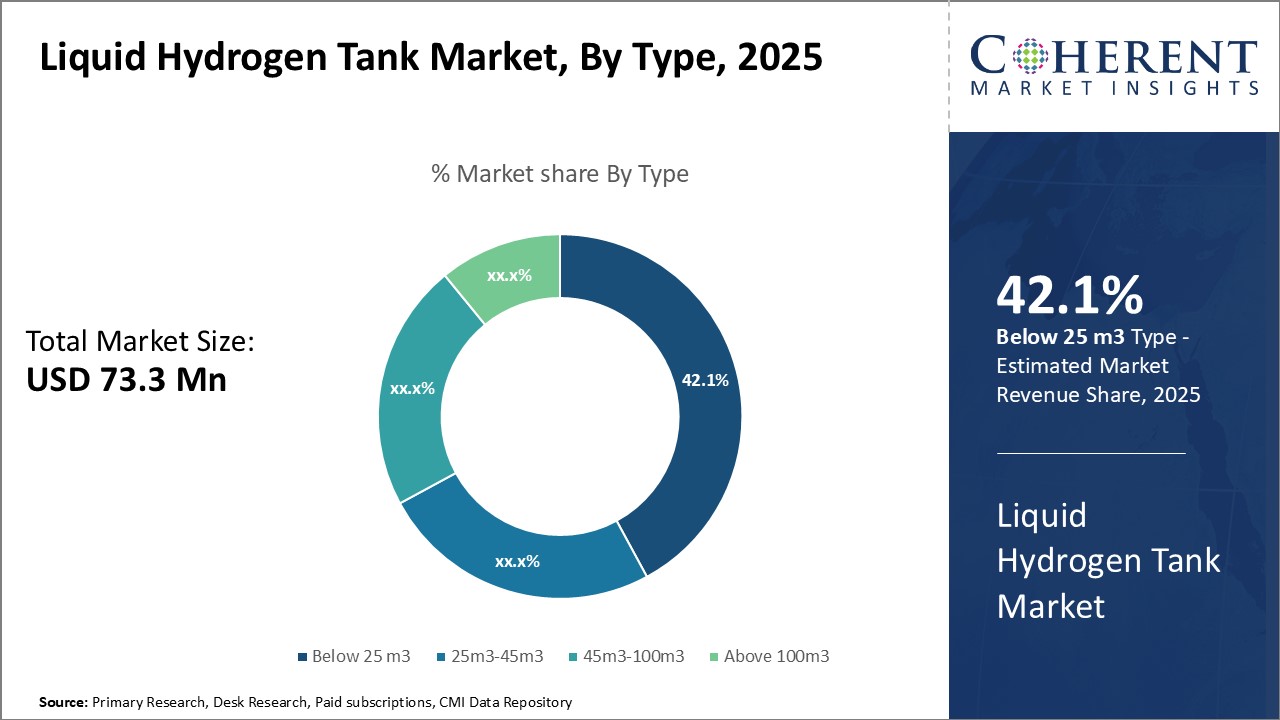
Liquid Hydrogen Tank Market Insights, By Type
In terms of type, below 25 m³ segment is estimated to contribute the highest market share of 43.1% in 2026, owing to its wide range of applications. This segment can witness growth due to its versatility across various industries. Tanks with capacity below 25 m³ are ideal for applications requiring hydrogen storage and transportation in smaller quantities, making them highly applicable in numerous sectors, thus, driving boosting demand.
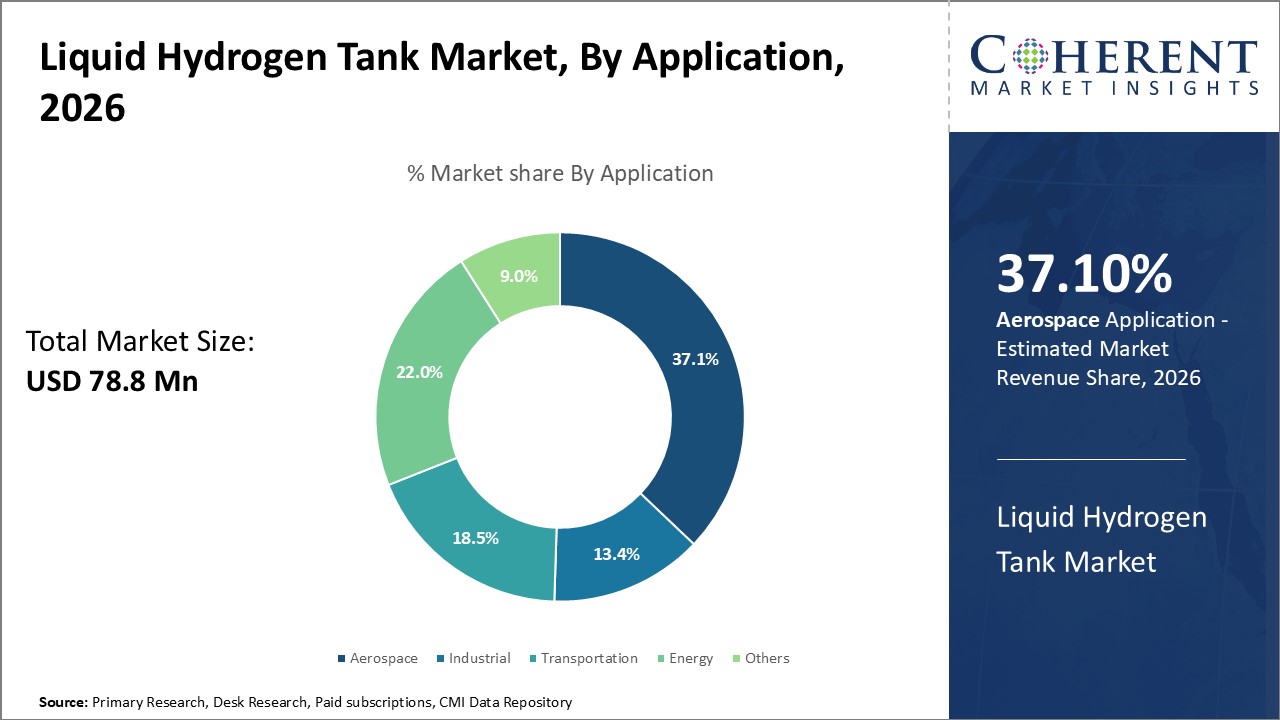
Liquid Hydrogen Tank Market Insights, By Application
In terms of application, aerospace segment is estimated to contribute the highest market share of 37.1% in 2026, owing to its crucial role in the industry. The aerospace sector holds the largest share in the global liquid hydrogen tank market. This dominance is due to the critical role of liquid hydrogen as both a fuel and coolant in aerospace propulsion systems. Most aerospace companies use liquid hydrogen as the main fuel for rockets and spacecraft.
Regional Insights
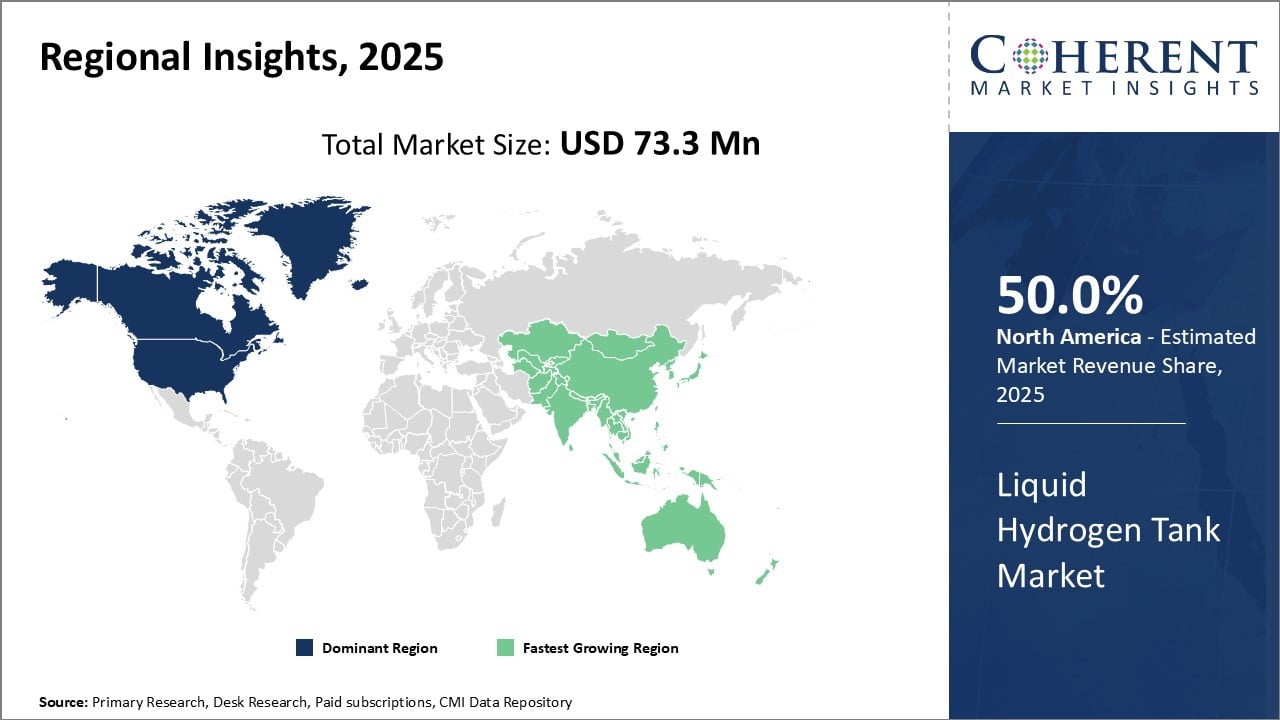
Dominating Region- North America
North America is projected to lead the liquid hydrogen tank market in 2026, with an estimated market share of 50.0%. North America liquid hydrogen tank market growth can be attributed to strong government support for clean energy initiatives such as U.S. Department of Energy's (DOE) Hydrogen Shot Initiative and increasing investments in hydrogen infrastructure by major players. Countries like the U.S. and Canada have ambitious targets for deploying hydrogen technologies and expanding the existing network.
Fastest-Growing Region- Asia Pacific
Asia Pacific region has the highest rate of growth, led by China and Japan's efforts to build a hydrogen economy to achieve sustainability targets and lessen reliance on fossil fuels. Significant investments are being put in place to augment local manufacturing capacity and increase hydrogen use across industries in the coming years.
Liquid Hydrogen Tank Market Dominating Countries
United States Liquid Hydrogen Tank Market Analysis and Trend
The U.S. is promoting hydrogen uptake with huge federal and state incentives, mainly focusing on clean energy and transportation industries. The Biden administration focus on clean energy and decarbonization has encouraged enormous investment in hydrogen infrastructure, such as liquid hydrogen storage facilities.
China Liquid Hydrogen Tank Market Analysis and Trend
China is a major player in the hydrogen sector, with major investments in green hydrogen production. The government has set favorable targets for reducing carbon emissions, including increasing the production of hydrogen and infrastructure. Liquid hydrogen storage tanks will be critical as China increases its fleet of hydrogen fuel cell vehicles and constructs industrial applications for hydrogen. China is already building scale-hydrogen projects in key industrial regions.
Japan Liquid Hydrogen Tank Market Analysis and Trend
Japan is a global leader in hydrogen technology and is investing heavily in hydrogen infrastructure, particularly for use in transportation and energy purposes. The government of Japan has introduced policies aimed at promoting the adoption of hydrogen, which will propel the liquid hydrogen tank solution market to grow.
For instance, Japan was the first to release a national hydrogen strategy, as reported by the DLA Piper in May 2026, and leads on this front by promoting development of its local hydrogen market and international supply chains. Japan's latest update to the strategy in 2023 aims at producing 12 million tons of low-carbon hydrogen by 2040.
Canada Liquid Hydrogen Tank Market Analysis and Trend
Canada has been making energetic investments in hydrogen as a clean fuel, with various plans to increase hydrogen production and infrastructure. As of August 2024, there is a major movement towards the development of infrastructure for hydrogen storage and distribution, especially in Alberta.
India Liquid Hydrogen Tank Market Analysis and Trend
India has been making progress in developing its hydrogen strategy, with the government recently unveiling the National Hydrogen Mission to boost green hydrogen production. India's market for liquid hydrogen tank will benefit from partnerships with global players like INOXCVA, which have already contributed to India's hydrogen projects.
Market Concentration and Competitive Landscape
Market Report Scope
Liquid Hydrogen Tank Market Report Coverage
| Report Coverage | Details | ||
|---|---|---|---|
| Base Year: | 2025 | Market Size in 2026: | USD 78.8 Mn |
| Historical Data for: | 2020 To 2024 | Forecast Period: | 2026 To 2033 |
| Forecast Period 2026 to 2033 CAGR: | 7.5% | 2033 Value Projection: | USD 130.7 Mn |
| Geographies covered: |
| ||
| Segments covered: |
| ||
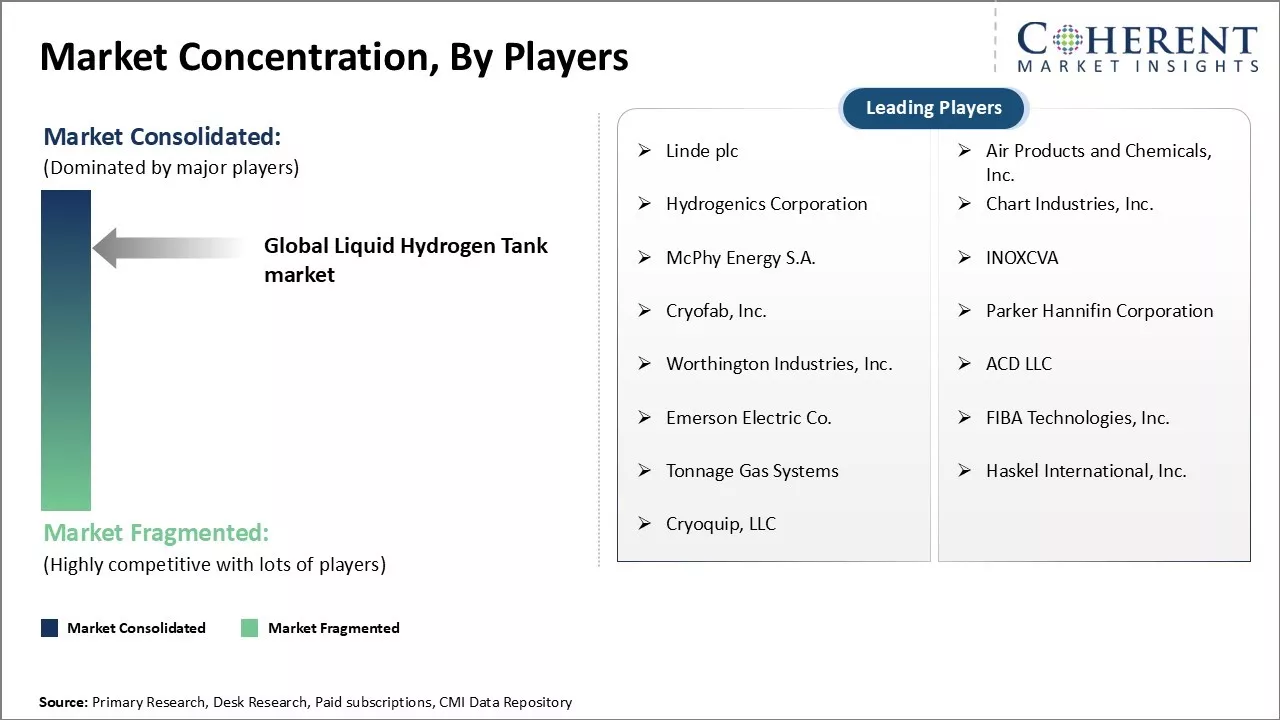
| Companies covered: | Linde plc, Air Products and Chemicals, Inc., Hydrogenics Corporation, Chart Industries, Inc., McPhy Energy S.A., INOXCVA, Cryofab, Inc., Parker Hannifin Corporation, Worthington Industries, Inc., ACD LLC, Emerson Electric Co., FIBA Technologies, Inc., Tonnage Gas Systems, Haskel International, Inc., Cryoquip, LLC | ||
| Growth Drivers: |
| ||
| Restraints & Challenges: |
| ||
Liquid Hydrogen Tanks Market Driver
Growing demand for hydrogen as a clean energy source in various applications
As awareness regarding greenhouse gas emissions and global warming rises worldwide, there will be huge demand for alternative clean energy sources. Hydrogen is emerging as one of the most viable clean energy options for various industries and applications. Being the lightest and most abundant element in the universe, hydrogen has a high energy content by weight and produces only water vapor when used as a fuel.
For instance, In March 2024, Australian company Provaris Energy commenced the fabrication of its H2Neo prototype tank, a novel hydrogen storage solution designed for bulk-scale transportation. The project aims to establish a cost-effective hydrogen supply chain in Europe, with testing and certification expected by mid-2024. Upon successful validation, Provaris plans to produce smaller-scale hydrogen tanks in Norway starting late 2024, catering to applications such as maritime bunkering and industrial storage.
Liquid Hydrogen Tanks Market Opportunity
Technological advancements in hydrogen storage solutions improving efficiency and safety
Technological advancements are being made to improve the efficiency and safety of hydrogen storage solutions, representing an opportunity for growth in the global liquid hydrogen tank market. Researchers are working on developing more efficient methods of hydrogen production that reduce energy requirements. New materials with enhanced storage capacities are also being explored to allow for smaller, lighter weight tanks that lower transportation costs. Advanced insulation technologies help minimize boil-off in cryogenic tanks as well. Furthermore, innovations in metal hydride storage and sorbent-based storage media offer promising alternatives to conventional tank designs.
Liquid Hydrogen Tank Industry News
- In May 2024, Plug Power, which is among the largest hydrogen fuel cell system providers, was issued a $1.66 billion loan guarantee by the U.S. Department of Energy. The money goes toward the construction of between six green hydrogen manufacturing plants in the United States, with one being in Graham, Texas.
- In August 2024, Linde plc announced a significant expansion of its clean hydrogen ambitions with a US$ 2 billion investment in a new Alberta, Canada production facility. The state-of-the-art plant will supply hydrogen to Dow's Path2Zero complex and other customers, with an impressive carbon capture and sequestration capability of over 2 million metric tons annually.
Key Takeaways from Analyst
- Growth in the global liquid hydrogen tank market is fueled by increasing demand for clean energy. Growing interest in the development of a hydrogen economy to store and transport green hydrogen generates more investment in sophisticated liquid hydrogen storage technologies. The aerospace industry's interest in creating hydrogen-powered aircraft and rockets can also increase prospects for the manufacturers of liquid hydrogen tanks in the near term.
- North America will be the leading region in the market during the forecast period driven by high government support for hydrogen infrastructure development in nations such as U.S. and Canada. Asia Pacific region will also emerge as a high growth market for liquid hydrogen tanks due to China's strengthening push for renewable energy and fuel cell vehicles.
- High production costs associated with cryogenic tanks requiring advanced materials can also hamper the market growth. High infrastructure investment needs for widespread distribution of liquid hydrogen also pose challenges. Safety concerns around flammability of hydrogen is also a restraint particularly for broader commercial usage. Identification of low-cost cryogenic materials can help lower production costs in the long-run.
- Increasing number of pilot programs to test liquid hydrogen supply chains will assist in solving infrastructure issues step by step. Standardization of safety procedures will assist in dispelling fears, broadening commercial uses in the long run. Collaborations among tank suppliers and consumers will play an important role in boosting adoption.
Market Segmentation
- Type Insights (Revenue, USD Mn, 2026 - 2033)
- Below 25 m³
- 25m³-45m³
- 45m³-100m³
- Above 100m³
- Application Insights (Revenue, USD Mn, 2026 - 2033)
- Aerospace
- Industrial
- Transportation
- Energy
- Others
- Regional Insights (Revenue, USD Mn, 2026 - 2033)
- North America
- U.S.
- Canada
- Latin America
- Brazil
- Argentina
- Mexico
- Rest of Latin America
- Europe
- Germany
- U.K.
- Spain
- France
- Italy
- Russia
- Rest of Europe
- Asia Pacific
- China
- India
- Japan
- Australia
- South Korea
- ASEAN
- Rest of Asia Pacific
- Middle East
- GCC Countries
- Israel
- Rest of Middle East
- Africa
- South Africa
- North Africa
- Central Africa
- Key Players Insights (Revenue, USD Mn, 2021 - 2033)
- Linde plc
- Air Products and Chemicals, Inc.
- Hydrogenics Corporation
- Chart Industries, Inc.
- McPhy Energy S.A.
- INOXCVA
- Cryofab, Inc.
- Parker Hannifin Corporation
- Worthington Industries, Inc.
- ACD LLC
- Emerson Electric Co.
- FIBA Technologies, Inc.
- Tonnage Gas Systems
- Haskel International, Inc.
- Cryoquip, LLC
Sources
Primary Research interviews
- Gardner Cryogenics (Cryogenic storage solutions provider)
- Chart Industries (Hydrogen infrastructure specialists)
- Kawasaki Heavy Industries (Liquid hydrogen transportation experts)
- Linde Engineering (Cryogenic tank manufacturers)
- Others
Databases
- Intel Market Research Liquid Hydrogen Tank Reports
- Valuates Reports - Hydrogen Storage Market Data
- TechSci Research Liquid Hydrogen Tank Analysis
- Others
Magazines
- Hydrogen Energy News
- Cryogenic Industry Magazine
- Sustainable Energy Review
- Advanced Materials Weekly
- Others
Journals
- International Journal of Hydrogen Energy
- Journal of Energy Storage
- Cryogenics (Elsevier)
- Others
Newspapers
- Financial Times Energy Sector Analysis
- Reuters Sustainable Business Reports
- Bloomberg New Energy Finance
- The Wall Street Journal Commodities Section
- Others
Associations
- International Hydrogen Fuel Cell Association (IHFCA)
- Hydrogen Council
- International Energy Agency Hydrogen TCP
- International Cryogenic Engineering Committee
- Others
Public Domain sources
- U.S. Department of Energy Hydrogen Program
- European Union Hydrogen Strategy Documents
- National Renewable Energy Laboratory (NREL) Reports
- World Resources Institute Climate Initiatives
- Others
Proprietary Elements
- CMI Data Analytics Tool
- Proprietary CMI Existing Repository of information for last 8 years
Get access to 250+ pages report
Every segment, forecast, competitor profile and data table behind the analysis above — available for instant download.
- ESOMAR Member
- ISO 9001:2015 Certified
- D-U-N-S Registered
- GDPR & CCPA Compliant
Missing comfort of reading report in your local language? Find your preferred language:
Transform your Strategy with Exclusive Trending Reports
Frequently Asked Questions
The Liquid Hydrogen Tank Market size is estimated to be valued at USD 78.8 Mn in 2026, and is expected to reach USD 130.7 Mn by 2033.
The CAGR of the Liquid Hydrogen Tank Market is projected to be 7.5% from 2026 to 2033.
Growing demand for hydrogen as a clean energy source in various applications and increasing investments drive growth in hydrogen hydrogen tank market.
High costs associated with the production and transportation of liquid hydrogen and safety concerns related to the storage and handling of liquid hydrogen are the major factors hampering the growth of global liquid hydrogen tank industry.
In terms of type, below 25 m³ segment is estimated to dominate the market in 2026.
Linde plc, Air Products and Chemicals, Inc., Hydrogenics Corporation, Chart Industries, Inc., McPhy Energy S.A., INOXCVA, Cryofab, Inc., Parker Hannifin Corporation, Worthington Industries, Inc., ACD LLC, Emerson Electric Co., FIBA Technologies, Inc., Tonnage Gas Systems, Haskel International, Inc., Cryoquip, LLC are the major players.
North America is expected to lead the global liquid hydrogen tank industry in 2026.