

Global Luxury Handbags Market Size and Forecast – 2026-2033
The global luxury handbags market is estimated to be valued at USD 29.30 Bn in 2026 and is expected to reach USD 45.24 Bn by 2033, exhibiting a compound annual growth rate (CAGR) of 6.4% from 2026 to 2033.
Key Takeaways of the Luxury Handbags Market
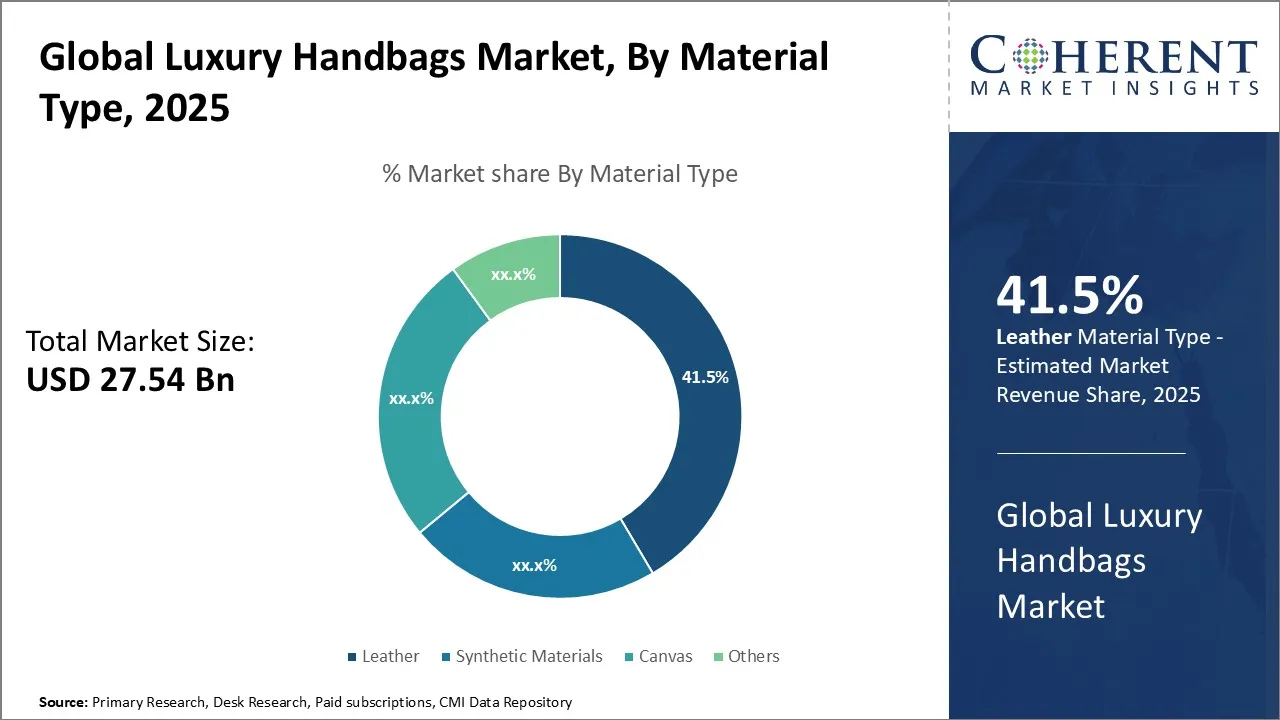
- The leather segment is projected to account for 42.5 % of the market share in 2026.
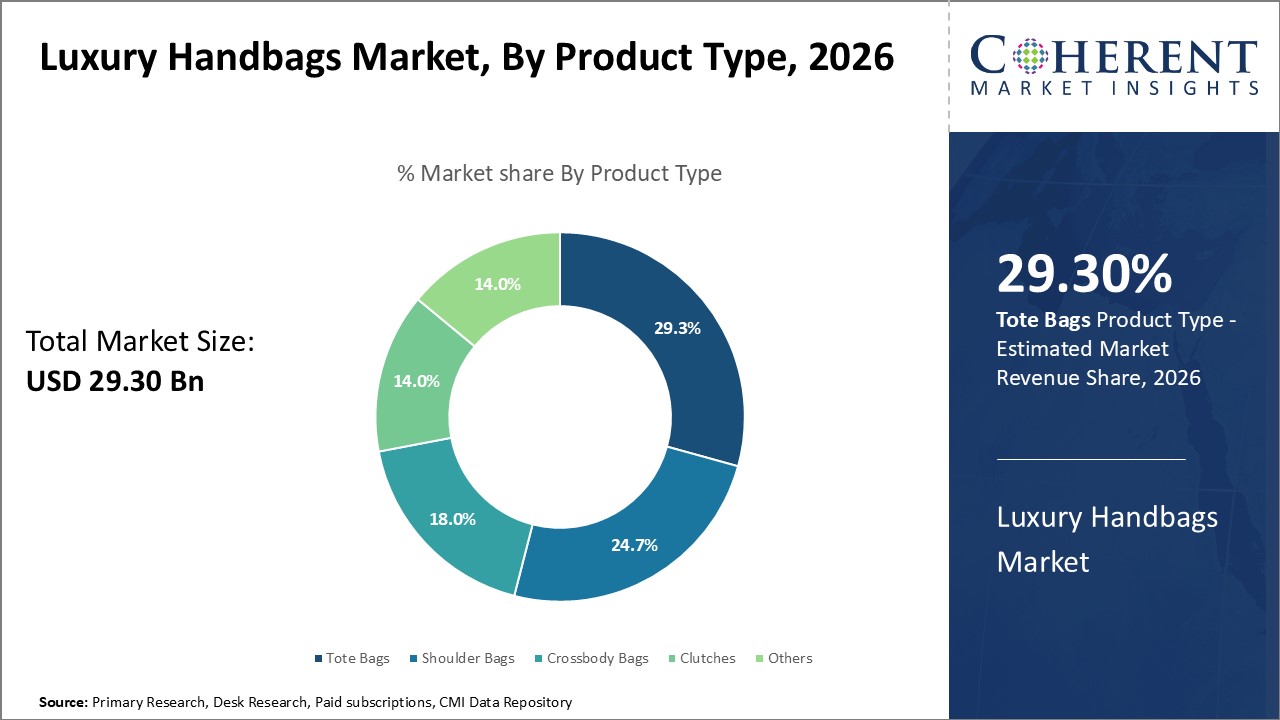
- The tote bags segment is expected to capture 29.3 % share in 2026.
- The online retail segment is projected to hold 33.1 % share in 2026.
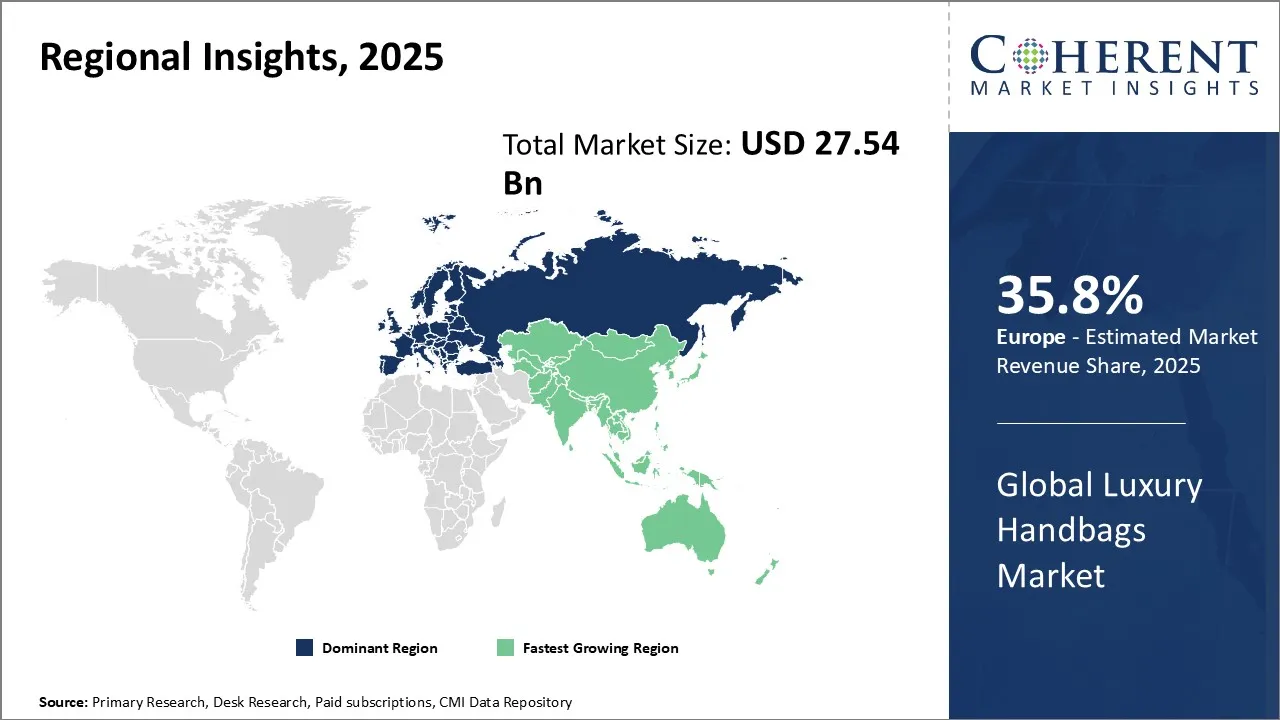
- Europe is expected to lead the global luxury handbags market in 2026 with a 35.8% share. Asia Pacific, with an estimated share of 22.5% in 2026, is expected to be the fastest-growing region.
Market Overview
In terms of market trends, the luxury handbags industry is witnessing a significant shift towards sustainable and ethically sourced materials, as environmentally conscious consumers demand transparency and eco-friendly products. Additionally, technological innovations such as augmented reality for virtual try-ons and personalized marketing strategies are enhancing customer experiences.
Tote bags continue to stand out as a popular category within the segment, appealing to consumers who prioritize functionality alongside luxury. Collaborations between luxury brands and popular designers or celebrities continue to captivate the affluent the market, further fueling the demand and brand loyalty in this competitive sector. Moreover, the rising the demand for premium luggage highlights consumers’ growing interest in travel-ready luxury accessories that combine style, durability, and exclusivity.
Current Events and Its Impact
Current Events | Description and its Impact |
U.S. Regulators Block Tapestry–Capri Deal |
|
China’s Hainan Pivot: Customs Closure & Zero Tariffs vs. Recent Slump |
|
Segmental Insights
- Current Industry Events of 2026
- Market Size Estimation
- Regional Breakdown
- Competitive Landscape
- Customer Intelligence
- Segmental Analysis
- Pricing Analysis
- Key Market Drivers, Challenges & Future Trends
- Customized Insights Section
Luxury Handbags Market Insights, by Material Type – Leather Segment Dominates the Market Due to its Premium Appeal and Durability
The leather segment is expected to hold 42.5% share in 2026, due to its unmatched combination of quality, durability, and symbolic value. One of the main drivers behind leather's prominence is its long-standing association with luxury, craftsmanship, and timeless elegance. Consumers purchasing luxury handbags often seek materials that not only offer aesthetic appeal but also stand the test of time. Leather delivers on both counts, providing a supple and sophisticated texture that ages gracefully, developing a unique patina that enhances the bag’s exclusivity over time.
For instance, Louis Vuitton’s Capucines and Chanel’s Classic Flap Bag collections, both crafted from high-quality calfskin and lambskin leather, continue to remain flagship products and consistent best-sellers.
Luxury Handbags Market Insights, by Product Type – Tote Bags Segment Dominates the Market Due to Functionality & Versatility
The tote bags segment is projected to account for 29.3% share in 2026, fueled by their amalgamation of style, versatility, and practicality. Tote bags appeal to consumers who prioritize everyday functionality without sacrificing the aesthetic and status associated with luxury brands. Their spacious interiors allow users to carry essentials ranging from wallets and cosmetics to tablets and documents, catering to the dynamic lifestyles of working professionals, travelers, and style-conscious individuals alike.
The rise of casual yet chic fashion trends has positioned tote bags as a wardrobe staple that transitions seamlessly from office environments to social outings. This adaptability aligns well with consumer demand for handbags that can serve multiple purposes, thereby justifying the premium prices characteristic of luxury products. The size and open-top design of tote bags provide easy accessibility, enhancing convenience without compromising on elegance.
Luxury Handbags Market Insights, by Distribution Channel - Online Retail Segment Dominates the Market Due to Rising Digital Luxury Adoption Among Affluent Shoppers
The online retail segment is expected to capture 33.1% share in 2026. Several factors contribute to this shift, chief among them being the increasing comfort and sophistication of digital shopping experiences catered to luxury consumers. E-commerce platforms now offer meticulously curated selections, high-resolution imagery, and virtual try-on technologies that replicate the immersive in-store experience, thereby reducing traditional barriers associated with purchasing high-end handbags online.
Convenience remains a paramount driver for online retail success. Luxury consumers, often time-constrained and globally dispersed, value the ability to shop from their preferred brands anytime and anywhere. Online platforms provide a wide assortment across styles, materials, and price points that physical stores may not always carry, enabling customers to make informed choices with access to detailed product information, customer reviews, and authenticity guarantees.
Regional Insights
Europe Luxury Handbags Market Analysis and Trends
The Europe region is projected to lead the market with a 35.8% share in 2026, fueled by the long-standing heritage of luxury fashion houses and craftsmanship excellence. The region houses some of the world’s most prestigious luxury brands such as Louis Vuitton, Chanel, Gucci, and Hermès, which have historically shaped global trends and consumer preferences.
Europe’s well-established fashion ecosystem, robust infrastructure for luxury retail, and strong protection of intellectual property rights help sustain its leading position. Additionally, favorable government policies promoting luxury exports and high consumer spending power support market stability. The presence of iconic fashion capitals like Paris, Milan, and London attracts international clientele and encourages innovation and exclusivity in handbag designs. The mature luxury market combines heritage appeal with modern retail channels, including flagship stores, luxury department stores, and expanding digital platforms, ensuring continued leadership.
Asia Pacific Luxury Handbags Market Analysis and Trends
The Asia Pacific region is expected to exhibit the fastest growth in the market contributing 22.5% share in 2026, driven by rising disposable incomes, increasing urbanization, and a growing aspirational middle class. Countries such as China, Japan, South Korea, and India are pivotal growth hubs due to expanding luxury retail infrastructure and evolving consumer behavior inclined towards premium and exclusive products. Government initiatives encouraging luxury investment and easing import tariffs in certain countries enhance accessibility to international brands.
The fast adoption of e-commerce and social media marketing amplifies brand outreach and engagement, particularly among younger consumers. Major global brands like Prada, Dior, and Fendi are expanding their footprints through flagship stores and collaborations with local designers. The region’s dynamic market is also propelled by growing travel retail demand and a blossoming local luxury manufacturing ecosystem in select countries.
Global Luxury Handbags Market Outlook for Key Countries
China Luxury Handbags Market Analysis and Trends
China luxury handbags market is a vital force within the Asia Pacific region, with luxury handbags becoming a symbol of status and personal style among affluent consumers. The country benefits from increasing urban wealth, widespread digital-savvy customers, and strong social media influence that facilitate direct consumer-brand interactions. Luxury giants including Louis Vuitton, Gucci, and Hermès have established extensive retail networks and localized marketing strategies tailored to Chinese tastes.
Additionally, government efforts to clamp down on counterfeit products and support authentic luxury retail help maintain brand prestige. The influx of international tourists prior to pandemic constraints had also contributed to significant luxury handbag sales via duty-free outlets.
France Luxury Handbags Market Analysis and Trends
France continues to lead Europe luxury handbags market, home to revered brands like Louis Vuitton, Chanel, and Dior that define the global standard for luxury leather goods. The French market is characterized by artisanal craftsmanship combined with innovation in design and sustainability initiatives gaining importance. Government policies supporting creative industries and stringent regulations on manufacturing standards ensure quality and uphold luxury credentials. Paris Fashion Week, a major event, serves as a global platform attracting buyers and media attention, boosting both domestic and international sales. French luxury houses are also investing in digital transformation and experiential retail to engage a new generation of consumers.
U.S. Luxury Handbags Market Analysis and Trends
The U.S. luxury handbags market is distinguished by a blend of homegrown luxury brands such as Coach and Michael Kors alongside dominant European labels. The U.S. consumer base exhibits high brand awareness, extensive e-commerce adoption, and significant discretionary spending on luxury accessories. The country’s diverse demographics and retail innovation foster a dynamic environment for luxury handbags, with growth in outlet stores and premium department stores fueling distribution. Government trade policies and intellectual property protections help maintain market integrity. Additionally, collaborations with celebrities and influencers are influential marketing tactics employed by companies like Tory Burch and Kate Spade to engage American consumers.
Japan Luxury Handbags Market Analysis and Trends
Japan luxury handbags market is fueled by sophisticated consumer preferences, valuing timeless elegance, craftsmanship, and exclusivity. Brands such as Prada, Louis Vuitton, and Coach enjoy strong brand loyalty and steady demand among affluent and middle-class shoppers. Japan’s retail environment is marked by high service standards, boutique stores, and department store presence that appeal to luxury buyers. Government support towards tourism and easing of visa regulations contributes positively by attracting international shoppers. Moreover, Japanese consumers place significant emphasis on limited editions and seasonal collections, prompting global brands to customize offerings. Local brands focusing on quality and heritage also gain traction.
India Luxury Handbags Market Analysis and Trends
India luxury handbags market is emerging rapidly, supported by increasing wealth concentration and evolving consumer aspirations toward premium lifestyles. International luxury brands like Gucci, Louis Vuitton, and Burberry are expanding their footprint, especially in metropolitan areas like Mumbai, Delhi, and Bengaluru. Government initiatives to boost retail investment and simplify import regulations are gradually improving market accessibility. The rise of digital platforms and social media marketing plays a crucial role in shaping modern luxury consumption while propping up domestic luxury brands.
Consumer Buying Behavior Analysis for the Global Luxury Handbags Market
- Brand Recognition and Status: Consumers gravitate towards iconic luxury brands for their reputation, exclusivity, and status-symbol appeal. High brand loyalty is especially strong among affluent millennials and Gen Z, who view ownership as both cultural distinction and a mark of personal success.
- Investment and Resale Value: Many luxury handbags are viewed as assets that retain or appreciate in value over time. The booming second-hand market—supported by platforms like The RealReal and Vestiaire Collective—encourages buyers to consider resale potential and collectible editions when making a purchase.
- Influencer and Celebrity Impact: Social media influencers, celebrities, and fashion icons heavily influence desirability, especially for limited editions or newly launched styles promoted online.
- Digital and E-commerce Experience: The rise of online stores, virtual showrooms, AR try-ons, and personalized AI shopping experiences make digital engagement central to the buying journey for luxury handbags. Direct-to-consumer and exclusive online drops are especially attractive to tech-savvy, younger consumers.
Market Players, Key Development, and Competitive Intelligence
Key Developments
- In May 2025, Coats Footwear introduced an industry-first innovation with the launch of its “bag in a box” kit designed for luxury handbag production. The unique kit simplifies the sourcing process by providing all essential structural components for handbags and accessories in a single package, streamlining manufacturing and enabling greater efficiency for designers and producers.
- In March 2025, Miraggio, a leading handbag brand, expanded its portfolio into the handbag accessories segment with the launch of its Bag Charms Collection. Aligning with the growing trend of bag personalization, the collection provides consumers with a stylish and playful way to elevate their everyday accessories, reinforcing Miraggio’s position in the fashion-forward luxury space.
Top Strategies Followed by Global Luxury Handbags Market Players
- Established players, often recognized as industry giants, invest heavily in research and development (R&D) to innovate high-performance products that blend craftsmanship with cutting-edge technology. Their substantial R&D expenditure enables them to maintain a competitive edge by introducing novel materials, enhancing durability, and optimizing design aesthetics that cater to evolving customer preferences.
- For example, Louis Vuitton, pioneered the use of lightweight yet durable coated canvas and smart luggage with embedded tracking devices, while Hermès continues to experiment with exotic leathers and eco-conscious tanning methods. Their substantial R&D spending allows them to maintain a competitive edge by introducing novel materials, enhancing durability, and refining design aesthetics to match evolving customer preferences.
- In contrast, mid-level players in the luxury handbags market emphasize creating cost-effective solutions that strike a balance between quality and affordability. These brands are particularly attuned to the needs of price-sensitive consumers who desire the allure and functionality of luxury products without the premium price tag that accompanies high-end labels. To achieve this, mid-level brands strategically optimize their manufacturing processes and supply chains to reduce costs while maintaining acceptable quality standards.
- For instance, Coach, optimized its supply chain by introducing modern leather alternatives and localized production strategies, making premium-quality bags more accessible to aspirational buyers.
- Small-scale players, often emerging boutiques and niche brands, adopt a distinctly agile and innovative approach to gain a foothold in the competitive luxury handbags market. Their primary strategy revolves around carving out niches by focusing on specialized features or innovative product concepts that address specific consumer demands unmet by larger competitors.
- For example, Cult Gaia’s Ark Bag became a social media sensation due to its unconventional bamboo structure, while Mansur Gavriel gained traction with minimalist bucket bags crafted from vegetable-tanned leather.
Market Report Scope
Luxury Handbags Market Report Coverage
| Report Coverage | Details | ||
|---|---|---|---|
| Base Year: | 2025 | Market Size in 2026: | USD 29.30 Bn |
| Historical Data for: | 2020 To 2024 | Forecast Period: | 2026 To 2033 |
| Forecast Period 2026 to 2033 CAGR: | 6.4% | 2033 Value Projection: | USD 45.24 Bn |
| Geographies covered: |
| ||
| Segments covered: |
| ||
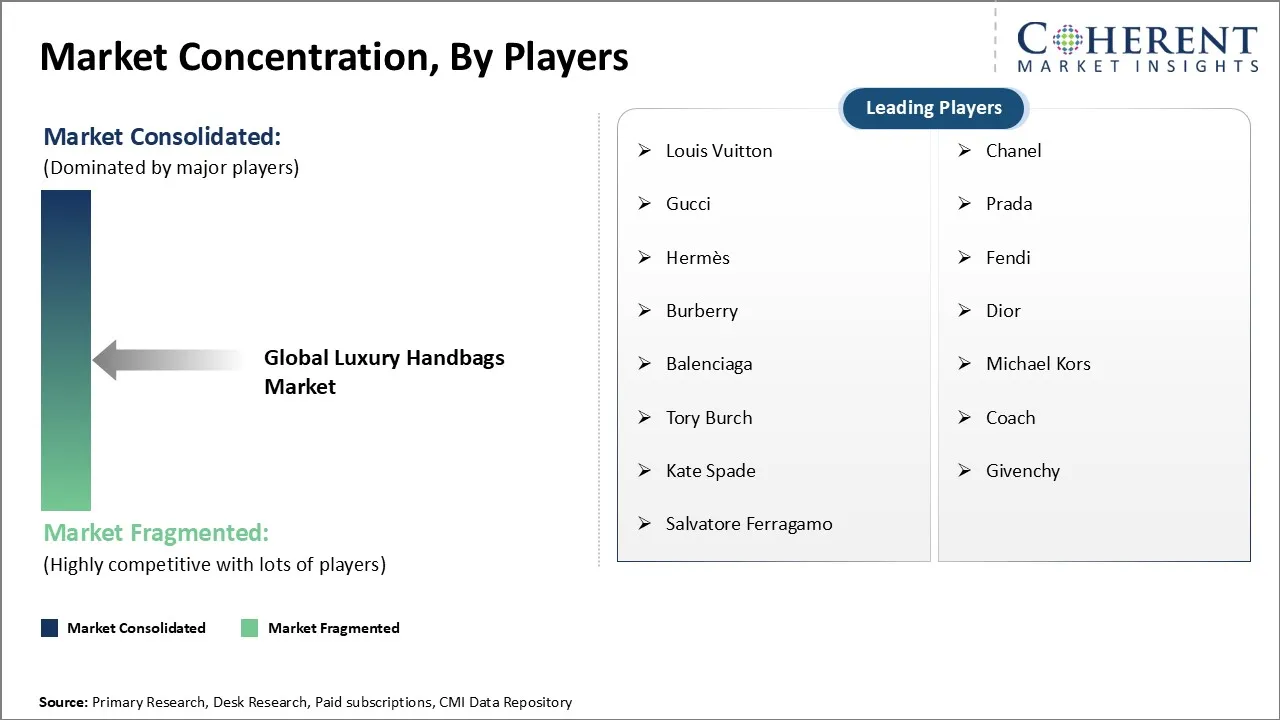
| Companies covered: | Louis Vuitton, Chanel, Gucci, Prada, Hermès, Fendi, Burberry, Dior, Balenciaga, Michael Kors, Tory Burch, Coach, Kate Spade, Givenchy, and Salvatore Ferragamo | ||
| Growth Drivers: |
| ||
| Restraints & Challenges: |
| ||
Luxury Handbags Market Dynamics
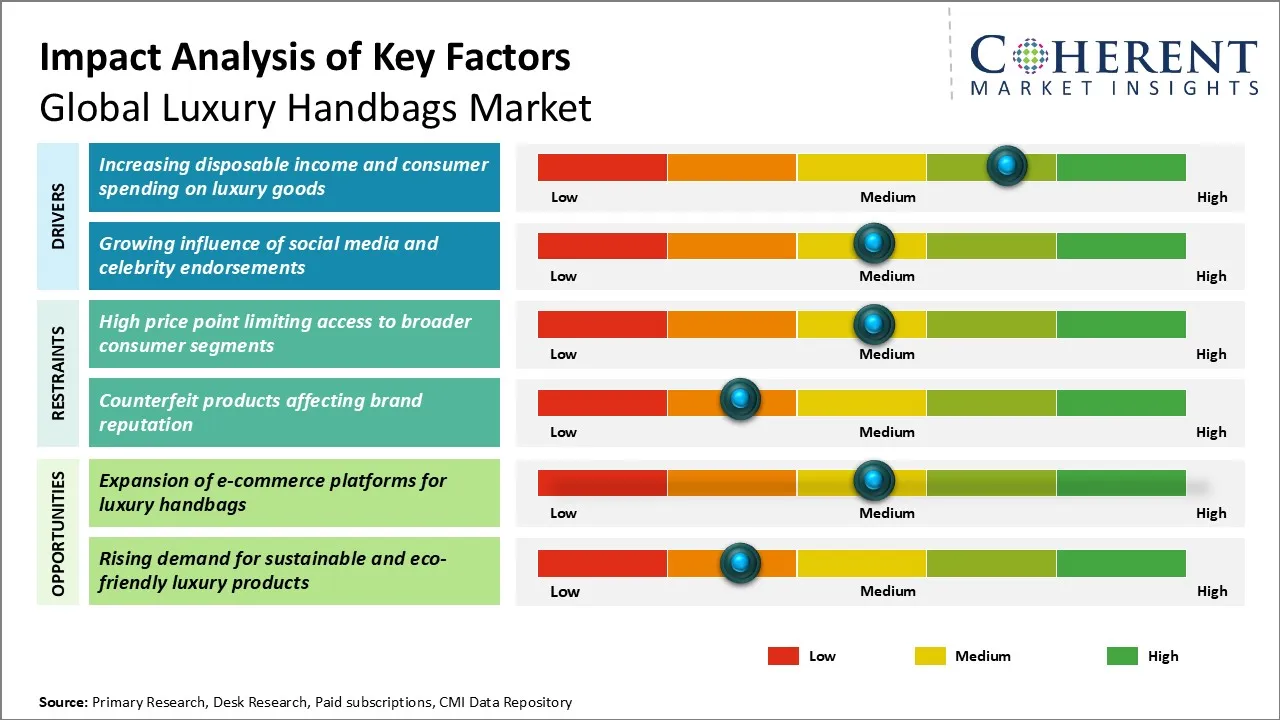
Luxury Handbags Market Driver - Increasing Disposable Income and Consumer Spending on Luxury Goods
The growth of the global luxury handbags market is significantly propelled by increasing disposable incomes among affluent and aspirational consumers, especially in emerging economies. As individuals experience higher earnings and improved financial stability, their willingness to spend on premium and luxury products intensifies. This rise in purchasing power enables consumers to prioritize high-quality, branded handbags as symbols of status, personal achievement, and fashion expression.
For instance, in countries like China and India, a rapidly expanding middle class with rising disposable income is fueling strong demand for luxury handbags. According to Bain & Company, by 2030, Gen Z will account for 25% to 30% of luxury market purchases, while Millennials will account for 50% to 55%, giving luxury brands motivation to understand how to appeal to them.
Luxury Handbags Market Opportunity - Expansion of E-commerce Platforms for Luxury Handbags
The expansion of e-commerce platforms presents a significant opportunity for the global luxury handbags market by enabling brands to reach a broader, more diverse customer base beyond traditional brick-and-mortar stores. Increasing internet penetration, smartphone adoption, and the growing trend of online shopping, especially among younger, tech-savvy consumers, have accelerated digital sales channels in the luxury segment. Luxury handbag brands can leverage advanced e-commerce capabilities such as virtual try-ons, augmented reality, and personalized recommendations to enhance the consumer shopping experience and build stronger brand loyalty.
For instance, platforms like Farfetch, Net-a-Porter, and MyTheresa have emerged as global leaders in luxury e-commerce, offering curated collections from top brands such as Gucci, Prada, and Burberry, thereby expanding accessibility for international consumers. In 2024, Farfetch reported that nearly 45% of its luxury handbag sales came from emerging markets, highlighting how digital channels are reshaping geographic reach.
Analyst Opinion (Expert Opinion)
- The global luxury handbags market is poised for substantial growth, driven by shifting consumer preferences towards investment pieces and sustainability. Insights from the Paris Fashion Week (2023) and the Luxury Goods Conference (2022) revealed key trends, with brands like Gucci and Chanel leading the charge in innovative designs and eco-conscious collections.
- Gucci's recent launch of a limited-edition collection crafted from recycled materials exemplifies a strategic response to the growing the demand for sustainable luxury. Discussions at these events highlighted the importance of storytelling and brand heritage in attracting discerning consumers who value authenticity. However, challenges such as counterfeiting and the impact of economic fluctuations were noted as potential threats. Companies that prioritize transparency in their supply chains and engage in direct-to-consumer strategies will likely enhance brand loyalty.
- Furthermore, leveraging social media to create immersive shopping experiences can attract younger demographics. Ultimately, the luxury handbags market's trajectory will hinge on its ability to innovate while maintaining exclusivity and addressing evolving consumer expectations for environmental responsibility and unique craftsmanship in their purchases.
Speak to the analyst
Want personalized insights?
Take the findings above to one of our principal consultants, or have the report rebuilt around the segments, geographies and competitors you actually track.
Market Segmentation
- Material Type Insights (Revenue, USD Bn, 2021 - 2033)
- Leather
- Synthetic Materials
- Canvas
- Others
- Product Type Insights (Revenue, USD Bn, 2021 - 2033)
- Tote Bags
- Shoulder Bags
- Crossbody Bags
- Clutches
- Others
- Distribution Channel Insights (Revenue, USD Bn, 2021 - 2033)
- Online Retail
- Department Stores
- Brand Boutiques
- Specialty Stores
- Others
- Regional Insights (Revenue, USD Bn, 2021 - 2033)
- North America
- U.S.
- Canada
- Latin America
- Brazil
- Argentina
- Mexico
- Rest of Latin America
- Europe
- Germany
- U.K.
- Spain
- France
- Italy
- Russia
- Rest of Europe
- Asia Pacific
- China
- India
- Japan
- Australia
- South Korea
- ASEAN
- Rest of Asia Pacific
- Middle East
- GCC Countries
- Israel
- Rest of Middle East
- Africa
- South Africa
- North Africa
- Central Africa
- North America
- Key Players Insights
- Louis Vuitton
- Chanel
- Gucci
- Prada
- Hermes
- Fendi
- Burberry
- Dior
- Balenciaga
- Michael Kors
- Tory Burch
- Coach
- Kate Spade
- Givenchy
- Salvatore Ferragamo
Sources
Primary Research Interviews
- Creative Director – Leading Luxury Handbag Brand
- Head of Merchandising – Global Fashion Retail Chain
- Procurement Manager – Department Store Chain (Luxury Accessories Division)
- Sustainability Officer – Luxury Goods Certification Authority
Stakeholders
- Manufacturers
- End Use Sectors
- Fashion Houses & Luxury Brands
- Premium Department Stores & Specialty Boutiques
- Online Luxury Retail Platforms
- Regulatory & Certification Bodies
- E-commerce & Omnichannel Retailers
- Technology Integration Players: AR/VR and AI personalization providers for luxury retail
Databases
- UN Comtrade Database – Global trade data on leather goods and accessories
- Eurostat Database – EU trade and consumption of handbags
Magazines
- Vogue Business – Trends and strategies in luxury fashion and handbags
- Luxury Daily – Updates on luxury brands and retail strategies
- Business of Fashion (BoF) – Market dynamics and innovations in the fashion/luxury sector
- WWD (Women’s Wear Daily) – Industry news, brand launches, and handbag trends
- Harper’s Bazaar Business of Luxury – Consumer trends and luxury lifestyle insights
Journals
- Journal of Fashion Marketing and Management – Studies on luxury consumer behavior
- International Journal of Retail & Distribution Management – Luxury retailing and distribution strategies
- Luxury Research Journal – Brand equity, consumer psychology, and market segmentation in luxury goods
- Fashion Theory Journal – Cultural and design perspectives of luxury fashion
- Journal of Consumer Research – Insights on luxury consumption patterns
Newspapers
- The Financial Times (FT) – How To Spend It – Luxury goods market and retail trends
- The New York Times – Style Section – Global luxury consumption and brand expansion
- The Guardian – Lifestyle & Fashion – Emerging markets and consumer behavior in luxury handbags
- South China Morning Post – Luxury Section – APAC luxury market dynamics
Associations
- Fondation de la Haute Horlogerie (FHH) – Luxury goods and craftsmanship standards
- Luxury Institute – Research on high-net-worth consumer insights
- British Fashion Council (BFC) – Industry updates and luxury fashion market initiatives
- Council of Fashion Designers of America (CFDA) – Trends and regulations in US luxury fashion
- European Luxury Association (ELA) – Advocacy and policy updates for luxury brands in Europe
Public Domain Sources
- World Trade Organization (WTO) – Trade regulations affecting luxury goods
- World Intellectual Property Organization (WIPO) – Trademark & IP protections for luxury brands
- European Commission – REACH & Leather Goods Regulations
- OECD – Luxury Goods and Counterfeit Trade Reports
Proprietary Elements
- CMI Data Analytics Tool, Proprietary CMI Existing Repository of information for last 8 years.
Get access to 250+ pages report
Every segment, forecast, competitor profile and data table behind the analysis above — available for instant download.
- ESOMAR Member
- ISO 9001:2015 Certified
- D-U-N-S Registered
- GDPR & CCPA Compliant
Missing comfort of reading report in your local language? Find your preferred language:
Transform your Strategy with Exclusive Trending Reports
Frequently Asked Questions
The global luxury handbags market is estimated to be valued at USD 29.30 Bn in 2026 and is expected to reach USD 45.24 Bn by 2033.
The CAGR of the global luxury handbags market is projected to be 6.4% from 2026 to 2033.
Increasing disposable income and consumer spending on luxury goods and growing influence of social media and celebrity endorsements are the major factors driving the growth of the global luxury handbags market.
High price point limiting access to broader consumer segments and counterfeit products affecting brand reputation are the major factors hampering the growth of the global luxury handbags market.
In terms of material type, the leather segment is estimated to dominate the market revenue share in 2026.
Louis Vuitton, Chanel, Gucci, Prada, Hermès, Fendi, Burberry, Dior, Balenciaga, Michael Kors, Tory Burch, Coach, Kate Spade, Givenchy, and Salvatore Ferragamo are the major players.
Europe is expected to lead the global luxury handbags market in 2026.