

Global Marine Gearbox Market Size and Forecast – 2026 To 2033
The global marine gearbox market is expected to grow from USD 1,771.0 Mn in 2026 to USD 2,746.6 Mn by 2033, registering a compound annual growth rate (CAGR) of 6.5% from 2026 to 2033. The global marine gearbox market growth is primarily driven by significant growth in maritime tourism and cruise vessels.
On April 15, 2026, the State of the Cruise Industry report released by Cruise Lines International Association (CLIA) highlighted that the global cruise passenger volume reached a historic high of 37.2 million in 2025. The report also points to the continued strength and resilience of the industry, with nearly 90% of cruisers indicating they intend to sail again. (Source: CLIA)
Key Takeaways of the Global Marine Gearbox Market
- The helical gearbox segment is expected to account for 54.4% of the global marine gearbox market share in 2026. Technological advancements in smart and automated gearboxes is a major factor driving the growth of the segment. On April 3, 2024, Sumitomo Machinery Corporation of America (SMA), operating under the trusted brand name Sumitomo Drive Technologies and a subsidiary of Sumitomo Heavy Industries, announced the launch of its innovative line of Servo Gearboxes. (Source: Sumitomo)
- The two-stage segment is estimated to capture 43.8% of the market share in 2026. Two stage gearboxes are preferred as they offer higher efficiency and smoother operation. Renk has been developing two-stage marine gearboxes for heavy duty applications. (Source: Renk)
- The 151 kW to 500 kW segment is projected to hold 29.4% of the global marine gearbox market share in 2026. 151 kW to 500 kW gearboxes are gaining popularity as they are an ideal balance between operational power and compact size. The Advance 120 series is a prime example of marine gearbox in this range. (Source: Advance Gearbox)
- Asia Pacific is expected to account for 45.8% share in 2026. Emerging demand from Asia Pacific shipbuilding hubs is a major factor driving the regional market growth.
- North America is expected to account for 17.1% share in 2026 and is projected to record the fastest growth over the forecast period. Technological advancements and the development of new products are major factors driving growth in North America.
- Demand for Lightweight, Compact & Noise-Reduced Gearbox Designs: Manufacturers are focusing on compact, lightweight, and low-vibration gearbox technologies to improve vessel efficiency and onboard comfort.
- Strong Growth from Shipbuilding & Fleet Modernization: Asia Pacific dominates the marine gearbox market due to expanding shipbuilding activities in China, South Korea, and Japan. Rising investments in LNG carriers, offshore wind vessels, defense fleets, and commercial cargo ships are accelerating demand for advanced propulsion systems.
Segmental Insights
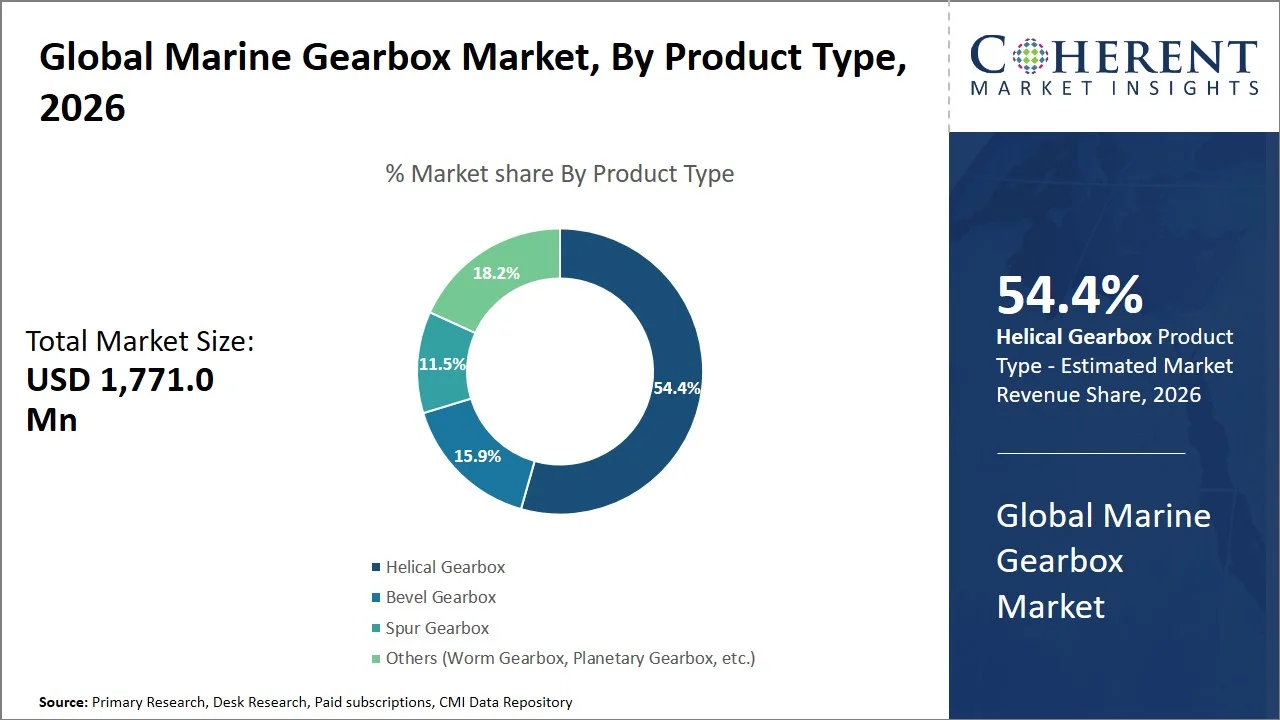
Why Does Helical Gearbox Dominate the Global Marine Gearbox Market?
The helical gearbox segment is expected to account for 54.4% of the global marine gearbox market share in 2026. Modern manufacturers are rapidly investing in the development of compressors in helical gearboxes to increase efficiency and load-handling capacity. This is a major factor driving the demand for helical gearboxes. For instance, on June 30, 2025, Baker Hughes, an energy technology company, announced that it had been awarded a contract by Saipem to supply carbon dioxide (CO2) compression technology for Eni’s Liverpool Bay Carbon Capture and Storage (CCS) Project in the U.K. As part of the scope, Baker Hughes will supply three advanced CO2 centrifugal compressor trains with electric motors, as well as a Lufkin Gears gearbox. (Source: Baker Hughes)
- Current Industry Events of 2026
- Market Size Estimation
- Regional Breakdown
- Competitive Landscape
- Customer Intelligence
- Segmental Analysis
- Pricing Analysis
- Key Market Drivers, Challenges & Future Trends
- Customized Insights Section
Why is the Two-Stage Segment the Most Preferred Gear Train Stage Count?
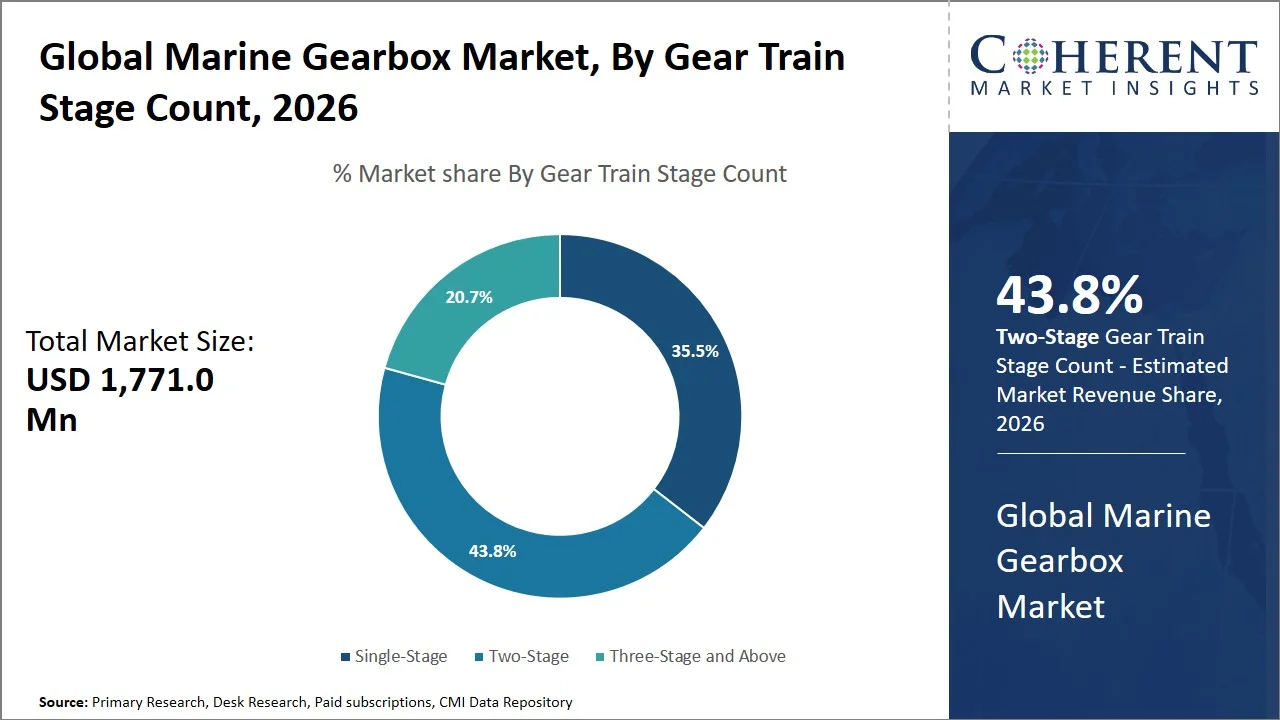
The two-stage segment is expected to account for 43.8% of the global marine gearbox market share in 2026. Often chosen, two-stage gear trains offer a balanced mix of efficiency, dimensions, expense, and output. As a result, components last longer, experiencing less deterioration over time. Higher torque transfer becomes possible without oversized gears, aiding space-constrained setups. Such traits suit sectors including ship engines, production equipment, and vehicle drivetrains well.
151 kW to 500 kW Segment Dominates the Global Marine Gearbox Market
The 151 kW to 500 kW segment is expected to account for 29.4% of the global marine gearbox market share in 2026. Despite its compact dimensions, performance remains strong under tough conditions. Designed for applications where space optimization and reliable performance are critical, this power range is widely used in marine and industrial environments. Its high transmission efficiency minimizes energy loss, reducing heat generation and improving fuel economy in marine operations. In industrial settings, lower power losses contribute to reduced operating costs over the long term. The precision-engineered design also enhances durability and extends maintenance intervals without increasing system size or weight.
Currents Events and their Impact
Current Events | Description and its Impact |
IMO Net-Zero Framework (International Maritime Organization, 2025) |
|
(Source: IMO)
Global Marine Gearbox Market Dynamics
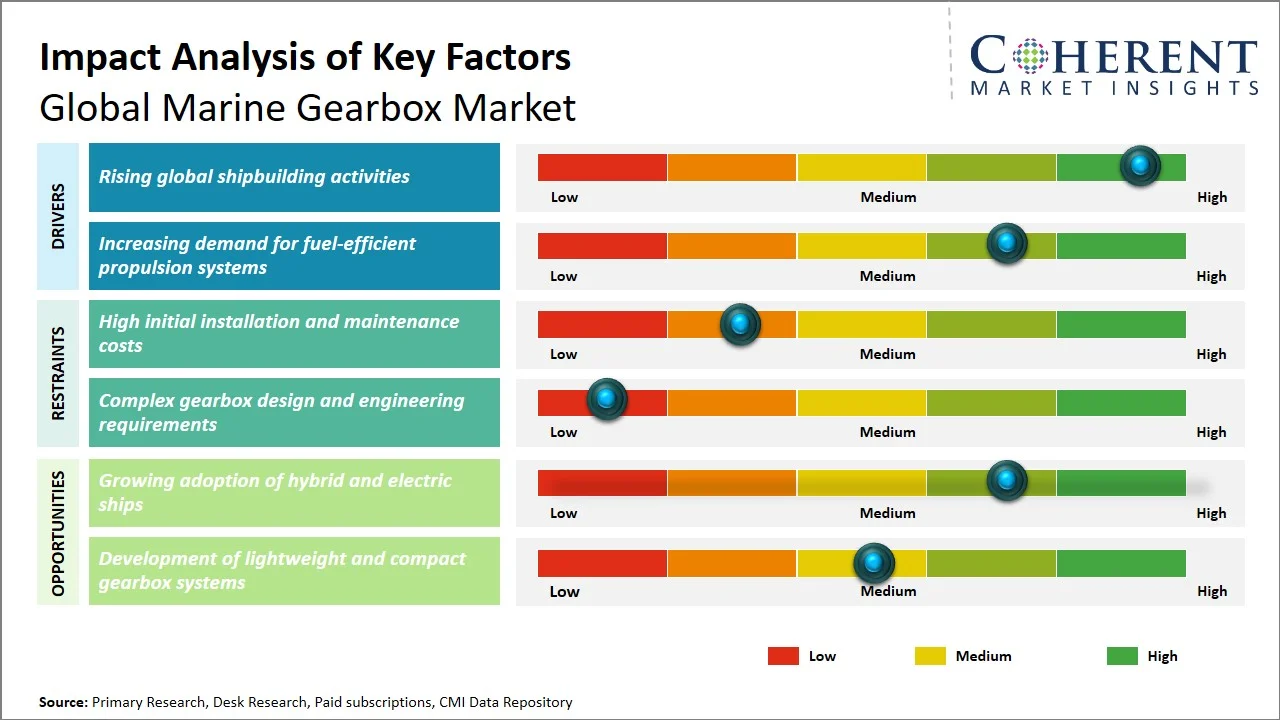
Market Drivers
- Rising global shipbuilding activities: Worldwide growth in ship production is pushing higher needs for gearbox within maritime machinery and drive systems, especially seen across nations like China, South Korea, and Japan. Because commerce between countries expands, along with bigger cargo vessel groups, rising numbers of LNG transport ships, sea-based power ventures, and updated defense fleet initiatives, new vessels emerge at notable rates around the globe. On February 9, 2026, A.P. Moller - Maersk (Maersk) signed an order of eight large vessels with New Times Shipbuilding Co. Ltd. in China. All eight ships will have the same characteristics and make up a new series of 18,600 TEU vessels with delivery in 2029 and 2030. (Source: Maersk)
- Increasing demand for fuel-efficient propulsion systems: Fuel economy now drives change across shipping worldwide. Because vessels require less energy, companies adjust operations to spend less and pollute less. Rules shaped by groups like the International Maritime Organization push new designs into use. These include smarter transmissions, combined drive methods, and efficient ways to deliver engine power. Performance gains follow when technology aligns with regulation.
Emerging Trends
- Shift Toward Hybrid & Electric Propulsion-Compatible Gearboxes: Marine gearbox manufacturers are increasingly developing systems compatible with hybrid-electric and fully electric propulsion architectures. Demand is being driven by stricter IMO emission regulations, fuel-efficiency targets, and decarbonization strategies across commercial shipping, offshore vessels, and naval fleets.
- Integration of Digital Condition Monitoring & Predictive Maintenance: Manufacturers are focusing on compact, lightweight, and low-vibration gearbox technologies to improve vessel efficiency and onboard comfort. Advanced materials, optimized gear tooth geometry, and improved lubrication systems are enabling higher torque density with reduced operational noise.
Regional Insights
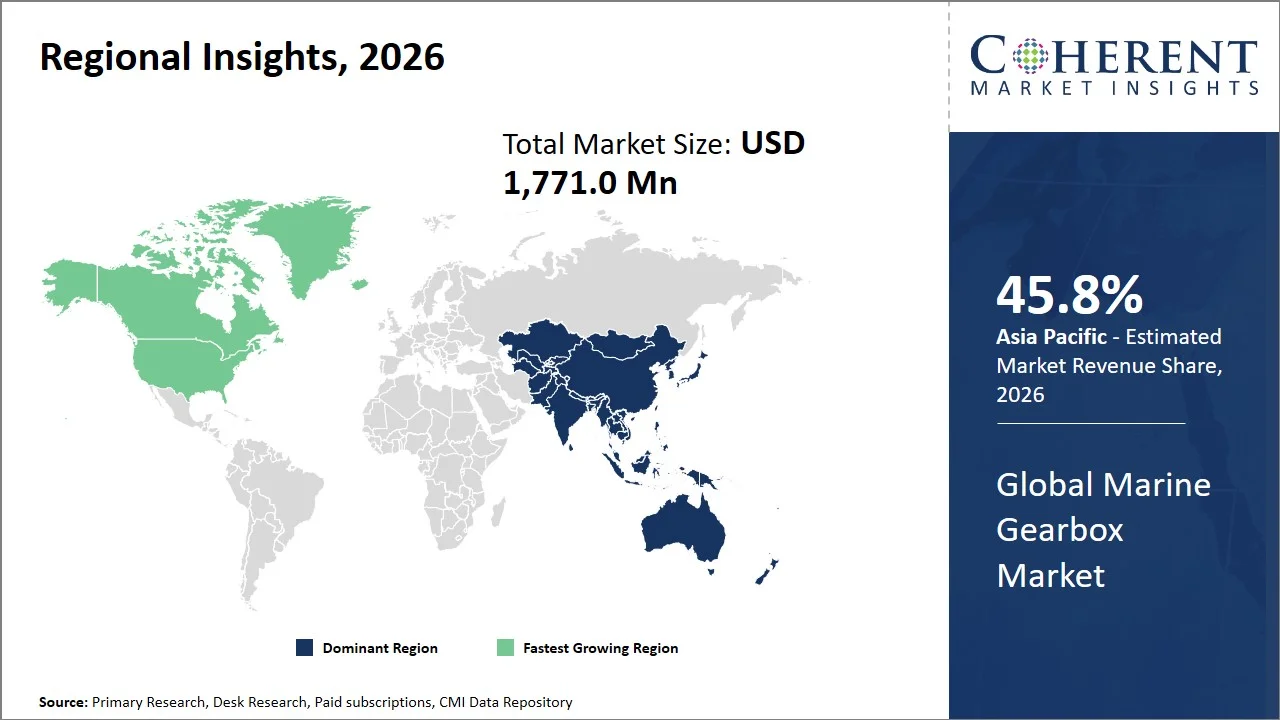
Why is Asia Pacific a Strong Market for Marine Gearboxes?
Asia Pacific is expected to account for a market share of 45.8% in 2026. The Asia Pacific marine gearbox market is driven by the region’s dominance in commercial shipbuilding and marine equipment manufacturing, particularly in South Korea, Japan, and China. Demand is increasing for high-capacity reduction gear systems used in container ships, LNG carriers, and offshore support vessels. Regional manufacturers (Elecon Engineering and Hangzhou Advance Gearbox Group) are also benefiting from strong export demand and government-supported maritime infrastructure expansion, especially in Southeast Asian economies developing coastal cargo and ferry networks.
Why Does the North America Marine Gearbox Market Exhibit High Growth?
North America is expected to account for a market share of 17.1% in 2026 and is expected to register the fastest growth rate over the forecast period. In North America, the marine gearbox market is strongly influenced by defense vessel upgrades, offshore service operations, and recreational boating demand. The U.S. and Canada are witnessing increased adoption of technologically advanced propulsion systems for patrol boats, coast guard vessels, and luxury marine craft. The region also shows rising investment in hybrid propulsion integration for inland waterways and offshore energy support vessels, creating demand for digitally controlled gearbox solutions.
On May 6, 2024, ABS Wind and ZF Wind Power announced a strategic collaboration at the Cleanpower Congress for the repair of their gearboxes in North America.
(Source: Atlantic Bearing)
Why is China Emerging as a Major Hub in the Marine Gearbox Market?
Beginning far inland, China hosts a major share of global marine gearbox production and usage because of vast shipyards and strong overseas trade in sea-based machinery. Not limited to simple models anymore, local makers now prioritize powerful drive units meant for cargo giants, military craft, and complex offshore platforms. Backed by national strategies that favor homegrown maritime capability, efforts grow stronger toward fine-tuned gear systems and intelligent vessel drives made within the country itself.
Is U.S. the Next Growth Engine for the Marine Gearbox Market?
Despite steady growth, the U.S. marine gearbox sector evolves quietly alongside naval upgrades and updates to existing commercial fleets. The biggest catalyst is the renewed U.S. naval shipbuilding push. The U.S. Navy’s 2026 shipbuilding plan emphasizes fleet expansion, distributed shipbuilding, and modernization of both surface ships and submarines. This directly increases demand for high-performance propulsion systems and precision marine gearboxes.
Germany Marine Gearbox Market Analysis and Trends
Built on deep-rooted engineering strengths, Germany's marine gearbox sector targets advanced propulsion needs across cruise liners, military craft, and custom offshore platforms. Germany is also becoming a center for next-generation naval propulsion technology. On May 6, 2026, RENK secured a contract to supply electric motors, couplings, and transmissions for an unmanned surface vessel (USV) program for a NATO customer. The project highlights growing European demand for compact, integrated marine drivetrain systems capable of supporting autonomous naval platforms. (Source: RENK)
India Marine Gearbox Market Analysis and Trends
Steady growth marks India’s marine gearbox sector, driven by a broader naval fleet alongside advancements in coastal shipping and inland water transport. Supported by policies like Sagarmala, local output of propulsion parts sees momentum, especially in gearbox assembly. Rising investments in modern fishing fleets, port infrastructure, and domestically manufactured defense vessels are increasing demand for durable marine gearboxes across both commercial and naval applications. Growth in the sector continues steadily, supported by expanding industrial activity and long-term strategic maritime initiatives.
Global Marine Gearbox Market: Fleet Ageing & Retrofit Opportunity
Dimension | Industry Benchmark (2024–2026) | 2030–2035 Outlook |
Fleet Age Distribution | ~14–15 years, with ~20–30% vessels >20 years | Fleet ageing accelerates in bulk, tanker, offshore segments |
Gearbox Replacement Cycle | 10–15 years or ~60,000–80,000 operating hours | Cycle shortens to 7–12 years in regulated fleets |
Failure-Driven Overhaul Trigger | ~30–40% CBM adoption in advanced fleets | 60–75% CBM adoption with digital twins |
Retrofit Penetration Rate | ~18–25% of eligible fleet | 35–50% by 2035 |
IMO Compliance Upgrades | ~40–55% of deep-sea fleet impacted (2023–2026 cycle) | >70% fleet compliance-driven modification |
How is Growing Adoption of Hybrid and Electric Ships Creating New Growth Opportunities in the Global Marine Gearbox Market?
With more hybrid and electric ships entering service, demand rises for specialized marine gearboxes able to manage diverse power inputs while optimizing energy flow. Instead of traditional setups, these vessels rely on compact, quiet transmissions designed for superior efficiency and lower emission output. Because maritime operators now prioritize regulatory alignment and long-term environmental goals, producers respond with precision-engineered drivetrain components featuring real-time diagnostics and adaptive control functions. Innovation in this space advances steadily, shaped by operational needs rather than trends, expanding the sector without reliance on outdated design principles. On December 1, 2025, ABB secured an order with Washington State Ferries (WSF), to supply and integrate hybrid-electric propulsion systems for two hybrid-electric 160-auto ferries that initiate the owner’s ambitious System Electrification Program. (Source: ABB)
Market Players, Key Development, and Competitive Intelligence
Key Developments
- On June 30, 2025, SEW‑EURODRIVE announced a major expansion in its U.S. manufacturing capability with the local assembly of its advanced P2.e planetary gear units, available with lead times as short as six weeks in 2-stage and 3-stage cataloged ratios and as little as 12 weeks for non-stocked options.
- On December 19, 2024, WEG announced investments of approximately USD 40 million in a new gearbox plant in the İzmir region in Turkey. This project aims to address the demand and increase the company's manufacturing capacity for components.
Competitive Landscape
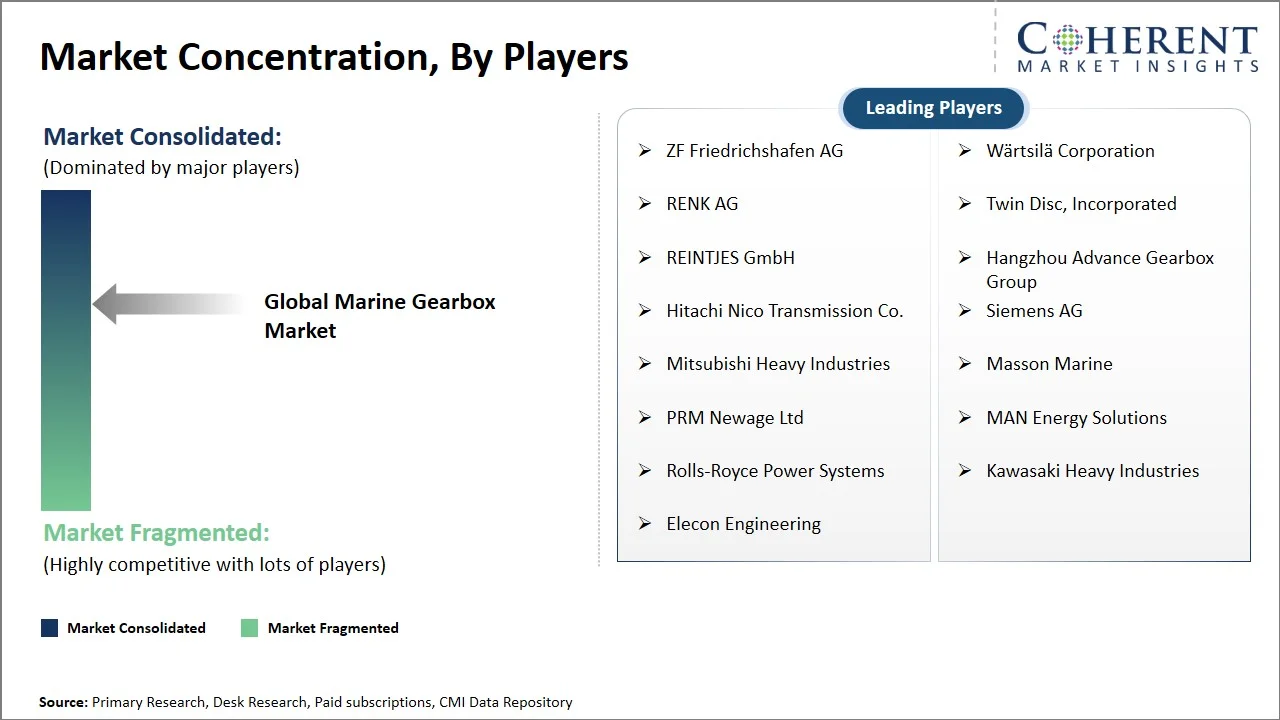
Among those shaping the worldwide marine gearbox sector, a tight race unfolds between multinational and local producers aiming at tech progress, better performance, and high collaboration rates. Leading names including ZF Friedrichshafen AG operate under constant pressure to evolve - fuel economy, digital compatibility, mechanical precision drive their lab work forward. Wärtsilä Corporation appears often in new system trials, its focus fixed on next-gen transmission design. Twin Disc, Incorporated follows similar paths, adjusting engineering priorities amid shifting sea transport needs. At intervals, RENK AG introduces modified models shaped by field feedback, real voyage data guiding updates. Market participants are also emphasizing mergers, collaborations, and expansion into emerging shipbuilding regions to strengthen their market presence.
Market Report Scope
Marine Gearbox Market Report Coverage
| Report Coverage | Details | ||
|---|---|---|---|
| Base Year: | 2025 | Market Size in 2026: | USD 1,771.0 Mn |
| Historical Data for: | 2020 To 2024 | Forecast Period: | 2026 To 2033 |
| Forecast Period 2026 to 2033 CAGR: | 6.5% | 2033 Value Projection: | USD 2,746.6 Mn |
| Geographies covered: |
| ||
| Segments covered: |
| ||
| Companies covered: | ZF Friedrichshafen AG, Wärtsilä Corporation, RENK AG, Twin Disc, Incorporated, REINTJES GmbH, Hangzhou Advance Gearbox Group, Hitachi Nico Transmission Co., Siemens AG, Mitsubishi Heavy Industries, Masson Marine, PRM Newage Ltd, MAN Energy Solutions, Rolls-Royce Power Systems, Kawasaki Heavy Industries, and Elecon Engineering | ||
| Growth Drivers: |
| ||
| Restraints & Challenges: |
| ||
Analyst Opinion (Expert Opinion)
- The marine gearbox market is expected to witness stable long-term growth due to the increasing demand for energy-efficient propulsion technologies and the expansion of global maritime trade. The transition toward hybrid and electric vessels is likely to accelerate the adoption of advanced gearbox systems integrated with smart monitoring and predictive maintenance technologies. It can also be observed that Asia Pacific will continue to dominate the market owing to strong shipbuilding activities and rising investments in marine infrastructure. Although high operational and maintenance costs remain a challenge, ongoing technological advancements and fleet modernization initiatives are expected to support the market growth in the coming years.
- The future of the marine gearbox market appears promising, driven by the rising adoption of sustainable marine technologies, autonomous vessels, and digitalized ship operations. Growing environmental regulations aimed at reducing emissions are expected to encourage the development of highly efficient and eco-friendly gearbox systems. Future innovations may include AI-enabled monitoring systems, compact gearbox designs, and advanced hybrid propulsion integration for improved fuel economy and operational performance. Additionally, increasing investments in offshore renewable energy projects, naval defense modernization, and smart shipping infrastructure are anticipated to create significant growth opportunities for marine gearbox manufacturers worldwide.
Speak to the analyst
Want personalized insights?
Take the findings above to one of our principal consultants, or have the report rebuilt around the segments, geographies and competitors you actually track.
Market Segmentation
- Product Type Insights (Revenue, USD Million, 2021 - 2033)
- Helical Gearbox
- Bevel Gearbox
- Spur Gearbox
- Others (Worm Gearbox, Planetary Gearbox, etc.)
- Gear Train Stage Count Insights (Revenue, USD Million, 2021 - 2033)
- Single-Stage
- Two-Stage
- Three-Stage and Above
- Gearbox Rated Input Power Insights (Revenue, USD Million, 2021 - 2033)
- Up to 150 kW
- 151 kW to 500 kW
- 501 kW to 1,500 kW
- 1,501 kW to 5,000 kW
- Above 5,000 kW
- Application Insights (Revenue, USD Million, 2021 - 2033)
- Main Propulsion
- Secondary, Emergency and Hybrid Propulsion (PTI)
- PTO and PTI for Auxiliary Loads
- Generator Drive
- Pump Drive
- Winch, Crane and Deck Machinery Drive
- Thruster and Maneuvering Drive
- Dredge Pump and Dredging Drive
- Special Mission Drive
- Vessel Type Insights (Revenue, USD Million, 2021 - 2033)
- Commercial Vessels
- Bulk Carriers
- Tankers
- Container Ships
- General Cargo and Multi-Purpose Vessels
- Ro-Ro and Car Carriers
- Others (Tug Boats & Workboats, Inland Waterway Vessels, etc.)
- Naval and Defense Vessels
- Surface Combatants
- Submarines and Underwater Vehicles
- Patrol and Coast Guard Vessels
- Naval Auxiliaries and Replenishment Ships
- Recreational Vessels
- Commercial Vessels
- Regional Insights (Revenue, USD Million, 2021 – 2033)
- North America
- U.S.
- Canada
- Latin America
- Brazil
- Argentina
- Mexico
- Rest of Latin America
- Europe
- Germany
- U.K.
- Spain
- France
- Italy
- Russia
- Rest of Europe
- Asia Pacific
- China
- India
- Japan
- Australia
- South Korea
- ASEAN
- Rest of Asia Pacific
- Middle East
- GCC Countries
- Israel
- Rest of Middle East
- Africa
- South Africa
- North Africa
- Central Africa
- North America
Sources
Primary Research Interviews
- Marine gearbox manufacturers and suppliers
- Shipbuilding companies and naval architects
- Marine equipment distributors and dealers
- Port authorities and maritime operators
Magazines
- Marine Technology News
- International Marine Engineering
- Maritime Reporter and Engineering News
- Ship & Boat International
Journals
- Journal of Marine Science and Engineering
- Maritime Policy & Management
- International Journal of Naval Architecture and Ocean Engineering
Associations
- International Association of Marine Aids to Navigation and Lighthouse Authorities (IALA)
- Society of Naval Architects and Marine Engineers (SNAME)
- International Maritime Organization (IMO)
- Marine Equipment Trade Association (META)
Public Domain Sources
- IMO Global Maritime Distress and Safety System reports
- National maritime administration websites
- Port authority statistical reports
- Government maritime industry publications
Proprietary Elements
- CMI Data Analytics Tool
- Proprietary CMI Existing Repository of information for last 10 years
Get access to 250+ pages report
Every segment, forecast, competitor profile and data table behind the analysis above — available for instant download.
- ESOMAR Member
- ISO 9001:2015 Certified
- D-U-N-S Registered
- GDPR & CCPA Compliant
Missing comfort of reading report in your local language? Find your preferred language:
Transform your Strategy with Exclusive Trending Reports
Frequently Asked Questions
The global marine gearbox market is expected to stand at USD 1,771.0 Mn in 2026 and is expected to reach USD 2,746.6 Mn by 2033.
The CAGR of the global marine gearbox market is projected to be 6.5% from 2026 to 2033.
Rising global shipbuilding activities and increasing demand for fuel-efficient propulsion systems are the major factors driving the growth of the global marine gearbox market.
High initial installation and maintenance costs and complex gearbox design and engineering requirements are the major factors hampering the growth of the global marine gearbox market.
In terms of product type, helical gearbox is estimated to dominate the market revenue share in 2026.
AI enhances threat detection accuracy by analyzing scanned images and identifying anomalies in real time.
Biometrics enables faster identity verification using facial, iris, or fingerprint recognition.