

Global Medical Coding Software Market Size and Forecast – 2026 to 2033
The Global Medical Coding Software Market is estimated to be valued at USD 6.15 Bn in 2026 and is expected to reach USD 12.77 Bn by 2033, exhibiting a compound annual growth rate (CAGR) of 11.0% from 2026 to 2033. This significant growth reflects increasing adoption of advanced coding solutions driven by the rising need for efficient clinical data management, regulatory compliance, and improved billing accuracy across healthcare providers worldwide.
Key Takeaways of the Global Medical Coding Software Market
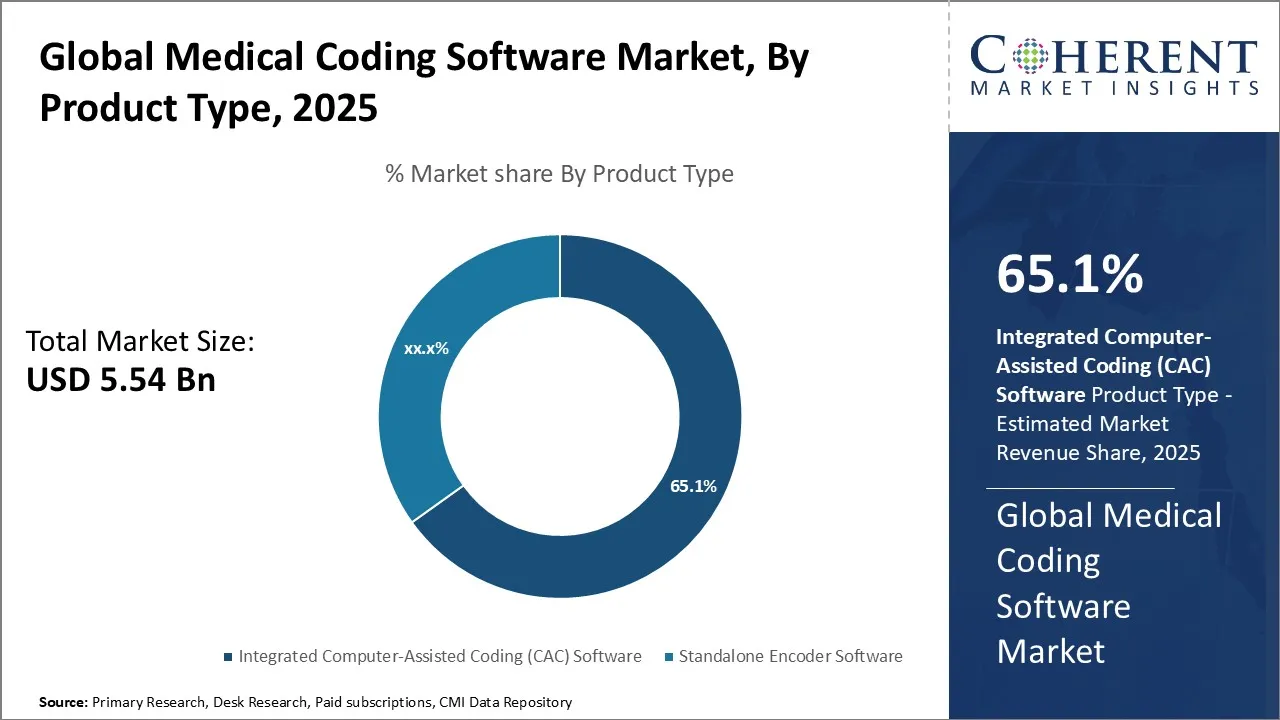
- In terms of product type, Integrated Computer-Assisted Coding (CAC) software is anticipated to lead the market, accounting for 66.1% of the market share in 2026.
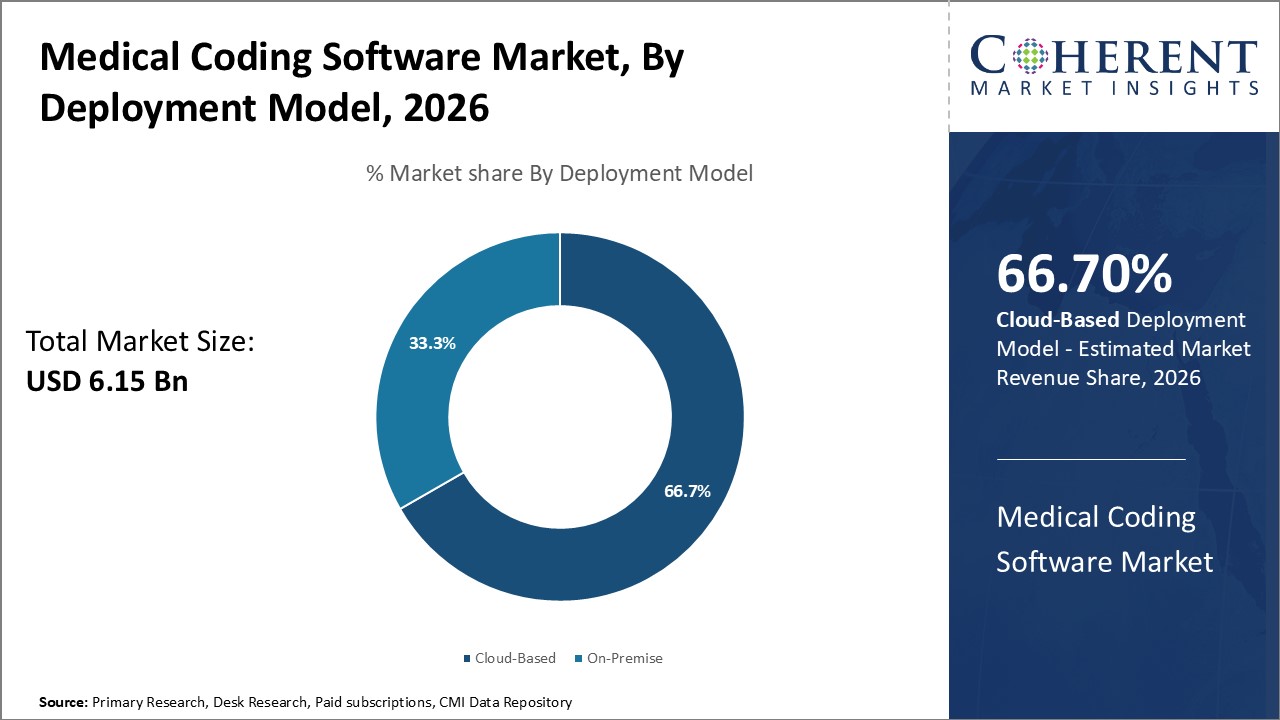
- Within the deployment model category, the cloud-based segment is projected to dominate, holding a significant 66.7% share in 2026, reflecting the healthcare sector's growing preference for scalable, flexible, and accessible digital solutions.
- Additionally, the general medicine segment is expected to capture the largest share of the medical coding software market, with a projected share of 24.4% in 2026.
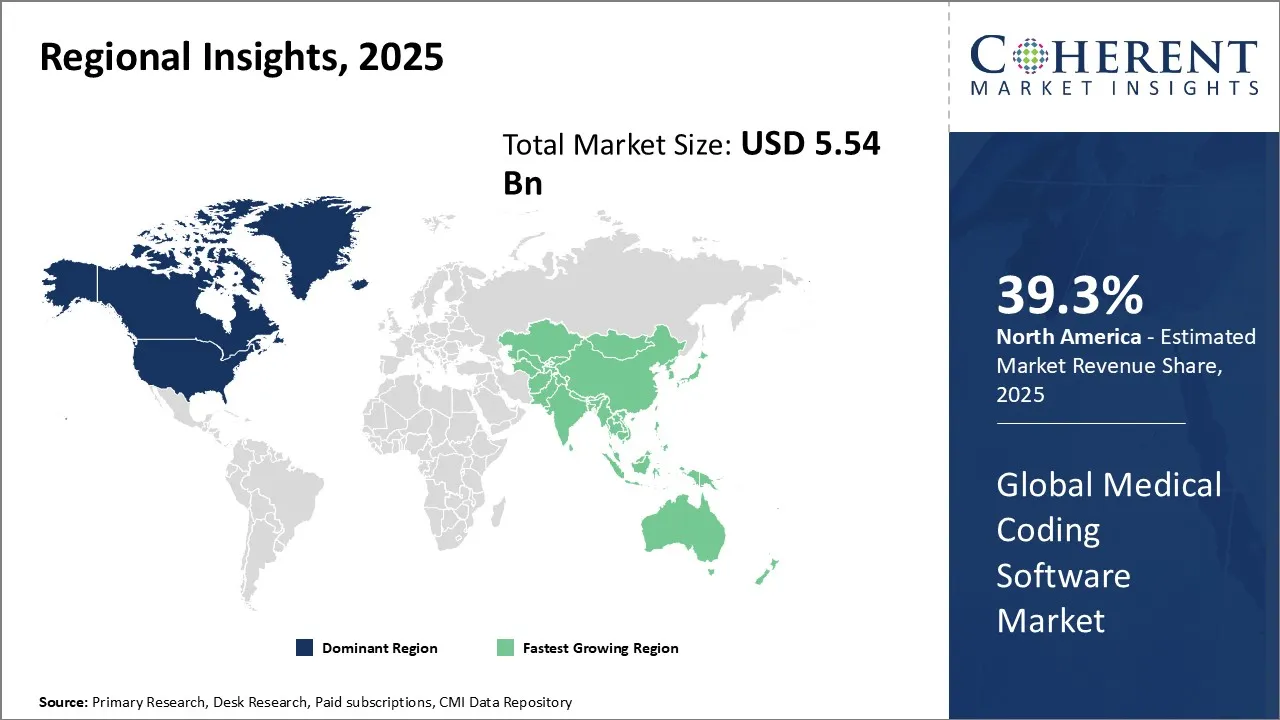
- North America is expected to lead the market, holding a share of 39.3% in 2026. Asia Pacific is anticipated to be the fastest-growing region, with a market share of 23.5% in 2026.
Market Overview
A prevailing trend in the medical coding software market is the integration of artificial intelligence (AI) and machine learning technologies, which enhance coding accuracy and reduce manual errors. Additionally, cloud-based solutions are gaining traction, offering scalability and remote accessibility. The growing emphasis on electronic health record (EHR) interoperability and regulatory mandates is further propelling the demand for sophisticated medical coding software, facilitating streamlined healthcare workflows and improved patient data security.
Currents Events and their Impact
Current Events | Description and its Impact |
Expansion of AI-Powered Computer-Assisted Coding Software Solutions |
|
Rapid Integration of Generative AI |
|
Segmental Insights
- Current Industry Events of 2026
- Market Size Estimation
- Regional Breakdown
- Competitive Landscape
- Customer Intelligence
- Segmental Analysis
- Pricing Analysis
- Key Market Drivers, Challenges & Future Trends
- Customized Insights Section
Medical Coding Software Market Insights, By Product Type - Integrated Computer-Assisted Coding (CAC) Software is Driving Accuracy and Efficiency in Medical Coding
When it comes to product type, the Integrated Computer-Assisted Coding (CAC) software is expected to occupy the leading position in the market with a proportion of 66.1% in 2026. This growth can be attributed to the significant effect the software has on enhancing the accuracy and efficiency of the medical billing and documentation processes. Integrated CAC software is a software built with advanced natural language processing (NLP) and a direct interface into electronic health record (EHR) systems, which permits successful analysis of clinical documentation and automatic assignment of codes in real-time.
In February 2024, U.S.-based, KAID Health, a clinical analytics and patient chart summarization company, launched its PRIDE HCC coding technology and a new Coding Services Group to enhance coding accuracy and care quality. The Patient Risk Identification & Data Extraction (PRIDE) platform automatically identifies coding and care quality opportunities from medical records in real time, integrating data from EMRs to reduce review time and audit risks.
Medical Coding Software Market Insights, By Deployment Model - Cloud-Based Deployment is Enabling Scalability and Accessibility in Medical Coding
Under the deployment model category, cloud-based segment is expected to hold the highest market share of 66.7% in 2026, which is a manifestation of the increasing trend of the healthcare sector toward scalable, flexible, and available digital solutions. Whether it is the fact that cloud-based deployment is much easier when compared to traditional on-premise models, the greatest benefit of cloud-based deployment, as it applies to healthcare organizations, is that it allows them to implement and update software easily without having to spend a lot of money on infrastructure and without having to invest in a plethora of IT resources.
In October 2024, at the Oracle Health Summit in Nashville, Oracle unveiled its next-generation electronic health record (EHR) platform, built on Oracle Cloud Infrastructure to deliver advanced AI capabilities and military-grade security. The new EHR integrates AI across the entire clinical workflow, automating documentation, simplifying patient follow-up, and enhancing decision-making at the point of care.
Medical Coding Software Market Insights, By Specialty Type - General Medicine Specialty is the Backbone of Medical Coding Demand
The general medicine segment is expected to hold the largest market share in the medical coding software market with 24.4% in 2026 because of the sheer number of patients that are handled and also because of the variety of services that are included in this field. General medicine is a wide spectrum of primary care services and routine health care all of which must be properly coded to provide the right billing and regulatory measures.
The broad scope of general medicine implies that the coding software that is specific to such specialty should be able to cover a wide range of clinical cases, including both preventive health and the treatment of chronic illnesses, as well as the acute conditions. Medical codes software which can capture such diversity by automating code sets and recognizing the gaps in documentation is in high demand since it eases the burden of complexity that medical coders encounter when handling large and diverse patients.
Role of Artificial Intelligence (AI) in the Global Medical Coding Software Market
- A clear example of how artificial intelligence (AI) is transforming the global medical coding software market is the automation of manual and error-prone as well as time-consuming medical coding. AI systems, and technologies like natural language processing (NLP), machine learning (ML), and deep learning, can successfully make sense of unstructured clinical data and assign standardized medical codes and update records in real time at a fraction of the administrative cost and with dramatically higher accuracy. The four main driving companies such as 3M Health Information Systems, Nym Health, and Maverick Medical AI are already implementing autonomous coding engines which can be directly connected with electronic health record (EHR) systems to provide up to 95-98 percent accuracy with little human intervention. Predictive analytics can enable these platforms to foresee billing mismatches prior to their arising and efficient robotization speeds up reimbursement times and manages abiding by updated standards such as ICD-11 and CPT updates. The transition to cloud-based AI-based solutions also increases the scalability capability where a provider can manage the increase of patient data volumes without increasing the number of staff or cost proportionately.
- The new business model and innovations in services are also providing AI with new opportunities to grow through data. Other startups like Arintra, Clinion, and Tiplu are also starting to add generative AI-based tools that do not only automate the coding process but also nurse trends and revenue reports to aid in strategic planning. Through embracing the AI, business organizations will be able to provide value-based and customized solutions that meet the needs of specialties and generate customer loyalty and competitive advantage in the long-term. Nevertheless, there are still issues, such as the bias of algorithms, the threat of privacy, and the excessive use of machine-generated results without providing sufficient human supervision. The hybrid strategy would be a key to the sustainable success: integrating the speed and precision of AI with the expertise of human validation.
Regional Insights
North America Medical Coding Software Market Analysis and Trends
In North America, the leadership in the world medical coding software market characterized by an estimated share of 39.3% in 2026 is due to a well-developed healthcare system, strict regulations, and early implementation of modern health IT. The availability of top healthcare organizations and payers, alongside powerful government initiatives like the Health Information Technology for Economic and Clinical Health (HITECH) Act, have fueled the extensive adoption of medical coding software to enhance billing accuracy and regulatory adherence. Additionally, the region's well-established healthcare ecosystem fosters innovation, leading to significant investments in AI-driven coding solutions.
For example, ImagineSoftware, a U.S.-based leader in AI-driven revenue cycle management and medical billing automation, introduced new advancements within its ImagineOne platform aimed at improving billing efficiency across more than 47 medical specialties. The updates integrate ImagineCo-Pilot, an AI-powered automation tool that delivers over 95% process automation and enhances staff productivity by 400%, alongside expanded analytics and patient engagement capabilities.
Asia Pacific Medical Coding Software Market Analysis and Trends
The Asia Pacific region is expected to experience the highest growth, capturing a 23.5% share in 2026, driven by the digitalization of healthcare systems, expansion of healthcare coverage, and increased adoption of technological solutions in medical care. The opportunities in healthcare modernization of the government in China, India and Japan and the growing investments in health IT infrastructure, prompt the need to find efficient coding solutions, which tackle languages variety and regulatory setting.
Also, the expanding private healthcare industry and rising awareness concerning billing accuracy and revenue cycle management only lead to the expansion of the market. The main players, like Cerner Corporation, McKesson Corporation (since bought by Change Healthcare) and local providers are vigorously investing in product localization and collaboration to get into this growing demand.
Global Medical Coding Software Market Outlook for Key Countries
U.S. Medical Coding Software Market Trends
The U.S. medical coding software market is the keystone to the entire world of medical coding software with high rates of EHR implementation and strict compliance with standards such as ICD-10 and CPT coding. Healthcare systems and payers requiring large systems require sophisticated software to incorporate AI to automate and be accurate. The industry is dominated by other companies like 3M Health Information Systems and Optum, which provide advanced coding suites to customers that are augmented with analytics and machine learning. The regulatory environment in the country promotes unceasing innovation that places it as a center of next-generation solutions that ease revenue cycle management.
In September 2023, Medmio Inc., a U.S.-based healthcare technology company, launched its AI-powered medical coding and billing app, designed to automate charge capture and streamline administrative workflows for healthcare providers. The app combines automated coding algorithms with practice management tools, including mobile patient intake, voice dictation, and real-time worklists, helping clinics reduce billing errors and improve reimbursement speed.
Germany Medical Coding Software Market Trends
The medical coding software market in Germany has been enjoying the advantage of an established healthcare system and strict rules by the government to standardize the medical coding to use in billing and reimbursements. The presence of the German Diagnosis-Related Group (DRG) system makes efficient coding software absolutely essential in hospitals to guarantee that they can receive the right funding. Specialized software solutions of coding adapted to local regulatory framework and language needs are available in such companies as Agfa HealthCare and CompuGroup Medical.
In June 2022, Tiplu, a Germany-based healthcare technology company founded by Dr. Lukas and Mr. Tim Aschenberg, gained attention for transforming hospital revenue assurance and clinical decision-making through artificial intelligence. Its flagship product, MOMO, helps hospitals automate coding and billing, ensuring every medical service is accurately charged saving Germany’s healthcare system an estimated USD 2 billion annually.
China Medical Coding Software Market Trends
China is a high-potential market with government initiatives, such as the Healthy China 2030, that promote the digitalization of healthcare and enhance the quality of data management. With a large and rapidly evolving healthcare delivery system, the need to scale coding solutions that accommodate multilingual requirements and region-specific reimbursement regulations is increasing. Other foreign and domestic vendors like Ping An Healthcare and Cerner Corporation are aggressively Chinese market tailoring their products, making alliances and investing in local data centers. The changing regulatory environment promotes the revision of the software in accordance to the national standards of the coding, which becomes more efficient in the work of the hospitals and clinics.
Clinion, a leading eClinical technology provider, launched an AI-powered medical coding solution for clinical trials in China as part of its global rollout. The system uses advanced ML models to parse clinical data and assign codes automatically, reducing errors, speeding up processing, and giving real-time feedback to trial teams.
U.K. Medical Coding Software Market Trends
The National Health Service (NHS) of the U.K. has strict clinical coding strategies, such as ICD-10 and SNOMED CT, which require a quality software to facilitate the accurate coding and billing activities. A developed digital health landscape and current directives at improving healthcare IT interoperability are an advantage to the country. Companies like Optum and special U.K. companies supply bespoke products that meet the requirements of the NHS, including built-in reporting functions, and audit tools. The cost-containment and quality improvement approach of NHS is strategically placed on the basis of more accurate medical documentation, which generates consistent demand in the advanced coding software.
In October 2026, Nym Health, a U.S.-based healthcare technology company specializing in autonomous medical coding, expanded its footprint across leading health systems, physician groups, and hospitals in the U.K., deploying its AI-driven Clinical Language Understanding (CLU) engine there. Nym’s platform automatically deciphers clinical notes and assigns accurate medical codes within seconds, achieving over 95% accuracy with full audit transparency and zero human intervention.
Market Players, Key Developments, and Competitive Intelligence
Key Developments
- In June 2025, the Health Information Management Association of Australia (HIMAA), a leading body representing health information managers, coders, and documentation specialists, introduced a new guideline to support the safe and effective adoption of AI in clinical coding. The guide promotes a principle-based approach centered on governance, risk management, privacy, ethical use, and human oversight to ensure responsible AI deployment in healthcare.
- In May 2025, CodaMetrix, a U.S.-based healthcare technology company, announced the expansion of its AI-powered Contextual Coding Automation Platform, chosen by health systems representing over USD 180 billion in net patient revenue. The platform leverages artificial intelligence to automate medical coding across service lines, cutting direct coding costs by 30%, reducing denials by 60%, and improving turnaround time fivefold.
- In May 2025, Iodine Software, a leading U.S.-based healthcare AI company specializing in revenue cycle optimization, introduced its next-generation pre-bill platform, AwarePre-Bill. The new solution enables hospitals to identify revenue leakage post-discharge and perform financially targeted retrospective reviews before claim submission, improving coding accuracy and documentation quality. Designed to support financially strained health systems facing rising claim denials, AwarePre-Bill has already helped clients recover an additional USD 3–4 million per month in missed revenue.
- In March 2025, Microsoft introduced Dragon Copilot at HIMSS25, positioning it as an advanced AI-powered clinical assistant designed to ease clinicians’ administrative workload. The company, which acquired Nuance for nearly USD 20 billion in 2022, has merged its existing voice documentation tools like Dragon Medical One and DAX Copilot into a unified platform. Dragon Copilot integrates voice dictation, ambient listening, and generative AI to help doctors automatically generate structured notes, referral letters, and retrieve medical information.
Top Strategies Followed by Global Medical Coding Software Market Players
- Established market leaders primarily invest heavily in research and development (R&D) to drive innovation and develop high-performance solutions that meet evolving healthcare regulations and customer requirements. These companies prioritize the creation of comprehensive software platforms that integrate advanced features such as artificial intelligence (AI)-enabled coding automation, real-time compliance monitoring, and interoperability with electronic health record (EHR) systems.
- For example, 3M Health Information Systems' Coding & Reimbursement System Plus is a well-established coding tool that integrates with DRG and reimbursement data, while also supporting coding audits.3M also provides end-to-end modules for clinical documentation improvement, case mix, terminology services (e.g. SNOMED) and mapping to reimbursement logic. Also, Optum/Episource provides risk-adjustment coding, analytics, chart retrieval, and connects to payer/provider systems.
- Mid-level players in the medical coding software market typically focus on offering cost-effective solutions that maintain a balance between quality and affordability, catering primarily to price-sensitive healthcare providers, small hospitals, and clinics. Recognizing the competitive pressure from both high-end offerings and low-cost entrants, these companies emphasize scalable, modular software packages that can be customized based on the client's size and need.
- For example, NextGen Healthcare is frequently cited in lists of medical coding vendors. It offers integrated EHR + coding, practice management, and claims workflows. CareCloud (focused on practices) provides bundled billing, coding, analytics, and practice management modules.
- Small-scale players and startups in the medical coding software market distinguish themselves by focusing on niche segments or specialized features that address unique needs within the healthcare ecosystem. They often adopt cutting-edge technologies such as machine learning, natural language processing (NLP), and cloud computing to develop innovative products that deliver specialized functionalities such as specialized billing modules for specific specialties or enhanced data security capabilities.
- For example, Arintra is an autonomous medical coding platform. The company uses generative AI and clinical NLP to convert patient charts into accurate insurance claims, reporting around 96% coding accuracy. Moreover, Knowtex.ai (from VentureRadar) captures natural conversation and auto-generates visit notes + billing codes.
Market Report Scope
Global Medical Coding Software Market Report Coverage
| Report Coverage | Details | ||
|---|---|---|---|
| Base Year: | 2025 | Market Size in 2026: | USD 6.15 Bn |
| Historical Data for: | 2020 To 2024 | Forecast Period: | 2026 To 2033 |
| Forecast Period 2026 to 2033 CAGR: | 11.0% | 2033 Value Projection: | USD 12.77 Bn |
| Geographies covered: |
| ||
| Segments covered: |
| ||
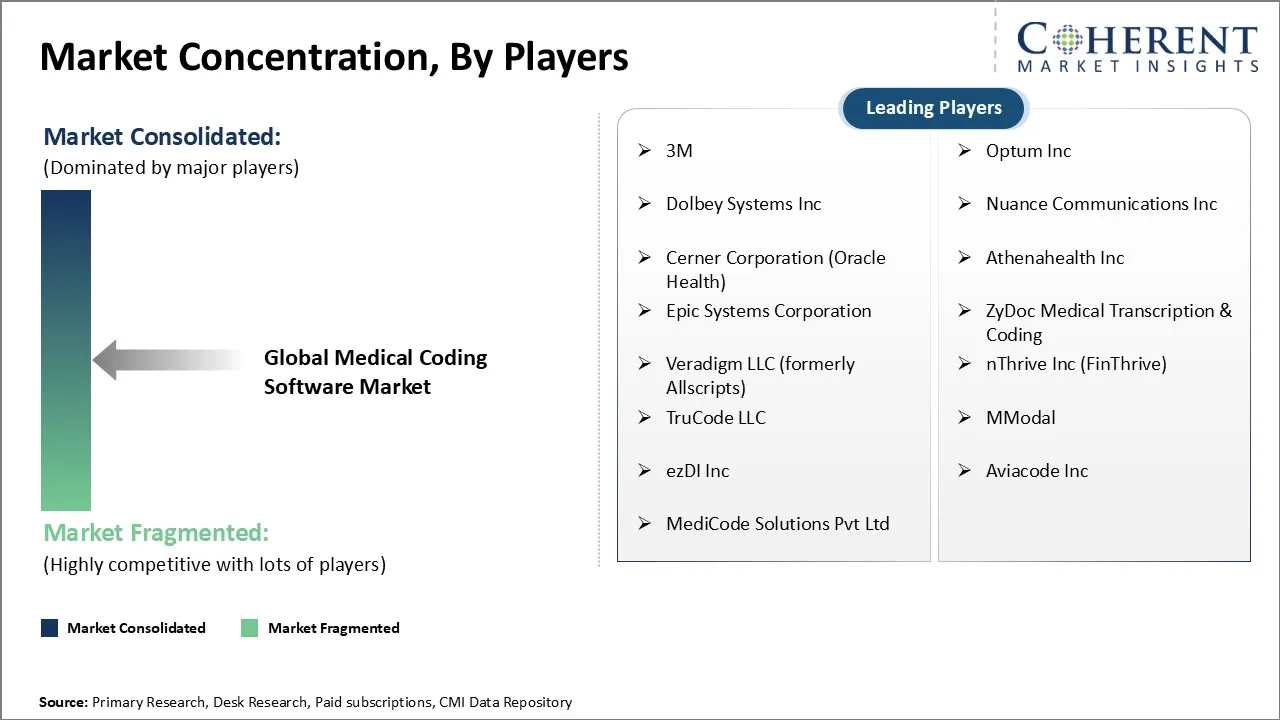
| Companies covered: | 3M, Optum Inc, Dolbey Systems Inc, Nuance Communications Inc, Cerner Corporation (Oracle Health), Athenahealth Inc, Epic Systems Corporation, ZyDoc Medical Transcription & Coding, Veradigm LLC (formerly Allscripts), nThrive Inc (FinThrive), TruCode LLC, MModal, ezDI Inc, Aviacode Inc, and MediCode Solutions Pvt Ltd | ||
| Growth Drivers: |
| ||
| Restraints & Challenges: |
| ||
Medical Coding Software Market Dynamics
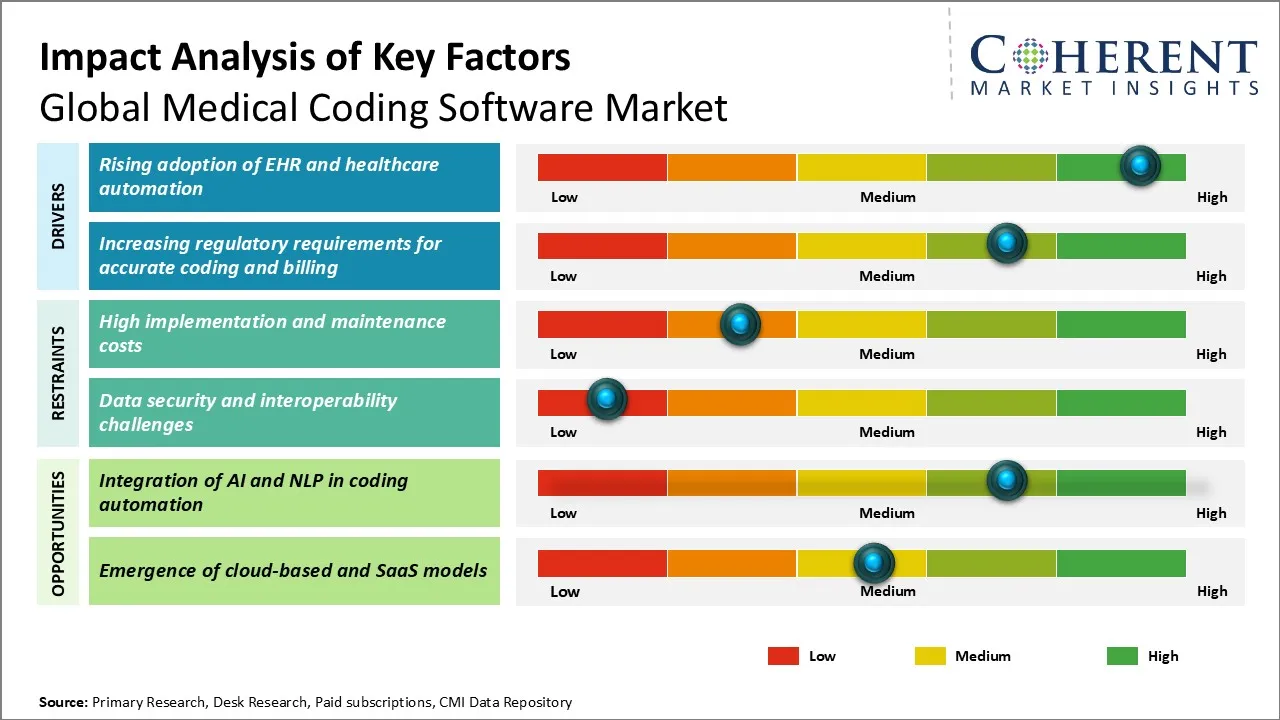
Medical Coding Software Market Driver - Rising Adoption of EHR and Healthcare Automation
The growing adoption of electronic health records (EHR) systems in healthcare facilities is playing an important role in influencing the need to have advanced medical coding software. With a constant shift in healthcare providers towards digitalization of patient information, the accuracy, effectiveness, and smoothing of coding procedures are paramount to the right documentation and billing. Medical coding software products which are easily connected to EHR systems allow automated extraction of data which lowers errors caused by manual extraction, and improves the efficiency of work. Also, the general trend of computerizing healthcare, such as claims handling, patient care, and adoption of compliance reporting, would further drive the use of advanced coding technology.
In March 2025, UiPath, a U.S.- based enterprise automation and AI software company, announced a new global consulting agreement with a major Electronic Medical Records platform to expand its healthcare automation services across 16 new countries. The collaboration enhances UiPath’s professional services capabilities, enabling faster access for hospitals and partners in regions such as Australia, Germany, Italy, Singapore, and Sweden.
Medical Coding Software Market Opportunity - Integration of AI and NLP in Coding Automation
The incorporation of the Artificial Intelligence (AI) and Natural Language Processing (NLP) algorithms into the medical coding software is an important chance to boost the efficiency and accuracy of the global medical coding software market. The unstructured clinical data can be automatically extracted and interpreted by AI-based solutions with an NLP feature as health care providers receive larger amounts of clinical documentation and complex coding demands. This minimizes the use of manual coding, which reduces the human error and makes the coding part faster, which is essential in the timely billing and reimbursement cycles. In addition, AI and NLP can be used to perform continuous learning with large datasets, enhancing the accuracy of the code suggestions and flexibility to regular changes in the coding standards, including ICD-10 and CPT.
In February 2025, Jitterbit, a U.S.-based global leader in enterprise integration and business transformation, introduced new AI-powered natural language processing capabilities to its Harmony platform. The update allows users to build, manage, and integrate business applications and APIs using simple natural language commands, eliminating the need for coding expertise.
Analyst Opinion (Expert Opinion)
- The medical coding software market is experiencing steady growth as healthcare systems worldwide transition toward digital transformation and value-based care. The integration of AI and natural language processing into coding platforms has significantly improved accuracy, reduced administrative workloads, and accelerated claim processing. Regulatory frameworks such as ICD-10 and CPT code updates, coupled with growing emphasis on compliance and data integrity, are further driving adoption across hospitals and physician practices. The rising need for automated solutions to manage the increasing volume of patient data and prevent revenue leakage has made computer-assisted coding a critical investment for healthcare providers. However, the shortage of trained coders and ongoing interoperability challenges between EHR systems remain key constraints. Still, opportunities are emerging from cloud-based deployments, expansion of telehealth documentation, and growing adoption in developing healthcare markets.
- Conferences, such as the AHIMA Global Conference (2023–2024), HIMSS Global Health Conference & Exhibition (2023), and the AAPC HealthCon (2024), have served as key platforms for discussing digital coding innovations, compliance strategies, and AI-enabled automation. These events have fostered collaboration between policymakers, coders, and technology providers, setting the stage for standardization and interoperability improvements. In practice, companies like 3M Health Information Systems and Optum have launched AI-driven coding engines, while Cerner (Oracle Health) has integrated NLP-powered modules into EHR systems. Government initiatives such as the U.S. ONC’s Interoperability Rule and the EU’s Digital Health Strategy are encouraging uniform data exchange, improving efficiency in clinical documentation. Collectively, these developments are shaping a market that is more data-driven, compliant, and adaptable to the future of healthcare delivery.
Speak to the analyst
Want personalized insights?
Take the findings above to one of our principal consultants, or have the report rebuilt around the segments, geographies and competitors you actually track.
Market Segmentation
- Product Type Insights (Revenue, USD Bn, 2020 - 2032)
- Integrated Computer-Assisted Coding (CAC) Software
- Standalone Encoder Software
- Deployment Model Insights (Revenue, USD Bn, 2020 - 2032)
- Cloud-Based
- On-Premise
- Specialty Type Insights (Revenue, USD Bn, 2020 - 2032)
- General Medicine
- Radiology
- Oncology
- Cardiology
- Pathology
- Emergency Medicine
- Anesthesia
- Other Specialties
- Other Primary Care Coding
- Functionality Insights (Revenue, USD Bn, 2020 - 2032)
- Code Assignment and Validation
- Charge Capture and Claims Processing
- Clinical Documentation Optimization
- Reimbursement Analysis
- Audit Management
- Workflow and Productivity Tracking
- Organization Size Insights (Revenue, USD Bn, 2020 - 2032)
- Large Healthcare Facilities
- Medium-Sized Healthcare Facilities
- Small and Independent Clinics
- Pricing Model Insights (Revenue, USD Bn, 2020 - 2032)
- Subscription-Based (SaaS)
- One-Time License Fee
- Pay-Per-Use
- End User Insights (Revenue, USD Bn, 2020 - 2032)
- Hospitals and Health Systems
- Physician Practices
- Ambulatory Surgical Centers
- Diagnostic and Imaging Centers
- Dental Clinics
- Home Healthcare Agencies
- Medical Billing Companies
- Academic and Research Institutes
- Regional Insights (Revenue, USD Bn, 2020 - 2032)
- North America
- U.S.
- Canada
- Latin America
- Brazil
- Argentina
- Mexico
- Rest of Latin America
- Europe
- Germany
- U.K.
- Spain
- France
- Italy
- Russia
- Rest of Europe
- Asia Pacific
- China
- India
- Japan
- Australia
- South Korea
- ASEAN
- Rest of Asia Pacific
- Middle East
- GCC Countries
- Israel
- Rest of Middle East
- Africa
- South Africa
- North Africa
- Central Africa
- North America
- Key Players Insights
- 3M
- Optum Inc
- Dolbey Systems Inc
- Nuance Communications Inc
- Cerner Corporation (Oracle Health)
- Athenahealth Inc
- Epic Systems Corporation
- ZyDoc Medical Transcription & Coding
- Veradigm LLC (formerly Allscripts)
- nThrive Inc (FinThrive)
- TruCode LLC
- MModal
- ezDI Inc
- Aviacode Inc
- MediCode Solutions Pvt Ltd
Sources
Primary Research Interviews
Industry Stakeholders
- Chief Information Officers (CIOs) at major health systems
- Heads of Revenue Cycle, HIM, or Coding departments
End Users
- Senior medical coders in hospitals or clinics
- Health information management staff in physician groups
Government and International Databases
- Healthcare Cost and Utilization Project (HCUP)
- Centers for Medicare & Medicaid Services (CMS) Data
- HealthData.gov (U.S. HHS Open Data)
- Certified Health IT Product List (CHPL)
- Health Resources and Services Administration (HRSA) Data
Trade Publications
- Journal of AHIMA
- Healthcare Informatics
- Health Data Management
- Healthcare IT News
- Journal of Medical Systems
- Health Affairs
Academic Journals
- Journal of the American Medical Informatics Association (JAMIA)
- International Journal of Medical Informatics
- Health Informatics Journal
- BMC Medical Informatics and Decision Making
- Computers in Biology and Medicine
- Journal of Biomedical Informatics
Reputable Newspapers
- The New York Times
- The Wall Street Journal
- The Guardian
- Financial Times
- The Washington Post
- Reuters Health
Industry Associations
- American Health Information Management Association (AHIMA)
- Healthcare Information and Management Systems Society (HIMSS)
- American Medical Informatics Association (AMIA)
- European Federation for Medical Informatics (EFMI)
- International Medical Informatics Association (IMIA)
- Health Information Management Association of the United Kingdom
Public Domain Resources
- Open Medical Record System
- popHealth (Open-source quality measure reporting tool)
- Conquery (Healthcare analytics platform)
- National Provider Data repositories
- U.S. National Library of Medicine
Proprietary Elements
- CMI Data Analytics Tool: Proprietary analytics tool to analyze real-time market trends, consumer behavior, and technology adoption in market
- Proprietary CMI Existing Repository of Information for Last 8 Years
Get access to 250+ pages report
Every segment, forecast, competitor profile and data table behind the analysis above — available for instant download.
- ESOMAR Member
- ISO 9001:2015 Certified
- D-U-N-S Registered
- GDPR & CCPA Compliant
Missing comfort of reading report in your local language? Find your preferred language:
Transform your Strategy with Exclusive Trending Reports
Frequently Asked Questions
The global medical coding software market is estimated to be valued at USD 6.15 Bn in 2026 and is expected to reach USD 12.77 Bn by 2033.
The CAGR of the global medical coding software market is projected to be 11.0% from 2026 to 2033.
Rising adoption of EHR and healthcare automation and increasing regulatory requirements for accurate coding and billing are the major factors driving the growth of the global medical coding software market.
High implementation and maintenance costs and data security and interoperability challenges are the major factors hampering the growth of the global medical coding software market.
In terms of product type, Integrated Computer-Assisted Coding (CAC) software is estimated to dominate the market revenue share in 2026.
3M, Optum Inc, Dolbey Systems Inc, Nuance Communications Inc, Cerner Corporation (Oracle Health), Athenahealth Inc, Epic Systems Corporation, ZyDoc Medical Transcription & Coding, Veradigm LLC (formerly Allscripts), nThrive Inc (FinThrive), TruCode LLC, MModal, ezDI Inc, Aviacode Inc, and MediCode Solutions Pvt Ltd are the major players.
North America is expected to lead the global medical coding software market in 2026.