

Global Mental Health Screening Market Size and Forecast
The global mental health screening market is estimated to be valued at USD 2.67 Bn in 2026 and is expected to reach USD 5.38 Bn by 2033, exhibiting a compound annual growth rate (CAGR) of 10.5% from 2026 to 2033. This significant growth is driven by increasing awareness about mental health disorders, rising prevalence of conditions such as anxiety and depression, and the growing adoption of digital and AI-based screening tools that facilitate early diagnosis and intervention.
Key Takeaways of the Global Mental Health Screening Market
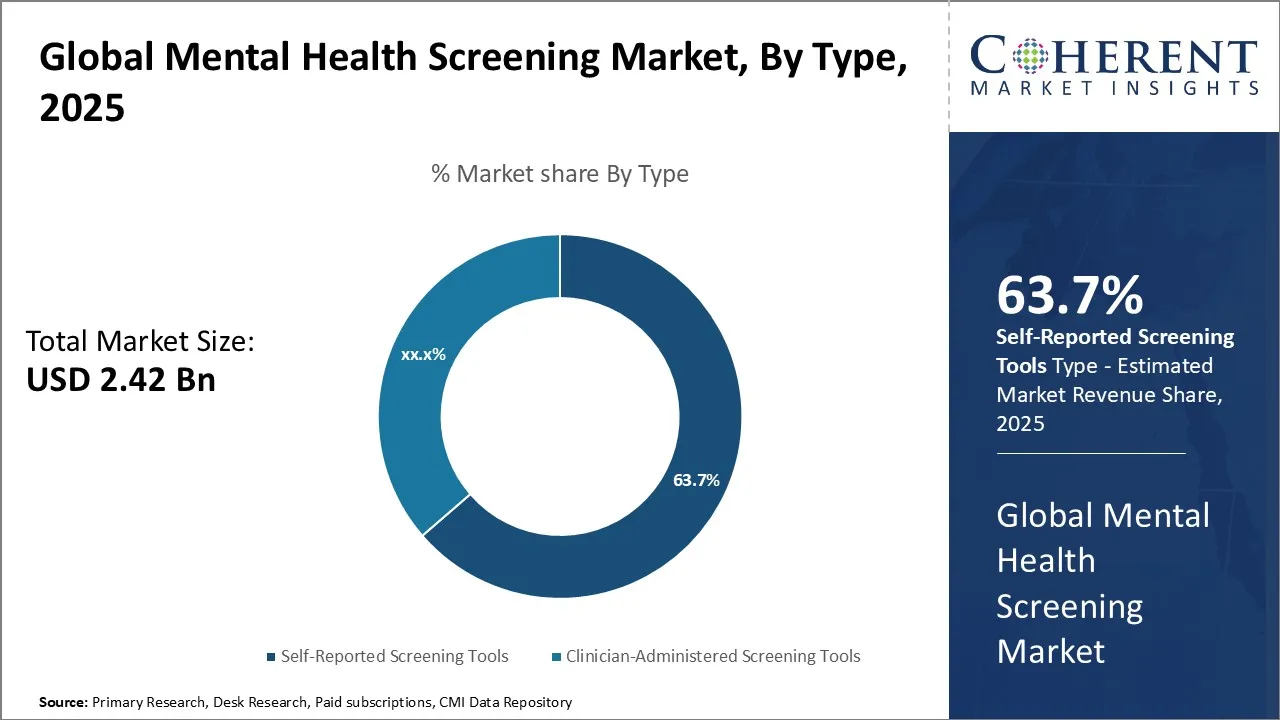
- By type, self-reported screening tools are projected to hold the largest share of the global mental health screening market in 2026, accounting for 64.7%, primarily because of their accessibility and the sense of empowerment they provide users in managing their mental health.
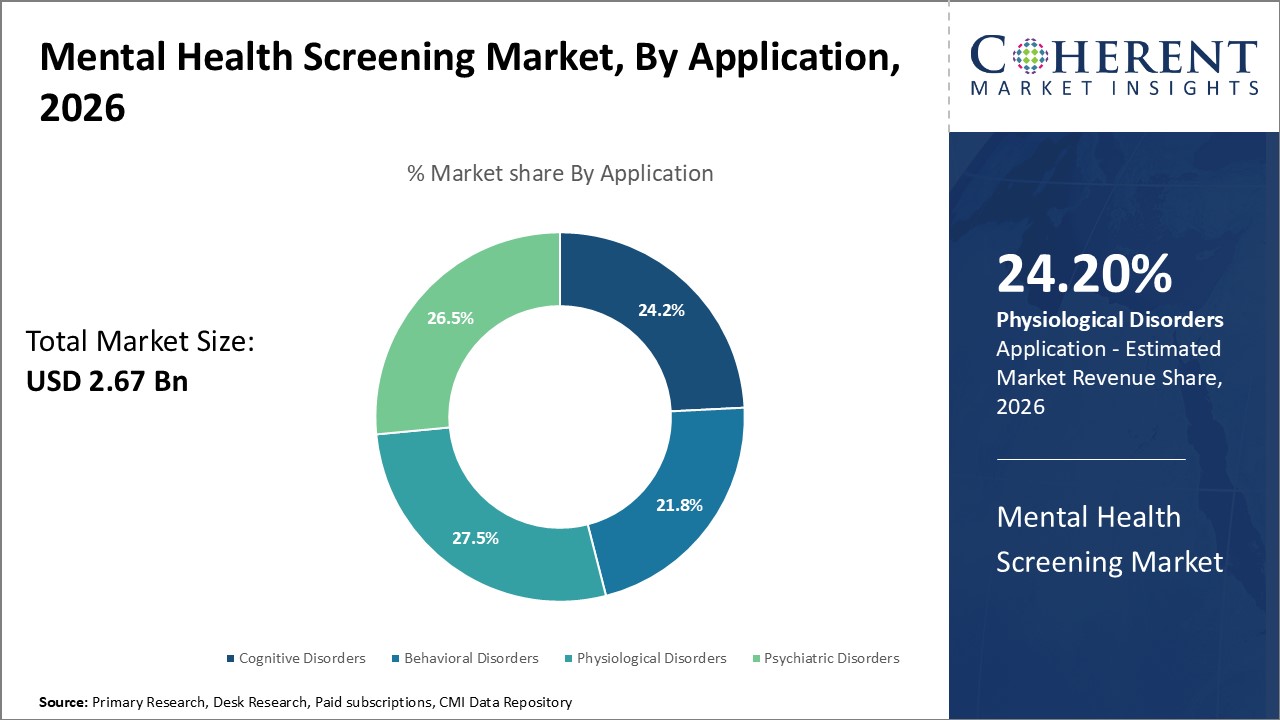
- In the application segment, the cognitive disorders segment is expected to represent the leading share at 24.2% in 2026, underscoring the growing global emphasis on early detection and management of conditions such as Alzheimer’s disease, dementia, and related impairments.
- Meanwhile, in terms of delivery mode, online screening is expected to dominate with a 56.3% share in 2026, highlighting the rapid digital transformation that is reshaping mental health care delivery across the world.
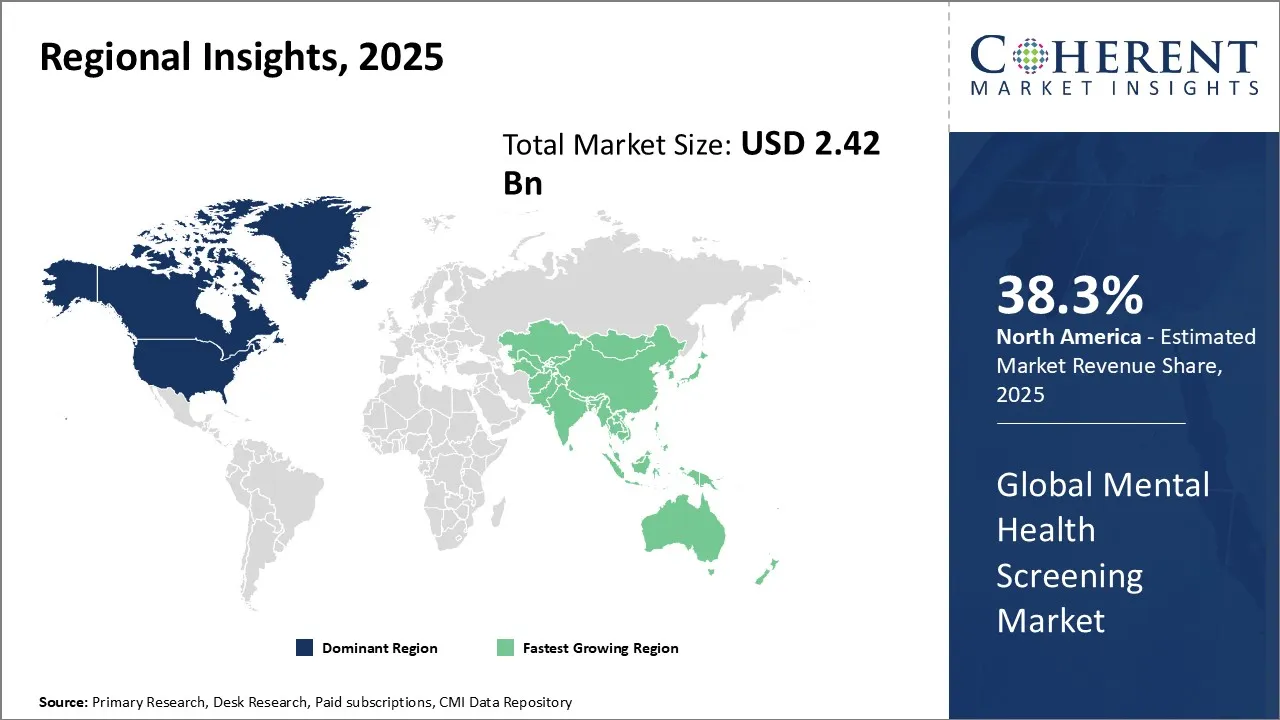
- North America is expected to lead the market, holding a share of 38. 3% in 2026. Asia Pacific is anticipated to be the fastest-growing region, with a market share of 23.2% in 2025.
Market Overview
Market trends indicate a strong shift towards the integration of technology in mental health screening, with mobile applications and telehealth services gaining prominence. There is also an increasing focus on personalized screening solutions tailored to specific demographics and conditions. Moreover, the push from government initiatives and insurance providers to support mental health awareness and treatment is fueling market expansion, while collaborations between healthcare providers and technology firms continue to innovate screening methodologies, enhancing accessibility and accuracy globally.
Currents Events and their Impact
Current Events | Description and its impact |
Rise in Mental Health Awareness & Legislation for Mental Health Funding
|
|
Global Health Crises and Natural Disasters |
|
Segmental Insights
- Current Industry Events of 2026
- Market Size Estimation
- Regional Breakdown
- Competitive Landscape
- Customer Intelligence
- Segmental Analysis
- Pricing Analysis
- Key Market Drivers, Challenges & Future Trends
- Customized Insights Section
Mental Health Screening Market Insights, By Type - Accessibility and User Empowerment Propel Self-Reported Screening Tools in Mental Health Screening
In terms of type, self-reported screening tools contribute the highest share of the global mental health screening market with an estimated share of 64.7% in 2026 primarily due to their accessibility and the empowerment they offer users in managing their mental health. These tools enable individuals to assess their mental health status in a manner that is convenient, private, and often less stigmatizing than clinician-administered evaluations. This ease of access plays a pivotal role in driving widespread adoption, especially in regions where mental health resources and clinical professionals are scarce.
The growing awareness about mental health issues and the increasing normalization of discussing psychological wellbeing have encouraged many individuals to take initiative in their own health assessments. Self-reported tools, such as standardized questionnaires and digital apps, allow users to monitor symptoms, track mood changes, and recognize early signs of mental health conditions. By facilitating early identification, these tools can prompt individuals to seek timely professional intervention, ultimately improving outcomes.
In May 2025, a mental health tech company, HiBoop, founded by Mr. Jason Morehouse, launched the beta version of its digital assessment platform aimed at delivering faster, evidence-based mental health evaluations. Motivated by Morehouse’s own costly, decades-long struggle to get a proper diagnosis, HiBoop goes beyond symptom checklists by linking coping behaviors like anxiety and substance use to deeper issues.
Mental Health Screening Market Insights, By Application - Rising Prevalence and Diagnostic Complexity Fuel Growth in Cognitive Disorders Screening
Within the application segment, cognitive disorders account for the highest share of the global mental health screening market with an estimated share of 24.2% in 2026, reflecting the increasing global focus on identifying and managing cognitive impairments such as Alzheimer’s disease, dementia, and other related disorders. This prominence is largely due to the aging global population and the corresponding surge in cognitive decline-related health challenges, which exert profound personal, social, and economic burdens.
The rising incidence of age-associated cognitive disorders has galvanized efforts for early detection, as timely intervention can slow disease progression and improve quality of life. Screening for cognitive disorders plays a crucial role in differentiating normal age-related changes from pathological decline, thereby guiding appropriate care pathways. For instance, in March 2024, a major study by The Lancet Neurology and the World Health Organization (WHO) found that over 3 billion people worldwide were living with neurological conditions in 2021, making them the top cause of illness and disability. Driven by aging and longer lifespans, cases of dementia, stroke, and diabetic neuropathy have surged, with diabetic neuropathy alone tripling since 1990. WHO stressed the urgent need for better prevention and care to address the rising burden of age-related cognitive disorders.
Mental Health Screening Market Insights, By Delivery Mode - Digital Transformation Accelerates Adoption of Online Screening in Mental Health Assessments
In the delivery mode segment, online screening is expected to hold the largest market share with 56.3% in 2026, reflecting the widespread digital transformation reshaping mental health care delivery worldwide. The pivot toward online platforms is driven by their inherent advantages in scalability, convenience, and real-time data collection, which address many challenges associated with traditional offline screening methods.
The proliferation of smartphones, internet accessibility, and mobile health applications facilitates online mental health screening adoption. Users can complete assessments remotely, anytime and anywhere, which is particularly valuable amid increasing demand for mental health support and the need to overcome geographical, social, and logistical barriers. This digital shift enhances inclusivity by reaching underserved populations, including rural communities and individuals with mobility or transportation constraints.
In January 2023, Metta Media, an Indian startup focused on mental health content and tools, launched MyndStories, the country’s first platform offering guidance and insights into mental health care.
Role of Artificial Intelligence (AI) in the Global Mental Health Screening Market
- Artificial Intelligence (AI) is significantly reshaping the global mental health screening market by enabling predictive analytics, automating assessments, and driving personalization in care delivery. AI-powered tools analyze vast datasets—such as voice patterns, behavioral signals, and biometric inputs—to detect early indicators of mental health conditions faster and more accurately than traditional methods. This improves diagnostic efficiency and reduces costs for providers while empowering data-driven decision-making. For example, AI chatbots and virtual assistants can conduct preliminary screenings, triage patients, and deliver real-time interventions, lowering the burden on clinical staff and enhancing customer experience. These innovations are unlocking new business models, such as subscription-based mental health platforms and scalable telepsychiatry services.
- One notable example is Sonde Health, a U.S.-based company specializing in vocal biomarker technology. Sonde Health’s platform uses AI to analyze voice recordings and detect vocal characteristics linked to mental health conditions like depression and anxiety. Their solution demonstrated in 2024 that it could accurately identify individuals with elevated mental health symptoms through remote voice analysis, illustrating AI’s transformative potential in accessible and proactive screening. While AI brings clear advantages in scalability and precision, it also raises concerns around data privacy, algorithmic bias, and over-reliance on automation, underscoring the need for balanced integration alongside human expertise.
Regional Insights
North America Mental Health Screening Market Analysis and Trends
In North America, the dominance in the global mental health screening market is driven by a well-established healthcare infrastructure with an estimated share of 38.3% in 2026, significant government initiatives focused on mental health awareness, and a robust ecosystem of technology providers and healthcare institutions.
Regulatory frameworks in the U.S. and Canada have fostered advancements in digital health technologies, facilitating widespread adoption of mental health screening tools in clinical and community settings.
The presence of key industry players such as Medtronic, Pfizer, and Cerner Corporation—with their innovative screening platforms and integration capabilities—further consolidates the region’s leadership. Cerner Corporation (U.S. has integrated behavioral health screening tools into its electronic health record (EHR) platforms, allowing clinicians to perform standardized mental health assessments (e.g., PHQ-9, GAD-7) within routine workflows. Additionally, extensive public and private funding for mental health research has accelerated product development and deployment, while comprehensive insurance coverage models have improved access to screening services.
Asia Pacific Mental Health Screening Market Analysis and Trends
Meanwhile, the Asia Pacific region is expected to exhibit the fastest growth in the global mental health screening market with a share of 23.2% in 2026 due to rising mental health awareness, expanding healthcare infrastructure, and supportive governmental reforms. Countries like China, India, Japan, and Australia are increasing investments in mental health services, driven by escalating cases of mental health disorders and a growing middle class seeking better healthcare outcomes.
The region is experiencing strong momentum from the rapid digitization of healthcare systems and the growing footprint of multinational companies such as Siemens Healthineers and GE Healthcare, along with local innovators like Australia’s Mindstrong Health. Moreover, government efforts to embed mental health services within primary care and launch public awareness campaigns are accelerating market adoption. In Japan, the Ministry of Health, Labour and Welfare is actively investing in mental health screening initiatives across occupational and primary care settings, supported by digital solutions from companies like Welby Inc., a Tokyo-based health technology firm specializing in apps for managing chronic conditions and mental health.
Global Mental Health Screening Market Outlook for Key Countries
U.S. Mental Health Screening Market Trends
The U.S mental health screening market reflects a mature stage with strong governmental support through programs run by agencies such as the national institutes of health and centers for disease control and prevention, emphasizing early detection and intervention of mental health illness. Major players like Medtronic and Johnson & Johnson dominate, offering advanced digital screening tools integrated with electronic health records (EHR). The U.S. also sees significant innovation from mental health startups focusing on AI-powered analytics and telehealth screening services, which improve outreach in underserved communities. Insurance providers increasingly recognize the benefits of mental health screenings, further driving adoption within both public and private healthcare sectors.
In November 2023, SonderMind, a U.S.-based mental wellness company specializing in digital mental healthcare solutions, acquired Total Brain to broaden its service portfolio. The acquisition aims to deliver personalized mental health services, enhance therapist support tools, equip enterprises with population health screening insights, and provide comprehensive solutions to health plans.
Canada Mental Health Screening Market Trends
The Canada mental health screening market is undergoing rapid digital transformation, driven by the widespread adoption of online tools, apps, and telehealth services that gained momentum during the pandemic. There is a strong focus on making screening more equitable and accessible, especially for rural, low-income, and Indigenous populations who face barriers like limited connectivity and digital literacy. Evidence increasingly supports the effectiveness of virtual screening and interventions for common mental health conditions, prompting integration into blended care models that combine self-assessment with clinical support.
In April 2026, Homewood Health, Canada’s leading mental health and EFAP provider, partnered with Cleveland Clinic Canada, a top virtual healthcare organization, to launch an integrated mental health, EFAP, and virtual care solution for workplaces nationwide. This collaboration blends over 250 years of expertise to improve employee health, resilience, and productivity, and ensures mental health screening services become part of routine hospital care across Canada.
China Mental Health Screening Market Trends
China’s mental health screening market is rapidly evolving with strong government focus on mental health reform and integration of mental health into primary care. The country’s vast population provides a large user base with increasing access to digital screening solutions via smartphones and telemedicine platforms. Domestic companies such as Mindstrong Health and WeDoctor, alongside global players like GE Healthcare, are investing heavily in AI-driven screening tools tailored for local languages and health profiles. Policy reforms under China’s National Mental Health Work Plan have improved insurance coverage and funding, further accelerating adoption. The growing acceptance of digital health solutions and expansion of community-based screening programs contribute to dynamic market growth.
In April 2026 China’s National Health Commission, the government body overseeing public health policy, announced that mental health screening will become a part of routine care in all hospital departments nationwide. Under a new three-year campaign running until 2027, patients identified as at risk will receive timely evaluations and early intervention when needed. The initiative also calls for expanding specialized mental health staff—including doctors, nurses, and psychotherapists—and ensuring township and community health centers have dedicated teams to manage severe mental disorders.
India Mental Health Screening Market Trends
India’s mental health screening market is witnessing notable transformation fueled by expanding healthcare infrastructure, increasing mental health awareness, and supportive policy frameworks such as the National Mental Health Programme. The large and diverse population presents opportunities for scalable digital screening tools that consider linguistic and cultural nuances. Indian startups and technology firms like Niramai and Lybrate are innovating cost-effective screening solutions employing AI, which complement the government’s push for telepsychiatry and rural healthcare access. The role of international corporations such as Philips and Abbott is also pronounced, bringing advanced screening platforms and capacity-building partnerships.
In January 2022, Karnataka’s Health Department, in collaboration with the National Institute of Mental Health and Neurosciences (NIMHANS) and the National Institution for Transforming India (NITI Aayog), launched the Karnataka Brain Health Initiative, India’s first program to train doctors in screening and treating mental health patients. Health Minister Dr. K. Sudhakar announced the pilot rollout in Bengaluru, Kolar, and Chikkaballapur, highlighting the need for early mental health screening—even in newborns—and greater public awareness to improve overall wellbeing.
Market Players, Key Developments, and Competitive Intelligence
Key Developments
- In May 2025, Horizon Public Health, a community health organization based in Minnesota, U.S. launched CredibleMind, a free 24 by 7 online platform supporting mental health and wellbeing for people aged 13 and up. Accessible through the Horizon website, CredibleMind offers thousands of trusted resources on topics like anxiety, relationships, and substance use. Users can create free accounts for personalized tools and enter a gift card drawing by completing a mental health check-in.
- In March 2025, the World Health Organization (WHO), the UN’s global health agency, released new guidance to help countries reform mental health policies and systems. Despite rising demand, mental health services remain severely underfunded, with up to 90% of people in some countries receiving no care. The guidance offers a framework to align services with international human rights standards and improve access to quality care.
- In April 2024, Fortis Healthcare, a leading integrated healthcare delivery service provider, introduced an AI-powered application to support individuals with mental health concerns. The app features a self-assessment tool offering personalized evaluations.
- In October 2023, Ellipsis Health Inc., a developer of AI-powered voice analysis technology, partnered with Augmedix to launch AI-generated vocal biomarker tools for automated mental health screenings during patient visits, enabling better identification and monitoring of mental health conditions.
Top Strategies Followed by Global Mental Health Screening Market
- Established players in the mental health screening market are advancing through significant investments in research and development. These efforts aim to create high-performance, clinically reliable products that integrate artificial intelligence (AI), machine learning, and data analytics to improve both diagnostic accuracy and user experience.
- In February 2025, NeuroX, part of American TelePhysicians and known for its AI-driven virtual brain health platform, launched an AI-powered screening tool to assess dementia and psychological condition risks. The tool enables users to screen themselves online and receive personalized risk reports, supporting early detection and easier access to specialist care from home.
- Mid-level market players adopt a cost-conscious approach by offering affordable mental health screening solutions that balance quality with price. This strategy primarily appeals to price-sensitive segments, including smaller healthcare facilities, community clinics, and developing economies where budget constraints are significant. To expand their capabilities and market reach, these companies often engage in collaborations or technology-sharing agreements with other industry players or research institutions, allowing them to access advanced manufacturing methods, innovative technologies, and broader distribution networks without incurring the high costs larger companies sustain.
- In March 2024, Sonde Health, a pioneer in vocal biomarker technology, announced that its mental fitness platform successfully demonstrated the ability to accurately identify individuals with elevated mental health symptoms, underscoring the promise of vocal biomarkers in mental health screening.
- Small-scale players in the mental health screening market are carving out specialized niches by developing innovative products tailored to specific regions or demographic segments. They often leverage cutting-edge technologies such as mobile health applications, wearable sensors, or telepsychiatry platforms to differentiate themselves from larger competitors.
- For example, Wysa, a mental health startup, utilizes an AI-driven mobile app to provide emotionally intelligent support through text-based conversations, offering tools for managing stress, anxiety, and depression. This solution is specifically designed to cater to young adults and working professionals, offering a convenient, scalable, and cost-effective way to access mental health care.
Market Report Scope
Mental Health Screening Market Report Coverage
| Report Coverage | Details | ||
|---|---|---|---|
| Base Year: | 2025 | Market Size in 2026: | USD 2.67 Bn |
| Historical Data for: | 2020 To 2024 | Forecast Period: | 2026 To 2033 |
| Forecast Period 2026 to 2033 CAGR: | 10.5% | 2033 Value Projection: | USD 5.38 Bn |
| Geographies covered: |
| ||
| Segments covered: |
| ||
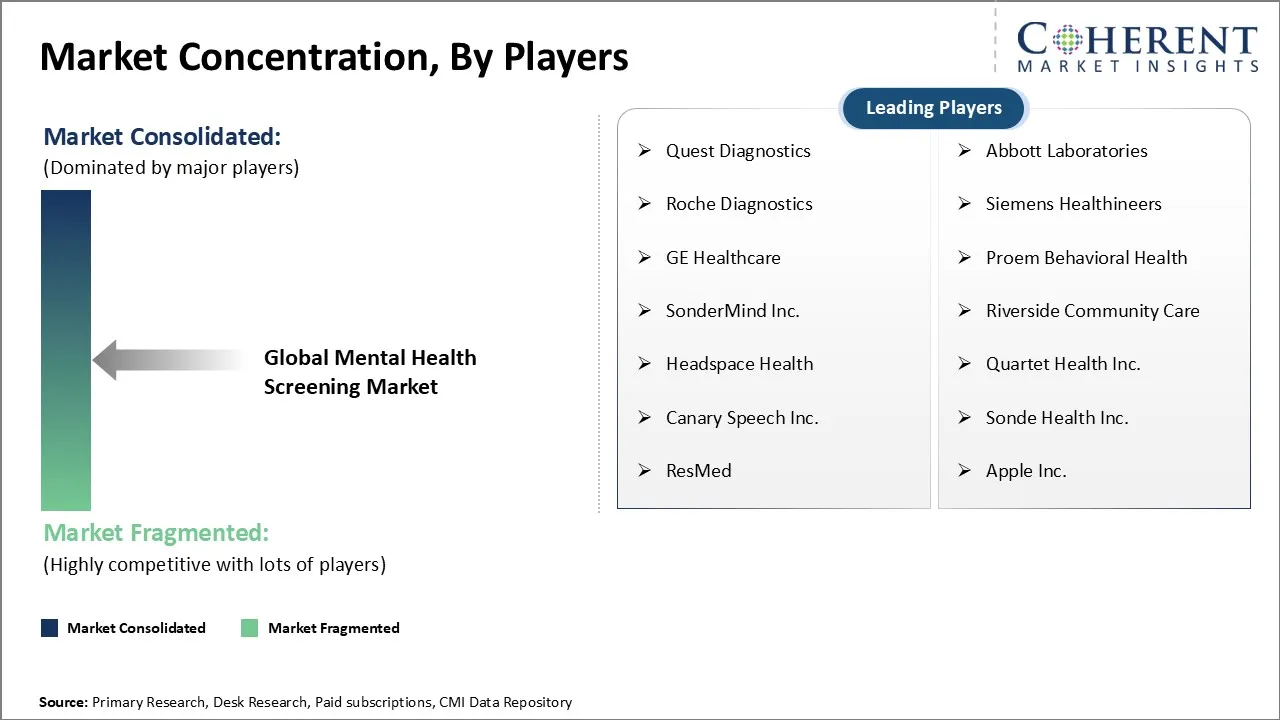
| Companies covered: | Quest Diagnostics, Abbott Laboratories, Roche Diagnostics, Siemens Healthineers, GE Healthcare, Proem Behavioral Health, SonderMind Inc., Riverside Community Care, Headspace Health, Quartet Health Inc., Canary Speech Inc., Sonde Health Inc., ResMed, and Apple Inc. | ||
| Growth Drivers: |
| ||
| Restraints & Challenges: |
| ||
Mental Health Screening Market Dynamics
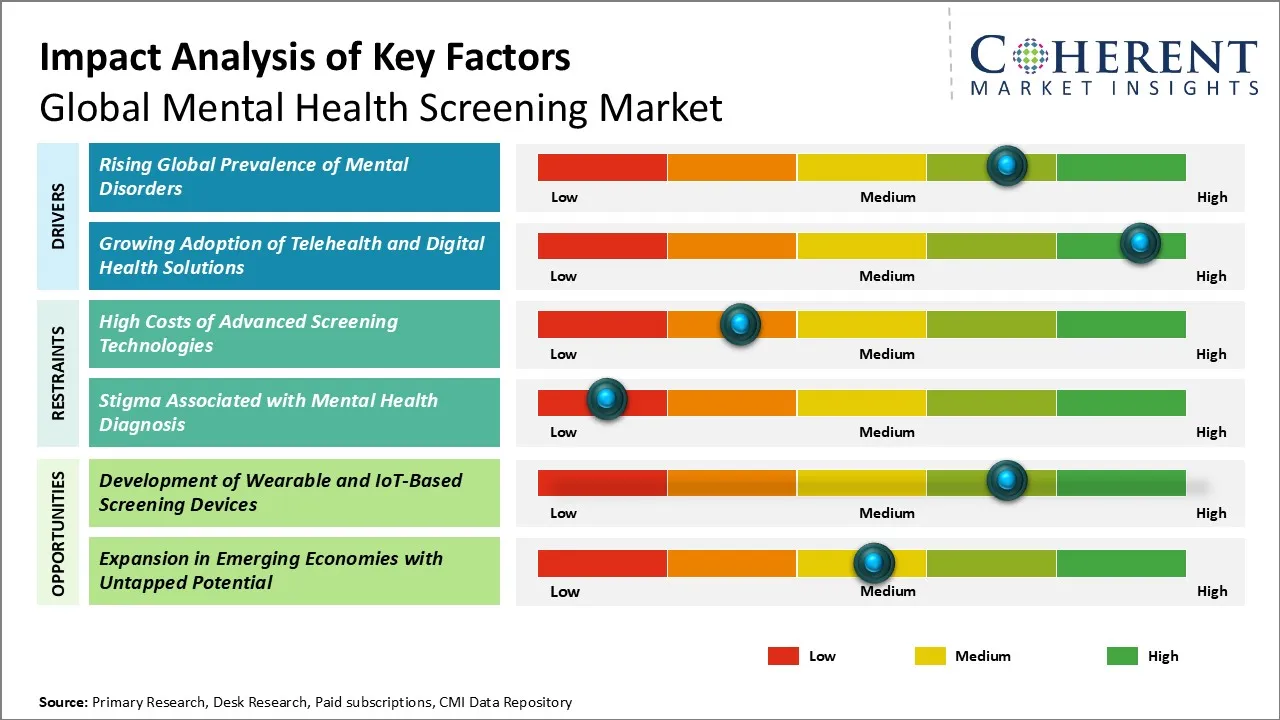
Mental Health Screening Market Driver - Rising Global Prevalence of Mental Disorders
The increasing prevalence of mental disorders across diverse populations is a significant driver propelling the demand for mental health screening solutions worldwide. Factors such as urbanization, lifestyle changes, and the ongoing socio-economic challenges including the impact of global pandemics have collectively contributed to heightened mental health concerns. Conditions like depression, anxiety, bipolar disorder, and other psychosocial impairments are being diagnosed more frequently, highlighting the urgent need for early detection and intervention. As awareness around mental health grows and the stigma surrounding these conditions gradually diminishes, more individuals are seeking professional evaluation, thereby driving the adoption of comprehensive screening tools.
This rising global incidence underscores the critical role of efficient screening technologies in facilitating timely diagnosis and personalized treatment planning. For instance, in June 2022, according to the WHO, the COVID-19 pandemic triggered a 25% global increase in anxiety and depression, disproportionately affecting young people and women. Social isolation, fear of infection, and economic stress were major contributors. In 2019, 1 in 8 people worldwide lived with a mental disorder, rising further in 2020. Despite effective treatments, most individuals lack access to care and face stigma and discrimination. WHO called this a wake-up call for all countries to prioritize mental health services and integrate support into public health systems.
Mental Health Screening Market Opportunity - Development of Wearable and IoT-Based Screening Devices
The global mental health screening market is poised to experience significant growth driven by the development of wearable and IoT-based screening devices. With advancements in sensor technologies, these devices offer real-time, continuous monitoring of physiological and behavioral indicators associated with mental health conditions such as anxiety, depression, and stress. Wearable devices like smartwatches, fitness bands, and specialized mental health trackers can capture vital data including heart rate variability, sleep patterns, and activity levels, which are critical in early detection and ongoing assessment of mental health status. Integration with Internet of Things (IoT) platforms enhances data collection, enabling seamless transmission to healthcare providers and facilitating remote monitoring and timely interventions. This is particularly advantageous in addressing the shortage of mental health professionals and overcoming barriers related to stigma and accessibility.
Additionally, the increasing adoption of smartphones and mobile connectivity globally complements the use of these wearables by supporting app ecosystems that interpret and provide feedback based on the collected data, empowering users with personalized mental health insights. The evolving regulatory landscape and rising investments in digital health innovations further accelerate the development and commercialization of these devices. For instance, in January 2024, an India-based startup, BramhAnsh Technologies, known for developing wellness innovations, launched SOONYAM, a wearable biofeedback device that monitors psychological arousal and stress using Galvanic Skin Response (GSR) technology. Unlike typical wearables tracking only heart rate, SOONYAM captures electrodermal activity for real-time emotional insights during counseling or daily use.
Analyst Opinion (Expert Opinion)
- The global mental health screening market is experiencing sustained momentum driven by a convergence of technological innovation, regulatory prioritization, and rising societal awareness. The widespread adoption of AI-powered screening tools, including vocal biomarkers and adaptive digital assessments, has significantly enhanced early detection and accessibility across clinical and community settings. Regulatory frameworks, such as mental health parity laws in the EU and North America, are mandating standardized screening in schools and workplaces, further expanding adoption. However, challenges persist around data privacy, algorithmic bias, and the need for culturally responsive tools that can effectively engage diverse populations. Emerging opportunities are especially strong in developing markets where mobile-first solutions and scalable cloud platforms are increasingly critical to bridging gaps in mental health infrastructure.
- Several high-impact events and initiatives continue to shape this landscape. Conferences like the World Mental Health Congress (2023) and the Global Digital Health Forum (2024) have provided essential platforms for knowledge-sharing and policy dialogue, accelerating cross-sector collaboration and showcasing next-generation screening technologies. Notable examples include the IMSS and SNTSS Emotional Coping Course in Mexico, part of a nationwide mental health screening strategy launched in 2025, and SonderMind’s acquisition of Total Brain to integrate advanced mental health assessment capabilities. These initiatives signal a growing commitment to normalizing mental health screening and fostering innovation that improves reach, quality, and user trust in digital solutions.
Speak to the analyst
Want personalized insights?
Take the findings above to one of our principal consultants, or have the report rebuilt around the segments, geographies and competitors you actually track.
Market Segmentation
- Type Insights (Revenue, USD Bn, 2021 - 2033)
- Self-Reported Screening Tools
- Clinician-Administered Screening Tools
- Application Insights (Revenue, USD Bn, 2021 - 2033)
- Cognitive Disorders
- Alzheimer’s Disease
- Cognitive Impairment
- Dementia
- Other Cognitive Disorders
- Behavioral Disorders
- Sleep Disorder
- Social Withdrawal
- Dissociative Disorder
- Hyperactivity
- Self-Harm
- Aggression
- Other Behavioral Disorders
- Physiological Disorders
- Bipolar Disorder
- Eating Disorder
- Substance Abuse
- Depression
- Anxiety
- Post-Traumatic Stress Disorder (PTSD)
- Other (Post‑Menopausal Mental Health)
- Psychiatric Disorders
- Psychotic Disorder
- Dissociative Disorder
- Obsessive Compulsive Disorder
- Schizophrenia
- Dissociative Disorder
- Others (Attention Deficit Hyperactivity Disorder (ADHD))
- Cognitive Disorders
- Delivery Mode Insights (Revenue, USD Bn, 2021 - 2033)
- Online Screening
- Offline Screening
- Component Insights (Revenue, USD Bn, 2021 - 2033)
- Hardware
- Wearable Sensors & Devices
- Neuroimaging & Neurodiagnostic Equipment
- Biometric Collection Devices
- Others (Point-of-Care Testing Devices, etc.)
- Software
- Screening & Assessment Platforms
- Mobile Applications
- Data Integration & Analytics Suites
- Therapeutic Support Software
- Others (Administrative & Reporting Tools, etc.)
- Hardware
- Age Group Insights (Revenue, USD Bn, 2021 - 2033)
- Children & Adolescents
- Adults
- Geriatric Population
- Gender Insights (Revenue, USD Bn, 2021 - 2033)
- Female
- Male
- End User Insights (Revenue, USD Bn, 2021 - 2033)
- Hospitals & Specialty Clinics
- Community Mental Health Centers
- Homecare Settings
- Educational Institutions
- Workplace/Corporate Wellness Programs
- Rehabilitation Centers
- Regional Insights (Revenue, USD Bn, 2021 - 2033)
- North America
- U.S.
- Canada
- Latin America
- Brazil
- Argentina
- Mexico
- Rest of Latin America
- Europe
- Germany
- U.K.
- Spain
- France
- Italy
- Russia
- Rest of Europe
- Asia Pacific
- China
- India
- Japan
- Australia
- South Korea
- ASEAN
- Rest of Asia Pacific
- Middle East
- GCC Countries
- Israel
- Rest of Middle East
- Africa
- South Africa
- North Africa
- Central Africa
- North America
- Key Players Insights
- Quest Diagnostics
- Abbott Laboratories
- Roche Diagnostics
- Siemens Healthineers
- GE Healthcare
- Proem Behavioral Health
- SonderMind Inc.
- Riverside Community Care
- Headspace Health
- Quartet Health Inc.
- Canary Speech Inc.
- Sonde Health Inc.
- ResMed
- Apple Inc.
Sources
Primary Research Interviews
- Psychiatrists and Clinical Psychologists
- Hospital Mental Health Program Directors
- Telehealth Platform Administrators
- Government Health Policy Advisors
- Employee Assistance Program Managers
- School and University Counseling Coordinators
Government and International Databases
- World Health Organization (WHO) Mental Health Atlas
- OECD Health Statistics
- Centers for Disease Control and Prevention (CDC) Behavioral Risk Factor Surveillance System
- National Institute of Mental Health (NIMH)
- Eurostat Health Data
- Statistics Canada – Mental Health Indicators
- Australian Institute of Health and Welfare (AIHW)
- NHS Digital – Mental Health Services Data Set
- United Nations Data (UNData)
Trade Publications
- Psychology Today
- Behavioral Healthcare Executive
- mHealth Intelligence
- Healthcare IT News
- Telehealth and Medicine Today
- Health Affairs Blog
Academic Journals
- The Lancet Psychiatry
- Journal of Affective Disorders
- JAMA Psychiatry
- International Journal of Mental Health Systems
- BMC Psychiatry
- Frontiers in Psychiatry
- Social Psychiatry and Psychiatric Epidemiology
Reputable Newspapers
- The New York Times – Health Section
- The Guardian – Society/Mental Health
- The Washington Post – Health
- Financial Times – Healthcare
- The Economist – International Health Coverage
Industry Associations
- American Psychological Association (APA)
- World Federation for Mental Health (WFMH)
- Mental Health Europe
- National Alliance on Mental Illness (NAMI)
- International Society for Mental Health Online (ISMHO)
- Global Alliance for Mental Health Advocates
Public Domain Resources
- WHO Mental Health Action Plan
- UNICEF Mental Health Reports
- World Bank Health Systems Reports
- United Nations Sustainable Development Goals (SDGs) – Goal 3: Good Health and Well-being
- OECD Policy Responses on Mental Health
Proprietary Elements:
- CMI Data Analytics Tool: Proprietary analytics tool to analyze real-time market trends, consumer behavior, and technology adoption in market
- Proprietary CMI Existing Repository of Information for Last 8 Years
Get access to 250+ pages report
Every segment, forecast, competitor profile and data table behind the analysis above — available for instant download.
- ESOMAR Member
- ISO 9001:2015 Certified
- D-U-N-S Registered
- GDPR & CCPA Compliant
Missing comfort of reading report in your local language? Find your preferred language:
Transform your Strategy with Exclusive Trending Reports
Frequently Asked Questions
The global mental health screening market is estimated to be valued at USD 2.67 Bn in 2026 and is expected to reach USD 5.38 Bn by 2033.
The CAGR of the global mental health screening market is projected to be 10.5% from 2026 to 2033.
Rising global prevalence of mental disorders and growing adoption of telehealth and digital health solutions are the major factors driving the growth of the global mental health screening market.
High costs of advanced screening technologies and stigma associated with mental health diagnosis are the major factors hampering the growth of the global mental health screening market.
In terms of type, self-reported screening tools segment is estimated to dominate the market revenue share in2025.
Quest Diagnostics, Abbott Laboratories, Roche Diagnostics, Siemens Healthineers, GE Healthcare, Proem Behavioral Health, SonderMind Inc., Riverside Community Care, Headspace Health, Quartet Health Inc., Canary Speech Inc., Sonde Health Inc., ResMed, and Apple Inc. are the major players.
North America is expected to lead the global mental health screening market in 2026.