

Middle East and Saudi Arabia General Urology and Hernia Repair Market Size and Forecast – 2026 To 2033
The Middle East and Saudi Arabia general urology and hernia repair market is expected to grow from USD 703.9 Mn in 2026 to USD 1,200.0 Mn by 2033, registering a compound annual growth rate (CAGR) of 7.9% from 2026 to 2033. The market for general urology and hernia repair in the Middle East and Saudi Arabia is poised for significant expansion, fueled by the increasing adoption of minimally invasive and robotic-assisted surgical procedures, and rapid expansion of healthcare infrastructure across the region.
In May 2025, the Saudi Ministry of Health launched an advanced robotic surgical system at King Abdullah Medical City to perform complex minimally invasive procedures, including urology, as part of the Health Sector Transformation Program under Vision 2030, reinforcing the Kingdom's investment in advanced surgical technologies.
Key Takeaways of the Middle East and Saudi Arabia General Urology and Hernia Repair Market
- General urology surgical instruments are projected to hold 65.2 % of the Middle East and Saudi Arabia general urology and hernia repair market share in 2026, making it the dominant product type segment, due to their routine use across endoscopic, laparoscopic, and open urological procedures. For instance, the Emirates Urological Society and Emirates Medical Association regularly conduct live endourology and minimally invasive surgery workshops to train urologists on advanced endoscopic instrumentation, reflecting the increasing clinical adoption of these devices across the UAE.
- Benign prostatic hyperplasia is projected to hold 21.2 % of the Middle East and Saudi Arabia general urology and hernia repair market share in 2026, making it the dominant indication segment, due to the growing elderly male population requiring surgical intervention. For instance, the European Association of Urology (EAU) Guidelines—widely adopted by urology centers across the Middle East, recommend transurethral resection of the prostate (TURP) as the standard surgical treatment for prostates measuring 30–80 mL, sustaining the demand for BPH-related surgical procedures and devices.
- Hospitals are projected to hold 46.5 % of the Middle East and Saudi Arabia general urology and hernia repair market share in 2026, making it the dominant end user segment, owing to the availability of multidisciplinary surgical infrastructure. For instance, Hamad Medical Corporation (Qatar), the country's principal tertiary healthcare provider, performs advanced robotic urology, endourology, and complex hernia repair procedures through its specialized surgical centers, reinforcing hospitals as the primary treatment setting.
- Rising Adoption of Robotic-Assisted Urological and Hernia Procedures: The increasing integration of robotic-assisted surgery is transforming urology and hernia repair across the Middle East, particularly in Saudi Arabia, the UAE, and Qatar. Robotic platforms enable greater surgical precision, shorter hospital stays, and faster patient recovery, driving their adoption for procedures such as radical prostatectomy, partial nephrectomy, pyeloplasty, and complex ventral and inguinal hernia repairs. The growing number of robotic surgery centers and surgeon training programs is further accelerating demand for advanced surgical instruments and accessories.
- Expansion of Same-Day Hernia Repair and Ambulatory Urology Services: The rapid development of ambulatory surgical centers (ASCs) and day-care surgery programs present a significant opportunity for the market. Advancements in laparoscopic techniques, lightweight surgical meshes, enhanced recovery after surgery (ERAS) protocols, and minimally invasive endourological procedures are enabling more hernia repairs and urological interventions to be performed on an outpatient basis. This shift is expected to increase demand for disposable surgical instruments, fixation devices, and compact endourology systems while reducing the burden on tertiary hospitals.
Segmental Insights
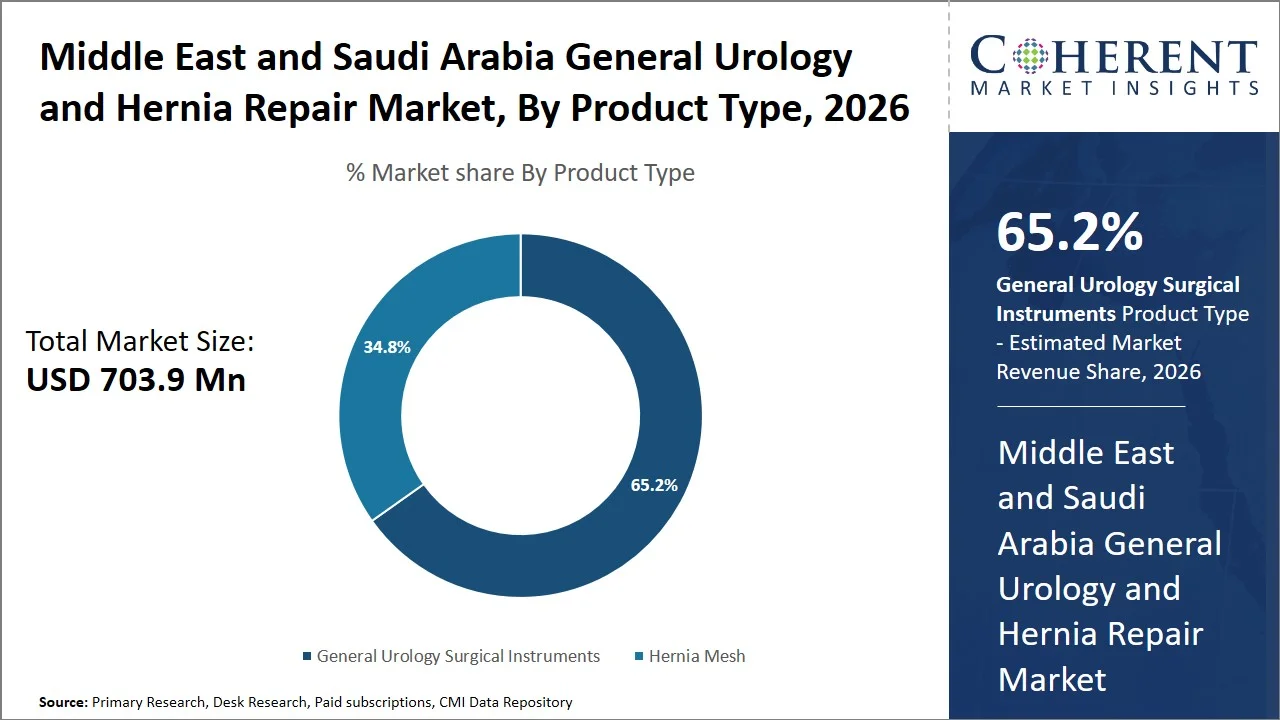
Why Do General Urology Surgical Instruments Dominate the Middle East and Saudi Arabia General Urology and Hernia Repair Market?
General urology surgical instruments are projected to hold a market share of 65.2% in 2026, primarily driven by their vital function in nearly all urological and hernia repair procedures such as cystoscopy, ureteroscopy, transurethral resection of prostate (TURP), percutaneous nephrolithotomy (PCNL), laparoscopic hernia repair, and robotic-assisted surgery. These instruments are required for diagnosis, tissue dissection, stone retrieval, suturing, and reconstruction, making them essential across hospitals and specialty surgical centers. The increased use of the minimally invasive and robotic surgical procedures is driving persistent demand for advanced reusable and disposable urology surgical instruments. For instance, the Division of Urology at King Faisal Specialist Hospital & Research Centre (KFSHRC) in Saudi Arabia possesses total subspecialty expertise in robotic surgery, laparoscopy, urological oncology, endourology for stone and prostate diseases, reconstructive urology, neuromodulation, pediatric urology and andrology/infertility, reinforcing the extensive utilization of specialized urology surgical instruments across diverse clinical applications.
- Current Industry Events of 2026
- Market Size Estimation
- Regional Breakdown
- Competitive Landscape
- Customer Intelligence
- Segmental Analysis
- Pricing Analysis
- Key Market Drivers, Challenges & Future Trends
- Customized Insights Section
Why Does Benign Prostatic Hyperplasia Represent the Largest Indication Segment in the Middle East and Saudi Arabia General Urology and Hernia Repair Market?
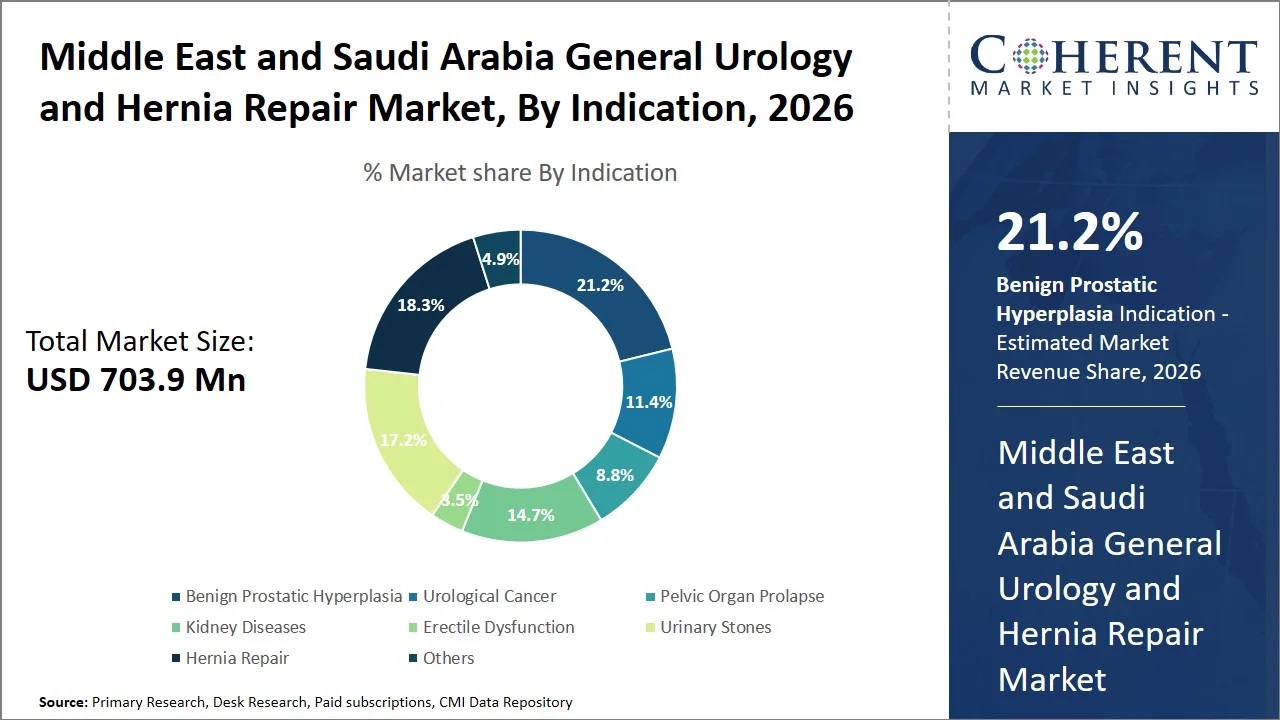
Benign prostatic hyperplasia is projected to hold a market share of 21.2% in 2026, driven by the rising prevalence of benign prostatic hyperplasia (BPH) among the aged population and growing preference for minimally invasive procedures. Enhanced patient awareness, diagnostics advancements and adoption of minimally invasive treatment options such as the laser and image-guided treatments, is encouraging hospitals to expand specialized benign prostatic hyperplasia (BPH) treatment offerings. For instance, in October 2024, Cleveland Clinic Abu Dhabi expanded its range of treatments for benign prostatic hyperplasia (BPH) with the launch of Aquablation Therapy, a robotic-assisted minimally invasive therapy. The innovative technology can selectively and effectively resect prostate tissue and minimize potential risks associated with this procedure, reflecting the region's rising adoption of advanced benign prostatic hyperplasia (BPH) treatment technologies.
Hospitals Segment Dominates the Middle East and Saudi Arabia General Urology and Hernia Repair Market
The hospitals segment is projected to hold a market share of 46.5% in 2026, due to access to state-of-the-art surgical infrastructure, multidisciplinary clinical expertise, and readily accessible modern technologies such as robotic surgical systems, laser platforms and high-definition endoscopy. Tertiary hospitals represent the focal point for most complex urologic and hernia repair surgeries and referral destination for minimally invasive and robot-assisted cases. Their superior capability of managing complex high-risk cases coupled with a strong support network that extends from preoperative to postoperative care continues to strengthen their market leadership. For instance, in April 2026, Sheikh Shakhbout Medical City (SSMC) Abu Dhabi has performed emergency urology robotic surgery to repair a complex ureteropelvic junction injury in a 71-year-old patient. The operation was performed within six hours from diagnosis with no complications occurring during the surgery, reinforcing the advanced surgical capabilities of tertiary hospitals in the region.
Currents Events and their Impact
Current Events | Description and its Impact |
UAE Federal Decree-Law No. 38 of 2024 on Medical Products entered into force (January 2025) |
|
Saudi Food and Drug Authority (SFDA) strengthen regulation of medical device clinical studies (July 2025) |
|
Middle East and Saudi Arabia General Urology and Hernia Repair Market Dynamics
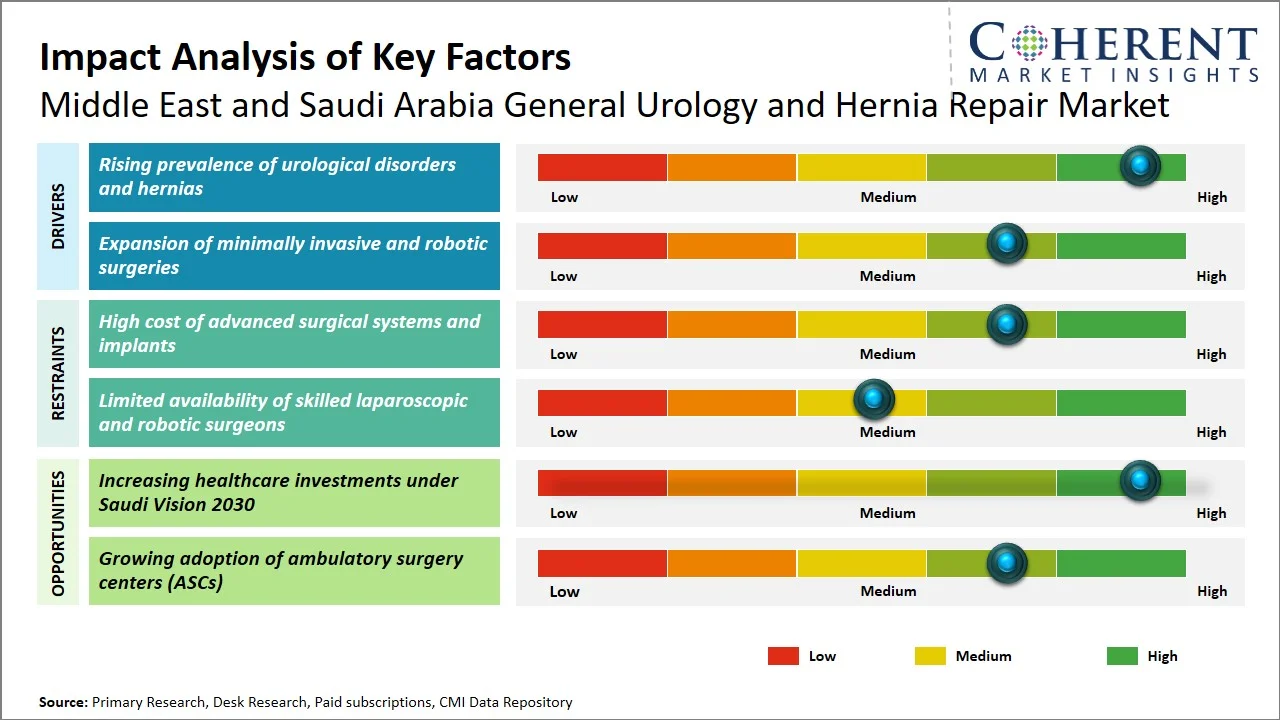
Market Drivers
- Rising prevalence of urological disorders and hernias: The rising prevalence of kidney stones, BPH, urinary disorders and abdominal hernia is fueling the demand for advanced urological and hernia repair procedures in the Middle East & Saudi Arabia. The growing disease burden in the region has fueled an accelerated adoption of endourology devices, laparoscopic systems, and surgical meshes in tertiary healthcare settings. For instance, according to the Saudi Ministry of Health, kidney stones most frequently occur in individuals between the age group of 30–60 years, are more common in men than women. The large stones often require interventions such as ureteroscopy, lithotripsy, or surgical removal, thereby increasing demand for specialized urology devices and surgical instruments.
- Expansion of minimally invasive and robotic surgeries: Healthcare organizations across the region are increasing their use of minimally invasive surgical procedures, along with robotics-assisted procedures, for enhanced accuracy of operations and enhanced postoperative outcomes and reduced length of hospital stay. Hence, these changes boost the demand for new generation laparoscopes, surgical robots and hernia repair technologies in urology and general surgery disciplines. For instance, In April 2025, Cleveland Clinic Abu Dhabi performed the UAE's first robotic bilateral kidney transplant via the da Vinci system, reinforcing the region's increasing acceptance of robotic urological surgery.
Emerging Trends
- Increasing Adoption of Laser-Based Therapies for Benign Prostatic Hyperplasia (BPH): Hospitals across the Middle East are increasingly adopting laser technologies such as Holmium Laser Enucleation of the Prostate (HoLEP) and Thulium Fiber Laser (TFL) for BPH treatment. These techniques offer reduced bleeding, shorter catheterization time, and faster patient recovery, driving demand for advanced laser systems and associated urology instruments.
- Growing Preference for Lightweight and Biosynthetic Hernia Meshes: Surgeons are increasingly shifting toward lightweight, composite, and biosynthetic hernia meshes to minimize chronic pain, foreign-body response, and post-operative complications. The trend is encouraging manufacturers to introduce next-generation implant materials that improve biocompatibility and long-term clinical outcomes, particularly for laparoscopic and complex abdominal wall repairs.
Competitive Positioning of Key Countries in the Middle East and Saudi Arabia General Urology and Hernia Repair Market Based on Urology & Hernia Care Capabilities
Country | Centers of Excellence (Urology/Hernia) | Robotic Surgery Adoption | Key Urology Procedures | Competitive Position |
Saudi Arabia | High | High | Robotic prostatectomy, stone management, complex hernia | Regional Leader |
UAE
| High | Very High | Endourology, laser BPH, robotic urology | Premium Destination |
Qatar | Moderate | High | Kidney transplantation, robotic urology | Emerging Hub |
Israel | Very High | Very High | Oncology urology, reconstructive urology | Technology Leader |
Turkey | High | Moderate | Stone disease, laparoscopic hernia | Cost Leader |
How are the increasing healthcare investments under Saudi Vision 2030 creating new growth opportunities in the Middle East and Saudi Arabia general urology and hernia repair market?
The growing healthcare spending in Saudi Vision 2030 is setting the stage for future growth, particularly for its specialized surgical ecosystem. The expansion of health clusters, modernization of tertiary hospitals are expanding reach of minimally invasive urology procedures and complex hernia repairs while creating demand for next generation instruments, endourology solutions, robotics platforms and implants. For instance, in October 2025, the Saudi Ministry of Health had signed over 124 strategic partnerships during the Global Health Exhibition 2025, involving healthcare facilities, innovative solutions, and new medical technologies that will enhance the pace of transformation of the health sector in accordance with Saudi Vision 2030. These investments are anticipated to improve access to specialized surgical procedures, and to encourage the widespread uptake of innovative urology and hernia repair technology in the Kingdom.
Market Players, Key Development, and Competitive Landscape
Key Developments
- In November 2025, Profound Medical signed an exclusive distribution agreement with Al Faisaliah Medical Systems to commercialize its TULSA-PRO and Sonalleve platforms in Saudi Arabia. The agreement enables the introduction of incision-free, MRI-guided therapies for prostate disease and tissue ablation, with all required regulatory approvals in place. The partnership is expected to accelerate the adoption of advanced, minimally invasive urology technologies across the Kingdom.
- In October 2025, Johns Hopkins Aramco Healthcare (JHAH) expanded its robotic surgery program by introducing robot-assisted thoracic procedures after successfully performing Saudi Arabia's first robotic lung surgery. The expansion follows the hospital's earlier implementation of robotic hernia repair surgeries, highlighting the increasing adoption of robotic-assisted minimally invasive procedures. This development strengthens Saudi Arabia's advanced surgical capabilities and supports demand for robotic technologies in the general surgery and hernia repair industry.
Competitive Landscape
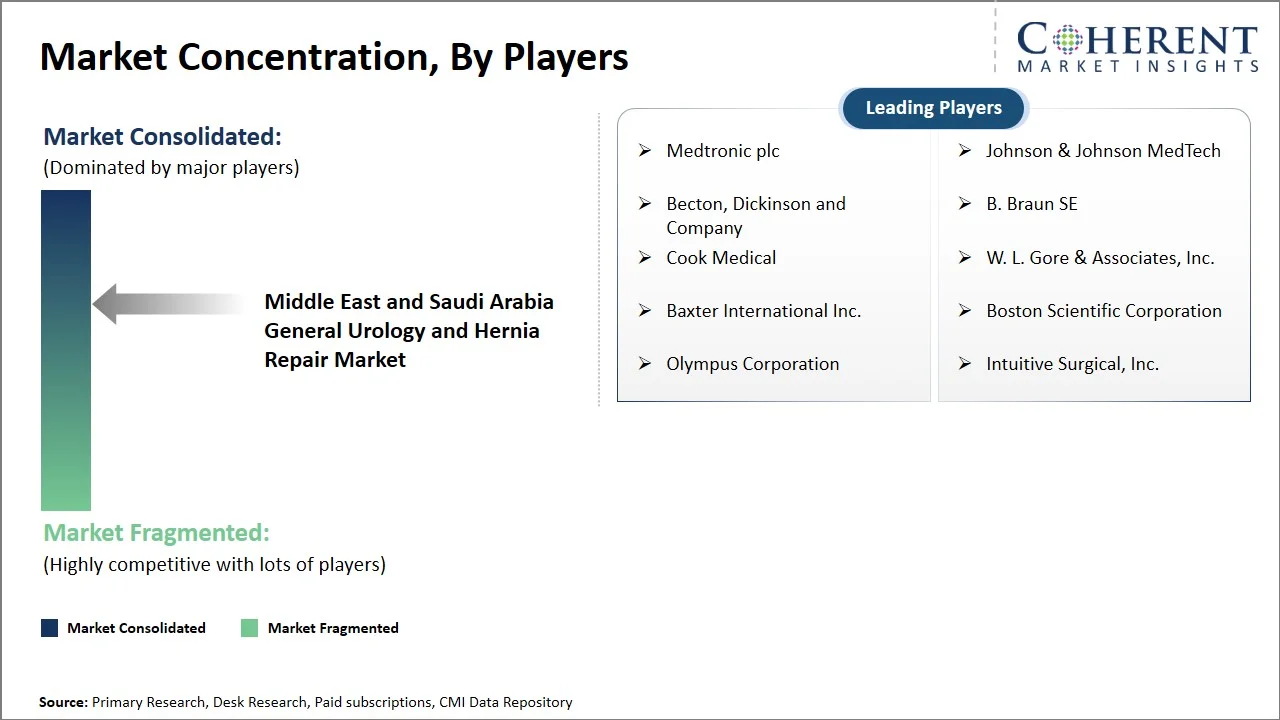
The Middle East and Saudi Arabia general urology and hernia repair market is moderately consolidated, with competition centered on technological innovation, product portfolio breadth, clinical evidence, and strategic collaborations with hospitals and healthcare providers. Leading medical device manufacturers are strengthening their regional presence through localized distribution networks, surgeon training initiatives, and the introduction of advanced minimally invasive and robotic-assisted surgical solutions. Key focus areas include:
- Expansion of robotic-assisted urology and laparoscopic hernia repair portfolios
- Development of advanced endourology devices, laser systems, and next-generation surgical meshes
- Strategic partnerships with hospitals, distributors, and healthcare groups to strengthen regional market access
- Investment in surgeon training, clinical education, and procedural adoption programs
- Focus on regulatory approvals and commercialization of innovative urology and hernia repair technologies across the Middle East and Saudi Arabia
Market Report Scope
Middle East and Saudi Arabia General Urology and Hernia Repair Market Report Coverage
| Report Coverage | Details | ||
|---|---|---|---|
| Base Year: | 2025 | Market Size in 2026: | USD 703.9 Mn |
| Historical Data for: | 2020 To 2024 | Forecast Period: | 2026 To 2033 |
| Forecast Period 2026 to 2033 CAGR: | 7.9% | 2033 Value Projection: | USD 1,200.0 Mn |
| Segments covered: |
| ||
| Companies covered: | Medtronic plc, Johnson & Johnson MedTech, Becton, Dickinson and Company, B. Braun SE, Cook Medical, W. L. Gore & Associates, Inc., Baxter International Inc., Boston Scientific Corporation, Olympus Corporation, and Intuitive Surgical, Inc. | ||
| Growth Drivers: |
| ||
| Restraints & Challenges: |
| ||
Analyst Opinion (Expert Opinion)
- In the coming years, the Middle East and Saudi Arabia general urology and hernia repair market will be shaped by the rapid adoption of minimally invasive and robotic-assisted surgical technologies, increasing localization of advanced healthcare services, and greater integration of digital surgical platforms. As governments continue investing in tertiary care infrastructure and specialized surgical centers, demand for precision-driven urology and hernia repair solutions is expected to accelerate.
- The maximum opportunities will probably exist within robotic-assisted benign prostatic hyperplasia (BPH) and kidney stone management procedures in Saudi Arabia, supported by Vision 2030 healthcare transformation, expanding robotic surgery programs, and increasing investments in advanced urology centers. Additionally, laparoscopic inguinal and ventral hernia repair in the UAE presents significant potential due to the country's high adoption of minimally invasive surgery and strong private healthcare sector.
- In order to obtain a competitive advantage, market participants should prioritize next-generation endourology technologies, advanced laser systems, lightweight and biosynthetic hernia meshes, and robotic-compatible surgical instruments. Strengthening partnerships with leading hospitals, investing in surgeon training and clinical education, and expanding local distribution and technical support networks will be critical to accelerating product adoption and establishing long-term market leadership.
Speak to the analyst
Want personalized insights?
Take the findings above to one of our principal consultants, or have the report rebuilt around the segments, geographies and competitors you actually track.
Market Segmentation
- Product Type Insights (Revenue, USD Mn, 2021 - 2033)
- General Urology Surgical Instruments
- Hernia Mesh
- By Indication (Revenue, USD Mn, 2021 - 2033)
- Benign Prostatic Hyperplasia
- Urological Cancer
- Pelvic Organ Prolapse
- Kidney Diseases
- Erectile Dysfunction
- Urinary Stones
- Hernia Repair
- Others
- By End User (Revenue, USD Mn, 2021 - 2033)
- Hospitals
- Specialty Clinics
- Ambulatory Surgical Centers
- Others
- Key Players Insights
- Medtronic plc
- Johnson & Johnson MedTech
- Becton, Dickinson and Company
- Braun SE
- Cook Medical
- L. Gore & Associates, Inc.
- Baxter International Inc.
- Boston Scientific Corporation
- Olympus Corporation
- Intuitive Surgical, Inc.
Sources
Primary Research Interviews
- Urologists specializing in endourology, uro-oncology, and robotic urological surgery
- General and gastrointestinal surgeons specializing in laparoscopic and complex hernia repair
- Heads of Urology Departments and Directors of Surgical Services at tertiary hospitals
- Hospital procurement managers for surgical instruments and medical devices
- Medical device distributors specializing in urology and general surgery products
- Clinical application specialists for robotic surgery, endoscopy, and laparoscopy systems
- Healthcare infrastructure and surgical technology consultants
- Officials from healthcare regulatory authorities and medical device registration agencies
Stakeholders
- Medical device manufacturers (urology instruments, endoscopy, laparoscopy, robotic surgery, surgical meshes)
- Multispecialty and tertiary care hospitals
- Ambulatory surgery centers (ASCs) and day-care surgical facilities
- Specialty urology clinics and stone treatment centers
- Hernia centers of excellence and gastrointestinal surgery centers
- Hospital purchasing organizations and group procurement entities
- Healthcare investors and private hospital operators
- End-use Sectors
- Tertiary care hospitals
- Specialty urology hospitals and clinics
- General surgery departments
- Ambulatory surgery centers (ASCs)
- Academic medical centers and teaching hospitals
- Military and government hospitals
- Regulatory & Health Bodies
- Saudi Food and Drug Authority (SFDA)
- Saudi Ministry of Health (MOH)
- UAE Ministry of Health and Prevention (MoHAP)
- Department of Health – Abu Dhabi (DoH)
- Dubai Health Authority (DHA)
- Gulf Health Council (GHC)
Databases
- Saudi Ministry of Health Statistical Yearbook
- Saudi Food and Drug Authority (Medical Devices Database)
- World Health Organization (WHO) Global Health Observatory
- World Bank Open Data
- Organisation for Economic Co-operation and Development (OECD) Health Statistics
- Global Burden of Disease (GBD) Study
- European Association of Urology (EAU) Guidelines Database
- HerniaSurge International Guidelines Repository
Magazines
- Middle East Health Magazine
- Saudi Medical Journal Magazine
- Journal of Urology Today
- Arab Health Magazine,
Journals
- Arab Journal of Urology
- Journal of Minimal Access Surgery
- International Journal of Surgery (Hernia & Abdominal Wall)
- Saudi Medical Journal
Newspapers
- Arab News (Health Section)
- Saudi Gazette (Medical & Healthcare)
- Gulf News (Healthcare)
- The National (UAE – Health & Science)
Associations
- Saudi Urology Association (SUA)
- Arab Association of Urology (AAU)
- Saudi Surgical Society
- European Hernia Society (EHS) – Middle East Chapter
Public Domain Sources
- Saudi Arabia Ministry of Health (MOH) Reports
- World Health Organization (WHO) – Middle East Regional Office
- Saudi Food and Drug Authority (SFDA) Publications
- Gulf Cooperation Council (GCC) Health Data Portal
Proprietary Elements
- CMI Data Analytics Tool, Proprietary CMI Existing Repository of information for last 10 years.
Get access to 250+ pages report
Every segment, forecast, competitor profile and data table behind the analysis above — available for instant download.
- ESOMAR Member
- ISO 9001:2015 Certified
- D-U-N-S Registered
- GDPR & CCPA Compliant
Missing comfort of reading report in your local language? Find your preferred language:
Transform your Strategy with Exclusive Trending Reports
Frequently Asked Questions
The Middle East and Saudi Arabia general urology and hernia repair market is estimated to be valued at USD 703.9 Mn in 2026 and is expected to reach USD 1,200.0 Mn by 2033.
General urology surgical instruments dominate due to their extensive use in endoscopic, laparoscopic, robotic-assisted, and open urological procedures, along with the high procedural volume for kidney stone management, BPH treatment, and urinary tract interventions.
General urology and hernia repair encompass the diagnosis and surgical treatment of urinary tract disorders, male reproductive conditions, and abdominal wall hernias using open, laparoscopic, and robotic-assisted techniques.
The CAGR of the Middle East and Saudi Arabia general urology and hernia repair market is projected to be 7.9% from 2026 to 2033.
Robotic-assisted urology and minimally invasive hernia repair procedures are expected to create the greatest growth opportunities, driven by increasing investments in advanced surgical infrastructure, greater adoption of precision surgery, and expanding surgeon training programs across the region.
Laparoscopic inguinal hernia repair (TEP/TAPP) is increasingly preferred due to reduced postoperative pain, faster recovery, and lower recurrence rates in appropriately selected patients.
Transurethral Resection of the Prostate (TURP) remains the gold-standard surgical treatment for men with moderate-to-severe symptomatic BPH.