

Electroencephalographs Market Size and Forecast — 2026 - 2033
The Global Electroencephalographs Market size is estimated to be valued at USD 1.85 billion in 2026 and is expected to reach USD 3.24 billion by 2033, exhibiting a compound annual growth rate (CAGR) of 8.2% from 2026 to 2033.
Overview
The Electroencephalographs (EEG) market comprises advanced medical devices used to monitor and record electrical activity in the brain. Products include conventional wired EEG systems, portable and wireless EEG devices, and high-density EEG systems for detailed neural mapping. These devices cater to hospitals, neurological clinics, research laboratories, and home healthcare settings. Key features often include multi-channel recording, real-time data analysis, cloud connectivity, and compatibility with software for seizure detection, sleep studies, and cognitive research. With innovations focusing on portability, ease of use, and integration with AI-driven diagnostic tools, EEG devices are increasingly enabling accurate, non-invasive neurological monitoring and enhancing patient care and research outcomes.
Key Takeaways
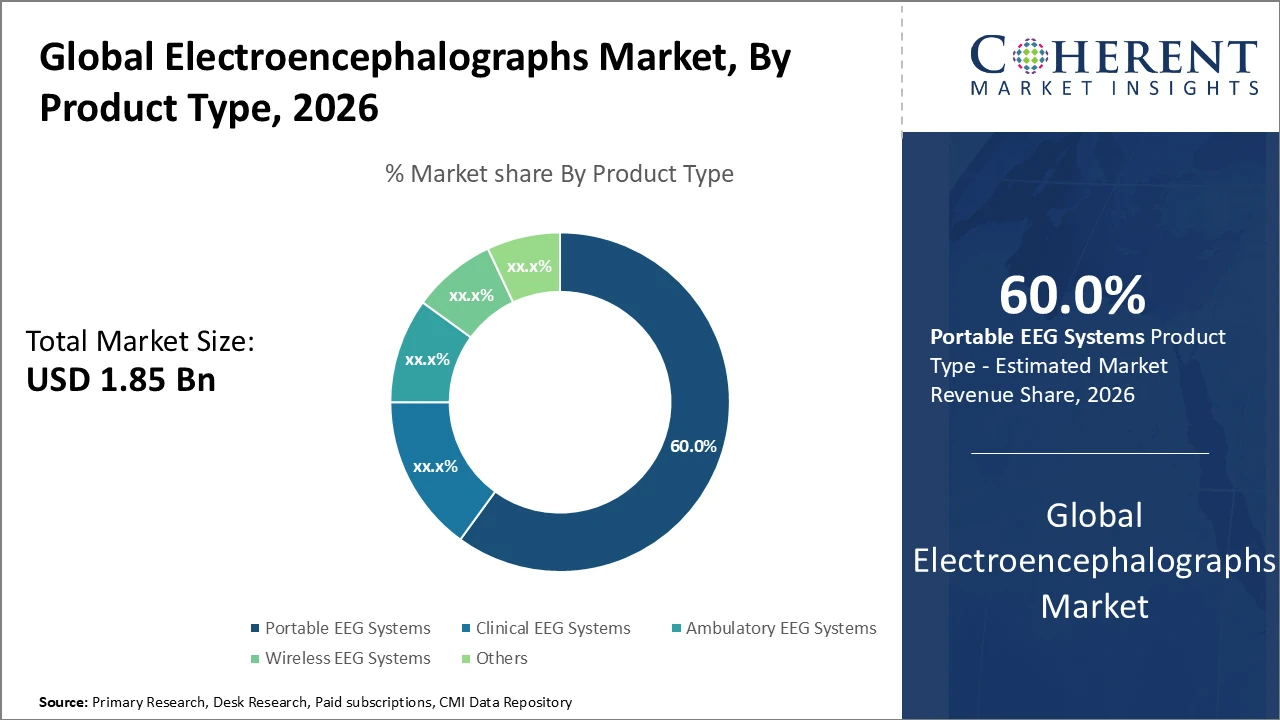
The Portable EEG Systems segment holds the largest market share due to growing demand for mobility and user-friendly devices in neurological diagnostics.
Hospitals and clinics are the primary end users, reflecting concentrated investments in neurodiagnostic infrastructure and advanced EEG equipment.
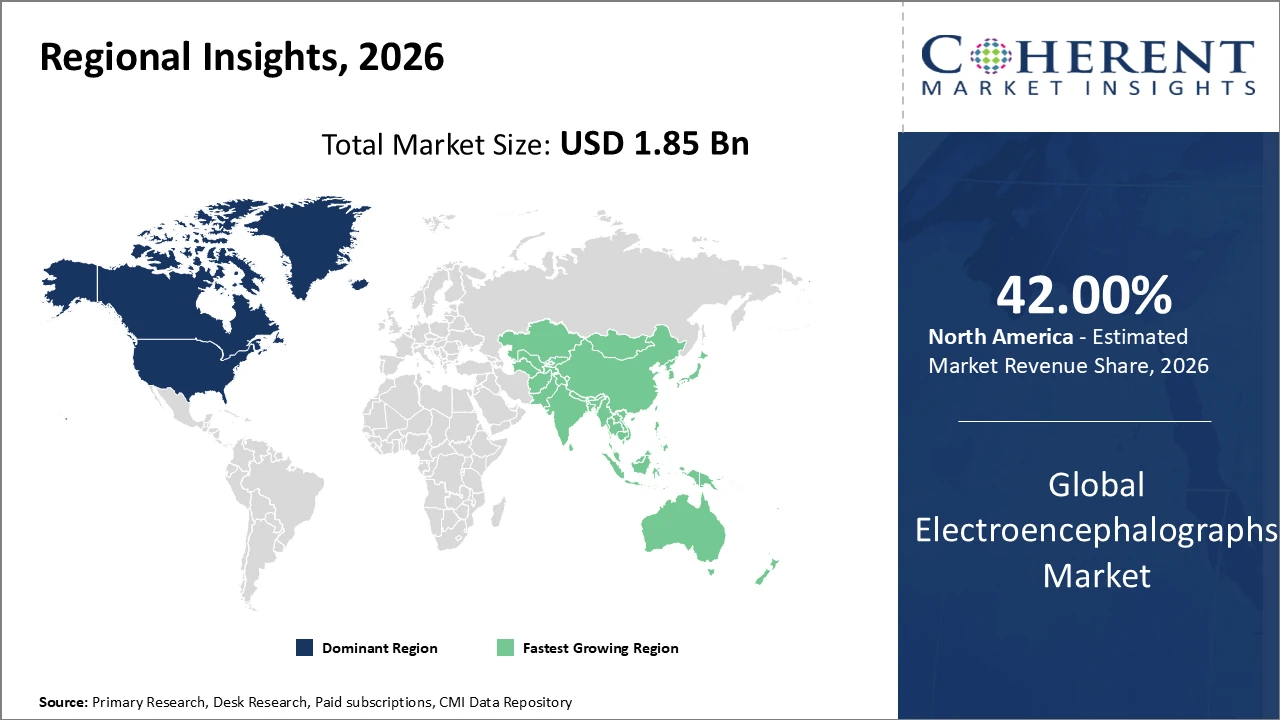
North America dominates the market, supported by robust healthcare infrastructure and the presence of leading EEG device manufacturers.
The Asia Pacific region shows the highest CAGR, fueled by government initiatives promoting neurological diagnostics and rising adoption of innovative EEG devices in countries like China and India.
Electroencephalographs Market Segmentation Analysis
Electroencephalographs Market Insights, By Product Type
Portable EEG Systems dominate the market, driven by their enhanced usability, compact design, and increasing integration with wireless and cloud-based platforms that enable remote monitoring. They hold approximately 60% of the market share, supported by healthcare facilities prioritizing patient comfort and diagnostic efficiency. Ambulatory EEG Systems are the fastest-growing subsegment, fueled by rising epilepsy cases that require extended monitoring outside clinical settings for improved seizure detection, supported by advancements in battery life and signal fidelity. Clinical EEG Systems remain important for hospitals, offering comprehensive brain activity analysis with high electrode density for pre-surgical evaluations, while wireless EEG Systems and other specialized devices serve research and neurofeedback applications, enhancing market diversity.
Electroencephalographs Market Insights, By Application
Epilepsy Monitoring leads the market with a 46% share, driven by a large patient population requiring precise seizure detection and long-term monitoring solutions. Increased investments in home-based and ambulatory EEG devices have further strengthened this segment. The fastest-growing application is Brain-Computer Interface (BCI), where EEG technology supports neural prosthetics and communication tools for individuals with physical impairments, bolstered by clinical trials and global funding exceeding USD 75 million in 2026. Sleep Disorder Diagnosis is also expanding, aided by wearable EEG devices that allow continuous monitoring of sleep patterns, while Neurological Research applications maintain steady demand through academic and pharmaceutical innovations in treatment development.
Electroencephalographs Market Insights, By End-User
Hospitals and clinics dominate the market, holding 64% of the share, driven by increased investments in neurodiagnostic infrastructure upgrades across developed economies. These institutions utilize advanced EEG technologies for both routine diagnostics and specialized neurological care. The fastest-growing subsegment is homecare settings, reflecting a shift toward decentralized patient management. Rising prevalence of chronic neurological disorders has boosted demand for EEG devices designed for home use, supported by expanding telemedicine infrastructure and improved insurance reimbursements. Diagnostic centers and research laboratories remain important for niche and high-precision EEG applications, while other segments include consumer-grade EEG products targeting wellness, cognitive enhancement, and personal neurofeedback.
Electroencephalographs Market Trends
The Electroencephalographs market is driven by rapid technological innovation, including AI-driven EEG data analysis and emerging dry electrode technologies.
Advances in real-time brain signal processing have improved applications such as epilepsy diagnostics and neurofeedback, with Medtronic’s AI algorithm in 2026 enhancing seizure prediction accuracy by 18%.
Tele-neurology platforms are increasingly adopted, expanding access to neurological care in remote and underserved regions.
North America dominates the market with around 42% share, supported by strong clinical infrastructure and significant investments from leading U.S.-based EEG companies.
Asia Pacific is the fastest-growing region, with a CAGR exceeding 10%, driven by government healthcare initiatives in China and India, growing patient awareness, and rising private sector investments in neurotechnology.
Electroencephalographs Market Insights, By Geography
North America Electroencephalographs Market Analysis and Trends
In North America, the Electroencephalographs market is dominated by the presence of leading EEG device manufacturers and a well-established network of neurodiagnostic facilities. The U.S. accounted for over 35% of global revenue in 2025, driven by widespread adoption of advanced clinical EEG systems across hospitals, clinics, and specialized neurological centers. Growing demand for portable EEG systems in outpatient and homecare settings has further strengthened market growth, enabling continuous monitoring and remote diagnostics. High healthcare spending, supportive infrastructure, and ongoing technological innovation in AI-enabled and wireless EEG devices continue to reinforce North America’s dominant position in the global electroencephalographs market.
Asia Pacific Electroencephalographs Market Analysis and Trends
The Asia Pacific region is experiencing the fastest growth in the Electroencephalographs market, driven by expanding healthcare infrastructure and improved access to neurological diagnostics in emerging economies. Countries such as China and India recorded a combined growth rate exceeding 11% in 2025, fueled by government initiatives promoting neurological disorder management and investments in advanced medical equipment. Rising awareness of brain health among consumers and increasing adoption of portable and wearable EEG devices further support market expansion. Additionally, the growing presence of private healthcare providers and research institutions, coupled with technological advancements in AI-enabled and wireless EEG systems, reinforces the region’s rapid market growth.
Electroencephalographs Market Outlook for Key Countries
USA Electroencephalographs Market Analysis and Trends
The U.S. Electroencephalographs market remains the largest globally, supported by substantial research funding and a highly advanced healthcare ecosystem. Key players, including Medtronic and Natus Medical Incorporated, have expanded their offerings with AI-powered portable EEG systems, which saw a 20% increase in usage across neurology clinics between 2024 and 2026. The adoption of these advanced systems is further supported by streamlined regulatory approvals and favorable reimbursement policies, encouraging hospitals and clinics to integrate innovative EEG solutions. Strong investment in neurodiagnostic infrastructure, coupled with high patient demand for accurate and efficient neurological monitoring, positions the U.S. as a central driver of market growth.
Germany Electroencephalographs Market Analysis and Trends
Germany’s Electroencephalographs market is experiencing steady growth supported by its advanced healthcare infrastructure and strong focus on neurological diagnostics. Hospitals and specialized neurology clinics in the country are increasingly adopting high‑precision EEG systems for epilepsy monitoring, sleep disorder diagnosis, and research applications. Demand is also rising for portable and wireless EEG devices that offer greater flexibility and patient comfort. Technological innovations, including AI‑enhanced data analysis and dry electrode solutions, are gaining traction among clinicians seeking improved diagnostic accuracy. Government initiatives to modernize medical equipment and the presence of established medical technology companies further reinforce Germany’s role as a key market within Europe for sophisticated EEG solutions.
Analyst Opinion
The rising prevalence of neurological disorders, particularly epilepsy, is a major driver for the electroencephalographs market, with over 50 million people diagnosed worldwide in 2025, increasing demand for advanced EEG devices for long-term monitoring and accurate diagnostics.
Demand-side trends show expanding applications in emerging fields such as brain-computer interfaces (BCI) and neurofeedback therapy; in 2026, BCI-related clinical trials using EEG technology grew 15% year-over-year, highlighting usage beyond traditional diagnostics.
On the supply side, optimized manufacturing capacity has reduced costs, improving accessibility in middle-income countries. By 2024, portable EEG systems accounted for around 60% of total production, reflecting a shift toward mobile, wireless solutions.
Pricing variations across EEG device categories are driven by technological complexity and integration; high-density EEG systems, despite premium pricing, saw a 12% market share increase in 2025 due to demand for detailed neural mapping in research institutions.
- Current Industry Events of 2026
- Market Size Estimation
- Regional Breakdown
- Competitive Landscape
- Customer Intelligence
- Segmental Analysis
- Pricing Analysis
- Key Market Drivers, Challenges & Future Trends
- Customized Insights Section
Market Scope
| Report Coverage | Details | ||
|---|---|---|---|
| Base Year: | 2025 | Market Size in 2026: | USD 1.85 billion |
| Historical Data for: | 2020 To 2024 | Forecast Period: | 2026 To 2033 |
| Forecast Period 2026 to 2033 CAGR: | 8.2% | 2033 Value Projection: | USD 3.24 billion |
| Geographies covered: |
| ||
| Segments covered: |
| ||
| Companies covered: | Medtronic plc, ANT Neuro BV, Micromed Group, Neurosoft, Philips Healthcare, Natus Medical Incorporated, Nihon Kohden Corporation, Compumedics Limited, Cadwell Laboratories Inc., NeuroWave Systems Inc. | ||
| Growth Drivers: |
| ||
Electroencephalographs Market Growth Factors
The rise in neurological disorder incidence worldwide serves as a key growth driver for the Electroencephalographs market, supported by heightened global awareness and widespread screening initiatives. Advancements in digital signal processing and device miniaturization have accelerated the adoption of portable and wireless EEG systems, significantly boosting market revenue. Government support for neurological healthcare infrastructure in emerging markets such as India and Brazil further facilitates rapid market expansion. Additionally, the integration of AI and machine learning in EEG devices enhances diagnostic accuracy and efficiency, creating strong momentum in neurodiagnostics applications and reinforcing market growth between 2024 and 2026.
Electroencephalographs Market Development
In October 2025, NCC MEDICAL introduced the world’s first wireless Bluetooth video-EEG system, enabling fully integrated wireless communication, synchronized video, and 24-hour ambulatory monitoring.
Key Players
Leading Companies of the Market
Medtronic plc
ANT Neuro BV
Micromed Group
Neurosoft
Nihon Kohden Corporation
Natus Medical Incorporated
Philips Healthcare
Compumedics Limited
Cadwell Laboratories Inc.
NeuroWave Systems Inc.
Several leading companies have strategically expanded their market presence through product diversification and strategic collaborations. In 2025, Medtronic introduced advanced wearable EEG devices, capturing a significant customer base in homecare monitoring solutions. Philips Healthcare’s investment in AI-powered EEG analytics tools in 2026 led to a 10% increase in clinical adoption rates, enhancing its competitive position. Meanwhile, Natus Medical Incorporated pursued acquisitions to integrate innovative ambulatory EEG technologies into its portfolio, strengthening its market share in North America. These initiatives reflect a broader industry trend of combining technological innovation, strategic partnerships, and targeted expansions to drive growth in the electroencephalographs market.
Electroencephalographs Market Future Outlook
The Electroencephalographs market is expected to witness robust growth in the coming years, driven by rising prevalence of neurological disorders and increasing demand for accurate, non-invasive brain monitoring solutions. Advances in AI, machine learning, and wearable EEG technologies will enhance diagnostic precision, real-time monitoring, and remote patient care. Portable and wireless EEG systems are likely to gain further adoption in homecare and outpatient settings. Government initiatives and investments in neurological healthcare infrastructure, particularly in emerging economies, will support market expansion. Additionally, integration of EEG devices with brain-computer interfaces and neurofeedback applications will create new growth opportunities, positioning the market for sustained long-term development.
Electroencephalographs Market Historical Analysis
The historical analysis of the Electroencephalographs market highlights steady growth driven by increasing awareness and diagnosis of neurological disorders. Between 2018 and 2024, hospitals and specialized neurology clinics primarily relied on clinical EEG systems for epilepsy monitoring, sleep disorder diagnosis, and research applications. Early innovations focused on wired and high-density EEG devices, providing accurate brain activity mapping. Gradually, portable and wireless EEG systems emerged, addressing the need for mobility and remote monitoring.
Sources
Primary Research Interviews:
Hospitals, neurology clinics, and surgical centers
Home healthcare providers and specialized neurological care facilities
Medical device and EEG equipment manufacturing companies
Research laboratories and academic medical institutions
Neurologists, EEG technicians, and medical device consultants
Magazines:
Neurology Today – Clinical Equipment & Innovations
Medical Device & Diagnostic Industry (MD+DI)
HealthTech Magazine – Neurotechnology & Medical Devices
Journal of Clinical Neurophysiology – EEG Applications and Research
Journals:
Journal of Clinical Neurophysiology
Clinical Neurophysiology
Epilepsy & Behavior
Frontiers in Neuroscience – Neurodiagnostics and EEG Studies
Newspapers:
The Wall Street Journal – Healthcare & Medical Devices
Financial Times – Medical Technology & Neurodiagnostics
Reuters – Healthcare & EEG Equipment
Bloomberg – Neurotechnology and Medical Devices
Nikkei Asia – Healthcare Equipment Manufacturing
Associations:
American Clinical Neurophysiology Society (ACNS)
International Federation of Clinical Neurophysiology (IFCN)
American Academy of Neurology (AAN)
Association for the Advancement of Medical Instrumentation (AAMI) – EEG Equipment Standards
Get access to 250+ pages report
Every segment, forecast, competitor profile and data table behind the analysis above — available for instant download.
- ESOMAR Member
- ISO 9001:2015 Certified
- D-U-N-S Registered
- GDPR & CCPA Compliant
Missing comfort of reading report in your local language? Find your preferred language:
Transform your Strategy with Exclusive Trending Reports
Frequently Asked Questions
Several key companies have secured leadership through innovation and strategic expansion, including Medtronic plc, Nihon Kohden Corporation, and Natus Medical Incorporated.
The market size is projected to reach approximately USD 3.24 billion by 2033, growing at a CAGR of 8.2% from 2026 to 2033.
Hospitals and clinics exhibit the largest market opportunity, driven by increasing demand for diagnostic services and technological upgrades in neurodiagnostics.
Emerging trends like AI integration, wearable EEG adoption, and tele-neurology expansion will shape the market landscape, emphasizing remote care and precision diagnostics.
Competitive pressures stem from rapid technological innovation and product differentiation, alongside challenges related to regulatory compliance and device affordability in certain markets.
Key players leverage product innovation, strategic partnerships, and regional expansion, alongside enhanced service offerings to increase market penetration and user loyalty.