

Global Mosquito Control Market Size and Forecast – 2026 - 2033
The Global Mosquito Control Market is estimated to be valued at USD 7.24 Bn in 2026 and is expected to reach USD 10.67 Bn by 2033, exhibiting a compound annual growth rate (CAGR) of 5.7% from 2026 to 2033.
Key Takeaways of the Mosquito Control Market
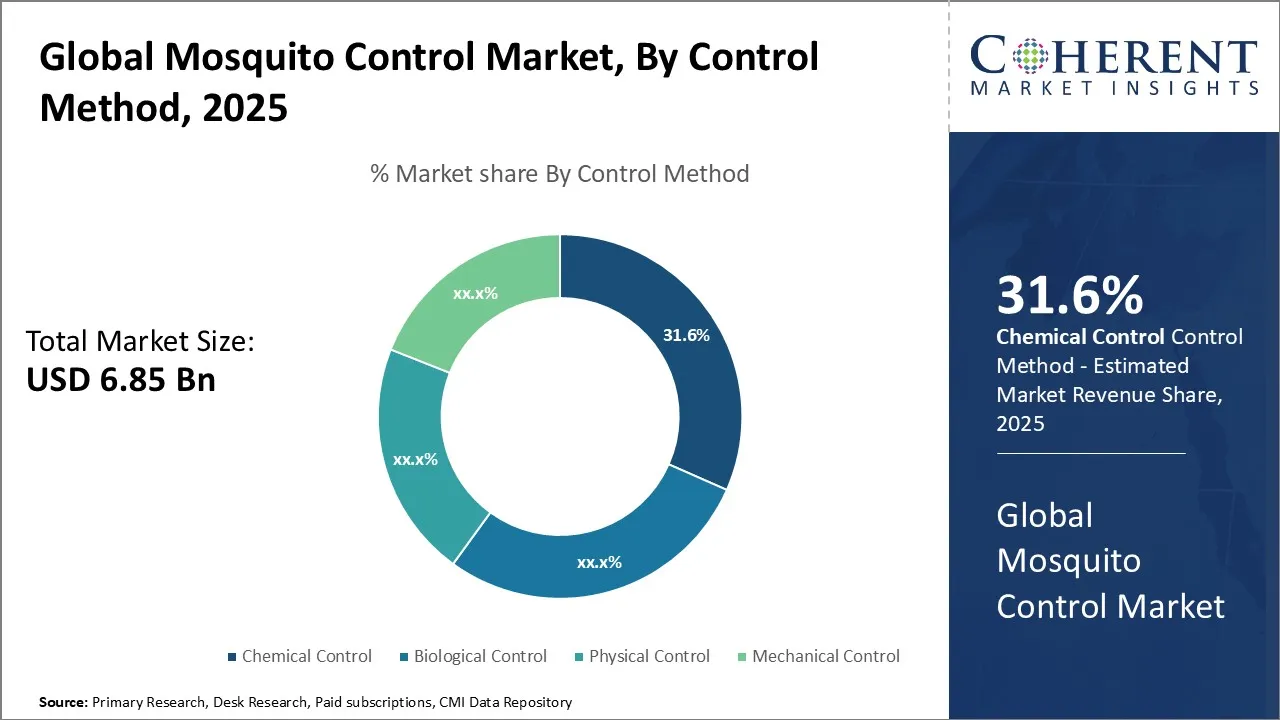
- The chemical control segment is expected to account for 32.6% of the global mosquito control market in 2026.
- The Monitoring and Surveillance segment is projected to hold a 39.2 % share of the market in 2026.
- The residential segment is set to capture a 43.7 % share of the market in 2026.
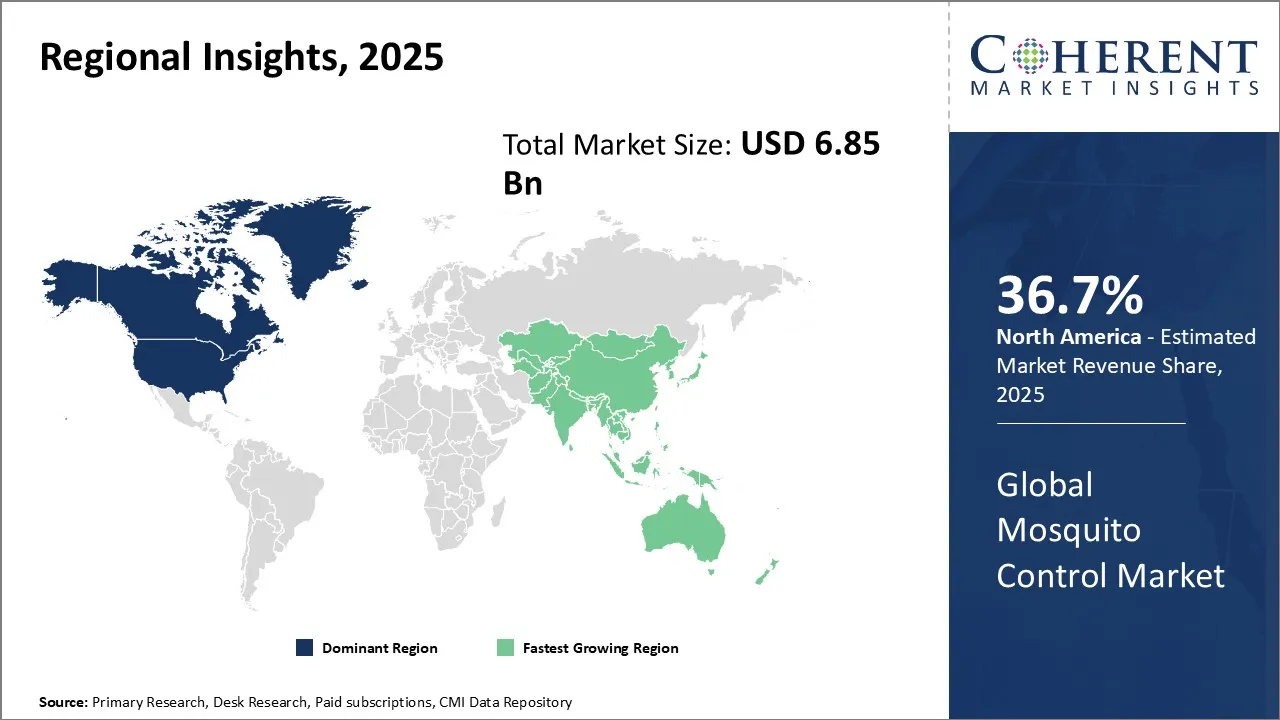
- North America is set to lead the global mosquito control market in 2026 with a 36.7 % share. Asia Pacific, holding a 13.5% share, will be the fastest-growing region.
Market Overview
A key market trend is the growing adoption of innovative and eco-friendly mosquito control technologies, including biocontrol agents such as biologically based larvicides and automated monitoring systems. Additionally, urbanization and climate change are extending mosquito habitats, prompting demand for more effective and sustainable control methods. Increased awareness and government regulations supporting mosquito control activities are also driving the market towards integrated pest management approaches, the growing use of home insecticides, and the incorporation of digital solutions for real-time surveillance and targeted interventions.
Current Events and Its Impact
Current Events | Description and its impact |
Regulatory Shifts Favoring Eco-Friendly and Non-Chemical Solutions |
|
Technological Advancements in Smart and Connected Mosquito Control Devices |
|
Segmental Insights
- Current Industry Events of 2026
- Market Size Estimation
- Regional Breakdown
- Competitive Landscape
- Customer Intelligence
- Segmental Analysis
- Pricing Analysis
- Key Market Drivers, Challenges & Future Trends
- Customized Insights Section
Mosquito Control Market Insights, By Control Method - Chemical Control Segment Dominates Driven by Efficiency and Broad-Spectrum Effectiveness
Chemical control segment is expected to hold 32.6% share of the global mosquito control market in 2026, primarily due to its proven efficacy and rapid action against mosquito populations. Chemical agents such as insecticides and larvicides have been integral to mosquito management practices for decades, offering immediate knockdown effects that are essential in acute outbreak scenarios. The widespread availability of diverse chemical formulations—ranging from organophosphates to pyrethroids—enables targeted and large-scale mosquito population suppression, especially in regions prone to vector-borne diseases like malaria, dengue, and Zika virus.
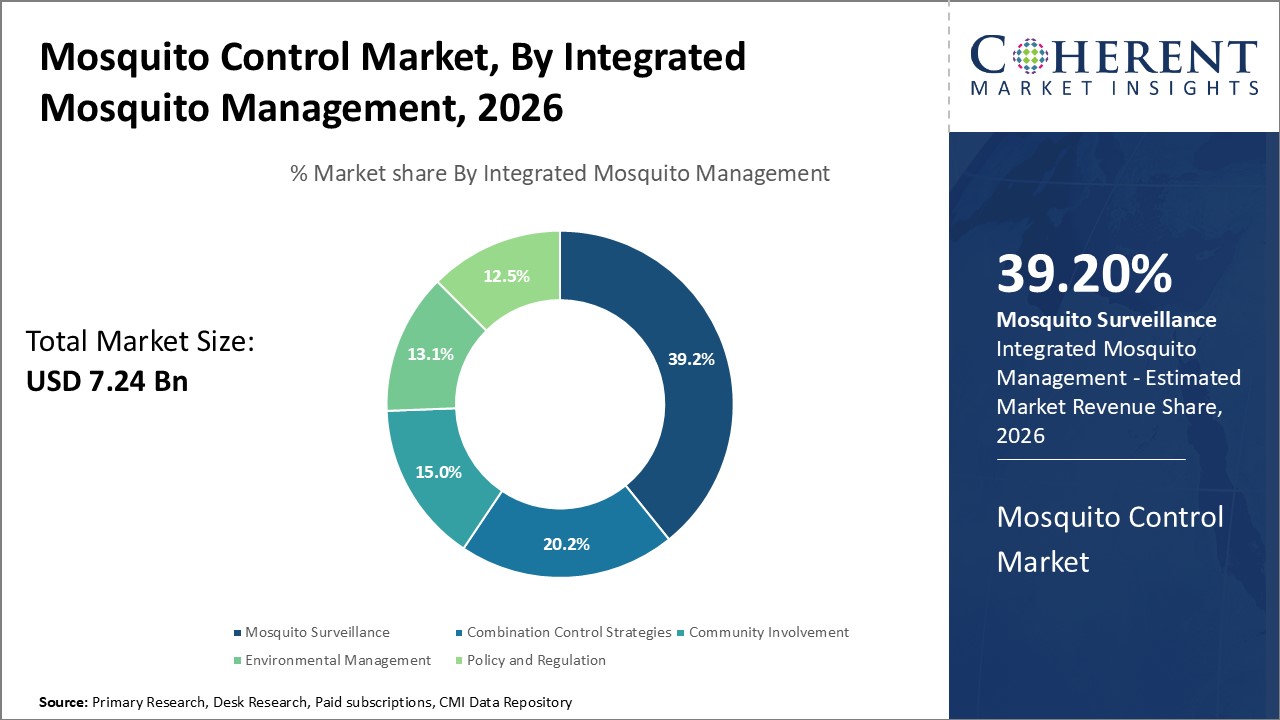
Mosquito Control Market Insights, By Integrated Mosquito Management - Monitoring and Surveillance Leading through Data-Driven Precision in Integrated Mosquito Management
Monitoring and Surveillance segment is projected to contribute 39.2% share of the market in 2026, owing to their foundational role in enabling targeted and efficient mosquito control interventions. Effective monitoring provides critical data on mosquito species distribution, population density, breeding sites, and seasonal activity patterns, which are indispensable for designing precise control efforts and minimizing resource wastage.
The sophistication of surveillance tools has seen significant advancement, including the use of automated traps, remote sensing technologies, and GIS mapping, which allow for real-time and spatially accurate monitoring of mosquito populations. This data-driven approach empowers public health officials and mosquito control agencies to predict outbreak risks, optimize timing for interventions, and evaluate the effectiveness of ongoing control measures. As a result, monitoring and surveillance shift mosquito control from reactive to proactive practices.
Mosquito Control Market Insights, By Application – Residential Segment Leads Due to Mosquito Control through Heightened Awareness and Urbanization
The residential segment is expected to account for 43.7% share of the market in 2026, driven predominantly by increasing awareness of mosquito-related health risks combined with rising urbanization trends worldwide. As more people reside in densely populated urban and suburban environments, the risk of exposure to mosquito-borne diseases grows, prompting homeowners and property managers to actively seek effective control solutions for personal living spaces.
The residential segment benefits from a broad spectrum of consumer-accessible products and services including repellents, insecticides, treated nets, and professionally administered mosquito control treatments. Enhanced consumer education about the dangers posed by mosquitoes, fueled by public health campaigns and media coverage of outbreaks, amplifies demand for household-level protective measures. Residents increasingly invest in preventive approaches that reduce mosquito breeding sites such as removing standing water and applying localized control measures to avoid bites and ensure comfort.
Regional Insights
North America Mosquito Control Market
The North America region is projected to lead the market with a 36.7% share in 2026, stems from a well-established market ecosystem characterized by advanced technological adoption, strong governmental support, and an extensive presence of leading industry players. The United States and Canada have robust public health initiatives aimed at controlling vector-borne diseases like West Nile Virus and Zika virus, driving consistent demand for innovative mosquito control solutions.
Additionally, stringent regulations and favorable government funding for research foster the development and deployment of environmentally safe and effective mosquito control products. Key companies such as Clarke Environmental Mosquito Management, FMC Corporation, and Valent U.S.A. Corporation have entrenched operations across this region, offering integrated vector management solutions and advanced larvicides. The presence of comprehensive distribution networks further strengthens North America’s dominance by ensuring timely product availability and extensive market penetration.
Asia Pacific Mosquito Control Market
The Asia Pacific region is expected to exhibit the fastest growth in the market contributing 13.5% share in 2026, due to increasing public health concerns amid dense populations vulnerable to mosquito-borne diseases such as dengue, malaria, and chikungunya. Rapid urbanization and climatic conditions conducive to mosquito breeding intensify the need for effective pest control measures. This market also benefits from burgeoning government initiatives and funding aimed at controlling disease outbreaks, especially in countries like India, China, and Southeast Asian nations.
Increasing awareness campaigns and growing disposable incomes have expanded consumer adoption of mosquito control products. The presence of both established multinational corporations like BASF SE and regional players such as Godrej Agrovet enhances innovation and market outreach. Trade dynamics, including improved import-export channels within the region, facilitate access to diverse control solutions at competitive prices, accelerating market penetration.
Global Mosquito Control Market Outlook for Key Countries
U.S. Mosquito Control Market Trends
The U.S. leads the mosquito control market with a focus on research-driven, technology-intensive solutions. National and local government agencies, including the Centers for Disease Control and Prevention (CDC), actively promote integrated vector management programs to curb mosquito populations and prevent disease transmission.
Companies like Clarke Environmental Mosquito Management provide advanced aerial and ground-based application equipment that support large-scale control operations. The market also benefits from strong collaborations between the public sector and private industry, fostering novel biologically based control agents and smart monitoring systems. Continuous innovation aligns with strict regulatory standards, ensuring product safety and efficacy.
India Mosquito Control Market Trends
India's mosquito control market is expanding rapidly, fueled by the urgent need to address frequent outbreaks of malaria and dengue. Government initiatives such as the National Vector Borne Disease Control Programme (NVBDCP) play a vital role in promoting mosquito control activities across rural and urban areas. Local companies like Godrej Agrovet have introduced a range of consumer-friendly mosquito repellents and insecticides catering to diverse economic segments. Additionally, international players are capitalizing on India’s vast market by adapting products to local climatic and epidemiological conditions. The emphasis on affordable and accessible control methods, alongside increasing public awareness, drives market expansion.
China Mosquito Control Market Trends
China continues to lead within the Asia Pacific due to extensive government-backed mosquito control campaigns focusing on urban centers prone to mosquito infestations. The Chinese government incorporates pest control into broader public health and environmental policies, which spurs consistent demand for both chemical and biological mosquito control solutions. Major global entities such as BASF SE maintain a significant presence, offering innovative insecticides and larvicides tailored to regional requirements. Additionally, domestic companies are ramping up product research and local manufacturing, aligning trade policies with growing export capabilities. The growing adoption of IoT-based mosquito monitoring tools and digital platforms enhances preventive measures in this market.
Brazil Mosquito Control Market Trends
Brazil's mosquito control market is strongly influenced by recurring outbreaks of diseases like Zika and chikungunya, necessitating aggressive vector control strategies. Government agencies such as the Ministry of Health implement large-scale mosquito control programs, supported by increasing financial allocations and community engagement. International firms like Syngenta and Bayer provide advanced chemical solutions, complemented by emergent local manufacturers focusing on eco-friendly and sustainable products. Urbanization and environmental factors warrant integrated approaches combining insecticides, larvicides, and public education, with innovative pilot projects being introduced in metropolitan areas. Trade policies encouraging imports of novel control agents also aid market development.
South Africa Mosquito Control Market Trends
South Africa’s mosquito control market is evolving in response to malaria prevalence in specific regions and government-led vector control initiatives. The Department of Health emphasizes indoor residual spraying and community-based measures, encouraging adoption of long-lasting insecticide-treated nets and chemicals. Multinational players such as Sumitomo Chemical and local companies contribute to a diversified product portfolio addressing both residential and public health needs. Regulatory frameworks support the introduction of new, safer control agents while fostering capacity building among pest control operators. Furthermore, international collaborations and funding from global health organizations enable large-scale intervention programs that impact market dynamics positively.
End User Feedback and Unmet Needs in the Mosquito Control Market
Effective Area-wide Coverage in Municipal Programs
One commonly praised aspect of modern mosquito control technologies is the improved efficacy of larvicide-based aerial applications integrated with GIS (Geographic Information Systems). For example, a public health department in the southeastern United States reported significant success using a drone-enabled larvicide distribution system to manage mosquito populations in hard-to-reach wetland zones. The department highlighted real-time mapping capabilities and the system’s ability to deploy treatments precisely, reducing chemical use by over 30% while achieving a measurable decline in mosquito-borne illness reports during peak season. This demonstrates how integration with digital tools can enhance operational precision and environmental safety, leading to higher public trust and better resource allocation.
Limitations in Product Longevity and Reapplication Frequency
A recurring concern voiced by industrial users—particularly in sectors like mining and oil & gas where operations span remote and expansive terrains—is the short residual effect of certain adulticides and repellents. Several facilities in sub-Saharan Africa and Latin America noted that frequent reapplication of insecticides is not only costly but logistically burdensome, especially when access to certain operational zones is limited. Users reported that the protective window often closes within 48–72 hours, leading to coverage gaps and increased vector activity. This calls attention to the need for longer-lasting formulations or automated reapplication mechanisms to minimize human resource strain and operational downtime.
Market Players, Key Development, and Competitive Intelligence
Key Developments
- The City of Watertown's Mosquito Control Program has announced that mosquito spraying operations will begin on the evening of Tuesday, July 15, 2025. Spraying will target specific areas where adult mosquito populations have reached thresholds that warrant control measures. Operations are set to commence after 9:00 p.m., weather permitting.
- On July 15, 2025, the Allen County Department of Health, ramped up its mosquito control efforts in response to West Nile Virus, the leading mosquito-borne illness in the continental U.S. The county’s mosquito control program, which began inspecting and treating permanent breeding sites in May, started testing mosquito samples on July 7. Traps are being used to collect and test mosquitoes for the presence of disease. With mosquito populations typically peaking in August, testing will continue through the end of September.
Top Strategies Followed by Global Mosquito Control Market Players
- Established players dominate the landscape by heavily investing in research and development (R&D) to create innovative, high-performance mosquito control products that meet evolving consumer needs and regulatory standards. These companies leverage cutting-edge technologies such as environmentally friendly insecticides, automated mosquito traps, and digital monitoring systems to maintain product superiority. Furthermore, they focus on forging strategic partnerships and alliances with Original Equipment Manufacturers (OEMs) and other major industry stakeholders to strengthen their distribution networks and streamline product offerings. Such collaborations also enable them to integrate complementary technologies and services, creating holistic solutions that resonate well with customers worldwide.
- For example, SC Johnson & Son, Inc., the maker of OFF, leads through continuous innovation. The company has introduced plant-based repellents and DEET-free products that cater to environmentally conscious consumers. Their investment in research enables product diversification, from aerosols to wearable repellents.
- Mid-level players in the mosquito control market adopt a more measured approach by focusing on delivering cost-effective yet reliable solutions designed to appeal to price-sensitive consumers. These companies balance quality and affordability, often tailoring their product portfolios to include basic insecticide formulations, plug-in devices, and manual traps that are accessible to households and small businesses with limited budgets. Mid-tier firms also pursue strategic collaborations with technology providers and suppliers to enhance production efficiency and incorporate improved features without significantly escalating costs.
- For example, in India, brands like Jyothy Labs Limited and Dabur India Ltd. target the burgeoning middle-class segment by balancing affordability with consistent quality in their mosquito repellent creams, coils, and plug-ins.
- Small-scale players carve out their niche in the bustling mosquito control market by concentrating on specialized products or innovative features that differentiate them from larger competitors. Embracing cutting-edge technologies such as bio-based repellents, smart sensor-enabled traps, or eco-friendly repellents, these smaller firms appeal to specific consumer segments that seek novel or sustainable mosquito control solutions. Their agility allows them to respond quickly to emerging trends and adapt product designs accordingly.
- For example, such as Herbal Strategi (India) and Sawyer Products, Inc. (US) are recognized for their emphasis on natural formulations and environmentally conscious products. Their agility enables rapid adaptation to consumer trends, such as the rising demand for non-toxic and child-safe repellents.
Market Report Scope
Mosquito Control Market Report Coverage
| Report Coverage | Details | ||
|---|---|---|---|
| Base Year: | 2025 | Market Size in 2026: | USD 7.24 Bn |
| Historical Data for: | 2020 To 2024 | Forecast Period: | 2026 To 2033 |
| Forecast Period 2026 to 2033 CAGR: | 5.7% | 2033 Value Projection: | USD 10.67 Bn |
| Geographies covered: |
| ||
| Segments covered: |
| ||
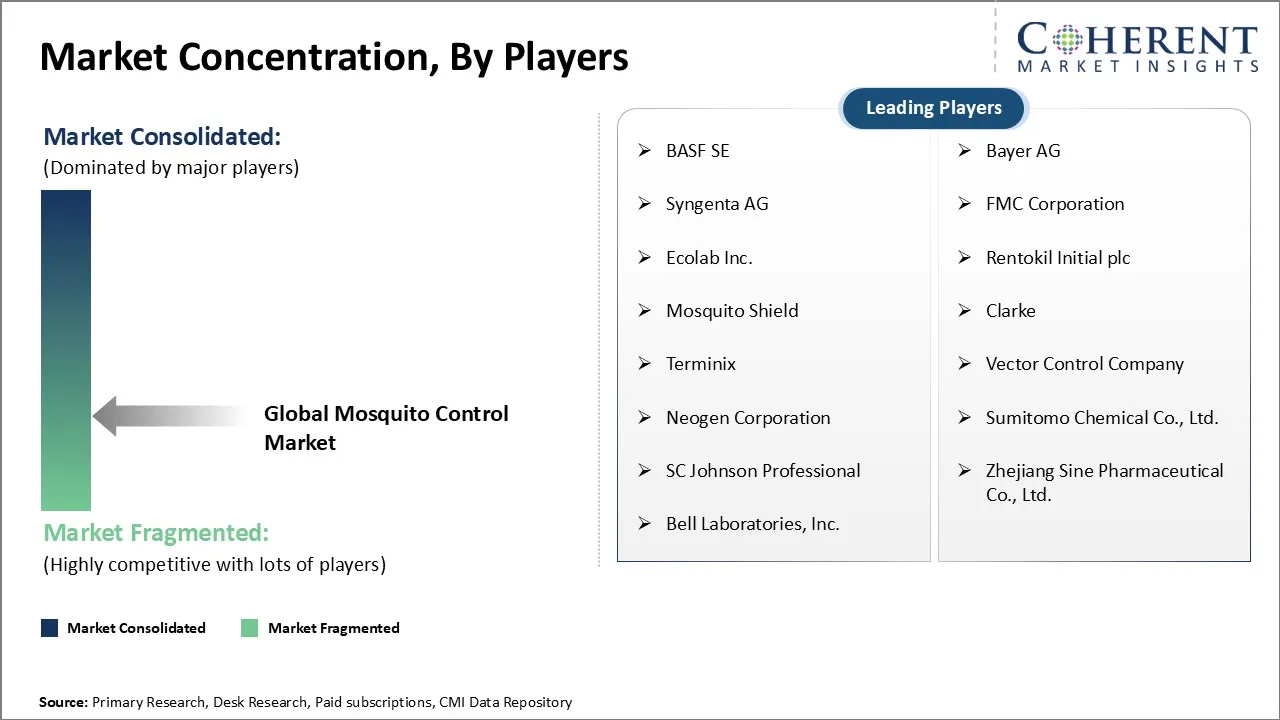
| Companies covered: | BASF SE, Bayer AG, Syngenta AG, FMC Corporation, Ecolab Inc., Rentokil Initial plc, Mosquito Shield, Clarke, Terminix, Vector Control Company, Neogen Corporation, Sumitomo Chemical Co., Ltd., SC Johnson Professional, Zhejiang Sine Pharmaceutical Co., Ltd., and Bell Laboratories, Inc. | ||
| Growth Drivers: |
| ||
| Restraints & Challenges: |
| ||
Mosquito Control Market Dynamics
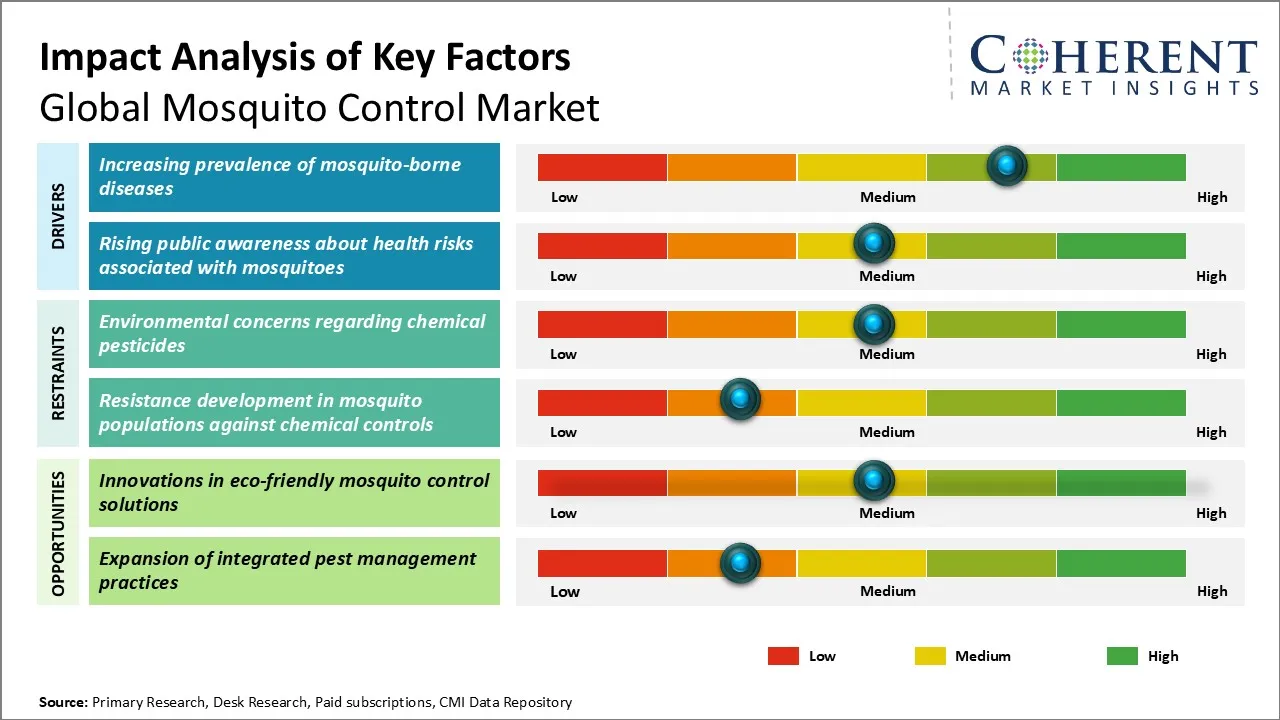
Mosquito Control Market Driver - Increasing Prevalence of Mosquito-borne Diseases
The escalating incidence of mosquito-borne diseases such as malaria, dengue fever, Zika virus, chikungunya, and West Nile virus continues to pose a significant public health challenge globally, directly fueling the demand for effective mosquito control solutions. Rising urbanization, changing climate patterns, and increased human travel have collectively contributed to the expansion of mosquito habitats, enhancing vector proliferation and facilitating the transmission of pathogens to new regions previously less affected. This growing health burden compels governments, public health organizations, and private sectors to invest heavily in mosquito control interventions ranging from chemical insecticides and biological agents to advanced spatial repellents and innovative trapping technologies.
The U.S. Centers for Disease Control and Prevention (CDC), for example, has increased funding for vector-borne disease programs, while the European Centre for Disease Prevention and Control (ECDC) has ramped up surveillance and vector control efforts following localized dengue outbreaks in France and Italy. In the private sector, companies are innovating with products such as genetically modified mosquitoes (e.g., Oxitec’s Aedes aegypti), spatial repellents, drone-based larvicide deployment, and AI-powered smart traps, all contributing to a dynamic and growing mosquito control market.
Mosquito Control Market Opportunity - Innovations in Eco-Friendly Mosquito Control Solutions
The growing environmental consciousness among consumers and regulatory bodies presents a significant opportunity for the global mosquito control market through the development and adoption of eco-friendly mosquito control solutions. Traditional mosquito control methods often rely on chemical insecticides, which pose risks to human health, non-target species, and ecosystems, leading to increasing demand for safer, sustainable alternatives.
Innovations in this space include biological control agents such as Bacillus thuringiensis israelensis (BTI), a naturally occurring bacterium used globally in larvicides for its targeted action against mosquito larvae. For instance, BTI-based products are widely used in mosquito control programs in the U.S. and parts of Europe, especially in wetlands and urban areas. Additionally, the use of larvivorous fish, such as Gambusia affinis (mosquitofish), has been adopted in India and Southeast Asia to naturally control mosquito larvae in stagnant water bodies.
Analyst Opinion (Expert Opinion)
- The global mosquito control market is at a pivotal juncture, driven by increasing concerns over vector-borne diseases and the need for sustainable pest management solutions. Companies like BASF and Syngenta are leading innovations with environmentally friendly insecticides and biological control methods that reduce reliance on chemical treatments.
- Key conferences, such as the International Conference on Vector-Borne Diseases (2023) and the Global Mosquito Control Summit (2022), have emphasized the market's urgency, showcasing research on integrated pest management strategies that combine technology and community engagement. Presentations highlighted successful case studies where innovative solutions, such as genetically modified mosquitoes and larviciding techniques, have significantly reduced mosquito populations in urban areas.
- Additionally, the rising trend of smart mosquito traps and IoT-enabled monitoring systems reflects the industry's shift towards data-driven approaches in pest control. As public awareness of health risks associated with mosquitoes continues to rise, the global mosquito control market is poised for substantial growth. The convergence of technological advancements, regulatory support, and increased funding for research will be crucial in shaping effective mosquito control strategies, making this an essential sector in public health and environmental sustainability.
Speak to the analyst
Want personalized insights?
Take the findings above to one of our principal consultants, or have the report rebuilt around the segments, geographies and competitors you actually track.
Market Segmentation
- Control Method Insights (Revenue, USD Bn, 2021 - 2033)
- Chemical Control
- Biological Control
- Physical Control
- Mechanical Control
- Integrated Mosquito Management Insights (Revenue, USD Bn, 2021 - 2033)
- Monitoring and Surveillance
- Combination Control Strategies
- Community Involvement
- Environmental Management
- Policy and Regulation
- Application Insights (Revenue, USD Bn, 2021 - 2033)
- Residential
- Commercial
- Agricultural
- Public Health
- Regional Insights (Revenue, USD Bn, 2021 - 2033)
- North America
- U.S.
- Canada
- Latin America
- Brazil
- Argentina
- Mexico
- Rest of Latin America
- Europe
- Germany
- U.K.
- Spain
- France
- Italy
- Russia
- Rest of Europe
- Asia Pacific
- China
- India
- Japan
- Australia
- South Korea
- ASEAN
- Rest of Asia Pacific
- Middle East
- GCC Countries
- Israel
- Rest of Middle East
- Africa
- South Africa
- North Africa
- Central Africa
- North America
- Key Players Insights
- BASF SE
- Bayer AG
- Syngenta AG
- FMC Corporation
- Ecolab Inc.
- Rentokil Initial plc
- Mosquito Shield
- Clarke
- Terminix
- Vector Control Company
- Neogen Corporation
- Sumitomo Chemical Co., Ltd.
- SC Johnson Professional
- Zhejiang Sine Pharmaceutical Co., Ltd.
- Bell Laboratories, Inc.
Sources
Primary Research Interviews
- R&D Director – Leading Mosquito Larvicide Manufacturer
- Procurement Manager – Major Vector Control Solutions Provider
- Product Development Head – Global Insecticide Brand
- Sustainability Manager – Environmental Certification Agency related to Pesticides
Stakeholders
- Manufacturers (Larvicides, Adulticides, Repellents, Traps)
- End-use Sectors:
- Public Health Agencies and Municipal Vector Control Units
- Malaria and Dengue Prevention NGOs
- Residential/Commercial Pest Control Operators
- Agribusinesses using mosquito control in livestock management
- Regulatory & Certification Bodies (WHO PQT-VCP, EPA, ECHA, Indian CIB)
- E-commerce Platforms and Retailers for mosquito repellents and household products
- Technology Integration Players: Providers of IoT-based mosquito monitoring, drone-based application services, and digital surveillance systems
Databases
- UN Comtrade Database
- India Import Export (EXIM) Database
Magazines
- Pest Management Professional – Global trends, technology, and regulatory updates
- Vector Control Today – Innovations and field case studies in mosquito management
- Agricultural Chemicals News – Mosquito control in agricultural/rural environments
- Public Health Pesticide News – New product launches and policy insights
- Mosquito Review – Industry news, market updates, and vector ecology features
Journals
- Journal of Medical Entomology – Research on mosquito biology and control efficacy
- Acta Tropica – Studies on vector-borne disease epidemiology and control impacts
- Parasites & Vectors – Evaluations of mosquito management interventions
- Journal of the American Mosquito Control Association – Field research, operational methods
Newspapers
- The Financial Times – Market analysis and investment in global vector control
- The Guardian – Human interest and public health campaigns
- Asia Health Journal – Mosquito-borne disease trends and intervention programs in Asia-Pacific
- European Health News – Vector control policy and public health responses in Europe
Associations
- American Mosquito Control Association (AMCA)
- World Health Organization (WHO) Vector Control Product Team
- London School of Hygiene & Tropical Medicine (Vector Control and Disease Biology Dept.)
- European Mosquito Control Association (EMCA)
- U.S. Environmental Protection Agency (EPA) Office of Pesticide Programs
- Central Insecticides Board (India)
Public Domain Sources
- World Health Organization (WHO) – Vector control guidelines, Prequalification lists, and technical reports
- U.S. Environmental Protection Agency (EPA) – Pesticide registration and compliance guidelines for mosquito control products
- European Chemicals Agency (ECHA) – Regulatory status and risk assessments under REACH & Biocidal Products Regulation (BPR)
Proprietary Elements
- CMI Data Analytics Tool, Proprietary CMI Existing Repository of information for the last 8 years.
Get access to 250+ pages report
Every segment, forecast, competitor profile and data table behind the analysis above — available for instant download.
- ESOMAR Member
- ISO 9001:2015 Certified
- D-U-N-S Registered
- GDPR & CCPA Compliant
Missing comfort of reading report in your local language? Find your preferred language:
Transform your Strategy with Exclusive Trending Reports
Frequently Asked Questions
The global mosquito control market is estimated to be valued at USD 7.24 Bn in 2026 and is expected to reach USD 10.67 Bn by 2033.
Technologies used for mosquito control include insecticide-treated nets, indoor residual spraying, biological control (e.g., larvivorous fish, bacteria), genetic modification of mosquitoes, sterile insect techniques, mosquito traps, and drone or AI-based surveillance systems.
Mosquito control sprays can pose risks to children and pets if not used properly; however, many products are designed to be safe when applied according to the manufacturer's instructions, with precautions such as keeping kids and pets away until the treated area is dry.
The CAGR of global mosquito control market is projected to be 5.7% from 2026 to 2033.
Increasing prevalence of mosquito-borne diseases and rising public awareness about health risks associated with mosquitoes are the major factors driving the growth of global mosquito control market.
Environmental concerns regarding chemical pesticides and resistance development in mosquito populations against chemical controls are the major factors hampering the growth of global mosquito control market.
In terms of Control Method, Chemical Control is estimated to dominate the market revenue share in 2026.