

Global Motor Control Centers Market Size and Forecast – 2026 To 2033
The global motor control centers market is expected to grow from USD 7 Bn in 2026 to USD 10.50 Bn by 2033, registering a compound annual growth rate (CAGR) of 5% from 2026 to 2033. The global motor control centers market is driven by steady growth in manufacturing & infrastructure projects. On May 14, 2025, GE Vernova announced plans to invest approximately USD 16 million in India to expand its electrification manufacturing and engineering footprint, specifically, advanced grid technologies that enable stable, reliable, and secure delivery of electricity. (Source: GE Vernova)
Key Takeaways of the Global Motor Control Centers Market
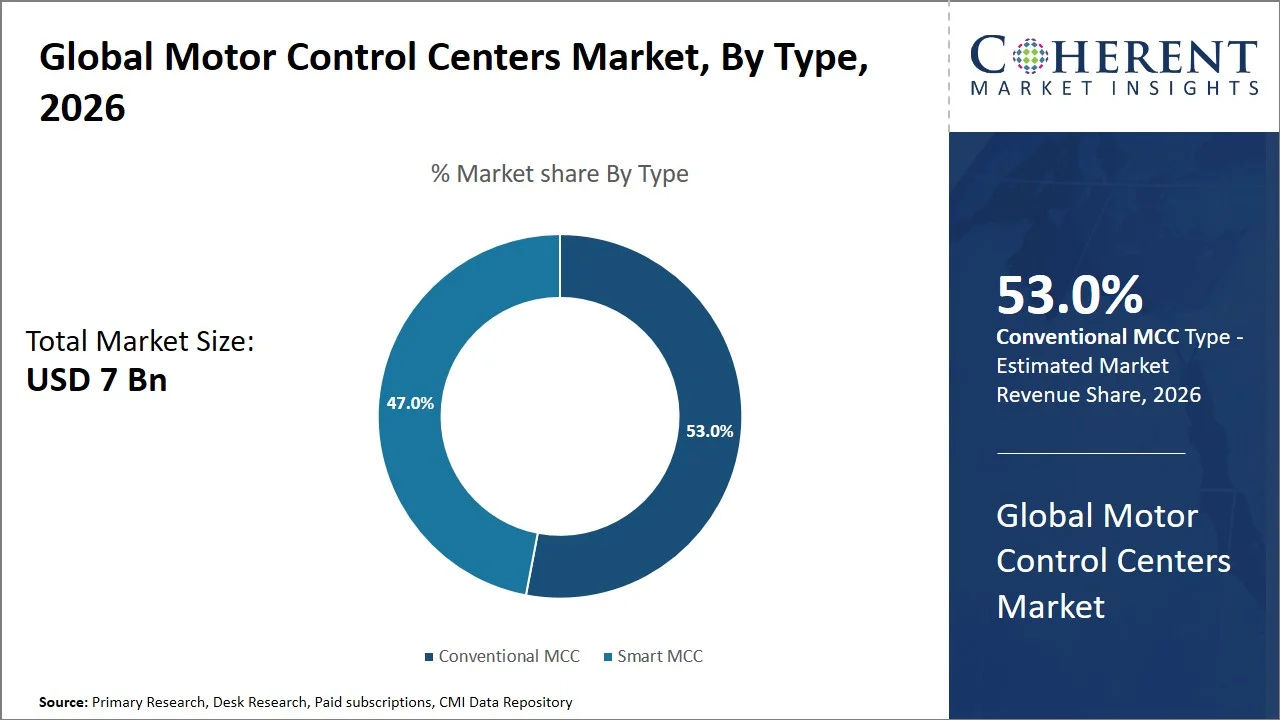
- The conventional MCC segment is expected to account for 53.0 % of the global motor control centers market share in 2026. Rapid expansion of oil & gas, mining and water treatment industries is a key factor driving the growth of the segment. On March 6, 2025, Venture Global announced plans for a brownfield expansion at its Plaquemines LNG facility south of New Orleans, Louisiana, U.S. The planned Plaquemines expansion will consist of 24 trains and would represent an approximately USD 18 billion additional investment in the State of Louisiana. (Source: Venture Global)
- The low voltage MCC segment is estimated to capture 62.0 % of the market share in 2026. Rising need for centralized motor control & reduced downtime is driving the growth of the segment. On September 3, 2025, SitePro, Inc., a leader in industrial automation and control solutions, announced it has been selected as the sole automation provider for Direct Midstream, a rapidly expanding water midstream operator serving the Permian Basin. (Source: SitePro)
- The motor starters segment is estimated to capture 44.0 % of the market share in 2026. Increasing use of smart MCCs with IoT & predictive maintenance is a major factor for the growth of the segment. On April 22, 2026, Eaton introduced a new motor analytics software solution designed to help mining, oil and gas, manufacturing, and other industrial applications detect critical equipment issues sooner and more accurately than existing solutions, without installing additional sensors or hardware directly on the motor. (Source: Eaton)
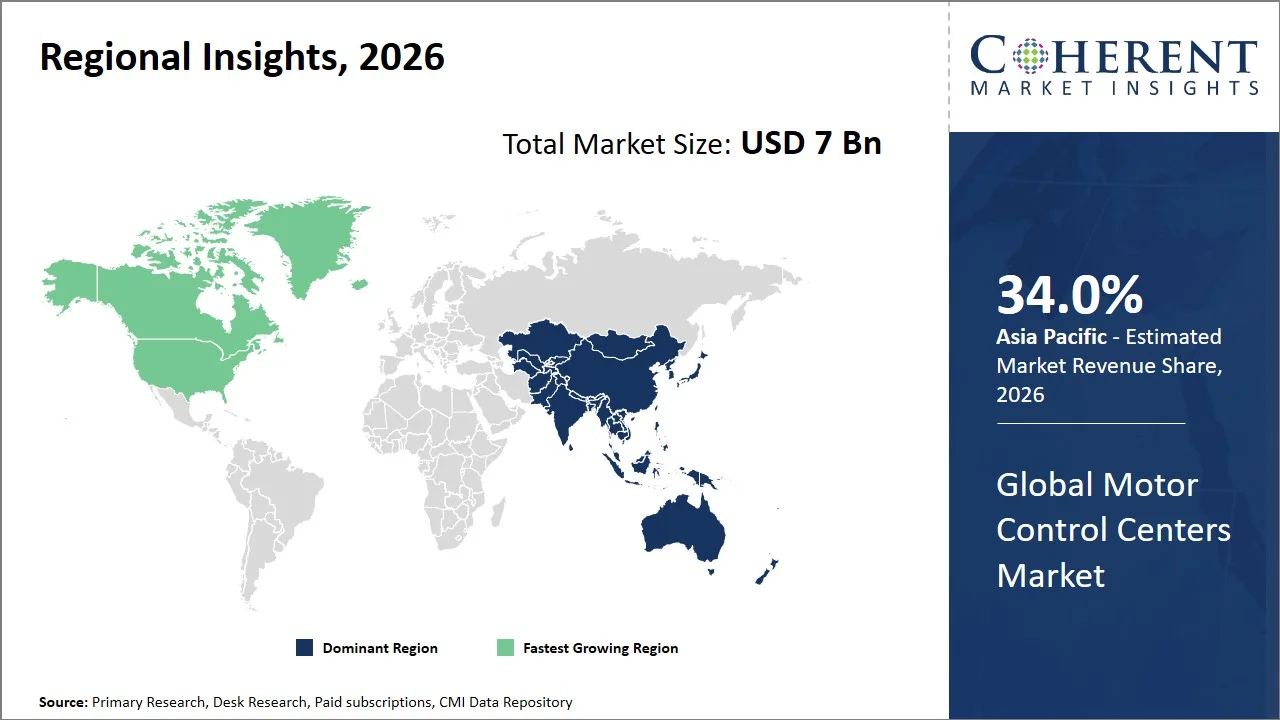
- Asia Pacific is expected to dominate the motor control centers market in 2026 with a market share of 34.0 %. Growth in renewable energy and smart grid projects in Asia Pacific is a primary driver for the regional market. On April 20, 2026, Juniper Green Energy Limited announced that it achieved another landmark as it began commissioning India's first Firm and Dispatchable Renewable Energy (FDRE) project under Government of India’s Flagship FDRE Guidelines, marking yet another historic first for the Indian power sector. (Source: Juniper Green Energy)
- North America is expected to account for 25.0 % share in 2026 and is projected to record the fastest growth over the forecast period. Growing adoption of predictive maintenance & digital twins is a prime growth factor for the motor control centers market in North America. On January 6, 2026, Siemens announced Digital Twin Composer, a new software solution that builds Industrial Metaverse environments at scale, empowering organizations to apply industrial AI, simulation and real-time physical data to make decisions virtually, at speed and at scale. (Source: Siemens)
- Adoption of Intelligent and Smart MCCs: Industries are moving from conventional MCCs to intelligent MCCs with digital communication, diagnostics in real-time, and remote monitoring capabilities. These solutions improve operational visibility, minimize downtime and enable predictive maintenance
- Integration with Industry 4.0 and Industrial IoT: Modern MCCs are being integrated with Industrial Internet of Things (IIoT), SCADA and cloud based platforms. This allows for continuous performance monitoring, data analytics and automated decision-making, helping industries increase productivity and energy efficiency.
Segmental Insights
Why Does Conventional MCC Dominate the Global Motor Control Centers Market?
The conventional MCC segment is expected to account for 53.0% of the global motor control centers market share in 2026. Conventional Motor Control Centers (MCCs) remain the most popular on the market, partly because they represent a smaller initial capital commitment compared to intelligent MCCs. Many industrial facilities, particularly in manufacturing, utilities, water treatment and process sectors, now operate on standard MCC infrastructure. These systems are reliable, known to maintenance personnel and need less capital expenditure, so they are the favored choice for cost sensitive projects and retrofit applications. For example, Eaton continued to promote its MCC aftermarket program, which allows industrial customers to modify older MCC buckets and components rather than replacing entire MCC lines. The business said the new units may be plugged directly into the existing MCC infrastructure, prolonging the life of the assets by more than 20 years without the cost and downtime of a total system replacement. (Source: Eaton)
- Current Industry Events of 2026
- Market Size Estimation
- Regional Breakdown
- Competitive Landscape
- Customer Intelligence
- Segmental Analysis
- Pricing Analysis
- Key Market Drivers, Challenges & Future Trends
- Customized Insights Section
Why is Low Voltage MCC the Most Applied Voltage?
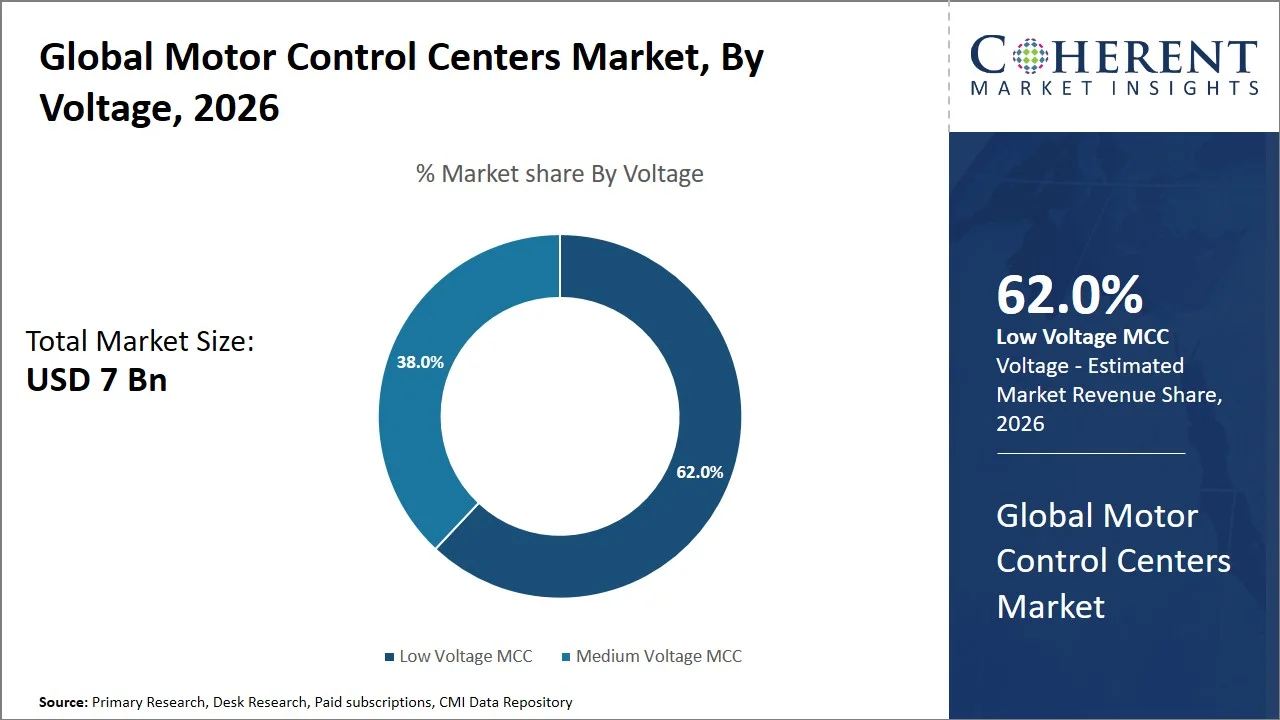
The low voltage MCC segment is expected to account for 62.0% of the global motor control centers market share in 2026. Low voltage MCCs are the most widely utilized as most of the motors used in industrial plants, water treatment facilities, commercial buildings and processing industries run on low voltage power supplies. Low Voltage MCCs are the favored choice for a wide range of end use industries owing to their suitability for day to day motor control applications, ease of installation and lower operating costs. On September 25, 2025, ABB India launched India’s first IE5 ultra-premium efficiency low-voltage motors and announced an investment of over USD 1.40 billion to develop and modernize its low-voltage motor production facilities. The investment underscores rising industrial demand for low-voltage motor systems that are utilized in manufacturing, water treatment, HVAC and processing plants which are the major applications for low-voltage MCCs. (Source: Times of India)
Motor Starters Dominate the Global Motor Control Centers Market
The motor starters segment is expected to account for 44.0% of the global motor control centers market share in 2026. Motor starters are the dominant equipment in the market as a critical part of almost all motor control centers, providing the functions required to start, stop and protect electric motors from overloads and electrical faults. Motor starters are widely used in industrial and commercial plants, and they account for the biggest portion of the MCC components as all motor-driven applications demand reliable motor control and protection. On March 31, 2025, Rockwell Automation, Inc. announced the launch of the M100 Electronic Motor Starter, enabling industrial organizations to simplify panel wiring and reduce component and engineering complexities with advanced functional safety solutions and more refined motor starting capabilities. (Source: Rockwell Automation)
Currents Events and their Impact
Current Events | Description and its Impact |
IEC 60034-30-1:2025 (Global Motor Energy Efficiency Standard) |
|
UL 845 Revised Standard for Motor Control Centers |
|
Global Motor Control Centers Market - Industrial Automation System Installation
Rising installations of industrial automation systems are considerably boosting the demand for Motor Control Centers (MCCs) across the globe. As manufacturers move towards smart factories, robotics, programmable logic controllers (PLCs), distributed control systems (DCS) and Industrial IoT platforms, the number of motor-driven assets requiring centralized control is increasing. MCCs are important for controlling motors that drive conveyors, pumps, compressors, fans and automatic production equipment. They are a key component of today's automated industrial plants.
Key insights include:
- Manufacturing industries are further increasing their use of automation with the world’s industrial robot installations exceeding 540,000 units per year.
- More than 70% of new manufacturing facilities are including advanced automation and digital control technologies in their Industry 4.0 activities.
- A large proportion of automation system installations requiring MCC integration are in the automotive, electronics, semiconductor, food & beverage, and pharmaceutical sectors.
- Investment in motor control and automation infrastructure is driven by the potential for smart factories to boost operational productivity by 15–30 per cent.
- In the industrial segment, the number of Industrial IoT-connected devices is estimated to reach tens of billions of linked endpoints globally by 2030, driving the demand for intelligent MCCs with remote monitoring capabilities.
- For automated production lines, hundreds to thousands of electric motors need to be protected, controlled and monitored by MCC systems.
- Asia Pacific is the greatest market for new industrial automation installations, driven by China, Japan, South Korea and India.
- Rising use of predictive maintenance and digital twin technologies is driving demand for smart MCCs with Ethernet communication and real-time diagnostics.
- The expansion of e-commerce is driving increasing investment in warehousing and logistics automation, leading to deployment of motor-controlled conveyors and material-handling systems.
- Increased expenditures in industrial automation in water treatment, mining, renewable energy, chemicals and process sectors provide more prospects for MCC makers.
Motor Control Centers Market Dynamics
Market Drivers
Rapid industrial automation and Industry 4.0 adoption
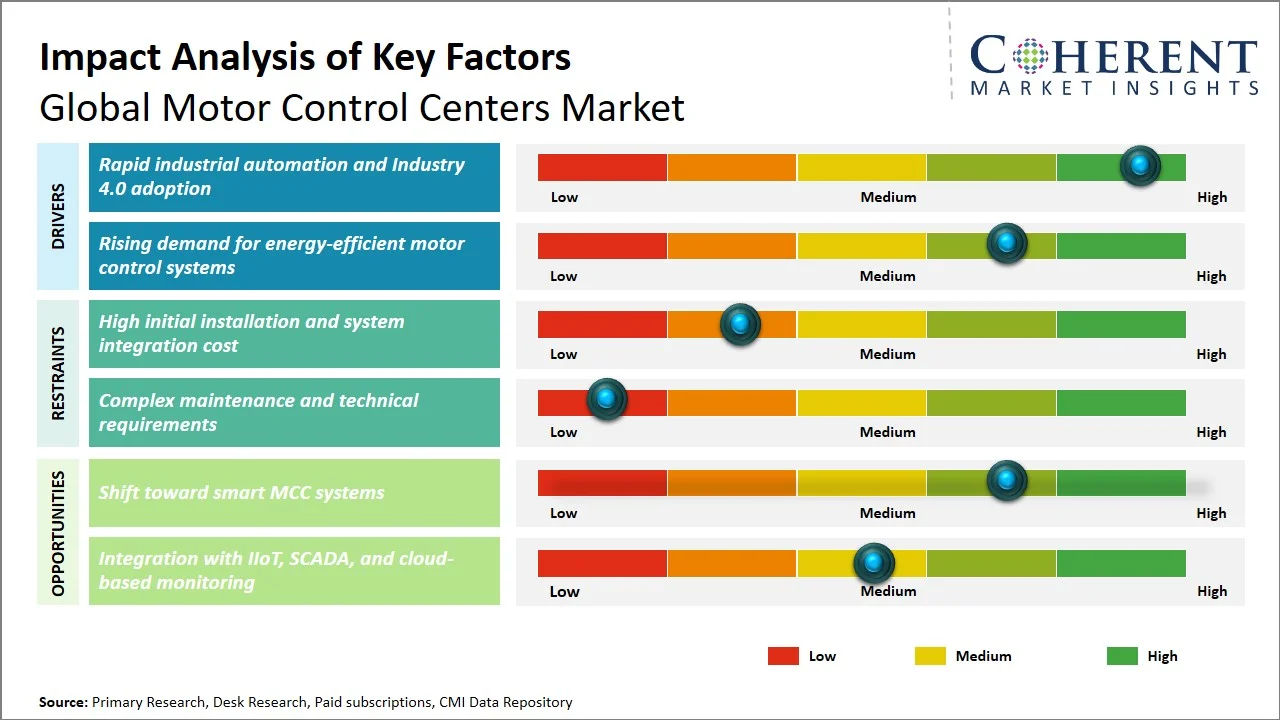
The rapid industrial automation and Industry 4.0 adoption is a major factor propelling the growth of the motor control centers market. Manufacturers across a broad spectrum of industries, including automotive, food & beverage, chemicals, and pharmaceuticals, are rapidly embracing smart factories that depend on interconnected machinery, sensors and automated production systems. MCCs play an important role in the operation and protection of the electric motors that power these automated processes. Intelligent MCCs provide real-time monitoring, predictive maintenance and seamless interaction with Industrial IoT (IIoT) and SCADA systems. As industries are focused on productivity improvement, operating efficiency and decreasing unexpected downtime, the need for modern MCC solutions is on the rise across the globe.
On January 6, 2026, Siemens and NVIDIA announced a significant expansion of their strategic partnership to bring artificial intelligence into the real world. Together, the companies aim to develop industrial and physical AI solutions that will bring AI-driven innovation to every industry and industrial workflow, as well as accelerate each other’s operations. (Source: NVIDIA)
Rising demand for energy-efficient motor control systems
One of the major factors driving the growth of the Motor Control Centers (MCC) market is the increasing demand for energy efficient motor control systems. Industrial facilities are increasingly looking to reduce their electricity use, cut their operational costs and fulfill sustainability and carbon-reduction targets. MCCs incorporate energy-saving technology such variable frequency drives (VFDs), intelligent motor starters, and advanced monitoring systems that help improve motor performance and decrease energy loss. The use of energy-efficient MCC solutions is accelerating in manufacturing, utilities, water treatment and other energy-intensive sectors as governments and regulatory bodies implement more stringent energy efficiency regulations and enterprises strive for more sustainable operations.
On June 19, 2025, Schneider Electric announced the next version of its Altivar ATS430 soft starter. The new soft starter is designed to alleviate electrical stress during motor start-up and increase system efficiency. The devices are designed for energy-intensive applications such as pumps, compressors, conveyors and fans, where decreasing power consumption and extending equipment life are high priorities. (Source: Schneider Electric)
Emerging Trends
- Growing Demand for Energy-Efficient Motor Control Solutions: Increasing energy prices and sustainability programs are fueling the adoption of MCCs with variable frequency drives (VFDs), enhanced motor protection and energy management capabilities. Organizations are seeking to reduce power use and satisfy environmental compliance.
- Expansion of Modular and Retrofit-Friendly MCC Designs: Manufacturers are designing modular, compact and scalable MCC solutions that make installation, maintenance and future expansion easier. As companies upgrade aging electrical infrastructure without having to rebuild the entire system, retrofit-friendly designs are gaining favor.
Global Motor Control Centers Market - MCC Retrofit & Modernization Spending
Most of the industrial facilities have motor control equipment that is 20 – 40 years old, which makes MCC refit and modernization spending a major growth driver in the global motor control centers market. Instead of replacing entire electrical systems manufacturers, utilities, water treatment plants, mining operators and process industries are increasingly retrofitting existing MCCs with intelligent motor management, digital monitoring, ethernet communication, arc-flash protection and predictive maintenance capabilities. Modernization is a popular solution throughout mature industrial industries, as retrofit projects have cheaper capital costs, less downtime and faster deployment than full MCC replacement.
Key insights include
- It is projected that around 60–70% of installed MCCs in North America and Europe are over 15 years old, presenting huge upgrade potential.
- MCC retrofit projects typically cost 30–60% less than full MCC replacement programs.
- Modernization projects can shorten plant shutdown times by 40–70% compared to the complete replacement of switchgear and MCC.
- More than 50% of the world’s industrial facilities are investing in brownfield improvements over greenfield development projects.
- Advanced monitoring and control capabilities of intelligent retrofits can improve motor energy efficiency by 10-20%.
- MCC upgrades with predictive maintenance can reduce motors associated unplanned downtime by 20–50%.
- Bucket replacements, improved starters, digital relays and communication modules can increase the service life of MCCs by 10-20 years for industrial operators.
- MCC spends the most on modernization in water treatment, oil & gas, mining, power generating and manufacturing facilities.
- North America is the greatest retrofit market, given its vast installed base of aged industrial infrastructure.
- Europe is seeing a strong wave of modernization, spurred by energy efficiency standards and Industry 4.0 efforts.
- Asia Pacific is investing more in MCC upgrades as aging manufacturing facilities in Japan, South Korea, China and Australia digitize.
- New MCC refit projects are increasingly standardizing the integration of Industrial Ethernet, remote diagnostics, cloud monitoring and smart motor management systems.
- Arc-flash mitigation and electrical safety compliance modifications are among the fastest increasing MCC modernization applications.
- Many industrial sites are now taking a phased retrofit approach to replace individual MCC buckets and control units vs complete MCC lines.
- The increasing adoption of smart MCC technology in numerous mature industrial markets is anticipated to drive retrofit and modernization investment higher than new conventional MCC installations over the next decade.
Regional Insights
Why is Asia Pacific a Strong Market for Motor Control Centers?
Asia Pacific is expected to account for a market share of 34.0% in 2026. Asia Pacific is the largest market for motor control centers worldwide, due to significant industrial developments in China, India, South Korea, Taiwan, Vietnam and Southeast Asia. Manufacturing modernization, semiconductor fabs, petrochemical complexes and utility infrastructure projects are all very intimately associated with the region’s growth. For example, new semiconductor fabs in Taiwan and South Korea need complex MCC systems for cleanroom HVAC, water treatment and process equipment control, while industrial facilities in India are gradually replacing traditional control panels with automated MCC solutions.
Asia Pacific is responsible for around one-third of global MCC demand and is a hotbed for large expenditures in industrial electrification and automation. Moreover, rapid industrialization is an added boost for the growth of the regional market. On January 29, 2026, Fuji Electric Co., Ltd. announced that it will make capital investment at its Tsukuba Factory in Japan, to expand its production capacity for switchboards and power supplies. (Source: Fuji Electric)
Why Does North America Motor Control Centers Market Exhibit High Growth?
North America is projected to account for 25.0% of the global motor control centers market and is expected to register the fastest growth. North American motor control centers market is fueled by significant investments in data centers, semiconductor manufacturing and industrial reshoring programs. In the U.S., AI-enabled data center building reached historic levels, with annual spending of almost USD 40 billion in 2025, driving major demand for MCCs utilized in power distribution, cooling systems, pumps and backup infrastructure. In addition, the growth of semiconductor fabs and modernization of utility infrastructure are fueling the introduction of intelligent MCCs with predictive maintenance and digital monitoring capabilities. On April 27, 2026, Schneider Electric launched TeSys Tera, a next-generation intelligent motor management system designed for demanding industrial environments. Built on a century of motor management expertise, TeSys Tera unifies protection, control and monitoring to reduce equipment failures, lower energy costs and extend asset life across industries including water and wastewater, metal, mineral and mining, chemical, petrochemical, pharmaceutical and oil and gas. (Source: Schneider Electric)
Global Motor Control Centers Market Outlook for Key Countries
Why is China Emerging as a Major Hub in the Motor Control Centers Market?
China continues to be the biggest single nation market for motor control centers in Asia and is supported by its huge manufacturing base, large scale industrial automation programs and ongoing factory modernization activities. Demand is especially high in automobile production, chemicals, electronics and industrial infrastructure projects where sophisticated motor control systems are needed to optimize efficiency and dependability.
The continuous investment in smart factories and electrical infrastructure renovation in the country is boosting the adoption of intelligent MCCs that incorporate variable frequency drives, remote monitoring, and energy management technologies. In addition, increasing industrial automation in China is also an advantage for the growth of the motor control centers market. On May 4, 2026, Three-Circle Group announced it will use earnings from a planned Hong Kong IPO to fund automation projects in China and international production sites. The company’s significant expansion is driving investment in automated production systems, increasing need for motor control, industrial drives and MCC infrastructure throughout its manufacturing activities.
Is the U.S. the Next Growth Engine for the Motor Control Centers Market?
The U.S. motor control centers market is expected to increase significantly owing to increasing growth of AI data centers, semiconductor fabrication facilities and advanced manufacturing plants. Microsoft, Amazon and Alphabet are all spending billions of dollars on new data center infrastructure, generating a need for MCCs to handle cooling equipment, HVAC systems, pumps and electrical motors. At the same time, efforts to expand semiconductor production and reshore industry are fueling demand for intelligent MCCs that promote automation, energy efficiency and operational reliability across manufacturing facilities.
Germany Motor Control Centers Market Analysis and Trends
Germany's market for motor control centers is closely tied to the country's modern industrial base, particularly the automotive manufacturing, chemical, power generation, and production of industrial machinery sectors. The country’s leadership in Industry 4.0 has resulted in the widespread use of intelligent MCCs coupled with automation systems, digital monitoring platforms, and predictive maintenance technologies. In addition, large industrial operators in areas such as chemicals and wastewater treatment continue to replace old motor control infrastructure to increase operating efficiency and meet severe energy-efficiency requirements.
India Motor Control Centers Market Analysis and Trends
India is one of the fastest expanding motor control centers markets due to large expenditures in manufacturing, renewable energy, metro rail, data centers, and power infrastructure. ABB will invest around USD 75 million in 2026 to expand its manufacturing and R&D facilities in Bengaluru, Hyderabad, Nashik and Vadodara with a focus on electrification, automation, renewable energy and data center prospects. Siemens Energy India announced an investment of USD 20.50 billion to ramp up power equipment production capacity, spurred by the growing demand for industrial electrification solutions and advanced motor control systems throughout the country.
Japan Motor Control Centers Market Analysis and Trends
The motor control centers market in Japan is driven by demand from advanced manufacturing industries like automotive, electronics, semiconductor production and process manufacturing. The ongoing activities for factory automation and adoption of smart manufacturing technologies in the country are driving the move from conventional MCCs to intelligent MCCs with Industrial IoT connectivity, real-time diagnostics and predictive maintenance capabilities. The major industrial businesses are investing for the modernization of the old electrical infrastructure to enhance the energy efficiency and operational dependability. The growth of the semiconductor manufacturing industry along with the development of data centers is driving the demand for advanced motor control systems. Furthermore, the push for carbon neutrality and energy conservation in Japan is creating a favorable environment for the adoption of MCCs with variable frequency drives (VFDs) and smart energy management systems, especially for industrial plants, water treatment plants, and commercial infrastructure projects.
Global Motor Control Centers Market - Smart Factory Investments
Region | Smart Factory Investment/Market Value (2025, USD Billion) |
Asia Pacific | 59.9 |
North America | 48.7 |
Europe | 40.6 |
Latin America | 9.8 |
Middle East & Africa | 8.1 |
Global Motor Control Centers Market - Industrial Electrification Capital Expenditure
Region | Industrial Electrification CAPEX (USD Billion, 2025) | Share of Global CAPEX |
Asia Pacific | 245 | 42.2% |
North America | 145 | 25.0% |
Europe | 125 | 21.6% |
Middle East & Africa | 38 | 6.6% |
Latin America | 27 | 4.6% |
How is the Shift Toward Smart MCC Systems Creating New Growth Opportunities in the Motor Control Centers Market?
The transition to smart Motor Control Centers (MCCs) is creating key growth prospects within the market, allowing industries to transition from reactive maintenance to data-driven asset management and operational optimization. Smart MCCs include intelligent devices, sensors, communication networks and software platforms that provide real-time monitoring of motor performance, energy consumption, equipment health and fault circumstances. These features enable industrial operators to minimize unplanned downtime, enhance energy efficiency, extend equipment life and reduce maintenance costs through predictive maintenance tactics. The rapid adoption of Industrial IoT (IIoT), Industry 4.0 and digital transformation initiatives in manufacturing facilities, utilities, oil & gas plants and water treatment facilities is driving a rapid increase in demand for intelligent MCCs that integrate smoothly with SCADA, cloud-based analytics and enterprise automation systems, presenting new revenue opportunities for MCC manufacturers and solution providers.
On May 14, 2026, Rockwell Automation, Inc. announced new capabilities of its EtherNet/IP In-cabinet Solution, expanding support for additional motor control and protection devices. The update enables manufacturers to connect more components inside the control panel, simplify wiring and gain deeper diagnostic insight, without redesigning their existing architecture. (Source: Rockwell Automation)
Global Motor Control Centers Market - Industrial Motor Energy Consumption
Industrial Sector | Estimated Motor Electricity Consumption (TWh/Year) |
Oil & Gas | ~1,350 TWh |
Chemicals & Petrochemicals | ~1,200 TWh |
Water & Wastewater Treatment | ~1,050 TWh |
Metals & Mining | ~975 TWh |
Food & Beverage | ~750 TWh |
Pulp & Paper | ~600 TWh |
Cement & Construction Materials | ~525 TWh |
Market Players, Key Development, and Competitive Intelligence
Key Developments
- On March 9, 2026, ABB announced that it will invest a further USD 75 million in India during 2026 to significantly expand its manufacturing footprint and research and development (R&D) capabilities. The investment will support growth across ABB’s Electrification, Motion, and Automation business areas. It follows a decade of strong annual growth in the country, where ABB has invested more than USD 230 million over this period to strengthen India’s position as a global manufacturing hub.
- On October 21, 2024, Siemens launched SIMOCODE M-CP, an efficient and future-proof motor management product series, especially tailored for motor control centers (MCC). The new product series complements the existing SIMOCODE portfolio and is designed to optimally meet the requirements of motor control centers.
Competitive Landscape
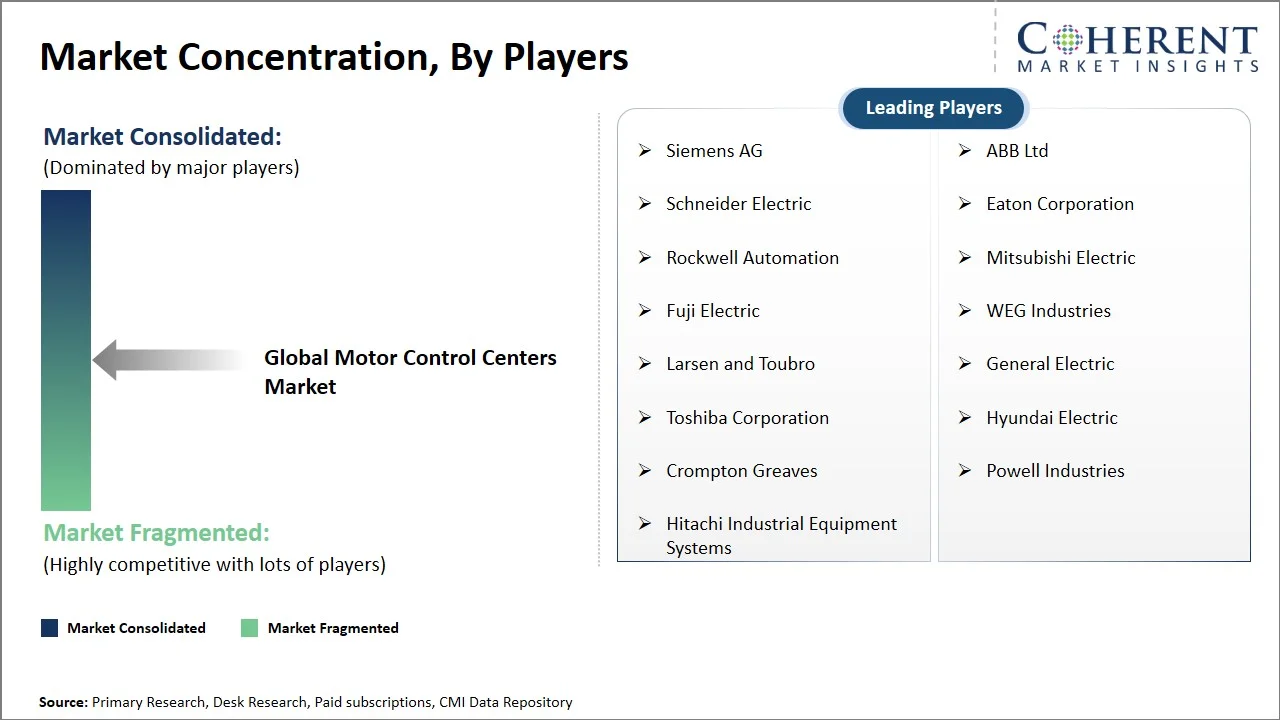
The motor control centers market is segmented into several prominent players working in the industry such as Siemens AG, ABB Ltd., Schneider Electric, Eaton Corporation, and Rockwell Automation. The competition emphasizes product innovation, smart MCC development, digital monitoring capabilities, energy-efficient solutions and interaction with Industrial IoT systems. Companies are pursuing strategic investments in factory expansion, software-enabled motor control solutions, partnerships with automation providers and regional market expansion to improve competitive positioning and capture increased demand from industrial and infrastructure sectors.
Market Report Scope
Motor Control Centers Market Report Coverage
| Report Coverage | Details | ||
|---|---|---|---|
| Base Year: | 2025 | Market Size in 2026: | USD 7 Bn |
| Historical Data for: | 2020 To 2024 | Forecast Period: | 2026 To 2033 |
| Forecast Period 2026 to 2033 CAGR: | 5% | 2033 Value Projection: | USD 10.50 Bn |
| Geographies covered: |
| ||
| Segments covered: |
| ||
| Companies covered: | Siemens AG, ABB Ltd, Schneider Electric, Eaton Corporation, Rockwell Automation, Mitsubishi Electric, Fuji Electric, WEG Industries, Larsen and Toubro, General Electric, Toshiba Corporation, Hyundai Electric, Crompton Greaves, Powell Industries, and Hitachi Industrial Equipment Systems | ||
| Growth Drivers: |
| ||
| Restraints & Challenges: |
| ||
Analyst Opinion (Expert Opinion)
- Rising use of industrial automation, digitalization and energy-efficient motor control technologies in key end-use sectors are anticipated to favor the market. More focus is being placed on intelligent MCC systems that offer real-time diagnostics, predictive maintenance and smooth integration with Industry 4.0 environments. Sustained market expansion during the projection period is expected to be supported by continued investments in manufacturing modernization, data centers, semiconductor facilities, utilities and renewable energy infrastructure.
- The motor control centers market is predicted to reach the future with the growth of smart factories, connected industrial assets and enhanced energy management systems. Demand is projected to be fueled by the increasing usage of intelligent MCCs with cloud connectivity, remote monitoring, cybersecurity features and analytics-driven maintenance capabilities. Steady long-term growth through 2033 and beyond is predicted for the market, fueled by opportunities arising from industrial expansion in Asia Pacific, renewable energy projects, electrification programs and upgrading of aged industrial infrastructure.
Speak to the analyst
Want personalized insights?
Take the findings above to one of our principal consultants, or have the report rebuilt around the segments, geographies and competitors you actually track.
Market Segmentation
- Type Insights (Revenue, USD Billion, 2021 - 2033)
- Conventional MCC
- Smart MCC
- Voltage Insights (Revenue, USD Billion, 2021 - 2033)
- Low Voltage MCC
- Medium Voltage MCC
- Component Insights (Revenue, USD Billion, 2021 - 2033)
- Motor starters
- Circuit breakers
- Contactors
- VFDs
- Protection Relays
- End User Insights (Revenue, USD Billion, 2021 - 2033)
- Oil and Gas
- Power Generation and Utilities
- Manufacturing
- Mining and Metals
- Water and Wastewater Treatment
- Commercial Infrastructure
- Regional Insights (Revenue, USD Billion, 2021 - 2033)
- North America
- U.S.
- Canada
- Latin America
- Brazil
- Argentina
- Mexico
- Rest of Latin America
- Europe
- Germany
- U.K.
- Spain
- France
- Italy
- Russia
- Rest of Europe
- Asia Pacific
- China
- India
- Japan
- Australia
- South Korea
- ASEAN
- Rest of Asia Pacific
- Middle East
- GCC Countries
- Israel
- Rest of Middle East
- Africa
- South Africa
- North Africa
- Central Africa
- North America
- Key Players Insights
- Siemens AG
- ABB Ltd
- Schneider Electric
- Eaton Corporation
- Rockwell Automation
- Mitsubishi Electric
- Fuji Electric
- WEG Industries
- Larsen and Toubro
- General Electric
- Toshiba Corporation
- Hyundai Electric
- Crompton Greaves
- Powell Industries
- Hitachi Industrial Equipment Systems
Sources
Primary Research Interviews
- Motor Control Center Manufacturers
- Industrial Automation Engineers
- Electrical Panel Builders
- End-user Industries (Oil & Gas, Manufacturing, Water Treatment)
Magazines
- Control Engineering Magazine
- Electrical Construction & Maintenance Magazine
- Plant Engineering Magazine
- IndustryWeek Magazine
Journals
- IEEE Transactions on Industrial Electronics
- Journal of Industrial Engineering and Management
- International Journal of Electrical Power & Energy Systems
Associations
- National Electrical Manufacturers Association (NEMA)
- International Electrotechnical Commission (IEC)
- Institute of Electrical and Electronics Engineers (IEEE)
- Electrical Apparatus Service Association (EASA)
Public Domain Sources
- U.S. Department of Energy Reports
- European Commission Energy Reports
- World Bank Industrial Development Reports
- Government Statistical Offices
Proprietary Elements
- CMI Data Analytics Tool
- Proprietary CMI Existing Repository of information for last 10 years
Get access to 250+ pages report
Every segment, forecast, competitor profile and data table behind the analysis above — available for instant download.
- ESOMAR Member
- ISO 9001:2015 Certified
- D-U-N-S Registered
- GDPR & CCPA Compliant
Missing comfort of reading report in your local language? Find your preferred language:
Transform your Strategy with Exclusive Trending Reports
Frequently Asked Questions
The global motor control centers market is expected to stand at USD 7 Bn in 2026 and is expected to reach USD 10.50 Bn by 2033.
The CAGR of the global motor control centers market is projected to be 5% from 2026 to 2033.
Rapid industrial automation and Industry 4.0 adoption and rising demand for energy-efficient motor control systems are the major factors driving the growth of the global motor control centers market.
High initial installation and system integration cost and complex maintenance and technical requirements are the major factors hampering the growth of the global motor control centers market.
In terms of type, the conventional MCC segment is estimated to dominate the market revenue share in 2026.
A motor starter is used to start, stop, and protect electric motors from overloads and faults.
They optimize motor operation through advanced controls and energy-saving technologies such as VFDs.