

Global Mushroom Cosmetics Market Size and Forecast – 2026-2033
The Global Mushroom Cosmetics Market is estimated to be valued at USD 2.04 Bn in 2026 and is expected to reach USD 3.01 Bn by 2033, exhibiting a compound annual growth rate (CAGR) of 5.7% from 2026 to 2033.
Key Takeaways of the Mushroom Cosmetics Market
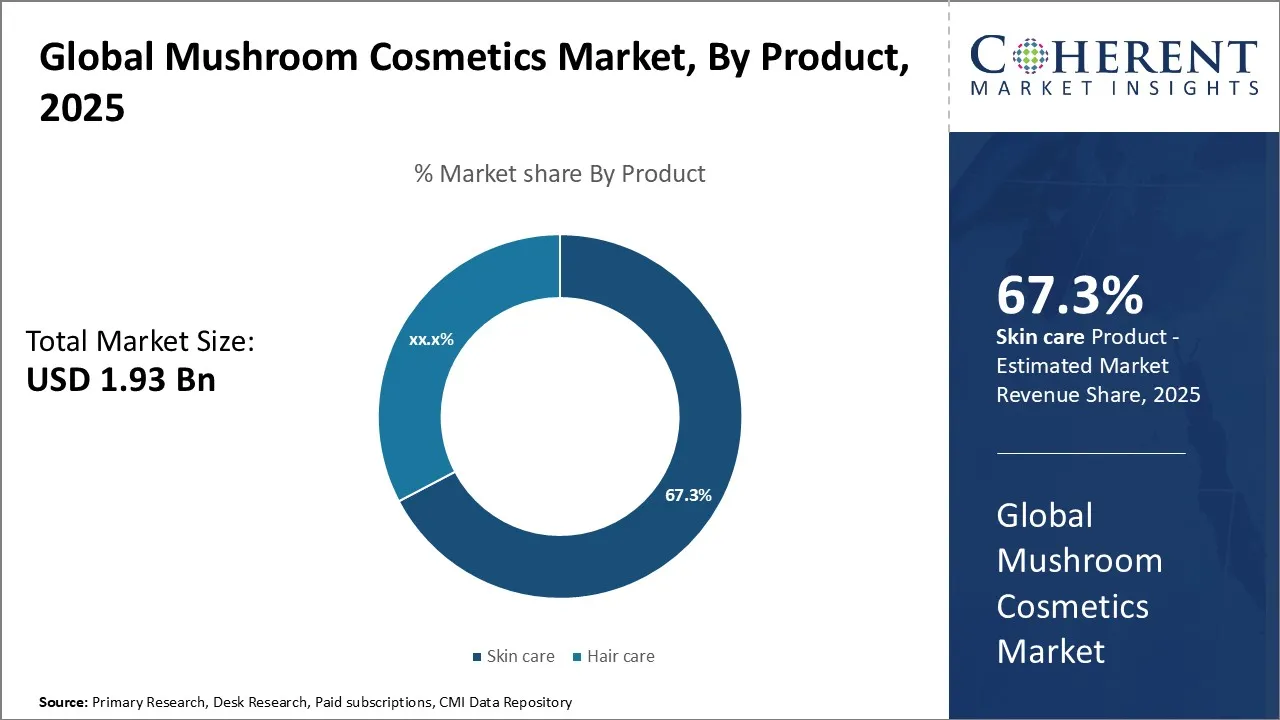
- The skin care segment is projected to capture 68.3 % of the global mushroom cosmetics market in 2026, driven by growing consumer awareness about the benefits of natural and bioactive ingredients in personal care products.
- The hypermarkets & supermarkets segment is expected to account for 32.6 % of the global mushroom cosmetics market in 2026, fueled by their capacity to offer consumers convenient, all-in-one shopping experiences.
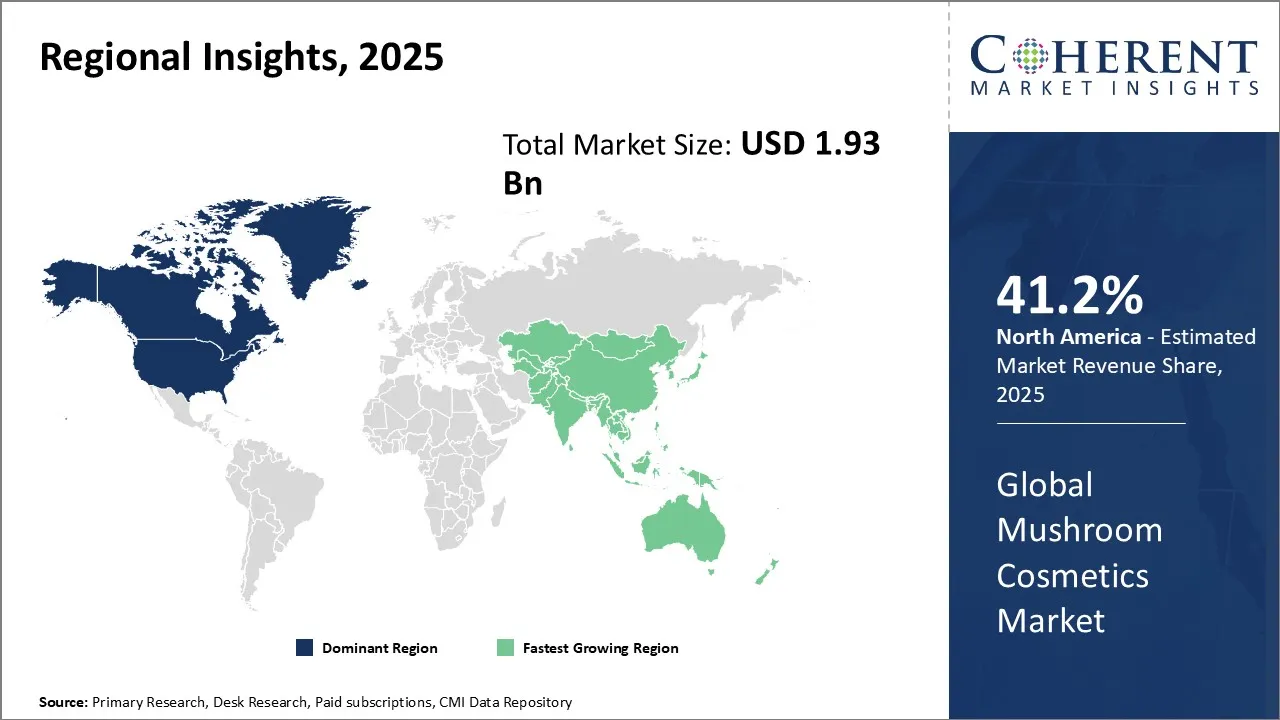
- North America is expected to lead the global mushroom cosmetics market in 2026 with a 41.2 % share, driven by increasing consumer demand for natural skincare products and the rising popularity of bioactive ingredients. Asia Pacific, with a 23.5% share, will be the fastest-growing region, propelled by growing awareness of skincare benefits, expanding beauty trends, and rising middle-class income levels.
Market Overview
The market trend in mushroom cosmetics highlights a rising preference for clean-label and eco-friendly formulations among consumers globally. Incorporation of mushroom extracts in skin care products is becoming mainstream, driven by their ability to enhance skin health while minimizing harsh chemical use. Additionally, research collaborations and technological advancements have led to enhanced extraction and formulation techniques, making mushroom-based skin care products more effective and appealing. This trend aligns with the broader shift towards wellness-oriented beauty, promoting holistic and sustainable skin care solutions.
Current Events and Its Impact
Current Events | Description and its impact |
Surge in Mushroom-Based Skincare Launches |
|
Integration of Mushrooms in Haircare Products |
|
Segmental Insights
- Current Industry Events of 2026
- Market Size Estimation
- Regional Breakdown
- Competitive Landscape
- Customer Intelligence
- Segmental Analysis
- Pricing Analysis
- Key Market Drivers, Challenges & Future Trends
- Customized Insights Section
Mushroom Cosmetics Market Insights, By Product - Skin Care Segment Dominates the Market due to its Strong Consumer Preference for Natural and Effective Ingredients
The skin care segment is expected to hold 68.3% share of the global mushroom cosmetics market in 2026, due to the rising consumer awareness around the benefits of natural and bioactive ingredients in personal care products. Mushrooms, rich in antioxidants, vitamins, and polysaccharides, have gained recognition for their ability to hydrate, soothe, and rejuvenate the skin, addressing common concerns such as aging, inflammation, and dullness. This has led to an increased incorporation of mushroom extracts like reishi, shiitake, and chaga in various skin care formulations including creams, serums, and moisturizers.
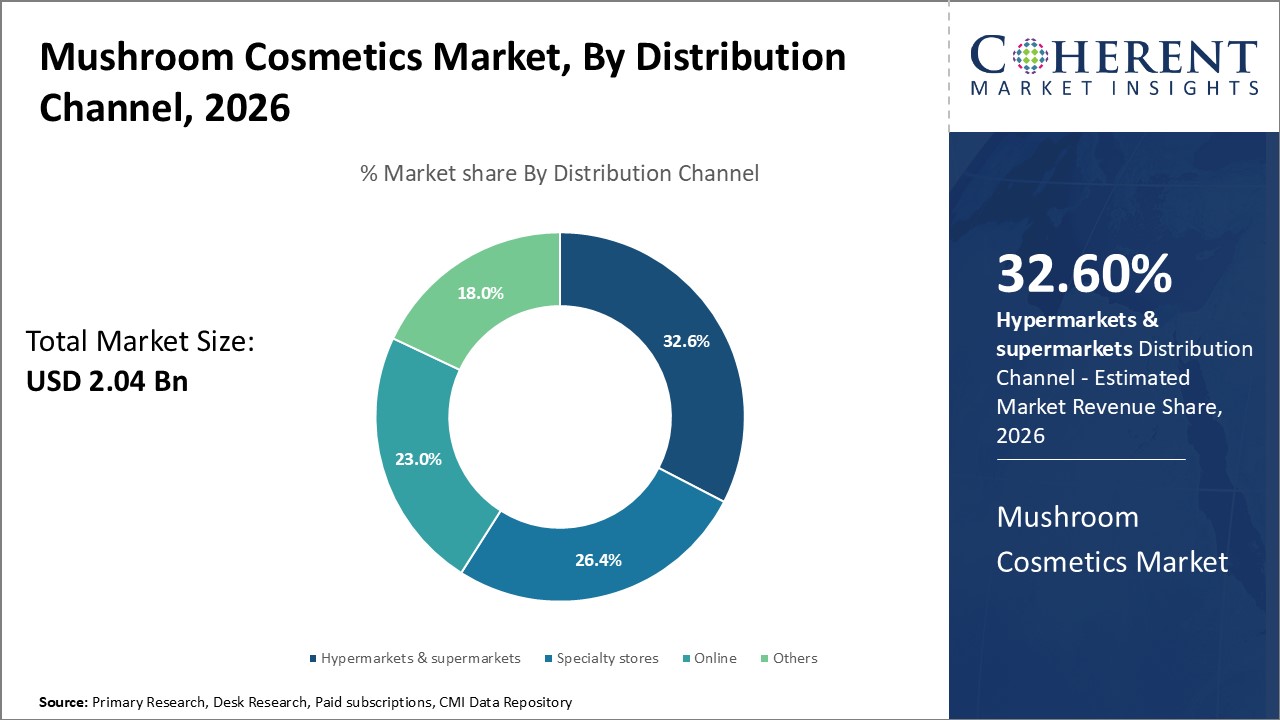
Mushroom Cosmetics Market Insights, By Distribution Channel - Hypermarkets & Supermarkets Segment Dominates the Market due to their Accessibility and Wide Product Assortment
Hypermarkets & supermarkets segment is projected to hold 32.6% share in the global mushroom cosmetics market in 2026, driven by their ability to provide consumers with convenient, one-stop shopping experiences. These retail formats attract a diverse customer base by offering a broad range of mushroom cosmetic products under one roof, including skin care, hair care, and body care items.
One significant factor supporting growth in Hypermarkets & supermarkets is the increasing consumer preference for purchasing everyday personal care products from easily accessible physical stores. Shoppers often rely on these outlets for the tactile experience of examining products, seeking immediate purchase gratification while benefiting from promotional offers and discounts. This accessibility is particularly important for mushroom cosmetics, which many consumers may discover through in-store trials or recommendations during routine shopping.
Regional Insights
North America Mushroom Cosmetics Market Analysis and Trends
The North America region is projected to lead the market with a 41.2% share in 2026, driven by a mature and well-established beauty and personal care ecosystem alongside strong consumer demand for natural and sustainable ingredients. The region boasts a robust presence of leading cosmetic companies investing heavily in R&D for innovative mushroom-derived formulations. Government regulations promoting clean and green beauty products, coupled with rising consumer awareness about skin benefits of mushroom extracts, further support market leadership.
The advanced supply chain and trade infrastructure facilitate smooth sourcing of diverse mushroom varieties globally. Notable companies such as Estée Lauder, Kiehl’s (L’Oréal), and smaller niche brands like Krave Beauty offer mushroom-based skincare products, expanding market penetration across the U.S. and Canada. Their continuous product innovations and marketing campaigns emphasizing the functional benefits of mushrooms contribute significantly to North America’s commanding position.
Asia Pacific Mushroom Cosmetics Market Analysis and Trends
The Asia Pacific region is expected to exhibit the fastest growth in the market contributing 23.5% share in 2026, propelled by burgeoning middle-class populations, increased disposable incomes, and heightened interest in natural and herbal beauty solutions. Countries like South Korea and Japan have long traditions of incorporating fungi in beauty regimens, providing a favorable cultural foundation. Government initiatives promoting local agriculture and biotechnology accelerate mushroom cultivation and extraction technologies, reducing costs and improving product accessibility.
Furthermore, the expanding e-commerce landscape and rising health-conscious consumers drive rapid adoption. Key players include Amorepacific, Shiseido, and local startups innovating with diverse mushroom species such as Reishi and Shiitake. Their ability to blend traditional knowledge with modern science fuels dynamic market expansion throughout the Asia Pacific region.
Mushroom Cosmetics Market Outlook for Key Countries
U.S. Mushroom Cosmetics Market Trends
The U.S. mushroom cosmetics market is characterized by high consumer awareness regarding the benefits of mushroom extracts in skincare, particularly for anti-aging and hydration properties. Leading cosmetic giants like Estée Lauder and Johnson & Johnson have integrated mushroom ingredients into premium product lines, enhancing market visibility. Additionally, the rise of indie brands focusing exclusively on mushroom-infused formulations has broadened consumer choice. Regulatory support aimed at clean beauty and sustainability aligns well with mushroom cosmetics’ natural positioning.
South Korea Mushroom Cosmetics Market Trends
South Korea’s cosmetics sector leverages its deep-rooted cultural usage of mushrooms in beauty and traditional medicine to accelerate product development and consumer acceptance. Amorepacific is a dominant player actively incorporating mushroom extracts such as Cordyceps and Reishi, promoting skin rejuvenation and anti-inflammatory effects. Government support for biotechnology innovation and mushroom farming enhances local ingredient sourcing. The strong K-beauty export wave further amplifies South Korea’s global influence in mushroom cosmetics, making it a central hub for new ingredient and formulation developments.
Japan Mushroom Cosmetics Market Trends
Japan continues to lead with a sophisticated mushroom cosmetics market that emphasizes science-backed natural ingredients, including a strong heritage of medicinal mushrooms like Shiitake and Maitake. Shiseido and Kao Corporation have introduced various lines featuring mushroom-based antioxidants and moisturizers, reinforcing their premium skincare segments. The Japanese government’s focus on advancing natural product research and protecting intellectual property rights supports ongoing innovations. Japan’s meticulous quality standards and consumer preference for minimalistic, effective cosmetics propel steady market growth.
China Mushroom Cosmetics Market Trends
China’s mushroom cosmetics market is rapidly expanding, powered by rising urbanization and increasing consumer expenditure on beauty. Domestic companies, such as Herborist and Inoherb, are pioneering the use of local mushroom varieties, linking traditional Chinese medicine principles with modern cosmetic science. Favorable government policies encouraging agricultural modernization and natural product development, alongside China's growing e-commerce capabilities, facilitate widespread product distribution. The expanding middle class’s shifting preference towards premium and nature-inspired skincare fuels vibrant market dynamics.
Germany Mushroom Cosmetics Market Trends
Germany’s mushroom cosmetics market reflects a combination of environmental consciousness and regulatory rigor. Consumers strongly favor organic and natural cosmetics, providing fertile ground for mushroom-based skincare products. Leading European companies like Dr. Hauschka (WALA Heilmittel) and Weleda incorporate mushroom extracts for their purported skin-soothing and anti-aging properties. Germany’s well-structured regulatory framework ensures product safety and efficacy, thus building consumer trust. The country’s strategic location as a European trade hub allows these companies to efficiently distribute products across the continent, reinforcing Germany’s significant market influence.
End User Feedback and Unmet Needs in the Mushroom Cosmetics Market
- Enhanced Skin Benefits from Bioactive Mushroom Extracts: A recurring positive theme from end users in the skincare and beauty sector revolves around the perceived effectiveness of mushroom-based ingredients in promoting skin health. For instance, a significant number of consumers have praised the anti-aging properties of products containing Reishi mushrooms, citing visible improvements in skin elasticity, texture, and a reduction in fine lines. One consumer from a mid-market skincare brand shared their experience with a Reishi-infused serum, mentioning a noticeable reduction in wrinkles after just two weeks of use. The ingredient’s antioxidant properties and the deep hydration it provides were highlighted as key factors behind this positive outcome.
- Customization and Product Variety: There is a growing demand for personalized mushroom-based products tailored to different skin types, concerns, and preferences. While the market currently focuses heavily on anti-aging and hydration, a significant number of users have expressed the need for products that cater to more specific skin conditions, such as acne, rosacea, or hyperpigmentation. Formulating a wider range of products that incorporate mushrooms with targeted benefits could better serve a more diverse consumer base.
Market Players, Key Development, and Competitive Intelligence
Key Developments
- On August 18, 2025, O Boticário launched EGEO Cogu and EGEO Cogu Mellow in the U.S., the world’s first fragrances featuring Boletus Edulis mushroom. Created with Symrise, the limited-edition scents highlight personalization through layering, marking a bold innovation to attract Gen Z consumers and reinforce the brand’s global positioning.
- In April 2023, Pacifica launched its Wake-Up Beautiful body line, featuring retinoid and mushroom-based body products including a Body Serum and Retinoid Body Lotion, reinforcing its positioning as a vegan, sustainable, clean beauty brand
Top Strategies Followed by Global Mushroom Cosmetics Market Players
- Established industry leaders heavily invest in research and development (R&D) to innovate high-performance mushroom-based skincare and cosmetic products that cater to evolving consumer needs. These companies prioritize the creation of formulations rich in bioactive mushroom extracts that offer unique benefits such as anti-aging, hydration, and skin protection. Through retail collaborations, e-commerce platforms, and localized marketing strategies, established firms ensure widespread accessibility and heightened brand recognition worldwide.
- For example, L'Oréal has integrated mushrooms like Reishi into their formulations, promoting their antioxidant-rich properties for skin rejuvenation.
- Mid-level players in the mushroom cosmetics sector adopt a different strategic approach primarily aimed at balancing product efficacy with affordability. Recognizing the price-sensitive nature of a significant portion of consumers, these companies focus on offering cost-effective solutions that do not compromise on quality. Their product portfolios often include simplified formulations but still leverage the potent benefits of mushroom-derived ingredients to appeal to budget-conscious customers.
- For example, Dr. Jart+, a mid-tier player, offers a mushroom-infused product range that uses ingredients like Cordyceps for energy boosting and anti-aging, while remaining price-conscious. These firms often streamline their formulations without compromising on the potent benefits derived from mushroom extracts.
- Small-scale players play a crucial and innovative role in the mushroom cosmetics market by focusing on niche opportunities and adopting specialized differentiation strategies. These companies often concentrate on unique product features—such as organic certification, rare mushroom species, or eco-friendly packaging—to appeal to discerning consumers who seek novelty and ethical beauty solutions. Embracing cutting-edge technologies like microencapsulation, fermentation, or plant-based extraction methods helps smaller firms develop innovative products that compete effectively despite limited resources.
- For example, Fungi Perfecti is a brand that leverages rare mushrooms like Lion’s Mane and Turkey Tail to create wellness-focused beauty products.
Market Report Scope
Mushroom Cosmetics Market Report Coverage
| Report Coverage | Details | ||
|---|---|---|---|
| Base Year: | 2025 | Market Size in 2026: | USD 2.04 Bn |
| Historical Data for: | 2020 To 2024 | Forecast Period: | 2026 To 2033 |
| Forecast Period 2026 to 2033 CAGR: | 5.7% | 2033 Value Projection: | USD 3.01 Bn |
| Geographies covered: |
| ||
| Segments covered: |
| ||
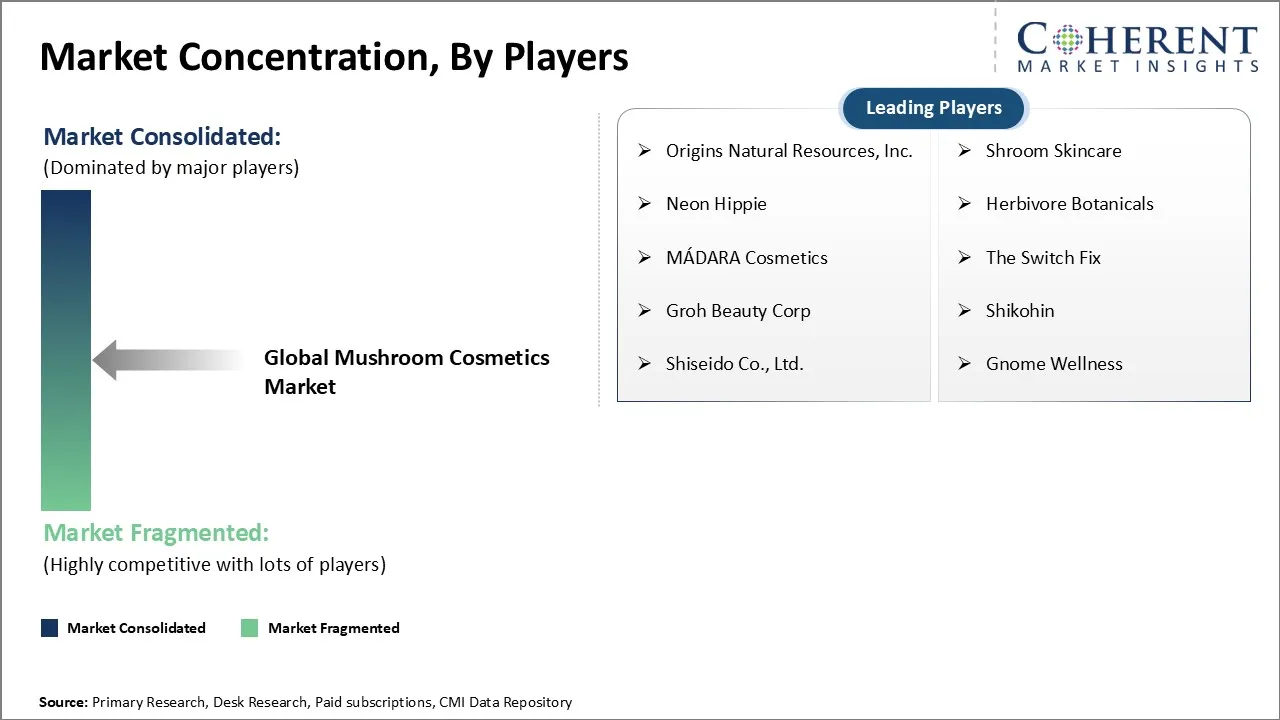
| Companies covered: | Origins Natural Resources, Inc., Shroom Skincare, Neon Hippie, Herbivore Botanicals, MÁDARA Cosmetics, The Switch Fix, Groh Beauty Corp, Shikohin, Shiseido Co., Ltd., and Gnome Wellness | ||
| Growth Drivers: |
| ||
| Restraints & Challenges: |
| ||
Mushroom Cosmetics Market Dynamics
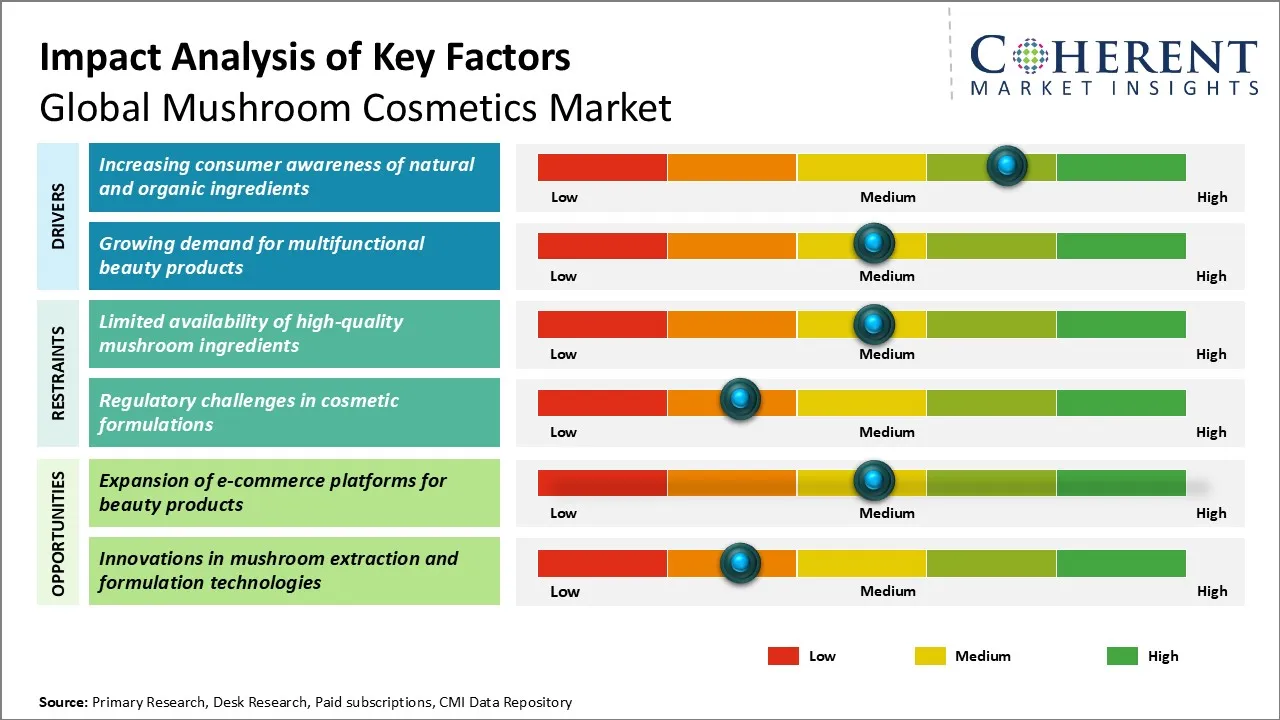
Mushroom Cosmetics Market Driver - Increasing Consumer Awareness of Natural and Organic Ingredients
Growing consumer awareness about the benefits of natural and organic ingredients is significantly driving the adoption of mushroom-based cosmetics globally. As more individuals seek skincare and beauty solutions that minimize exposure to synthetic chemicals and potential allergens, mushrooms stand out due to their rich profile of bioactive compounds, antioxidants, and vitamins known for nourishing and protecting the skin. The increasing prevalence of clean beauty trends and the desire for products formulated with sustainably sourced, plant-based ingredients have further accelerated interest in mushroom extracts.
For instance, the rise of the clean beauty movement has made consumers more inclined to choose products with bioactive compounds, antioxidants, and vitamins, all of which are abundant in mushrooms. Mushrooms, such as Reishi and Chaga, are recognized for their ability to nourish, protect, and rejuvenate the skin, making them increasingly popular in skincare formulations.
Mushroom Cosmetics Market Opportunity - Expansion of E-commerce Platforms for Beauty Products
The rapid expansion of e-commerce platforms presents a significant opportunity for the global mushroom cosmetics market, enabling brands to reach a broader and more diverse consumer base. Increasing internet penetration, smartphone adoption, and the convenience offered by online shopping have driven a substantial shift in consumer purchasing behavior, particularly in the beauty and personal care segment. Mushroom-based cosmetics, which cater to the growing demand for natural and sustainable ingredients, can effectively leverage e-commerce channels to enhance visibility and accessibility.
For example, major online retailers like Amazon, Sephora Digital, and specialized beauty e-tailers are increasingly featuring mushroom cosmetics brands, while direct-to-consumer platforms enable smaller, innovative companies to reach global audiences without significant infrastructure investments. The digital environment allows brands to tell compelling stories about their sustainable sourcing practices, highlighting how mushroom cultivation requires minimal water and land resources compared to traditional cosmetic ingredients, which resonates strongly with environmentally conscious consumers who dominate online beauty shopping demographics.
Analyst Opinion (Expert Opinion)
- The global mushroom cosmetics market is rapidly evolving, driven by a burgeoning interest in natural ingredients and sustainable beauty solutions. Insights from the Natural Products Expo (2023) and the Sustainable Beauty Conference (2022) highlighted the growing recognition of mushrooms for their skin-nourishing properties and bioactive compounds.
- Brands like Shroom Bloom and Eminence Organic Skin Care are at the forefront, showcasing innovative formulations that leverage mushrooms such as reishi and chaga for their anti-aging and moisturizing benefits. For instance, Shroom Bloom's recent product line has been well-received for its ability to enhance skin health while promoting sustainability. Moreover, discussions at these conferences emphasized the importance of transparency in sourcing and ingredient efficacy, which are crucial in gaining consumer trust.
- Challenges such as regulatory hurdles and the need for extensive research on ingredient safety were noted. Companies that prioritize education and invest in clinical studies to validate their claims are likely to thrive. Ultimately, the future of the mushroom cosmetics market will hinge on its ability to merge innovation with sustainability, appealing to increasingly discerning consumers seeking holistic beauty solutions.
Speak to the analyst
Want personalized insights?
Take the findings above to one of our principal consultants, or have the report rebuilt around the segments, geographies and competitors you actually track.
Market Segmentation
- Product Insights (Revenue, USD Bn, 2021 - 2033)
- Skin care
- Face serums
- Face creams & moisturizers
- Cleansers
- Body lotions
- Others
- Hair care
- Shampoo
- Hair conditioner & masks
- Hair serum & gels
- Others
- Distribution Channel Insights (Revenue, USD Bn, 2021 - 2033)
- Hypermarkets & supermarkets
- Specialty stores
- Online
- Others
- Regional Insights (Revenue, USD Bn, 2021 - 2033)
- North America
- U.S.
- Canada
- Latin America
- Brazil
- Argentina
- Mexico
- Rest of Latin America
- Europe
- Germany
- U.K.
- Spain
- France
- Italy
- Russia
- Rest of Europe
- Asia Pacific
- China
- India
- Japan
- Australia
- South Korea
- ASEAN
- Rest of Asia Pacific
- Middle East
- GCC Countries
- Israel
- Rest of Middle East
- Africa
- South Africa
- North Africa
- Central Africa
- North America
- Key Players Insights
- Origins Natural Resources, Inc.
- Shroom Skincare
- Neon Hippie
- Herbivore Botanicals
- MÁDARA Cosmetics
- The Switch Fix
- Groh Beauty Corp
- Shikohin
- Shiseido Co., Ltd.
- Gnome Wellness
Sources
Primary Research Interviews
- R&D Director – Leading Mushroom-Based Cosmetic Manufacturer
- Procurement Manager – Major Beauty & Skincare Retailer
- Product Development Head – Well-Known Cosmetics Brand (with mushroom ingredient focus)
- Sustainability Manager – Natural Cosmetics Certification Body
Stakeholders
- Manufacturers
- End-use Sectors:
- Skincare (face creams, serums, masks, cleansers)
- Haircare (shampoos, conditioners, scalp treatments)
- Anti-aging & Wellness Brands with mushroom actives
- Regulatory & Certification Bodies
- E-commerce Platforms and Retailers
- Technology Integration Players (ingredient extraction, AI-driven beauty personalization platforms)
Databases
- UN Comtrade Database
- India Import Export (EXIM) Database
Magazines:
- Cosmetics & Toiletries Magazine – Trends in natural cosmetics and mushroom ingredients
- Global Cosmetic Industry (GCI) – Innovations in mushroom-based skincare
- Beauty Packaging – Ingredient focus and sustainability
- Happi Magazine – Natural beauty and cosmeceutical updates
Journals
- International Journal of Cosmetic Science – Functional benefits of mushrooms in cosmetics
- Journal of Ethnopharmacology – Medicinal mushrooms and their topical applications
- Journal of Dermatological Science – Bioactive compounds from mushrooms for skin health
- Journal of Applied Microbiology – Mushroom extract effects in topical formulations
Newspapers
- The Financial Times – Growth of natural and mushroom-based beauty products
- The Guardian – Consumer trends in natural and ‘clean’ beauty
- Asia Beauty Industry Journal – Mushroom cosmetics market in Asia-Pacific
- European Cosmetics News – New regulations and market launches
Associations
- Personal Care Products Council (PCPC)
- International Society for Mushroom Science (ISMS)
- Society of Cosmetic Chemists (SCC)
- Natural Products Association
- European Federation of Cosmetic Ingredients (EFfCI)
Public Domain Sources
- U.S. FDA – Cosmetic ingredient guidelines and approvals
- European Commission – Cosmetics Regulation and Natural Ingredient Guidelines
- World Health Organization – Safety standards for cosmetic usage of mushrooms
Proprietary Elements
- CMI Data Analytics Tool, Proprietary CMI Existing Repository of information for last 8 years.
Get access to 250+ pages report
Every segment, forecast, competitor profile and data table behind the analysis above — available for instant download.
- ESOMAR Member
- ISO 9001:2015 Certified
- D-U-N-S Registered
- GDPR & CCPA Compliant
Missing comfort of reading report in your local language? Find your preferred language:
Transform your Strategy with Exclusive Trending Reports
Frequently Asked Questions
The global mushroom cosmetics market is estimated to be valued at USD 2.04 Bn in 2026 and is expected to reach USD 3.01 Bn by 2033.
The CAGR of global mushroom cosmetics market is projected to be 5.7% from 2026 to 2033.
The mushroom cosmetics market refers to beauty and personal care products formulated with mushroom extracts for their skincare, anti-aging, and therapeutic benefits.
Increasing consumer awareness of natural and organic ingredients and growing demand for multifunctional beauty products are the major factors driving the growth of the global mushroom cosmetics market.
Limited availability of high-quality mushroom ingredients and regulatory challenges in cosmetic formulations are the major factors hampering the growth of the global mushroom cosmetics market.
In terms of product, skin care is estimated to dominate the market revenue share in 2026.
Origins Natural Resources, Inc., Shroom Skincare, Neon Hippie, Herbivore Botanicals, MÁDARA Cosmetics, The Switch Fix, Groh Beauty Corp, Shikohin, Shiseido Co., Ltd., and Gnome Wellness are the major players.