

Global Antioxidants Market Size and Share Analysis – Growth Trends and Forecasts (2026-2033)
The global antioxidants market is estimated to be valued at USD 4.23 Bn in 2026 and is expected to reach USD 6.08 Bn by 2033, exhibiting a compound annual growth rate (CAGR) of 5.3% from 2026 to 2033.
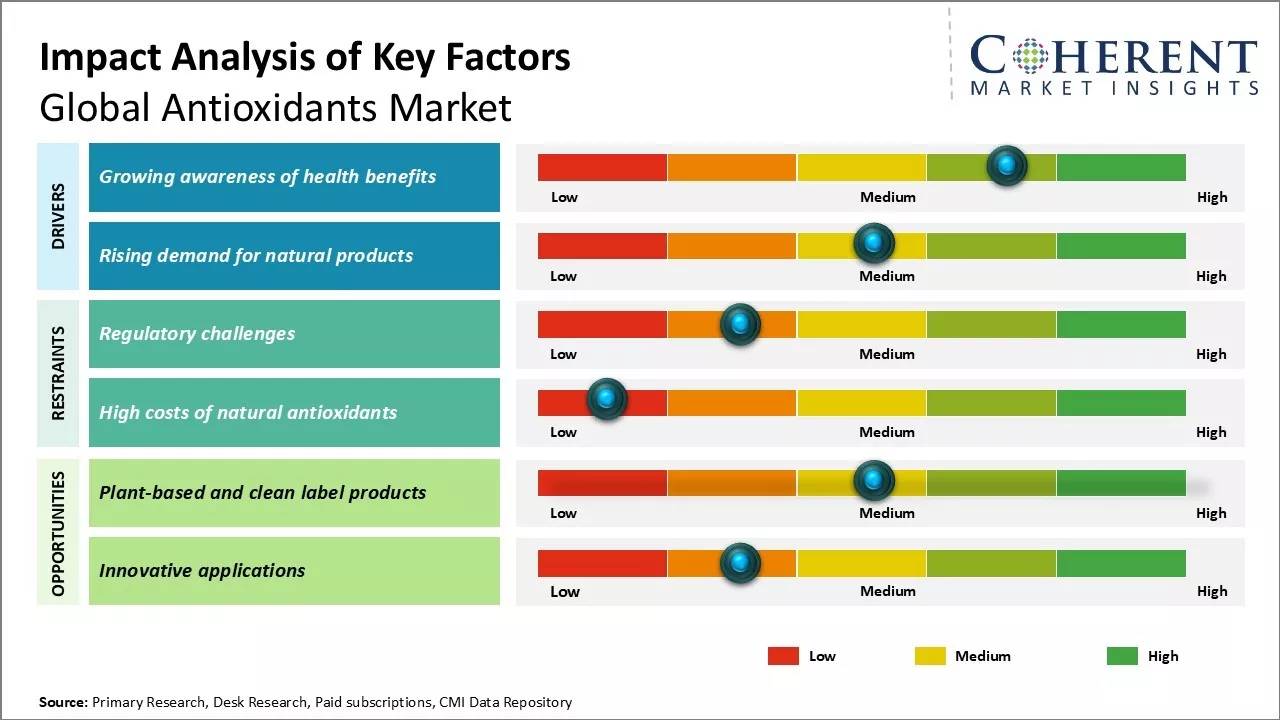
Key Takeaways
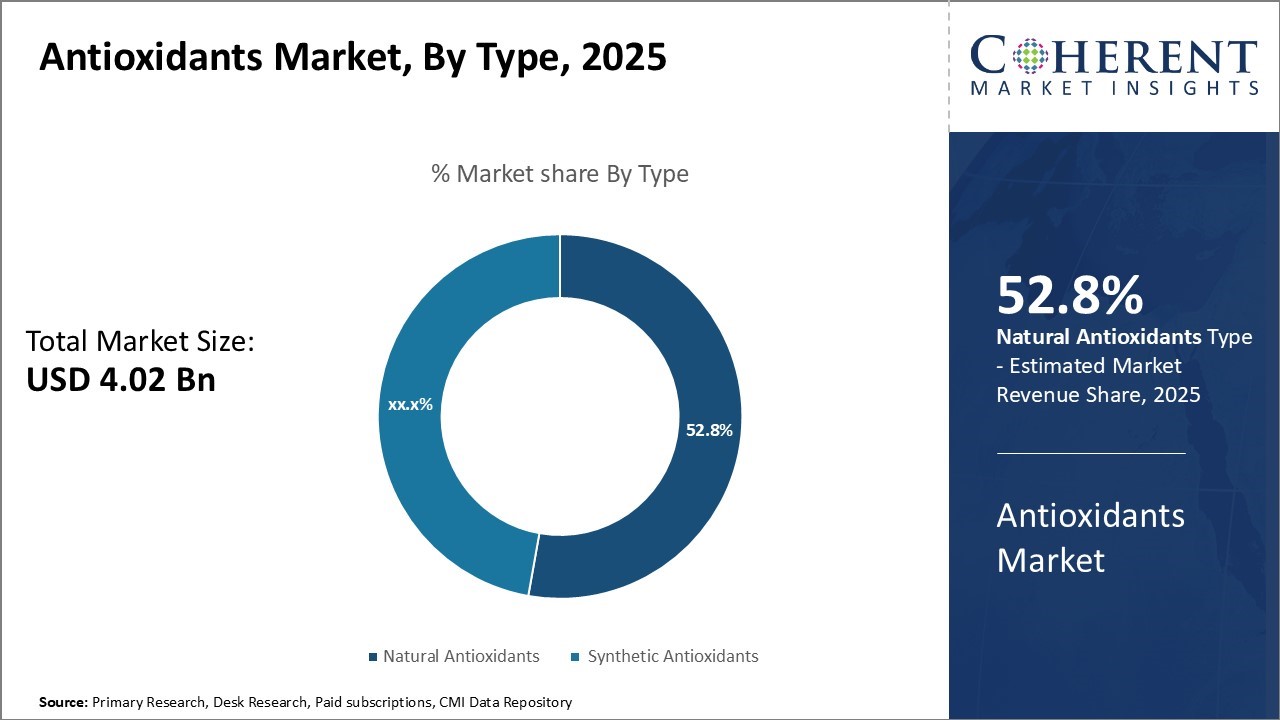
- In terms of Type, Natural Antioxidants Segment is expected to contribute 53.8% share of the market in 2026. This is due to the growing consumer preference for natural ingredients and healthier lifestyle choices.
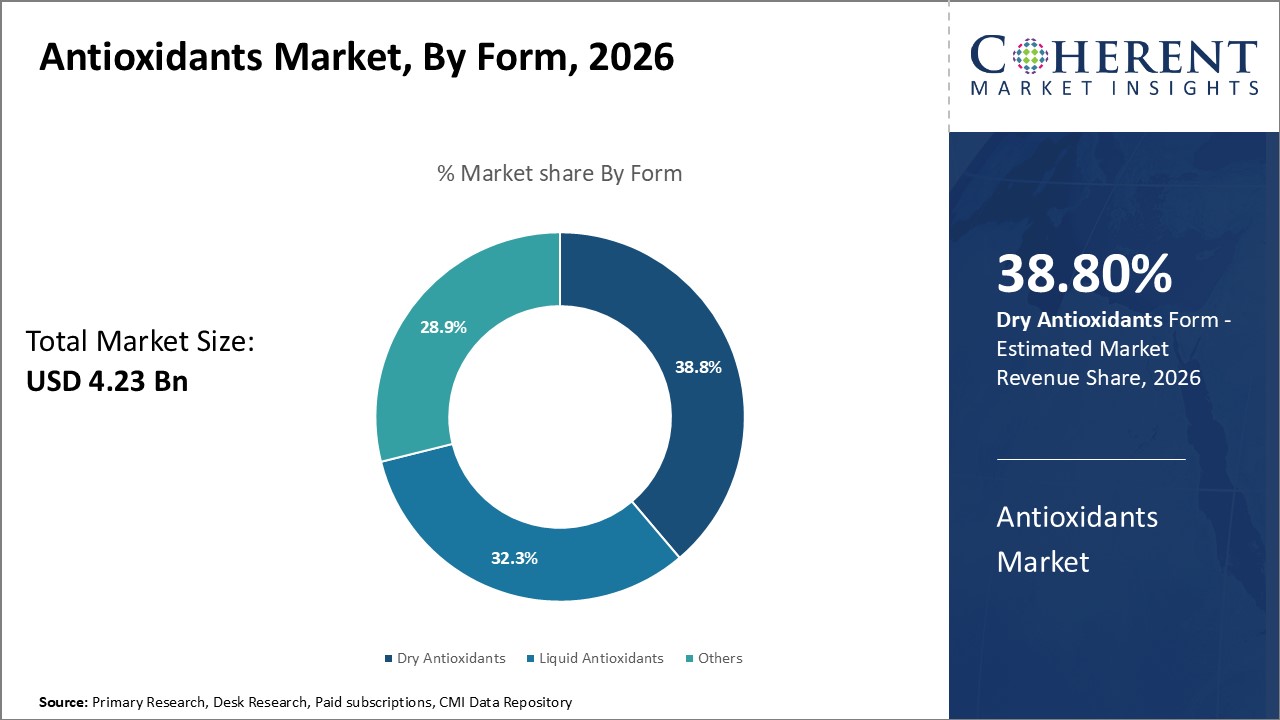
- In terms of Form, Dry Antioxidants Segment is expected to contribute 38.8% share of the market in 2026. This is due to the convenience they offer for storage, handling, and transportation.
- In terms of Application, Food And Beverage Additives Segment is expected to contribute 28.5% share of the market in 2026. This is owing to the rising demand from diverse food categories.
- Asia Pacific is expected to dominate the overall market in 2026 with an estimated share of 39.9%. This is due to strict regulatory frameworks for product quality and safety in the region.
Market Overview
Antioxidants are increasingly being used in various food products such as snacks, bakery items, and processed food to increase their shelf life. Growing health-consciousness among consumers is also prompting them to opt for food products with antioxidants which promote better health. Rising disposable income levels especially in developing nations is further expected to boost the purchase of antioxidants. Moreover, factors like increasing focus on preventive healthcare and rising disposable income are providing growth opportunities for players in this market.
Current Events and Its Impact on Antioxidants Market
Current Events | Description and its impact |
Shift to Green Extraction & Bio ‑ encapsulation Technologies |
|
AI-Fortified Supply Chain & Forecasting Inventory for Antioxidant Logistics |
|
Pricing Analysis
Pricing landscape for antioxidants reflects sustained demand across industries—food & beverages to pharma and cosmetics with clean‑label movements fueling strategic realignments. Synthetic antioxidants, traditionally cheap because of stable chemistry sourcing, still account for much volume share (e.g. ~53–54%). Nevertheless, recent regulation limits (e.g. BHA bans) and increasing consumer skepticism have led to reformulations, with higher compliance costs and premium prices being charged for reformulated synthetic products and natural substitutes alike.
In contrast, natural antioxidants like vitamin E, polyphenols, carotenoids, rosemary, green‑tea extracts—are 3–5× more expensive than synthetics because of lower yields, extraction, and traceability certifications costs.
Price volatility is a critical issue—supply chain disruptions (e.g. geopolitical tensions, climate volatility) impact agriculture‑based costs of natural ingredients, placing downward pressure on margins and upward pressure on product prices. In addition, raw material prices on phenols, phosphites and amines went up by ~16% from 2022–2024, increasing raw material costs for synthetic antioxidant manufacturers.
Buyer dynamics also influence pricing: large pharma and food, as well as CPG companies, have significant bargaining power, negotiating bulk discounts, squeezing supplier margins—and intensifying emphasis on cost-efficient formulations.
Overall, while synthetic antioxidants wholesale deals are still cost‑efficient and volume‑led, a structural transformation towards natural substitutes and increasing regulation are increasingly pushing up average market pricing, squeezing commodity margins, and boosting premiums for traceable, certified natural ingredients.
- Current Industry Events of 2026
- Market Size Estimation
- Regional Breakdown
- Competitive Landscape
- Customer Intelligence
- Segmental Analysis
- Pricing Analysis
- Key Market Drivers, Challenges & Future Trends
- Customized Insights Section
Demand for organic and clean label food options
Increased consumer health consciousness is driving robust demand among food and beverage companies for clean‑label and organic antioxidant ingredients like vitamin C, tocopherols, rosemary extract, and polyphenols. Food and beverage companies emphasize transparency and "minimal‑ingredient" value. Cleaner labels are synonymous with safe and premium, particularly among millennials and high‑income consumers worldwide.
Tightening regulations on synthetic antioxidants such as BHA and BHT are driving reformulation activity forward, with manufacturers replacing these synthetic and organic antioxidants with natural ones to address consumer and compliance requirements. This is especially effective in regions such as North America, Europe, and increasingly the Asia‑Pacific.
Market research and surveys indicate that numerous consumers (as much as 71%) will pay a premium for clean-label foods—and almost half of them now prefer organic ingredients when selecting packaged food. These trends reinforce growing demand for antioxidant additives capable of providing preservation and label-convenient credentials.
The natural-ingredient clean-label market—of which natural antioxidants constitute a central segment—is estimated to have been worth USD 53–57 billion in 2024–25 and is projected to expand at 6–15% CAGR over the decades of the 2030s. This trend marks strong and accelerating uptake of organic, minimally processed ingredients across food forms globally.
Geographically, Asia‑Pacific (particularly India and China) is growing strongly because of growing middle-class health consciousness, while North America and Europe are ahead on clean‑label penetration—driven by strong food safety standards and wellness-oriented preferences.
Major concerns are higher prices, low organic availability, and formula instability—though most manufacturers consider these to be fair trade-offs considering good consumer willingness to pay extra for perceived purity and sustainability.
Market Driver - Growing awareness of health benefits
With increasing health consciousness among people globally, there is a wide understanding of the role antioxidants play in maintaining wellbeing. Individuals are increasingly recognizing that a diet rich in antioxidants can support the immune system and reduce risk of chronic diseases.
Market Challenge - Regulatory challenges
The global antioxidants market is facing stringent regulatory challenges which are hampering its growth prospects. Various regulations regarding the safe permissible levels of antioxidants in food and beverages are posing compliance issues for manufacturers. As per data by the United Nations Food and Agriculture Organization in 2021, about 50% of the total food trade is hindered due to non-tariff measures (NTMs) like technical regulations and standards.
Market Opportunity-Plant-based and clean label products
The rising consumer demand for plant based, clean-label products offer significant opportunities for the market growth. Health-conscious buyers increasingly prefer natural, plant-based ingredients over synthetic ones. As reported by a 2020 UN FAO report, the global food demand is shifting towards sustainably-produced items with transparent ingredients, pushing more companies to adopt plant-based antioxidants for their marketing appeal.
Segmental Insights
Antioxidants Market Insights, By Type
In terms of type, natural antioxidants segment is expected to contribute 53.8% share of the market in 2026, owing to the growing consumer preference for natural ingredients and healthier lifestyle choices. There is a rising demand for food that is rich in antioxidants which help fight diseases and support overall well-being.
Antioxidants Market Insights, By Form
In terms of form, dry antioxidants segment is expected to contribute 38.8% share of the market in 2026, owing to the convenience they offer for storage, handling, and transportation. Dry antioxidants have longer shelf life compared to liquid antioxidants as they are less prone to degradation. They can be easily blended into various products during manufacturing without the messiness of liquids.
Antioxidants Market Insights, By Application
In terms of application, food and beverage additives segment is expected to contribute 28.5% share of the market in 2026, owing to the rising demand from diverse food categories. Antioxidants are extensively used in food processing to enhance product quality and extend shelf life. Traditionally antioxidants were mainly used in fats and oils to inhibit oxidation.
Global Antioxidants Market - Regional Insights
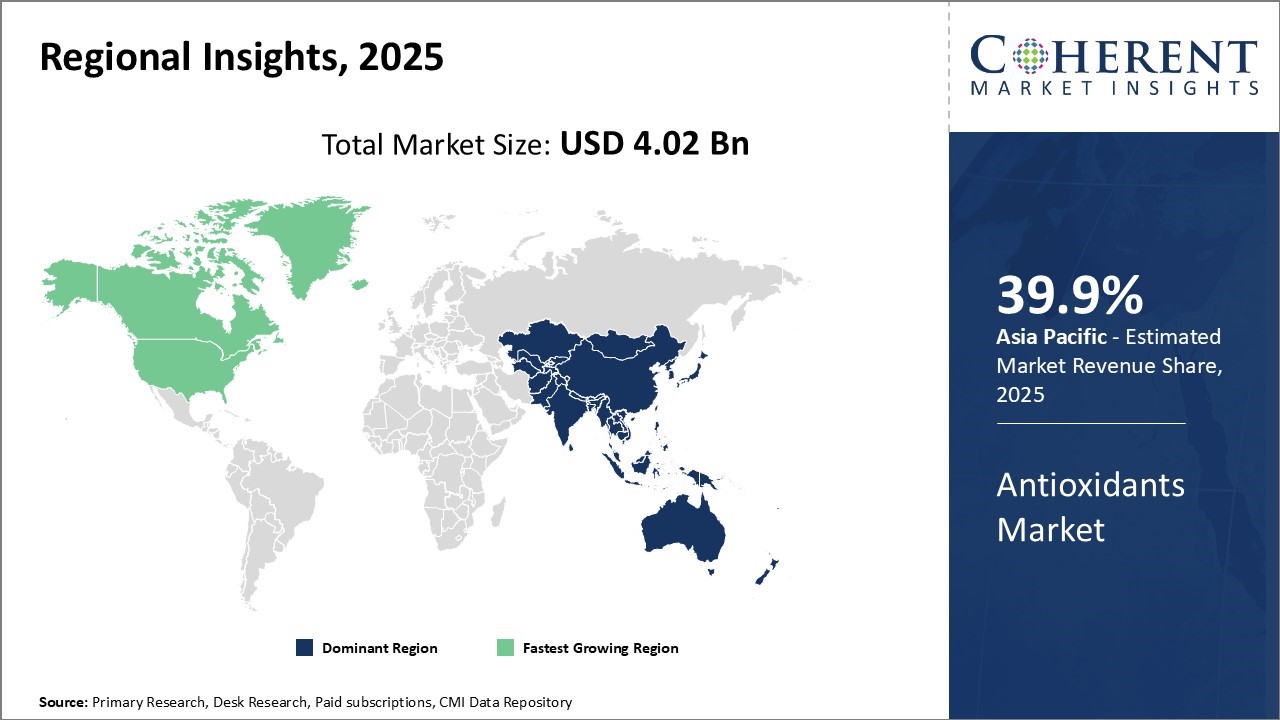
Dominating Region: Asia Pacific
Asia Pacific is expected to dominate the overall market in 2026 with an estimated share of 39.9%. Strict regulatory frameworks for product quality and safety have pushed manufacturers to incorporate natural and synthetic antioxidants.
Fastest-Growing Region: North America
North America region exhibits the fastest growth, led by countries such as the U.S., and Canada. Rising health consciousness among consumers, growing disposable incomes, and expansion of end-use industries have boosted product uptake. Government initiatives to strengthen domestic manufacturing have promoted antioxidant production in the region.
Antioxidants Market Dominating Countries
U.S. Antioxidants Market Analysis and Trend
The U.S. market is characterized by the presence of well-established market players and a robust regulatory environment mandating antioxidant addition. Companies like DuPont, BASF, and Archer Daniels Midland play a significant role through continuous R&D in innovative antioxidants. Vitamins like Vitamin C and Vitamin E, as well as beta-carotene and natural plant-based antioxidants, are in high demand.
China’s Antioxidants Market Analysis and Trend
China's market demonstrates steady expansion, supported by low-cost feedstock availability and government impetus to boost local food processing firms. Home-grown giants Zhangjiagang Huayang Chemical and Jiangsu Sinorgchem Technology are investing in new capacities. Natural antioxidants such as green tea extracts, resveratrol, and quercetin are in high demand, alongside synthetic antioxidants used in the food processing industry.
Japan Antioxidants Market Analysis and Trend
Japan continues to lead in the Asia Pacific region, with key manufacturers such as Sumitomo Chemicals and Hunan Xuanyi Antioxidant Chemical focusing on specialty antioxidants. Strict food standards necessitate increased applications of synthetic and natural antioxidants in packaged foods, beverages, and snacks.
India’s Antioxidants Market Analysis and Trend
India's market is witnessing fast growth due to a growing consumer packaged goods sector and expansion programs of global firms such as BASF and Cargill. Antioxidant exports are also rising as Indian suppliers cater to Asian and Middle Eastern nations.
Market Concentration and Competitive Landscape
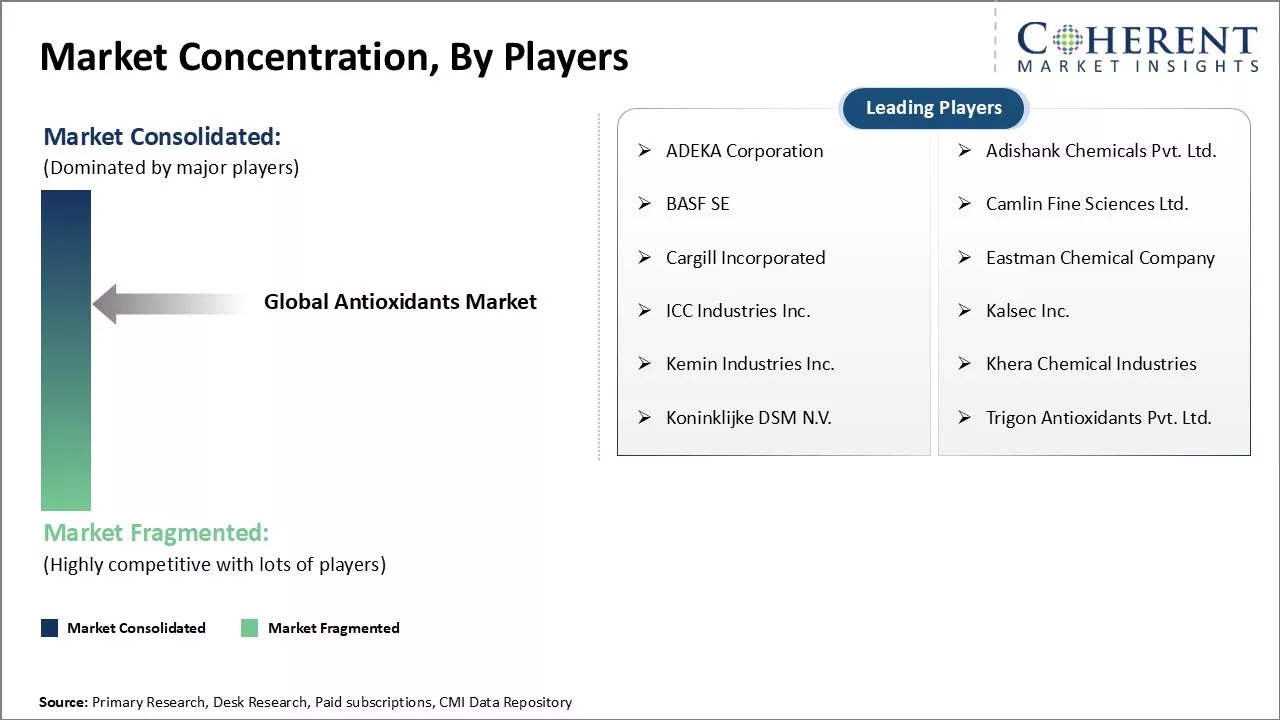
Top Strategies Followed by Global Antioxidants Market Players
- Established Players: Leading companies in this market heavily invest in research and development to innovate new high-performance products. They focus on developing novel antioxidant formulations that can withstand severe processing conditions and enhance product stability and quality. Companies also invest in evaluating new sources of antioxidants to develop cost-effective and sustainable solutions.
- Mid-Level Players: Mid-tier players in the market adopt strategies focused on delivering quality antioxidant products at competitive prices. They target price-sensitive consumers in developing economies by optimizing production processes to reduce costs. These companies also collaborate with local manufacturers, which helps boost their production capabilities while catering to regional requirements.
- Small-Scale Players: Small players in this market focus on niche market segments left untapped by larger corporations. They develop innovative products with unique formulations targeted at specialized applications in industries like food, cosmetics, etc.
Emerging Startups in the Global Antioxidants Market
- Innovative Technologies
Some startups are developing advanced antioxidants using modern techniques like biomimicry. Companies like Ox Thera are creating antioxidant peptides inspired by human enzymes to boost efficacy. Startups are also applying technologies like machine learning to design smart antioxidant formulations tailored for dynamic processing conditions. Such innovations could disrupt existing market trends.
- Sustainable Solutions
Rising awareness about sustainability is driving startups to find environment-friendly alternatives. Companies like Anthropic focus on producing plant-based antioxidants from agricultural waste using natural processes like fermentation. Such startups not only address market needs but also contribute to reducing industry footprint. Through collaborations, they encourage larger players to embrace greener solutions. Some emerging companies target specific market categories left untapped.
Market Report Scope
Antioxidants Market Report Coverage
| Report Coverage | Details | ||
|---|---|---|---|
| Base Year: | 2025 | Market Size in 2026: | USD 4.23 Bn |
| Historical Data for: | 2020 To 2024 | Forecast Period: | 2026 To 2033 |
| Forecast Period 2026 to 2033 CAGR: | 5.3%2033 Value Projection: | USD 6.08 Bn | |
| Geographies covered: |
| ||
| Segments covered: |
| ||
| Companies covered: | ADEKA Corporation, Adishank Chemicals Pvt. Ltd., BASF SE, Camlin Fine Sciences Ltd., Cargill Incorporated, Eastman Chemical Company, ICC Industries Inc., Kalsec Inc., Kemin Industries Inc., Khera Chemical Industries, Koninklijke DSM N.V., and Trigon Antioxidants Pvt. Ltd. | ||
| Growth Drivers: |
| ||
| Restraints & Challenges: |
| ||
Antioxidants Industry News
- In 2025, Kemin Industries expanded its production capacity for botanical antioxidants at its U.S. facility to meet rising global demand for natural shelf-life solutions in snacks, oils, and meat products. The move supports the clean-label movement and provides alternatives to synthetic additives like BHA and BHT.
- In 2024, Syensqo introduced Riza, a 100% plant-based antioxidant and flavor range derived from rosemary, targeting food and beverage—including bakery, oil-based, pet food, and meat applications. The product supports clean-label reformulations by replacing synthetic preservatives with natural alternatives.
Key Takeaways from Analyst
- The worldwide antioxidants market illustrates strong momentum fueled by growing consumer health and wellness awareness, especially in the prevention of chronic illnesses and conditions related to aging. Growing demand for organic and natural food products strongly drives market growth, as consumers increasingly pursue clean-label ingredients with no artificial additives.
- The pharmaceutical and nutraceutical industries are major growth drivers, with antioxidants emerging as central players in dietary supplements and functional foods designed for immune system support and cardiovascular well-being.
- Nonetheless, growth in the market is hindered by significant impediments such as rigorous regulatory structures overseeing food additives and supplements whose approval processes can be lengthened and rising compliance expenses. Price instability of raw materials, especially natural sources of antioxidants, further challenges manufacturers to keep costs at affordable levels.
- Asia-Pacific leads the antioxidants market, powered by large-scale manufacturing capacity, ready availability of raw material, and increasing consumer health awareness. The region enjoys well-established pharmaceutical and food processing sectors, especially in India and China. The North American region is the fastest-growing one, spearheaded by high-end health product demand, high-research-capability, and strong consumer buying power enabling high-value antioxidant products.
Market Segmentation
- By Type Insights (Revenue, USD Bn, 2021 - 2033)
- Natural Antioxidants
- Synthetic Antioxidants
- By Form Insights (Revenue, USD Bn, 2021 - 2033)
- Dry Antioxidants
- Liquid Antioxidants
- Others
- By Application Insights (Revenue, USD Bn, 2021 - 2033)
- Food and Beverage Additives
- Pharmaceuticals and Personal Care Products
- Fuel and Lubricant Additives
- Plastic Additives
- Others
- Regional Insights (Revenue, USD Bn, 2021 - 2033)
- North America
- U.S.
- Canada
- Latin America
- Brazil
- Argentina
- Mexico
- Rest of Latin America
- Europe
- Germany
- U.K.
- Spain
- France
- Italy
- Russia
- Rest of Europe
- Asia Pacific
- China
- India
- Japan
- Australia
- South Korea
- ASEAN
- Rest of Asia Pacific
- Middle East
- GCC Countries
- Israel
- Rest of Middle East
- Africa
- South Africa
- North Africa
- Central Africa
- Key Players Insights (Revenue, USD Bn, 2021 - 2033)
- ADEKA Corporation
- Adishank Chemicals Pvt. Ltd.
- BASF SE
- Camlin Fine Sciences Ltd.
- Cargill Incorporated
- Eastman Chemical Company
- ICC Industries Inc.
- Kalsec Inc.
- Kemin Industries Inc.
- Khera Chemical Industries
- Koninklijke DSM N.V.
- Trigon Antioxidants Pvt. Ltd.
Sources
Primary Research Interviews
- Antioxidant manufacturers and suppliers
- Nutraceutical and dietary supplement companies
- Online retail platform managers
- Food and beverage industry executives
- Others
Databases
- IBISWorld Industry Research Database
- Others
Magazines
- Nutraceuticals World Magazine
- Food Processing Magazine
- Natural Products Insider
- Nutritional Outlook Magazine
- Others
Journals
- Journal of Functional Foods
- Food Chemistry Journal
- Antioxidants Journal (MDPI)
- Others
Newspapers
- The Wall Street Journal
- Financial Times
- Reuters Business News
- Bloomberg News
- Others
Associations
- Council for Responsible Nutrition (CRN)
- International Food Information Council (IFIC)
- Natural Products Association (NPA)
- Global Organization for EPA and DHA Omega-3s (GOED)
- Others
Public Domain Sources
- FDA (Food and Drug Administration) publications
- WHO (World Health Organization) reports
- USDA (United States Department of Agriculture) databases
- European Food Safety Authority (EFSA) guidelines
- Others
Proprietary Elements
- CMI Data Analytics Tool
- Proprietary CMI Existing Repository of information for last 8 years
Get access to 250+ pages report
Every segment, forecast, competitor profile and data table behind the analysis above — available for instant download.
- ESOMAR Member
- ISO 9001:2015 Certified
- D-U-N-S Registered
- GDPR & CCPA Compliant
Missing comfort of reading report in your local language? Find your preferred language:
Transform your Strategy with Exclusive Trending Reports
Frequently Asked Questions
The Antioxidants Market size is estimated to be valued at USD 4.23 Bn in 2026, and is expected to reach USD 6.08 Bn by 2033.
The CAGR of the Antioxidants industry is projected to be 5.3% from 2026 to 2033.
Growing awareness of health benefits and rising demand for natural products are the major factors driving the market growth for antioxidants.
Regulatory challenges and high costs of natural antioxidants are the major factors hampering the market growth for antioxidants.
Yes, food-grade antioxidants are strictly regulated by authorities like the FDA (U.S.) and EFSA (EU) to ensure safety, permissible limits, and proper labeling in consumable products.
Yes, the antioxidants market is highly profitable, fueled by rising demand in food, cosmetics, and nutraceuticals due to growing health awareness and the clean-label trend.
Top antioxidant-rich ingredients include vitamin C, vitamin E, rosemary extract, green tea extract, astaxanthin, and grape seed extract, widely used in food, skincare, and supplements.