

Global Myocardial Ischemia Market Size and Forecast: 2026 to 2033
The global myocardial ischemia market is estimated to be valued at USD 5.10 Bn in 2026 and is expected to reach USD 8.74 Bn by 2033, exhibiting a compound annual growth rate (CAGR) of 8.0% from 2026 to 2033. This steady growth reflects increasing diagnosis rates, advanced treatment options, and rising awareness about cardiovascular diseases globally, making myocardial ischemia a critical area of focus for healthcare providers and medical technology companies alike.
Key Takeaways of the Global Myocardial Ischemia Market
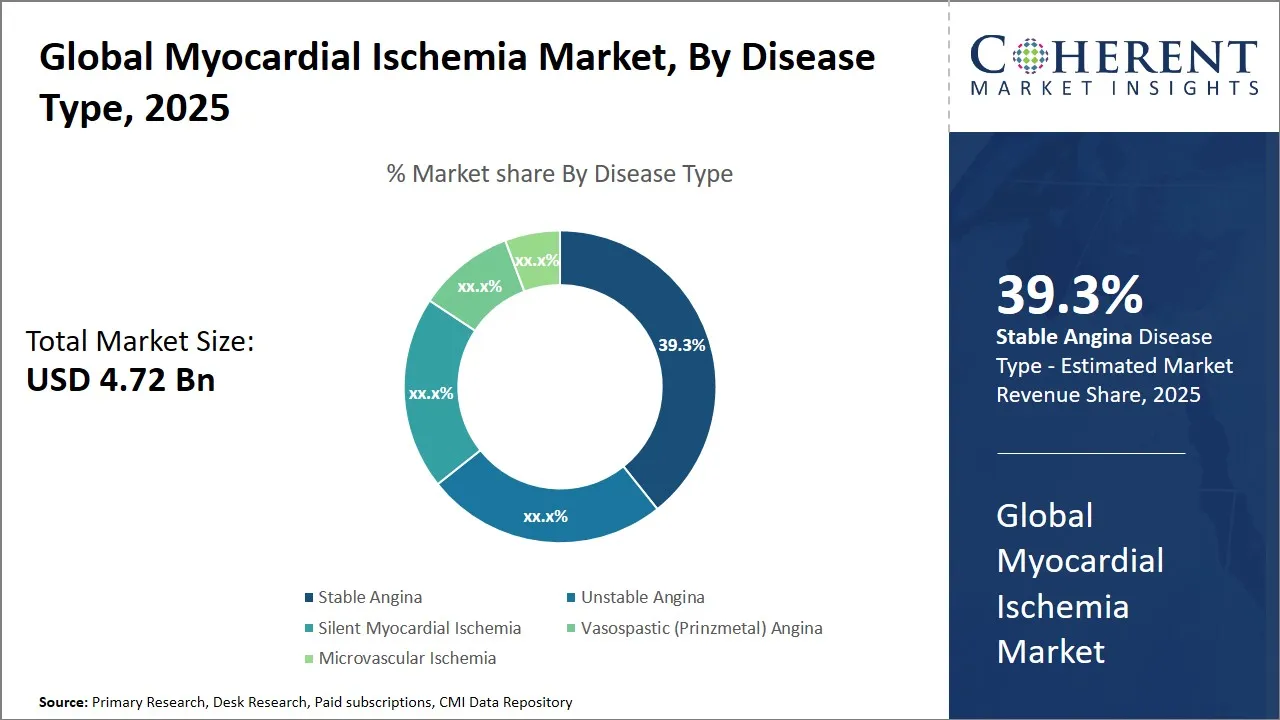
- Stable Angina segment is expected to represent the largest disease type segment in the global myocardial ischemia market, accounting for 40.3% share in 2026.
- Anti-anginal agents (e.g., nitroglycerin, isosorbide mononitrate) segment is projected to account for 23.3% of the market share in 2026.
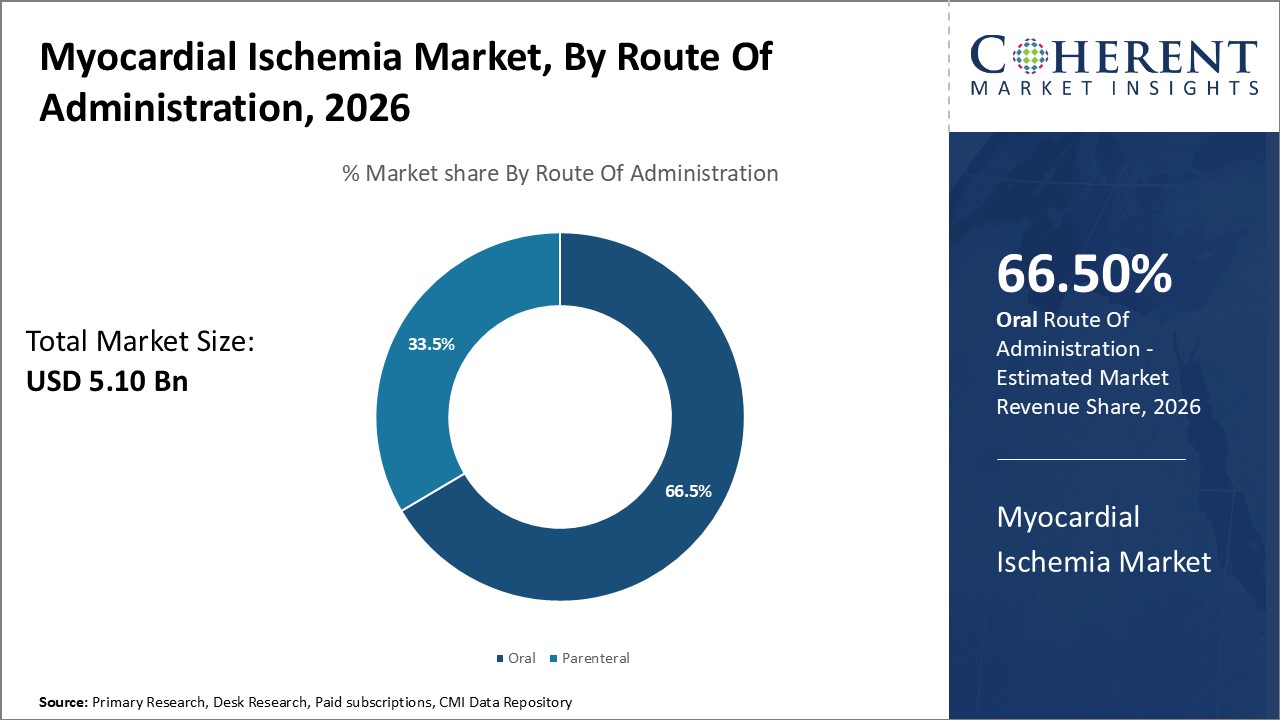
- The oral segment is projected to hold 66.5% of the myocardial ischemia market share in 2026.
- North America is expected to lead the market, holding a share of 42.3% in 2026. Asia Pacific is anticipated to be the fastest-growing region, with an estimated market share of 24.6% in 2026.
Market Overview
Current market trends indicate a significant shift towards minimally invasive diagnostic and therapeutic procedures, driven by technological innovations such as improved imaging techniques and advanced stents. Additionally, the rising prevalence of risk factors like diabetes, obesity, and sedentary lifestyles is propelling demand for early diagnosis and effective management of myocardial ischemia. Increasing investments in research and development, along with favorable government initiatives to enhance cardiovascular health infrastructure, further support this expanding market landscape.
Currents Events and Its Impact
Current Events | Description and its Impact |
Innovative Therapeutic Approvals and Drug Launches |
|
U.S. FDA approval of Flurpiridaz F 18 PET tracer for myocardial ischemia |
|
Segmental Insights
- Current Industry Events of 2026
- Market Size Estimation
- Regional Breakdown
- Competitive Landscape
- Customer Intelligence
- Segmental Analysis
- Pricing Analysis
- Key Market Drivers, Challenges & Future Trends
- Customized Insights Section
Myocardial Ischemia Market Insights, By Disease Type - Dominance of Stable Angina Segment Driven by Prevalence and Chronic Nature
The largest market share of global myocardial ischemia market belongs to the stable angina, which is expected to hold 40.3% share in 2026, and its strong share is mainly driven by its high prevalence and chronic nature. Stable Angina: This is characterized as chest pain or discomfort that usually happens to predictable causes like physical activity or emotional stress and of course, disappears through rest or nitroglycerin.
This expected trend makes it one of the most widely diagnosed types of myocardial ischemia, which makes this type of ischemia significantly contribute to its dominance in the market. The most notable factor that has caused the popularity of this segment is the prevalence of cardiovascular risk factors including hypertension, diabetes and hyperlipidemia, which are strongly linked to the onset of stable angina
Myocardial Ischemia Market Insights, By Drug Class - Market Leadership of Anti-Anginal Agents (e.g., nitroglycerin, isosorbide mononitrate) Driven by Efficacy and Broad Usage
Anti-anginal drugs (e.g., nitroglycerin, isosorbide mononitrate) hold the largest market in the world with a projected share of 23.3% in 2026, dependable relief of chest pain through dilution of coronary vessels and decrease in oxygen requirements. They are required in acute ischemic events due to their quick response.
As an illustration, GSK, AstraZeneca, Viatris, Lupin, Dr. Reddys, Cipla, Torrent Pharma, Aurobindo Pharma, Glenmark and Nicholas Piramal are companies that provide anti-anginal and ischemia therapies. These companies offer a wide range of nitrates, calcium channel blockers and chronic angina generics, which promotes extensive global and regional supply.
Myocardial Ischemia Market Insights, By Route of Administration - Preference for Oral Segment Fueled by Convenience and Chronic Use Patterns
The oral controls the global market of myocardial ischemia of 66.5% in 2026, because of its convenience and better compliance with the patient. Its long-term therapeutic applicability is another strength that makes it better than injectable and transdermal options.
The benefit of oral drugs is that they are easy to use and patients can administer the drugs themselves, without the need to have a special medical supervision of medical facilities, which is essential to a disease such as myocardial ischemia, which may require a lifetime treatment.
Healthcare Expenditure Patterns in Cardiovascular Management
- Healthcare expenditure in cardiovascular disease management is dominated by acute treatment costs for myocardial ischemia. Major cost drivers include emergency admissions, revascularization procedures, intensive care stays, and long-term pharmacotherapy. Claims and hospital billing datasets quantify per-patient spending across disease severity, age groups, and payers.
- Rehospitalization-focused datasets capture readmission rates, episode costs, and drivers such as medication nonadherence or procedural failure. Preventive care implementation metrics track spending on screening, statins, antihypertensives, smoking cessation, and cardiac rehabilitation.
- In June 2024, the American Heart Association, a major U.S. heart research nonprofit, projected escalating national costs. Its advisory reported soaring cardiovascular spending, with Myocardial Ischemia contributing heavily to rising treatment and readmission expenses Researchers warned healthcare costs could nearly quadruple by 2050 because of aging and worsening risk factors.
Regional Insights
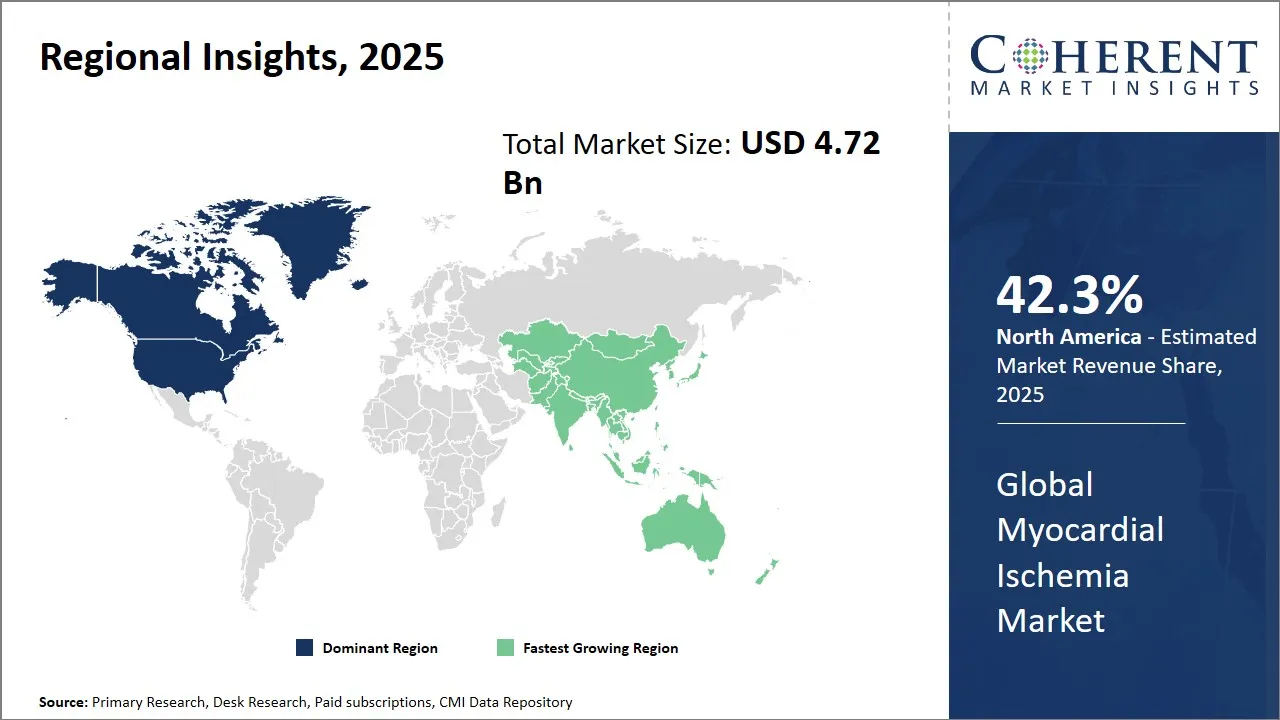
North America Myocardial Ischemia Market Analysis and Trends
North America’s leading position in the global myocardial ischemia market, with an estimated 42.3% in 2026, is largely determined by the developed healthcare infrastructure, high rates of cardiovascular diseases, and investments in the development of modern medical technologies in North America. Research institutions, healthcare providers, and medical device companies have powerful partnerships, which are beneficial to the ecosystem here.
Other prominent pharmaceutical corporations like Abbott Laboratories, Medtronic plc and Boston Scientific are also involved in the development and marketing of the solutions to myocardial ischemia to enable the region retain its leadership.
Asia Pacific Myocardial Ischemia Market Analysis and Trends
Asia pacific would have the most rapid growth in the myocardial ischemia market and hold an expected 24.6% share in 2026, because of the growing healthcare awareness, medical infrastructure, and incidences of ischemic heart diseases caused by lifestyle and urbanization.
The opportunities of the market are increased through the augmentation of the public-private alliance and foreign direct investments into the areas of healthcare. The major local competitors like Wipro GE Healthcare (India), Shanghai Fosun Pharmaceutical (China), and Terumo Corporation (Japan) are also increasing their presence with new diagnostic equipment and low-cost treatment options.
Myocardial Ischemia Market Outlook for Key Countries
U.S. Myocardial Ischemia Market Trends
The healthcare infrastructure and insurance cover provide robust opportunities to the U.S. myocardial ischemia market due to easy access to innovative diagnostic and treatment methods.
The headquarters of such major players as Abbott Laboratories, Boston Scientific, and Medtronic are here, and they are investing heavily in research and development as well as clinical trials on myocardial ischemia. Programs of cardiovascular health management and mainstream implementation of telemedicine and digital health tools are another force that is driven by the government and increases market activity.
Germany Myocardial Ischemia Market Trends
The market for myocardial ischemia remains under the control of Germany due to its well-established healthcare system, a large network of hospitals, and active governmental policies, which support the prevention of cardiovascular diseases and the adoption of the latest treatment methods. Such companies as Siemens Healthineers and B. Braun Melsagne AG make their contributions to the innovation in the sphere of diagnostic imaging and interventional cardiology products.
Cases in point are Bayer AG and Boehringer Ingelheim that reinforce the market with dominant cardiovascular pharmaceutical dishes. Novartis Deutschland, AbbVie Germany and Pfizer Germany are also contributing to the growth by conducting active cardiology trials as well as wide application of anti-anginal and antiplatelet therapies in German hospitals.
China Myocardial Ischemia Market Trends
The market for myocardial ischemia in China is fast developing, with the help of the rising urbanization of the population, the rise in prevalence rates of cardiovascular diseases, and governmental reforms to improve the accessibility and quality of healthcare. The Chinese industry players such as Shanghai Fosun Pharmaceutical and Mindray medical international have a significant role to play in terms of availing locally adapted devices and diagnostic equipment. The market is vibrant due to government sensitization aimed at early diagnosis, growth in the private sector, and international collaboration.
Examples in China include Hengrui medicine that is undertaking the development of cardiovascular drugs and Lepu medical, a major provider of stents, angioplasty systems and ischemia interventional devices. Yuyue Medical and MicroPort Scientific also enhance the market with growing portfolios in cardiac monitoring, implants and interventional cardiology solutions that meet the local requirements.
Japan Myocardial Ischemia Market Trends
The market for myocardial ischemia in Japan can be defined by the highly developed healthcare system and the ageing population that needs effective cardiovascular care solutions. The main companies, including Terumo Corporation and Asahi Kasei Medical, offer new catheter-based procedures and monitoring equipment. Due to the interest that the government has shown on healthcare innovation, coupled with good insurance coverage, the products that deal with myocardial ischemia in the most advanced way are available and utilized.
In Japan, there are examples of Otsuka Pharmaceutical, which supplies the market with cardiovascular therapeutics, and Nipro Corporation, a company which provides large quantities of cardiac catheters and monitoring technologies. Other players include Shimadzu Corporation and Daiichi Sankyo which has contributed to imaging innovations and powerful cardiovascular drug pipeline that is common in Japanese heart care centers.
Prevalence, Incidence, and Hospitalization Rates of Myocardial Ischemia by Region
Region | Prevalence – ischemic heart disease / Angina (Adults) | Incidence – MI / Ischemic Events | Hospitalization Rate – MI / Ischemic Events |
North America | ~5–8% of adults | ~250–350 / 100,000 / year | ~200–300 / 100,000 / year |
Latin America | ~3–6% of adults | ~180–280 / 100,000 / year | ~160–240 / 100,000 / year |
Europe (overall) | ~4–8% of adults | ~200–320 / 100,000 / year | ~180–280 / 100,000 / year |
Asia Pacific | ~2–5% of adults | ~150–280 / 100,000 / year | ~140–250 / 100,000 / year |
Middle East | ~5–9% of adults | ~250–400 / 100,000 / year | ~220–350 / 100,000 / year |
Africa | ~1–3% of adults (under-diagnosed) | ~80–180 / 100,000 / year (under-reported) | ~60–150 / 100,000 / year |
Market Players, Key Developments, and Competitive Intelligence
Key Developments
- In April 2025, Shanghai Jiao Tong University developed a deep-learning model that measures myocardial blood flow on CT scans to improve myocardial ischemia diagnosis. The university is a major Chinese research institution focused on medical innovation. The model, tested in 660 patients, showed strong accuracy and could streamline clinical workflows and improve ischemia assessment.
- In March 2025, Beijing Sungen Biomedical Technology Co., Ltd., a biotech focused on cardiac biologics, received the USFDA Fast Track status for SGC001, the first monoclonal antibody aimed at treating acute myocardial infarction. Early data show the drug may protect heart cells and reduce infarct damage, positioning it as a potential breakthrough therapy.
- In January 2024, Cleerly, a U.S. health-tech firm specializing in AI cardiac diagnostics, launched its U.S. FDA-cleared Cleerly ISCHEMIA solution, an AI tool that analyzes CCTA scans to detect likely myocardial ischemia using quantitative plaque and stenosis data. Cleerly uses large multi-center trial evidence to support its platform and aims to improve ischemia diagnosis and cardiac risk assessment for physicians.
- In February 2023, Yale University and Mayo Clinic CERSI, two leading U.S. research institutions, advanced a major U.S. FDA-collaborative project focused on improving diagnosis and treatment for women with myocardial ischemia and no obstructive coronary artery disease. The team, led by Yale cardiologist Samit Shah, is developing a new patient-reported outcome.
Top Strategies Followed by Global Myocardial Ischemia Market Players
- Established companies dominate the industry through significant investments in research and development (R&D), driving continuous innovation aimed at producing high-performance diagnostic and therapeutic products. These players prioritize the advancement of cutting-edge technologies that enhance accuracy, speed, and patient outcomes in myocardial ischemia detection and treatment.
- Examples include AstraZeneca, Bayer AG, Novartis, Pfizer, and Sanofi. These companies lead the myocardial ischemia drug space with major portfolios in anti-anginals, antiplatelets, anticoagulants, beta-blockers, and statins. Their dominance is driven by deep clinical pipelines, global trials, and strong regulatory presence.
- Mid-level market players adopt a competitive approach centered on delivering cost-effective yet reliable solutions that cater specifically to price-sensitive consumers, including hospitals and diagnostic centers operating under budget constraints. By striking a careful balance between product quality and affordability, these companies address a vital segment often underserved by larger corporations.
- Examples include Sun Pharma, Dr. Reddy’s Laboratories, Hikma Pharmaceuticals, Teva Pharmaceutical Industries, and Cipla. These companies supply high-quality and cost-efficient generics for nitrates, calcium channel blockers, statins, and antiplatelet therapies, serving price-sensitive hospitals and emerging markets.
- Small-scale players in the myocardial ischemia market tend to focus on carving out niche positions by developing specialized products featuring unique functionalities or innovative diagnostic techniques. To remain competitive amidst intense pressure from larger competitors, these players embrace advanced technologies such as artificial intelligence, wearable sensors, and point-of-care testing systems.
- Examples include MannKind Corporation, Amneal Pharmaceuticals, Zydus Lifesciences, Torrent Pharma, and Glenmark Pharmaceuticals. These firms compete through niche formulationsmodified-release anti-anginals, combination cardiovascular therapies, and innovative generics targeted at specialized ischemia management segments.
Market Report Scope
Global Myocardial Ischemia Report Coverage
| Report Coverage | Details | ||
|---|---|---|---|
| Base Year: | 2025 | Market Size in 2026: | USD 5.10 Bn |
| Historical Data for: | 2020 To 2024 | Forecast Period: | 2026 To 2033 |
| Forecast Period 2026 to 2033 CAGR: | 8.0% | 2033 Value Projection: | USD 8.74 Bn |
| Geographies covered: |
| ||
| Segments covered: |
| ||
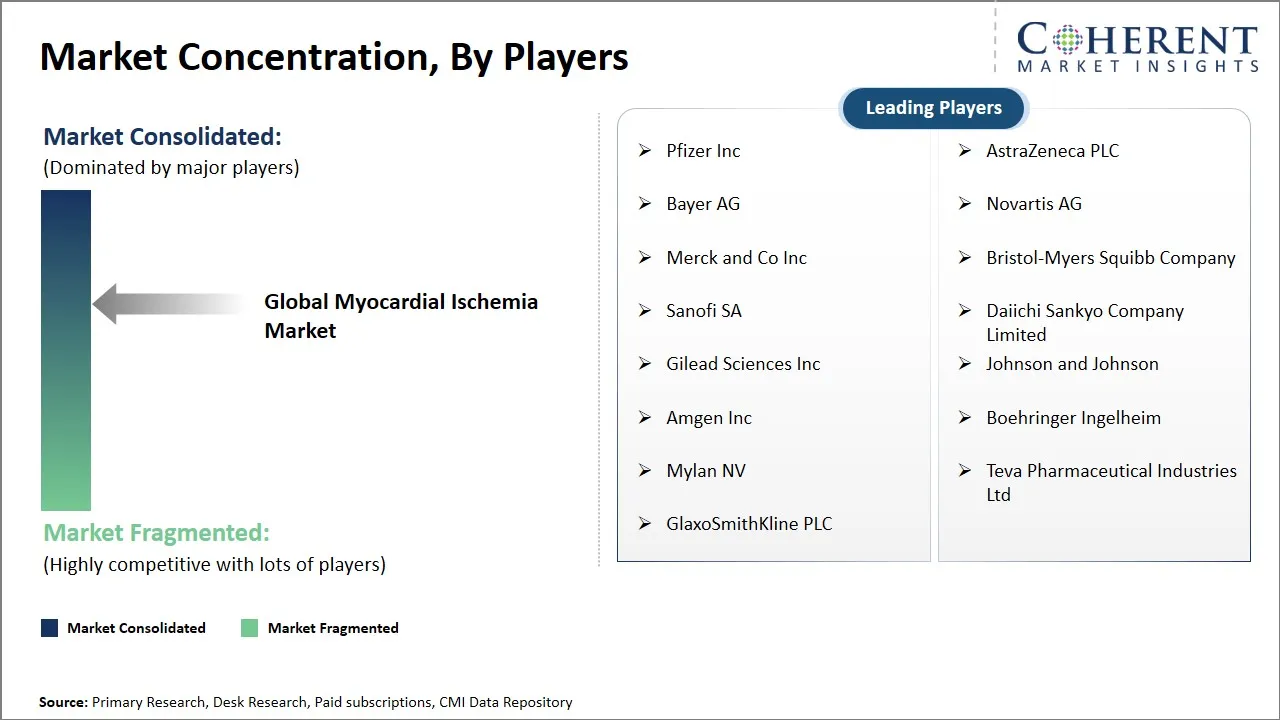
| Companies covered: | Pfizer Inc, AstraZeneca PLC, Bayer AG, Novartis AG, Merck and Co Inc, Bristol-Myers Squibb Company, Sanofi SA, Daiichi Sankyo Company Limited, Gilead Sciences Inc, Johnson and Johnson, Amgen Inc, Boehringer Ingelheim, Mylan NV, Teva Pharmaceutical Industries Ltd, and GlaxoSmithKline PLC | ||
| Growth Drivers: |
| ||
| Restraints & Challenges: |
| ||
Myocardial Ischemia Market Dynamics
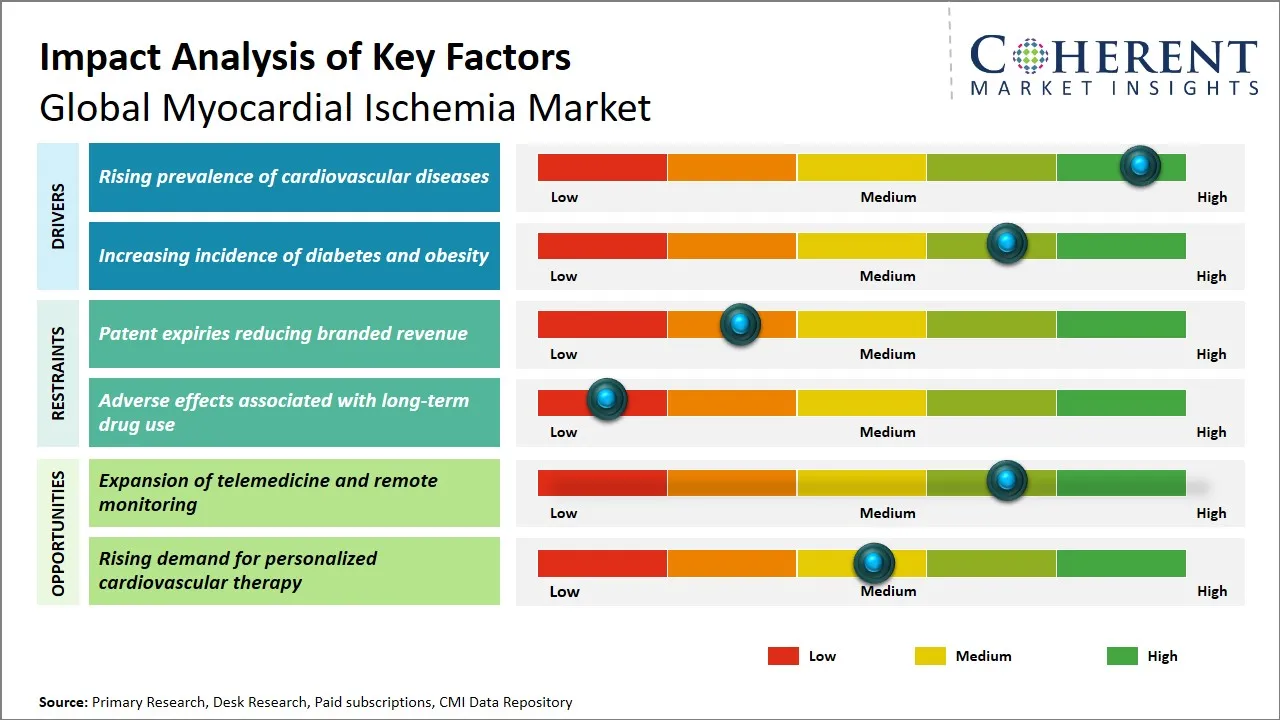
Myocardial Ischemia Market Driver - Rising Prevalence of Cardiovascular Diseases
The growing trend of cardiovascular diseases is a major force that is pushing the need to have diagnostics and treatment solutions of myocardial ischemia in the world. Regular sedentary lives, unhealthy dieting, smoking, and an increasing obesity are some of the factors that have led to the increasing burden of heart related diseases, one of the major causes of myocardial ischemia being coronary artery disease. Moreover, the overall population of the world is aging, which is more vulnerable to heart conditions, which worsens the prevalence of myocardial ischemia. This epidemic of cardiovascular conditions requires an immediate and accurate diagnosis that leads to the usage of the new imaging techniques, biomarkers, and minimal invasive procedures.
In July 2025, WHO highlighted that cardiovascular diseases caused 19.8 million deaths in 2022, representing 32% of global deaths and showing the growing scale of the Myocardial Ischemia burden. The report noted that 85% of these deaths came from heart attacks and strokes, with more than three quarters occurring in low- and middle-income countries. It also stressed that CVDs accounted for 38% of the 18 million premature noncommunicable disease deaths in 2021, reinforcing the need for stronger prevention, early diagnosis, and wider access to essential cardiac treatments.
Myocardial Ischemia Market Opportunity - Expansion of Telemedicine and Remote Monitoring
The telemedicine and other remote monitoring technologies have been expanding, which is a growing business in the global market for myocardial ischemia. With the aim of healthcare systems across the world struggling to improve patient outcomes at minimal cost, telemedicine platforms have provided a way to monitor myocardial ischemia remotely, thereby facilitating the detection and continuous management of the condition at an early stage. The development of wearable technologies, mobile medical applications, and IoT-powered sensors allows real-time monitoring of such cardiac parameters as heart rate, ECG, and oxygen saturation directly at the residences of patients.
In July 2025, Europe launched the TIMELY clinical study to test an AI-supported telemedicine platform designed to improve recovery for Myocardial Ischemia and post-infarction patients. BIOTRONIK a major German cardiovascular device manufacturer leads development of the platform’s monitoring tools. Semdatex a Berlin health-tech firm built the digital dashboard used by clinicians in the trial. The University of Amsterdam a key academic partner created the digital coach and personalized chatbot that guide patient behavior. The study will track 360 cardiac patients across Germany, Spain and the Netherlands to evaluate lifestyle adherence, physical fitness, and long-term risk reduction after rehabilitation.
Analyst Opinion (Expert Opinion)
- The myocardial ischemia market is expanding as improved therapies, supportive regulations, and growing adoption of advanced monitoring tools strengthen clinical outcomes. Demand is rising with better anti-anginal and antiplatelet options, while AI-enabled monitoring and personalized medicine create new openings despite challenges around reimbursement and access. Industry events such as the AHA Scientific Sessions, ESC Congress, and ACC Annual Meeting continue to guide clinical priorities and accelerate the adoption of new treatment approaches.
- Recent initiatives show this momentum in action. Governments are scaling cardiac screening and rehabilitation programmes, and several companies are fast-tracking next-generation anti-anginal drug candidates. Hospitals collaborating with digital-health startups are driving uptake of wearable ischemia-tracking tools that support earlier detection and better long-term management, shaping the market’s forward outlook.
Speak to the analyst
Want personalized insights?
Take the findings above to one of our principal consultants, or have the report rebuilt around the segments, geographies and competitors you actually track.
Market Segmentation
- Disease Type Insights (Revenue, USD Bn, 2021 - 2033)
- Stable Angina
- Unstable Angina
- Silent Myocardial Ischemia
- Vasospastic (Prinzmetal) Angina
- Microvascular Ischemia
- Drug Class Insights (Revenue, USD Bn, 2021 - 2033)
- Anti-Anginal Agents (e.g., nitroglycerin, isosorbide mononitrate)
- Antiplatelet Agents (e.g., aspirin, clopidogrel, ticagrelor)
- Anticoagulants (e.g., heparin, enoxaparin, apixaban)
- Beta-Blockers (e.g., metoprolol, atenolol, carvedilol)
- ACE Inhibitors (e.g., ramipril, lisinopril, enalapril)
- Angiotensin II Receptor Blockers (e.g., losartan, valsartan, telmisartan)
- Calcium Channel Blockers (e.g., amlodipine, diltiazem, verapamil)
- Nitrates (e.g., nitroglycerin spray, isosorbide dinitrate)
- Statins (e.g., atorvastatin, rosuvastatin, simvastatin)
- Late Sodium Current Inhibitors/Ranolazine (e.g., ranolazine)
- Thrombolytics (e.g., alteplase, tenecteplase, streptokinase)
- Route of Administration Insights (Revenue, USD Bn, 2021 - 2033)
- Oral
- Parenteral
- Drug Type Insights (Revenue, USD Bn, 2021 - 2033)
- Branded
- Generic
- End User Insights (Revenue, USD Bn, 2021 - 2033)
- Hospitals
- Cardiac Specialty Clinics
- Diagnostic Centers
- Ambulatory Surgical Centers
- Research and Academic Institutes
- Distribution Channel Insights (Revenue, USD Bn, 2021 - 2033)
- Hospital Pharmacies
- Retail Pharmacies
- Online Pharmacies
- Regional Insights (Revenue, USD Bn, 2021 - 2033)
- North America
- U.S.
- Canada
- Latin America
- Brazil
- Argentina
- Mexico
- Rest of Latin America
- Europe
- Germany
- U.K.
- Spain
- France
- Italy
- Russia
- Rest of Europe
- Asia Pacific
- China
- India
- Japan
- Australia
- South Korea
- ASEAN
- Rest of Asia Pacific
- Middle East
- GCC Countries
- Israel
- Rest of Middle East
- Africa
- South Africa
- North Africa
- Central Africa
- North America
- Key Players Insights
- Pfizer Inc
- AstraZeneca PLC
- Bayer AG
- Novartis AG
- Merck and Co Inc
- Bristol-Myers Squibb Company
- Sanofi SA
- Daiichi Sankyo Company Limited
- Gilead Sciences Inc
- Johnson and Johnson
- Amgen Inc
- Boehringer Ingelheim
- Mylan NV
- Teva Pharmaceutical Industries Ltd
- GlaxoSmithKline PLC
Sources
Primary Research Interviews
Industry Stakeholders list
- Cardiologists
- Clinical researchers
- Hospital procurement heads
- Pharmaceutical R&D managers
- Regulatory affairs specialists
- Clinical trial coordinators
End users list
- Patients undergoing ischemia management
- Cardiac rehabilitation specialists
- Emergency care physicians
- Nurses managing cardiac units
- Pharmacists in cardiovascular care settings
- Telehealth cardiac monitoring teams
Government and International Databases
- U.S. Food and Drug Administration (FDA)
- European Medicines Agency (EMA)
- National Institutes of Health (NIH)
- World Health Organization (WHO)
- Centers for Disease Control and Prevention (CDC)
Trade Publications
- The Heart.org
- Cardiology Today
- Fierce Pharma (non-commercial editorial content)
- PharmaTimes
- Medical Device Network
- Cardiovascular Business
Academic Journals
- Journal of the American College of Cardiology (JACC)
- Circulation
- European Heart Journal
- The Lancet Cardiology
- American Journal of Cardiology
- Cardiovascular Research
Reputable Newspapers
- The New York Times – Health Section
- The Guardian – Health
- The Washington Post – Health & Science
- The Wall Street Journal – Health Industry
- Financial Times – Healthcare & Pharma
- Reuters Health
Industry Associations
- American Heart Association (AHA)
- European Society of Cardiology (ESC)
- American College of Cardiology (ACC)
- World Heart Federation
- Society for Cardiovascular Angiography and Interventions
- International Society of Cardiovascular Pharmacotherapy
Public Domain Resources
- Google Scholar
- National Library of Medicine
- OpenFDA
- Cardiovascular disease statistics repositories (public datasets)
- Government health portals (public access)
Proprietary Elements
- CMI Data Analytics Tool: Proprietary analytics tool to analyze real-time market trends, consumer behavior, and technology adoption in market
- Proprietary CMI Existing Repository of Information for Last 8 Years
Get access to 250+ pages report
Every segment, forecast, competitor profile and data table behind the analysis above — available for instant download.
- ESOMAR Member
- ISO 9001:2015 Certified
- D-U-N-S Registered
- GDPR & CCPA Compliant
Missing comfort of reading report in your local language? Find your preferred language:
Transform your Strategy with Exclusive Trending Reports
Frequently Asked Questions
The global myocardial ischemia market is estimated to be valued at USD 5.10 Bn in 2026 and is expected to reach USD 8.74 Bn by 2033.
The CAGR of the global myocardial ischemia market is projected to be 8.0% from 2026 to 2033.
Rising prevalence of cardiovascular diseases and increasing incidence of diabetes and obesity are the major factors driving the growth of the global myocardial ischemia market.
Patent expiries reducing branded revenue and adverse effects associated with long-term drug use are the major factors hampering the growth of the global myocardial ischemia market.
In terms of disease type, the stable angina is estimated to dominate the market revenue share in 2026.
Pfizer Inc, AstraZeneca PLC, Bayer AG, Novartis AG, Merck and Co Inc, Bristol-Myers Squibb Company, Sanofi SA, Daiichi Sankyo Company Limited, Gilead Sciences Inc, Johnson and Johnson, Amgen Inc, Boehringer Ingelheim, Mylan NV, Teva Pharmaceutical Industries Ltd, and GlaxoSmithKline PLC are the major players.
North America is expected to lead the global myocardial ischemia market in 2026.