

Global Neuroendocrine Carcinoma Treatment Market Size and Forecast – (2026 to 2033)
According to Coherent Market Insights, the global neuroendocrine carcinoma treatment market is estimated to be valued at USD 2.35 Bn in 2026 and is expected to reach USD 4.08 Bn by 2033, exhibiting a compound annual growth rate (CAGR) of 8.2% from 2026 to 2033. This growth reflects increasing prevalence rates of neuroendocrine carcinoma, advancements in targeted therapies, and expanding healthcare infrastructure globally, driving heightened demand for effective treatment options.
Key Takeaways of the Neuroendocrine Carcinoma Treatment Market
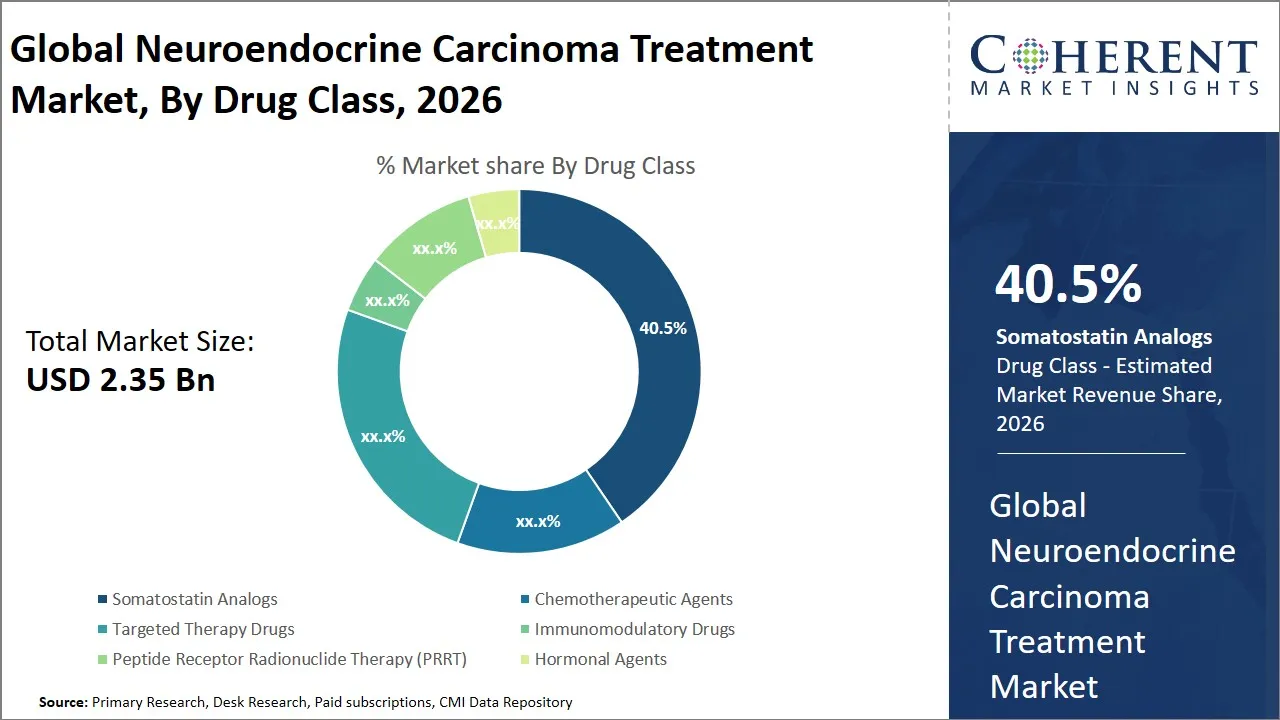
- The somatostatin analogs segment is expected to account for 40.5% of the market share in 2026.
- The Gastroenteropancreatic Neuroendocrine Tumors (GEP-NETs) segment is estimated to hold the largest share, representing 34.5% share in 2026.
- Hospitals segment is projected to dominate with a share of 26.7% in 2026.
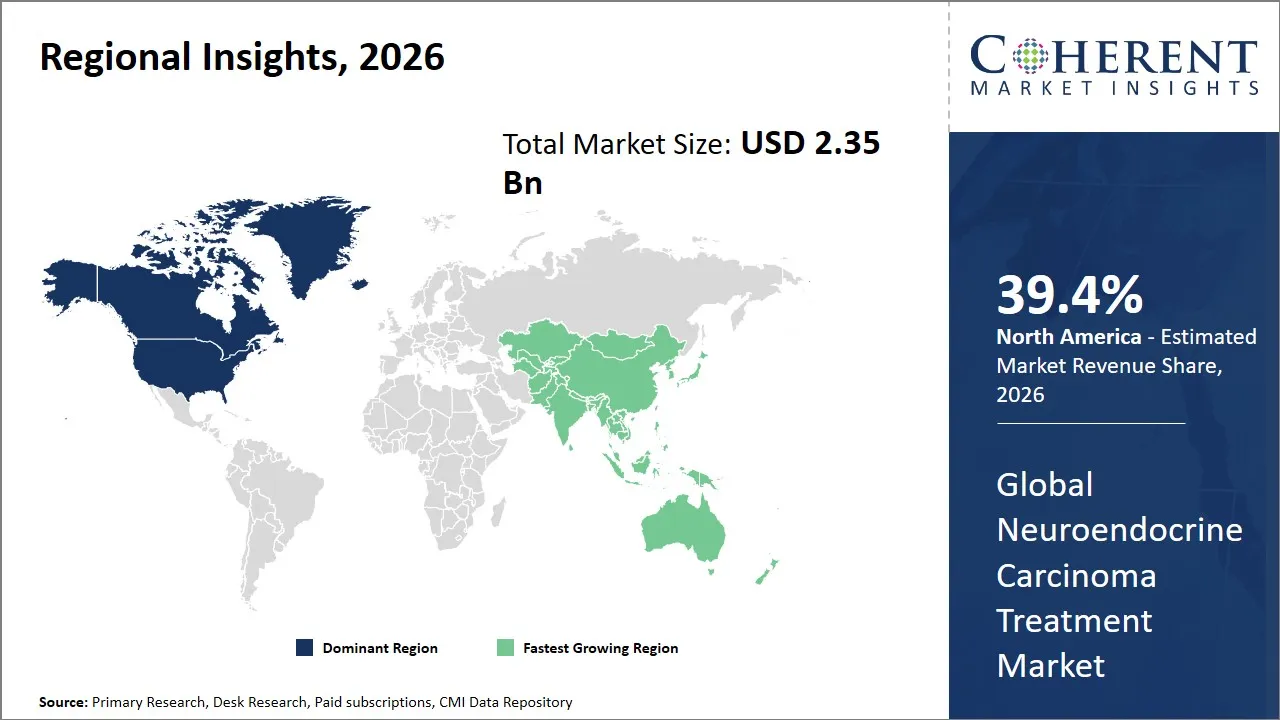
- North America is expected to lead the market, holding a share of 39.4% in 2026. Asia Pacific is anticipated to be the fastest-growing region, with 24.5% share in 2026.
Market Overview
- Emerging trends in the neuroendocrine carcinoma treatment market include the rising adoption of personalized medicine and immunotherapy, which improve patient outcomes by tailoring treatments to individual genetic profiles.
- Additionally, ongoing research and development efforts are leading to innovative drug therapies and combination treatments entering the market.
- Increasing awareness among healthcare professionals and patients, coupled with strategic collaborations between pharmaceutical companies and research institutes, are further shaping the market’s dynamic landscape.
Currents Events and Its Impact
Current Events | Description and its Impact |
U.S. FDA Approval & Expansion of Radioligand Therapies (RLTs) |
|
Integration of AI in Diagnostic Imaging & Patient Stratification |
|
Segmental Insights
- Current Industry Events of 2026
- Market Size Estimation
- Regional Breakdown
- Competitive Landscape
- Customer Intelligence
- Segmental Analysis
- Pricing Analysis
- Key Market Drivers, Challenges & Future Trends
- Customized Insights Section
Why Does Somatostatin Analogs Dominate the Neuroendocrine Carcinoma Treatment Market?
Somatostatin analogs are expected to dominate with 40.5% share in 2026, which are better than that of the other therapeutic categories of drugs including chemotherapeutic agents, targeted therapy drugs, immunomodulatory drugs, peptide receptor radionuclide therapy (PRRT), and hormonal agents.
This leading role is conditioned by the intended mechanism of action of somatostatin analogs that have been proven to inhibit the secretion of hormones of neuroendocrine tumor cells, and this results in symptom relieving and quality living of the patients.
For example, Pfizer has contributed to the somatostatin analog segment growth with Breztri Aerosphere, which targets neuroendocrine tumors in specific patient populations. The company is also involved in ongoing clinical trials to explore further indications for somatostatin analogs. and Novartis is a key player in the somatostatin analogs segment with its flagship product, Sandostatin LAR. This long-acting formulation has revolutionized the treatment of patients with neuroendocrine tumors by offering convenient dosing and effective symptom management.
Gastroenteropancreatic Neuroendocrine Tumors (GEP-NETs) Lead the Global Neuroendocrine Carcinoma Treatment Market
The Gastroenteropancreatic Neuroendocrine Tumors (GEP-NETs) is set to dominate with 34.5% share in 2026, which is primarily predetermined by the comparatively higher incidence and prevalence rates of GEP-NETs than of pulmonary, thyroid, and other neuroendocrine carcinomas.
GEP-NETs include tumors that are located inside the gastrointestinal tract and pancreas, which are common locations of neuroendocrine tumor diagnosis. This increased prevalence makes it into high demand of specific therapeutics that are needed by this subgroup.
What Role do Hospitals Play in Managing Complex Neuroendocrine Carcinoma Cases?
Hospitals take the biggest market share in the global neuroendocrine carcinoma treatment market with a projected share of 26.7% in 2026. To a large extent, this dominant status can be explained by the full-fleet of care infrastructure the hospitals offer, which allows handling the challenging cases of neuroendocrine carcinoma.
The management of neuroendocrine carcinomas can include oncologists, endocrinologists, radiologists, pathologists, specialized nursing staff, and a multidisciplinary approach can be the most effective treatment approach that is best achieved in a hospital environment.
Emerging Therapy Pipeline & Innovation Impact for Neuroendocrine Carcinoma Treatment Market
Therapy/Innovation | Company/Developer | Mechanism of Action | Impact on Treatment |
Cabozantinib (Targeted Therapy) | Exelixis | Tyrosine kinase inhibitor targeting tumor growth signals | Improves progression-free survival in advanced NETs, increasing treatment options and survival rates. |
Peptide Receptor Radionuclide Therapy (PRRT) | Novartis, Ipsen | Targets tumors with radiolabeled peptides, delivering targeted radiation directly to tumor cells | Offers more effective, targeted treatment for inoperable NETs, reducing side effects and improving quality of life. |
Lutetium-177 (PRRT) | Advanced Accelerator Applications | Targets tumor cells with radioactive isotopes for precise destruction of cancer cells | Emerging as a game-changer in treatment-resistant NETs, particularly in metastatic cases. |
Somatostatin Analogs (Extended formulations) | Novartis, Ipsen | Inhibits hormone release from neuroendocrine tumors | Provides effective symptomatic relief and disease control with fewer side effects, offering longer dosing intervals. |
Immunotherapy (Checkpoint Inhibitors) | Merck, Bristol-Myers Squibb | Enhances the body’s immune response against cancer cells | Emerging as an option for treating aggressive NETs with immune system modulation, increasing survival potential. |
Small Molecule Inhibitors | Various startups | Inhibit specific pathways involved in tumor growth and metastasis | Potential for more effective management of advanced NETs with fewer systemic side effects. |
Regional Insights
North America Neuroendocrine Carcinoma Treatment Market Analysis and Trends
North America’s leadership in the world neuroendocrine carcinoma treatment market, with an estimated share of 39.4% in 2026, is supported by advanced healthcare resource, strong governmental backing in oncology research, and leading pharmaceutical as well as biotechnology firms that focus on the oncological treatments. This is of great advantage to the U.S, whereby the investments made in the R&D are enhanced by the regulatory bodies, like the FDA, which facilitate the expedited process of introducing new therapies.
There is an established market ecosystem with full-fledged disease awareness campaigns, broad diagnostic services and established network of special cancer centers. Firms such as Novartis, Ipsen, and Celgene (since acquired by Bristol-Myers Squibb) are making significant contributions of targeted therapies and peptide receptor radionuclide therapy (PRRT), contributing to the development of more personalized therapies.
Asia Pacific Neuroendocrine Carcinoma Treatment Market Analysis and Trends
Asia Pacific neuroendocrine carcinoma treatment market is projected to experience the highest growth rate with a share of 24.5% in 2026, due to growth in healthcare spending, rise in awareness of cancer treatments, and growth in healthcare infrastructure in the emerging economies like China and India. Efforts by the government to make biotechnology innovations to prevail coupled with the enhancement of regulatory systems support the market growth.
Moreover, the advancement of neuroendocrine tumors associated with lifestyle/demographic shifts puts a strain on the need of innovative treatment. The multinational pharmaceutical companies such as Pfizer, Novartis and Ipsen are increasing collaboration and clinical trials in the area, with local firms.
Neuroendocrine Carcinoma Treatment Market Outlook for Key Countries
How are Targeted Therapies like Peptide Receptor Radionuclide Therapy Impacting the U.S. Treatment Landscape?
The U.S. market is the leader because of an advanced research ecosystem, which stimulates the introduction of neuroendocrine carcinoma therapies. Large companies such as Novartis and Ipsen have launched PRRT and targeted medications that have changed the patient outcomes. Clinical trial opportunities are increased by the high number of specialized cancer centers and continuous government funding. The implemented insurance and reimbursement plans grant more patients access to advanced treatments.
How is the Increasing Diagnosis of Neuroendocrine Tumors in Germany Affecting Treatment Demand?
Germany has a developed healthcare with a huge market in Europe for the treatment of neuroendocrine carcinomas. Strict regulatory and emphasis on medical innovation enable new treatment to be introduced. Bayer and Novartis are companies that are considered to be critical in the provision of advanced treatments. The oncology systems in the country are well structured, with the neuroendocrine tumors being diagnosed and managed in good time to maintain consistent market demand.
China Neuroendocrine Carcinoma Treatment Market Trends
The market for neuroendocrine carcinoma treatment in China has been hastened by the development of the infrastructure of healthcare and the increasing power of clinical research. Positive government policies that strive to enhance access to cancer care and innovation plays a big role. In collaboration with local pharmaceutical companies, multinational ones are actively running tests and introducing specialized treatment. Market growth is further stimulated by the increased awareness of patients and the more funds allocated to the cancer treatment programs.
India Neuroendocrine Carcinoma Treatment Market Trends
The market for neuroendocrine carcinoma treatment in India is booming with the rising awareness and better diagnostic centers. The government policies on increasing the affordability and accessibility of healthcare, as well as the efforts of streamlining the drug approvals, provide the market actors such as Pfizer as well as local biotech companies with an excellent environment. India boasts of a huge number of patients besides affordable treatment services, rendering it a significant regional center.
End User Feedback and Unmet Needs - Global Neuroendocrine Carcinoma Treatment Market
- Feedback from end users in the neuroendocrine carcinoma treatment market reveals both satisfaction and challenges. Somatostatin analogs, such as Sandostatin LAR, are appreciated for their ability to alleviate symptoms and improve patient quality of life, especially with less frequent dosing. However, many patients and healthcare providers express concerns about the limited efficacy in advanced or metastatic cases, with few treatment options available when traditional therapies fail.
- Key unmet needs include the lack of personalized treatments and high therapy costs. While targeted therapies and PRRT show potential, they are not effective for all patients, and affordability remains a significant barrier. There is also a need for better diagnostic tools and more accessible treatment options. Addressing these issues could open up new growth opportunities, improve patient satisfaction, and inspire innovative, cost-effective solutions in the market.
Market Players, Key Developments, and Competitive Intelligence
Key Developments
- In July 2025, Ipsen announced that the European Commission had approved Cabometyx (cabozantinib) for adult patients with unresectable or metastatic pancreatic and extra-pancreatic neuroendocrine tumors. This approval is based on the pivotal CABINET Phase III trial, which showed a 77% and 62% reduction in disease progression for pancreatic and extra-pancreatic NETs, respectively.
- In June 2025, NETRF highlighted several promising clinical trials for Neuroendocrine Carcinoma Treatment. Boehringer Ingelheim’s obrixtamig showed tumor shrinkage in 40% of patients with high DLL3 expression. Perspective Therapeutics' [212Pb] VMT-α-NET demonstrated tumor shrinkage in over half of patients. Crinetics Pharmaceuticals is preparing to launch its first trial of CRN09682, a non-radioactive therapy. Seneca Therapeutics began a Phase I/II trial of SVV-001, an oncolytic virus, combined with immunotherapy for aggressive neuroendocrine cancer.
- In March 2025, the U.S. FDA approved cabozantinib, an oral tyrosine kinase inhibitor, as a new standard of care for patients with previously treated advanced neuroendocrine tumors (NETs). The approval follows positive results from the phase 3 CABINET study, which evaluated cabozantinib against a placebo in patients with advanced pancreatic and extra-pancreatic NETs.
- In March 2025, Exelixis announced that the U.S. FDA had approved CABOMETYX (cabozantinib) for treating previously treated, unresectable, advanced neuroendocrine tumors (NETs). This approval is based on the results from the pivotal CABINET Phase III trial, which showed significant improvement in progression-free survival (PFS) for patients with advanced pancreatic (pNET) and extra-pancreatic NETs (epNET).
Top Strategies Followed by Global Neuroendocrine Carcinoma Treatment Market Players
Player Type | Strategic Focus | Examples |
Established Market Leaders | Heavy R&D investment in high-performance treatment options; strategic partnerships and collaborations with major pharmaceutical firms, biotechnology companies, and OEMs; aggressive global expansion into emerging markets. | Established leaders focus on advancing drug efficacy, safety profiles, and delivery mechanisms; strategic alliances with major firms and aggressive market expansion in regions like Asia-Pacific and Latin America. |
Mid-Level Players | Focus on cost-effective solutions balancing quality with affordability; collaborations to improve production efficiency, market visibility, and regulatory compliance; cater to price-sensitive segments. | Mid-level players develop reliable treatments for price-sensitive consumers, often engaging in partnerships with contract manufacturers, technology providers, or research institutions to expand their product portfolios. |
Small-Scale Players | Niche-focused innovation with unique product attributes; adoption of precision medicine, digital health integrations, and novel biomarkers; local alliances for market entry and regional distribution. | Small-scale companies focus on targeted delivery approaches or combination therapies; establish local partnerships with startups or research centers to access regional distribution channels and clinical networks. |
Market Report Scope
Global Neuroendocrine Carcinoma Treatment Market Report Coverage
| Report Coverage | Details | ||
|---|---|---|---|
| Base Year: | 2025 | Market Size in 2026: | USD 2.35 Bn |
| Historical Data for: | 2020 To 2024 | Forecast Period: | 2026 To 2033 |
| Forecast Period 2026 to 2033 CAGR: | 8.2% | 2033 Value Projection: | USD 4.08 Bn |
| Geographies covered: |
| ||
| Segments covered: |
| ||
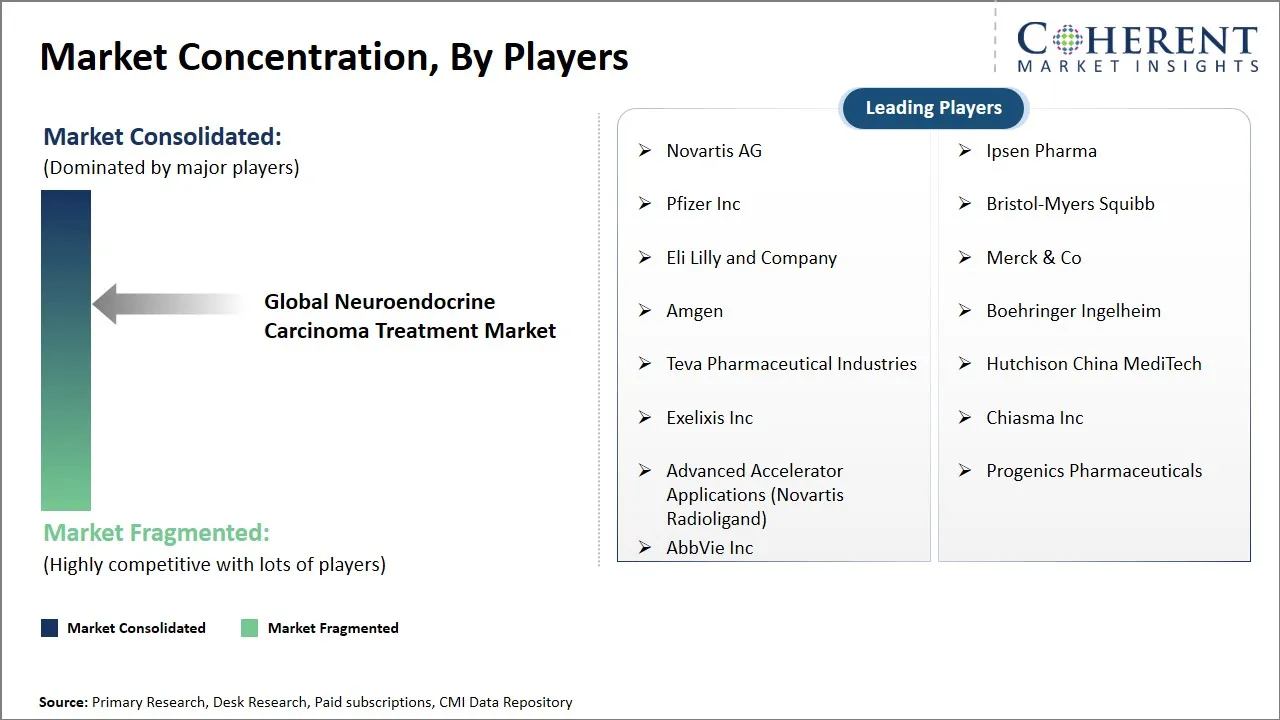
| Companies covered: | Novartis AG, Ipsen Pharma, Pfizer Inc, Bristol‑Myers Squibb, Eli Lilly and Company, Merck & Co, Amgen, Boehringer Ingelheim, Teva Pharmaceutical Industries, Hutchison China MediTech, Exelixis Inc, Chiasma Inc, Advanced Accelerator Applications (Novartis Radioligand), Progenics Pharmaceuticals, and AbbVie Inc | ||
| Growth Drivers: |
| ||
| Restraints & Challenges: |
| ||
Neuroendocrine Carcinoma Treatment Market Dynamics
Neuroendocrine Carcinoma Treatment Market Driver - Rising Prevalence of Neuroendocrine Tumors
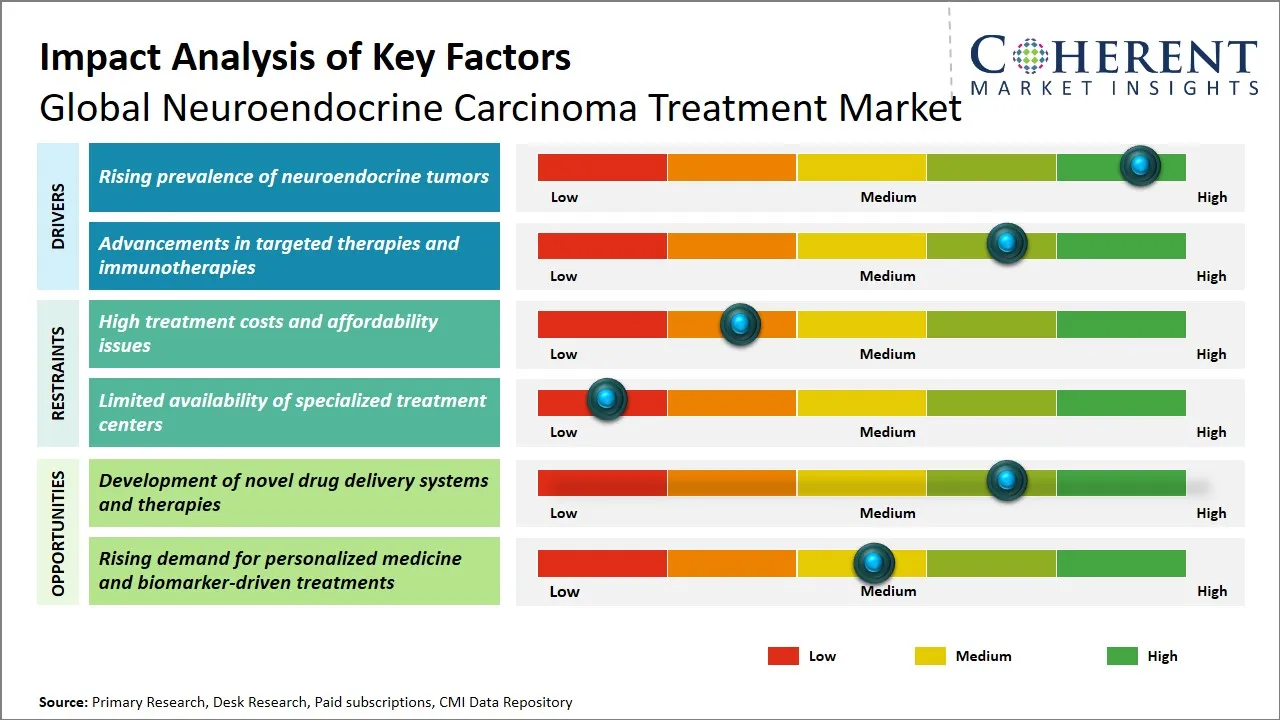
The increasing prevalence of neuroendocrine tumors (NETs) worldwide has become a significant driver for the growth of the neuroendocrine carcinoma treatment market. This surge can be attributed to improved diagnostic capabilities, including advanced imaging techniques and biomarker identification, which have facilitated earlier and more accurate detection of NETs that were previously underdiagnosed or misclassified. Moreover, heightened awareness among both clinicians and patients about the heterogeneity and complexity of neuroendocrine tumors has contributed to increased screening and diagnosis rates. The aging global population further exacerbates this trend, as NET incidence tends to rise with age. Additionally, lifestyle and environmental factors are believed to play a role in the growing disease burden.
For example, study published in Cancer journal explored the rising incidence of neuroendocrine tumors (NETs) using a population-based analysis in Ontario, Canada. The study, which analyzed data from 1994 to 2009, found the incidence of NETs increased from 2.48 to 5.86 per 100,000 people. While metastases were present in 20.8% of patients at diagnosis, another 38% developed metastases after the initial diagnosis. Interestingly, the proportion of metastatic disease at presentation decreased over time. The overall 10-year survival rate was 46.5%, with factors such as age, male sex, low socioeconomic status, and rural residency identified as independent predictors of worse outcomes.
Neuroendocrine Carcinoma Treatment Market Opportunity - Development of Novel Drug Delivery Systems and Therapies
The global neuroendocrine carcinoma treatment market presents significant opportunities through the advancement of novel drug delivery systems and innovative therapeutic approaches. Current treatment modalities for neuroendocrine carcinoma often face challenges such as limited drug bioavailability, systemic toxicity, and suboptimal targeting of tumor sites. The development of cutting-edge drug delivery technologies including nanoparticle-based carriers, targeted liposomal formulations, and implantable devices can drastically improve the precision and efficacy of administered therapies. These systems enable controlled and sustained release of chemotherapeutic agents and peptides, reducing side effects and enhancing patient compliance.
For example, Novartis is advancing in the development of novel somatostatin analogs and peptide receptor radionuclide therapies (PRRT), which are gaining attention as effective, targeted therapies for neuroendocrine tumors. AstraZeneca: Known for developing advanced drug delivery systems, AstraZeneca is exploring new approaches for targeted delivery of chemotherapy agents, improving both treatment efficacy and reducing systemic side effects. Their work on personalized therapies is focused on better tumor-targeting capabilities.
Analyst Opinion (Expert Opinion)
- The neuroendocrine carcinoma treatment market is growing rapidly, fueled by innovations in targeted therapies, immunotherapies, and peptide receptor radionuclide therapy (PRRT), which have improved patient outcomes. Regulatory support and increased healthcare spending, especially in emerging markets, are also driving this growth. However, challenges like high treatment costs and limited access to specialized care remain obstacles to wider adoption.
- Opportunities are emerging in personalized medicine and biomarker-driven treatments. Key events like the ENETS and ASCO conferences have facilitated knowledge-sharing and policy development. Companies like Novartis, with its focus on PRRT, are leading the way, while government initiatives supporting rare cancer research are expected to drive future market growth.
Speak to the analyst
Want personalized insights?
Take the findings above to one of our principal consultants, or have the report rebuilt around the segments, geographies and competitors you actually track.
Market Segmentation
- Drug Class Insights (Revenue, USD Bn, 2021 - 2033)
- Somatostatin Analogs
- Chemotherapeutic Agents
- Targeted Therapy Drugs
- Immunomodulatory Drugs
- Peptide Receptor Radionuclide Therapy (PRRT)
- Hormonal Agents
- Indication Type Insights (Revenue, USD Bn, 2021 - 2033)
- Gastroenteropancreatic Neuroendocrine Tumors (GEP-NETs)
- Pulmonary Neuroendocrine Tumors
- Thyroid Neuroendocrine Tumors
- Others (e.g. Adrenal Gland Neuroendocrine Tumors)
- End User Insights (Revenue, USD Bn, 2021 - 2033)
- Hospitals
- Cancer Treatment Centers
- Ambulatory Surgery Centers
- Home Care
- Research Institutes
- Route of Administration Insights (Revenue, USD Bn, 2021 - 2033)
- Oral
- Parenteral
- Distribution Channel Insights (Revenue, USD Bn, 2021 - 2033)
- Hospital Pharmacies
- Retail Pharmacies
- Online Pharmacies
- Regional Insights (Revenue, USD Bn, 2021 - 2033)
- North America
- U.S.
- Canada
- Latin America
- Brazil
- Argentina
- Mexico
- Rest of Latin America
- Europe
- Germany
- U.K.
- Spain
- France
- Italy
- Russia
- Rest of Europe
- Asia Pacific
- China
- India
- Japan
- Australia
- South Korea
- ASEAN
- Rest of Asia Pacific
- Middle East
- GCC Countries
- Israel
- Rest of Middle East
- Africa
- South Africa
- North Africa
- Central Africa
- North America
- Key Players Insights
- Novartis AG
- Ipsen Pharma
- Pfizer Inc
- Bristol‑Myers Squibb
- Eli Lilly and Company
- Merck & Co
- Amgen
- Boehringer Ingelheim
- Teva Pharmaceutical Industries
- Hutchison China MediTech
- Exelixis Inc
- Chiasma Inc
- Advanced Accelerator Applications (Novartis Radioligand)
- Progenics Pharmaceuticals
- AbbVie Inc
Sources
Primary Research Interviews
Industry Stakeholders List
- National Cancer Institute (NCI)
- American Society of Clinical Oncology (ASCO)
End Users List
- Oncology Clinics
- Neuroendocrine Tumor Patient Advocacy Groups
Government and International Databases
- U.S. National Institutes of Health (NIH)
- World Health Organization (WHO)
- European Medicines Agency (EMA)
- Food and Drug Administration (FDA)
- Centers for Disease Control and Prevention (CDC)
- National Institute for Health and Care Excellence (NICE)
Trade Publications
- Journal of Clinical Oncology
- Oncology Times
- The Lancet Oncology
- Cancer Network
- BioPharma Reporter
- Pharmaceutical Technology
Academic Journals
- Cancer Research
- Journal of Clinical Investigation
- Molecular Cancer Research
- The New England Journal of Medicine
- European Journal of Cancer
- Journal of the National Cancer Institute
Reputable Newspapers
- The New York Times
- The Guardian
- The Wall Street Journal
- BBC News
- Reuters
- Financial Times
Industry Associations
- National Cancer Institute (NCI)
- American Society of Clinical Oncology (ASCO)
- European Society for Medical Oncology (ESMO)
- International Neuroendocrine Cancer Alliance (INCA)
- American Association for Cancer Research (AACR)
- Society for NeuroOncology (SNO)
Public Domain Resources
- ClinicalTrials.gov
- U.S. Food and Drug Administration (FDA) Drug Database
- National Institute for Health and Care Excellence (NICE) Guidelines
- Cancer.gov
- European Medicines Agency (EMA) Website
Proprietary Elements
- CMI Data Analytics Tool: Proprietary analytics tool to analyze real-time market trends, consumer behavior, and technology adoption in market
- Proprietary CMI Existing Repository of Information for Last 8 Years
Get access to 250+ pages report
Every segment, forecast, competitor profile and data table behind the analysis above — available for instant download.
- ESOMAR Member
- ISO 9001:2015 Certified
- D-U-N-S Registered
- GDPR & CCPA Compliant
Missing comfort of reading report in your local language? Find your preferred language:
Transform your Strategy with Exclusive Trending Reports
Frequently Asked Questions
The global neuroendocrine carcinoma treatment market is estimated to be valued at USD 2.35 Bn in 2026 and is expected to reach USD 4.08 Bn by 2033.
The CAGR of global neuroendocrine carcinoma treatment market is projected to be 8.2% from 2026 to 2033.
Rising prevalence of neuroendocrine tumors and advancements in targeted therapies and immunotherapies are the major factors driving the growth of the global neuroendocrine carcinoma treatment market.
High treatment costs and affordability issues and limited availability of specialized treatment centers are the major factors hampering the growth of the global neuroendocrine carcinoma treatment market.
In terms of drug class, somatostatin analogs are estimated to dominate the market revenue share in 2026.
Novartis AG, Ipsen Pharma, Pfizer Inc, Bristol‑Myers Squibb, Eli Lilly and Company, Merck & Co, Amgen, Boehringer Ingelheim, Teva Pharmaceutical Industries, Hutchison China MediTech, Exelixis Inc, Chiasma Inc, Advanced Accelerator Applications (Novartis Radioligand), Progenics Pharmaceuticals, and AbbVie Inc are the major players.
North America is expected to lead the global neuroendocrine carcinoma treatment market in 2026.