

North America Pharmacy Benefit Management Market Size and Forecast – 2026 To 2033
The North America pharmacy benefit management market is expected to grow from USD 595.0 Mn in 2026 to USD 985.4 Mn by 2033, registering a compound annual growth rate (CAGR) of 7.5% from 2026 to 2033. The pharmacy benefit management market in North America is poised for significant expansion, fueled by the growing utilization of specialty pharmaceuticals, which demand intricate benefits management, prior authorization, and patient support programs.
Furthermore, the increasing financial burden of prescription drugs is reinforcing the need for effective pharmacy benefit management solutions. For instance, according to the American Society of Health-System Pharmacists, U.S. prescription drug spending surged in 2025, rising 12.7% to USD 915 billion, one of the fastest growth rates in the past two decades, and outpacing the increases in healthcare and the overall economy. The rapid increase in drug costs will drive the pharmacy benefit management services for better formulary management, rebate negotiation, and drug cost reduction.
(Source: American Society of Health-System Pharmacists)
Key Takeaways of the North America Pharmacy Benefit Management Market
- The processing prescriptions segment is projected to hold a market share of 34.4 % of the North America pharmacy benefit management market share in 2026, making it the dominant service type segment, due to increasing prescription drug usage and the growing need for cost-effective medication management . For instance, according to the U.S. Centers for Medicare & Medicaid Services (CMS), U.S. retail prescription drug spending increased 7.9% to USD 467.0 billion in 2024. (Source: Centers for Medicare & Medicaid Services) This persistent growth in prescription drug expenses has further raised the need for prescription processing, claims adjudication, and formulary management services throughout the pharmacy benefit management networks.
- The standalone PBMS segment is expected to hold 39.8 % of the North America pharmacy benefit management market share in 2026, making it the dominant model type segment, due to rising adoption of transparent and customizable pharmacy benefit solutions by employers and healthcare payers. This preference is further reinforced by ongoing industry initiatives aimed at enhancing transparency, cost visibility, and accountability within pharmacy benefit management services. For instance, in November 2024, the National Association of Manufacturers (NAM) released an ad campaign pushing Congress to move forward on pharmacy benefit management reform legislation based on concerns about the escalating costs of healthcare and prescription drugs. (Source: National Association of Manufacturers)
- Expansion of Biosimilar-Focused Formulary Strategies: The growing portfolio of biosimilars for high-cost specialty therapies offers new avenues for pharmacy benefit management to drive formulary optimization and greater savings. PBMs are encouraging increased market adoption of biosimilars via preferred formulary position, utilization management programs and provider oversight programs. As various biosimilar competitors enter the market in additional indications, PBMs will have an increasingly significant impact over adoption and savings.
- Growth of Employer-Sponsored Transparent PBM Models: Large employers are interested in transparency while optimizing their pharmacy management and demand greater insight into drug costs, rebates and administrative charges. This is pushing the adoption of pass-through pricing models and the development of alternative PBM business models that seek to provide better accountability and transparency while reducing actual or perceived total costs.
Segmental Insights
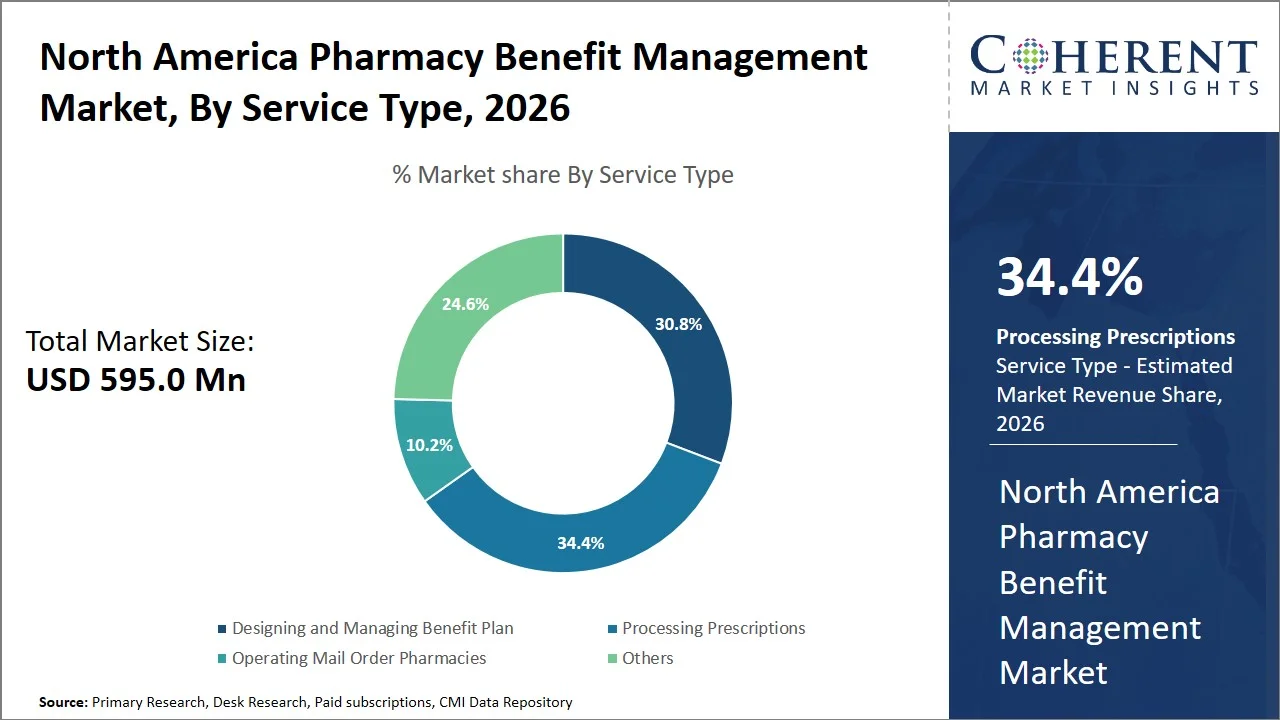
Why Do Processing Prescriptions Dominate the North America Pharmacy Benefit Management Market?
Processing prescriptions are projected to hold a market share of 34.4% in 2026, attributed to the sheer volume of prescriptions written for commercial health plans, Medicare Part D, and Medicaid programs. Processing Prescriptions provide a core PBM function allowing real-time claims adjudication, verification of eligibility, formulary, and payment. E-prescribing adoption and increased prescription utilization to manage chronic illnesses continues to drive strong demand for this service. For instance, in September 2024, Accion Labs Healthcare unveiled the PBM NexaPro, a fully integrated platform for PBM services, to help optimize prescription benefit management, improve claims processing speed and manage pharmacy benefit administration operations. (Source: Accion Labs) Digitization in pharmacy benefit management coupled with the increased volume of prescriptions, in both public and private health care segments, are likely to support the segment’s growth in the market.
- Current Industry Events of 2026
- Market Size Estimation
- Regional Breakdown
- Competitive Landscape
- Customer Intelligence
- Segmental Analysis
- Pricing Analysis
- Key Market Drivers, Challenges & Future Trends
- Customized Insights Section
Why is Standalone PBMS the Preferred Model Type in the North America Pharmacy Benefit Management Market?
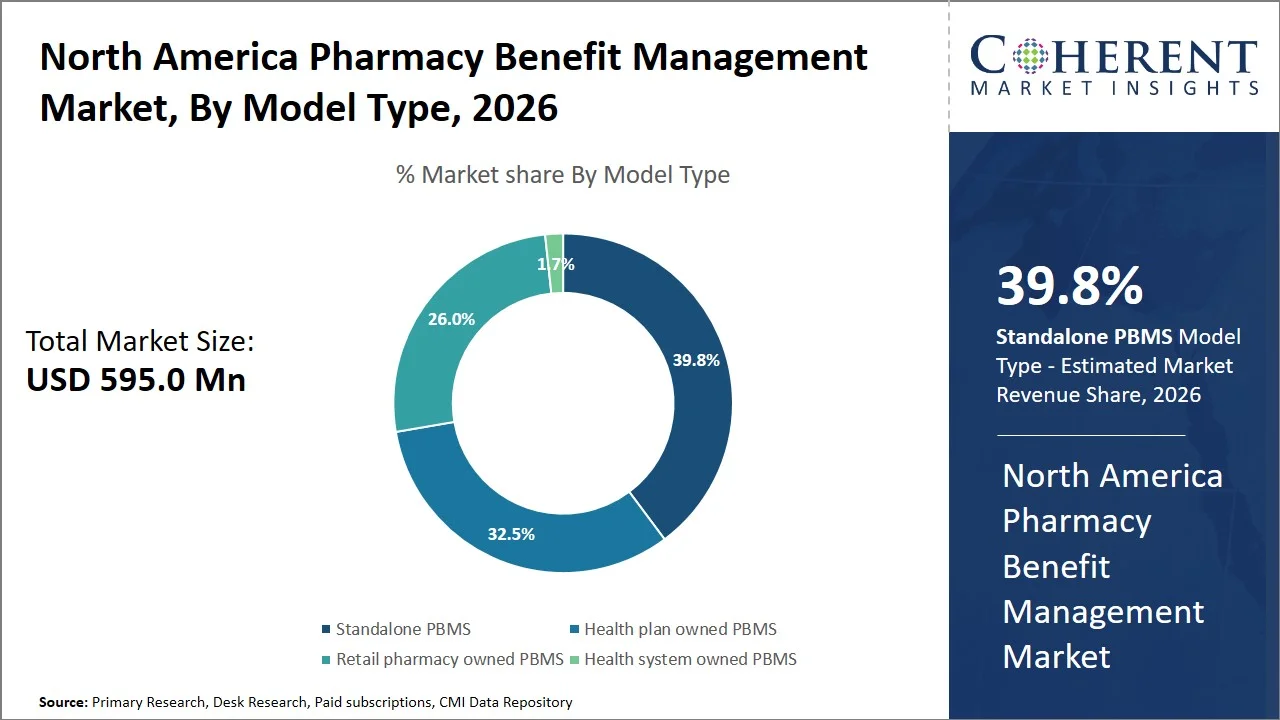
Standalone PBMS is projected to hold 39.8% of the market share in 2026, owing to their ability to provide dedicated pharmacy benefit services, flexible contracting mechanism, and independent formulary management process. They appeal to large employers, health plans and government programs as they are specialized in cost containment, manufacturer rebate negotiation, and pharmacy network development. They are also a scalable solution that can accommodate a broad range of payer needs without being subject to the constraint of the same underlying insurer. For instance, in May 2026, Optum Rx launched an industry-leading Transparent Pharmacy Care Model designed to make pharmacy benefit administration more straightforward, enhance pricing transparency, and align incentives within the pharmacy supply chain. (Source: UnitedHealth Group) Increased focus on transparency, controlling costs and individual pharmacy benefit designs will help standalone PBMs continue to dominate the North America pharmacy benefit management market.
Currents Events and their Impact
Current Events | Description and its Impact |
Regulatory & Industry Shift: Increased FTC Scrutiny of PBM Pricing Practices (January 2025) |
|
Regulatory Reform: U.S. Department of Labor Proposes PBM Fee Disclosure Requirements (January 2026) |
|
(Source: Federal Trade Commission, Employee Benefits Security Administration)
North America Pharmacy Benefit Management Market Dynamics
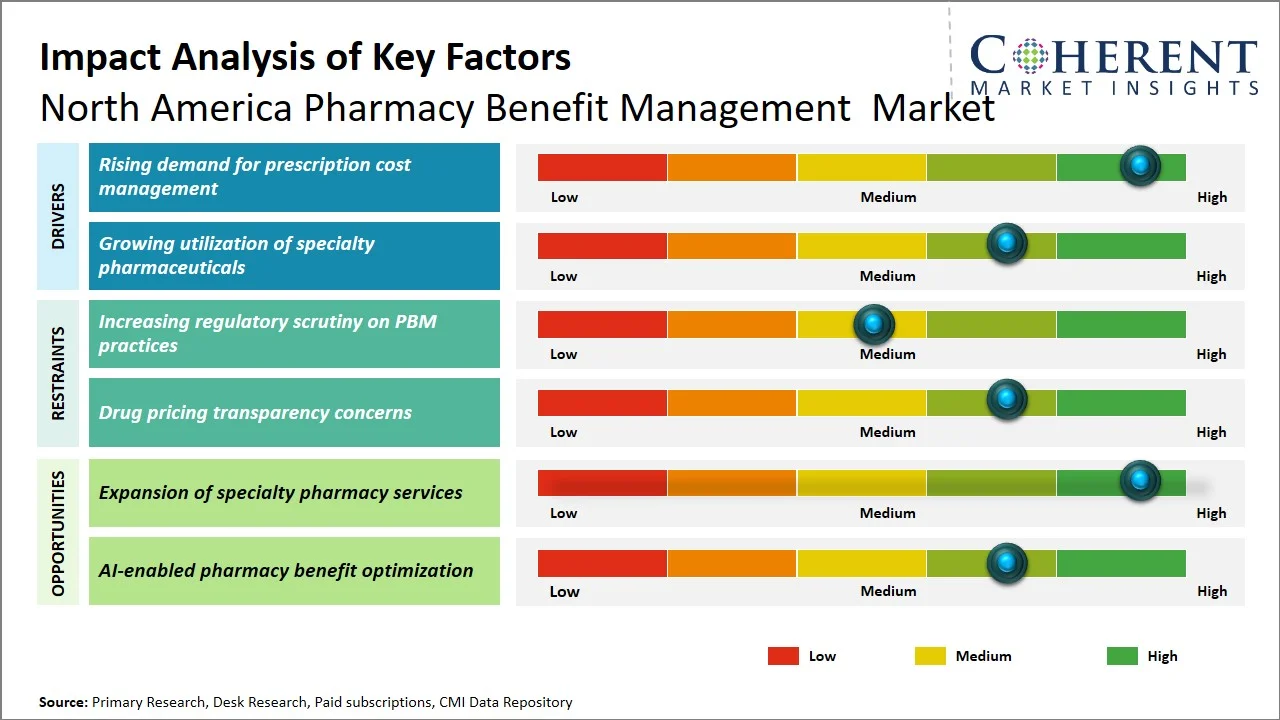
Market Drivers
- Rising demand for prescription cost management: The rising costs of prescription drugs in commercial, employer-sponsored and government health plans are driving increased use of PBMs. Many employers are turning to PBMs to negotiate manufacturer rebates, build cost-effective formularies and increase cost-effective drug utilization. As healthcare stakeholders attempt to balance cost and access, managing prescription drug costs is emerging as one of the key drivers of PBM utilization. For instance, in December 2023, CVS Health rolled out new reimbursement models – CVS CostVantage and CVS Caremark TrueCost to promote greater pricing transparency and stronger alignment across the pharmacy supply chain and provide clients with ways to better control prescription drug costs. (Source: CVS Health)
- Growing utilization of specialty pharmaceuticals: The increasing use of specialty pharmaceuticals for cancer, auto immune disease, orphan diseases and chronic conditions is driving demand for better PBM services. Specialty pharmaceuticals generally require specialized dispensing, pre-authorization, patient tracking and compliance management services, increasing dependence on PBMs. As specialty pharmaceuticals become a larger portion of overall drug spending, PBMs are increasing clinical management programs. For instance, in April 2026, EmpiRx Health announced the release of a transformative infusion therapy management solution aimed at improving selection of the site of care, lowering costs for specialty drugs, and facilitating clinical appropriateness for patients treated with specialty infusion therapies. (Source: EmpiRx Health)
Emerging Trends
- Expansion of Digital Prior Authorization and Automation Platforms: To decrease administrative burdens and to speed up the process of approving prescriptions, PBMs have been making use of AI-assisted prior approval and claims automation systems. Such digital systems facilitate clinicians work flow but also help PBMs to manage utilization and curtail costs.
- Increasing Adoption of Integrated Specialty Care Management Programs: PBMs offer integrated, condition-specific care management programs that cover the full range of prescription benefit administration, including oversight of complex and chronic conditions. These programs include managing medications, tracking patients, promoting adherence, and providing clinical activities to improve outcomes while controlling specialty drug spending.
Key Regulatory Trends Shaping the North America Pharmacy Benefit Management Market
Regulatory Trend | Current Status | Impact on PBMs | Future Outlook |
Drug Price Negotiation | Expanding under Medicare reforms | Reduces traditional rebate opportunities | High |
PBM Transparency Requirements | Increasing across U.S. states | Higher reporting and compliance burden | High |
Rebate Reform Initiatives | Under continuous review | Shifts revenue models toward service fees | Moderate-High |
Antitrust Scrutiny | Intensifying | May limit consolidation activities | High |
Specialty Drug Management Regulations | Expanding | Creates opportunities for specialty pharmacy services | High |
How is the expansion of specialty pharmacy services creating new growth opportunities in the North America pharmacy benefit management market?
The growth of specialty pharmacy will provide sizable opportunities for PBMs to capture new revenue streams, as specialty drugs (such as those for cancer, autoimmune and orphan diseases) drive higher management needs. PBMs are investing to ramp up specialty pharmacy capabilities around clinical management and adherence to improve outcomes and reduce costs. The increased penetration of specialty drugs will also facilitate PBM services such as prior authorization, care coordination and clinical programs. For instance, in June 2024, Prime Therapeutics LLC introduced Pharmacy Match, a specialty pharmacy program that helps members access the specialty pharmacy that best fits their needs within Prime's network. The program helps coordinate care, simplifies specialty drug fulfillment and access, and illustrates the rise of specialty pharmacy services to build PBM value-added offerings. (Source: Prime Therapeutics LLC)
Market Players, Key Development, and Competitive Intelligence
Key Developments
- On June 10, 2026, Custom Health finalized the acquisition of the innovative Rx operating subsidiaries to broaden its fully integrated medication management infrastructure throughout North America. This acquisition boosts Custom Health's offerings of pharmacy benefit management, medication adherence, and specialty pharmacy services. This transaction is expected to promote patient engagement, optimize medication results, and create increased operational scale across North America.
- In October 2025 Evernorth Health Services launched a non-rebate pharmacy benefit solution that provides transparency into the cost of medications and the prices for drugs at the consumer level. It is part of a broader movement within the PBM industry towards transparent pricing and value-based pharmacy benefit management that aims to increase cost-effectiveness, member satisfaction and competition in the PBM sector within North America.
Competitive Landscape
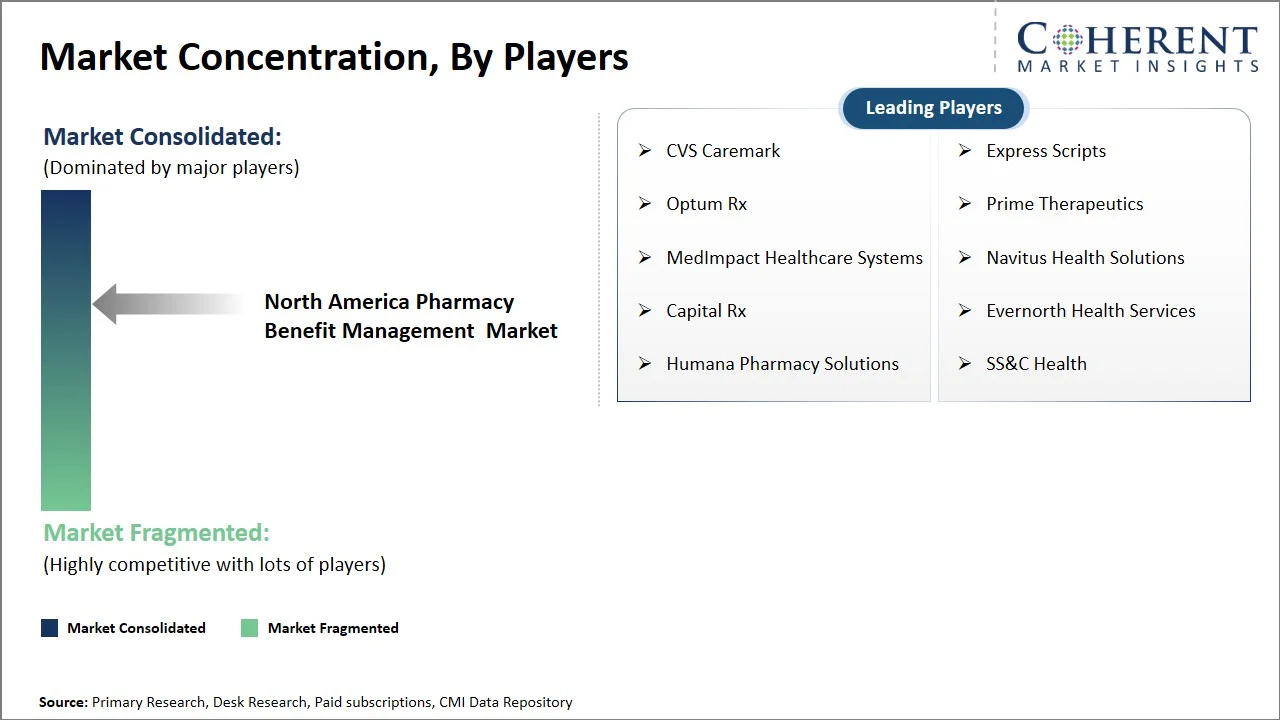
The North America pharmacy benefit management market is moderately consolidated, with competition focused on controlling prescription costs, specialty pharmacy abilities and transparent benefit management and administration models. Increased investments are made toward advanced analytics, formulary optimization and integrated medication management with a view to improving its services at a better payout to the members and strengthening payer relation. Innovative strategic acquisitions, extending specialty pharmacy network, and transparent pricing models are the latest competitive strategies.
Key focus areas include
- Specialty Pharmacy and High-Cost Drug Management
- Transparent Pricing and Rebate Administration Models
- AI-Driven Pharmacy Analytics and Medication Optimization
Market Report Scope
North America Pharmacy Benefit Management Market Report Coverage
| Report Coverage | Details | ||
|---|---|---|---|
| Base Year: | 2025 | Market Size in 2026: | USD 595.0 Mn |
| Historical Data for: | 2020 To 2024 | Forecast Period: | 2026 To 2033 |
| Forecast Period 2026 to 2033 CAGR: | 7.5% | 2033 Value Projection: | USD 985.4 Mn |
| Segments covered: |
| ||
| Companies covered: | CVS Caremark, Express Scripts, Optum Rx, Prime Therapeutics, MedImpact Healthcare Systems, Navitus Health Solutions, Capital Rx, Evernorth Health Services, Humana Pharmacy Solutions, and SS&C Health | ||
| Growth Drivers: |
| ||
| Restraints & Challenges: |
| ||
Analyst Opinion (Expert Opinion)
- Looking ahead, the future of the North America pharmacy benefit management market will be driven by rising demand for transparency in drug costs, management of specialty pharmacy and benefits optimization through technology platforms. As the drug spending accelerates, PBMs will transit from a claims manager to a health expenditure manager with stronger focus on using data, value-based relationship and accessible pharmacy management through integrated services.
- The maximum opportunities are foreseen in the provision of specialty pharmacy management services for high-cost therapy for the U.S. market with oncology, autoimmune, and rare conditions market segments holding the most promise. Biosimilars and complex specialty medications utilization increases are spurring demand for sophisticated formulary management, patient programs, and adherence.
- In order to gain a competitive advantage, market players should focus on transparent pricing strategies, strengthen specialty pharmacy, and focus on pharmacy analytics heavily driven by AI. Growing value-based pharmacy initiatives, improving patient interaction tools and building strategic partnerships with payers and providers will help sustain long term growth.
Speak to the analyst
Want personalized insights?
Take the findings above to one of our principal consultants, or have the report rebuilt around the segments, geographies and competitors you actually track.
Market Segmentation
- Service Type Insights (Revenue, USD Mn, 2021 - 2033)
- Designing and Managing Benefit Plan
- Processing Prescriptions
- Operating Mail Order Pharmacies
- Others
- Model Type Insights (Revenue, USD Mn, 2021 - 2033)
- Standalone PBMS
- Health plan owned PBMS
- Retail pharmacy owned PBMS
- Health system owned PBMS
- Key Players Insights
- CVS Caremark
- Express Scripts
- Optum Rx
- Prime Therapeutics
- MedImpact Healthcare Systems
- Navitus Health Solutions
- Capital Rx
- Evernorth Health Services
- Humana Pharmacy Solutions
- SS&C Health
Sources
Primary Research Interviews
- PBM Executives and Strategic Planning Directors (U.S., Canada)
- Formulary Management and Pharmacy Network Leaders
- Health Plan Pharmacy Benefit Administrators
- Employer Benefits and Healthcare Procurement Managers
- Specialty Pharmacy and Reimbursement Consultants
Stakeholders
- Pharmacy Benefit Management (PBM) service providers and formulary management organizations
- Health insurance companies and managed care organizations (MCOs)
- Specialty pharmacy operators and retail pharmacy network providers
- End-use Sectors
- Commercial health plans
- Self-funded employers and employer-sponsored health plans
- Government healthcare programs (Medicare Part D and Medicaid)
- Retail pharmacy chains
- Specialty pharmacies
- Integrated healthcare delivery systems and accountable care organizations (ACOs)
- Regulatory & Health Bodies
- Centers for Medicare & Medicaid Services
- U.S. Food and Drug Administration
- Federal Trade Commission
- Health Canada
- Canadian Agency for Drugs and Technologies in Health
- State Medicaid Agencies and Provincial Health Authorities
Databases
- Centers for Medicare & Medicaid Services – Medicare Part D utilization, prescription spending, reimbursement trends
- Agency for Healthcare Research and Quality – Healthcare expenditure and utilization statistics
- National Association of Insurance Commissioners – Health insurance and pharmacy benefit data
- Canadian Institute for Health Information – Prescription drug spending and healthcare statistics
Magazines
- Drug Channels – PBM market trends, rebate models, and specialty pharmacy developments
- Managed Healthcare Executive – Managed care and pharmacy benefit insights
- Pharmaceutical Commerce – Drug distribution and PBM supply-chain developments
- Pharmacy Times – Pharmacy benefit management and formulary trends
Journals
- Journal of Managed Care & Specialty Pharmacy – Formulary management, specialty pharmacy, and PBM research
- American Journal of Managed Care – Cost containment and reimbursement studies
- Health Affairs – Drug pricing and healthcare policy analysis
- Journal of Health Economics – Pharmaceutical expenditure and reimbursement research
Newspapers
- The Wall Street Journal – PBM consolidation, drug pricing, and reimbursement developments
- Financial Times – Healthcare services and pharmaceutical market trends
- The New York Times – Prescription drug affordability and healthcare policy coverage
- The Washington Post – Drug pricing reforms and healthcare access issues
- USA Today – Consumer prescription drug utilization and insurance trends
Associations
- Pharmaceutical Care Management Association – PBM industry policies, market developments, and regulatory updates
- Academy of Managed Care Pharmacy – Managed care pharmacy and formulary management research
- America's Health Insurance Plans – Health insurance and pharmacy benefit trends
- National Community Pharmacists Association – Community pharmacy reimbursement and dispensing trends
Public Domain Sources
- Centers for Medicare & Medicaid Services – Medicare Part D spending, prescription utilization, and reimbursement data
- U.S. Food and Drug Administration – Drug approvals, biosimilars, and regulatory guidance
- Federal Trade Commission – PBM industry competition, pricing transparency, and industry investigations
- Health Canada – Pharmaceutical regulation and reimbursement framework
Proprietary Elements
- CMI Data Analytics Tool, Proprietary CMI Existing Repository of information for last 10 years.
Get access to 250+ pages report
Every segment, forecast, competitor profile and data table behind the analysis above — available for instant download.
- ESOMAR Member
- ISO 9001:2015 Certified
- D-U-N-S Registered
- GDPR & CCPA Compliant
Missing comfort of reading report in your local language? Find your preferred language:
Transform your Strategy with Exclusive Trending Reports
Frequently Asked Questions
The North America pharmacy benefit management market is estimated to be valued at USD 595.0 Mn in 2026 and is expected to reach USD 985.4 Mn by 2033.
Pharmacy benefit management refers to the administration and management of prescription drug benefits on behalf of health insurers, employers, and government healthcare programs.
The CAGR of the North America pharmacy benefit management market is projected to be 7.5% from 2026 to 2033.
Processing prescriptions dominate due to the high volume of prescription claims handled by PBMs and the growing need for efficient claims adjudication, formulary management, and medication cost optimization.
PBMs lower drug costs through formulary management, manufacturer rebate negotiations, pharmacy network contracting, and utilization management programs.
Formulary management is the process of creating and maintaining a preferred list of medications to optimize clinical outcomes and control prescription drug spending
In terms of model type, standalone PBMS is estimated to dominate the market revenue share in 2026.