

Veterinary Pain Management Market Size and Share Analysis - (2026 - 2033)
The Veterinary Pain Management market was valued at USD 1,911.2 Mn in 2026 and is forecast to reach a value of USD 2,927.2 Mn by 2033 at a CAGR of 7.5% between 2026 and 2033.
Key Takeaways
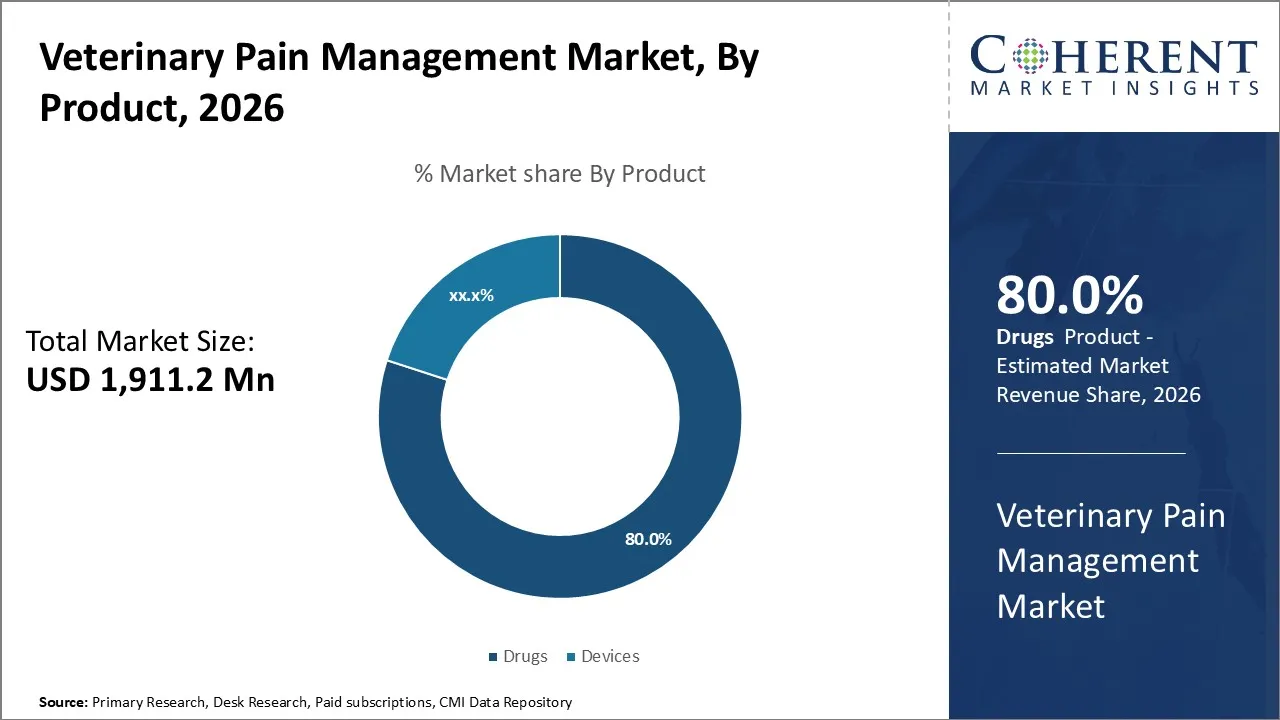
- Based on product, the drugs segment is expected to hold 80% share of the market in 2026.
- Based on application, the osteoarthritis and joint pain segment is projected to account for 72.8% share of the market in 2026.
- Based on animal type, the companion animals segment is expected to lead the market with 65% share in 2026.
- Based on end user, the hospitals & clinics segment is projected to capture 70% share in 2026.
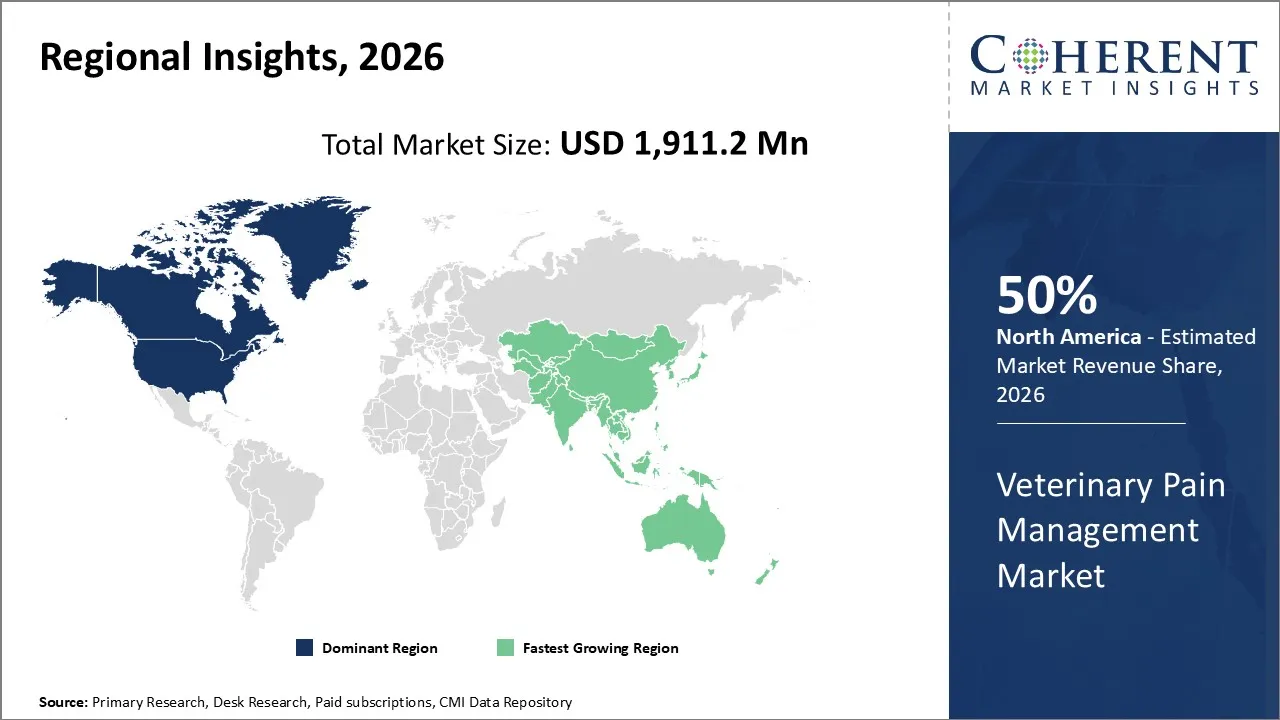
- Based on Region, North America is set to lead the veterinary pain management market with 50% share in 2026. While, Asia Pacific is anticipated to have the fastest growing region.
Market Overview
Veterinary pain management is a crucial part of veterinary therapeutics. Pain in animals leads to delayed healing and exaggerated stress in already sick animals. Pain in animals could be due to cancer, arthritis, and surgeries, and may lead to reduced activity and aggression. The most important aim is pain management while efforts are made to spot and treat underlying disease and reinforce healing and recovery. Rising pet ownership, increasing animal welfare awareness, growing chronic diseases in pets, technological advances in analgesics, higher veterinary spending, and expanding veterinary infrastructure.
Current Events and their Impacts on the Veterinary Pain Management Market
Current Event | Description and its Impact |
Advances in Veterinary Pain Medications |
|
Growing Awareness of Animal Welfare and Pain Management |
|
Segmental Insights
- Current Industry Events of 2026
- Market Size Estimation
- Regional Breakdown
- Competitive Landscape
- Customer Intelligence
- Segmental Analysis
- Pricing Analysis
- Key Market Drivers, Challenges & Future Trends
- Customized Insights Section
Veterinary Pain Management Market Insights, By Product - Drugs represent the largest share, because they are the most widely used treatment for managing pain in animals
In terms of product, the drugs segment is expected to lead the market with 80% share in 2026, owing to their well-established use, versatility across a range of species, and broad accessibility in both developed and emerging veterinary healthcare systems. The predominance of drugs in this market is fundamentally rooted in their proven efficacy in managing pain associated with a variety of conditions, including post-surgical pain, chronic musculoskeletal disorders like arthritis, and acute injuries in animals.
For instance, in December 2025, Felix Pharmaceuticals Pvt. Ltd., released, Firocoxib Tablets for Horses, for the control of pain as well as inflammation associated with osteoarthritis in horses. This dominance is further reinforced by the continual development of new veterinary analgesics, ensuring that drugs remain the preferred and most reliable solution for managing animal pain.
Veterinary Pain Management Market Insights, By Application - Osteoarthritis and Joint Pain dominate market
In terms of application, the osteoarthritis and joint pain segment is expected to hold 72.8% share of the market in 2026. Owing to the widespread prevalence of degenerative joint diseases in companion animals as well as livestock. Osteoarthritis is recognized as one of the most common chronic situation impacting aging pets, particularly dogs, cats, etc., causing persistent pain along with mobility issues.
For instance, according to December 2025 report of the University of Illinois Urbana-Champaign, Osteoarthritis (OA), also known as degenerative joint disease (DJD), is a common problem in small animal patients. An estimated 80% of dogs >8 years old and 60% of cats between 6 and 19 years old have OA. This high prevalence along with chronic nature of osteoarthritis make it the primary driver of treatment demand, reinforcing its dominant position in the market.
Veterinary Pain Management Market Insights, By Animal Type - companion animals lead due to higher spending by pet owners on healthcare, chronic conditions like osteoarthritis and joint pain, and the preference for regular veterinary care
In terms of animal type, the companion segment is projected to account for 65% share of the market in 2026. Owing to several compelling factors related to the inclining dynamics of pet ownership, increased awareness of animal well-being, as well as advancements in veterinary healthcare. Over the past decades, there has been a major global increase in the number of companion animals, such as dogs, cats, and other small pets, driven largely by changing societal norms and urbanization that has enhanced the human-animal bond.
For instance, according to data from the American Pet Products Association, pet ownership in the U.S. hit an estimated 94 million households in 2025, up from 82 million in 2023. This trend highlights how urbanization as well as changing societal norms are fueling the growth of veterinary pain management products for companion animals.
Veterinary Pain Management Market Insights, By End User - hospitals and clinics dominate in the market
In terms of end user, the hospitals and clinics segment is projected to capture 70% share in 2026, the Hospitals and Clinics segment holds the largest share of the market, underpinned by several critical factors tied to the infrastructure, expertise, and demand patterns inherent in veterinary healthcare settings. The dominance of Hospitals as well as Clinics can primarily be attributed to the centralized nature of veterinary treatment, especially for pain management, which often requires sophisticated diagnostic tools, specialized personnel, and comprehensive treatment protocols that these establishments are better equipped to provide.
Regional Insights
North America Veterinary Pain Management Market Analysis & Trends
North America is expected to dominate the veterinary pain management market with 50% share in 2026, owing to several critical socio-economic, regulatory, and technological factors that consolidate its leadership position. The existence of an advanced veterinary healthcare infrastructure, along with with the escalating prevalence of pet adoption and ownership, especially dogs and cats, drives the demand for sophisticated pain management solutions.
For instance, in 2025, the UC Davis William R. Pritchard Veterinary Medical Teaching Hospital opened the All-Species Imaging Center, now the most advanced veterinary imaging facility on the West Coast.
Asia Pacific Veterinary Pain Management Market Analysis & Trends
Asia Pacific is expected to exhibit the fastest growth, bolstered by rapid urbanization, increasing pet ownership, as well as surging awareness about animal welfare as well as pain management. Countries such as China, India, and Southeast Asian nations are witnessing an exponential increase in domestic pet populations, encouraging more frequent visits to veterinary care centers and the adoption of advanced medical pain management solutions.
A significant contributing factor to this growth is the rising penetration of veterinary pharmaceutical manufacturing within Asia-Pacific itself. Governments in China and India have progressively supported veterinary health infrastructure development through policies promoting animal health and preventive care, as reported by the Food and Agriculture Organization (FAO) of the United Nations.
Veterinary Pain Management Market Outlook Country-Wise
The U.S. Veterinary Pain Management Market Trends
The U.S. contributes the highest share in the Veterinary Pain Management Market in North America owing to various region-specific factors deeply rooted in its advanced veterinary healthcare infrastructure, regulatory environment, as well as robust animal welfare framework. The United States hosts a highly developed network of veterinary clinics, hospitals, and specialized pain management centers that adopt cutting-edge therapeutic technologies for companion and farm animals.
For instance, the U.S. government’s proactive initiatives through agencies such as the U.S. Department of Agriculture (USDA) as well as the Food and Drug Administration (FDA) have streamlined the approval of novel veterinary analgesics as well as devices, thereby facilitating faster clinical adoption.
Japan Veterinary Pain Management Market Trends
Japan contributes the highest share in the veterinary pain management market owing to its advanced veterinary healthcare infrastructure, established regulatory framework, and heightened awareness among pet owners as well as livestock producers about animal welfare. The country has long maintained harsh standards for veterinary practices, supported by government initiatives promoting animal health and wellbeing.
For instance, the 11th Asian Pig Veterinary Society Congress (APVS 2025) took place in Fukuoka, Japan, from November 9 to 12, 2025, bringing together veterinarians, producers, researchers and industry professionals under the theme “Sustainable Future of Asian Pig Production.” Japan’s leadership is further strengthened by government initiatives and strict standards in veterinary care, which ensure high adoption of pain management treatments for both companion animals and livestock.
Market Report Scope
Veterinary Pain Management Market Report Coverage
| Report Coverage | Details | ||
|---|---|---|---|
| Base Year: | 2025 | Market Size in 2026: | USD 1,911.2 Mn |
| Historical Data for: | 2020 To 2024 | Forecast Period: | 2026 To 2033 |
| Forecast Period 2026 to 2033 CAGR: | 7.5% | 2033 Value Projection: | USD 2,927.2 Mn |
| Geographies covered: |
| ||
| Segments covered: |
| ||
| Companies covered: | Zoetis Inc., Vetoquinol SA, Norbrook, Dechra Pharmaceuticals PLC, Chanelle Veterinary Limited, Ceva Sante Animale, Assisi Animal Health, Elanco Animal Health Incorporated, and Boehringer Ingelheim International GmbH, among others | ||
| Growth Drivers: |
| ||
| Restraints & Challenges: |
| ||
Veterinary Pain Management Market Driver
Increasing pet ownership and companion animal care
The increasing trend of pet ownership globally is significantly influencing the expansion of the Veterinary Pain Management Market. Over the last few years, there has been a major inclination towards viewing pets as integral family members rather than just animals, leading to an upsurge in their healthcare as well as well-being demands. This evolution in pet care culture and demographics creates robust demand for l veterinary pain management products as well as services, positively influencing the market’s growth trajectory.
Rising incidence of veterinary chronic and post-operative pain
The escalating incidence of veterinary chronic as well as post-operative pain is significantly propelling the expansion of the veterinary pain management market globally. Historically, pain in animals was under-recognized and undertreated, largely due to limited understanding and diagnostic challenges. However, high awareness among veterinarians as well as pet owners about animal welfare has emphasized the importance of effective pain management strategies.
Veterinary Pain Management Market Opportunity
Development of novel analgesic drugs and biopharmaceuticals
The development of novel analgesic drugs and biopharmaceuticals represents a major opportunity in the veterinary pain management market, primarily driven by the escalating recognition of animal welfare and advancements in pharmaceutical technologies. Traditional pain management in animals has long relied on a limited arsenal of non-steroidal anti-inflammatory drugs (NSAIDs), opioids, as well as corticosteroids. However, these treatments usually have constraints such as side effects, limited efficacy in chronic pain, as well as potential for misuse in some cases. Recent innovations in biopharmaceuticals, including monoclonal antibodies and gene therapies, are opening new avenues for more targeted, effective, and safer pain relief options in veterinary medicine.
Analyst Opinion (Expert Opinion)
- The veterinary pain management market is experiencing high momentum driven by high awareness about animal welfare and the rising prevalence of chronic and acute pain conditions in pets and livestock. Growing pet adoption rates globally, especially in urban areas, are fueling demand for effective pain management therapies. Advances in veterinary pharmaceuticals as well as minimally invasive treatment alternatives offer veterinarians with enhanced tools to address pain, further propelling market growth. However, strict regulatory frameworks and concerns related to drug safety as well as side effects pose challenges that may slow market expansion.
- Emerging economies present lucrative opportunities as veterinary healthcare infrastructure improves as well as pet ownership rises. Additionally, high spending on companion animals’ healthcare underscores a willingness among consumers to invest in quality pain management solutions.
- North America continues to dominate the market, attributed to a well-established pet care ecosystem, robust R&D activities, as well as high per capita spending on veterinary services. Simultaneously, the Asia-Pacific region is emerging as the fastest-growing market, bolstered by rising disposable incomes, growing veterinary services, as well as heightened awareness about animal health.
- Innovations such as sustained-release formulations and non-opioid analgesics are anticipated to reshape the therapeutic landscape, creating new avenues for treatment. Strategic collaborations between pharmaceutical companies as well as veterinary clinics also offer potential for improved product accessibility and market penetration.
Speak to the analyst
Want personalized insights?
Take the findings above to one of our principal consultants, or have the report rebuilt around the segments, geographies and competitors you actually track.
Global Veterinary Pain Management Market: Key Developments
- In October 2025, Zoetis Inc. announced that the European Medicines Agency (EMA) has given a positive opinion for Lenivia (izenivetmab), a new medicine to reduce pain from osteoarthritis in dogs. Based on this opinion, the European Commission is expected to approve it in the fourth quarter of 2025, and Zoetis plans to start selling Lenivia in the EU in 2026.
- In March 2026, Dechra, a global veterinary care company, announced it will move its global headquarters from Northwich, England, to Boston, Massachusetts. This will put its leaders and main operations in a top innovation hub. The move shows Dechra’s focus on growing in North America and its plan to expand veterinary specialty care. Boston’s strong life sciences industry, skilled workforce, and global connections make it a good choice for the company’s future growth.
Market Segmentation
- By Product
- Drugs
- Devices
- By Application
- Osteoarthritis and Joint Pain
- Postoperative Pain
- Cancer
- Others
- By Animal type
- Companion
- Livestock
- By End User
- Hospitals and Clinics
- Retail Outlet & Others
- By Region
- North America
- U.S.
- Canada
- Latin America
- Brazil
- Argentina
- Mexico
- Rest of Latin America
- Europe
- Germany
- U.K.
- Spain
- France
- Italy
- Russia
- Rest of Europe
- Asia Pacific
- China
- India
- Japan
- Australia
- South Korea
- ASEAN
- Rest of Asia Pacific
- Middle East & Africa
- GCC Countries
- Israel
- Rest of Middle East & Africa
- North America
- Key Players
- Zoetis Inc.
- Vetoquinol SA
- Norbrook
- Dechra Pharmaceuticals PLC
- Chanelle Veterinary Limited
- Ceva Sante Animale
- Assisi Animal Health
- Elanco Animal Health Incorporated
- Boehringer Ingelheim International GmbH
Sources
Primary Research Interviews
- Veterinary pharmaceutical manufacturers
- Veterinary clinicians and practitioners
- Animal health product distributors
- Veterinary pain management specialists
- Others
Databases
- IMS Health
- GlobalData
- Factiva
- Others
Magazines
- Veterinary Practice News
- The Veterinary Journal
- Veterinary Times
- Animal Pharm
- Others
Journals
- Journal of Veterinary Pharmacology and Therapeutics
- Journal of Veterinary Internal Medicine
- Veterinary Anaesthesia and Analgesia
- Others
Newspapers
- Veterinary Record
- The Horse
- DVM Newsmagazine
- Lexology
- Others
Associations
- American Veterinary Medical Association (AVMA)
- Federation of Veterinarians of Europe (FVE)
- International Association for Veterinary Pain Management (IAVPM)
- World Veterinary Association (WVA)
- Others
Public Domain Sources
- U.S. Food and Drug Administration (FDA)
- World Organisation for Animal Health (OIE)
- Centers for Disease Control and Prevention (CDC)
- European Medicines Agency (EMA)
- Others
Proprietary Elements
- CMI Data Analytics Tool
- Proprietary CMI Existing Repository of Information for the Last 8 Years
Get access to 250+ pages report
Every segment, forecast, competitor profile and data table behind the analysis above — available for instant download.
- ESOMAR Member
- ISO 9001:2015 Certified
- D-U-N-S Registered
- GDPR & CCPA Compliant
Missing comfort of reading report in your local language? Find your preferred language:
Transform your Strategy with Exclusive Trending Reports
Frequently Asked Questions
The global veterinary pain management market size was valued at USD 1,911.2 Mn in 2026 and is expected to reach USD 2,927.2 Mn in 2033.
Major players operating in the market include Zoetis Inc., Vetoquinol SA, Norbrook, Dechra Pharmaceuticals PLC, Chanelle Veterinary Limited, Ceva Sante Animale, Assisi Animal Health, Elanco Animal Health Incorporated, and Boehringer Ingelheim International GmbH, among others.
Among product, the drugs segment is estimated to generate significant revenue in 2026.
Growing prevalence of animal disease causing pain & inflammation and growth in companion animal adoption are fueling the growth of the market.
The market is estimated to exhibit a CAGR of 7.5% till 2033.
Among region, North America is expected to witness significant growth over the forecast period.