

Global Orthodontic Services Market Size and Forecast – 2026-2033
The global orthodontic services market is estimated to be valued at USD 8.98 Bn in 2026 and is expected to reach USD 20.48 Bn by 2033, exhibiting a compound annual growth rate (CAGR) of 12.5% from 2026 to 2033. This substantial growth is driven by rising awareness of dental health, increasing demand for advanced orthodontic treatments, and expanding healthcare infrastructure globally. The market is witnessing significant investments in innovative technologies and treatment methodologies that contribute to enhanced patient outcomes and comfort.
Key Takeaways of the Global Orthodontic Services Market
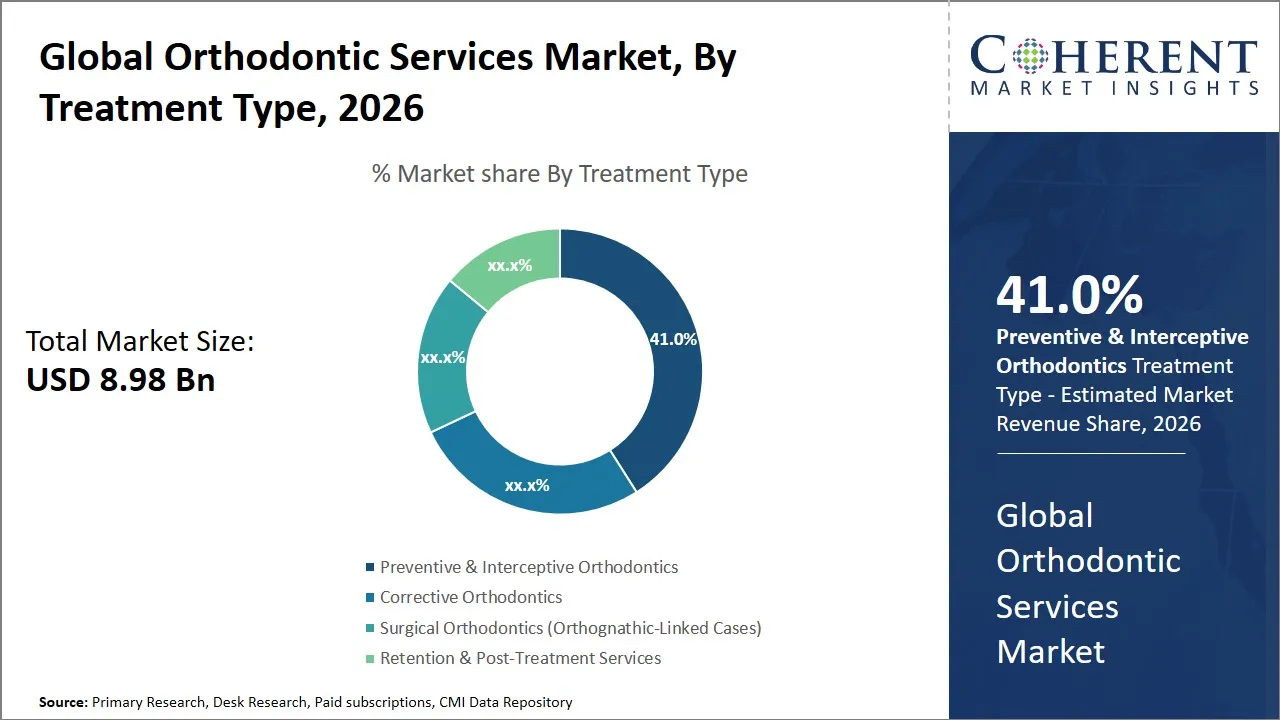
- Preventive & interceptive orthodontics segment is expected to lead the orthodontic services market, capturing 41% share in 2026.
- Pediatric (0–12 Years) segment is estimated to represent 39% of the orthodontic services market share in 2026.
- Mild malocclusion segment is projected to dominate with 49% of the global orthodontic services market share in 2026.
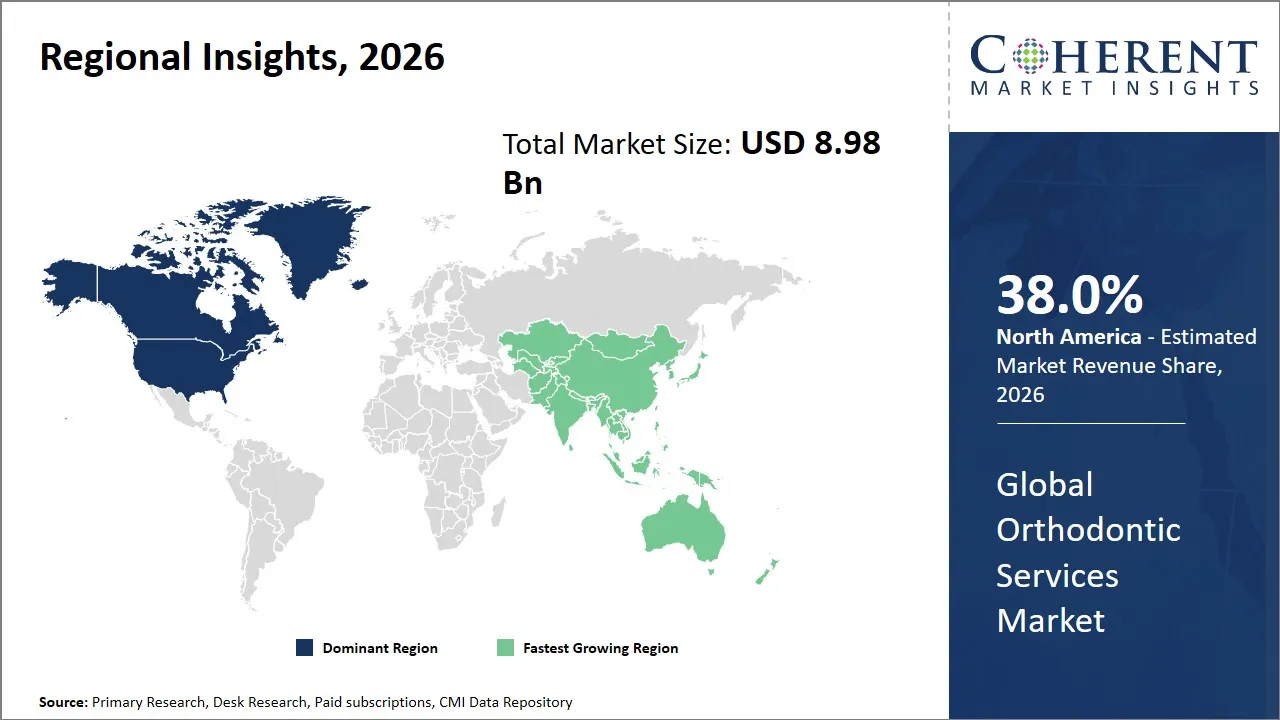
- North America is expected to lead the market, holding a share of 38% in 2026. Asia Pacific is anticipated to be the fastest-growing region, with 25% share in 2026.
Market Overview
- The orthodontic services market is experiencing steady global growth driven by increasing dental treatment demand and expanding patient awareness.
- Rising preference for aesthetic dentistry, particularly among adults seeking discreet smile correction, is a major growth driver.
- Clear aligners are gaining significant traction, which is shifting demand away from traditional metal braces
- Expansion of orthodontic service organizations and multi-site clinic networks is strengthening scalability and operational standardization.
Currents Events and their Impact
Current Events | Description and its Impact |
Expansion of Clear Aligner Solutions into Pediatric Segment |
|
Rapid Adoption of AI-Driven Treatment Planning |
|
Segmental Insights
- Current Industry Events of 2026
- Market Size Estimation
- Regional Breakdown
- Competitive Landscape
- Customer Intelligence
- Segmental Analysis
- Pricing Analysis
- Key Market Drivers, Challenges & Future Trends
- Customized Insights Section
Why Does the Preventive & Interceptive Orthodontics Segment Dominate the Global Orthodontic Services Market in 2026?
The preventive & interceptive orthodontics segment is expected to hold the largest share of 41% in 2026, propelled by increasing emphasis on early diagnosis and intervention in dental health. This segment is concerned with the detection and correction of orthodontic problems at an early age of the dental growth, usually on children, to reduce or avoid further more serious treatments at an older age. The increased sensitivity of parents and caregivers to the value of early orthodontic care is a critical force behind the demand in the segment. Good habits like thumb sucking or tongue thrusting can be corrected at a young age, proper jaw development directed, and severe malocclusion avoided, making the treatment process more complex and expensive in the long term.
For instance, in September 2025, Smartee Denti-Technology announced the launch of its pediatric-focused clear aligner solutions, including Smartee Kinder, aimed at early interceptive orthodontic treatment for growing patients. The new protocol is designed to guide jaw development, address early-stage malocclusions, and reduce the likelihood of complex corrective procedures during adolescence.
Why Does the Pediatric (0–12 years) Segment Dominate the Global Orthodontic Services Market in 2026?
The pediatric (0–12 years) segment is expected to hold 39% share in 2026, owing to the growing recognition of the importance of managing dental development from a young age. The most common patients of orthodontic procedures are the pediatric patients who need to be directed through proper tooth eruption and jaw positioning at the vital stages of growth therefore this group of patients is the core focus of the global orthodontic care strategies.
The dominance in the pediatric segment is triggered by a number of reasons. It is worth noting that the awareness of parents on effects of dental alignment on long-term oral health and psychosocial development benefits has promoted early orthodontic visits. Today the parents are more active when it comes to consulting professionals when they notice some dental anomalies because they are aware that when the treatment is performed early enough, it is possible to avoid problems with functionality like speech disorders and chewing difficulties.
The Mild Malocclusion Segment Dominates the Global Orthodontic Services Market
The mild malocclusion segment is expected to hold the largest share of 49% in 2026, due to the high incidence of minor dental alignment issues such as crowding, spacing, and slight bite irregularities that often prompt initial orthodontic consultation. Cases of mild malocclusion are normally easier to diagnose and manage, hence are available to a larger range of populated base and play a significant role in the market volume.
The fact that the modern society places a greater focus on aesthetic values and preventive care is one of the main reasons why this segment is dominating. Patients who have more minor misalignments are more conscious and encouraged to use orthodontic solutions at an earlier age to improve the look of their smiles and avoid the development of more serious issues. The availability of less invasive and more comfortable treatment options, including clear aligners and removable appliances, has further lowered the threshold for patients considering correction of mild malocclusion.
Consumer Demographics and Lifestyle Trends Shaping Orthodontic Service Demand
- Adult Aesthetic-Focused Consumers- A large portion of the orthodontic has been captured by urban adults aged 25 - 45 who consider appearance, confidence, and professional image most important. The culture of smile aesthetics has become a lifestyle choice and not a clinical necessity, more than ever due to heightened exposure to social media, high-definition video communication, and the culture of personal branding. This group likes to have inconspicuous options like clear aligners and ceramic braces, appreciates shorter treatment times and they are more ready to pay high prices due to convenience, digital control and reliable results.
- Health-Conscious and Preventive-Oriented Families- Parents in middle- and upper-income families are getting more and more active on the subject of early orthodontic screening and preventive treatment of children. Increased awareness of the long-term benefits of oral health, and the availability of increased access to pediatric dental care, is leading to the increased initiation of treatment. Such a population is focused on the structured treatment programs, safety, and long-term value, which help to maintain the long-term demand of interceptive orthodontics and growth-stage corrective options.
Regional Insights
North America Orthodontic Services Market Analysis and Trends
The North America region is projected to lead the market with a 38% share in 2026, due a well-established healthcare infrastructure supported by widespread awareness of dental health and cosmetic orthodontic treatments. The availability of many special orthodontic clinics and the location of most of the major manufacturing companies like the Align Technology, Dentsply Sirona, and 3M Oral Care further help in establishing the strong market position of the region.
The healthcare policies taken by the government, insurance provision on orthodontic procedures, as well as the technological development of clear aligners and digital orthodontics have further enhanced the market growth. Also, the trade dynamics in North America is favorable to the innovation of orthodontic devices because of the high intellectual property laws and good regulatory environment that promotes innovativeness and patient safety.
For instance, in November 2025, Smile Doctors LLC announced the expansion of its national orthodontic network to over 560 locations across 36 states, solidified by the acquisitions of True Smile Orthodontics and Pendleton Orthodontics in Texas, U.S. These additions strengthen the company's position as the largest orthodontic support organization (OSO) in the U.S., leveraging a shared infrastructure to improve supplier relationships and operational efficiency.
Asia Pacific Orthodontic Services Market Analysis and Trends
The Asia Pacific region is expected to exhibit the fastest growth in the orthodontic services market contributing 25% share in 2026, due to increasing urbanization, rising disposable incomes, and growing awareness of dental aesthetics. There is an increased demand of orthodontic services in countries such as China, India, Japan, and South Korea due to an increasing number of young people who are interested in cosmetic dental services.
Market expansion is also encouraged by the growing number of dentists, greater government programs relating to oral health awareness, and the foreign direct investment in healthcare facilities. The active companies, both local and multinational, like Straumann Group, Ormco and local dental chains are actively exploiting this expansion by means of partnerships, new clinic set-ups, and tailor-made treatment services.
Global Orthodontic Services Market Outlook for Key Countries
How is the U.S. Helping in the Growth of the Orthodontic Services Market?
The U.S. is the leader in the orthodontic services market driven by the development of the health care infrastructure and patient satisfaction with the orthodontic treatments, especially aesthetic orthodontic treatment, Invisalign. Align Technology, 3M Oral Care, and Henry Schein are the key players in the market that control the market through constant product innovations and large distribution channels.
The nation enjoys positive insurance policies, awareness campaigns about the need of using orthodontic care, and the fast uptake of technology, which prompts both adults and adolescents to undergo orthodontic care. New medical devices have regulatory assistance that enables an environment that promotes innovation and development.
How is China Helping in the Growth of the Orthodontic Services Market?
The orthodontic services market in China is expanding at a high rate due to the increasing number of middle-income population and the creation of more emphasis in dental health education. The market is defined by the increasing investments of both local and international companies such as Straumann, Dentsply Sirona, and local ones such as Perfect Dental. The accessibility of dental care and the initiatives created by government to enhance the excellence of healthcare are leading to the rise of orthodontic services, particularly in Tier 1 and Tier 2 cities. The growing consumer demand and penetration of the market are driven by the rising number of sophisticated orthodontic technologies and low-cost treatment.
Key Drivers for the Growth of the Japan Orthodontic Services Market
The mature healthcare system and the strong demand of the advanced technology orthodontic treatments make Japan dominate the Asia Pacific orthodontic services market. The focus on quality care provision and aging population that looks into corrective dental care solutions in the country helps in the uninterrupted market penetration. Dentsply Sirona and GC Corporation are the companies that are important in the introduction of the latest orthodontic tools and materials. The strict regulatory environment in Japan creates standards of high quality of orthodontic treatment, and the sufficient purchasing power maintains the pace in the market.
India Orthodontic Services Market Trends
The market of orthodontic services in India can be characterized by fast growth as there is a significant number of young people with a rising interest in oral aesthetics and oral health. Demand is pushed by the increasing number of independent dental clinics and chains and the government campaigns to raise oral healthcare awareness. MNCs such as Straumann and Ormco partner with local providers to infiltrate the Tier 1 and Tier 2 cities to provide affordable orthodontic services. The gradual advancements in healthcare facilities, increased access, and increased consumer desire to spend on orthodontic treatment support the market.
Regional Orthodontic Services Market Dynamics and Adoption Trends
| Region | Awareness Level | Adoption Rate | Key Drivers | Market Maturity |
| North America | Very High | High | Strong aesthetic demand, high disposable income, insurance penetration, advanced digital orthodontics | Mature |
| Europe | High | Moderate to High | Growing adult orthodontics, public oral health programs, rising aligner preference | Mature to Developing |
Asia Pacific | Moderate to High (Urban), Low (Rural) | Moderate and Rapidly Growing | Rising middle class income, social media influence, expanding private dental chains | Developing but Fast Growing |
Market Players, Key Developments, and Competitive Intelligence
Key Developments
- On February 4, 2026, Align Technology announced its fourth quarter and full-year 2025 financial results, reporting continued global demand for its Invisalign clear aligner systems and sustained expansion of its digital orthodontic ecosystem.
- In September 2025, Smartee Denti-Technology announced the launch of its pediatric-focused clear aligner solutions, Smartee Kinder and Smartee Teen, in the Australian market. The new product lines are specifically designed to address early-stage orthodontic intervention in children and adolescents, targeting interceptive and growth-modification treatment phases.
- In August 2025, Angelalign Technology reported introducing new product solutions focused on early orthodontic treatment and enhanced consultation/monitoring tools, supported by collaborations with research institutions.
Top Strategies Followed by Global Orthodontic Services Market Players
Player Type | Strategic Focus | Examples |
Established Market Leaders | Established leaders in the orthodontic services market sustain dominance through continuous R&D investment in advanced materials, digital workflows, and AI driven treatment systems. They strengthen their competitive edge by forming strategic alliances across the dental ecosystem, optimizing global supply chains, and expanding into emerging markets through acquisitions and partnerships. | Align Technology, which consistently invests in digital orthodontics, expands its Invisalign portfolio, and grows internationally through technology integration and strategic market expansion initiatives. |
Mid-Level Players | Mid-level players in the orthodontic services market compete by offering affordable yet clinically reliable solutions, targeting price sensitive consumers who seek value without premium pricing. They streamline manufacturing, use standardized treatment protocols, and form strategic partnerships with regional clinics or technology providers to expand capacity and improve cost efficiency. | Angelalign Technology provides competitively priced clear aligner solutions across Asia and other international markets, balancing affordability with digital treatment planning capabilities. |
Small-Scale Players | Small scale players in the orthodontic services market compete by focusing on niche, high value segments rather than mass volume models. They leverage technologies such as 3D printing and AI based treatment planning to offer highly customized solutions, including pediatric early intervention, lingual braces, or complex case aligners. | LightForce Orthodontics differentiates itself through fully customized 3D printed bracket systems tailored to individual patient anatomy, positioning itself as a precision focused alternative to conventional bracket manufacturers. |
Market Report Scope
Orthodontic Services Market Report Coverage
| Report Coverage | Details | ||
|---|---|---|---|
| Base Year: | 2025 | Market Size in 2026: | USD 8.98 Bn |
| Historical Data for: | 2020 To 2024 | Forecast Period: | 2026 To 2033 |
| Forecast Period 2026 to 2033 CAGR: | 12.5% | 2033 Value Projection: | USD 20.48 Bn |
| Geographies covered: |
| ||
| Segments covered: |
| ||
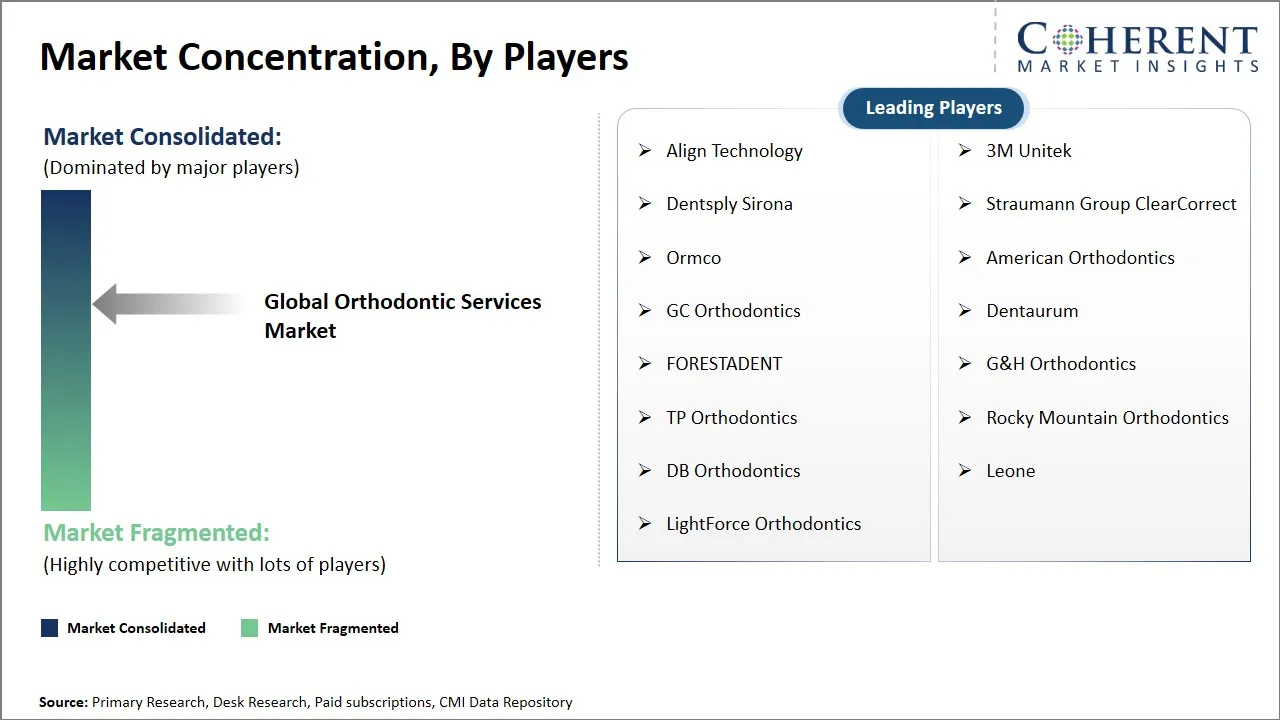
| Companies covered: | Align Technology, 3M Unitek, Dentsply Sirona, Straumann Group ClearCorrect, Ormco, American Orthodontics, GC Orthodontics, Dentaurum, FORESTADENT, G&H Orthodontics, TP Orthodontics, Rocky Mountain Orthodontics, DB Orthodontics, Leone, and LightForce Orthodontics | ||
| Growth Drivers: |
| ||
| Restraints & Challenges: |
| ||
Global Orthodontic Services Market Dynamics
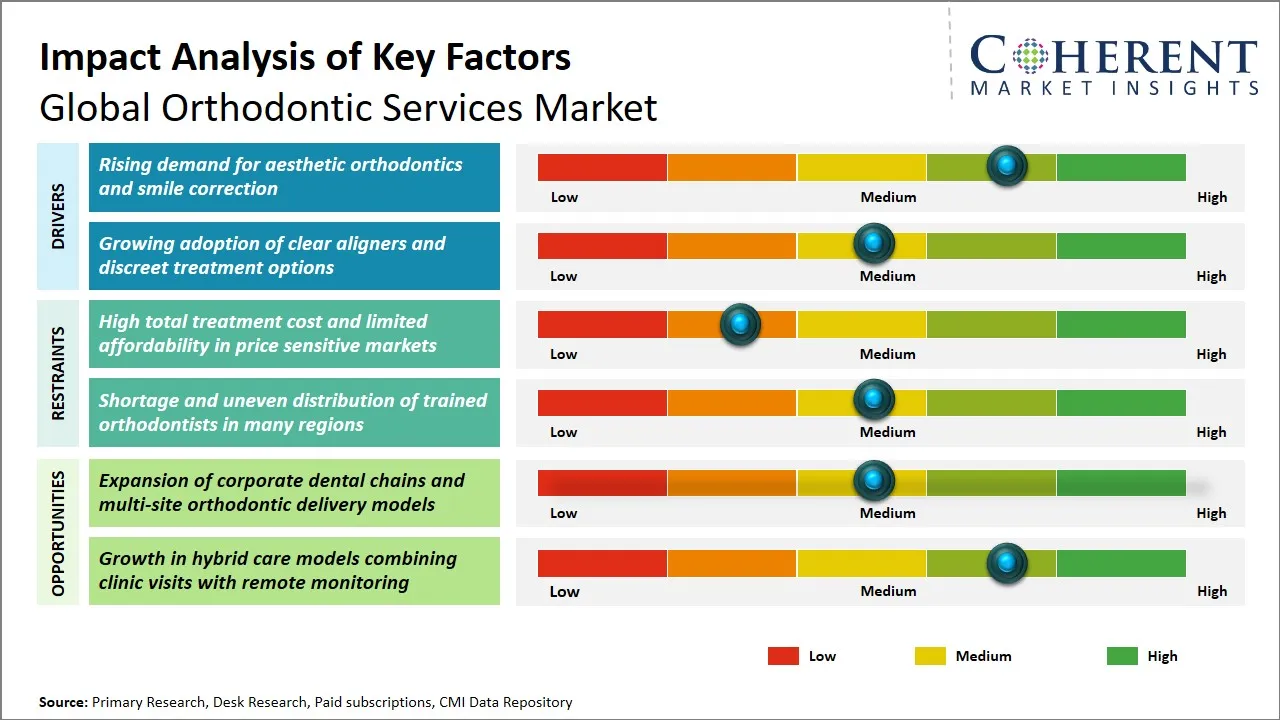
Orthodontic Services Market Driver - Rising Demand for Aesthetic Orthodontics and Smile Correction
Growing concern over personal appearance and increasing awareness of dental aesthetics are significantly driving demand for aesthetic orthodontic procedures across global markets. Consumers today are increasingly conscious of their smile aesthetics and overall facial appearance, driving a clear shift away from traditional metal braces toward more discreet and visually appealing alternatives such as clear aligners, ceramic braces, and lingual braces. This has particularly been the tendency among the adult population who want to undergo orthodontic treatment without losing their professional or social identity. Also, the emergence of the social media and the popularity of celebrities who showcase the ideal smiles are other factors that pushes people to spend on the orthodontic services.
For instance, in December 2025, Align Technology announced the commercial availability of its Invisalign System with mandibular advancement featuring occlusal blocks in select international markets, including Thailand, broadening treatment options for Class II malocclusions in growing patients and reinforcing global demand for its clear aligner solutions. The expanded product offering aims to combine aesthetic smile correction with functional bite correction, supporting broader clinical adoption of Invisalign treatments worldwide.
Orthodontic Services Market Opportunity - Expansion of Corporate Dental Chains and Multi-site Orthodontic Delivery Models
The well-known orthodontic services business across the globe has a lot to gain due to the further growth of the corporate dental chains and opening of the models of the multi-sites’ orthodontic delivery. These groups take advantage of economies of scale, efficient operational procedures, and uniformity of treatment regimens, which has facilitated the accessibility of orthodontic services in a wide geographical area. Dental chains usually use a lot of money in superior technologies, training, and promotional plans that increase the number of patients and consequently growth in the market. Multi-site models enable centralization of resources like high-end diagnostic equipment, digital imaging equipment, and cutting-edge orthodontic devices where care is always high quality and of high quality at several locations.
For instance, in February 2025, Aspen Dental Management, Inc. announced the appointment of Dr. Mindy J. Streem as its Director of Orthodontic Support, a key move to enhance its orthodontic services and clear aligner offerings across its nationwide network of branded dental locations. Dr. Streem’s role will focus on elevating clinical training and support for providers as Aspen Dental expands patient access to orthodontic care in its more than 1,000 practices across the U.S.
Analyst Opinion (Expert Opinion)
- The market of orthodontic services is steadily growing, with the increase in aesthetic care, the increase in the number of adult patients, and the fast pace of introducing digital technologies in the field of intraoral scanning, artificial intelligence-based treatment planning, and remote monitoring. The treatment base is being expanded by early awareness of interceptive care and increased disposable incomes in the emerging economies. Nevertheless, expensive treatment, inadequate coverage of reimbursement, and the lack of qualified orthodontists remain the barriers to full market penetration. The best growth opportunities are in hybrid care model, expansion of corporate dental chains, and workflow optimization technology.
- The biggest orthodontic conferences like the American Association of Orthodontists Annual Session, International Orthodontic Congress and IDS Cologne have expedited the dissemination of knowledge globally and presented the newest orthodontic technologies. The strategic consolidation and geographic expansion are manifested in recent launches of aligners in Asia Pacific through small companies and further expansion of large orthodontic service organizations in North America through acquisitions. Long term treatment volumes will also be supported by public oral health programs that aim at getting early screening, which has an overall positive look of the market.
Speak to the analyst
Want personalized insights?
Take the findings above to one of our principal consultants, or have the report rebuilt around the segments, geographies and competitors you actually track.
Market Segmentation
- Treatment Type Insights (Revenue, USD Bn, 2021 - 2033)
- Preventive & Interceptive Orthodontics
- Corrective Orthodontics
- Surgical Orthodontics (Orthognathic-Linked Cases)
- Retention & Post-Treatment Services
- Age Group Insights (Revenue, USD Bn, 2021 - 2033)
- Pediatric (0–12 Years)
- Adolescent (13–17 Years)
- Adult (18–40 Years)
- Mature Adult (Above 40 Years)
- Case Complexity Insights (Revenue, USD Bn, 2021 - 2033)
- Mild Malocclusion
- Moderate Malocclusion
- Severe/Complex Cases
- Syndromic & Craniofacial Cases
- Service Delivery Setting Insights (Revenue, USD Bn, 2021 - 2033)
- Independent Orthodontic Clinics
- Multi-Specialty Dental Clinics
- Dental Hospitals
- Academic & Teaching Institutions
- Corporate Dental Chains / DSOs
- Technology Adoption Level Insights (Revenue, USD Bn, 2021 - 2033)
- Conventional Orthodontic Treatment
- Digital Orthodontics
- 3D Scanning
- CAD/CAM Treatment Planning
- AI-Based Treatment Planning
- Remote Monitoring / Teledentistry-Based Orthodontics
- Payment Model Insights (Revenue, USD Bn, 2021 - 2033)
- Private Pay (Out-of-Pocket)
- Private Dental Insurance
- Public / Government Reimbursement
- Subscription-Based / EMI Models
- Treatment Duration Insights (Revenue, USD Bn, 2021 - 2033)
- Short-Term (≤12 Months)
- Medium-Term (13–24 Months)
- Long-Term (24 Months)
- End User Decision Driver Insights (Revenue, USD Bn, 2021 - 2033)
- Medical Necessity
- Aesthetic Enhancement
- Functional Improvement
- Combined Functional & Aesthetic
- Regional Insights (Revenue, USD Bn, 2021 - 2033)
- North America
- U.S.
- Canada
- Latin America
- Brazil
- Argentina
- Mexico
- Rest of Latin America
- Europe
- Germany
- U.K.
- Spain
- France
- Italy
- Russia
- Rest of Europe
- Asia Pacific
- China
- India
- Japan
- Australia
- South Korea
- ASEAN
- Rest of Asia Pacific
- Middle East
- GCC Countries
- Israel
- Rest of Middle East
- Africa
- South Africa
- North Africa
- Central Africa
- North America
- Key Players Insights
- Align Technology
- 3M Unitek
- Dentsply Sirona
- Straumann Group ClearCorrect
- Ormco
- American Orthodontics
- GC Orthodontics
- Dentaurum
- FORESTADENT
- G&H Orthodontics
- TP Orthodontics
- Rocky Mountain Orthodontics
- DB Orthodontics
- Leone
- LightForce Orthodontics
Sources
Primary Research Interviews
Industry Stakeholders
- American Association of Orthodontists
- World Federation of Orthodontists
- Dental Service Organizations executives
- Orthodontic clinic owners and practice directors
- Dental technology and CAD CAM system manufacturers
- Dental insurance providers and reimbursement specialists
End Users
- Licensed orthodontists
- General dentists providing orthodontic services
- Pediatric dentists
- Adult orthodontic patients
- Adolescent orthodontic patients
- Dental clinic administrators
Government and International Databases
- World Health Organization
- Centers for Disease Control and Prevention
- National Institutes of Health
- Organisation for Economic Co-operation and Development Health Data
- World Bank Data
- Eurostat
Trade Publications
- Orthodontic Products
- Dental Tribune International
- Inside Dentistry
- Compendium of Continuing Education in Dentistry
- British Dental Journal News
- Dentistry Today
Academic Journals
- American Journal of Orthodontics and Dentofacial Orthopedics
- Angle Orthodontist
- European Journal of Orthodontics
- Journal of Clinical Orthodontics
- Progress in Orthodontics
- BMC Oral Health
Reputable Newspapers
- The Wall Street Journal
- Financial Times
- The New York Times
- The Guardian
- The Economic Times
- The Washington Post
Industry Associations
- American Dental Association
- FDI World Dental Federation
- International Association for Dental Research
- British Orthodontic Society
- Australian Society of Orthodontists
- Canadian Association of Orthodontists
Public Domain Resources
- ClinicalTrials.gov
- MedlinePlus
- U.S. Food and Drug Administration Database
- European Medicines Agency Database
- National Health Service UK Statistics
Proprietary Elements
- CMI Data Analytics Tool: Proprietary analytics tool to analyze real-time market trends, consumer behavior, and technology adoption in market
- Proprietary CMI Existing Repository of Information for Last 8 Years
Get access to 250+ pages report
Every segment, forecast, competitor profile and data table behind the analysis above — available for instant download.
- ESOMAR Member
- ISO 9001:2015 Certified
- D-U-N-S Registered
- GDPR & CCPA Compliant
Missing comfort of reading report in your local language? Find your preferred language:
Transform your Strategy with Exclusive Trending Reports
Frequently Asked Questions
The global orthodontic services market is estimated to be valued at USD 8.98 billion in 2026 and is expected to reach USD 20.48 billion by 2033.
The CAGR of the global orthodontic services market is projected to be 12.5% from 2026 to 2033.
Rising demand for aesthetic orthodontics and smile correction and growing adoption of clear aligners and discreet treatment options are the major factors driving the growth of the global orthodontic services market.
High total treatment cost and limited affordability in price sensitive markets and shortage and uneven distribution of trained orthodontists in many regions are the major factors hampering the growth of the global orthodontic services market.
Digital technologies are transforming orthodontic service delivery by enabling precise intraoral scanning (replacing traditional impressions), CAD/CAM-based treatment planning and appliance fabrication, and teledentistry platforms for remote monitoring and reduced clinic visit frequency, which together improve accuracy, speed, patient experience, and practice efficiency.
Average treatment duration varies by case complexity: mild cases typically require 6–12 months, moderate cases 12–18 months, and severe/complex cases often 18–36+ months depending on biomechanics and patient compliance.
In terms of treatment type, the preventive & interceptive orthodontics segment is estimated to dominate the market revenue share in 2026.