

Global Oxygen Flow Meters Market Size and Forecast – 2026 To 2033
The global oxygen flow meters market is expected to grow from USD 1.42 Bn in 2026 to USD 2.31 Bn by 2033, registering a compound annual growth rate (CAGR) of 7.2% from 2026 to 2033. The global market for oxygen flow meters is poised for significant expansion, fueled by the soaring burden of chronic respiratory disorders such as chronic obstructive pulmonary disease (COPD), asthma, and pulmonary fibrosis.
According to the World Health Organization, chronic respiratory diseases (CRDs) are among the most common noncommunicable diseases (NCDs), and are the sixth leading cause of death in the WHO European Region, with almost 400,000 deaths every year, and nearly 80% of these deaths are caused by chronic obstructive pulmonary disease (COPD).
(Source: World Health Organization)
Key Takeaways of the Global Oxygen Flow Meters Market
- Thorpe tube flow meters are projected to hold 46.8 % of the global oxygen flow meters market share in 2026, making it dominant product type segment, throughout North America where hospitals and centralized medical gas systems rely heavily on precision medical grade oxygen delivery devices for both acute and long-term respiratory therapy needs. For instances, Cleveland Clinic and Case Western Reserve University announced a study to forecast the medical gas consumption of surge requirements to maintain continuous oxygen supply and manage ventilation during intensive hospital utilization. The research found that oxygen demand could soar with patient influx, especially in hospitals’ intensive care or respiratory treatment units, which required hospitals to forecast their medical gas consumption accurately and build up more robust central oxygen supply system to ensure uninterruptible patient therapy. (Source: American Association for Respiratory Care)
- Oxygen therapy is projected to hold 38.6 % of the global oxygen flow meters market share in 2026, making it dominant application segment, across Asia Pacific due to the increasing cases of chronic respiratory diseases and accelerated adoption of at home respiratory cares. The increased use of supplemental oxygen for the treatment of chronic pulmonary disorders and emergency respiratory management is set to boost the segment growth. For instance, according to statistics published by the European Society of Medicine on chronic respiratory diseases in the World Health Organization South-East Asia Region, an estimated 84.03 million people in the region were affected by chronic respiratory diseases, representing a pooled prevalence rate of 4.8%. Chronic obstructive pulmonary disease accounted for 45.04 million cases and asthma for 40.31 million. (Source: European Society of Medicine)
- Hospitals are projected to hold 52.3 % of the global oxygen flow meters market share in 2026, making it dominant end user segment, throughout Europe, where the usage of respiratory care devices and oxygen-supported treatment infrastructure is optimally high. Rising hospital admit rates for respiratory conditions and the rapid growth of intensive care facilities are further boosting demand for oxygen flow meters in hospitals. For instance, according to Eurostat, in 2023, there were around 46.9-million-day case discharges in the EU and 68.2 million hospital discharges of in-patients, highlighting the extensive utilization of hospital-based treatment infrastructure across the region. (Source: Eurostat)
- North America market maintains dominance with an expected share of 34.2 % in 2026, bolstered by the widespread use of oxygen therapy delivery systems in hospital and home healthcare environments, robust respiratory care infrastructure, and growing use of advanced oxygen delivery devices. For instance, the Centers for Medicare & Medicaid Services (CMS) offers National Coverage Determination (NCD) of oxygen therapy equipment use in home under Medicare reimbursement. The coverage policy supports the long-term implementation of oxygen systems and respiratory care equipment within the home health realm of the U.S. healthcare system. (Source: Centers for Medicare & Medicaid Services)
- Asia Pacific is expected to exhibit the fastest growth with a contribution of 24.8 % share in 2026, driven by the rapid expansion of healthcare infrastructure, growing burden of respiratory disease, investment in key care facilities, and the increased use of portable oxygen therapy and respiratory monitoring systems in China, India and Japan. For instance, the Government of India is further expanding the health infrastructure for critical care and oxygen-supported healthcare through the PM- Ayushman Bharat Health Infrastructure Mission (PM-ABHIM) to enhance capacity for emergency respiratory management and oxygen-supported healthcare around the country. (Source: Department of Health Research)
- Increasing Demand for Precision Oxygen Delivery in Critical Care Settings: As administrative precaution in intensive care units, neonatal units, and during emergency respiratory therapy is putting much more importance on careful oxygen administration, demand for more accurate oxygen flow meters is growing. Higher fidelity flow regulation units are gaining much more keeping against the wastage of oxygen and as a safe method against patients' respiratory therapy.
- Expansion of Medical Gas Pipeline Infrastructure Across Healthcare Facilities: Increasing investment in common hospital wide piped medical gases applications such as centralized medical gas pipelines in hospitals, such as specialty clinics, and operating theaters are opening prospects for oxygen flow meters into hospitals. Modern sources of oxygen flow monitoring are found being increasingly installed together with other medical gas systems to control respiratory care and operation safety, and sustained supply oxygen needs in critical healthcare facilities.
Segmental Insights
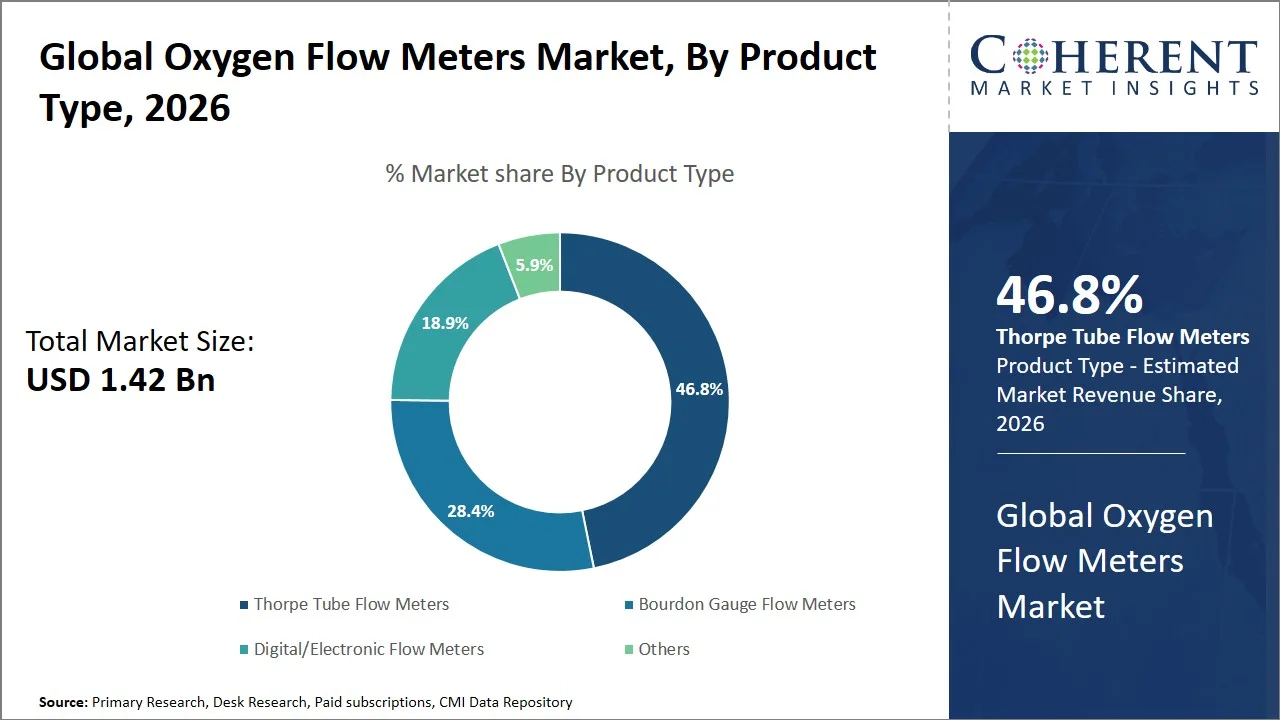
Why Do Thorpe Tube Flow Meters Dominate the Global Oxygen Flow Meters Market?
Thorpe tube flow meters are projected to hold the market share of 46.8% in 2026, owing to their significant measurement precision, straight forward operation, favorable pricing and popular usage in hospitals, emergency wards and home oxygen therapy settings. Flow adjustment rates of 1 liter/hour, easy view of flow readings, significant usage in conjunction with centralized medical gas systems and other factors, make thorpe tube flow meters a primary choice for administering continuous flow of oxygen. Moreover, the rise of demand for long-term oxygen treatment and improvements in respiratory care infrastructure are contributing to the segment's leading position across the globe. For instance, Ohio Medical's thorpe tube oxygen flowmeters are intended for accurate oxygen flow and line pressures from centralized hospital and critical care medical gas systems. The product line emphasizes accurate oxygen flow, dependable operational reliability and efficiency in respiratory care. (Source: Ohio Medical)
- Current Industry Events of 2026
- Market Size Estimation
- Regional Breakdown
- Competitive Landscape
- Customer Intelligence
- Segmental Analysis
- Pricing Analysis
- Key Market Drivers, Challenges & Future Trends
- Customized Insights Section
Why Does Oxygen Therapy Represent the Largest Application Segment in the Oxygen Flow Meters Market?
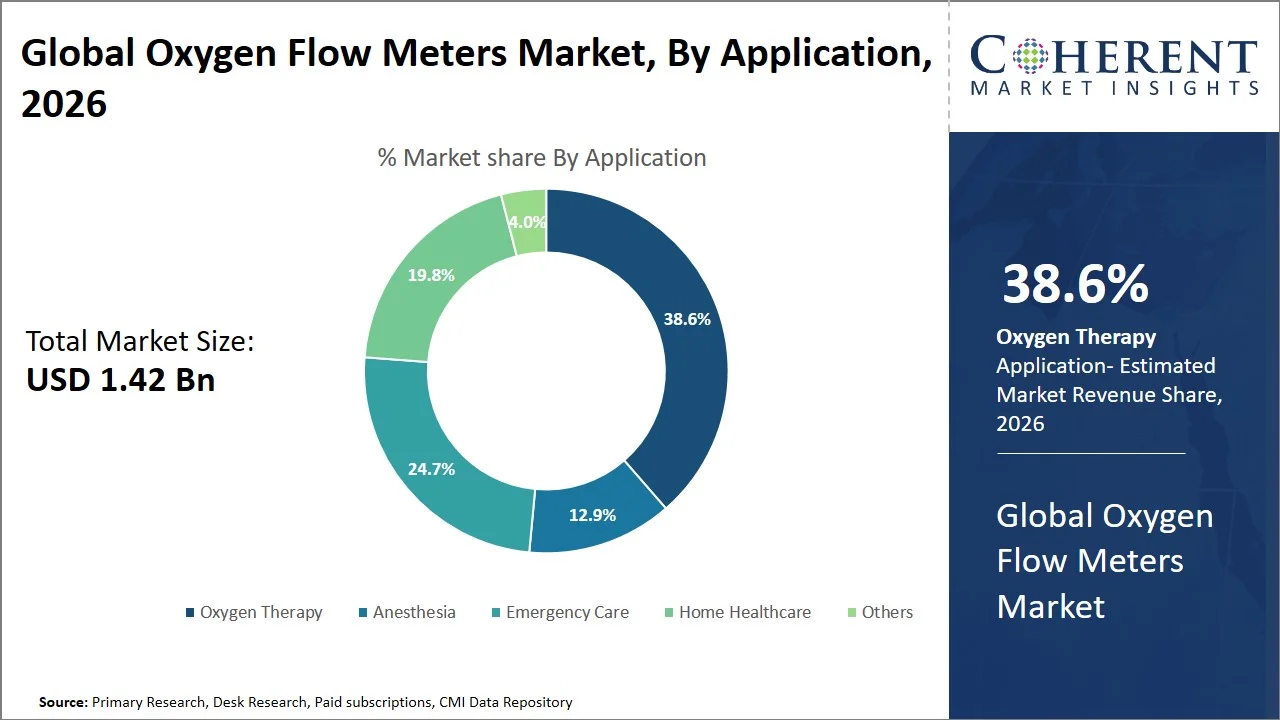
Oxygen therapy is projected to hold a market share of 38.6% in 2026, owing to the increasing use of supplemental oxygen to treat patients experiencing chronic respiratory failures, respiratory emergencies and post-surgical respiratory problems. Oxygen flow meters are used frequently to measure the flow of oxygen administered in the hospitals, intensive care units, and healthcare at homes for patients needing ongoing respiratory treatment. The growing use of long-term oxygen therapy and growing infrastructure of respiratory care is boosting segment growth globally. For instance, according to American Thoracic Society, more than 1.5 million adults in the U.S. use supplemental oxygen for a variety of respiratory disorders to improve their quality of life and prolong survival. (Source: American Thoracic Society)
Hospitals Segment Dominates the Global Oxygen Flow Meters Market
The hospitals segment is projected to hold a market share of 52.3% in 2026, on account of the widespread application of oxygen therapy systems in ICUs, surgical units, emergency departments, and respiratory care units. The need for efficient and uninterrupted provision of oxygen systems in hospitals for the treatment of critically ill patients, post-operative respiration, and chronic pulmonary disorder related interventions is boosting demand. The rise in hospital admission for respiratory disorders and investment in critical care units is propelling growth. For instance, according to statistics provided by Office for Health Improvement and Disparities, in the financial year ending 2025, there were 873,461 emergency admissions to hospital for respiratory disease in England, a rate of 1,442 per 100,000 population, a significant increase of 1.0% from the previous year. (Source: Office for Health Improvement and Disparities)
Currents Events and their Impact
Current Events | Description and its Impact |
European Union Strengthens Medical Device Oversight Under EU MDR (December 2025) |
|
Singapore Updates Regulatory Guidelines for AI-Enabled Medical Devices (December 2025) |
|
(Source: European Commission, Health Sciences Authority)
Oxygen Flow Meters Market Dynamics
Market Drivers
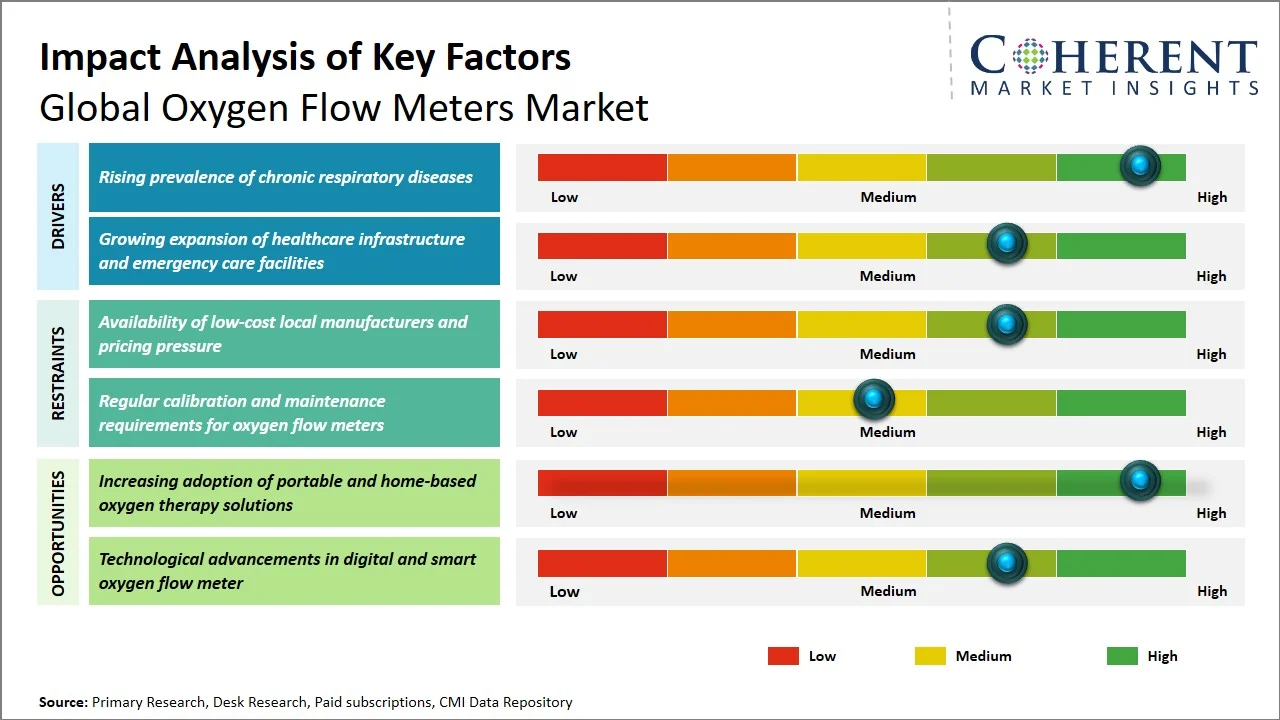
- Rising prevalence of chronic respiratory diseases: The global market for oxygen flow meters is growing at a rapid pace owing to the rising prevalence of chronic respiratory diseases including Chronic obstructive pulmonary disease (COPD), asthma, pulmonary fibrosis and sleep-related breathing disorders across the world. For instance, according to Centers for Disease Control and Prevention (CDC), Chronic obstructive pulmonary disease (COPD) is 1 of the top 10 causes of death in the United States. Nearly 16 million U.S. adults have COPD, while many do not know they have it (Source: Centers for Disease Control and Prevention). In addition, the rising prevalence of long-term oxygen therapy (LTOT) usage, increasing implementation of respiratory monitoring systems across healthcare systems, and ascending priority on patient safety and evidence-based oxygen administration practices are also fueling the demand for sophisticated oxygen flow meters worldwide.
- Growing expansion of healthcare infrastructure and emergency care facilities: The growing proliferation of hospitals and ICUs, emergency response centers and new ambulatory care units is fueling oxygen delivery and respiratory care equipment demand at the global level considerably. Oxygen flow meters are being predominantly integrated in emergency and intensive care units widely for effective oxygen administration and monitoring. Besides, burgeoning expenditure going into both healthcare infrastructure and respiratory care overhauling is further promoting the use of advanced oxygen flow meters. For instance, in April 2026, Apollo Hospitals announced the inauguration of its 76th hospital under Nextgen infrastructure expansion plans in India, to enhance critical care capacity, emergency services and respiratory infrastructure to enable higher doses of deployment of oxygen therapy and monitoring devices. (Source: Apollo Hospitals)
Emerging Trends
- Rising Adoption of Portable and Home-Based Oxygen Therapy Devices: As the trend moves toward home-based and long-term care for respiratory patients accelerates, the portable oxygen flow meters with smaller, lighter form factors are more demanded. The easy-to-use oxygen delivery devices enabling mobile, remote devices management and 24/7 oxygen care outside hospitals are becoming popular with healthcare providers and users.
- Integration of Digital Monitoring and Smart Oxygen Flow Technologies: To ensure precise oxygen delivery to the patient, an increasing number of manufacturers are launching newer digital oxygen flow meters with automated flow control, alarms, and monitoring system. Industry is experiencing a rise in deployment of smart respiratory care solutions that enhance connected oxygen therapy management at hospitals and critical care facilities.
Regional Insights
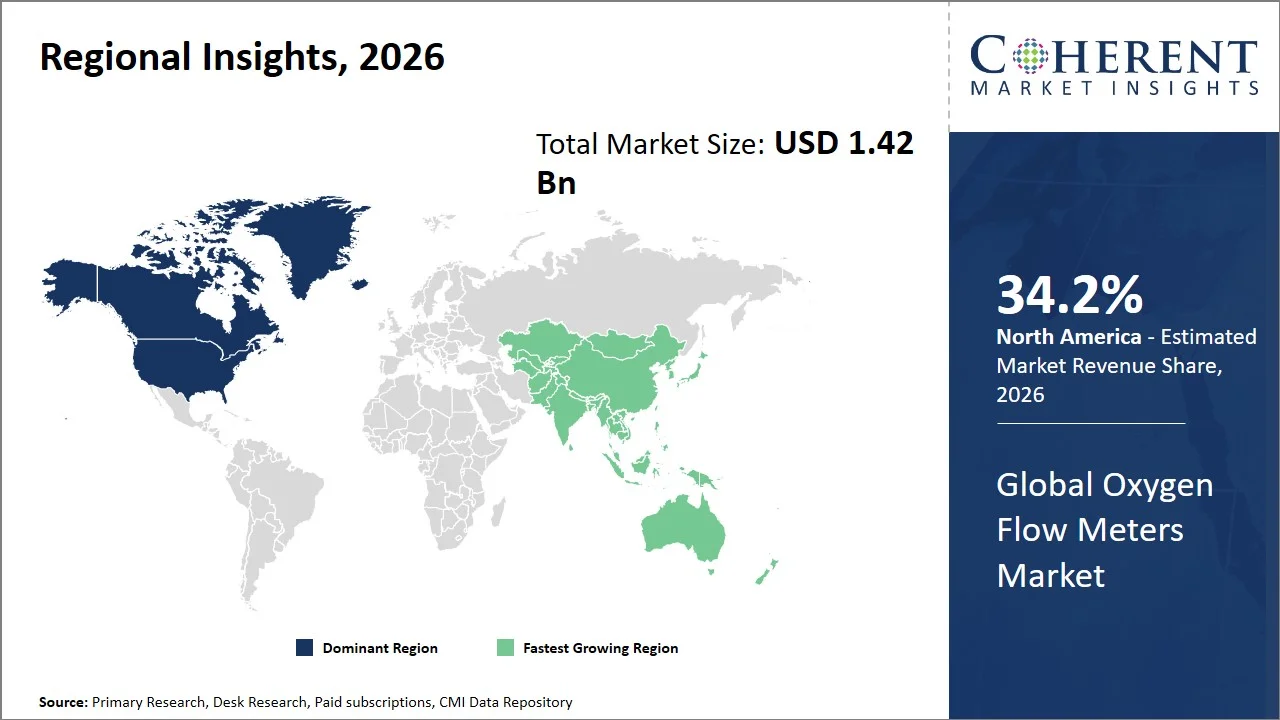
Why is North America a Strong Market for Oxygen Flow Meters?
North America leads the global oxygen flow meters market, accounting for an estimated 34.2% share in 2026, attributed to the extensive use of oxygen therapy systems at hospitals, emergency care units, ambulatory care facilities as well as in-home healthcare settings. The region has a well-developed respiratory care infrastructure, high penetration of portable oxygen therapy devices, and a presence of global respiratory devices players working towards offering precision-based oxygen delivery equipment. Moreover, the growing incidence of lung diseases, such as COPD (Chronic Obstructive Pulmonary Disease), sleep apnea, and asthma, is also expected to significantly contribute towards driving demand for technologically advanced oxygen flow meters in the region.
In addition, the U.S and Canadian markets are being fueled by the increasing preference for home-based respiratory therapy and long-term oxygen therapy treatment. At the same time, patient's safety, innovation and advanced quality controls are increasingly ensured by the strict regulations and quality standards. For instance, in February 2026, the U.S Food and Drug Administration (FDA) amended for Medical Devices Quality Management System Regulation (QMSR), which standardized 21/27 CFR Part 820 with 13485:2016 aspects to improve quality management and manufacturing compliance of medical devices. (Source: Food and Drug Administration)
Why Does Asia Pacific Oxygen Flow Meters Market Exhibit High Growth?
The Asia Pacific oxygen flow meters market is expected to exhibit the fastest growth with an estimated contribution of 24.8% share to the global market in 2026, attributed to booming healthcare infrastructure, surging burden of respiratory diseases, and growing acceptance of oxygen therapy systems in hospitals and home healthcare settings. Countries like China, India and Japan are observing a rising demand for portable and digitally integrated respiratory care products driven by the growing healthcare spending and enlarging critical care population. Additionally, Asia Pacific has a stronghold of indigenous medical device manufacturers specializing in affordable oxygen delivery products and respiratory parameter monitoring solutions.
Additionally, supporting regulatory process and advances in healthcare modernization initiatives are also fuelling the market growth across Asia Pacific. For instance, in December 2025, the National Medical Products Administration of China (NMPA, formerly known as CFDA) issued updated regulations concerning GMP for medical devices to improve the quality of medical device manufacturing, safety management, and standard of regulation (Source: National Medical Products Administration). Such initiatives are expected to promote the greater use of sophisticated respiratory medicine and oxygen therapy devices within the region.
Global Oxygen Flow Meters Market Outlook for Key Countries
Why is the U.S. Leading Innovation and Adoption in the Oxygen Flow Meters Market?
The U.S. is at the forefront of innovation and adoption in the oxygen flow meters market attributed to an increase in the number of healthcare institutions, ambulatory care centers, and home healthcare systems adopting sophisticated respiratory care systems. The presence of large number of key respiratory device manufacturing companies (such as Inogen Inc., Precision Medical Inc., Allied Healthcare Products Inc., and Medtronic plc) committed towards designing digital and portable oxygen flow management products with greater accuracy and monitoring features have catalyzed the growth of oxygen flow meters market in the U.S. Further, high number of patients requiring prolonged oxygen therapy (more than 1.5 million adults in the U.S. receive supplemental oxygen therapy annually, according to the American Thoracic Society) and rising home healthcare expenditure (U.S. home healthcare spending exceeded USD 145 billion in 2023, according to the Centers for Medicare & Medicaid Services) is further substantiating the growth of technologically advanced oxygen flow meters market within the country.
Is Japan a Favorable Market for Oxygen Flow Meters?
Japan is among the lucrative markets for oxygen flow meters, owing to the increasing healthcare infrastructure, rising prevalence of respiratory illnesses (more than 5.3 million people in Japan are estimated to suffer from chronic obstructive pulmonary disease (COPD), according to the Japanese Respiratory Society), and high penetration of advanced respiratory care technologies. Japan's thriving medical device manufacturing industry (such as Terumo Corporation, Nihon Kohden Corporation, Omron Healthcare, and Nipro Corporation) has been leading the development of sophisticated respiratory monitoring and oxygen management devices. Moreover, mounting geriatric healthcare requirements at homes and the escalating adoption of chronic respiratory therapy devices are projected to supplement the demand for portable & digitally connected oxygen flow meters at Japan.
Is China Emerging as a Key Growth Hub for the Oxygen Flow Meters Market?
China is considered as the emerging growth market for oxygen flow meters owing to factors such as increase in hospital infrastructure leading to increased demand for respiratory care devices, increasing large scale manufacturing capabilities for respiratory care devices, and increasing demand for oxygen delivery and respiratory monitoring devices from large number of secondary and tertiary hospitals. The country has well established medical device manufacturing infrastructure in place to cater to large scale production requirements owing to higher demand. Moreover, the increasing percentage of people suffering from chronic respiratory diseases (more than 100 million patients suffering from respiratory diseases in China accounted by the National Health Commission of China) is further augmenting the demand for oxygen delivery and respiratory monitoring devices.
Why Does Germany Top the European Oxygen Flow Meters Market?
Germany is the leader in the European market for oxygen flow meters led by the presence of high diversified developed healthcare infrastructure along with the effectiveness of well-established respiratory care devices manufacturing units and their extensive requirement in the hospitals and critical care institutions across Germany. The established medical devices manufacturing plants particularly in the segment of progressive oxygen administration and respiratory care units are the key operational institutions led by companies like (such as Drgerwerk AG, Heyer Medical AG, Lwenstein Medical and WEINMANN Emergency Medical Technology) across Germany. Moreover, the rising acceptance for home healthcare services along with the extensive management of chronic respiratory diseases is accentuating the demand of portable and digitally integrated oxygen flow meters.
Is Oxygen Flow Meters Market Developing in India?
India is emerging as a lucrative market for oxygen flow meters owing to rapid healthcare infrastructure growth, rising installation of oxygen therapy, implementation of advanced respiratory care and breathing devices on hospitals and home healthcare basis. Rising domestic manufacturing, advanced medical oxygen equipments industries (such as Allied Medical Limited, BPL Medical Technologies, Nice Neotech Medical Systems and SS Technomed) will further contribute to this growth. Factors such as increasing population burden of respiratory related problems (India have almost 55 million COPD patients, according to Indian Chest Society), increasing healthcare expenditure and emerging new hospitals, critical care and emergency healthcare system are expected to propel the demand for oxygen flow meters.
Regulatory Landscape Governing the Global Oxygen Flow Meters Market
Region | Authority & Classification | Approval Pathway | Key Regulatory Insight |
North America | U.S. Food and Drug Administration (FDA) – Class II Medical Device | FDA 510(k) Clearance | Compliance with U.S. FDA quality system regulations, oxygen delivery safety standards, and medical gas equipment performance requirements is mandatory for commercialization. |
Europe | European Medicines Agency (EMA) / European Commission MDR Framework – Class IIa Medical Device | CE Marking under EU MDR | Manufacturers must comply with EU Medical Device Regulation (MDR), clinical evaluation, and product safety and performance standards for respiratory care devices. |
Asia Pacific | National Medical Products Administration (NMPA), China / Pharmaceuticals and Medical Devices Agency (PMDA), Japan | Country-specific medical device registration and approval | Increasing regulatory harmonization and strengthening medical device quality standards are supporting market entry opportunities across Asia Pacific. |
Latin America | ANVISA, Brazil / COFEPRIS, Mexico | National medical device registration and import approvals | Regulatory authorities are emphasizing product quality certification, labeling compliance, and safety validation for imported respiratory care equipment. |
Middle East & Africa | Saudi Food and Drug Authority (SFDA) / South African Health Products Regulatory Authority (SAHPRA) | Regional medical device licensing and conformity approvals | Growing regulatory modernization and healthcare infrastructure investments are improving adoption of certified oxygen therapy and respiratory monitoring devices. |
How are the technological advancements in digital and smart oxygen flow meter creating new growth opportunities in the oxygen flow meters market?
Technical developments in digital and smart oxygen flow meters are resulting in significant market expansion prospects across the global oxygen flow meters market, owing to their potential for such advanced features as precision oxygen delivery, continuous respiratory monitoring, and remote management of patient's health condition in hospital and home care settings. These devices are increasingly being embedded with digital displays, automated flow controls, pressure- monitoring alarms, and wireless connectivity for enhanced reliability and patient safety, and reduced oxygen wastage in critical care and long-term oxygen therapy applications. Rising trend towards non-invasive portable oxygen therapy devices and growing number of home healthcare alternatives are strengthening the need for small and digitally integrated oxygen flow regulation systems.
Manufacturers are increasingly incorporating the advanced technology and customer-friendliness into their product innovations. For instance, in October 2024, Inogen Inc. Introduced the Rove 4 Portable Oxygen Concentrator intended to provide high flow oxygen output in a portable package. The system incorporates intelligent pulse-dose oxygen delivery technology, targeted at enhancing the mobility, respiratory therapy and usability of chronic- home oxygen systems (Source: Inogen Inc.). These advances are likely to enhance the transition towards digitally integrated and patient-focused respiratory healthcare framework.
Market Players, Key Development, and Competitive Intelligence
Key Developments
- On May 14, 2026, ScioSense announced the launch of its UFC23 Ultrasonic Flow Converter which enabled ultra-high-precision and ultra-low-power smart metering systems. UFC23 platform offered high-end flow measurement accuracy, extended system battery life, and flexible architecture for smart water, heat, and gas meter solutions. The development was going along with rising industry needs for energy-efficient and digitized flow monitoring solutions in utility infrastructure and industrial metering applications.
- On May 6, 2026, OleumTech introduced its new Coriolis Flow Meter platform for accurate mass flow, density, and temperature measurement of both liquids and gases. The new system brings high measurement accuracy, explosion-proof possibilities, and increased control visualization to meet expanding industrial requirement for state-of-the-art process measurement and automation.
Competitive Landscape
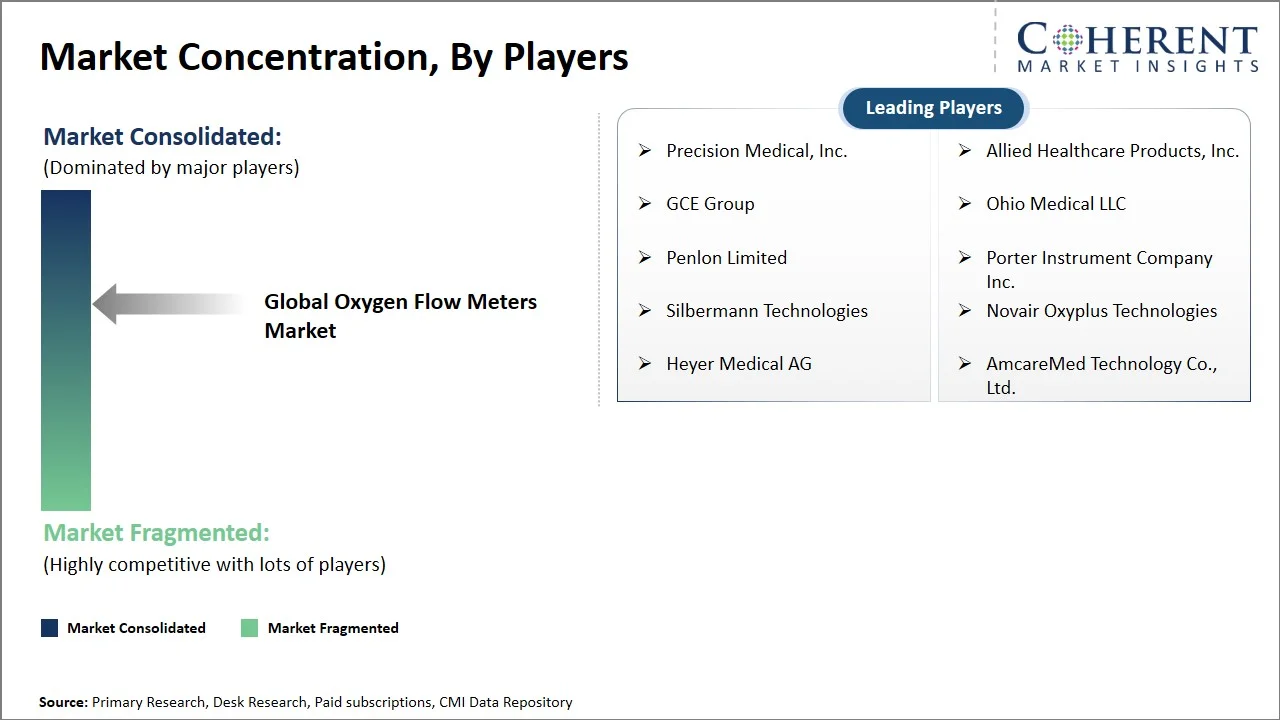
The global oxygen flow meters market is moderately competitive. The players operating in the market are primarily seeking to develop improved accuracy measures of oxygen delivery, portable oxygen flow meters and more durable devices, with the aim of gaining an edge within the market. Companies operating within the market are investing heavily within the development of digital, and smart oxygen flow meters, combining state of the art monitoring capabilities and thus competing to address the rapidly increasing demand for oxygen flow meters within hospitals, emergency care units and at home care practices. This would involve not only the development of more efficient products, but also well-structured advertising strategies, compliance with world regulations and increased distribution channels. Key focus areas include:
- Development of portable and digital oxygen flow meters
- Expansion of home healthcare and respiratory care product portfolios
- Investment in precision-based and low-maintenance oxygen delivery systems
- Strengthening distribution networks and regulatory compliance strategies
Market Report Scope
Oxygen Flow Meters Market Report Coverage
| Report Coverage | Details | ||
|---|---|---|---|
| Base Year: | 2025 | Market Size in 2026: | USD 1.42 Bn |
| Historical Data for: | 2020 To 2024 | Forecast Period: | 2026 To 2033 |
| Forecast Period 2026 to 2033 CAGR: | 7.2% | 2033 Value Projection: | USD 2.31 Bn |
| Geographies covered: |
| ||
| Segments covered: |
| ||
| Companies covered: | Precision Medical, Inc., Allied Healthcare Products, Inc., GCE Group, Ohio Medical LLC, Penlon Limited, Porter Instrument Company Inc., Silbermann Technologies, Novair Oxyplus Technologies, Heyer Medical AG, and AmcareMed Technology Co., Ltd. | ||
| Growth Drivers: |
| ||
| Restraints & Challenges: |
| ||
Analyst Opinion (Expert Opinion)
- In the coming years, the future outlook for the oxygen flow meters market is forecast to grow significantly during the forecast period owing to the rising prevalence of chronic respiratory diseases and surging adoption to long-term oxygen therapy and home-based health care for patients. Increasing frequencies of COPD, Asthma, Pulmonary Fibrosis, and sleep apnea, is boosting up the need for effective oxygen flow systems provision in hospital, ambulatory, and at home various healthcare needs. Moreover, technological evolution in to portable and digital oxygen flow meters integrated with better efficacy, sustainability, and innovative manipulation features is projected to revolutionize respiratory care management during next ten years.
- The maximum opportunities will probably exist in portable and digital oxygen flow meters for home health cares and long-term respiratory therapies where huge population dwelling in countries like India and China will act as catalyst. In Asia Pacific, the healthcare infrastructure penetration, expenditure, geriatrics population and awareness associated with the respiratory disease management will open wide scope for expanding the Oxygen Flow Meter business scope over the years to come. Moreover, the rising demand for the home oxygen therapy and post-acute care monitoring systems and solutions would further lead to robust growth of small, portable and user-friendly product systems.
- To create a sustainable and long-term strategic advantage, industry players should focus on designing more sophisticated oxygen flow meters with better precision, lower maintenance as well as built-in digital monitoring features. Companies should also invest in strengthening the distribution network in emerging markets, establish stronger co-operations with hospitals and home care suppliers for higher brand recognition and better regulatory strategy for gain extra marketer accessibility. Cost-effective and portable oxygen delivery equipment optimized for use in home healthcare should be an important long term competitive advantage of companies in this field.
Speak to the analyst
Want personalized insights?
Take the findings above to one of our principal consultants, or have the report rebuilt around the segments, geographies and competitors you actually track.
Market Segmentation
- Product Type Insights (Revenue, USD Bn, 2021 - 2033)
- Thorpe Tube Flow Meters
- Bourdon Gauge Flow Meters
- Digital/Electronic Flow Meters
- Others
- Application Insights (Revenue, USD Bn, 2021 - 2033)
- Oxygen Therapy
- Anesthesia
- Emergency Care
- Home Healthcare
- Others
- End User Insights (Revenue, USD Bn, 2021 - 2033)
- Hospitals
- Clinics
- Ambulatory Surgical Centers
- Home Care Settings
- Others
- Regional Insights (Revenue, USD Bn, 2021 - 2033)
- North America
- U.S.
- Canada
- Latin America
- Brazil
- Argentina
- Mexico
- Rest of Latin America
- Europe
- Germany
- U.K.
- Spain
- France
- Italy
- Russia
- Rest of Europe
- Asia Pacific
- China
- India
- Japan
- Australia
- South Korea
- ASEAN
- Rest of Asia Pacific
- Middle East
- GCC Countries
- Israel
- Rest of Middle East
- Africa
- South Africa
- North Africa
- Central Africa
- North America
- Key Players Insights
- Precision Medical, Inc.
- Allied Healthcare Products, Inc.
- GCE Group
- Ohio Medical LLC
- Penlon Limited
- Porter Instrument Company Inc.
- Silbermann Technologies
- Novair Oxyplus Technologies
- Heyer Medical AG
- AmcareMed Technology Co., Ltd.
Sources
Primary Research Interviews
- Respiratory therapists and pulmonologists utilizing oxygen delivery and respiratory care systems
- Hospital procurement managers and biomedical engineers involved in oxygen therapy equipment purchasing
- Home healthcare providers and critical care specialists utilizing oxygen flow monitoring devices
- Medical gas equipment distributors and respiratory device manufacturers
Stakeholders
- Oxygen flow meter manufacturers and respiratory care device providers
- End-use Sectors
- Hospitals and critical care units
- Home healthcare and long-term oxygen therapy centers
- Ambulatory surgical and emergency care centers
- Respiratory clinics and pulmonary rehabilitation centers
- Academic and healthcare research institutions
- Regulatory & Health Bodies: U.S. Food and Drug Administration (FDA) – medical device approval and compliance framework, European Medicines Agency (EMA) – respiratory device safety and regulatory standards, National Medical Products Administration (NMPA), China – medical device registration and compliance oversight, Pharmaceuticals and Medical Devices Agency (PMDA), Japan – respiratory care device regulations, World Health Organization (WHO) – respiratory disease prevalence and healthcare infrastructure statistics
Databases
- WHO Global Health Observatory – respiratory disease prevalence and oxygen therapy utilization statistics
- CDC FastStats – COPD, asthma, and respiratory healthcare utilization data
- FDA Medical Device Databases – oxygen flow meter approvals and safety information
- OECD Health Statistics – healthcare expenditure and respiratory care infrastructure data
- Global Burden of Disease (GBD) Database – respiratory disease epidemiology and mortality statistics
Magazines
- MedTech Dive – respiratory care technology and medical device industry trends
- Medical Device Network – oxygen therapy and respiratory equipment innovation updates
- Healthcare Technology Report – critical care and respiratory monitoring advancements
- RT: For Decision Makers in Respiratory Care – oxygen therapy and pulmonary care trends
- Medical Design & Outsourcing – respiratory device engineering and manufacturing developments
Journals
- Respiratory Care Journal
- European Respiratory Journal
- Chest Journal
- American Journal of Respiratory and Critical Care Medicine
- Journal of Clinical Monitoring and Computing
Newspapers
- Financial Times – global healthcare and medical device industry coverage
- The Wall Street Journal – healthcare technology and respiratory device market developments
- The New York Times (Health Section) – respiratory disease and healthcare innovation trends
- The Guardian (Science & Health) – global medical technology advancements
Associations
- American Association for Respiratory Care (AARC)
- American Thoracic Society (ATS)
- European Respiratory Society (ERS)
- International Council for Respiratory Care
Public Domain Sources
- World Health Organization (WHO) – respiratory disease and healthcare infrastructure statistics
- Centers for Disease Control and Prevention (CDC) – COPD, asthma, and oxygen therapy utilization data
- U.S. Food and Drug Administration (FDA) – medical device approval and compliance framework
- European Medicines Agency (EMA) – respiratory care device regulations
- OECD – healthcare expenditure and respiratory care infrastructure statistics
Proprietary Elements
- CMI Data Analytics Tool, Proprietary CMI Existing Repository of information for last 10 years.
Get access to 250+ pages report
Every segment, forecast, competitor profile and data table behind the analysis above — available for instant download.
- ESOMAR Member
- ISO 9001:2015 Certified
- D-U-N-S Registered
- GDPR & CCPA Compliant
Missing comfort of reading report in your local language? Find your preferred language:
Transform your Strategy with Exclusive Trending Reports
Frequently Asked Questions
The global oxygen flow meters market is estimated to be valued at USD 1.42 Bn in 2026 and is expected to reach USD 2.31 Bn by 2033.
Thorpe tube flow meters dominate due to their high accuracy, simple design, cost-effectiveness, and widespread usage across hospitals, emergency care units, and respiratory therapy applications.
Oxygen flow meters are medical devices used to measure and regulate the flow rate of oxygen delivered to patients during respiratory therapy.
The CAGR of global oxygen flow meters market is projected to be 7.2% from 2026 to 2033.
Rising prevalence of chronic respiratory diseases and growing expansion of healthcare infrastructure and emergency care facilities are the major factors driving the growth of the global oxygen flow meters market.
Availability of low-cost local manufacturers and pricing pressure, and regular calibration and maintenance requirements for oxygen flow meters are the major factors hampering the growth of the global oxygen flow meters market.
In terms of application, oxygen therapy is estimated to dominate the market revenue share in 2026.