

Global Palm Oil Market Size and Forecast – 2026-2033
The Global Palm Oil Market is estimated to be valued at USD 75.59 Bn in 2026 and is expected to reach USD 112.91 Bn by 2033, exhibiting a compound annual growth rate (CAGR) of 5.9% from 2026 to 2033.
Key Takeaways of the Palm Oil Market
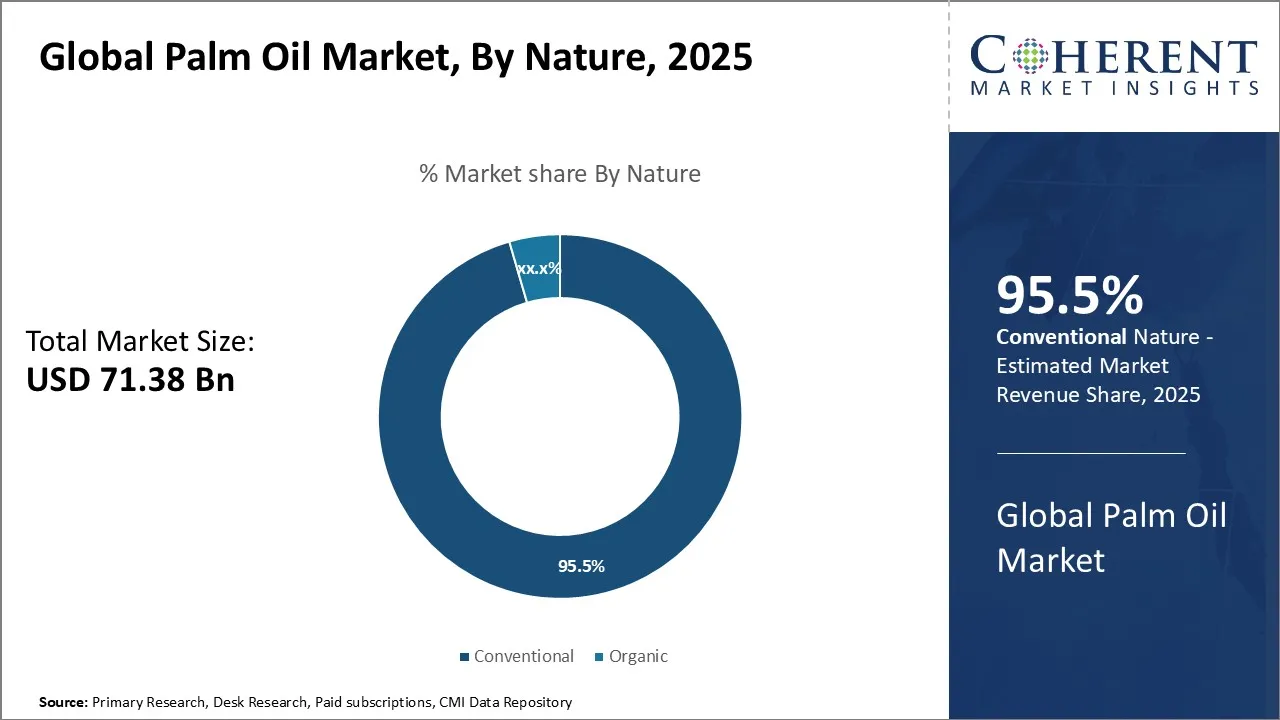
- The conventional segment is expected to capture 96.5 % of the global palm oil market in 2026.
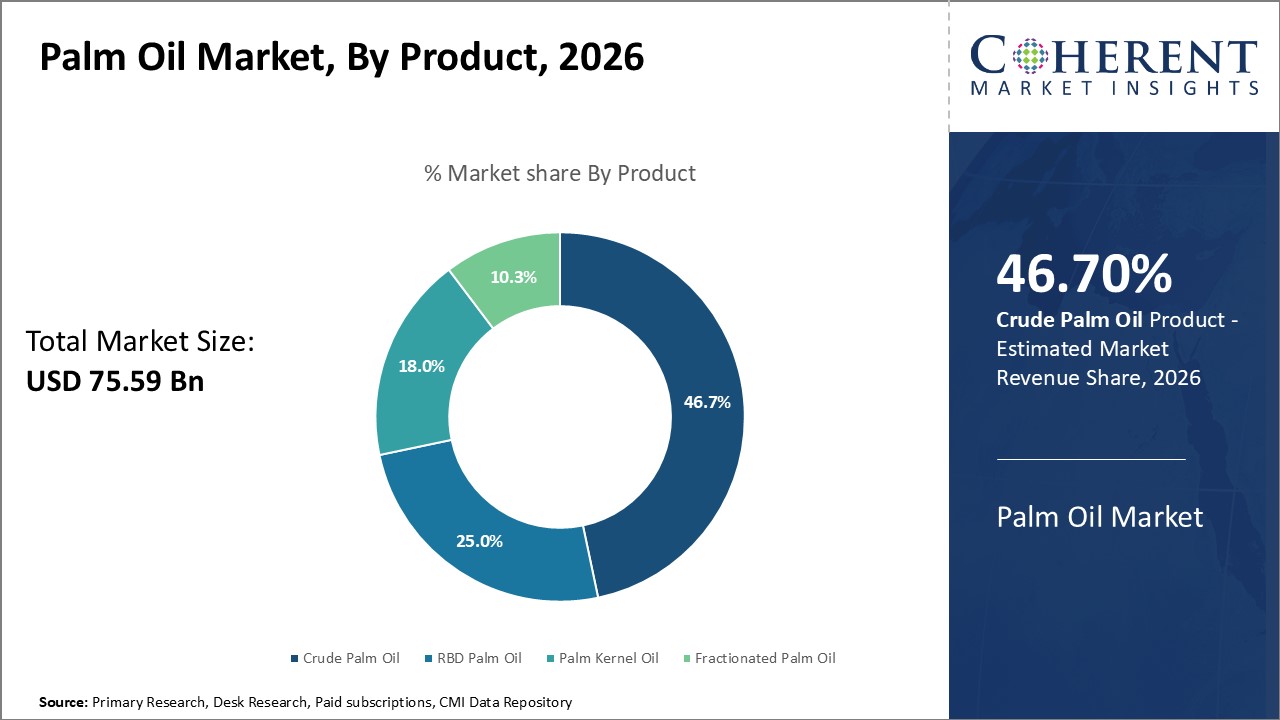
- The crude palm oil segment is projected to account for 46.7 % of the market in 2026.
- The food & beverage segment is expected to capture 56.6 % of the market in 2026.
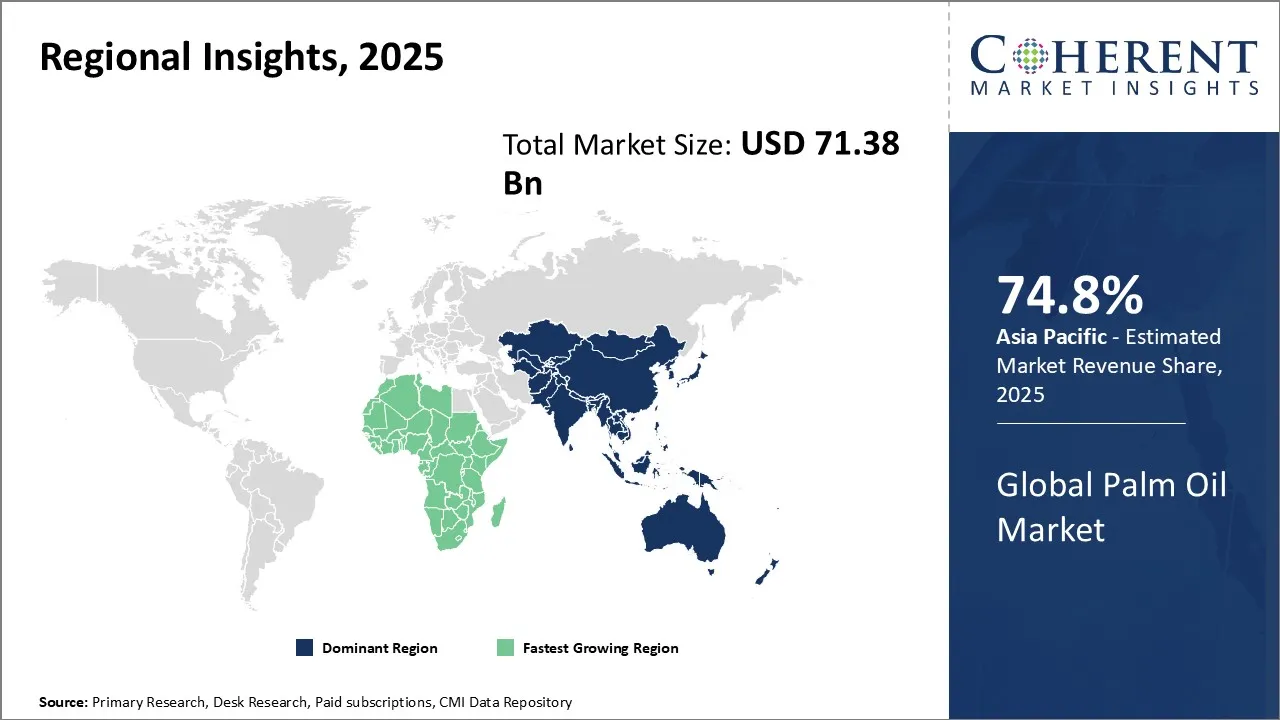
- Asia Pacific is expected to lead the global palm oil market in 2026 with a 74.8 % share. Africa, with a 12.7% share in 2026, will be the fastest-growing region.
Market Overview
Current market trends indicate a strong shift towards sustainable and ethically sourced palm oil due to increasing environmental concerns and regulatory pressures. Companies are investing in certified sustainable palm oil (CSPO) initiatives to reduce deforestation and carbon footprints. Additionally, innovations in refining technologies and diversification into bio-based products are reshaping the market landscape, while consumer preference for organic and natural ingredients further fuels the demand for sustainably produced palm oil.
Current Events and Its Impact
Current Events | Description and its impact |
Increased Palm Oil Demand from India and China, Stable Global Prices |
|
Technological and Sustainability Advancements in Palm Oil Production |
|
Segmental Insights
- Current Industry Events of 2026
- Market Size Estimation
- Regional Breakdown
- Competitive Landscape
- Customer Intelligence
- Segmental Analysis
- Pricing Analysis
- Key Market Drivers, Challenges & Future Trends
- Customized Insights Section
Palm Oil Market Insights, By Nature - Conventional Segment Dominates Due to its Widespread Availability and Cost-Effectiveness
The conventional segment is expected to hold 96.5% share of the global palm oil market in 2026, primarily driven by its extensive production scale and accessibility across major palm oil-producing countries such as Indonesia and Malaysia. Conventional palm oil benefits from highly optimized cultivation and processing techniques, which have evolved over decades to maximize yield and minimize operational costs. This efficiency allows producers to supply palm oil at lower prices compared to organic alternatives, making it a preferred choice for large-scale industrial users.
Additionally, conventional palm oil production leverages the use of synthetic fertilizers, pesticides, and genetically improved planting materials, which enhance crop productivity and reduce losses from pests and diseases. These agricultural inputs enable producers to reliably meet the high global demand, contributing to the segment’s substantial market share. Moreover, the established supply chain infrastructure supporting conventional palm oil—from plantation to refinery—ensures timely deliveries, supporting various downstream industries.
Palm Oil Market Insights, By Product - Crude Palm Oil Segment Dominates Due to its Versatility and Role as the Fundamental Raw Material in Palm Oil Processing
The crude palm oil segment is expected to hold 46.7% share of the market in 2026. Its significant market share stems from its direct use in food industries as well as its critical function in producing refined, bleached, and deodorized (RBD) palm oil, palm kernel oil, and fractionated palm oil.
One of the main growth factors for crude palm oil is its extensive application as a raw material in edible oil formulations and processed foods. The oil’s balanced fatty acid profile and superior oxidative stability make it ideal for cooking, frying, and as an ingredient in bakery and confectionery products. Food manufacturers particularly value CPO because it withstands high cooking temperatures without significant degradation, ensuring taste and shelf-life consistency.
Palm Oil Market Insights, By End-use Industry - Food & Beverage Segment Dominates Driven by Increasing Demand for Versatile and Affordable Cooking Oils Worldwide
The food & beverage segment is projected to hold 56.6% share of the market in 2026, primarily due to palm oil’s unique functional and economic advantages. Its widespread use spans packaged foods, bakery products, confectionery, instant noodles, and snack items where it acts as a cost-effective, stable, and easily sourced ingredient.
Palm oil’s semi-solid nature at room temperature, combined with its favorable melting characteristics, enables it to improve texture, flavor, and shelf life in food products. Manufacturers favor palm oil because it is trans-fat free, aligning with public health regulations and consumer preferences shifting away from partially hydrogenated oils. This attribute positions palm oil as a preferred alternative for enhancing product health profiles without compromising performance.
Regional Insights
Asia Pacific Palm Oil Market Analysis and Trends
The Asia Pacific region is projected to lead the market with a 74.8% share in 2026, which stems from the region’s extensive palm oil production capacity, particularly driven by countries such as Indonesia and Malaysia. The tropical climate and fertile soils create an ideal environment for oil palm cultivation, enabling consistent high yields. The well-established plantation ecosystem includes large-scale producers, integrated supply chains, and downstream processing industries that bolster market stability.
Government policies in these countries emphasize palm oil as a crucial export commodity, providing subsidies, research support, and sustainability certification frameworks like Malaysia's MSPO and Indonesia's ISPO to enhance product quality and access to international markets. Major players such as Wilmar International, Sime Darby, and PT Astra Agro Lestari have deeply penetrated the market with expanding operations and strategic partnerships, ensuring strong market control. Trade dynamics marked by significant export volumes to Europe, China, and India reinforce Asia Pacific’s commanding role in the palm oil sector.
Africa Palm Oil Market Analysis and Trends
The Africa region is expected to exhibit the fastest growth in the market contributing 12.7% share in 2026, owing to rising domestic demand coupled with increasing investments in palm oil plantations and processing facilities. Countries like Nigeria, Ghana, and Ivory Coast are expanding their cultivation areas to reduce reliance on imports and boost local industries. African governments are progressively implementing supportive agricultural policies, promoting sustainable practices and encouraging foreign direct investment to scale up production capacity.
The developing market ecosystem is being shaped by emerging local players such as Presco Plc and Wilmar Africa, as well as participation by multinational companies keen on tapping this expanding market. Additionally, Africa’s growing population and rising consumption of processed foods are driving demand for palm oil products both for food and industrial applications. Favorable trade agreements and regional cooperation initiatives are enhancing intra-African trade of palm oil, further accelerating market growth and integration.
Global Palm Oil Market Outlook for Key Countries
Indonesia Palm Oil Market Trends
Indonesia’s palm oil market continues to lead globally due to its position as the largest producer and exporter of palm oil. The country boasts palm oil plantations supported by a mature supply chain comprising nurseries, harvesting, milling, refining, and downstream processing. Government support through policies promoting sustainable palm oil production and trade facilitation enhances Indonesia’s global competitiveness.
Key industry players such as PT Astra Agro Lestari, Golden Agri-Resources, and Wilmar International dominate the landscape with vertically integrated operations, enabling operational efficiency and market control. Indonesia also focuses on expanding biodiesel production utilizing palm oil, aligning with environmental goals and energy diversification, which impacts market dynamics significantly.
Malaysia Palm Oil Market Trends
Malaysia maintains a strong presence in the global palm oil market with a focus on refined palm oil products and high-value derivatives. The country’s palm oil ecosystem emphasizes quality improvement, sustainability, and technological innovation. Government initiatives champion the Malaysian Sustainable Palm Oil certification system to meet international environmental standards, boosting export potentials. Leading companies including Sime Darby Plantation, IOI Corporation, and Kuala Lumpur Kepong Berhad play critical roles in production, research, and global trade. Malaysia is also a key exporter of specialty palm oil products catering to food, cosmetics, and oleochemical industries, underpinning its strategic market importance.
India Palm Oil Market Trends
India serves as one of the largest importers and consumers of palm oil, relying heavily on imports primarily from Indonesia and Malaysia to meet domestic demand driven by edible oil consumption and industrial use. The India palm oil market is characterized by a diverse end-user base, including food processing, confectionery, and biofuels sectors. Indian government regulations, import tariffs, and trade policies influence supply chain patterns and pricing. Prominent Indian companies such as Adani Wilmar and Ruchi Soya Industries are pivotal in refining, distribution, and retailing of palm oil and its derivatives. Increasing urbanization and rising income levels continue to strengthen demand, making India a critical market in the global palm oil trade network.
Nigeria Palm Oil Market Trends
Nigeria’s palm oil market is growing rapidly with increased focus on revitalizing the traditional oil palm sector and improving productivity. The government promotes initiatives to support smallholder farmers and large-scale plantations through subsidies, technical assistance, and infrastructure development. Local companies like Presco Plc and Okomu Oil Palm Company Limited are key contributors to production and processing, aiming to reduce import dependency.
The country’s expanding population and growing food processing industry fuel steady demand for palm oil, while efforts to modernize milling and promote certified sustainable practices are improving supply chain transparency and quality standards.
Thailand Palm Oil Market Trends
Thailand’s palm oil market focuses primarily on domestic consumption supported by local plantations and imports. The government supports the sector through agricultural policies encouraging sustainable practices and value addition, with initiatives targeting increased productivity and product diversification. Major players such as Bangchak Corporation and Thai Vegetable Oil Corporation are active in refining and marketing palm oil domestically and regionally. Thailand’s palm oil industry benefits from well-developed infrastructure and investment in research to improve yield and oil quality. The country also emphasizes development of biofuels and oleochemical applications, enhancing market resilience and growth prospects.
Factors Affecting on Palm Oil Market Growth
- Supply and Demand Dynamics: The fundamental economic principle of supply and demand is central. Increases in palm oil exports usually tighten supply and push prices up, while reductions lead to oversupply and price declines. Major production comes from Indonesia and Malaysia, which together account for about 5-90% of global production.
- Climate and Weather Conditions: Weather patterns such as dry spells, heavy rainfall, and extreme climate events directly affect palm oil yields in producing regions like Malaysia (Pahang, Johor, Sarawak) and Indonesia. Variability in precipitation can impact production volumes and thus market prices.
- Government Policies and Export Controls: Export bans or restrictions—such as the Indonesian export ban in 2022—cause immediate price spikes. Biofuel policies that increase blending mandates elevate palm oil demand as a renewable energy source. Regulatory measures including European Union restrictions requiring proof of sustainability and non-deforestation compliance (EUDR) also influence trade flows and market accessibility.
- Environmental Sustainability Concerns: Palm oil production contributes to deforestation, biodiversity loss, and greenhouse gas emissions, which attract regulation and affect consumer behavior. Certification schemes like the Roundtable on Sustainable Palm Oil (RSPO) are becoming crucial in market trends.
- Substitution and Related Commodity Prices: Palm oil prices are correlated with other vegetable oils such as soybean and rapeseed oil due to their substitutability in food and industrial use. Fluctuations in crude oil prices also impact palm oil, given its use in biodiesel.
- Population and Consumption Growth in Key Importers: Countries like India and China are major importers with growing populations, which drives increasing demand for palm oil, especially as an edible oil and industrial raw material.
Market Players, Key Development, and Competitive Intelligence
Key Developments
- In July 2025, the Federal Government (FG) inaugurated the National Palm Oil Traceability Framework and Inter-Agency Committee to enhance palm oil production in Nigeria. The initiative, led by the Minister of Agriculture and Food Security, Sen. Abubakar Kyari, aims to strengthen consumer confidence and boost exports. During the inauguration ceremony in Abuja, the Minister, represented by Dr. Marcus Olaniyi Ogunbiyi, the Permanent Secretary of the Ministry, highlighted the committee's focus on addressing issues such as adulteration, poor processing, and inadequate packaging within the palm oil sector. This strategic move seeks to improve quality control and ensure the sustainable growth of Nigeria's palm oil industry.
- In January 2025, ADM was honored with the 2025 BIG Innovation Award for its regenerative agriculture program. The award recognized ADM's efforts in advancing sustainability through the integration of technology, strategic partnerships, and innovative farming practices aimed at improving soil health and reducing emissions. This recognition underscores ADM's leadership in fostering resilient food systems and addressing global environmental and supply chain challenges.
- In October 2024, IOI Corporation received Gold at The Edge Malaysia ESG Awards for achieving a 40% reduction in GHG emissions, surpassing its 2025 target. This milestone was reached through initiatives such as biogas power generation, reforestation efforts, and waste circularity. IOI also launched a digital ESG platform to enhance transparency and sustainability reporting across its operations.
Top Strategies Followed by Global Palm Oil Market Players
- Established market leaders invest heavily in research and development (R&D) to drive innovation, creating high-performance palm oil products tailored to meet evolving consumer demands and regulatory standards. In tandem with these efforts, established companies aggressively expand their global footprint by broadening distribution networks, particularly targeting emerging markets where rising disposable incomes and increasing demand for processed foods offer significant growth opportunities.
- For example, Wilmar International has heavily invested in R&D to create specialty palm oil products that meet the growing demand for healthier food options. For example, the company has developed a range of palm oil products with reduced trans fats to cater to health-conscious consumers.
- Mid-level players in the palm oil market adopt a different approach, focusing on offering cost-effective solutions that maintain an acceptable balance between quality and affordability. Their target customers tend to be price-sensitive consumers, especially in developing regions where the palm oil price is a critical purchase consideration. To enhance their competitive edge, these players engage in strategic collaborations with technology providers and other industry participants.
- For example, Golden Agri-Resources has maintained competitive pricing through economies of scale and cost-effective sourcing, particularly in Indonesia and Malaysia. The company focuses on making its products accessible to mass-market consumers, especially in price-sensitive markets.
- Small-scale players in the global palm oil market differentiate themselves by carving out niche segments, often through specialization or innovation. These companies frequently emphasize unique product features—such as organic certification, sustainability claims, or value-added functional benefits—to appeal to select consumer demographics that are underserved by larger manufacturers. To remain competitive, small firms adopt cutting-edge technologies that streamline production processes, improve product quality, and enable faster adaptation to market trends.
- For example, Dewina Food Industries in Malaysia uses advanced refining technologies to produce palm oil products that meet specific dietary needs, such as high-oleic palm oil, which appeals to health-conscious and sustainability-focused consumers.
Market Report Scope
Palm Oil Market Report Coverage
| Report Coverage | Details | ||
|---|---|---|---|
| Base Year: | 2025 | Market Size in 2026: | USD 75.59 Bn |
| Historical Data for: | 2020 To 2024 | Forecast Period: | 2026 To 2033 |
| Forecast Period 2026 to 2033 CAGR: | 5.9% | 2033 Value Projection: | USD 112.91 Bn |
| Geographies covered: |
| ||
| Segments covered: |
| ||
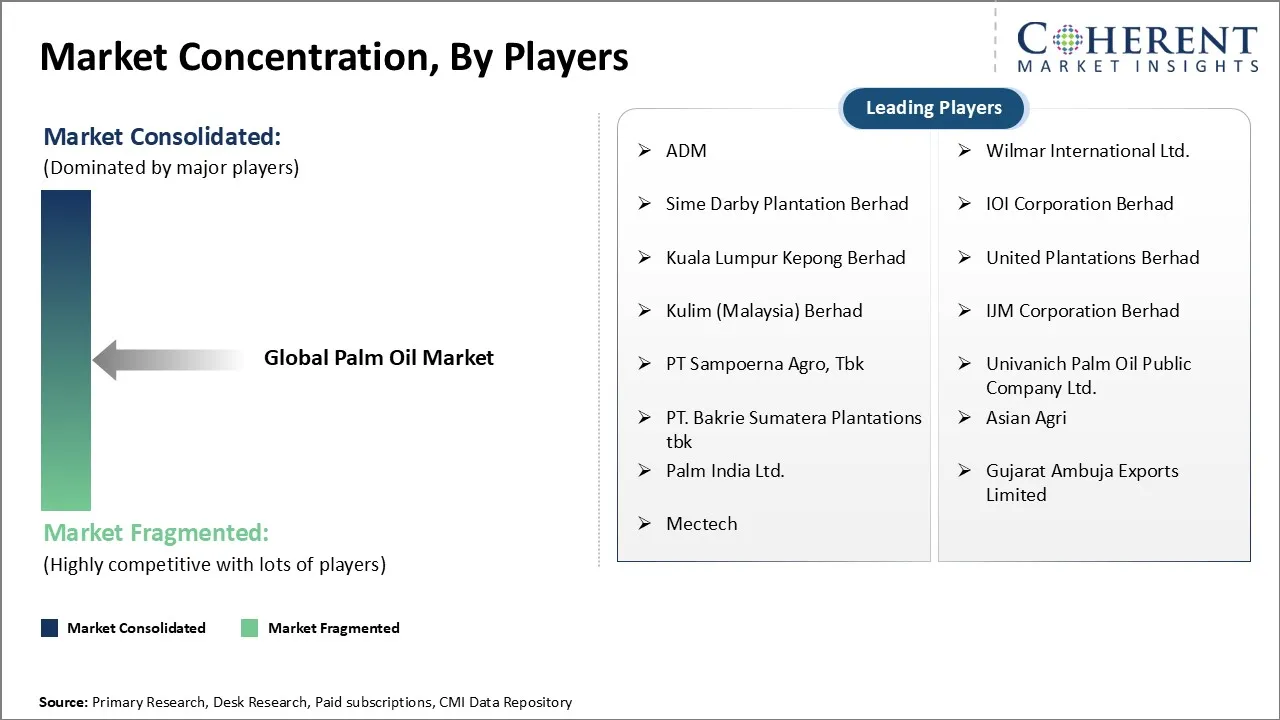
| Companies covered: | ADM, Wilmar International Ltd., Sime Darby Plantation Berhad, IOI Corporation Berhad, Kuala Lumpur Kepong Berhad, United Plantations Berhad, Kulim (Malaysia) Berhad, IJM Corporation Berhad, PT Sampoerna Agro, Tbk, Univanich Palm Oil Public Company Ltd., PT. Bakrie Sumatera Plantations tbk, Asian Agri, Palm India Ltd., Gujarat Ambuja Exports Limited, and Mectech | ||
| Growth Drivers: |
| ||
| Restraints & Challenges: |
| ||
Palm Oil Market Dynamics
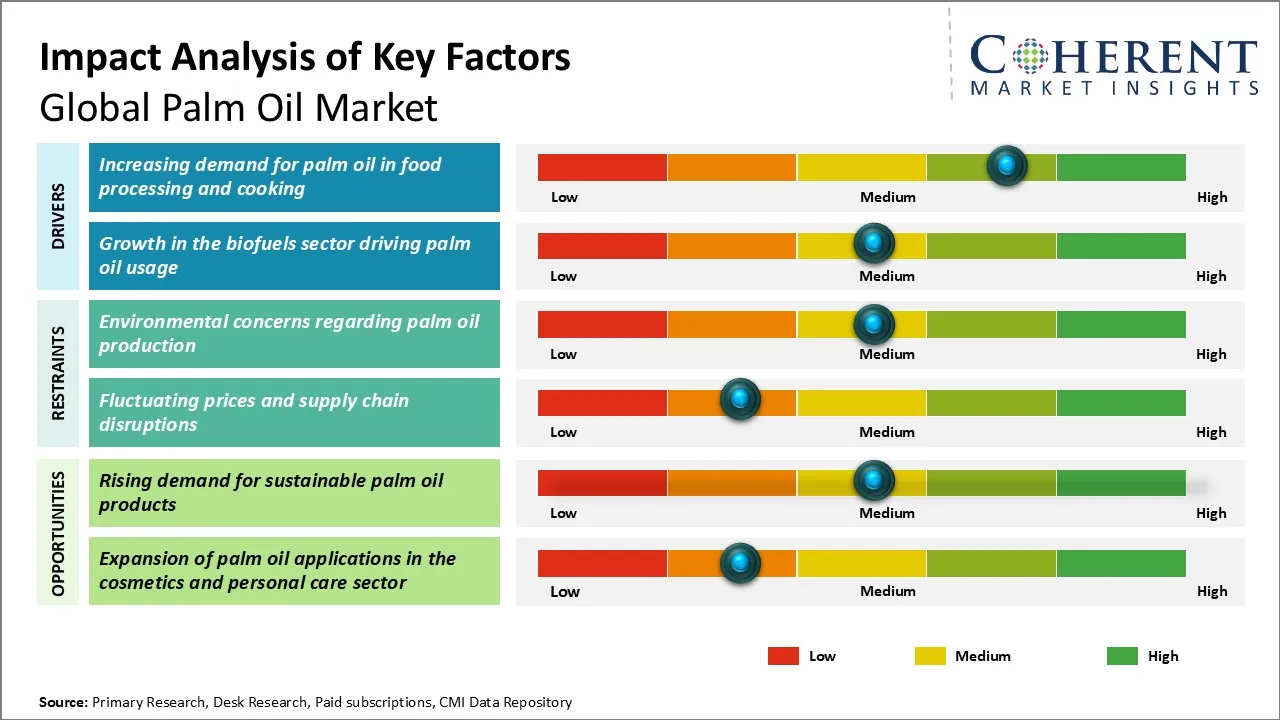
Palm Oil Market Driver - Increasing Demand for Palm Oil in Food Processing and Cooking
The escalating demand for palm oil in the food processing and cooking industries is a significant driver of the global palm oil market. Palm oil’s versatility, neutral flavor, and high oxidative stability make it a preferred ingredient for a wide range of food products, processed food, including baked goods, fast food, confectioneries, margarine, and snacks products. Its ability to withstand high temperatures without breaking down supports its extensive use in frying and cooking processes, especially in fast-food chains and commercial kitchens.
Major fast-food chains, including McDonald's and KFC, have historically used palm oil for frying due to its stability at high cooking temperatures. This enhances the oil's ability to maintain food quality and prevent breakdown, which is crucial for ensuring consistency in taste and texture across global outlets. These companies use palm oil in their deep fryers, which contribute to its high usage in cooking.
Palm Oil Market Opportunity - Rising Demand for Sustainable Palm Oil Products
The global palm oil market is increasingly witnessing a significant opportunity driven by the rising demand for sustainable palm oil products. Growing consumer awareness about environmental issues and the adverse impacts of unsustainable palm oil cultivation, such as deforestation and biodiversity loss, has led to a shift in preference towards sustainably sourced palm oil. This rising demand is further fueled by stringent regulations and sustainability commitments from governments, corporations, and international bodies aiming to promote responsible production practices.
RSPO Certification and Corporate Commitments: The Roundtable on Sustainable Palm Oil (RSPO), a global certification body, has played a crucial role in promoting sustainable palm oil production. Major companies like Unilever and Nestlé have committed to sourcing 100% of their palm oil from RSPO-certified sustainable sources. These commitments align with consumer demands for ethical products and align with regulatory pressures aimed at mitigating deforestation.
Analyst Opinion (Expert Opinion)
- The global palm oil market is navigating a complex landscape, marked by increasing scrutiny over sustainability and environmental impact. Leading companies like Wilmar International and Cargill are adapting to these challenges, as discussed at the World Palm Oil Conference (2023) and the Sustainable Palm Oil Summit (2022).
- Presentations highlighted the importance of traceability in supply chains, with Wilmar showcasing its commitment to sustainable practices through its “No Deforestation, No Peat, No Exploitation” policy. This approach has resonated with consumers and stakeholders alike, positioning the company as a leader in responsible sourcing. Additionally, the rising demand for palm oil alternatives, driven by health trends and dietary shifts, was a focal point of discussions.
- Cargill's innovative development of palm oil substitutes for the food industry exemplifies how companies are pivoting to meet changing consumer preferences. As regulatory pressures mount and public awareness grows, firms that embrace transparency and invest in sustainable innovations will likely gain a competitive edge. This proactive stance not only addresses market demands but also enhances brand reputation in an increasingly conscientious consumer landscape.
Speak to the analyst
Want personalized insights?
Take the findings above to one of our principal consultants, or have the report rebuilt around the segments, geographies and competitors you actually track.
Market Segmentation
- Nature Insights (Revenue, USD Bn, 2021 - 2033)
- Conventional
- Organic
- Product Insights (Revenue, USD Bn, 2021 - 2033)
- Crude Palm Oil
- RBD Palm Oil
- Palm Kernel Oil
- Fractionated Palm Oil
- End-use Industry Insights (Revenue, USD Bn, 2021 - 2033)
- Food & Beverage
- Personal Care & Cosmetics
- Biofuel & Energy
- Pharmaceuticals
- Others
- Regional Insights (Revenue, USD Bn, 2021 - 2033)
- North America
- U.S.
- Canada
- Latin America
- Brazil
- Argentina
- Mexico
- Rest of Latin America
- Europe
- Germany
- U.K.
- Spain
- France
- Italy
- Russia
- Rest of Europe
- Asia Pacific
- China
- India
- Japan
- Australia
- South Korea
- ASEAN
- Rest of Asia Pacific
- Middle East
- GCC Countries
- Israel
- Rest of Middle East
- Africa
- South Africa
- North Africa
- Central Africa
- North America
- Key Players Insights
- ADM
- Wilmar International Ltd.
- Sime Darby Plantation Berhad
- IOI Corporation Berhad
- Kuala Lumpur Kepong Berhad
- United Plantations Berhad
- Kulim (Malaysia) Berhad
- IJM Corporation Berhad
- PT Sampoerna Agro, Tbk
- Univanich Palm Oil Public Company Ltd.
- Bakrie Sumatera Plantations tbk
- Asian Agri
- Palm India Ltd.
- Gujarat Ambuja Exports Limited
- Mectech
Sources
Primary Research Interviews
- R&D Director – Leading Palm Oil Producer
- Procurement Manager – Major Edible Oil Retailer
- Product Development Head – Well-Known Food Brand Using Palm Oil
- Sustainability Manager – Palm Oil Certification Body (e.g. RSPO)
Stakeholders
- Manufacturers:
- Palm Oil Producers
- Palm Oil Refiners
- End-use Sectors:
- Food & Beverage Industry (Cooking Oils, Snacks, Margarine)
- Personal Care & Cosmetics (Soap, Shampoo, Skincare Products)
- Biofuel Industry (Biodiesel Production)
- Government Agencies & Regulatory Bodies:
- Food Safety and Standards Authority
- Environmental Protection Agencies
- NGOs & Sustainability Bodies:
- Roundtable on Sustainable Palm Oil (RSPO)
- Greenpeace, WWF
Databases
- FAOSTAT (Food and Agriculture Organization Database)
- International Trade Centre (ITC) – Trade Map
- Palm Oil Trade and Exports Database
- U.S. Department of Agriculture (USDA) – Palm Oil Report
Magazines
- Palm Oil International – Industry Trends and Insights
- Sustainable Palm Oil Journal – Environmental Impact Studies
- Edible Oils Magazine – Market Developments and Trends
- Agri-Tech East – Palm Oil Processing Innovations
Journals
- Journal of the American Oil Chemists' Society – Palm Oil Research and Applications
- Food Research International – Palm Oil Use in Processed Foods
- International Journal of Agricultural Sustainability – Palm Oil Sustainability and Certification
- Environmental Science & Technology – Palm Oil and Deforestation Issues
- Journal of Cleaner Production – Sustainable Palm Oil Production Practices
Newspapers
- The Wall Street Journal – Palm Oil Market Growth and Regulatory Changes
- Reuters – Palm Oil Industry Shifts and Sustainability Trends
- The Financial Times – Palm Oil Price Volatility and Trade Dynamics
- The Guardian – Palm Oil's Environmental Impact and Consumer Trends
Associations
- Roundtable on Sustainable Palm Oil (RSPO)
- Palm Oil Refiners Association (PORAM)
- Malaysian Palm Oil Council (MPOC)
- Indonesian Palm Oil Producers Association (GAPKI)
- Global Biofuels Alliance
Public Domain Sources
- Food and Agriculture Organization (FAO) – Palm Oil Production Data
- European Commission – Palm Oil Sustainability and Policy Guidelines
- World Trade Organization (WTO) – Trade Policies Affecting Palm Oil
- World Health Organization (WHO) – Health Impact and Nutritional Guidelines on Palm Oil
Proprietary Elements
- CMI Data Analytics Tool, Proprietary CMI Existing Repository of information for last 8 years.
Get access to 250+ pages report
Every segment, forecast, competitor profile and data table behind the analysis above — available for instant download.
- ESOMAR Member
- ISO 9001:2015 Certified
- D-U-N-S Registered
- GDPR & CCPA Compliant
Missing comfort of reading report in your local language? Find your preferred language:
Transform your Strategy with Exclusive Trending Reports
Frequently Asked Questions
The global palm oil market is estimated to be valued at USD 75.59 Bn in 2026 and is expected to reach USD 112.91 Bn by 2033.
The global palm oil market is experiencing rising prices driven by increased biodiesel demand, particularly in Indonesia, and reduced export availability due to domestic consumption mandates, while production growth remains sluggish.
The CAGR of global palm oil market is projected to be 5.9% from 2026 to 2033.
Increasing demand for palm oil in food processing and cooking and growth in the biofuels sector driving palm oil usage are the major factors driving the growth of the global palm oil market.
Environmental concerns regarding palm oil production and fluctuating prices and supply chain disruptions are the major factors hampering the growth of the global palm oil market.
In terms of nature, conventional is estimated to dominate the market revenue share in 2026.
ADM, Wilmar International Ltd., Sime Darby Plantation Berhad, IOI Corporation Berhad, Kuala Lumpur Kepong Berhad, United Plantations Berhad, Kulim (Malaysia) Berhad, IJM Corporation Berhad, PT Sampoerna Agro, Tbk, Univanich Palm Oil Public Company Ltd., PT. Bakrie Sumatera Plantations tbk, Asian Agri, Palm India Ltd., Gujarat Ambuja Exports Limited, and Mectech are the major players.